ACUTE LIMB ISCHAEMIA
Dr. JoelArudchelvam
ConsultantVascular andTransplant Surgeon
Teaching HospitalAnuradhapura
Acute limb Ischaemia
 Sudden interruption of blood supply to
limb resulting in threat to the limb
viability.
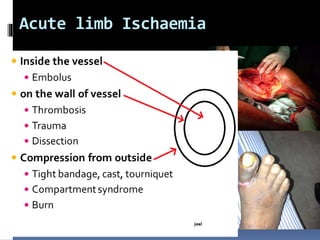
Acute limb Ischaemia
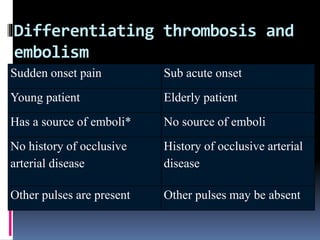
Differentiating thrombosis and
embolism
Sudden onset pain Sub acute onset
Young patient Elderly patient
Has a source of emboli* No source of emboli
No history of occlusive
arterial disease
History of occlusive arterial
disease
Other pulses are present Other pulses may be absent
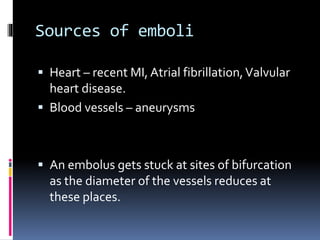
Sources of emboli
 Heart – recent MI, Atrial fibrillation,Valvular
heart disease.
 Blood vessels – aneurysms
 An embolus gets stuck at sites of bifurcation
as the diameter of the vessels reduces at
these places.
Acute limb Ischaemia
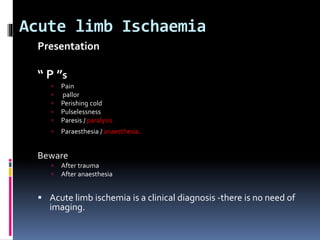
Presentation
“ P ”s
 Pain
 pallor
 Perishing cold
 Pulselessness
 Paresis / paralysis
 Paraesthesia / anaesthesia.
Beware
 After trauma
 After anaesthesia
 Acute limb ischemia is a clinical diagnosis -there is no need of
imaging.
Acute limb Ischaemia
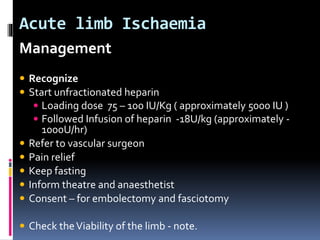
Management
 Recognize
 Start unfractionated heparin
 Loading dose 75 – 100 IU/Kg ( approximately 5000 IU )
 Followed Infusion of heparin -18U/kg (approximately -
1000U/hr)
 Refer to vascular surgeon
 Pain relief
 Keep fasting
 Inform theatre and anaesthetist
 Consent – for embolectomy and fasciotomy
 Check theViability of the limb - note.
Acute limb Ischaemia
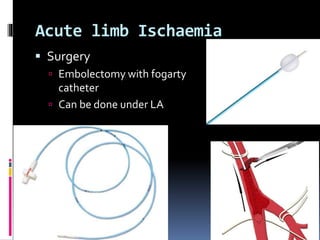
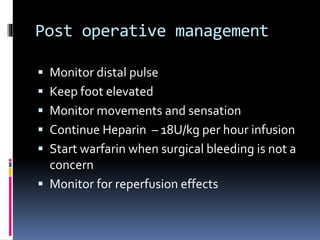
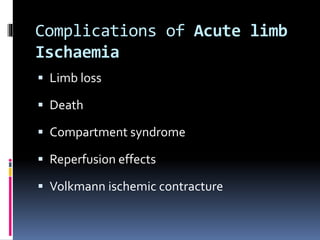
 Surgery
 Embolectomy with fogarty
catheter
 Can be done under LA
Post operative management
 Monitor distal pulse
 Keep foot elevated
 Monitor movements and sensation
 Continue Heparin – 18U/kg per hour infusion
 Start warfarin when surgical bleeding is not a
concern
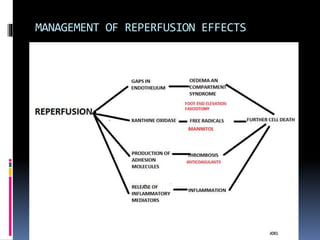
 Monitor for reperfusion effects
Complications of Acute limb
Ischaemia
 Limb loss
 Death
 Compartment syndrome
 Reperfusion effects
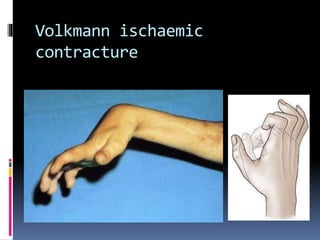
 Volkmann ischemic contracture
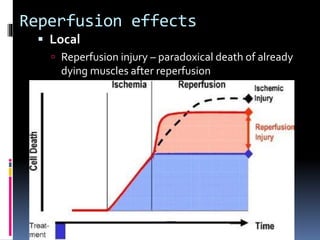
Reperfusion effects
 Local
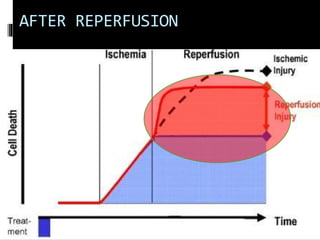
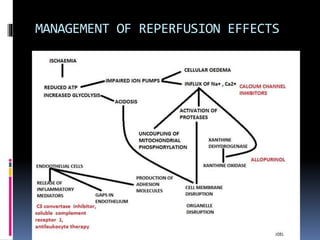
 Reperfusion injury – paradoxical death of already
dying muscles after reperfusion
 Systemic
 Reperfusion syndrome
 Hypotension
 ARDS
 Lactic acidosis
 Hyperkalemia
 Renal failure
Reperfusion effects
 Local
 Reperfusion injury – paradoxical death of already
dying muscles after reperfusion
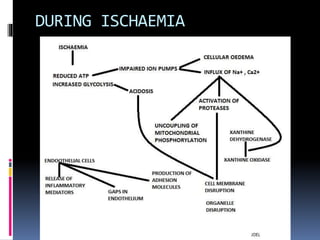
DURING ISCHAEMIA
DURING ISCHAEMIA
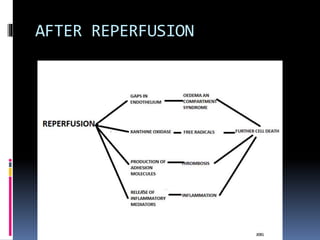
AFTER REPERFUSION
AFTER REPERFUSION
MANAGEMENT OF REPERFUSION EFFECTS
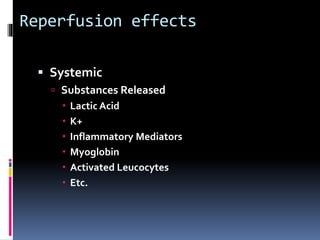
Reperfusion effects
 Systemic
 Substances Released
 Lactic Acid
 K+
 Inflammatory Mediators
 Myoglobin
 Activated Leucocytes
 Etc.
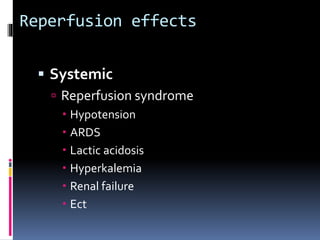
Reperfusion effects
 Systemic
 Reperfusion syndrome
 Hypotension
 ARDS
 Lactic acidosis
 Hyperkalemia
 Renal failure
 Ect
Management and prevention of
Reperfusion syndrome
 Cardiac – IV fluids and inotropes
 Respiratory – KeepO2
 Renal – hydration, Monitor IP/ OP, dialysis
 Correct electrolyte abnormalities – K+
 Continue mannitol for 48 hours
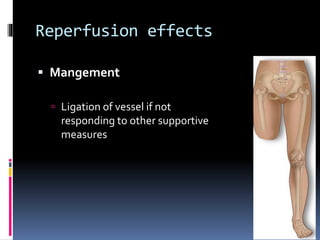
Reperfusion effects
 Mangement
 Ligation of vessel if not
responding to other supportive
measures
Compartment syndrome
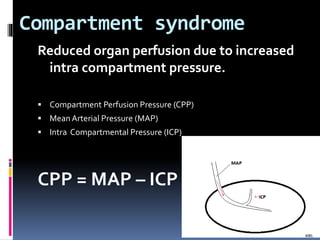
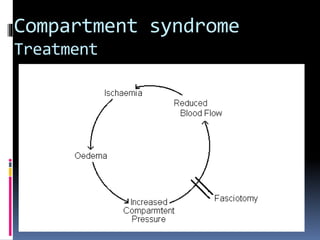
Reduced organ perfusion due to increased
intra compartment pressure.
 Compartment Perfusion Pressure (CPP)
 MeanArterial Pressure (MAP)
 Intra Compartmental Pressure (ICP)
CPP = MAP – ICP
Compartment syndrome
Causes
 Trauma (muscle contusion)
 Haematoma
 Reperfusion
 Intracompartmental extravasation of fluids
 Tight bandage, cast
Compartment syndrome
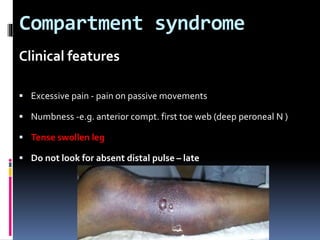
Clinical features
 Excessive pain - pain on passive movements
 Numbness -e.g. anterior compt. first toe web (deep peroneal N )
 Tense swollen leg
 Do not look for absent distal pulse – late
Compartment syndrome
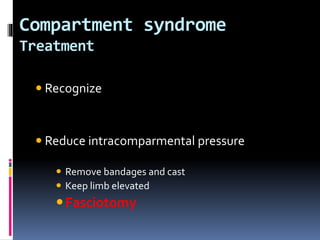
Treatment
 Recognize
 Reduce intracomparmental pressure
 Remove bandages and cast
 Keep limb elevated
Fasciotomy
Compartment syndrome
Treatment
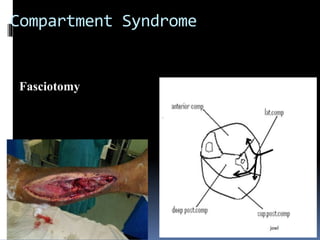
Compartment Syndrome
Fasciotomy
Volkmann ischaemic
contracture
Thank You

Acute limb ischaemia