Linking
Clinical
to
Basic sciences
Joel Arudchelvam
Consultant Vascular and Transplant Surgeon, National Hospital of Sri Lanka.
Senior lecturer, Department of Surgery, faculty of medicine, University of
Colombo.
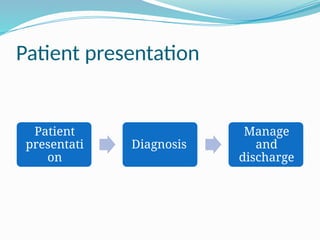
Patient presentation
Patient
presentati
on
Diagnosis
Manage
and
discharge
Integration of basic sciences -
why
 Student learn the relevance
 Understanding and retention of knowledge
 Stimulates interest
 Also improves the communication and integration
into the clinical team
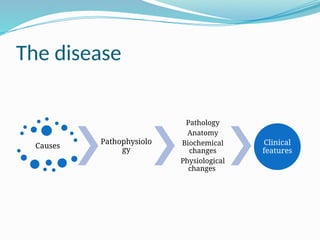
The disease
Causes
Pathophysiolo
gy
Pathology
Anatomy
Biochemical
changes
Physiological
changes
Clinical
features
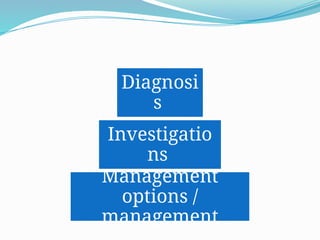
Diagnosi
s
Investigatio
ns
Management
options /
management
Basic sciences
Anatomy
Physiology
Pathology
Biochemistry
Diagnosis
Anatomy
Pathology
Aetiology
Complications / stage
Disability
Clinical – How to apply
 Trauma
 Varicose veins – Surgery
 Aortic aneurysms
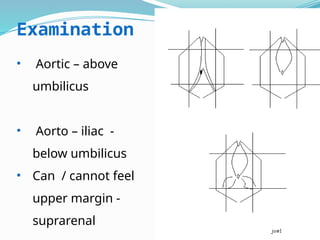
Examination
• Aortic – above
umbilicus
• Aorto – iliac -
below umbilicus
• Can / cannot feel
upper margin -
suprarenal
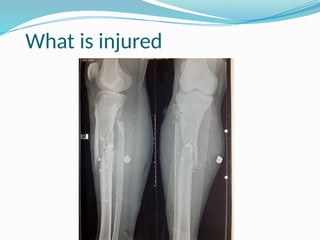
What is injured
Physiology
Aortic clamping
De clamping
Reperfusion cellular
mechanisms
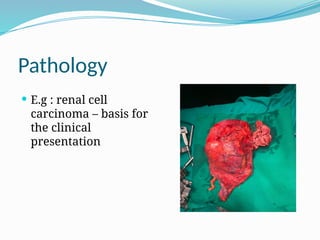
Pathology
 E.g : renal cell
carcinoma – basis for
the clinical
presentation
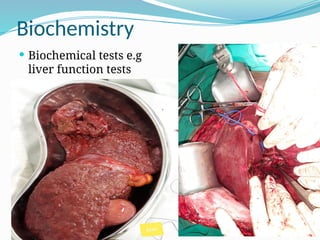
Biochemistry
 Biochemical tests e.g
liver function tests
Conclusions
 Understanding and applying the basic scientific
basis of the patient presentation and
management is important

Linking clinical to basic sciences, Joel Arudchelvam.pptx