Acute dermal toxicity
By, Syed Baseeruddin Alvi
M.Pharm- pharmacology
Roll.no: 09
INDEX
• Introduction
• General terminology

• Principal and test procedure
• Experimental animals
• Test conditions

• Clinical examination

• Data and reporting
INTRODUCTION
• Dermal toxicity involves the assessment and

evaluation of the toxic characteristics of a
substance. It is useful where the exposure to
dermal route is likely.

• Data from an acute dermal toxicity study may
serve as a basis for classification and labelling.
•

It is an initial step in establishing a dosage

regimen in subchronic and other studies
General Terminology
• Acute dermal toxicity
• Dose
• The LD50

• Dosage
• Dose-response

• Dose-effect
PRINCIPLE OF THE TEST
• The test substance is applied to the skin in
graduated

doses

to

several

groups

of

experimental animals.
• Animals which die during the test are necropsied
and surviving animals are also done the same at
the conclusion..
• Animals showing severe and enduring signs of
distress and pain may need to be humanely
killed.
THE TEST PROCEDURE
• Healthy young adult animals are acclimatised to the
laboratory conditions for at least 5 days prior to the
test.
• 24 hours before the test fur should be removed
• Not less than 10% of the body surface area should
be clear & weight of the animal should be taken into
account
• A suitable vehicle to ensure good contact with the
skin. The influence of the vehicle should also be
considered.
Experimental a n i m a l s
• Selection of species
• Number and sex
• Housing and feeding conditions
 Test c o n d i t i o n s:

• Dose levels
• Limit test
• Observation period
• Clinical examination & pathology
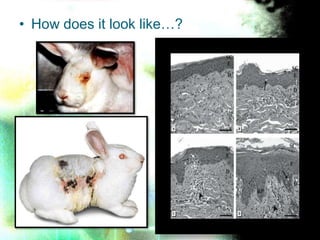
• How does it look like…?
DATA AND REPORTING
• Treatment of results

• Test report
• Interpretation of the results
Acute dermal toxicity

Acute dermal toxicity

  • 1.
    Acute dermal toxicity By,Syed Baseeruddin Alvi M.Pharm- pharmacology Roll.no: 09
  • 2.
    INDEX • Introduction • Generalterminology • Principal and test procedure • Experimental animals • Test conditions • Clinical examination • Data and reporting
  • 3.
    INTRODUCTION • Dermal toxicityinvolves the assessment and evaluation of the toxic characteristics of a substance. It is useful where the exposure to dermal route is likely. • Data from an acute dermal toxicity study may serve as a basis for classification and labelling. • It is an initial step in establishing a dosage regimen in subchronic and other studies
  • 4.
    General Terminology • Acutedermal toxicity • Dose • The LD50 • Dosage • Dose-response • Dose-effect
  • 5.
    PRINCIPLE OF THETEST • The test substance is applied to the skin in graduated doses to several groups of experimental animals. • Animals which die during the test are necropsied and surviving animals are also done the same at the conclusion.. • Animals showing severe and enduring signs of distress and pain may need to be humanely killed.
  • 6.
    THE TEST PROCEDURE •Healthy young adult animals are acclimatised to the laboratory conditions for at least 5 days prior to the test. • 24 hours before the test fur should be removed • Not less than 10% of the body surface area should be clear & weight of the animal should be taken into account • A suitable vehicle to ensure good contact with the skin. The influence of the vehicle should also be considered.
  • 7.
    Experimental a ni m a l s • Selection of species • Number and sex • Housing and feeding conditions  Test c o n d i t i o n s: • Dose levels • Limit test • Observation period • Clinical examination & pathology
  • 8.
    • How doesit look like…?
  • 9.
    DATA AND REPORTING •Treatment of results • Test report • Interpretation of the results