IND Enabling Studies
Presented by: Shikha Choudhary
M.pharm (Pharmacology)
1904650002
CONTENTS
āž¢Definition of IND
āž¢Importance of IND
āž¢Industry perspective
āž¢Studies needed for IND submission
āž¢Safety pharmacology studies-origin, concepts and importance
āž¢Tier1- CVS, CNS and respiratory safety pharmacology, HERG Assay
āž¢Tier2- GI, renal and other studies
shikhachoudhary901@gmail.com
2
DEFINITION OF IND:
• An IND is a submission to the food and drug administration (FDA) requesting permission to
initiate a clinical study of a new drug product on humans.
• The federal food , drug and cosmetic act requires that drugs have an approved marketing
application before they can be shipped in interstate commerce.
• The IND application allows a company to initiate and conduct clinical studies for their new drug
products.
• The IND application provides the FDA with the data necessary to decide whether the new drug
and the proposed clinical trial pose a reasonable risk to the human subjects participating in the
study.
shikhachoudhary901@gmail.com
3
WHEN DO WE NEED AN IND :
• An IND is required any time when we
want to conduct a clinical trial of an
unapproved drug.
• An IND would be required to conduct a
clinical trail if the drug is :
• A new chemical entity , not approved for
the indication under investigation in a new
dosage form.
• Being administered at a new dosage level.
• In combination with another drug and the
combination is not approved.
WHEN DO WE DON’T NEED AN IND :
• An IND is not required to conduct a study if the
drug :
• Is not intended for human subjects , but is
intended for in vivo testing or lab research
animals (non clinical studies).
• Is an approved drug and the study is within its
approved indication for use.
shikhachoudhary901@gmail.com
4
TYPES OF IND STUDIES
• All clinical studies where a new drug is administered to human subjects , regardless of whether
the drug will be commercially developed ,require an IND.
1. Investigator IND is submitted by a physician who both initiates and conducts an investigation,
and under whose immediate direction the investigational drug is administered or dispensed.
2. Emergency IND all the FDA to authorize use of an experimental drug in an emergency
situation.
3. Treatment IND is submitted for experimental drugs showing promise in clinical testing for
serious or immediately life-threatening conditions while the final clinical work is conducted
and the FDA review takes place.
shikhachoudhary901@gmail.com
5
CLASSIFICATION OF IND
• Commercial : permits sponsor to collect data on clinical safety and effectiveness needed for
application for marketing in the form of NDA.
• Research (non-commercial) :permits the sponsor to use drug in research to obtain advanced
scientific knowledge of new drug o no plan to market the product.
shikhachoudhary901@gmail.com
6
IMPORTANCE OF IND
āž¢ Helps in the result of successful preclinical development program.
āž¢ Ind is also the vehicle through which a sponsor advice the next stage of drug development i.e. Clinical
trial.
āž¢ The preclinical study, helps the sponsor’s primary goal to determine that the product is reasonably safe
for initial use in human.
āž¢ It is important in the commercial development of compounds if it exhibit pharmacological activity.
āž¢ It is important in assuring the marketing of a new drug and responsibility for compliance of sponsor.
āž¢ It is important for the company to initiate and conduct the clinical studies of their new product.
āž¢ It secure the safety and effectiveness of the clinical trial subjects.
āž¢ IND can be alternative in a life threatening situation when no standard acceptable therapy is available.
āž¢ It gives the indication of new drugs.
āž¢ Pharmacology and toxicology information of new drugs.
shikhachoudhary901@gmail.com
7
Studies Needed For IND Submission
The IND application must contain information in three broad areas: animal pharmacology and
toxicology studies - preclinical data to permit an assessment as to whether the product is reasonably
safe for initial testing in humans. Also included are any previous experience with the drug in
humans (often foreign use).
Application content: The IND application must contain information in three broad areas:
• Animal pharmacology and toxicology studies – preclinical data to permit an
assessment as to whether the product is reasonably safe for initial testing in humans. Also
included are any previous experience with the drug in humans (often foreign use).
shikhachoudhary901@gmail.com
8
• Chemistry and manufacturing information studies – information pertaining to
the chemical composition, manufacturing methods, stability, and controls used for
manufacturing the drug substance and the drug product. The chemical stability and activity of
the product must also have been tested. This information is assessed to ensure that the company
can adequately produce and supply consistent and active batches of the drug.
• Clinical Protocols and Investigator Information studies – Detailed protocols for
proposed clinical studies to assess whether the initial-phase trials will expose the subjects to
unnecessary risks. Information on the qualifications of clinical investigators—professionals
(generally physicians).
shikhachoudhary901@gmail.com
9
IND (Investigational New Drug Application)
• An investigation new drug application (IND) is a submission to food & drug administration
(FDA) requesting permission to initiate the study of new drug product
• FDAs role in the development of a new drug begins when the drug's sponsor has screened the
new molecule for pharmacological activity and acute toxicity potential in animals, wants to test
its diagnostic or therapeutic potential in humans.
• The molecule changes in legal status under the federal food, drug, and cosmetic act and becomes
a new drug subject to specific requirements of the drug regulatory system.
• Drug is to be the subjected to an approved marketing application before it is transported or
distributed across state lines.
• IND- notice of claimed investigational exemption for a new drug must be filed with regulatory
body.
shikhachoudhary901@gmail.com
10
REQUIREMENTS FOR IND
• A sponsor shall submit an IND to FDA who intends to conduct a clinical investigation.
• Investigation is not supposed to begin without prior written authorization of FDA.
Phases Of Investigation
• Phase 1 - ADME (20- 80) healthy subjects
• Phase 2 – effectiveness in particular indication (several hundred patients)
• Phase 3 – safety and effectiveness ( 100- 1000) subjects.
General Principle Of IND
• To assure safety and rights of the subject.
• To assure the scientific quality of investigation will yield data capable of meeting statutory
standards for marketing approval
• The central focus should be on general investigational plan & protocol which should be supported
by additional information
• Including animal toxicological studies
shikhachoudhary901@gmail.com
11
IND CONTENT & FORMAT
1. Cover sheet (FORM FDA 1571)
2. Table of contents
3. Introductory statement and a general investigational plan
4. Investigators brochure
5. Protocols
6. Chemistry , manufacturing and control information
7. Pharmacology and toxicology information
8. Previous human experience with the investigational drug
9. Other relevant information like no. of IND submissions, no. of copies to be submitted (1 + 2)
10. Protocol amendments, any changes in the protocol.
shikhachoudhary901@gmail.com
12
2.TABLE OF CONTENTS
TABLE OF CONTENTS –
• Comprehensive listing of contents of IND application broken in volumes & page number.
• Toc should include details of sections, appendices, attachments, reports & other reference material
• A well drafted TOC will facilitate the task of review & decrease the review time.
3. GENERAL INVESTIGATIONAL PLAN –
A brief 3 to 4 pages note on – the investigational product
• Sponsors 'investigational plan
• Goal of the section is to –
• To provide brief description of the drug
• Layout development plan of the drug
shikhachoudhary901@gmail.com
13
4. INVESTIGATORS BROCHURE
• Key document provided to each investigator & IRB at each of the clinical site.
• Includes-
1. All about the investigational drug
2. IB is a living document & must be updated by the sponsor.
5.PROTOCOLS
• Describes how the clinical trial would be conducted.
• It describes –
• the objective of the study
• The trial design
• How subjects would be selected?
• How the trail is to be conducted?
• All about the how the study would be conducted?
shikhachoudhary901@gmail.com
14
6. CHEMISTRY , MANUFACTURING AND CONTROL INFORMATION
• CMC information-
• Sufficient detail on QUALITY, IDE
• NITY, PURITY & POTENCY of the drug product.
• Manufactured in conformance with cGMP.
• CMC section includes the following –
1. Introduction CMC
2. Summary
3. Information of placebo, if any
4. Proposed clinical label
5. Categorical exclusion of any environmental assessment
shikhachoudhary901@gmail.com
15
7. PHARMACOLOGY AND TOXICOLOGY INFORMATION
• Pharmacology & toxicology data.
• Non-clinical safety data that sponsor generated to prove that the IP is safe for clinical study.
• The amount & type of data depends on class of new drug.
• Duration of proposed clinical trial patient population that will be exposed during the trial.
8. PREVIOUS HUMAN EXPERIENCE WITH THE INVESTIGATIONAL DRUG
• Integrated summary report of any human studies conducted on the investigational drug.
• Relevant to the safety of the investigations to be done – pk studies, pd studies.
• Observed adverse event profile.
shikhachoudhary901@gmail.com
16
9. OTHER RELEVANT INFORMATION LIKE NO. OF IND SUBMISSIONS-
• No of copies to be submitted (1 + 2)
• ADDITIONAL INFORMATION – special topics
• Drug dependence & abuse potential radioactive drugs paediatric population & other information.
Other relevant information –
• Information specifically requested by FDA.
• Financial disclosure information from each investigator & sub investigator.
• Drug master file ( DMF)
• Reports or journal articles.
• The IND application is always submitted in 1+ 2 format i.e. 1 original & 2 additional copies of each
application.
17
IND APPLICATION PROCESS
EARLY CONSULTATION
• Sponsors may request to meet with FDA reviewing
• Officials early in the drug development process to review and reach agreement on the design of necessary
preclinical and clinical studies.
Pre-investigational new drug (IND) meetings:
• Prior to the submission of the initial IND, the sponsor may request a meeting with FDA-reviewing
officials.
• The primary purpose of this meeting is to review and reach agreement on the design of animal studies
needed to initiate human testing.
• The meeting may also provide an opportunity for discussing the scope and design of phase 1 testing, plans
for studying the drug product in paediatric populations, and the best approach for presentation and
formatting of data in the IND
18
END-OF-PHASE 1 MEETINGS
• When data from phase 1 clinical testing are available, the sponsor may again request a meeting with FDA
reviewing officials.
• The primary purpose of this meeting is to review and reach agreement on the design of phase 2 controlled
clinical trials, with the goal that such testing will be adequate to provide sufficient data on the drug’s safety and
effectiveness to support a decision on its approvability for marketing, and to discuss and timing of studies of
the drug in paediatric the need for, as well as the design patients.
END OF PHASE 2 MEETINGS:
Is to determine the safety of proceedings to phase-3
• Once the IND is stamped as received , it is sent to CDER for review.
• It is further categorically divided into different sections –
• Medical
• Chemistry
• Pharmacology / toxicology
• Statistics 19
FDA’S IND REVIEW PROCESS
• SAFETY REVIEW:
• Following review of an initial IND submission, CDER has 30 calendar days in which to decide if
a clinical hold is necessary (i.e., If patients would be at an unacceptable risk or if CDER doesn't
have the data to make such a determination).
• Generally, drug review divisions do not contact the sponsor if no concerns arise with drug safety
and the proposed clinical trials.
• If the sponsor hears nothing from CDER, then on day 31 after submission of the IND, the study
may proceed as submitted.
20
CLINICAL HOLD DECISION
• A clinical hold is the mechanism that CDER uses when it does not believe, or cannot confirm,
that the study can be conducted without unreasonable risk to the subjects/patients.
• If this occurs, the centre will contact the sponsor within the 30-day initial review period to stop
the clinical trial. CDER may either delay the start of an early-phase trial on the basis of
information submitted in the IND, or stop an ongoing study based on a review of newly submitted
clinical protocols, safety reports, protocol amendments, or other information.
• When a clinical hold is issued, a sponsor must address the issue that is the basis of the hold before
the order is removed
Clinical hold
• A clinical hold can be –
• ā€œcomplete clinical holdā€ - a delay or suspension of all clinical work requested under IND
submission
• ā€œPartial clinical holdā€- a delay or suspension of only part of clinical work e.g. Part of protocol
21
NOTIFY SPONSOR
• Once a clinical hold is placed on a commercial IND, the sponsor will be notified immediately by
telephone by the division director.
• The division is required to send a letter within five working days following the telephone call.
• The letter should describe the reasons for the clinical hold, and must bear the signature of the
division director (or acting division director).
• The sponsor may then respond to CDER by sending an ā€œIND clinical hold response" letter to the
division. To expedite processing, the letter must be clearly identified as an "IND CLINICAL
HOLD RESPONSE" letter.
• The division then reviews the sponsor's response and decides within 30 days as to whether the
hold should be lifted.
• If the division does not reply to the clinical hold response within 30 calendar days, the division
director will telephone the sponsor and discuss what is being done to facilitate completion of the
review. 22
• If it is decided that the hold will not be lifted, the hold decision is automatically sent to the office
director for review.
• The office director must decide within 14 calendar days whether or not to sustain the division's
decision to maintain the clinical hold.
• If the decision is made to lift the hold, the division telephones the sponsor, informs them of the
decision, and sends a letter confirming that the hold has been lifted.
• The letter will be sent within 5 working days of the telephone call. However, the trial may begin
once the decision has been relayed to the sponsor by telephone.
23
SPONSOR NOTIFIED OF DEFICIENCIES
• If other deficiencies are found in an IND that the review division determines are not serious
enough to justify delaying clinical studies, the division may either telephone or forward a
deficiency letter to the sponsor.
• In either case, the division informs the sponsor that it may proceed with the planned clinical trials,
but that additional information is necessary to complete or correct the IND file, or that there are
issues that need to be addressed prior to a marketing application (NDA) submission.
24
SAFETY PHARMOCOLOGY STUDIES
• Safety pharmacology (SP) is an essential part of the drug development process that aims to identify and
predict adverse effects prior to clinical trials. SP studies are described in the international conference on
harmonisation (ich) s7a and s7b guidelines.
• The supplemental SP studies evaluate effects of a new chemical entity (NCE) at both anticipated
therapeutic and supra-therapeutic exposures on major organ systems. This outlines the current practices
and use of non-standard species, biomarkers, and combining toxicology. The core battery SP studies,
performed according to good laboratory practice (GLP) standards as per the ich guidelines, involves the
investigation of the major vital organ systems including :-
• Cardiovascular system (CVS)
• Central nervous system (CNS)
• Respiratory system
• Renal system
• Gastrointestinal system
25
OBJECTIVE OF SAFETY PHARMACOLOGY
• According to ICH S7A:-
• To identify undesirable pharmacodynamic properties of a substances.
• To evaluate adverse pharmacodynamic and pathophysiological effect of a substance .
• To investigate the mechanism of action of a adverse pharmacodynamic effect .
26
GENERAL CONSIDERATIONS IN SELECTION/DESIGN
ā–It will depended upon the specific properties of each test substance, the studies should be selected
and designed accordingly. The following factors should be considered:
1) effects related to the therapeutic class of the test substance, since the mechanism of action may
suggest specific adverse effects.
2) adverse effects associated with members of the chemical or therapeutic class, but independent of
the primary pharmacodynamic effects .
3) ligand binding or enzyme assay data suggesting a potential for adverse effects;
4) results from previous safety pharmacology studies, from secondary pharmacodynamic studies,
from toxicology studies, or from human use that warrant further investigation to establish and
characterize the relevance of these findings to potential adverse effects in humans.
27
USE OF IN VIVO AND IN VITRO STUDIES:
• Animal models as well as ex vivo and in vitro preparations can be used as test systems. Ex vivo
and in vitro systems can include, but are not limited to: isolated organs and tissues, cell cultures,
cellular fragments, subcellular organelles, receptors, ion channels, transporters and enzymes. In
vitro systems can be used in supportive studies (e.g., To obtain a profile of the activity of the
substance or to investigate the mechanism of effects observed in vivo).
28
SAMPLE SIZE AND USE OF CONTROLS
• The size of the groups should be sufficient to allow meaningful scientific interpretation of the
data generated.
• Thus, the number of animals or isolated preparations should be adequate to demonstrate or rule
out the presence of a biologically significant effect of the test substance.
• The size of the biological effect that is of concern for humans. Appropriate negative and positive
control groups should be included in the experimental design.
ROUTE OF ADMINISTRATION
• Exposure achieved similar to or greater than in humans
• If clinical use involves multiple routes, consider more than one route
• The expected clinical route of administration should be used when feasible.
29
DOSE LEVELS OR CONCENTRATIONS OF TEST SUBSTANCE
In vivo studies
• Safety pharmacology studies should be designed to define the dose-response relationship of the
adverse effect observed.
• The time course (e.g., Onset and duration of response) of the adverse effect should be investigated.
• Generally, the doses eliciting the adverse effect should be compared to the doses eliciting the primary
pharmacodynamic effect in the test species or the proposed therapeutic effect in humans.
In vitro studies:
• In vitro studies should be designed to establish a concentration-effect relationship.
• The range of concentrations used should be selected to increase the likelihood of detecting an
effect on the test system.
• The upper limit of this range may be influenced by physicochemical properties of the test
substance and other assay specific factors.
30
31
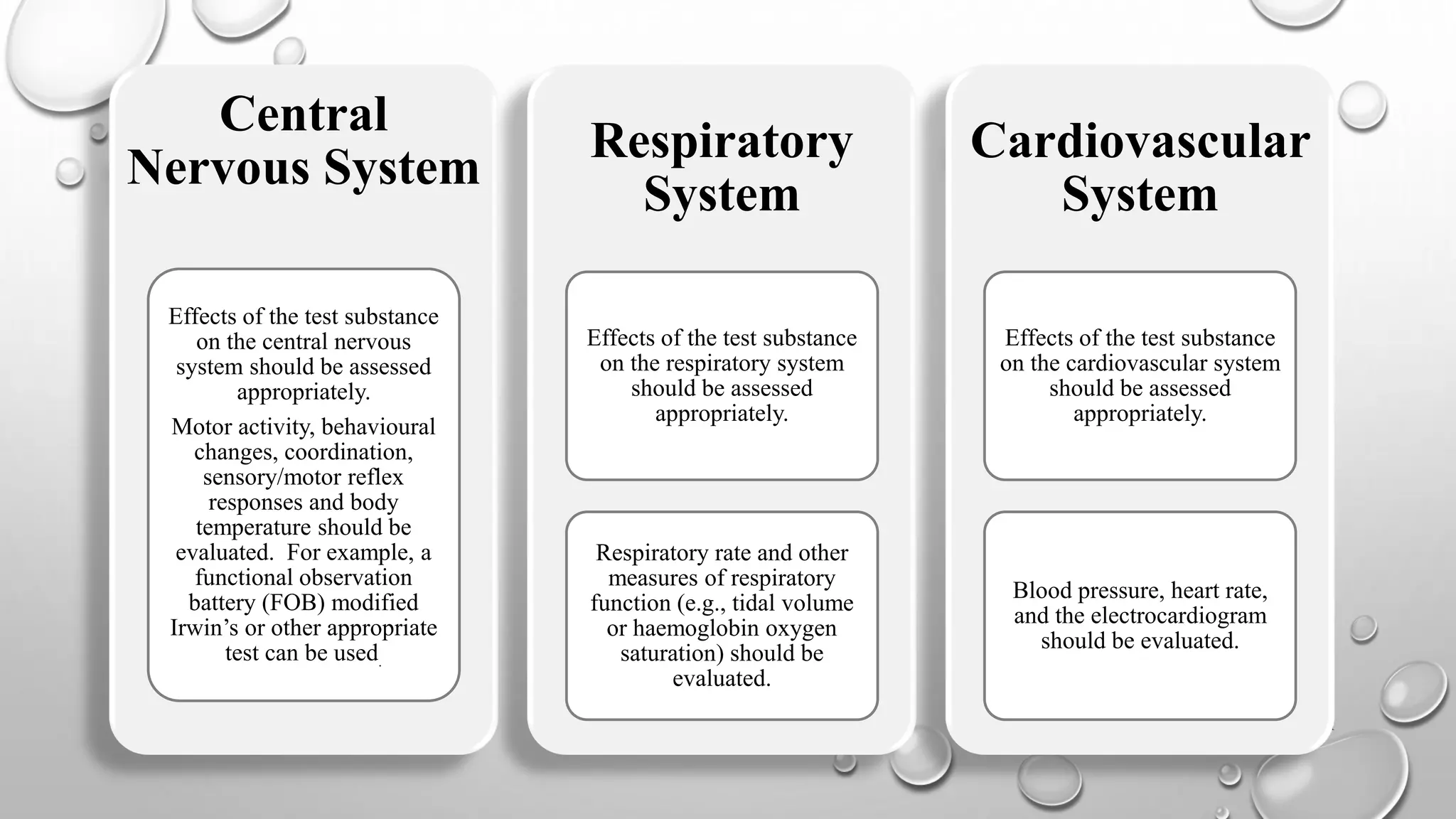
Central
Nervous System
Effects of the test substance
on the central nervous
system should be assessed
appropriately.
Motor activity, behavioural
changes, coordination,
sensory/motor reflex
responses and body
temperature should be
evaluated. For example, a
functional observation
battery (FOB) modified
Irwin’s or other appropriate
test can be used.
Respiratory
System
Effects of the test substance
on the respiratory system
should be assessed
appropriately.
Respiratory rate and other
measures of respiratory
function (e.g., tidal volume
or haemoglobin oxygen
saturation) should be
evaluated.
Cardiovascular
System
Effects of the test substance
on the cardiovascular system
should be assessed
appropriately.
Blood pressure, heart rate,
and the electrocardiogram
should be evaluated.
CENTRAL NERVOUS SYSTEM:
• Behavioural pharmacology
• Learning and memory
• Ligand-specific binding
• Neurochemistry
• Electrophysiology examinations, etc.
CARDIOVASCULAR SYSTEM
• Cardiac output
• Ventricular contractility
• Vascular resistance
• The effects of endogenous and/or exogenous substances
32
Respiratory system:
• Airway resistance
• Compliance
• Pulmonary arterial pressure
• Blood gases
• Blood pH, etc
33
Renal/Urinary
System
Effects of the test substance on renal
parameters should be assessed.
For example, urinary volume,
specific gravity, osmolality,
pH, fluid/electrolyte balance,
proteins, cytology, and blood
chemistry determinations such
as blood urea nitrogen,
creatinine and plasma proteins
can be used.
Gastrointestinal
System
Effects of the test substance on the
gastrointestinal system should be
assessed.
For example, gastric secretion,
gastrointestinal injury
potential, bile secretion, transit
time in vivo, gastric pH
measurement and pooling can
be used.
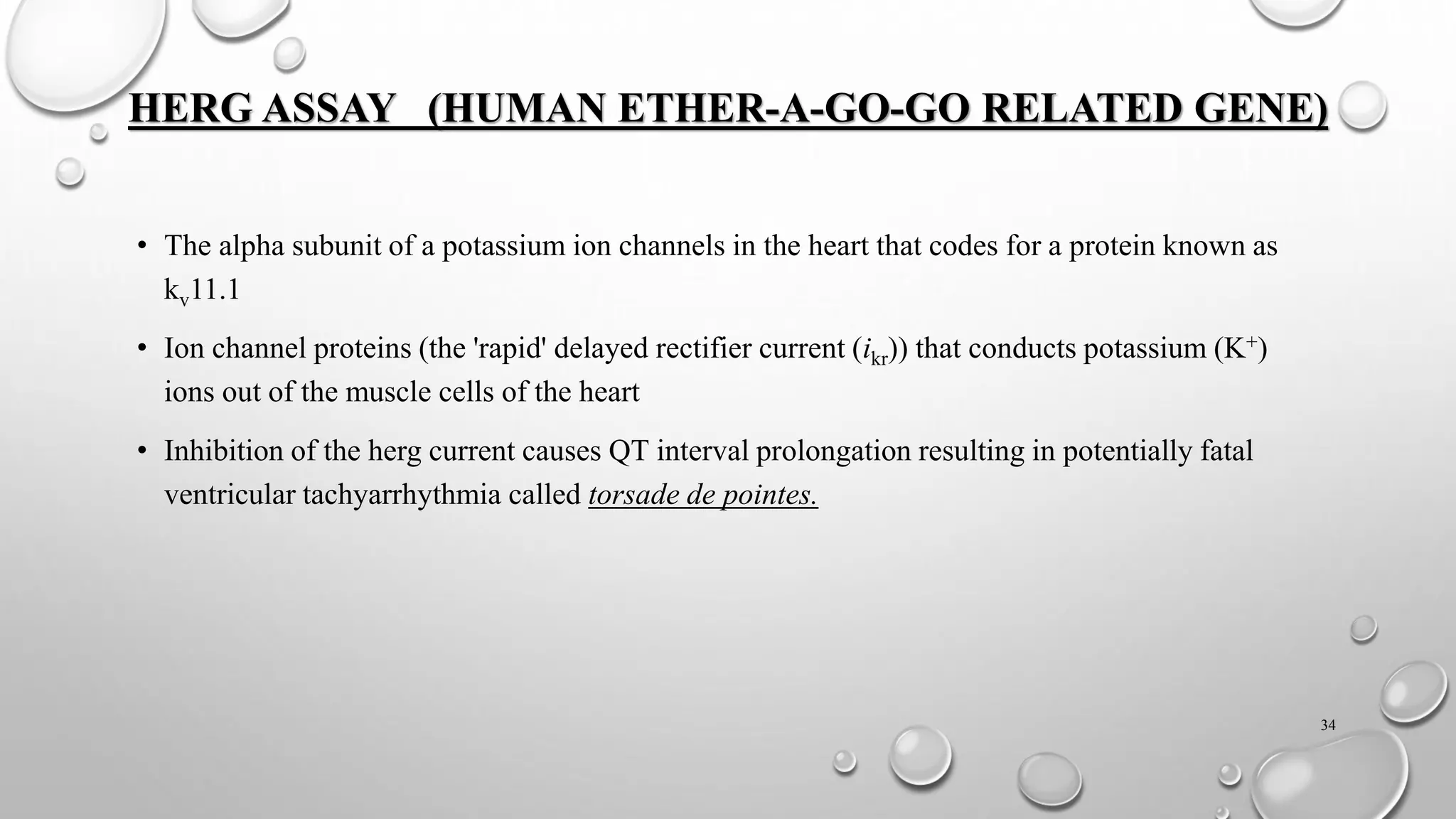
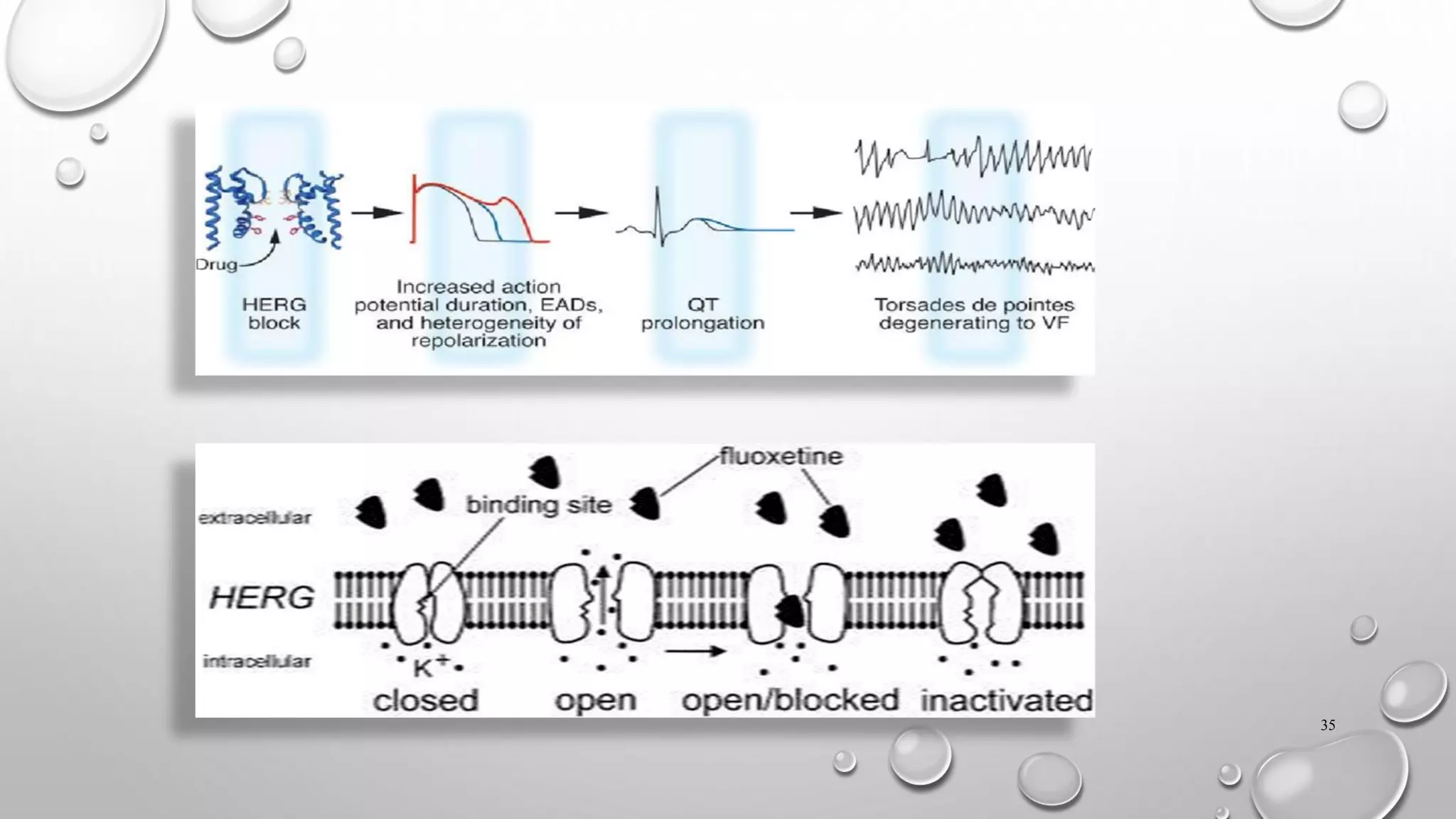
HERG ASSAY (HUMAN ETHER-A-GO-GO RELATED GENE)
• The alpha subunit of a potassium ion channels in the heart that codes for a protein known as
kv11.1
• Ion channel proteins (the 'rapid' delayed rectifier current (ikr)) that conducts potassium (K+)
ions out of the muscle cells of the heart
• Inhibition of the herg current causes QT interval prolongation resulting in potentially fatal
ventricular tachyarrhythmia called torsade de pointes.
34
35
THANK YOU
36

Ind enabling studies.

  • 1.
    IND Enabling Studies Presentedby: Shikha Choudhary M.pharm (Pharmacology) 1904650002
  • 2.
    CONTENTS āž¢Definition of IND āž¢Importanceof IND āž¢Industry perspective āž¢Studies needed for IND submission āž¢Safety pharmacology studies-origin, concepts and importance āž¢Tier1- CVS, CNS and respiratory safety pharmacology, HERG Assay āž¢Tier2- GI, renal and other studies shikhachoudhary901@gmail.com 2
  • 3.
    DEFINITION OF IND: •An IND is a submission to the food and drug administration (FDA) requesting permission to initiate a clinical study of a new drug product on humans. • The federal food , drug and cosmetic act requires that drugs have an approved marketing application before they can be shipped in interstate commerce. • The IND application allows a company to initiate and conduct clinical studies for their new drug products. • The IND application provides the FDA with the data necessary to decide whether the new drug and the proposed clinical trial pose a reasonable risk to the human subjects participating in the study. shikhachoudhary901@gmail.com 3
  • 4.
    WHEN DO WENEED AN IND : • An IND is required any time when we want to conduct a clinical trial of an unapproved drug. • An IND would be required to conduct a clinical trail if the drug is : • A new chemical entity , not approved for the indication under investigation in a new dosage form. • Being administered at a new dosage level. • In combination with another drug and the combination is not approved. WHEN DO WE DON’T NEED AN IND : • An IND is not required to conduct a study if the drug : • Is not intended for human subjects , but is intended for in vivo testing or lab research animals (non clinical studies). • Is an approved drug and the study is within its approved indication for use. shikhachoudhary901@gmail.com 4
  • 5.
    TYPES OF INDSTUDIES • All clinical studies where a new drug is administered to human subjects , regardless of whether the drug will be commercially developed ,require an IND. 1. Investigator IND is submitted by a physician who both initiates and conducts an investigation, and under whose immediate direction the investigational drug is administered or dispensed. 2. Emergency IND all the FDA to authorize use of an experimental drug in an emergency situation. 3. Treatment IND is submitted for experimental drugs showing promise in clinical testing for serious or immediately life-threatening conditions while the final clinical work is conducted and the FDA review takes place. shikhachoudhary901@gmail.com 5
  • 6.
    CLASSIFICATION OF IND •Commercial : permits sponsor to collect data on clinical safety and effectiveness needed for application for marketing in the form of NDA. • Research (non-commercial) :permits the sponsor to use drug in research to obtain advanced scientific knowledge of new drug o no plan to market the product. shikhachoudhary901@gmail.com 6
  • 7.
    IMPORTANCE OF IND āž¢Helps in the result of successful preclinical development program. āž¢ Ind is also the vehicle through which a sponsor advice the next stage of drug development i.e. Clinical trial. āž¢ The preclinical study, helps the sponsor’s primary goal to determine that the product is reasonably safe for initial use in human. āž¢ It is important in the commercial development of compounds if it exhibit pharmacological activity. āž¢ It is important in assuring the marketing of a new drug and responsibility for compliance of sponsor. āž¢ It is important for the company to initiate and conduct the clinical studies of their new product. āž¢ It secure the safety and effectiveness of the clinical trial subjects. āž¢ IND can be alternative in a life threatening situation when no standard acceptable therapy is available. āž¢ It gives the indication of new drugs. āž¢ Pharmacology and toxicology information of new drugs. shikhachoudhary901@gmail.com 7
  • 8.
    Studies Needed ForIND Submission The IND application must contain information in three broad areas: animal pharmacology and toxicology studies - preclinical data to permit an assessment as to whether the product is reasonably safe for initial testing in humans. Also included are any previous experience with the drug in humans (often foreign use). Application content: The IND application must contain information in three broad areas: • Animal pharmacology and toxicology studies – preclinical data to permit an assessment as to whether the product is reasonably safe for initial testing in humans. Also included are any previous experience with the drug in humans (often foreign use). shikhachoudhary901@gmail.com 8
  • 9.
    • Chemistry andmanufacturing information studies – information pertaining to the chemical composition, manufacturing methods, stability, and controls used for manufacturing the drug substance and the drug product. The chemical stability and activity of the product must also have been tested. This information is assessed to ensure that the company can adequately produce and supply consistent and active batches of the drug. • Clinical Protocols and Investigator Information studies – Detailed protocols for proposed clinical studies to assess whether the initial-phase trials will expose the subjects to unnecessary risks. Information on the qualifications of clinical investigators—professionals (generally physicians). shikhachoudhary901@gmail.com 9
  • 10.
    IND (Investigational NewDrug Application) • An investigation new drug application (IND) is a submission to food & drug administration (FDA) requesting permission to initiate the study of new drug product • FDAs role in the development of a new drug begins when the drug's sponsor has screened the new molecule for pharmacological activity and acute toxicity potential in animals, wants to test its diagnostic or therapeutic potential in humans. • The molecule changes in legal status under the federal food, drug, and cosmetic act and becomes a new drug subject to specific requirements of the drug regulatory system. • Drug is to be the subjected to an approved marketing application before it is transported or distributed across state lines. • IND- notice of claimed investigational exemption for a new drug must be filed with regulatory body. shikhachoudhary901@gmail.com 10
  • 11.
    REQUIREMENTS FOR IND •A sponsor shall submit an IND to FDA who intends to conduct a clinical investigation. • Investigation is not supposed to begin without prior written authorization of FDA. Phases Of Investigation • Phase 1 - ADME (20- 80) healthy subjects • Phase 2 – effectiveness in particular indication (several hundred patients) • Phase 3 – safety and effectiveness ( 100- 1000) subjects. General Principle Of IND • To assure safety and rights of the subject. • To assure the scientific quality of investigation will yield data capable of meeting statutory standards for marketing approval • The central focus should be on general investigational plan & protocol which should be supported by additional information • Including animal toxicological studies shikhachoudhary901@gmail.com 11
  • 12.
    IND CONTENT &FORMAT 1. Cover sheet (FORM FDA 1571) 2. Table of contents 3. Introductory statement and a general investigational plan 4. Investigators brochure 5. Protocols 6. Chemistry , manufacturing and control information 7. Pharmacology and toxicology information 8. Previous human experience with the investigational drug 9. Other relevant information like no. of IND submissions, no. of copies to be submitted (1 + 2) 10. Protocol amendments, any changes in the protocol. shikhachoudhary901@gmail.com 12
  • 13.
    2.TABLE OF CONTENTS TABLEOF CONTENTS – • Comprehensive listing of contents of IND application broken in volumes & page number. • Toc should include details of sections, appendices, attachments, reports & other reference material • A well drafted TOC will facilitate the task of review & decrease the review time. 3. GENERAL INVESTIGATIONAL PLAN – A brief 3 to 4 pages note on – the investigational product • Sponsors 'investigational plan • Goal of the section is to – • To provide brief description of the drug • Layout development plan of the drug shikhachoudhary901@gmail.com 13
  • 14.
    4. INVESTIGATORS BROCHURE •Key document provided to each investigator & IRB at each of the clinical site. • Includes- 1. All about the investigational drug 2. IB is a living document & must be updated by the sponsor. 5.PROTOCOLS • Describes how the clinical trial would be conducted. • It describes – • the objective of the study • The trial design • How subjects would be selected? • How the trail is to be conducted? • All about the how the study would be conducted? shikhachoudhary901@gmail.com 14
  • 15.
    6. CHEMISTRY ,MANUFACTURING AND CONTROL INFORMATION • CMC information- • Sufficient detail on QUALITY, IDE • NITY, PURITY & POTENCY of the drug product. • Manufactured in conformance with cGMP. • CMC section includes the following – 1. Introduction CMC 2. Summary 3. Information of placebo, if any 4. Proposed clinical label 5. Categorical exclusion of any environmental assessment shikhachoudhary901@gmail.com 15
  • 16.
    7. PHARMACOLOGY ANDTOXICOLOGY INFORMATION • Pharmacology & toxicology data. • Non-clinical safety data that sponsor generated to prove that the IP is safe for clinical study. • The amount & type of data depends on class of new drug. • Duration of proposed clinical trial patient population that will be exposed during the trial. 8. PREVIOUS HUMAN EXPERIENCE WITH THE INVESTIGATIONAL DRUG • Integrated summary report of any human studies conducted on the investigational drug. • Relevant to the safety of the investigations to be done – pk studies, pd studies. • Observed adverse event profile. shikhachoudhary901@gmail.com 16
  • 17.
    9. OTHER RELEVANTINFORMATION LIKE NO. OF IND SUBMISSIONS- • No of copies to be submitted (1 + 2) • ADDITIONAL INFORMATION – special topics • Drug dependence & abuse potential radioactive drugs paediatric population & other information. Other relevant information – • Information specifically requested by FDA. • Financial disclosure information from each investigator & sub investigator. • Drug master file ( DMF) • Reports or journal articles. • The IND application is always submitted in 1+ 2 format i.e. 1 original & 2 additional copies of each application. 17
  • 18.
    IND APPLICATION PROCESS EARLYCONSULTATION • Sponsors may request to meet with FDA reviewing • Officials early in the drug development process to review and reach agreement on the design of necessary preclinical and clinical studies. Pre-investigational new drug (IND) meetings: • Prior to the submission of the initial IND, the sponsor may request a meeting with FDA-reviewing officials. • The primary purpose of this meeting is to review and reach agreement on the design of animal studies needed to initiate human testing. • The meeting may also provide an opportunity for discussing the scope and design of phase 1 testing, plans for studying the drug product in paediatric populations, and the best approach for presentation and formatting of data in the IND 18
  • 19.
    END-OF-PHASE 1 MEETINGS •When data from phase 1 clinical testing are available, the sponsor may again request a meeting with FDA reviewing officials. • The primary purpose of this meeting is to review and reach agreement on the design of phase 2 controlled clinical trials, with the goal that such testing will be adequate to provide sufficient data on the drug’s safety and effectiveness to support a decision on its approvability for marketing, and to discuss and timing of studies of the drug in paediatric the need for, as well as the design patients. END OF PHASE 2 MEETINGS: Is to determine the safety of proceedings to phase-3 • Once the IND is stamped as received , it is sent to CDER for review. • It is further categorically divided into different sections – • Medical • Chemistry • Pharmacology / toxicology • Statistics 19
  • 20.
    FDA’S IND REVIEWPROCESS • SAFETY REVIEW: • Following review of an initial IND submission, CDER has 30 calendar days in which to decide if a clinical hold is necessary (i.e., If patients would be at an unacceptable risk or if CDER doesn't have the data to make such a determination). • Generally, drug review divisions do not contact the sponsor if no concerns arise with drug safety and the proposed clinical trials. • If the sponsor hears nothing from CDER, then on day 31 after submission of the IND, the study may proceed as submitted. 20
  • 21.
    CLINICAL HOLD DECISION •A clinical hold is the mechanism that CDER uses when it does not believe, or cannot confirm, that the study can be conducted without unreasonable risk to the subjects/patients. • If this occurs, the centre will contact the sponsor within the 30-day initial review period to stop the clinical trial. CDER may either delay the start of an early-phase trial on the basis of information submitted in the IND, or stop an ongoing study based on a review of newly submitted clinical protocols, safety reports, protocol amendments, or other information. • When a clinical hold is issued, a sponsor must address the issue that is the basis of the hold before the order is removed Clinical hold • A clinical hold can be – • ā€œcomplete clinical holdā€ - a delay or suspension of all clinical work requested under IND submission • ā€œPartial clinical holdā€- a delay or suspension of only part of clinical work e.g. Part of protocol 21
  • 22.
    NOTIFY SPONSOR • Oncea clinical hold is placed on a commercial IND, the sponsor will be notified immediately by telephone by the division director. • The division is required to send a letter within five working days following the telephone call. • The letter should describe the reasons for the clinical hold, and must bear the signature of the division director (or acting division director). • The sponsor may then respond to CDER by sending an ā€œIND clinical hold response" letter to the division. To expedite processing, the letter must be clearly identified as an "IND CLINICAL HOLD RESPONSE" letter. • The division then reviews the sponsor's response and decides within 30 days as to whether the hold should be lifted. • If the division does not reply to the clinical hold response within 30 calendar days, the division director will telephone the sponsor and discuss what is being done to facilitate completion of the review. 22
  • 23.
    • If itis decided that the hold will not be lifted, the hold decision is automatically sent to the office director for review. • The office director must decide within 14 calendar days whether or not to sustain the division's decision to maintain the clinical hold. • If the decision is made to lift the hold, the division telephones the sponsor, informs them of the decision, and sends a letter confirming that the hold has been lifted. • The letter will be sent within 5 working days of the telephone call. However, the trial may begin once the decision has been relayed to the sponsor by telephone. 23
  • 24.
    SPONSOR NOTIFIED OFDEFICIENCIES • If other deficiencies are found in an IND that the review division determines are not serious enough to justify delaying clinical studies, the division may either telephone or forward a deficiency letter to the sponsor. • In either case, the division informs the sponsor that it may proceed with the planned clinical trials, but that additional information is necessary to complete or correct the IND file, or that there are issues that need to be addressed prior to a marketing application (NDA) submission. 24
  • 25.
    SAFETY PHARMOCOLOGY STUDIES •Safety pharmacology (SP) is an essential part of the drug development process that aims to identify and predict adverse effects prior to clinical trials. SP studies are described in the international conference on harmonisation (ich) s7a and s7b guidelines. • The supplemental SP studies evaluate effects of a new chemical entity (NCE) at both anticipated therapeutic and supra-therapeutic exposures on major organ systems. This outlines the current practices and use of non-standard species, biomarkers, and combining toxicology. The core battery SP studies, performed according to good laboratory practice (GLP) standards as per the ich guidelines, involves the investigation of the major vital organ systems including :- • Cardiovascular system (CVS) • Central nervous system (CNS) • Respiratory system • Renal system • Gastrointestinal system 25
  • 26.
    OBJECTIVE OF SAFETYPHARMACOLOGY • According to ICH S7A:- • To identify undesirable pharmacodynamic properties of a substances. • To evaluate adverse pharmacodynamic and pathophysiological effect of a substance . • To investigate the mechanism of action of a adverse pharmacodynamic effect . 26
  • 27.
    GENERAL CONSIDERATIONS INSELECTION/DESIGN ā–It will depended upon the specific properties of each test substance, the studies should be selected and designed accordingly. The following factors should be considered: 1) effects related to the therapeutic class of the test substance, since the mechanism of action may suggest specific adverse effects. 2) adverse effects associated with members of the chemical or therapeutic class, but independent of the primary pharmacodynamic effects . 3) ligand binding or enzyme assay data suggesting a potential for adverse effects; 4) results from previous safety pharmacology studies, from secondary pharmacodynamic studies, from toxicology studies, or from human use that warrant further investigation to establish and characterize the relevance of these findings to potential adverse effects in humans. 27
  • 28.
    USE OF INVIVO AND IN VITRO STUDIES: • Animal models as well as ex vivo and in vitro preparations can be used as test systems. Ex vivo and in vitro systems can include, but are not limited to: isolated organs and tissues, cell cultures, cellular fragments, subcellular organelles, receptors, ion channels, transporters and enzymes. In vitro systems can be used in supportive studies (e.g., To obtain a profile of the activity of the substance or to investigate the mechanism of effects observed in vivo). 28
  • 29.
    SAMPLE SIZE ANDUSE OF CONTROLS • The size of the groups should be sufficient to allow meaningful scientific interpretation of the data generated. • Thus, the number of animals or isolated preparations should be adequate to demonstrate or rule out the presence of a biologically significant effect of the test substance. • The size of the biological effect that is of concern for humans. Appropriate negative and positive control groups should be included in the experimental design. ROUTE OF ADMINISTRATION • Exposure achieved similar to or greater than in humans • If clinical use involves multiple routes, consider more than one route • The expected clinical route of administration should be used when feasible. 29
  • 30.
    DOSE LEVELS ORCONCENTRATIONS OF TEST SUBSTANCE In vivo studies • Safety pharmacology studies should be designed to define the dose-response relationship of the adverse effect observed. • The time course (e.g., Onset and duration of response) of the adverse effect should be investigated. • Generally, the doses eliciting the adverse effect should be compared to the doses eliciting the primary pharmacodynamic effect in the test species or the proposed therapeutic effect in humans. In vitro studies: • In vitro studies should be designed to establish a concentration-effect relationship. • The range of concentrations used should be selected to increase the likelihood of detecting an effect on the test system. • The upper limit of this range may be influenced by physicochemical properties of the test substance and other assay specific factors. 30
  • 31.
    31 Central Nervous System Effects ofthe test substance on the central nervous system should be assessed appropriately. Motor activity, behavioural changes, coordination, sensory/motor reflex responses and body temperature should be evaluated. For example, a functional observation battery (FOB) modified Irwin’s or other appropriate test can be used. Respiratory System Effects of the test substance on the respiratory system should be assessed appropriately. Respiratory rate and other measures of respiratory function (e.g., tidal volume or haemoglobin oxygen saturation) should be evaluated. Cardiovascular System Effects of the test substance on the cardiovascular system should be assessed appropriately. Blood pressure, heart rate, and the electrocardiogram should be evaluated.
  • 32.
    CENTRAL NERVOUS SYSTEM: •Behavioural pharmacology • Learning and memory • Ligand-specific binding • Neurochemistry • Electrophysiology examinations, etc. CARDIOVASCULAR SYSTEM • Cardiac output • Ventricular contractility • Vascular resistance • The effects of endogenous and/or exogenous substances 32 Respiratory system: • Airway resistance • Compliance • Pulmonary arterial pressure • Blood gases • Blood pH, etc
  • 33.
    33 Renal/Urinary System Effects of thetest substance on renal parameters should be assessed. For example, urinary volume, specific gravity, osmolality, pH, fluid/electrolyte balance, proteins, cytology, and blood chemistry determinations such as blood urea nitrogen, creatinine and plasma proteins can be used. Gastrointestinal System Effects of the test substance on the gastrointestinal system should be assessed. For example, gastric secretion, gastrointestinal injury potential, bile secretion, transit time in vivo, gastric pH measurement and pooling can be used.
  • 34.
    HERG ASSAY (HUMANETHER-A-GO-GO RELATED GENE) • The alpha subunit of a potassium ion channels in the heart that codes for a protein known as kv11.1 • Ion channel proteins (the 'rapid' delayed rectifier current (ikr)) that conducts potassium (K+) ions out of the muscle cells of the heart • Inhibition of the herg current causes QT interval prolongation resulting in potentially fatal ventricular tachyarrhythmia called torsade de pointes. 34
  • 35.
  • 36.