OECD TG - 403: ACUTE INHALATIONAL
TOXICITY STUDIES
SUPERVISOR
DR. MAMTA F. SINGH
Professor,
School of Pharmaceutical
Sciences and Technology,
SBSU, Balawala, D.dun.
PREPARED BY
JYOTIRMAYA SILORI
M.Pharm Pharmacology
2nd Semester (2021-2023)
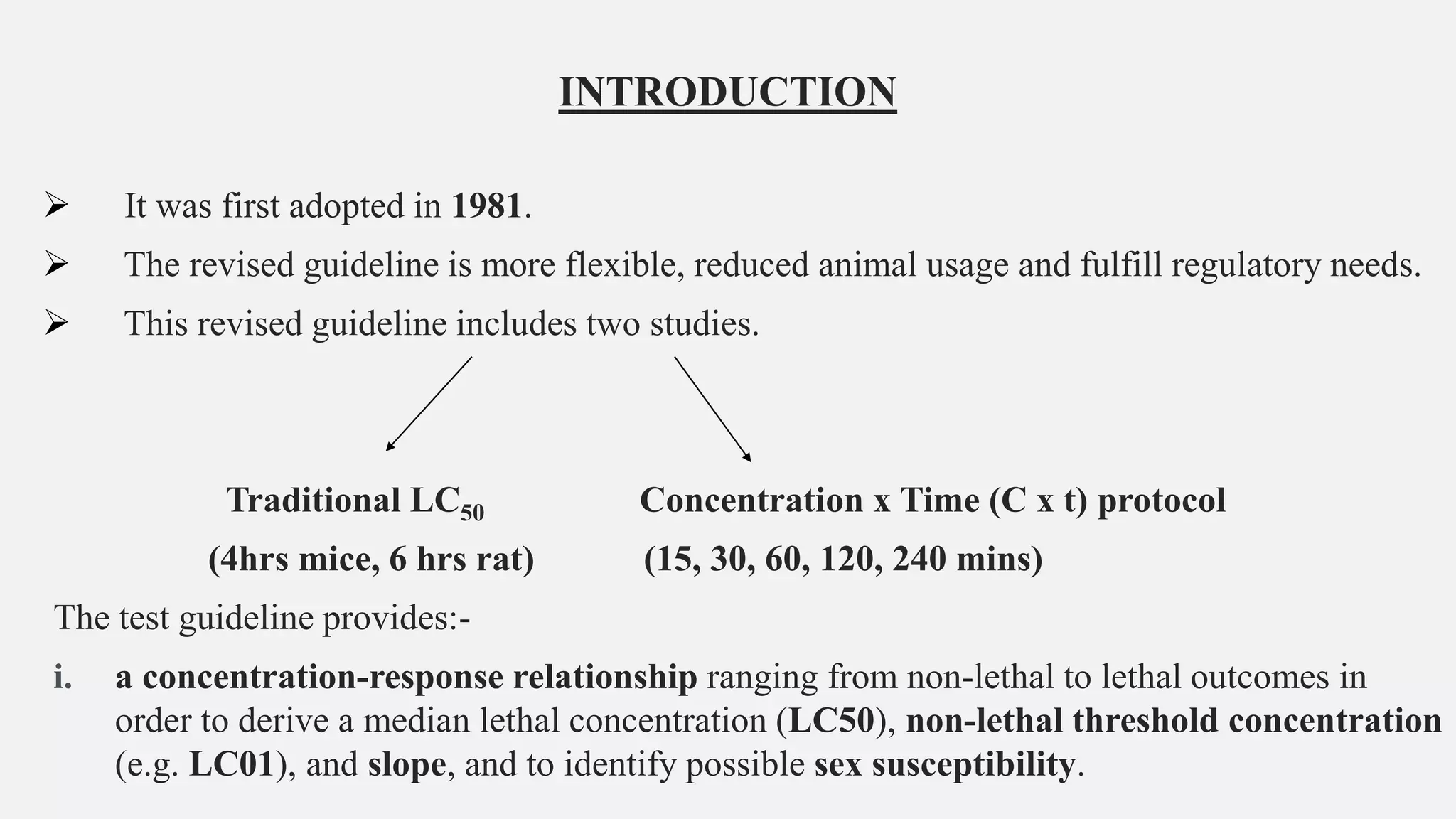
INTRODUCTION
 It was first adopted in 1981.
 The revised guideline is more flexible, reduced animal usage and fulfill regulatory needs.
 This revised guideline includes two studies.
Traditional LC50 Concentration x Time (C x t) protocol
(4hrs mice, 6 hrs rat) (15, 30, 60, 120, 240 mins)
The test guideline provides:-
i. a concentration-response relationship ranging from non-lethal to lethal outcomes in
order to derive a median lethal concentration (LC50), non-lethal threshold concentration
(e.g. LC01), and slope, and to identify possible sex susceptibility.
• (C x t) protocol is used when the testing of animals over multiple time duration is required.
(regulatory or scientific need).
• This Test Guideline enables test article characterization and quantitative risk assessment, and
allows test articles to be ranked and classified according to the United Nations (UN) Globally
Harmonized System of Classification and Labelling of Chemicals (GHS) (3).
INITIAL CONSIDERATIONS
• Before testing, all available information on the test article should be considered by the testing
laboratory in order to minimize animal usage.
• Information including test system, animal chemical properties etc, results of in vitro or in vivo
toxicity testing, anticipated uses and essential for human exposure should be known.
• Testing corrosive / irritating test articles at conc that are expected to cause severe pain /
distress should be avoided.
• Corrosive / irritating potential should be evaluated by human, animal experiences, in-vitro data,
pH, information from similar substances etc.
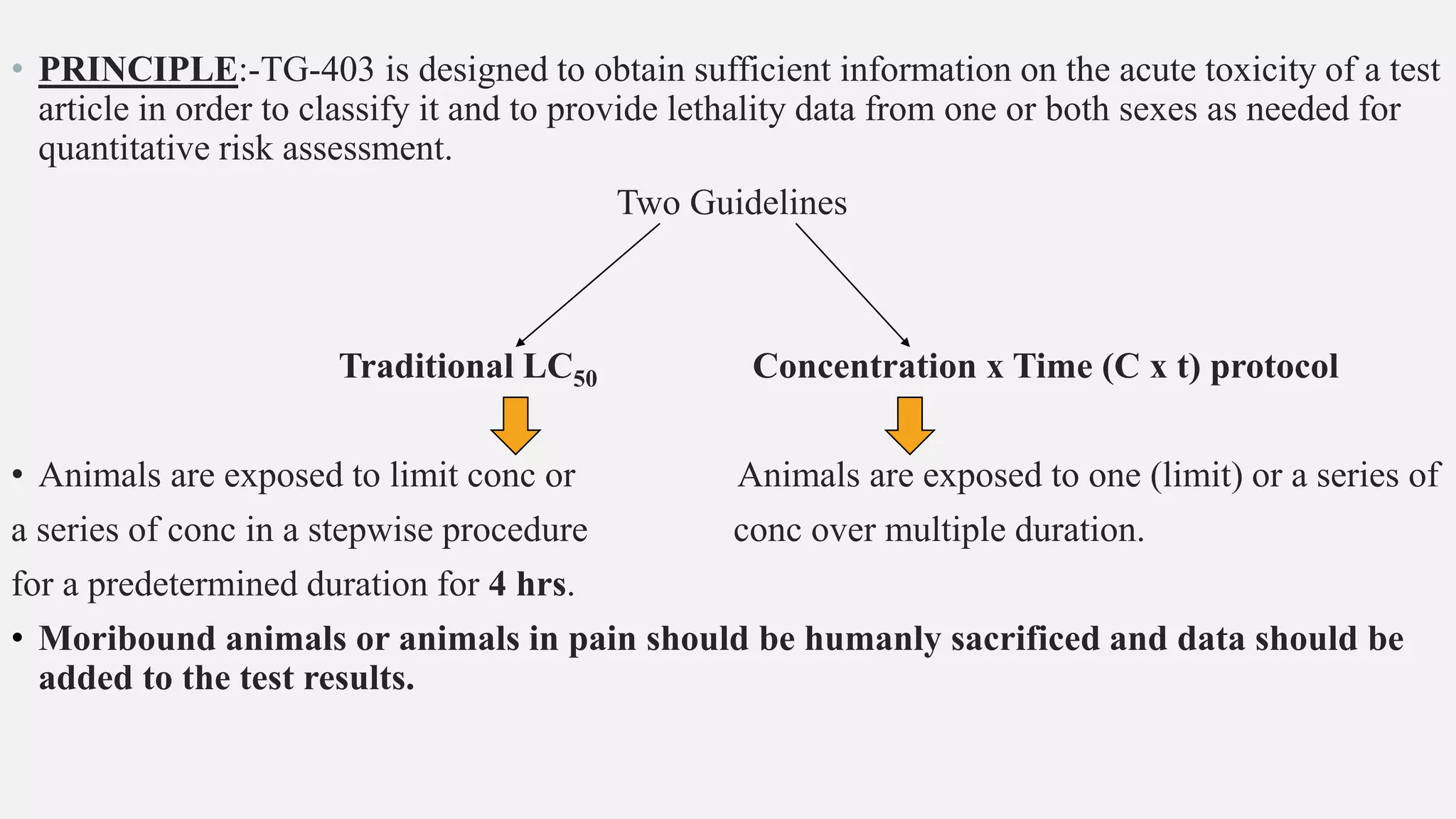
• PRINCIPLE:-TG-403 is designed to obtain sufficient information on the acute toxicity of a test
article in order to classify it and to provide lethality data from one or both sexes as needed for
quantitative risk assessment.
Two Guidelines
Traditional LC50 Concentration x Time (C x t) protocol
• Animals are exposed to limit conc or Animals are exposed to one (limit) or a series of
a series of conc in a stepwise procedure conc over multiple duration.
for a predetermined duration for 4 hrs.
• Moribound animals or animals in pain should be humanly sacrificed and data should be
added to the test results.
DESCRIPTION OF THE METHOD
1. Selection of animal species: Preferred species is the rat.
2. Preparation of animals: Females should be nulliparous and nonpregnant, 8 to 12 weeks of
age, and body weights should be within ±20% of the mean weight for each sex of any
previously exposed animals of the same age. animals are kept in their cages for at least 5 days
prior to the start of the test.
3. Animal husbandry
The temperature 22±3°C, RH range: 30 to 70%. Animals should generally be caged sex wise,
and no of animals in a group should be minimum one.
When animals are to be exposed nose-only, it may be necessary for them to be acclimated to
the restraining tubes. The restraining tubes should not impose undue physical, thermal, or
immobilization stress on the animals. Restraint may affect physiological endpoints such as
body temperature (hyperthermia) and/or respiratory minute volume.
04. Inhalation chambers
Aerosol-exposure to mice in the holding
chamber.
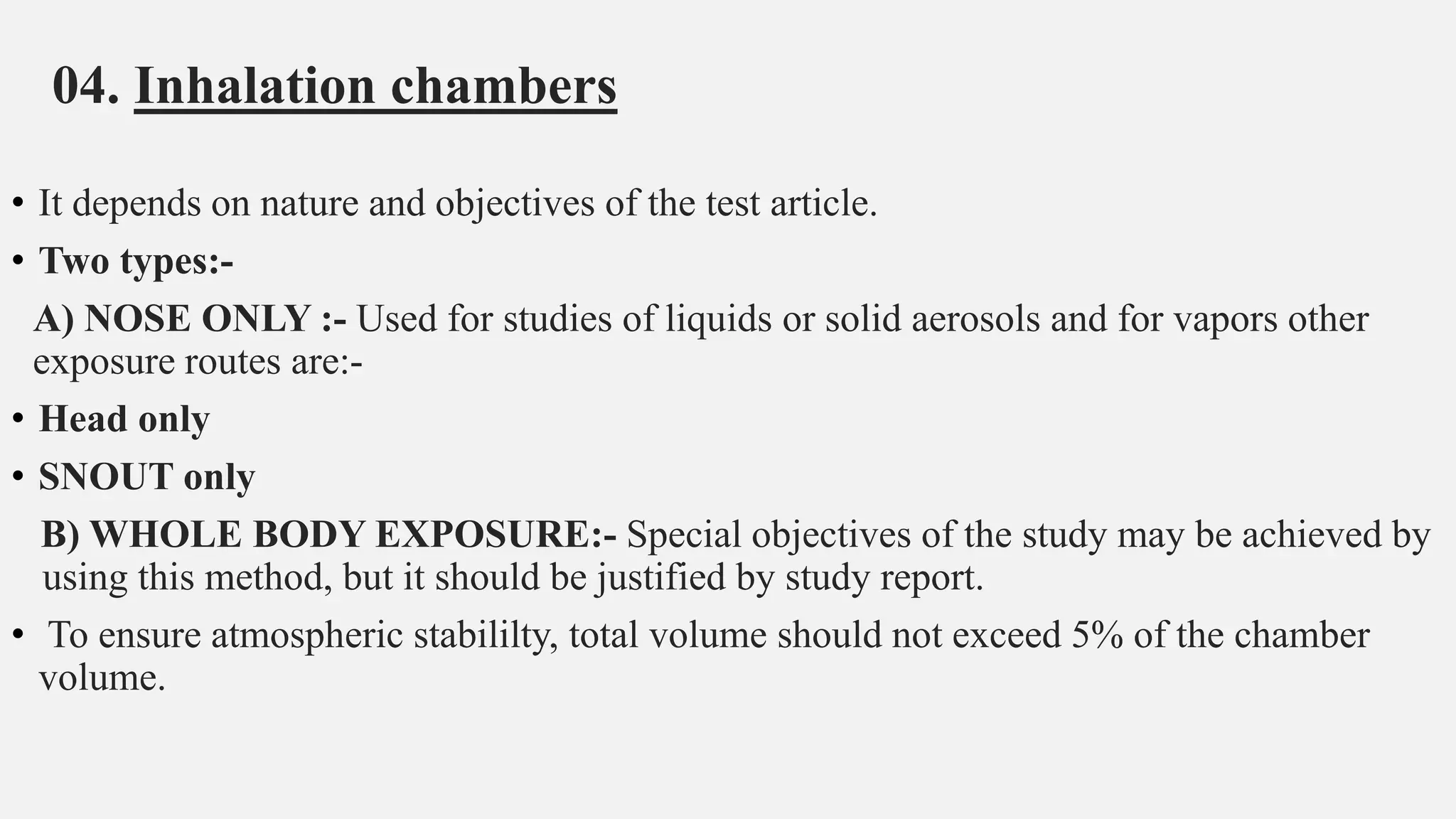
04. Inhalation chambers
• It depends on nature and objectives of the test article.
• Two types:-
A) NOSE ONLY :- Used for studies of liquids or solid aerosols and for vapors other
exposure routes are:-
• Head only
• SNOUT only
B) WHOLE BODY EXPOSURE:- Special objectives of the study may be achieved by
using this method, but it should be justified by study report.
• To ensure atmospheric stabililty, total volume should not exceed 5% of the chamber
volume.
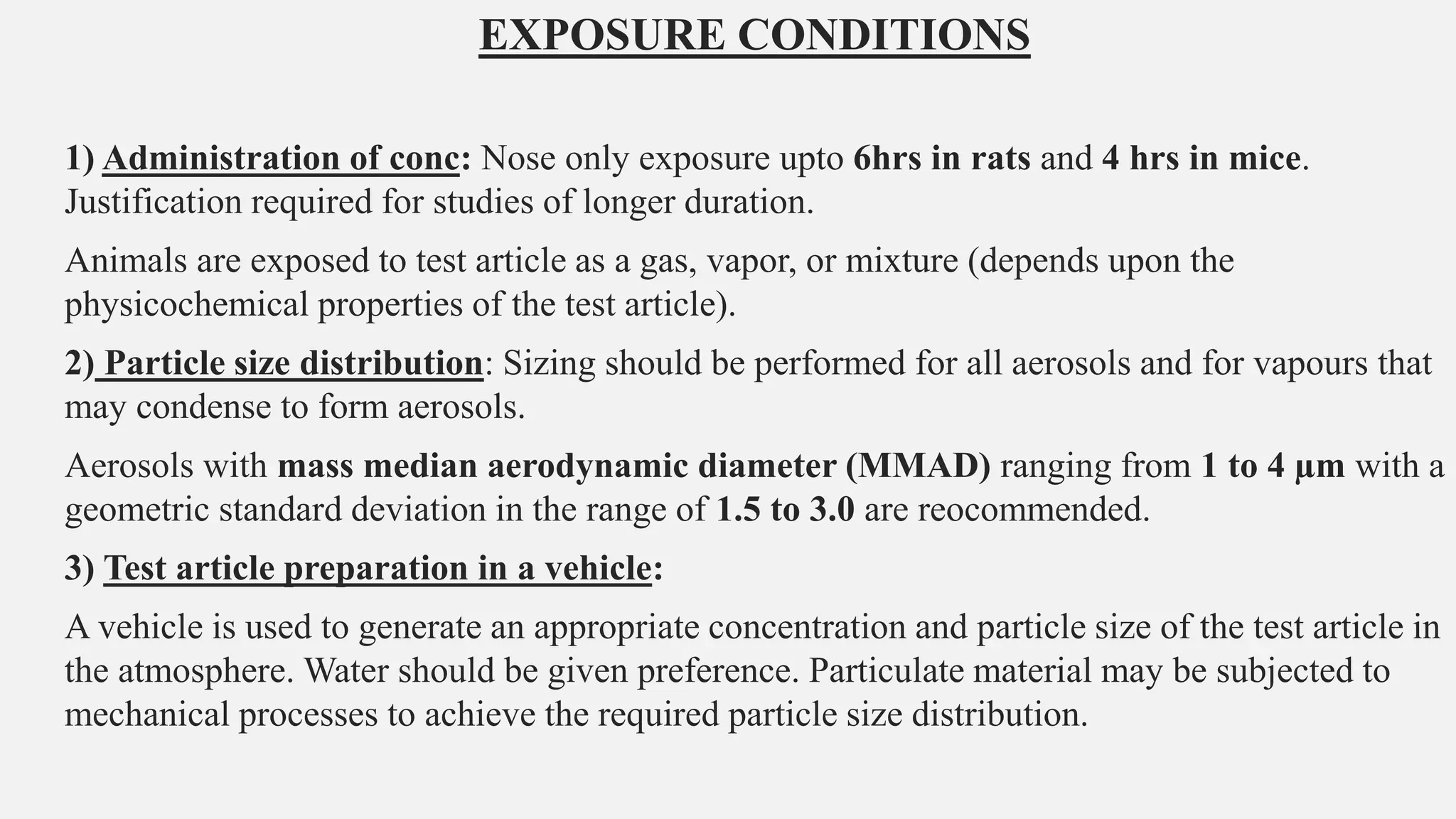
EXPOSURE CONDITIONS
1) Administration of conc: Nose only exposure upto 6hrs in rats and 4 hrs in mice.
Justification required for studies of longer duration.
Animals are exposed to test article as a gas, vapor, or mixture (depends upon the
physicochemical properties of the test article).
2) Particle size distribution: Sizing should be performed for all aerosols and for vapours that
may condense to form aerosols.
Aerosols with mass median aerodynamic diameter (MMAD) ranging from 1 to 4 µm with a
geometric standard deviation in the range of 1.5 to 3.0 are reocommended.
3) Test article preparation in a vehicle:
A vehicle is used to generate an appropriate concentration and particle size of the test article in
the atmosphere. Water should be given preference. Particulate material may be subjected to
mechanical processes to achieve the required particle size distribution.
4) Control animals: A concurrent negative (air) control group may or may not be used.
MONITORING OF EXPOSURE CONDITIONS
Administration of concentrations
1) Exposure NMT 4hrs in traditional protocol for mice and incase of rats 6hrs is also
justified.
(C x t) protocol: (15, 30, 60, 120, 240 mins)
2) Chamber airflow: The flow of air through the chamber should be carefully controlled,
continuously monitored, and recorded at least hourly during each exposure.
Oxygen concentration should be at least 19% and carbon dioxide concentration
should not exceed 1%.
3) Chamber temperature and relative humidity:
Temperature: 22±3°C
Monitored and recorded during 4 hr period of exposure.
Humidity: 30-70%
4) Whole body exposure: Animal recently exposed to whole body exposure should not be kept
with other animals going to be exposed.
5) Test article: Actual concentration: It is the concentration of the test article at the animals’
breathing zone in an inhalation chamber. Actual concentrations can be obtained by specific
methods (e.g. direct sampling, adsorptive or chemical reactive methods, and subsequent analytical
characterisation) or by non-specific methods such as gravimetric filter analysis.
The exposure atmosphere shall be held as constant as practicable and monitored continuously.
6) Test article: Particle size distribution:
The particle size distribution of aerosols should be determined at least twice during each 4 hour
exposure by using a cascade impactor.
PROCEDURE
• Two study types are described below: the Traditional protocol, and the C x t protocol.
• Both protocols may include a sighting study, a main study, and/or a limit test (Traditional
protocol) or testing at a limit concentration
• If one sex is known to be more susceptible, the study director may choose to perform
these studies using only the susceptible sex.
• If rodent species other than rats are exposed nose-only, maximum exposure durations
may be adjusted to minimise species-specific distress.
• Before commencing, all available data should be considered in order to minimize animal
usage.
• For example, data generated using TG 436 (4) may eliminate the need for a sighting
study, and may also demonstrate whether one sex is more susceptible [see GD 39 (2)].
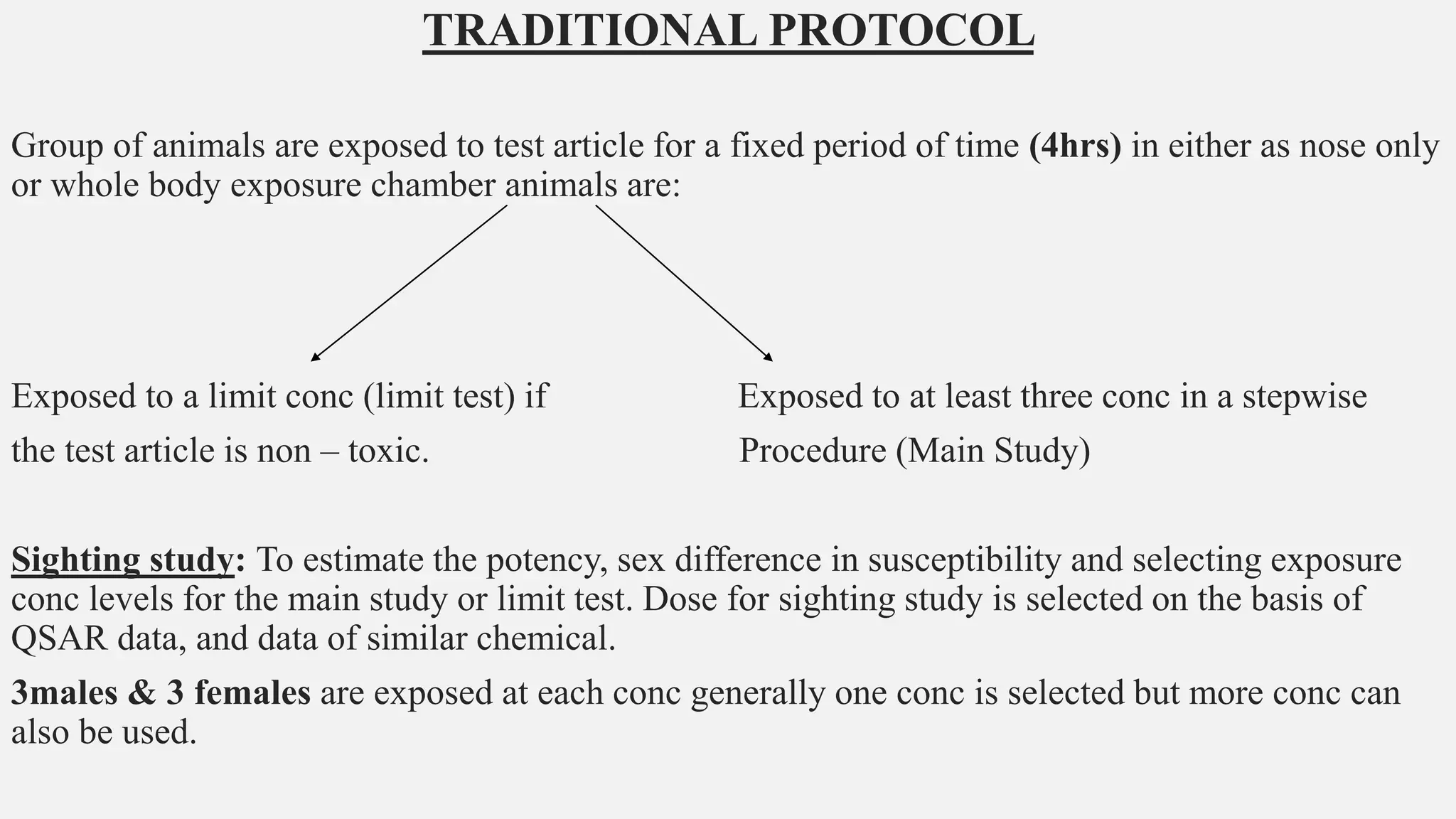
TRADITIONAL PROTOCOL
Group of animals are exposed to test article for a fixed period of time (4hrs) in either as nose only
or whole body exposure chamber animals are:
Exposed to a limit conc (limit test) if Exposed to at least three conc in a stepwise
the test article is non – toxic. Procedure (Main Study)
Sighting study: To estimate the potency, sex difference in susceptibility and selecting exposure
conc levels for the main study or limit test. Dose for sighting study is selected on the basis of
QSAR data, and data of similar chemical.
3males & 3 females are exposed at each conc generally one conc is selected but more conc can
also be used.
 LIMIT TEST: Single group of 3 males and 3 females are exposed to a test article at a
limit conc. Selection of limit conc depends upon the regulatory requirement.
• As per GHS the limit conc for gases, vapours and aerosols are 20000 PPM, 20mg/l
and 5mg/l are selected. A respirable particle size of (MMAD of 1-4µm) is generally
used.
• The test article at a conc of 2mg/l gives this particle size.
 MAIN STUDY: Traditional protocol
• 5males and 5 females per conc level with at least three conc levels.
• Time interval b/w exposure groups is determined by onset, duration and severity of
toxic signs.
• The exposure of the animals at the next conc level should be based on the previous
studies and scientific judgement.,
• Study is performed at 20000 PPM, 5mg/l and 20mg/l conc levels.
 CONC E NT R AT I ON X T I ME (C X T ) PR OT OCOL
• A stepwise C x t study is an alternative to a Traditional protocol when assessing inhalation
toxicity (12) (13) (14). This approach allows animals to be exposed to a test article at several
concentration levels and for multiple time durations.
• All testing is performed in a nose-only chamber (whole-body chambers are not practical for
this protocol).
• Dose or conc levels of 20000 ppm, 20 mg/L and 5 mg/L are used for study.
• Animals are exposed to a test article for five time durations (5, 30, 60, 120, or 240 minutes)
respectively.
 Sighting study: 3animals / sex / conc for five time durations (5, 30, 60, 120, or 240 minutes)
respectively.
• limit test is performed if the article is exceptionally safe.
 Main study: conducted on 5 animals/sex/conc ie 10 animals at each conc.
REFERENCES
1. OECD (2009), Acute Inhalation Toxicity Testing. OECD Guideline for Testing of Chemicals No. 403,
OECD, Paris. Available at: [http://www.oecd.org/env/testguidelines]
2. OECD (2009), Guidance Document on Acute Inhalation Toxicity Testing. Environmental Health and
Safety Monograph Series on Testing and Assessment No. 39, OECD, Paris. Available at:
[http://www.oecd.org/env/testguidelines]
3. UN (2007), United Nations Globally Harmonized System of Classification and Labelling of Chemicals
(GHS), ST/SG/AC.10/30, UN New York and Geneva. Available
at:[http://www.unece.org/trans/danger/publi/ghs/ghs_welcome_e.html]
4. OECD (2009), Acute Inhalation Toxicity – Acute Toxic Class Method. OECD Guideline for Testing of
Chemicals No. 436, OECD, Paris. Available at:[http://www.oecd.org/env/testguidelines]
5. OECD (2004), In Vitro Skin Corrosion – Transcutaneous Electrical Resistance Test (TER). OECD
Guideline for Testing of Chemicals No. 430, OECD, Paris. Available
at:[http://www.oecd.org/env/testguidelines]
6. OECD (2004), In Vitro Skin Corrosion – Human Skin Model Test. OECD Guideline for Testing of
Chemicals No. 431, OECD, Paris. Available at: [http://www.oecd.org/env/testguidelines]
7. OECD (2005), In Vitro Membrane Barrier Test Method For Skin Corrosion. OECD Guideline for
Testing of Chemicals No. 435, OECD, Paris. Available at:[http://www.oecd.org/env/testguidelines]
8. OECD (2000), Guidance Document on the Recognition, Assessment and Use of Clinical Signs
as Humane Endpoints for Experimental Animals Used in Safety Evaluation. Environmental
Health and Safety Monograph Series on Testing and Assessment No. 19, OECD, Paris.
Available at: [http://www.oecd.org/env/testguidelines]
9. SOT (1992), Technical Committee of the Inhalation Specialty Section, Society of Toxicology
(SOT). Recommendations for the Conduct of Acute Inhalation Limit Tests. Fund. Appl.
Toxicol. 18, 321-327.
10. Phalen R.F. (2009), Inhalation Studies: Foundations and Techniques. (2nd Edition) Informa
Healthcare, New York.
11. Pauluhn, J. and Thiel, A. (2007), A Simple Approach to Validation of Directed-Flow Nose-
Only Inhalation Chambers. J. Appl. Toxicol. 27, 160-167.
12. Zwart, J.H.E., Arts, J.M., ten Berge, W.F. and Appelman, L.M. (1992), Alternative Acute
Inhalation Toxicity Testing by Determination of the Concentration-Time-Mortality
Relationship: Experimental Comparison with Standard LC50 Testing. Reg. Toxicol.
Pharmacol. 15, 278-290.

Acute inhalational toxicity studies.pptx

  • 1.
    OECD TG -403: ACUTE INHALATIONAL TOXICITY STUDIES SUPERVISOR DR. MAMTA F. SINGH Professor, School of Pharmaceutical Sciences and Technology, SBSU, Balawala, D.dun. PREPARED BY JYOTIRMAYA SILORI M.Pharm Pharmacology 2nd Semester (2021-2023)
  • 2.
    INTRODUCTION  It wasfirst adopted in 1981.  The revised guideline is more flexible, reduced animal usage and fulfill regulatory needs.  This revised guideline includes two studies. Traditional LC50 Concentration x Time (C x t) protocol (4hrs mice, 6 hrs rat) (15, 30, 60, 120, 240 mins) The test guideline provides:- i. a concentration-response relationship ranging from non-lethal to lethal outcomes in order to derive a median lethal concentration (LC50), non-lethal threshold concentration (e.g. LC01), and slope, and to identify possible sex susceptibility.
  • 3.
    • (C xt) protocol is used when the testing of animals over multiple time duration is required. (regulatory or scientific need). • This Test Guideline enables test article characterization and quantitative risk assessment, and allows test articles to be ranked and classified according to the United Nations (UN) Globally Harmonized System of Classification and Labelling of Chemicals (GHS) (3). INITIAL CONSIDERATIONS • Before testing, all available information on the test article should be considered by the testing laboratory in order to minimize animal usage. • Information including test system, animal chemical properties etc, results of in vitro or in vivo toxicity testing, anticipated uses and essential for human exposure should be known. • Testing corrosive / irritating test articles at conc that are expected to cause severe pain / distress should be avoided. • Corrosive / irritating potential should be evaluated by human, animal experiences, in-vitro data, pH, information from similar substances etc.
  • 4.
    • PRINCIPLE:-TG-403 isdesigned to obtain sufficient information on the acute toxicity of a test article in order to classify it and to provide lethality data from one or both sexes as needed for quantitative risk assessment. Two Guidelines Traditional LC50 Concentration x Time (C x t) protocol • Animals are exposed to limit conc or Animals are exposed to one (limit) or a series of a series of conc in a stepwise procedure conc over multiple duration. for a predetermined duration for 4 hrs. • Moribound animals or animals in pain should be humanly sacrificed and data should be added to the test results.
  • 5.
    DESCRIPTION OF THEMETHOD 1. Selection of animal species: Preferred species is the rat. 2. Preparation of animals: Females should be nulliparous and nonpregnant, 8 to 12 weeks of age, and body weights should be within ±20% of the mean weight for each sex of any previously exposed animals of the same age. animals are kept in their cages for at least 5 days prior to the start of the test. 3. Animal husbandry The temperature 22±3°C, RH range: 30 to 70%. Animals should generally be caged sex wise, and no of animals in a group should be minimum one. When animals are to be exposed nose-only, it may be necessary for them to be acclimated to the restraining tubes. The restraining tubes should not impose undue physical, thermal, or immobilization stress on the animals. Restraint may affect physiological endpoints such as body temperature (hyperthermia) and/or respiratory minute volume.
  • 6.
    04. Inhalation chambers Aerosol-exposureto mice in the holding chamber.
  • 7.
    04. Inhalation chambers •It depends on nature and objectives of the test article. • Two types:- A) NOSE ONLY :- Used for studies of liquids or solid aerosols and for vapors other exposure routes are:- • Head only • SNOUT only B) WHOLE BODY EXPOSURE:- Special objectives of the study may be achieved by using this method, but it should be justified by study report. • To ensure atmospheric stabililty, total volume should not exceed 5% of the chamber volume.
  • 8.
    EXPOSURE CONDITIONS 1) Administrationof conc: Nose only exposure upto 6hrs in rats and 4 hrs in mice. Justification required for studies of longer duration. Animals are exposed to test article as a gas, vapor, or mixture (depends upon the physicochemical properties of the test article). 2) Particle size distribution: Sizing should be performed for all aerosols and for vapours that may condense to form aerosols. Aerosols with mass median aerodynamic diameter (MMAD) ranging from 1 to 4 µm with a geometric standard deviation in the range of 1.5 to 3.0 are reocommended. 3) Test article preparation in a vehicle: A vehicle is used to generate an appropriate concentration and particle size of the test article in the atmosphere. Water should be given preference. Particulate material may be subjected to mechanical processes to achieve the required particle size distribution.
  • 9.
    4) Control animals:A concurrent negative (air) control group may or may not be used. MONITORING OF EXPOSURE CONDITIONS Administration of concentrations 1) Exposure NMT 4hrs in traditional protocol for mice and incase of rats 6hrs is also justified. (C x t) protocol: (15, 30, 60, 120, 240 mins) 2) Chamber airflow: The flow of air through the chamber should be carefully controlled, continuously monitored, and recorded at least hourly during each exposure. Oxygen concentration should be at least 19% and carbon dioxide concentration should not exceed 1%. 3) Chamber temperature and relative humidity: Temperature: 22±3°C Monitored and recorded during 4 hr period of exposure. Humidity: 30-70%
  • 10.
    4) Whole bodyexposure: Animal recently exposed to whole body exposure should not be kept with other animals going to be exposed. 5) Test article: Actual concentration: It is the concentration of the test article at the animals’ breathing zone in an inhalation chamber. Actual concentrations can be obtained by specific methods (e.g. direct sampling, adsorptive or chemical reactive methods, and subsequent analytical characterisation) or by non-specific methods such as gravimetric filter analysis. The exposure atmosphere shall be held as constant as practicable and monitored continuously. 6) Test article: Particle size distribution: The particle size distribution of aerosols should be determined at least twice during each 4 hour exposure by using a cascade impactor.
  • 11.
    PROCEDURE • Two studytypes are described below: the Traditional protocol, and the C x t protocol. • Both protocols may include a sighting study, a main study, and/or a limit test (Traditional protocol) or testing at a limit concentration • If one sex is known to be more susceptible, the study director may choose to perform these studies using only the susceptible sex. • If rodent species other than rats are exposed nose-only, maximum exposure durations may be adjusted to minimise species-specific distress. • Before commencing, all available data should be considered in order to minimize animal usage. • For example, data generated using TG 436 (4) may eliminate the need for a sighting study, and may also demonstrate whether one sex is more susceptible [see GD 39 (2)].
  • 12.
    TRADITIONAL PROTOCOL Group ofanimals are exposed to test article for a fixed period of time (4hrs) in either as nose only or whole body exposure chamber animals are: Exposed to a limit conc (limit test) if Exposed to at least three conc in a stepwise the test article is non – toxic. Procedure (Main Study) Sighting study: To estimate the potency, sex difference in susceptibility and selecting exposure conc levels for the main study or limit test. Dose for sighting study is selected on the basis of QSAR data, and data of similar chemical. 3males & 3 females are exposed at each conc generally one conc is selected but more conc can also be used.
  • 13.
     LIMIT TEST:Single group of 3 males and 3 females are exposed to a test article at a limit conc. Selection of limit conc depends upon the regulatory requirement. • As per GHS the limit conc for gases, vapours and aerosols are 20000 PPM, 20mg/l and 5mg/l are selected. A respirable particle size of (MMAD of 1-4µm) is generally used. • The test article at a conc of 2mg/l gives this particle size.  MAIN STUDY: Traditional protocol • 5males and 5 females per conc level with at least three conc levels. • Time interval b/w exposure groups is determined by onset, duration and severity of toxic signs. • The exposure of the animals at the next conc level should be based on the previous studies and scientific judgement., • Study is performed at 20000 PPM, 5mg/l and 20mg/l conc levels.
  • 14.
     CONC ENT R AT I ON X T I ME (C X T ) PR OT OCOL • A stepwise C x t study is an alternative to a Traditional protocol when assessing inhalation toxicity (12) (13) (14). This approach allows animals to be exposed to a test article at several concentration levels and for multiple time durations. • All testing is performed in a nose-only chamber (whole-body chambers are not practical for this protocol). • Dose or conc levels of 20000 ppm, 20 mg/L and 5 mg/L are used for study. • Animals are exposed to a test article for five time durations (5, 30, 60, 120, or 240 minutes) respectively.  Sighting study: 3animals / sex / conc for five time durations (5, 30, 60, 120, or 240 minutes) respectively. • limit test is performed if the article is exceptionally safe.  Main study: conducted on 5 animals/sex/conc ie 10 animals at each conc.
  • 20.
    REFERENCES 1. OECD (2009),Acute Inhalation Toxicity Testing. OECD Guideline for Testing of Chemicals No. 403, OECD, Paris. Available at: [http://www.oecd.org/env/testguidelines] 2. OECD (2009), Guidance Document on Acute Inhalation Toxicity Testing. Environmental Health and Safety Monograph Series on Testing and Assessment No. 39, OECD, Paris. Available at: [http://www.oecd.org/env/testguidelines] 3. UN (2007), United Nations Globally Harmonized System of Classification and Labelling of Chemicals (GHS), ST/SG/AC.10/30, UN New York and Geneva. Available at:[http://www.unece.org/trans/danger/publi/ghs/ghs_welcome_e.html] 4. OECD (2009), Acute Inhalation Toxicity – Acute Toxic Class Method. OECD Guideline for Testing of Chemicals No. 436, OECD, Paris. Available at:[http://www.oecd.org/env/testguidelines] 5. OECD (2004), In Vitro Skin Corrosion – Transcutaneous Electrical Resistance Test (TER). OECD Guideline for Testing of Chemicals No. 430, OECD, Paris. Available at:[http://www.oecd.org/env/testguidelines] 6. OECD (2004), In Vitro Skin Corrosion – Human Skin Model Test. OECD Guideline for Testing of Chemicals No. 431, OECD, Paris. Available at: [http://www.oecd.org/env/testguidelines] 7. OECD (2005), In Vitro Membrane Barrier Test Method For Skin Corrosion. OECD Guideline for Testing of Chemicals No. 435, OECD, Paris. Available at:[http://www.oecd.org/env/testguidelines]
  • 21.
    8. OECD (2000),Guidance Document on the Recognition, Assessment and Use of Clinical Signs as Humane Endpoints for Experimental Animals Used in Safety Evaluation. Environmental Health and Safety Monograph Series on Testing and Assessment No. 19, OECD, Paris. Available at: [http://www.oecd.org/env/testguidelines] 9. SOT (1992), Technical Committee of the Inhalation Specialty Section, Society of Toxicology (SOT). Recommendations for the Conduct of Acute Inhalation Limit Tests. Fund. Appl. Toxicol. 18, 321-327. 10. Phalen R.F. (2009), Inhalation Studies: Foundations and Techniques. (2nd Edition) Informa Healthcare, New York. 11. Pauluhn, J. and Thiel, A. (2007), A Simple Approach to Validation of Directed-Flow Nose- Only Inhalation Chambers. J. Appl. Toxicol. 27, 160-167. 12. Zwart, J.H.E., Arts, J.M., ten Berge, W.F. and Appelman, L.M. (1992), Alternative Acute Inhalation Toxicity Testing by Determination of the Concentration-Time-Mortality Relationship: Experimental Comparison with Standard LC50 Testing. Reg. Toxicol. Pharmacol. 15, 278-290.