Syed Baseeruddin Alvi
M.pharm-pharmacology
Roll no. 09

IMMUNOTOXICITY
CONTENT
• INTRODUCTION
• FRAMEWORK FOR IMMUNOTOXICITY
• GENERAL TERMINOLOGY

• PRINCIPLES OF THE TEST METHODS
• TEST PROCEDURES
• IMMUNOTOXICITY TESTS
• DATA & REPORTING
INTRODUCTION
• immunity is the state of having
sufficient biological defense to
avoid infections, disease, or other
unwanted biological invasion.
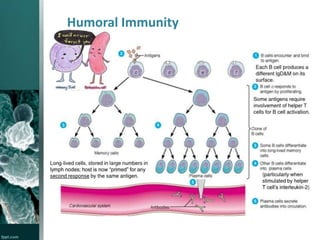
Humoral Immunity
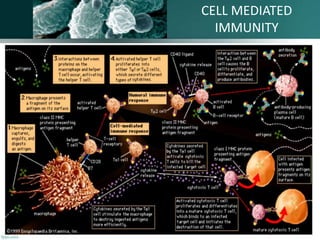
CELL MEDIATED
IMMUNITY
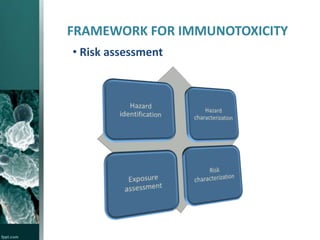
FRAMEWORK FOR IMMUNOTOXICITY
• Risk assessment
A risk assessment should be preceded by a
problem formulation phase
• Hazard identification:
This aims identify the nature of the
potential health effects of a chemical
substance.
• Hazard characterization:
Information on MOA can be used to
determine the human relevance for
immunotoxicity.
It gives dose effect relation ship
Threshold for toxicity can be established on
the basis of NOAEL –(BMD)
• Exposure assessment:

Exposure at or below the RfD/RfC or
ADI/TDI

is considered to be safe.

In this information regarding previous, current
and expected exposure is collected and
quantitatively described.
• Risk characterization:
exposure assessment results are integrated
with and assessed in relation to the hazard
characterization.
GENERAL TERMINOLOGY
• Purpose:

It provides information on

suppression of immune system which might
be due to repeated

exposure of test

substance..

• Antibodies or immunoglobulin's (Ig)
• CD or cluster of differentiation
• Immunotoxicity
• Natural Killer (NK) cells
Principles of the test methods
• To asses the functional responsiveness of the

immune system against T cell dependent
antigen (SRBC)
• Rat/mice are exposed to the test/control

• Animal must be immunized either by i.v/i.p with
SRBC.
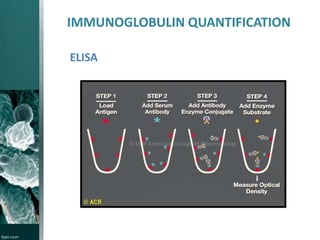
• At the end of the test PFC assay of ELISA is done
to determine the conc. Of anti-SRBC levels
• If the test substance show no significant
effect on the anti-SRBC assay.
• A functional test for NK cells must be
performed to test for a chemical’s effect on
non-specific immunity.

• Limit test:
With the dose of 1000mg/kg, if no toxic
effect is observed then a full study is not
required using 3 doses.
TEST PROCEDURES
• Animal selection
• Age/weight

• Sex
• Numbers
• Husbandry
• Control and test substances
• Dose levels
• Administration of the test substance
• Observation
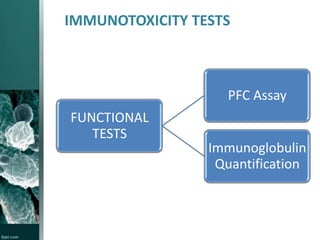
IMMUNOTOXICITY TESTS

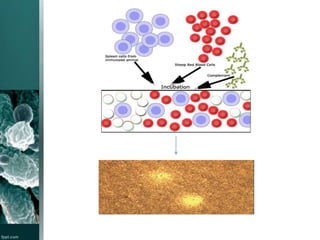
PFC Assay
FUNCTIONAL
TESTS

Immunoglobulin
Quantification
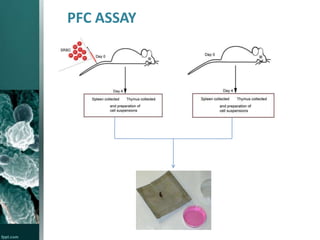
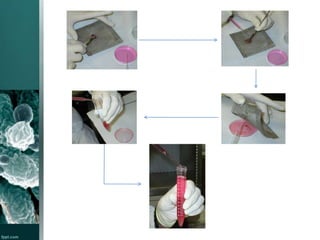
PFC ASSAY
IMMUNOGLOBULIN QUANTIFICATION
ELISA
HOST RESISTANCE ASSAY
• It is done when there is evidence suggesting
that chemical causes reduction in host

resistance
• Suppression of host defense gives a clear
evidence of immunosuppression
• Suppression
combination

of
with

host

resistance

associate

in

immune

function increases the strength of data.
Haematology
• It is done when the evidence suggests
haematological changes.
• Severe haematological changes alone are
sufficient to demonstrate adverse

immunosuppression
• immunosuppression with histopathological

evidence may add strength to the report
Histopathology & Organ weight
• Histopathological evidence from multiple
immune

organs

may

indicate

immunotoxicity.
• Decreased weight of immune organ may also

support the evidence of Immunesuppression
• Immune organ weight and histopathological
considerations are not enough to derive
effect levels…
DATA & REPORTING
• Treatment of results

• Evaluation of study results
• Test report as per GLP standards
– The test substance characterization
– The test system
– The test procedure
– Test results
Immunotoxicity

Immunotoxicity

  • 1.
  • 2.
    CONTENT • INTRODUCTION • FRAMEWORKFOR IMMUNOTOXICITY • GENERAL TERMINOLOGY • PRINCIPLES OF THE TEST METHODS • TEST PROCEDURES • IMMUNOTOXICITY TESTS • DATA & REPORTING
  • 3.
    INTRODUCTION • immunity isthe state of having sufficient biological defense to avoid infections, disease, or other unwanted biological invasion.
  • 4.
  • 5.
  • 6.
  • 7.
    A risk assessmentshould be preceded by a problem formulation phase
  • 8.
    • Hazard identification: Thisaims identify the nature of the potential health effects of a chemical substance. • Hazard characterization: Information on MOA can be used to determine the human relevance for immunotoxicity. It gives dose effect relation ship Threshold for toxicity can be established on the basis of NOAEL –(BMD)
  • 9.
    • Exposure assessment: Exposureat or below the RfD/RfC or ADI/TDI is considered to be safe. In this information regarding previous, current and expected exposure is collected and quantitatively described. • Risk characterization: exposure assessment results are integrated with and assessed in relation to the hazard characterization.
  • 10.
    GENERAL TERMINOLOGY • Purpose: Itprovides information on suppression of immune system which might be due to repeated exposure of test substance.. • Antibodies or immunoglobulin's (Ig) • CD or cluster of differentiation • Immunotoxicity • Natural Killer (NK) cells
  • 11.
    Principles of thetest methods • To asses the functional responsiveness of the immune system against T cell dependent antigen (SRBC) • Rat/mice are exposed to the test/control • Animal must be immunized either by i.v/i.p with SRBC. • At the end of the test PFC assay of ELISA is done to determine the conc. Of anti-SRBC levels
  • 12.
    • If thetest substance show no significant effect on the anti-SRBC assay. • A functional test for NK cells must be performed to test for a chemical’s effect on non-specific immunity. • Limit test: With the dose of 1000mg/kg, if no toxic effect is observed then a full study is not required using 3 doses.
  • 13.
    TEST PROCEDURES • Animalselection • Age/weight • Sex • Numbers • Husbandry • Control and test substances • Dose levels • Administration of the test substance • Observation
  • 14.
  • 15.
  • 18.
  • 19.
    HOST RESISTANCE ASSAY •It is done when there is evidence suggesting that chemical causes reduction in host resistance • Suppression of host defense gives a clear evidence of immunosuppression • Suppression combination of with host resistance associate in immune function increases the strength of data.
  • 20.
    Haematology • It isdone when the evidence suggests haematological changes. • Severe haematological changes alone are sufficient to demonstrate adverse immunosuppression • immunosuppression with histopathological evidence may add strength to the report
  • 21.
    Histopathology & Organweight • Histopathological evidence from multiple immune organs may indicate immunotoxicity. • Decreased weight of immune organ may also support the evidence of Immunesuppression • Immune organ weight and histopathological considerations are not enough to derive effect levels…
  • 22.
    DATA & REPORTING •Treatment of results • Evaluation of study results • Test report as per GLP standards – The test substance characterization – The test system – The test procedure – Test results