ACUTE, SUBACUTE
AND CHRONIC
TOXICITY IN ANIMALS
INTRODUCTIO
N
Drug is a single substance or mixture of substances
used for diagnosis, treatment, mitigation or prevention
of disease ; estoring, correcting or modifying the
organic functions in man or animals (W.H.O.)
Agents of these potential activities interfere with
biological processes of the host or extraneous etiological
agents and hence are toxic substances.
The object of toxicity testing in the laboratory is to
elucidate the toxic properties of drugs
Toxicology is the scientific study of adverse effects that
occur in living organisms due to chemicals. it involves
observing and
symptoms, mechanisms detection and treatments of
toxic substances, in particular relation to the poisoning
of humans.
General Toxicitytesting referred to a series of toxicity
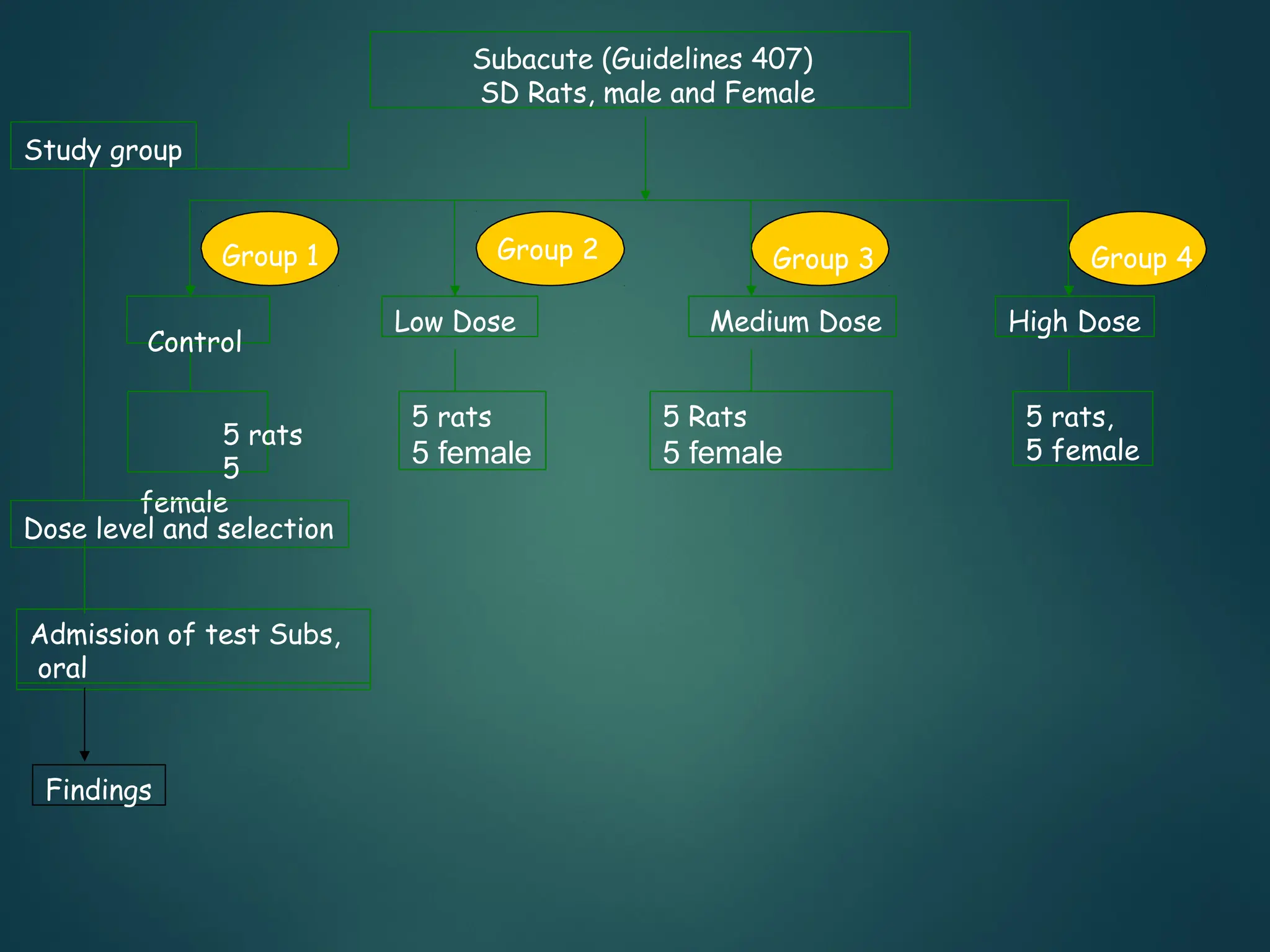
testing required by International regulatory for
compliance to Good Laboratory Practices (GLP) for
proof of safety in experimental animal prior to
their testing in human. .
It comprises of :
Acute,
Sub-acute
chronic
toxicity.
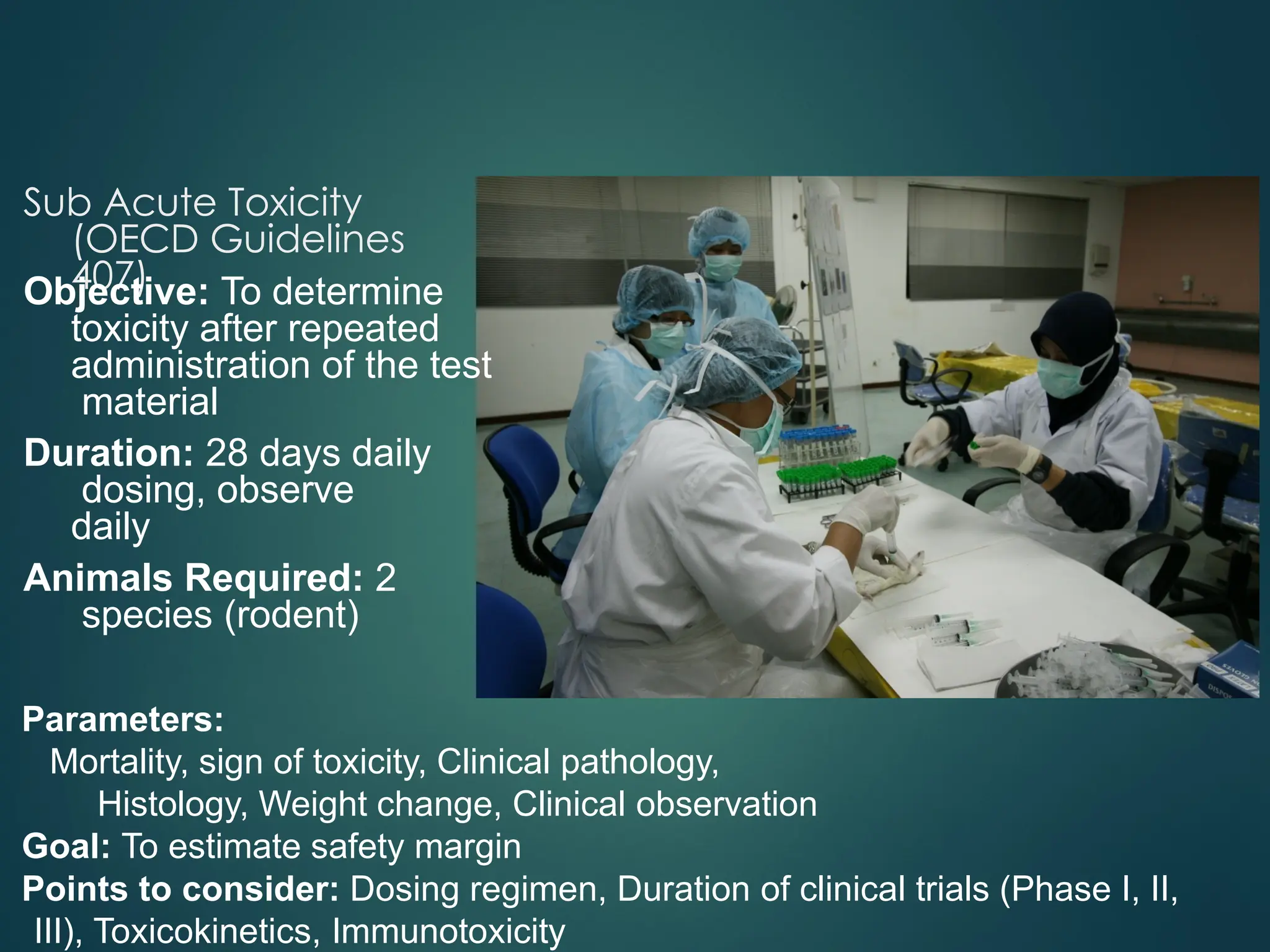
These studies are conducted based on “OECD guidelines
of testing of chemicals”
They are performed in rodents and non rodents
International regulations relating to human health require
that all new pharmaceutical drugs undergo Preclinical
investigation.
One of the phases of the Preclinical investigation is the
toxicology studies,
It is conducted following an appropriate guideline and
quality system (OECD GLP).
Organisation for Economic Co-operation and
Development (OECD)
Preclinical Studies
Includes:
1. Phytochemistry , Development of
the products
2. Formulation
3. Complete pharmacologic and
pharmacokinetic profile
4. Safety study – Toxicology
5. Efficacy study
Regulatory Guidelines
and Quality System in
Toxicology
Drug safety testing is driven
by International and national
regulatory requirements, e.g.
OECD/ICH guidelines, Good
Laboratory Practices (GLP)….
GLP
GLP is a quality system
concerned with the
organizational process
and the conditions under
which non-clinical health
and environmental safety
studies are :
PLANNED
Preclinical Toxicology
• Ames (Bacterial Reverse
Mutation Test ) testing to
measure effects on single
DNA bases ,
 the micronucleus assay
to measure structural
or numerical changes
to chromosomes
 Chromosomal abberation
Mouse Lymphoma
In vitro Studies
Genotoxicity test (to predict
carcinogenicity)
•
•
•
In vivo studies: Animal
testing
• Efficacy
• Toxicity
Acute
Subacute
Chronic
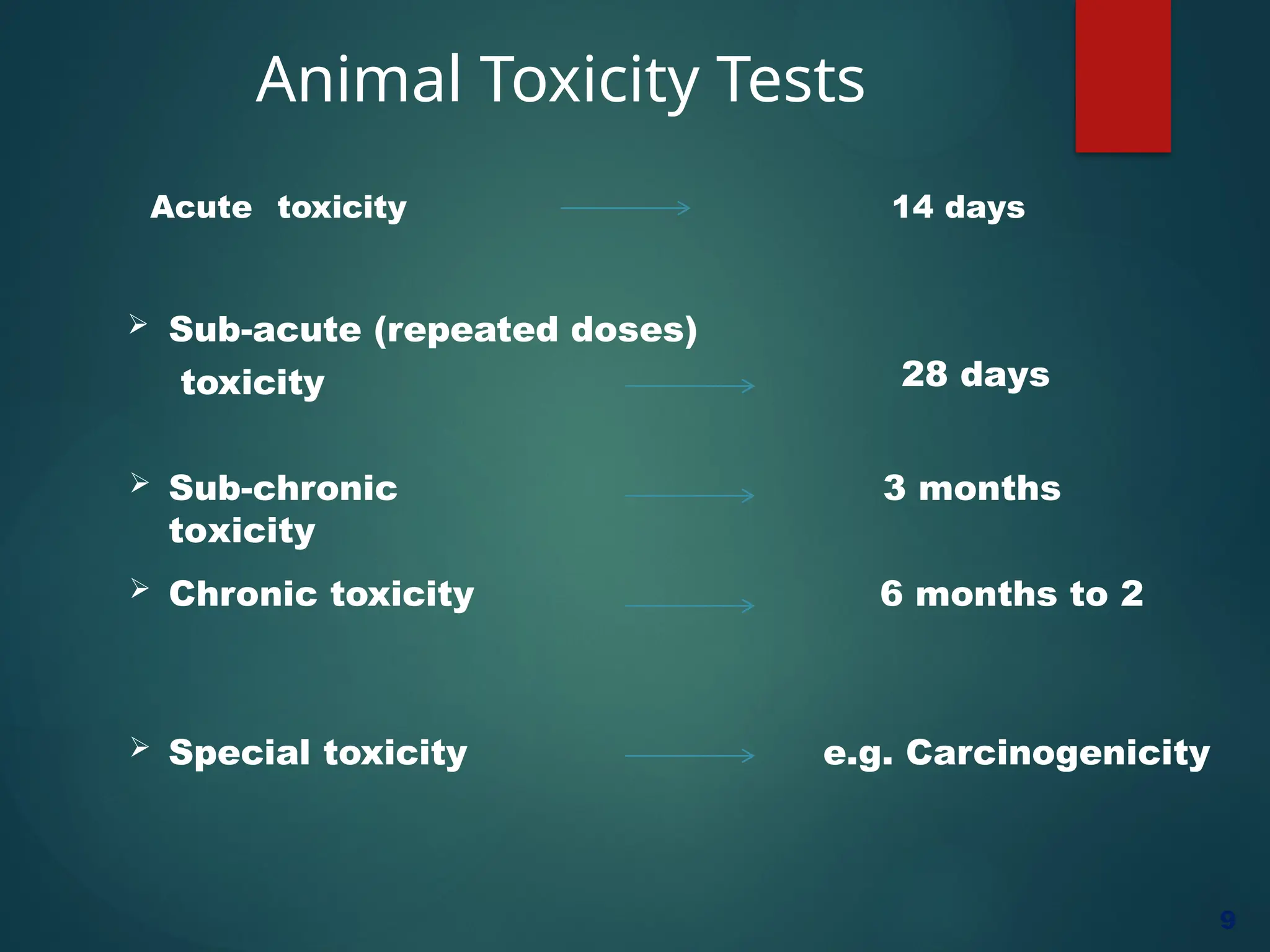
 Sub-acute (repeated doses)
toxicity 28 days
 Sub-chronic
toxicity
3 months
 Chronic toxicity 6 months to 2
 Special toxicity e.g. Carcinogenicity
9
Animal Toxicity Tests
Acute toxicity 14 days
Test
Guidelines
No.
 ACUTE ORAL TOXICITY
40
1
423
425
420
1
Tremor
Salivation
Muscle
spasm
Convulsion
Lacrima
tion
Weight
loss
Diarrhoea
Altered
Respiration
Loss of
righting
reflex
 ACUTE TOXICITY SYMPTOMS
(Ghosh., 2005)
1
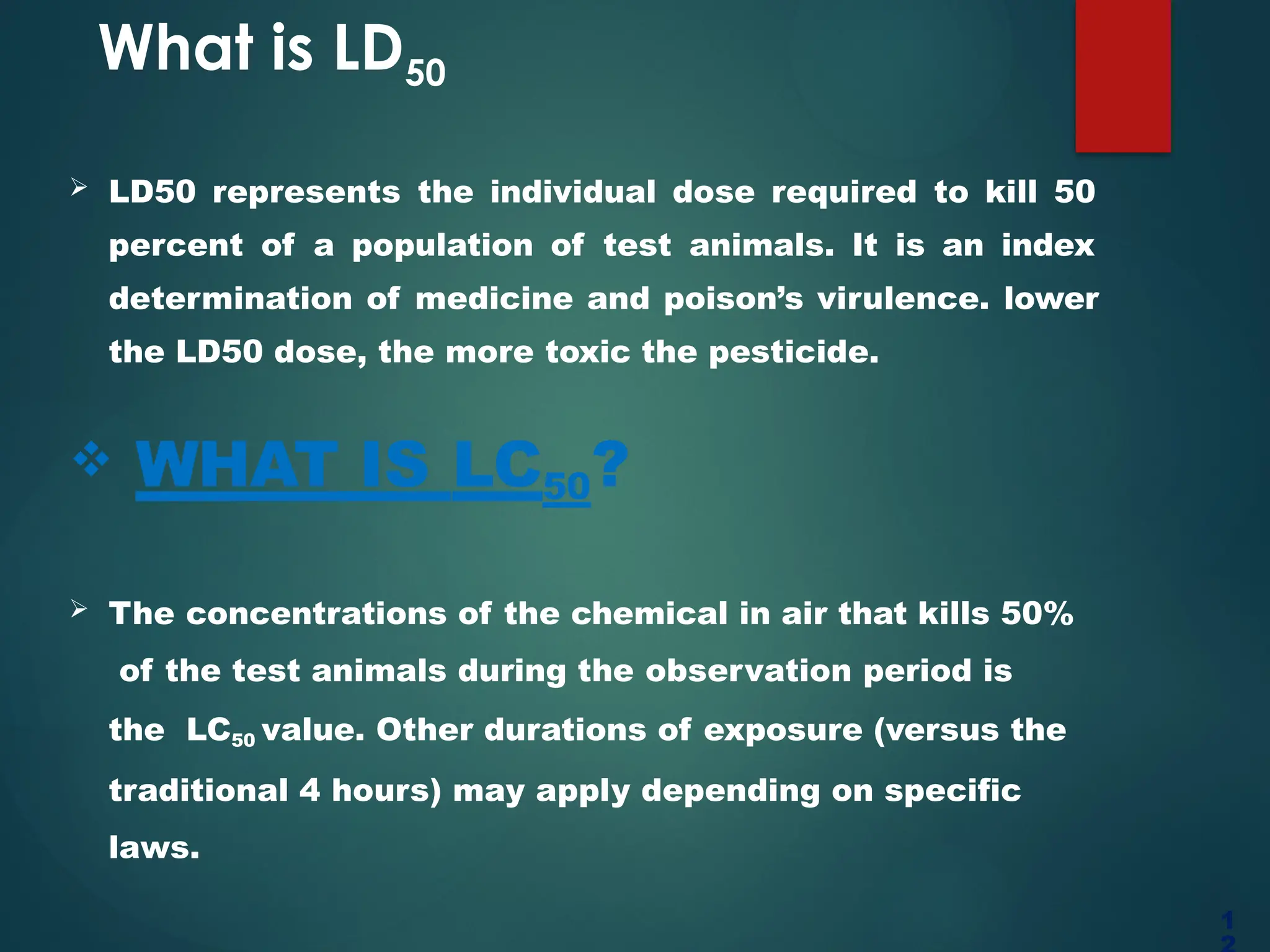
 LD50 represents the individual dose required to kill 50
percent of a population of test animals. It is an index
determination of medicine and poison’s virulence. lower
the LD50 dose, the more toxic the pesticide.
 WHAT IS LC50?
 The concentrations of the chemical in air that kills 50%
of the test animals during the observation period is
the LC50 value. Other durations of exposure (versus the
traditional 4 hours) may apply depending on specific
laws.
1
What is LD50
 LD50/LC50
9
9
Acute Toxicity
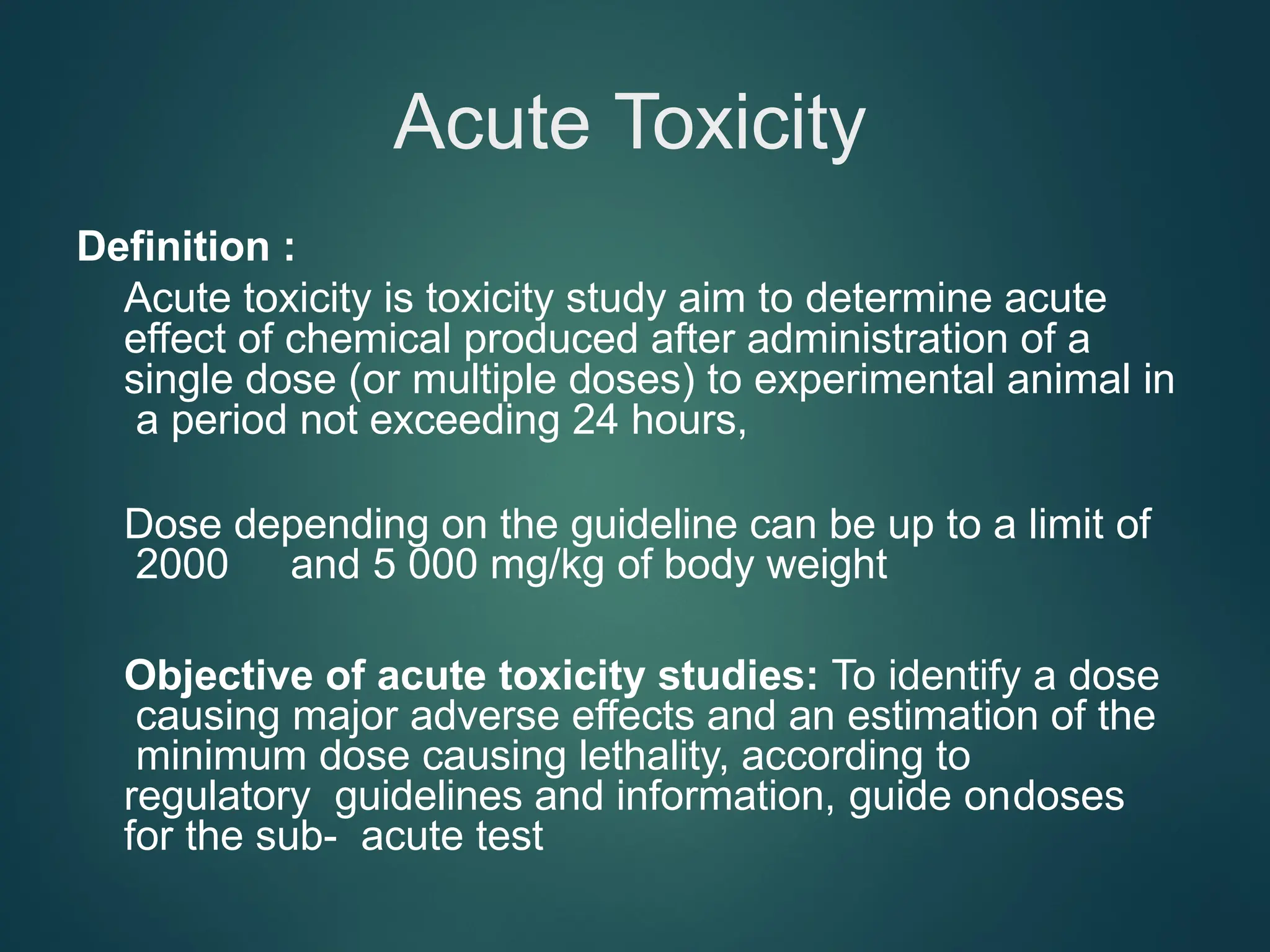
Definition :
Acute toxicity is toxicity study aim to determine acute
effect of chemical produced after administration of a
single dose (or multiple doses) to experimental animal in
a period not exceeding 24 hours,
Dose depending on the guideline can be up to a limit of
2000 and 5 000 mg/kg of body weight
Objective of acute toxicity studies: To identify a dose
causing major adverse effects and an estimation of the
minimum dose causing lethality, according to
regulatory guidelines and information, guide ondoses
for the sub- acute test
Acute
Toxicolo
gy
Rats,
female
Study group
Dose level and selection
Admission of test Subs, orally
Findings
OECD Guidelines 420, 425
Control
5 rats 5 rats
5 g/kg
Group 1 Group 2
OECD Guidelines for the Testing of Chemicals
Test No. 420: Acute Oral Toxicity - Fixed Dose
Procedure
Principle : in the main study only moderately toxic
doses are used, and the administration of doses that
are expected to be lethal should be avoided.
Sighting study : Groups of animals of a single sex
(normally females) are dosed in a stepwise
procedure using the fixed doses of 5, 50, 300 and
2000 mg/kg (exceptionally 5000 mg/kg).
If dose causes acute effect, stop at that dose, if
not cont until the highest dose.
Main study : Two groups of 5 rats each, one control
and one test
OECD Guidelines for the Testing of Chemicals
Test No. 425: Acute Oral Toxicity: Up-and-Down
Procedure
Principle :to apply to materials that produce death
within couple of days.
Sighting study : step wise
Main study : Two groups of 5 rats each, one control
and one test
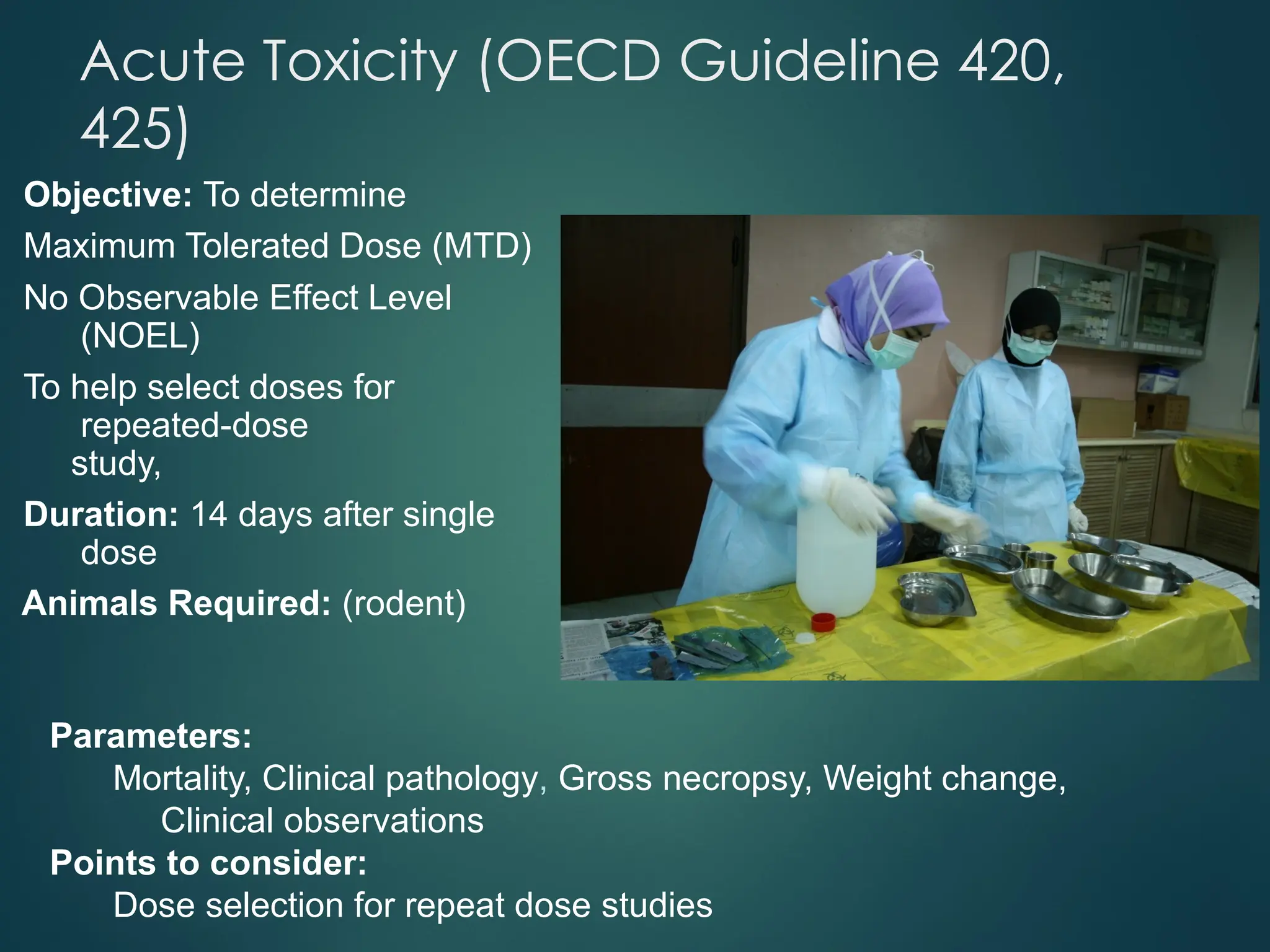
Acute Toxicity (OECD Guideline 420,
425)
Objective: To determine
Maximum Tolerated Dose (MTD)
No Observable Effect Level
(NOEL)
To help select doses for
repeated-dose
study,
Duration: 14 days after single
dose
Animals Required: (rodent)
Parameters:
Mortality, Clinical pathology, Gross necropsy, Weight change,
Clinical observations
Points to consider:
Dose selection for repeat dose studies
What is subacute toxicity
• The effect of exposure from 1 day to 30
days
OECD Guidelines for the
Testing of Chemicals Test
No. 407: Repeated Dose
28-day Oral Toxicity Study
in Rodents
Principle : Provides information on health hazard likely to arise from
exposure (daily) to test substance via oral
administration.
The method is based on the repeated oral administration of the
substance of interest during one limited period (one dose level daily
during 28 days).
This Guideline is intended primarily for use with rodents (rat
preferably). At least 10 animals (5 female and 5 male) should be
used for each dose level.
Three tests groups, should be used.
The test compound is administered by gavage or via the diet or
drinking water. A limit test may be performed if no effects would be
expected at a dose of 1000 mg/kg bw/d.
Subacute (Guidelines 407)
SD Rats, male and Female
5 rats
5 female
5 Rats
5 female
5 rats,
5 female
Low Dose Medium Dose High Dose
Admission of test Subs,
oral
Study group
Group 1
Control
5 rats
5
female
Dose level and selection
Group 2 Group 3 Group 4
Findings
What is chronic toxicity
• Daily exposure for 3 months or more
OECD Guidelines for the
Testing of Chemicals
Test No. 452: Chronic
Toxicity Studies
The objective : of these chronic toxicity studies is to characterize the
profile of a substance in a mammalian species (primarily
rodents) following prolonged and repeated exposure.
The Test Guideline focuses on rodents and oral administration. Both
sexes should be used.
For rodents, at least 20 animals per sex per group should
normally be used at each dose level,
while for non- rodents a minimum of 4 per sex per group is
recommended.
At least three dose levels should be used in addition to the
concurrent control group.
Frequency of exposure normally is daily, but may vary according to the
route chosen (oral, dermal or inhalation) and should be adjusted
according to the toxicokinetic profile of the test substance.
12 months or longer or or up to 10% of species’ lifespan. Length
depends on intended period of human exposure
Chronic (Guidelines 452)
SD Rats, male and
Female
20 rats
20 female
20 Rats
20 female
20 rats,
20 female
Low Dose Medium Dose High Dose
Admission of test Subs,
oral
Study group
Group 1
Control
20 rats
20
female
Dose level and selection
Group 2 Group 3 Group 4
Findings
Non Rodent Animal Species
• Dogs, Pigs and Monkeys are the most commonly used
animals in preclinical studies.
• Ideally , the species of choice should have the same
pharmacokinetic profile as in humans, however, this
information is either incomplete or missing,
• Under such circumstance, select the most sensitive
species for evaluating the safety of the substance.
Chronic Toxicity Study
• Species: 2 ( a rodent and a non-rodent).
• In rodents chronic studies are usually for 6 months to 2
years.
• In non-rodents chronic studies are usually for 1 year but
may be longer.
• The length of exposure is somewhat dependent on the
intended period of use in humans.
Clinical Chemistry
• Hepatocellular leakage enzymes:
– ALT, AST, SDH, LDH
• Cholestatic enzymes:
– AP, GGT
• Liver function tests:
– Total bilirubin, direct bilirubin, indirect bilirubin, bile acids,
ammonia
• Pancreatic parameters
– Amylase, lipase
• Lipid parameters
– Cholesterol, triglycerides
• Muscle parameters
– Creatine kinase (CK), AST, ALT, LDH
Clinical Chemistry
• Calcium, potassium: Often influenced by kidney
function, kidney parameters should be evaluated
concurrently.
• Kidney Parameters: Urea nitrogen, Creatinine
– Urine specific gravity should be evaluated
concurrently when evaluating renal function.
– Kidney function affect proteins, minerals,
electrolytes, acid-base balance and hematopoietic
parameters.
Hematology
• RBC,
• WBC,
• PLT,
• HB,
• Neutrophyl %
• Neutrophyl no
• MCHC,
• HCT
• MCHC
• MCV,
Sub Acute Toxicity
(OECD Guidelines
407)
Objective: To determine
toxicity after repeated
administration of the test
material
Duration: 28 days daily
dosing, observe
daily
Animals Required: 2
species (rodent)
Parameters:
Mortality, sign of toxicity, Clinical pathology,
Histology, Weight change, Clinical observation
Goal: To estimate safety margin
Points to consider: Dosing regimen, Duration of clinical trials (Phase I, II,
III), Toxicokinetics, Immunotoxicity
Chronic Toxicity (OECD Guideline 452)
Objective:
To characterize dose-response
relationships following repeated doses
To identify and characterize specific
organs affected after repeated
administration
Duration:
Rodents - 6 to 24 months;
non-rodents (monkey) - 12 months or
longer or up to 10% of species’
lifespan. Length depends on intended
period of human exposure.
Animals Required: 2 species (rodent
and non-rodent)
Parameters:
Mortality,Clinical pathology, Clinical
observation, Behavioral Assessment,
Histology, Weight change
Special Toxicity Studies
Teratogenicity
Mutagenicity
Carcinogenicity
A-Teratogenicity tests
Tests for effects on reproduction should involve the
study on animals which have been exposed to the test
substance from the time of conception to the time they
produce their own offspring plus a study of the offspring
during growth and development
Effect on the mother
1-Effects on lactation.
2-Acceptance of offspring.
3-Effects on the offspring as regards:
1-Growth and development
2-Sexual maturation
Effects on fertility
1-Gonadal function
2-Estrous cycle
3-Mating behavior
4-Conception rates
5-Early stages of gestation (implantation of
fertilized ovum)
Effects on the development of the fetus
1-Degree of normality
2-Teratogenicity and mutagenic effects
3-Intra-uterine mortality
B-Mutagenicity test
*Mutagenesis is the induction of alterations in
the information content (DNA) of an organism or
cell that are not due to the normal process of
recombination
*This alteration may occur in germ or
somatic cells.
*Somatic mutations in a developing organism
may lead to abnormal differentiation of its
cells.
*Alterations in the duplicating somatic cells of
an adult may lead to Cancer.
Mutation Tests
(1)In-Vitro Test:
*Organisms used: sub mammalian systems
including bacteria, yeast, plants and insects.
*Advantages:
1-Simple systems allowing detailed analysis of
their genetic composition.
2-They are capable of characterizing the type of
genetic damage caused by the test substance.
*Disadvantages:
They lack the physiology and metabolism of
mammals. This can be overcome partly by
addition of the mammalian metabolizing system
(as liver homogenates) to the growth medium.
C-Carcinogenicity Tests
*A substance that produce any type of tumor
whether the tumor is benign or Malignant in test
species is called Carcinogenic.
*Chemical induced carcinogenesis in man is
substantiated only through epidemiological studies
from occupational, environmental or medical
exposure.
*If a compound is known to be a carcinogen in man
the carcinogenicity has to be confirmed in
experimental animals.
*Although certain compounds are not carcinogenic
in test species, they can biotransformed in suitable
species to active carcinogen.
*Animals:
Rats and Dogs.
*Test duration:
-Rats: 2-3 years.
-Dogs: 7 y ears.
*Route of administration: Oral.
*Dose: 3 dose concentrations
-Maximally tolerated dose(MTD).
-1/3 of MTD.
-1/9 of MTD.
*All animals that become seriously ill during the
course of the test are killed and complete clinical,
chemical and pathological examination is done.
*If tumors become evident during the course of the
test, the time of occurrence, characteristics and type
of the tumor should be recorded.
*At the end of the test the animals are killed and
complete pathological examination of all tissues is
done.

Acute, sub-acute and Chronic oral studies (OECD).

  • 1.
  • 2.
    INTRODUCTIO N Drug is asingle substance or mixture of substances used for diagnosis, treatment, mitigation or prevention of disease ; estoring, correcting or modifying the organic functions in man or animals (W.H.O.) Agents of these potential activities interfere with biological processes of the host or extraneous etiological agents and hence are toxic substances. The object of toxicity testing in the laboratory is to elucidate the toxic properties of drugs Toxicology is the scientific study of adverse effects that occur in living organisms due to chemicals. it involves observing and symptoms, mechanisms detection and treatments of toxic substances, in particular relation to the poisoning of humans.
  • 3.
    General Toxicitytesting referredto a series of toxicity testing required by International regulatory for compliance to Good Laboratory Practices (GLP) for proof of safety in experimental animal prior to their testing in human. . It comprises of : Acute, Sub-acute chronic toxicity. These studies are conducted based on “OECD guidelines of testing of chemicals” They are performed in rodents and non rodents
  • 4.
    International regulations relatingto human health require that all new pharmaceutical drugs undergo Preclinical investigation. One of the phases of the Preclinical investigation is the toxicology studies, It is conducted following an appropriate guideline and quality system (OECD GLP). Organisation for Economic Co-operation and Development (OECD)
  • 5.
    Preclinical Studies Includes: 1. Phytochemistry, Development of the products 2. Formulation 3. Complete pharmacologic and pharmacokinetic profile 4. Safety study – Toxicology 5. Efficacy study
  • 6.
    Regulatory Guidelines and QualitySystem in Toxicology Drug safety testing is driven by International and national regulatory requirements, e.g. OECD/ICH guidelines, Good Laboratory Practices (GLP)….
  • 7.
    GLP GLP is aquality system concerned with the organizational process and the conditions under which non-clinical health and environmental safety studies are : PLANNED
  • 8.
    Preclinical Toxicology • Ames(Bacterial Reverse Mutation Test ) testing to measure effects on single DNA bases ,  the micronucleus assay to measure structural or numerical changes to chromosomes  Chromosomal abberation Mouse Lymphoma In vitro Studies Genotoxicity test (to predict carcinogenicity) • • • In vivo studies: Animal testing • Efficacy • Toxicity Acute Subacute Chronic
  • 9.
     Sub-acute (repeateddoses) toxicity 28 days  Sub-chronic toxicity 3 months  Chronic toxicity 6 months to 2  Special toxicity e.g. Carcinogenicity 9 Animal Toxicity Tests Acute toxicity 14 days
  • 10.
    Test Guidelines No.  ACUTE ORALTOXICITY 40 1 423 425 420 1
  • 11.
  • 12.
     LD50 representsthe individual dose required to kill 50 percent of a population of test animals. It is an index determination of medicine and poison’s virulence. lower the LD50 dose, the more toxic the pesticide.  WHAT IS LC50?  The concentrations of the chemical in air that kills 50% of the test animals during the observation period is the LC50 value. Other durations of exposure (versus the traditional 4 hours) may apply depending on specific laws. 1 What is LD50
  • 13.
  • 14.
    Acute Toxicity Definition : Acutetoxicity is toxicity study aim to determine acute effect of chemical produced after administration of a single dose (or multiple doses) to experimental animal in a period not exceeding 24 hours, Dose depending on the guideline can be up to a limit of 2000 and 5 000 mg/kg of body weight Objective of acute toxicity studies: To identify a dose causing major adverse effects and an estimation of the minimum dose causing lethality, according to regulatory guidelines and information, guide ondoses for the sub- acute test
  • 15.
    Acute Toxicolo gy Rats, female Study group Dose leveland selection Admission of test Subs, orally Findings OECD Guidelines 420, 425 Control 5 rats 5 rats 5 g/kg Group 1 Group 2
  • 16.
    OECD Guidelines forthe Testing of Chemicals Test No. 420: Acute Oral Toxicity - Fixed Dose Procedure Principle : in the main study only moderately toxic doses are used, and the administration of doses that are expected to be lethal should be avoided. Sighting study : Groups of animals of a single sex (normally females) are dosed in a stepwise procedure using the fixed doses of 5, 50, 300 and 2000 mg/kg (exceptionally 5000 mg/kg). If dose causes acute effect, stop at that dose, if not cont until the highest dose. Main study : Two groups of 5 rats each, one control and one test
  • 17.
    OECD Guidelines forthe Testing of Chemicals Test No. 425: Acute Oral Toxicity: Up-and-Down Procedure Principle :to apply to materials that produce death within couple of days. Sighting study : step wise Main study : Two groups of 5 rats each, one control and one test
  • 18.
    Acute Toxicity (OECDGuideline 420, 425) Objective: To determine Maximum Tolerated Dose (MTD) No Observable Effect Level (NOEL) To help select doses for repeated-dose study, Duration: 14 days after single dose Animals Required: (rodent) Parameters: Mortality, Clinical pathology, Gross necropsy, Weight change, Clinical observations Points to consider: Dose selection for repeat dose studies
  • 19.
    What is subacutetoxicity • The effect of exposure from 1 day to 30 days
  • 20.
    OECD Guidelines forthe Testing of Chemicals Test No. 407: Repeated Dose 28-day Oral Toxicity Study in Rodents Principle : Provides information on health hazard likely to arise from exposure (daily) to test substance via oral administration. The method is based on the repeated oral administration of the substance of interest during one limited period (one dose level daily during 28 days). This Guideline is intended primarily for use with rodents (rat preferably). At least 10 animals (5 female and 5 male) should be used for each dose level. Three tests groups, should be used. The test compound is administered by gavage or via the diet or drinking water. A limit test may be performed if no effects would be expected at a dose of 1000 mg/kg bw/d.
  • 21.
    Subacute (Guidelines 407) SDRats, male and Female 5 rats 5 female 5 Rats 5 female 5 rats, 5 female Low Dose Medium Dose High Dose Admission of test Subs, oral Study group Group 1 Control 5 rats 5 female Dose level and selection Group 2 Group 3 Group 4 Findings
  • 22.
    What is chronictoxicity • Daily exposure for 3 months or more
  • 23.
    OECD Guidelines forthe Testing of Chemicals Test No. 452: Chronic Toxicity Studies The objective : of these chronic toxicity studies is to characterize the profile of a substance in a mammalian species (primarily rodents) following prolonged and repeated exposure. The Test Guideline focuses on rodents and oral administration. Both sexes should be used. For rodents, at least 20 animals per sex per group should normally be used at each dose level, while for non- rodents a minimum of 4 per sex per group is recommended. At least three dose levels should be used in addition to the concurrent control group. Frequency of exposure normally is daily, but may vary according to the route chosen (oral, dermal or inhalation) and should be adjusted according to the toxicokinetic profile of the test substance. 12 months or longer or or up to 10% of species’ lifespan. Length depends on intended period of human exposure
  • 24.
    Chronic (Guidelines 452) SDRats, male and Female 20 rats 20 female 20 Rats 20 female 20 rats, 20 female Low Dose Medium Dose High Dose Admission of test Subs, oral Study group Group 1 Control 20 rats 20 female Dose level and selection Group 2 Group 3 Group 4 Findings
  • 25.
    Non Rodent AnimalSpecies • Dogs, Pigs and Monkeys are the most commonly used animals in preclinical studies. • Ideally , the species of choice should have the same pharmacokinetic profile as in humans, however, this information is either incomplete or missing, • Under such circumstance, select the most sensitive species for evaluating the safety of the substance.
  • 26.
    Chronic Toxicity Study •Species: 2 ( a rodent and a non-rodent). • In rodents chronic studies are usually for 6 months to 2 years. • In non-rodents chronic studies are usually for 1 year but may be longer. • The length of exposure is somewhat dependent on the intended period of use in humans.
  • 27.
    Clinical Chemistry • Hepatocellularleakage enzymes: – ALT, AST, SDH, LDH • Cholestatic enzymes: – AP, GGT • Liver function tests: – Total bilirubin, direct bilirubin, indirect bilirubin, bile acids, ammonia • Pancreatic parameters – Amylase, lipase • Lipid parameters – Cholesterol, triglycerides • Muscle parameters – Creatine kinase (CK), AST, ALT, LDH
  • 28.
    Clinical Chemistry • Calcium,potassium: Often influenced by kidney function, kidney parameters should be evaluated concurrently. • Kidney Parameters: Urea nitrogen, Creatinine – Urine specific gravity should be evaluated concurrently when evaluating renal function. – Kidney function affect proteins, minerals, electrolytes, acid-base balance and hematopoietic parameters.
  • 29.
    Hematology • RBC, • WBC, •PLT, • HB, • Neutrophyl % • Neutrophyl no • MCHC, • HCT • MCHC • MCV,
  • 30.
    Sub Acute Toxicity (OECDGuidelines 407) Objective: To determine toxicity after repeated administration of the test material Duration: 28 days daily dosing, observe daily Animals Required: 2 species (rodent) Parameters: Mortality, sign of toxicity, Clinical pathology, Histology, Weight change, Clinical observation Goal: To estimate safety margin Points to consider: Dosing regimen, Duration of clinical trials (Phase I, II, III), Toxicokinetics, Immunotoxicity
  • 31.
    Chronic Toxicity (OECDGuideline 452) Objective: To characterize dose-response relationships following repeated doses To identify and characterize specific organs affected after repeated administration Duration: Rodents - 6 to 24 months; non-rodents (monkey) - 12 months or longer or up to 10% of species’ lifespan. Length depends on intended period of human exposure. Animals Required: 2 species (rodent and non-rodent) Parameters: Mortality,Clinical pathology, Clinical observation, Behavioral Assessment, Histology, Weight change
  • 32.
  • 33.
    A-Teratogenicity tests Tests foreffects on reproduction should involve the study on animals which have been exposed to the test substance from the time of conception to the time they produce their own offspring plus a study of the offspring during growth and development
  • 34.
    Effect on themother 1-Effects on lactation. 2-Acceptance of offspring. 3-Effects on the offspring as regards: 1-Growth and development 2-Sexual maturation
  • 35.
    Effects on fertility 1-Gonadalfunction 2-Estrous cycle 3-Mating behavior 4-Conception rates 5-Early stages of gestation (implantation of fertilized ovum)
  • 36.
    Effects on thedevelopment of the fetus 1-Degree of normality 2-Teratogenicity and mutagenic effects 3-Intra-uterine mortality
  • 37.
    B-Mutagenicity test *Mutagenesis isthe induction of alterations in the information content (DNA) of an organism or cell that are not due to the normal process of recombination *This alteration may occur in germ or somatic cells. *Somatic mutations in a developing organism may lead to abnormal differentiation of its cells. *Alterations in the duplicating somatic cells of an adult may lead to Cancer.
  • 38.
    Mutation Tests (1)In-Vitro Test: *Organismsused: sub mammalian systems including bacteria, yeast, plants and insects. *Advantages: 1-Simple systems allowing detailed analysis of their genetic composition. 2-They are capable of characterizing the type of genetic damage caused by the test substance. *Disadvantages: They lack the physiology and metabolism of mammals. This can be overcome partly by addition of the mammalian metabolizing system (as liver homogenates) to the growth medium.
  • 39.
    C-Carcinogenicity Tests *A substancethat produce any type of tumor whether the tumor is benign or Malignant in test species is called Carcinogenic. *Chemical induced carcinogenesis in man is substantiated only through epidemiological studies from occupational, environmental or medical exposure. *If a compound is known to be a carcinogen in man the carcinogenicity has to be confirmed in experimental animals. *Although certain compounds are not carcinogenic in test species, they can biotransformed in suitable species to active carcinogen.
  • 40.
    *Animals: Rats and Dogs. *Testduration: -Rats: 2-3 years. -Dogs: 7 y ears. *Route of administration: Oral. *Dose: 3 dose concentrations -Maximally tolerated dose(MTD). -1/3 of MTD. -1/9 of MTD.
  • 41.
    *All animals thatbecome seriously ill during the course of the test are killed and complete clinical, chemical and pathological examination is done. *If tumors become evident during the course of the test, the time of occurrence, characteristics and type of the tumor should be recorded. *At the end of the test the animals are killed and complete pathological examination of all tissues is done.