1
Activity Based Learning
1
What is Activity-based learning (ABL) & Child Centered Approach?
• Identify active learning opportunities
• Understand use of ABL teaching & learning in the classrooms
• Use Active learning opportunities in classroom
2
Training Agenda
• Remembering a learning experience from your school life.
• The trainer will share her personal experience.
• The trainer will ask the teachers to share their experiences.
Volunteers will be randomly selected to share their peer’s
information.
3
Task-1
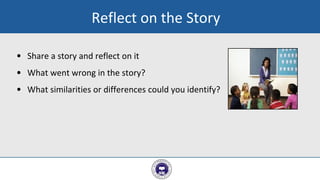
• Share a story and reflect on it
• What went wrong in the story?
• What similarities or differences could you identify?
4
Reflect on the Story
THE LITTLE BOY
5
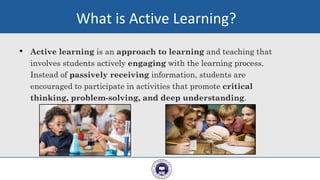
• Active learning is an approach to learning and teaching that
involves students actively engaging with the learning process.
Instead of passively receiving information, students are
encouraged to participate in activities that promote critical
thinking, problem-solving, and deep understanding.
6
What is Active Learning?
7
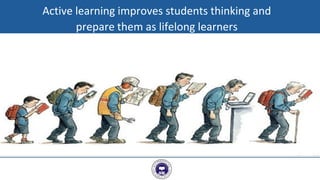
Active learning improves students thinking and
prepare them as lifelong learners
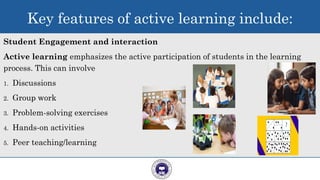
Student Engagement and interaction
Active learning emphasizes the active participation of students in the learning
process. This can involve
1. Discussions
2. Group work
3. Problem-solving exercises
4. Hands-on activities
5. Peer teaching/learning
8
Key features of active learning include:
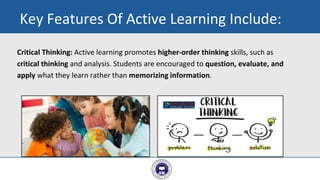
Critical Thinking: Active learning promotes higher-order thinking skills, such as
critical thinking and analysis. Students are encouraged to question, evaluate, and
apply what they learn rather than memorizing information.
9
Key Features Of Active Learning Include:
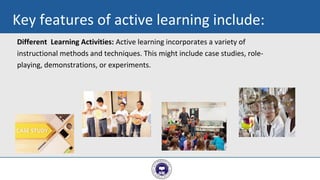
Different Learning Activities: Active learning incorporates a variety of
instructional methods and techniques. This might include case studies, role-
playing, demonstrations, or experiments.
10
Key features of active learning include:
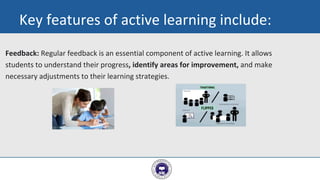
Feedback: Regular feedback is an essential component of active learning. It allows
students to understand their progress, identify areas for improvement, and make
necessary adjustments to their learning strategies.
11
Key features of active learning include:
Active vs Passive Learning Methods
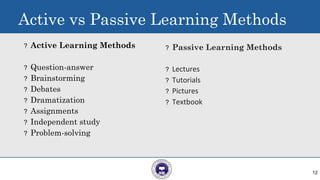
? Active Learning Methods
? Question-answer
? Brainstorming
? Debates
? Dramatization
? Assignments
? Independent study
? Problem-solving
? Passive Learning Methods
? Lectures
? Tutorials
? Pictures
? Textbook
12
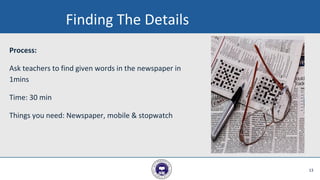
Finding The Details
Process:
Ask teachers to find given words in the newspaper in
1mins
Time: 30 min
Things you need: Newspaper, mobile & stopwatch
13
Summing Up
• Discuss the activity, its outcomes in our everyday
school.
What are some other restrictions in doing of Activity
Based Teaching in classrooms?
Thank You
Take a Break
15

Actvity based learning Day 2 Session 1.pdf

  • 1.
  • 2.
    What is Activity-basedlearning (ABL) & Child Centered Approach? • Identify active learning opportunities • Understand use of ABL teaching & learning in the classrooms • Use Active learning opportunities in classroom 2 Training Agenda
  • 3.
    • Remembering alearning experience from your school life. • The trainer will share her personal experience. • The trainer will ask the teachers to share their experiences. Volunteers will be randomly selected to share their peer’s information. 3 Task-1
  • 4.
    • Share astory and reflect on it • What went wrong in the story? • What similarities or differences could you identify? 4 Reflect on the Story
  • 5.
  • 6.
    • Active learningis an approach to learning and teaching that involves students actively engaging with the learning process. Instead of passively receiving information, students are encouraged to participate in activities that promote critical thinking, problem-solving, and deep understanding. 6 What is Active Learning?
  • 7.
    7 Active learning improvesstudents thinking and prepare them as lifelong learners
  • 8.
    Student Engagement andinteraction Active learning emphasizes the active participation of students in the learning process. This can involve 1. Discussions 2. Group work 3. Problem-solving exercises 4. Hands-on activities 5. Peer teaching/learning 8 Key features of active learning include:
  • 9.
    Critical Thinking: Activelearning promotes higher-order thinking skills, such as critical thinking and analysis. Students are encouraged to question, evaluate, and apply what they learn rather than memorizing information. 9 Key Features Of Active Learning Include:
  • 10.
    Different Learning Activities:Active learning incorporates a variety of instructional methods and techniques. This might include case studies, role- playing, demonstrations, or experiments. 10 Key features of active learning include:
  • 11.
    Feedback: Regular feedbackis an essential component of active learning. It allows students to understand their progress, identify areas for improvement, and make necessary adjustments to their learning strategies. 11 Key features of active learning include:
  • 12.
    Active vs PassiveLearning Methods ? Active Learning Methods ? Question-answer ? Brainstorming ? Debates ? Dramatization ? Assignments ? Independent study ? Problem-solving ? Passive Learning Methods ? Lectures ? Tutorials ? Pictures ? Textbook 12
  • 13.
    Finding The Details Process: Askteachers to find given words in the newspaper in 1mins Time: 30 min Things you need: Newspaper, mobile & stopwatch 13
  • 14.
    Summing Up • Discussthe activity, its outcomes in our everyday school. What are some other restrictions in doing of Activity Based Teaching in classrooms?
  • 15.