Activity based learning in
classroom
Introduction to Activity-Based Learning in
Multigrade Classrooms
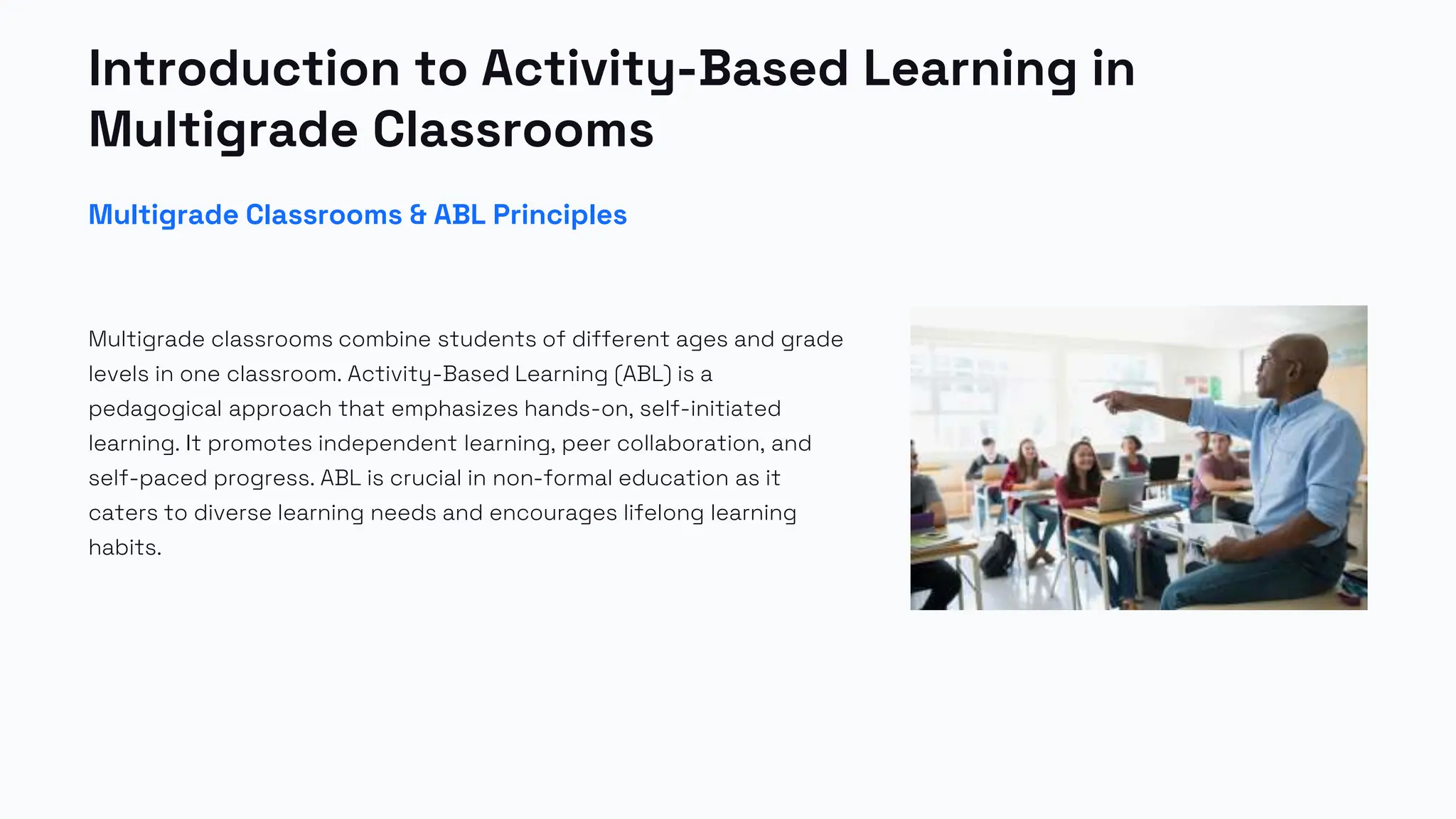
Multigrade classrooms combine students of different ages and grade
levels in one classroom. Activity-Based Learning (ABL) is a
pedagogical approach that emphasizes hands-on, self-initiated
learning. It promotes independent learning, peer collaboration, and
self-paced progress. ABL is crucial in non-formal education as it
caters to diverse learning needs and encourages lifelong learning
habits.
Multigrade Classrooms & ABL Principles
Challenges and Opportunities in Multigrade
Teaching
Benefits and Challenges
● Enhanced peer learning and social skills
● Difficulty in managing diverse learning needs
● Innovative teaching methods required
Key Principles of Activity-Based Learning
Activity-Based Learning (ABL) is founded on several key principles that transform the traditional classroom.
These include self-initiated learning, where students take charge of their education; independent pacing,
allowing learners to progress at their own speed; and differentiated resources to cater to diverse learning
needs. Peer learning and a reconfigured teacher's role as a guide are crucial. ABL also emphasizes creating
a fear-free environment, promoting open learning and fostering 'pedagogic bonding'. Classroom
reorganization and continuous assessment are integral to this approach, ensuring a dynamic and
responsive learning space.
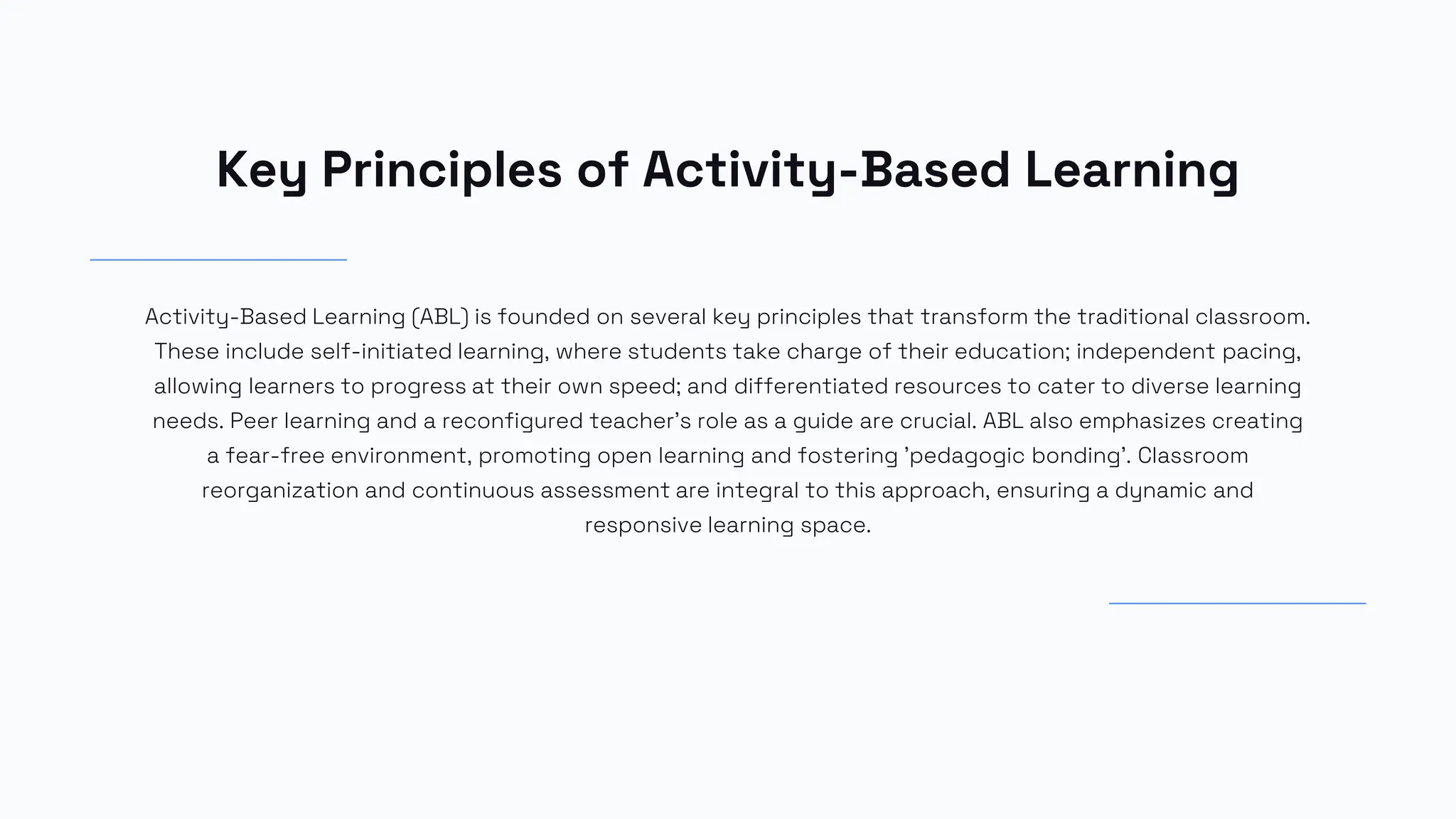
Effective Planning for Activity-Based Learning
● Identify learning goals and objectives
● Design engaging, inclusive activities
● Prepare and organize necessary materials
● Adapt activities for different levels
● Implement and monitor progress
● Collect feedback and refine activities
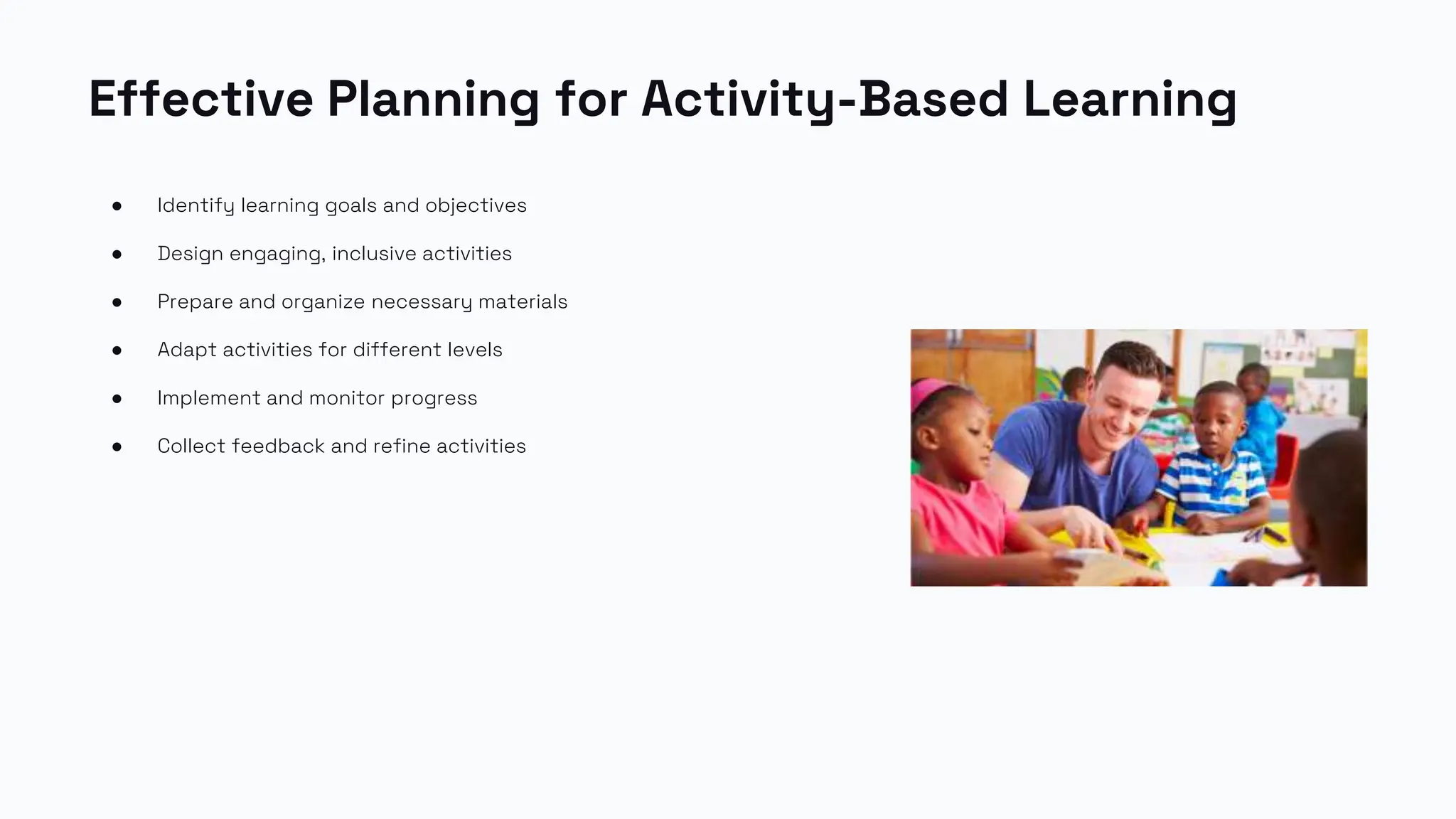
Examples of Activities for Multigrade Classrooms
Implementing activity-based learning (ABL) in multigrade classrooms
requires creative and flexible strategies. Here are a few successful
examples: Group Exercises: Use mixed-age groups for collaborative
projects, fostering peer learning and teamwork. Cooperative Learning:
Develop activities where students can teach and learn from each
other. Project-Based Learning: Engage students in real-world projects
that require critical thinking and problem-solving. Independent Work:
Design self-guided activities that cater to varied learning paces and
styles, ensuring all students remain engaged.
Activity Planning Template
Interactive Element: Designing an Activity
Activity Design Guidelines
Consider learning objectives, age groups, and available
resources. Incorporate peer learning and
differentiated tasks for multigrade engagement.
Use this template to outline your activity: objectives,
materials, procedure, assessment, and adaptations for
different grade levels.
Classroom Management in Multigrade Settings
Techniques for Managing Diverse Groups
● Implement flexible grouping strategies
● Utilize thematic teaching across grades
● Create independent learning stations
Effective Strategies for Multigrade
Classrooms
● Develop peer tutoring programs
● Establish clear routines and expectations
● Use differentiated instruction techniques
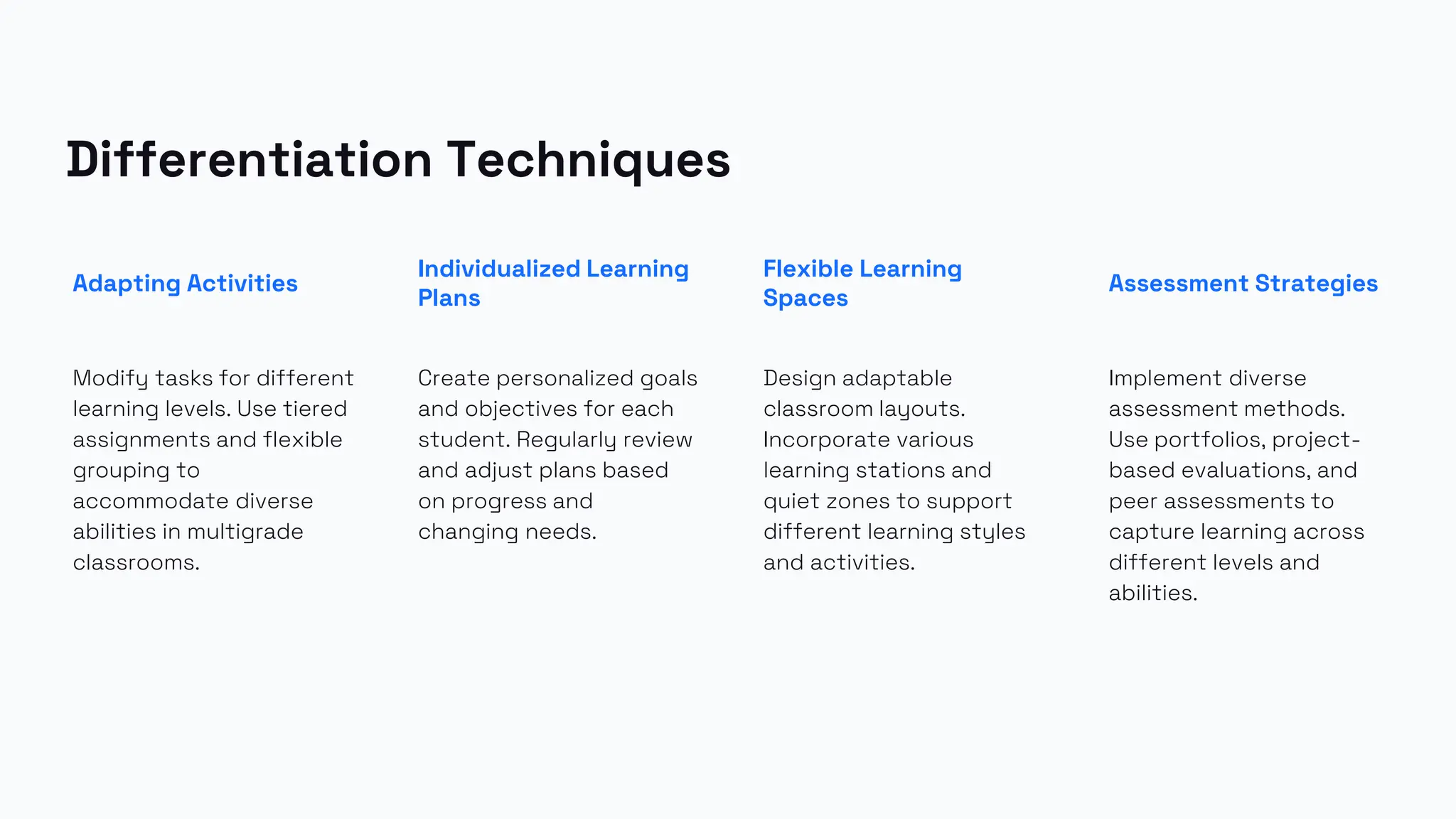
Differentiation Techniques
Adapting Activities
Individualized Learning
Plans
Flexible Learning
Spaces
Assessment Strategies
Modify tasks for different
learning levels. Use tiered
assignments and flexible
grouping to
accommodate diverse
abilities in multigrade
classrooms.
Create personalized goals
and objectives for each
student. Regularly review
and adjust plans based
on progress and
changing needs.
Design adaptable
classroom layouts.
Incorporate various
learning stations and
quiet zones to support
different learning styles
and activities.
Implement diverse
assessment methods.
Use portfolios, project-
based evaluations, and
peer assessments to
capture learning across
different levels and
abilities.
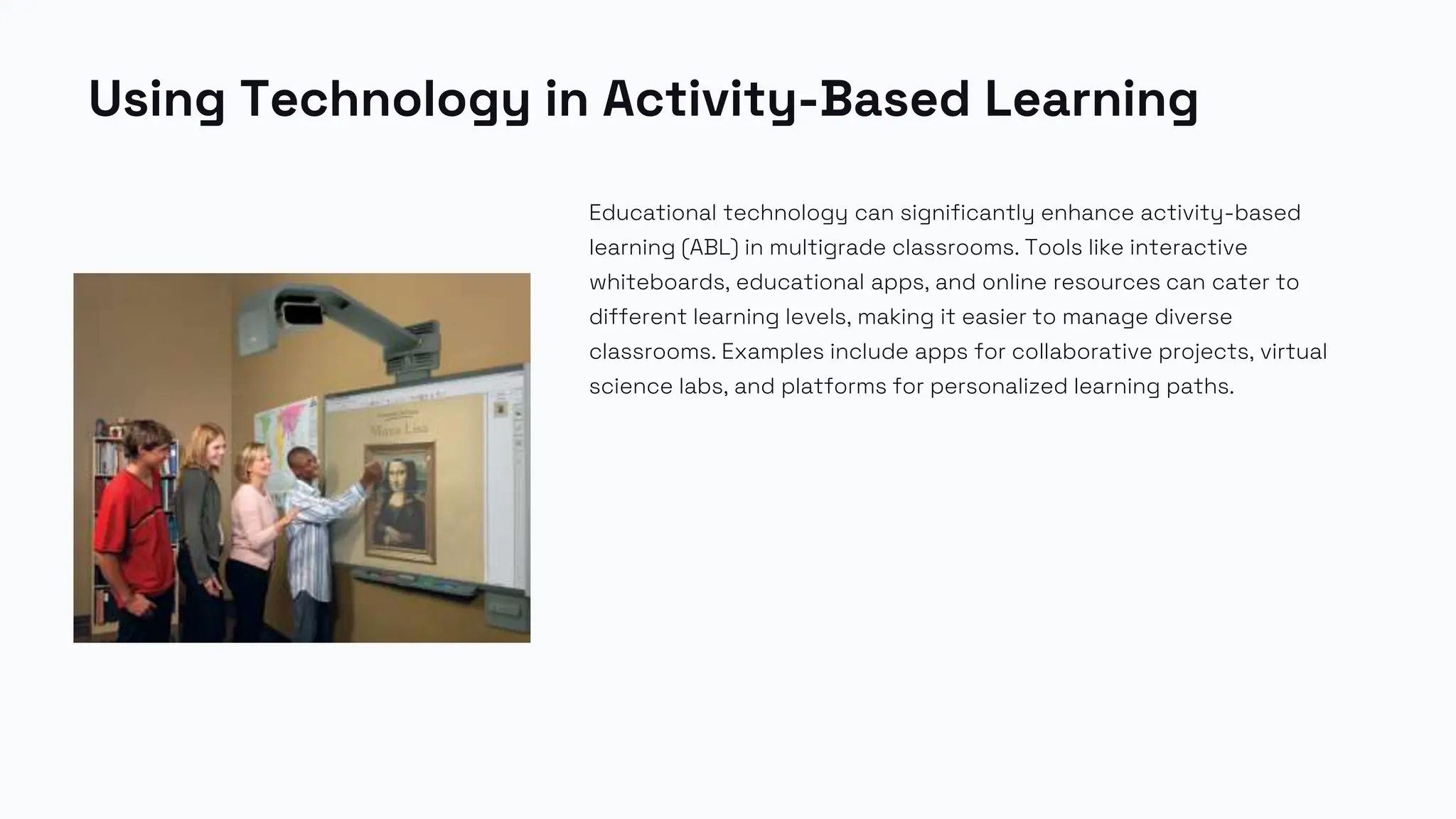
Using Technology in Activity-Based Learning
Educational technology can significantly enhance activity-based
learning (ABL) in multigrade classrooms. Tools like interactive
whiteboards, educational apps, and online resources can cater to
different learning levels, making it easier to manage diverse
classrooms. Examples include apps for collaborative projects, virtual
science labs, and platforms for personalized learning paths.
Assessment and Evaluation
Assessing Student Progress
● Portfolios for tracking assignments and projects
● Continuous assessment for real-time feedback
● Peer evaluations for collaborative feedback
Assessment Tools and Techniques
Interactive Element: Assessing an Activity
Mock Assessment Exercise
Engage in evaluating an ABL activity using provided
rubrics. Apply assessment criteria to a sample
multigrade classroom scenario.
Explore various assessment methods such as
portfolios, peer evaluations, and continuous
assessment. Learn to create effective rubrics for
multigrade ABL activities.
Teacher's Role in ABL
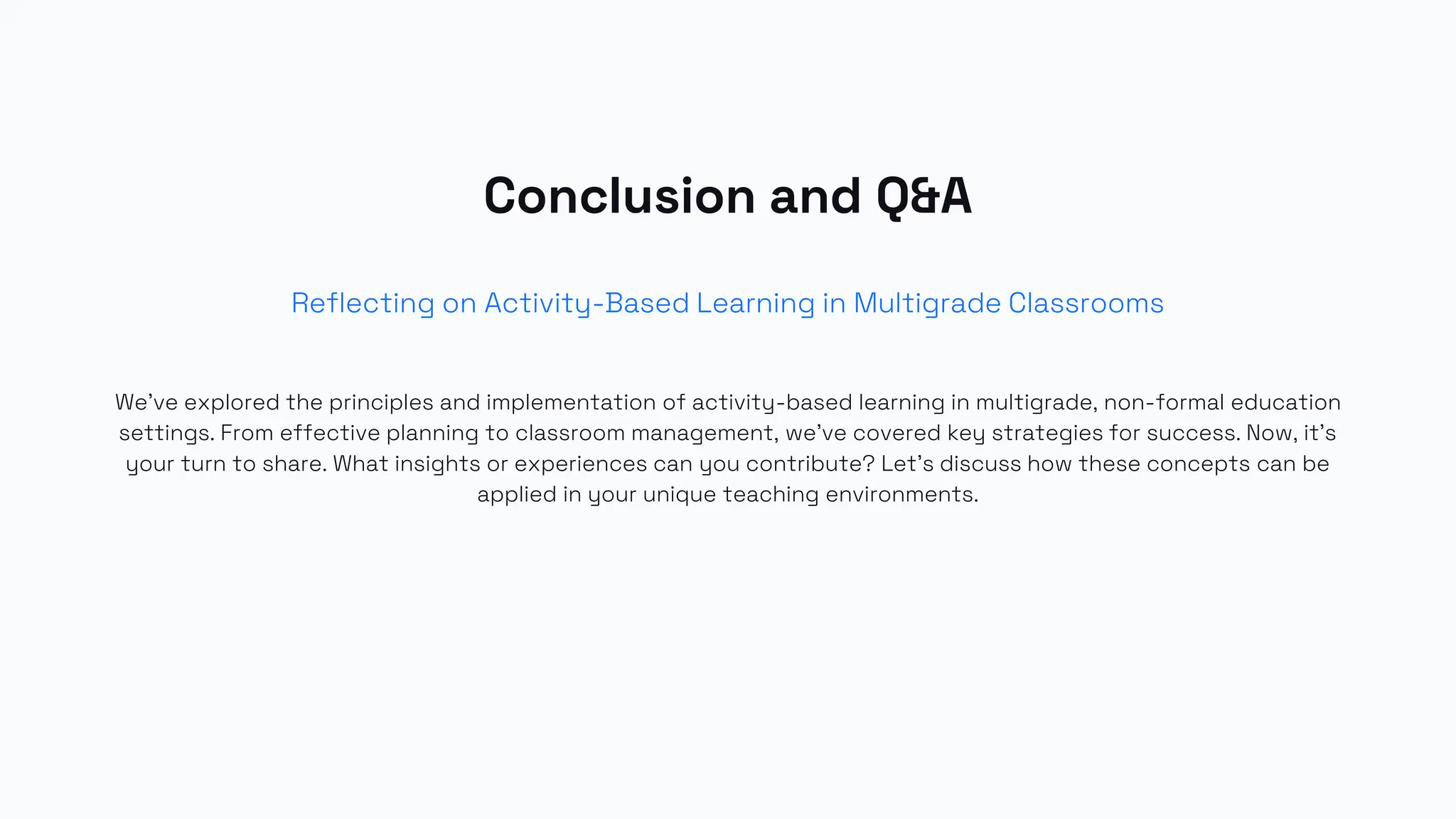
In ABL, teachers transition from traditional lecturers to facilitators.
They guide students through activities, provide support, and
encourage independent learning. Effective preparation and ongoing
support are crucial for teachers to adapt to this role.
Guiding as a Mentor
Real-World Relevance and Community Involvement
Incorporating real-world experiences and community involvement in
ABL enriches learning. Examples include community-based projects
like local history research and field trips to science museums or local
businesses.
Conclusion and Q&A
We've explored the principles and implementation of activity-based learning in multigrade, non-formal education
settings. From effective planning to classroom management, we've covered key strategies for success. Now, it's
your turn to share. What insights or experiences can you contribute? Let's discuss how these concepts can be
applied in your unique teaching environments.
Reflecting on Activity-Based Learning in Multigrade Classrooms
Additional Resources and Further Reading
Explore these resources to deepen your understanding of ABL in multigrade classrooms
● Activity Based Learning (ABL) evaluation report by UK aid - Comprehensive
study on ABL implementation in Tamil Nadu
● 5 Activity-based Learning Principles for Digital Classrooms - Adapting ABL for
online learning environments
● Open University resource on working with multigrade classes - Practical
strategies for multigrade teaching
● Academic journals on multigrade teaching - Research findings and best
practices in multigrade education
● Educational technology resources - Tools and software to support ABL in
multigrade settings
● Community-based learning projects - Ideas for integrating real-world
experiences in ABL

Activity based learning in classroom.pptx

  • 1.
  • 2.
    Introduction to Activity-BasedLearning in Multigrade Classrooms Multigrade classrooms combine students of different ages and grade levels in one classroom. Activity-Based Learning (ABL) is a pedagogical approach that emphasizes hands-on, self-initiated learning. It promotes independent learning, peer collaboration, and self-paced progress. ABL is crucial in non-formal education as it caters to diverse learning needs and encourages lifelong learning habits. Multigrade Classrooms & ABL Principles
  • 3.
    Challenges and Opportunitiesin Multigrade Teaching Benefits and Challenges ● Enhanced peer learning and social skills ● Difficulty in managing diverse learning needs ● Innovative teaching methods required
  • 4.
    Key Principles ofActivity-Based Learning Activity-Based Learning (ABL) is founded on several key principles that transform the traditional classroom. These include self-initiated learning, where students take charge of their education; independent pacing, allowing learners to progress at their own speed; and differentiated resources to cater to diverse learning needs. Peer learning and a reconfigured teacher's role as a guide are crucial. ABL also emphasizes creating a fear-free environment, promoting open learning and fostering 'pedagogic bonding'. Classroom reorganization and continuous assessment are integral to this approach, ensuring a dynamic and responsive learning space.
  • 5.
    Effective Planning forActivity-Based Learning ● Identify learning goals and objectives ● Design engaging, inclusive activities ● Prepare and organize necessary materials ● Adapt activities for different levels ● Implement and monitor progress ● Collect feedback and refine activities
  • 6.
    Examples of Activitiesfor Multigrade Classrooms Implementing activity-based learning (ABL) in multigrade classrooms requires creative and flexible strategies. Here are a few successful examples: Group Exercises: Use mixed-age groups for collaborative projects, fostering peer learning and teamwork. Cooperative Learning: Develop activities where students can teach and learn from each other. Project-Based Learning: Engage students in real-world projects that require critical thinking and problem-solving. Independent Work: Design self-guided activities that cater to varied learning paces and styles, ensuring all students remain engaged.
  • 7.
    Activity Planning Template InteractiveElement: Designing an Activity Activity Design Guidelines Consider learning objectives, age groups, and available resources. Incorporate peer learning and differentiated tasks for multigrade engagement. Use this template to outline your activity: objectives, materials, procedure, assessment, and adaptations for different grade levels.
  • 8.
    Classroom Management inMultigrade Settings Techniques for Managing Diverse Groups ● Implement flexible grouping strategies ● Utilize thematic teaching across grades ● Create independent learning stations Effective Strategies for Multigrade Classrooms ● Develop peer tutoring programs ● Establish clear routines and expectations ● Use differentiated instruction techniques
  • 9.
    Differentiation Techniques Adapting Activities IndividualizedLearning Plans Flexible Learning Spaces Assessment Strategies Modify tasks for different learning levels. Use tiered assignments and flexible grouping to accommodate diverse abilities in multigrade classrooms. Create personalized goals and objectives for each student. Regularly review and adjust plans based on progress and changing needs. Design adaptable classroom layouts. Incorporate various learning stations and quiet zones to support different learning styles and activities. Implement diverse assessment methods. Use portfolios, project- based evaluations, and peer assessments to capture learning across different levels and abilities.
  • 10.
    Using Technology inActivity-Based Learning Educational technology can significantly enhance activity-based learning (ABL) in multigrade classrooms. Tools like interactive whiteboards, educational apps, and online resources can cater to different learning levels, making it easier to manage diverse classrooms. Examples include apps for collaborative projects, virtual science labs, and platforms for personalized learning paths.
  • 11.
    Assessment and Evaluation AssessingStudent Progress ● Portfolios for tracking assignments and projects ● Continuous assessment for real-time feedback ● Peer evaluations for collaborative feedback
  • 12.
    Assessment Tools andTechniques Interactive Element: Assessing an Activity Mock Assessment Exercise Engage in evaluating an ABL activity using provided rubrics. Apply assessment criteria to a sample multigrade classroom scenario. Explore various assessment methods such as portfolios, peer evaluations, and continuous assessment. Learn to create effective rubrics for multigrade ABL activities.
  • 13.
    Teacher's Role inABL In ABL, teachers transition from traditional lecturers to facilitators. They guide students through activities, provide support, and encourage independent learning. Effective preparation and ongoing support are crucial for teachers to adapt to this role. Guiding as a Mentor
  • 14.
    Real-World Relevance andCommunity Involvement Incorporating real-world experiences and community involvement in ABL enriches learning. Examples include community-based projects like local history research and field trips to science museums or local businesses.
  • 15.
    Conclusion and Q&A We'veexplored the principles and implementation of activity-based learning in multigrade, non-formal education settings. From effective planning to classroom management, we've covered key strategies for success. Now, it's your turn to share. What insights or experiences can you contribute? Let's discuss how these concepts can be applied in your unique teaching environments. Reflecting on Activity-Based Learning in Multigrade Classrooms
  • 16.
    Additional Resources andFurther Reading Explore these resources to deepen your understanding of ABL in multigrade classrooms ● Activity Based Learning (ABL) evaluation report by UK aid - Comprehensive study on ABL implementation in Tamil Nadu ● 5 Activity-based Learning Principles for Digital Classrooms - Adapting ABL for online learning environments ● Open University resource on working with multigrade classes - Practical strategies for multigrade teaching ● Academic journals on multigrade teaching - Research findings and best practices in multigrade education ● Educational technology resources - Tools and software to support ABL in multigrade settings ● Community-based learning projects - Ideas for integrating real-world experiences in ABL

Editor's Notes

  • #3 Welcome to our presentation on Activity-Based Learning in Multigrade Classrooms. Let's start by defining our key concepts. Multigrade classrooms are unique learning environments where students of different ages and grade levels are taught together in one classroom. This setup is common in many non-formal education settings and rural areas. Activity-Based Learning, or ABL, is a pedagogical approach that emphasizes hands-on, self-initiated learning. It's particularly well-suited for multigrade classrooms because it promotes: 1. Independent learning: Students work at their own pace on tasks appropriate to their level. 2. Peer collaboration: Older students can help younger ones, fostering a collaborative environment. 3. Self-paced progress: Each student advances through the curriculum at their own speed. ABL is crucial in non-formal education systems for several reasons: - It caters to diverse learning needs, which is essential in multigrade settings. - It encourages lifelong learning habits by teaching students to take initiative in their education. - It creates a more engaging and interactive learning environment, which can be particularly beneficial in resource-constrained settings. The image on this slide illustrates the collaborative nature of ABL, showing children of various ages working together on colorful learning materials. This visual representation helps to emphasize the inclusive and engaging nature of ABL in multigrade classrooms. References: - https://assets.publishing.service.gov.uk/media/58db95a3e5274a06b0000046/Report_1.pdf - https://www.fierce-network.com/accessibility/5-activity-based-learning-principles-for-digital-classroom
  • #4 Multigrade teaching presents both unique challenges and valuable opportunities for educators. This slide explores some key aspects of multigrade classrooms: Benefits: - Enhanced peer learning and social skills: Students of different ages and abilities can learn from each other, developing important social and collaborative skills. - Innovative teaching methods: Teachers must employ creative strategies to engage students at different levels simultaneously. Challenges: - Managing diverse learning needs: It can be difficult to meet the varied academic needs of students across different grade levels. - Increased planning and preparation: Teachers need to carefully plan lessons and activities to accommodate multiple grade levels. Research has shown that despite the challenges, multigrade classrooms can be highly effective learning environments when properly managed. The key is leveraging the diversity of the classroom as a strength rather than seeing it as an obstacle. Teachers in multigrade settings often become adept at differentiated instruction and activity-based learning approaches out of necessity. This can lead to more student-centered, engaging lessons that benefit learners at all levels. Overall, while multigrade teaching requires additional effort and skill from educators, it also provides unique opportunities to foster peer learning, develop social skills, and implement innovative teaching methods that can enhance the educational experience for all students involved. References: - https://www.open.edu/openlearncreate/mod/oucontent/view.php?id=153802&printable=1 - https://www.masterofartsinteaching.net/lists/5-tips-for-teaching-in-multi-grade-classrooms/ - http://www.academicjournals.org/app/webroot/article/article1379659613_Ciftci%20and%20Baykan.pdf
  • #5 Activity-Based Learning, or ABL, is built on several key principles that fundamentally change the traditional classroom dynamic. Let's explore these principles: 1. Self-initiated learning: ABL empowers students to take charge of their own education, fostering independence and motivation. 2. Independent pacing: This approach allows students to progress at their own speed, accommodating different learning rates and styles. 3. Differentiated resources: ABL uses a variety of learning materials to cater to diverse learning needs and preferences. 4. Peer learning: Students are encouraged to learn from and with each other, promoting collaboration and social skills. 5. Teacher as guide: The teacher's role shifts from lecturer to facilitator, supporting and guiding students through their learning journey. 6. Fear-free environment: ABL emphasizes creating a safe, non-threatening learning space where students feel comfortable to explore and make mistakes. 7. Pedagogic bonding: This approach fosters stronger connections between teachers and students, enhancing the learning experience. 8. Classroom reorganization: ABL often involves physical changes to the classroom layout to support its principles. 9. Continuous assessment: Regular evaluation of student progress is integral to ABL, allowing for timely adjustments to learning strategies. These principles work together to create a dynamic, student-centered learning environment that promotes engagement, independence, and deeper understanding. References: - https://assets.publishing.service.gov.uk/media/58db95a3e5274a06b0000046/Report_1.pdf - https://www.fierce-network.com/accessibility/5-activity-based-learning-principles-for-digital-classroom
  • #6 Effective planning is crucial for successful implementation of activity-based learning in multigrade classrooms. This slide outlines key strategies for planning ABL activities: 1. Identify learning goals and objectives: Clearly define what you want students to learn and achieve through the activities. Consider the different grade levels and abilities in your classroom. 2. Design engaging, inclusive activities: Create activities that can be adapted for different levels while still being challenging and interesting for all students. Focus on hands-on, experiential learning opportunities. 3. Prepare and organize necessary materials: Gather all required resources in advance. Consider using locally available materials when possible. Ensure you have enough for all students to participate fully. 4. Adapt activities for different levels: Modify instructions, complexity, and expectations to suit various grade levels and abilities within your classroom. Provide scaffolding where needed. 5. Implement and monitor progress: As students work on activities, circulate to provide guidance, answer questions, and assess understanding. Be prepared to adjust on the fly if needed. 6. Collect feedback and refine activities: After implementing activities, gather input from students and reflect on what worked well and what could be improved. Use this information to refine and enhance future activities. By following these steps, teachers can create effective, engaging ABL experiences that cater to the diverse needs of students in multigrade classrooms. References: - https://www.masterofartsinteaching.net/lists/5-tips-for-teaching-in-multi-grade-classrooms/ - http://www.academicjournals.org/app/webroot/article/article1379659613_Ciftci%20and%20Baykan.pdf
  • #7 Now, let's explore some effective examples of activities for multigrade classrooms using activity-based learning approaches. Group Exercises: One successful strategy is to use mixed-age groups for collaborative projects. This fosters peer learning and teamwork across grade levels. For example, older students can take on leadership roles while younger ones contribute fresh perspectives. Cooperative Learning: Developing activities where students teach and learn from each other is highly effective in multigrade settings. This could involve pairing students of different ages to work on a task together, allowing knowledge sharing between grades. Project-Based Learning: Engaging students in real-world projects that require critical thinking and problem-solving is an excellent way to cater to multiple grade levels simultaneously. Projects can be designed with varying levels of complexity to challenge all students appropriately. Independent Work: Designing self-guided activities that cater to varied learning paces and styles ensures all students remain engaged, regardless of their grade level. This could include learning stations or individualized worksheets tailored to each student's needs. By implementing these types of activities, teachers can effectively manage the diverse needs of students in multigrade classrooms while promoting active, engaged learning. The key is to create flexible, adaptable learning experiences that allow students of different ages and abilities to participate meaningfully. References: - https://www.open.edu/openlearncreate/mod/oucontent/view.php?id=153802&printable=1 - http://www.academicjournals.org/app/webroot/article/article1379659613_Ciftci%20and%20Baykan.pdf - https://www.masterofartsinteaching.net/lists/5-tips-for-teaching-in-multi-grade-classrooms/
  • #8 Now it's time to put theory into practice. We're going to engage in designing an activity-based learning experience for a multigrade classroom. Let's start by looking at our activity design guidelines. When designing an ABL activity, it's crucial to consider your learning objectives, the age groups you're working with, and the resources available to you. Remember to incorporate opportunities for peer learning, as this is a valuable aspect of multigrade classrooms. Also, think about how you can differentiate tasks to engage students across different grade levels. To help you structure your activity, we've provided a planning template. This template includes sections for outlining your objectives, listing required materials, detailing the procedure, planning your assessment strategy, and considering adaptations for different grade levels. Take some time now to brainstorm an activity idea. Think about a topic that could engage multiple grade levels and how you might structure the activity to promote active learning. Use the template to guide your planning process. We'll be sharing and discussing these ideas later, so be prepared to explain your activity design.
  • #9 In multigrade classroom settings, effective management is crucial for ensuring a productive learning environment. This slide outlines key techniques and strategies for managing diverse groups in these unique educational settings. First, we'll discuss techniques for managing diverse groups: 1. Implementing flexible grouping strategies allows teachers to organize students based on skills, interests, or learning needs rather than just grade level. This approach maximizes learning opportunities across age groups. 2. Utilizing thematic teaching across grades helps create cohesion in the classroom. By focusing on overarching themes, teachers can engage students of different levels in related content while adjusting complexity for each group. 3. Creating independent learning stations enables students to work at their own pace on level-appropriate tasks, allowing the teacher to focus on specific groups or individuals as needed. Next, we'll look at effective strategies specifically for multigrade classrooms: 1. Developing peer tutoring programs encourages older or more advanced students to support younger or struggling learners, fostering a collaborative learning environment. 2. Establishing clear routines and expectations is vital in multigrade settings. Consistent procedures help students of all ages understand classroom norms and transitions. 3. Using differentiated instruction techniques allows teachers to tailor content, process, and products to meet the diverse needs of students across grade levels. These strategies and techniques, when implemented effectively, can transform potential challenges of multigrade classrooms into unique learning opportunities, creating a rich and dynamic educational experience for all students. References: - https://files.eric.ed.gov/fulltext/EJ1351460.pdf
  • #10 This slide focuses on differentiation techniques for multigrade classrooms. Here are the key points to cover: Adapting Activities: - Emphasize the importance of modifying tasks to accommodate different learning levels within the classroom. - Highlight tiered assignments as a strategy to provide appropriate challenges for all students. - Discuss flexible grouping as a way to support diverse abilities and promote peer learning. Individualized Learning Plans: - Stress the importance of creating personalized goals and objectives for each student. - Explain the need for regular review and adjustment of these plans based on student progress and changing needs. - This approach ensures that each student's unique learning journey is supported. Flexible Learning Spaces: - Describe the benefits of adaptable classroom layouts in multigrade settings. - Discuss the incorporation of various learning stations to cater to different learning styles and activities. - Mention the importance of quiet zones for independent work or small group activities. Assessment Strategies: - Highlight the need for diverse assessment methods in multigrade classrooms. - Introduce portfolios as a way to track individual progress over time. - Discuss project-based evaluations and their relevance to real-world applications. - Mention peer assessments as a tool for promoting collaborative learning and developing critical thinking skills. These differentiation techniques are crucial for effectively managing and teaching in multigrade classrooms, ensuring that all students receive appropriate instruction and support regardless of their age or ability level. References: - https://files.eric.ed.gov/fulltext/EJ1351460.pdf
  • #11 Educational technology can be a powerful tool for enhancing activity-based learning in multigrade classrooms. Interactive whiteboards allow teachers to present content that engages multiple grade levels simultaneously. Educational apps and online resources provide opportunities for personalized learning paths, allowing students to progress at their own pace. Collaborative project platforms enable mixed-age group work, fostering peer learning. Virtual science labs can provide hands-on experimentation for different grade levels. These technological tools help teachers manage the diverse needs of a multigrade classroom while keeping students actively engaged in their learning. The image shows students using tablets and interactive whiteboards, illustrating how technology can be seamlessly integrated into the multigrade learning environment to support activity-based approaches. References: - https://files.eric.ed.gov/fulltext/EJ1351460.pdf
  • #12 In multigrade Activity-Based Learning environments, assessment and evaluation play a crucial role in tracking student progress and ensuring effective learning outcomes. Let's explore three key methods: Portfolios are an excellent tool for tracking assignments and projects over time. They provide a comprehensive view of a student's growth and development across various subjects and skills. Portfolios allow teachers to see the progression of work and identify areas where students excel or need additional support. Continuous assessment is vital for providing real-time feedback to students. This approach allows teachers to monitor progress consistently, making timely interventions when necessary. It helps in identifying learning gaps quickly and adjusting teaching strategies accordingly. Peer evaluations introduce a collaborative element to the assessment process. They encourage students to engage critically with each other's work, fostering a deeper understanding of the subject matter. This method also helps develop important skills like communication, critical thinking, and constructive feedback. These assessment methods, when used in combination, provide a holistic view of student progress in multigrade ABL settings. They support personalized learning paths and help maintain high standards of education across diverse age groups and abilities. References: - https://www.open.edu/openlearncreate/mod/oucontent/view.php?id=153802&printable=1
  • #13 Now, we'll dive into an interactive element focused on assessing an Activity-Based Learning activity. This hands-on exercise will give you practical experience in evaluating ABL activities in a multigrade classroom setting. First, we'll engage in a mock assessment exercise. You'll be provided with rubrics and asked to apply assessment criteria to a sample multigrade classroom scenario. This will help you understand how to effectively evaluate ABL activities across different grade levels and learning abilities. Next, we'll explore various assessment tools and techniques specifically designed for multigrade ABL environments. We'll look at methods such as portfolios, which showcase student progress over time, peer evaluations that encourage collaborative learning, and continuous assessment strategies that provide ongoing feedback. A crucial skill we'll develop is creating effective rubrics for multigrade ABL activities. These rubrics will help you objectively assess student performance while accounting for the diverse learning levels in your classroom. Remember, effective assessment in ABL is not just about grading; it's about understanding each student's progress and tailoring future activities to meet their individual needs. This interactive session will equip you with the skills to do just that.
  • #14 In Activity-Based Learning (ABL), the teacher's role undergoes a significant transformation. Rather than being the traditional lecturer at the front of the classroom, teachers become facilitators and mentors who guide students through their learning journey. As facilitators, teachers are responsible for creating an environment that encourages independent learning and exploration. They provide support when needed, but also step back to allow students to discover and learn on their own. This approach fosters critical thinking skills and helps students become more self-reliant learners. The image on this slide illustrates this new dynamic, showing a teacher facilitating a group of students engaged in an activity-based learning exercise. Notice how the teacher is not lecturing, but rather observing and guiding as needed. It's important to note that this transition requires effective preparation and ongoing support for teachers. They need training to understand the principles of ABL and to develop strategies for implementing it successfully in their classrooms. Additionally, teachers may need support in creating and adapting activities, managing diverse learning paces, and assessing student progress in this new framework. By embracing this role, teachers can create a more engaging and effective learning environment that caters to individual student needs and promotes active participation in the learning process. References: - https://assets.publishing.service.gov.uk/media/58db95a3e5274a06b0000046/Report_1.pdf - https://www.fierce-network.com/accessibility/5-activity-based-learning-principles-for-digital-classroom
  • #15 Real-world relevance and community involvement are crucial aspects of Activity-Based Learning in multigrade classrooms. This approach enriches the learning experience by connecting classroom activities to the students' lived experiences and local context. Community-based projects offer excellent opportunities for hands-on, interdisciplinary learning. For example, students could engage in local history research, interviewing community elders and documenting their stories. This not only teaches research skills but also fosters intergenerational connections and preserves local heritage. Field trips are another valuable tool for bringing real-world experiences into the curriculum. Visits to science museums can spark curiosity and reinforce scientific concepts across different grade levels. Similarly, trips to local businesses can provide insights into various career paths and the practical application of academic skills. These experiences help students see the relevance of their studies to the world around them, increasing engagement and motivation. They also allow for natural differentiation, as students of different ages and abilities can engage with the same experience at their own level. By incorporating these real-world elements, teachers can create a more dynamic, relevant, and engaging learning environment that benefits all students in the multigrade classroom. References: - https://files.eric.ed.gov/fulltext/EJ1351460.pdf
  • #16 Throughout this presentation, we've delved into the world of activity-based learning in multigrade, non-formal education settings. We've covered essential aspects such as effective planning, classroom management, and key strategies for success in these unique learning environments. Now, it's time to reflect on what we've learned and consider how these concepts can be applied in your specific teaching contexts. Your experiences and insights are invaluable, and we encourage you to share them. This is an opportunity for open discussion. Consider sharing: 1. How might you adapt these strategies in your classroom? 2. What challenges do you foresee in implementing activity-based learning? 3. Are there any success stories or best practices from your own experience that align with what we've discussed? Remember, there are no wrong answers here. Your contributions will help enrich our understanding and provide practical insights for everyone present. Let's use this time to learn from each other and explore how we can enhance learning experiences in multigrade classrooms.
  • #17 This slide provides a curated list of additional resources for participants to explore and deepen their understanding of Activity-Based Learning (ABL) in multigrade classrooms. Let's highlight each resource: 1. The UK aid evaluation report on ABL implementation in Tamil Nadu offers a comprehensive study of the program's effectiveness and impact. 2. The article on 5 Activity-based Learning Principles for Digital Classrooms provides insights on adapting ABL for online learning environments, which is increasingly relevant in today's educational landscape. 3. The Open University resource on working with multigrade classes offers practical strategies that teachers can immediately apply in their classrooms. 4. Academic journals on multigrade teaching are valuable for those interested in research findings and best practices in this field. 5. Educational technology resources can help teachers find tools and software to support ABL in multigrade settings, enhancing the learning experience. 6. Community-based learning projects provide ideas for integrating real-world experiences into ABL, making learning more relevant and engaging for students. Encourage participants to explore these resources based on their specific interests and needs. Emphasize that continuous learning and adaptation are key to successful implementation of ABL in multigrade classrooms. References: - https://assets.publishing.service.gov.uk/media/58db95a3e5274a06b0000046/Report_1.pdf - https://www.fierce-network.com/accessibility/5-activity-based-learning-principles-for-digital-classroom - https://www.open.edu/openlearncreate/mod/oucontent/view.php?id=153802&printable=1