The document discusses active learning as a teaching method that involves students doing things and thinking about what they are doing rather than just passively listening to a lecture. It presents research showing students prefer and benefit from active learning compared to solely lectures. A three-part model of active learning is outlined involving receiving information, experience, and reflective dialogue. Various techniques for promoting individual and group active learning are provided such as assigning readings, in-class activities, reflective writing, and discussion/debates.
Agenda What is “active learning”? Why use active learning? A model of active learning Promoting active learning Techniques of active learning Individual Cooperative
3.
What is ActiveLearning? Take a minute to write an answer to these questions: How would you define “active learning”? What characterizes active learning and makes different from “inactive learning”?
4.
What is ActiveLearning? Active learning is anything that students do in the classroom to learn other than just listening to a lecture Active learning involves students in doing things and thinking about what they are doing
5.
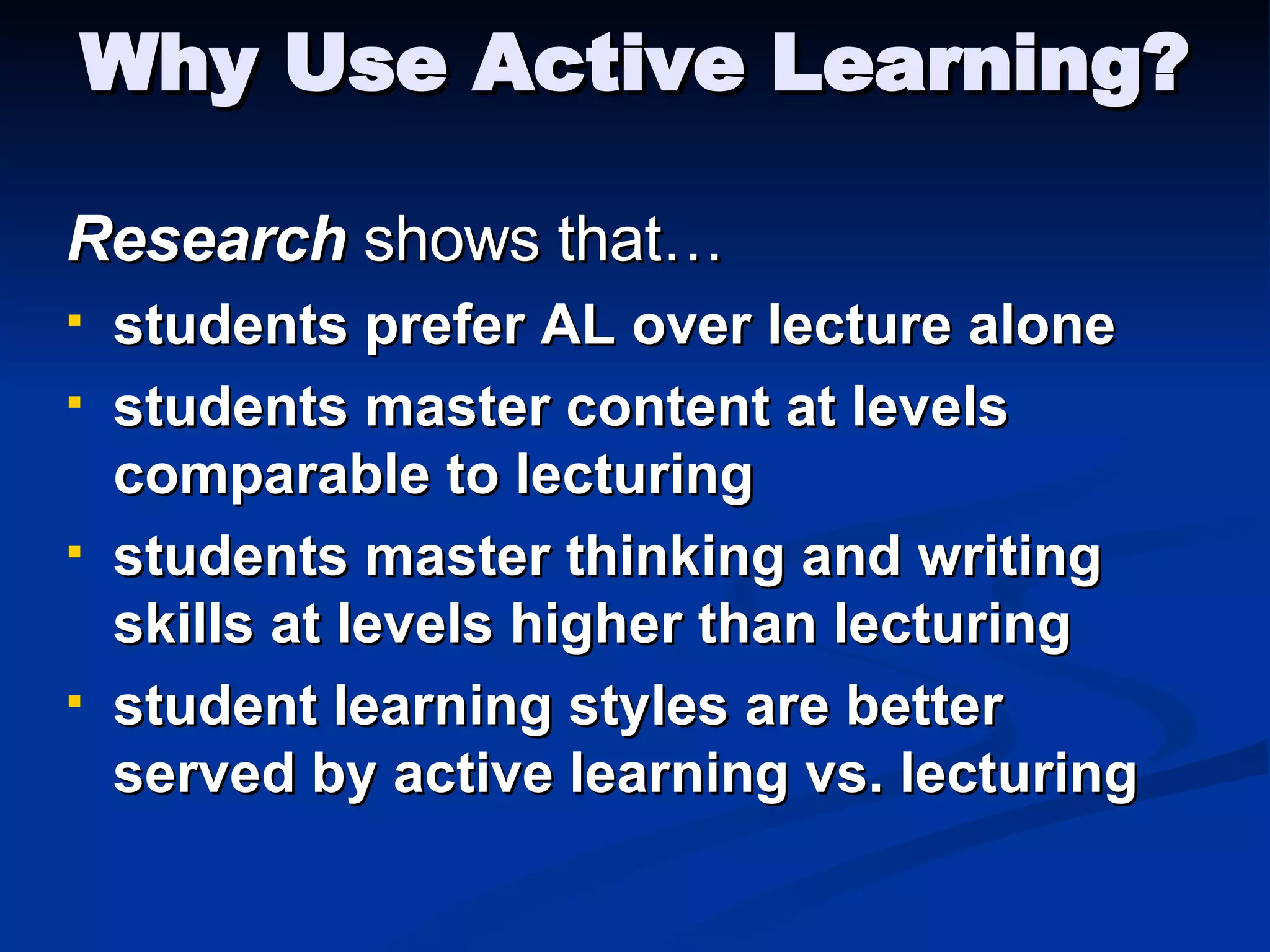
Why Use ActiveLearning? Research shows that… students prefer AL over lecture alone students master content at levels comparable to lecturing students master thinking and writing skills at levels higher than lecturing student learning styles are better served by active learning vs. lecturing
6.
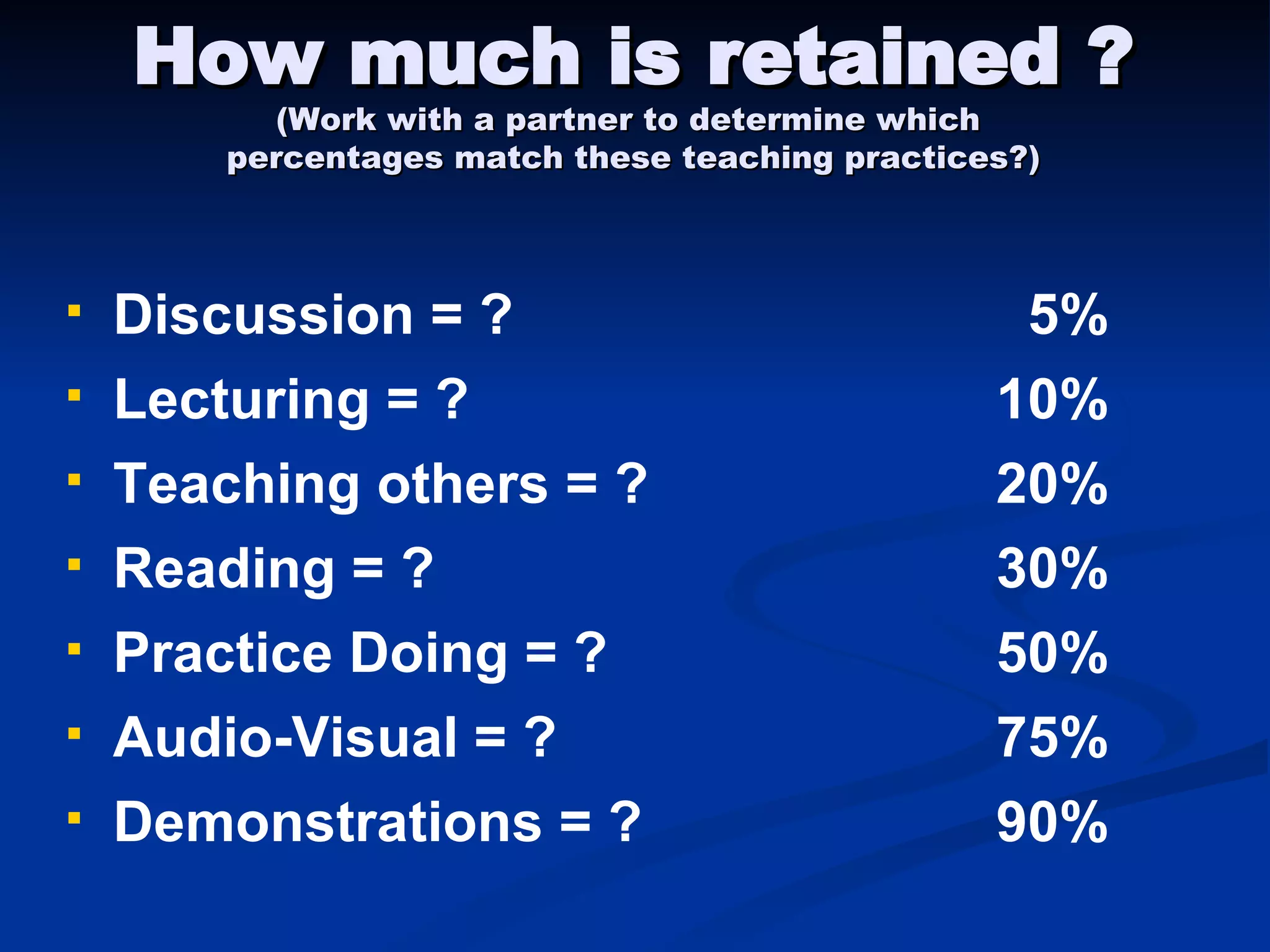
How much isretained ? (Work with a partner to determine which percentages match these teaching practices?) Discussion = ? Lecturing = ? Teaching others = ? Reading = ? Practice Doing = ? Audio-Visual = ? Demonstrations = ? 5% 10% 20% 30% 50% 75% 90%
7.
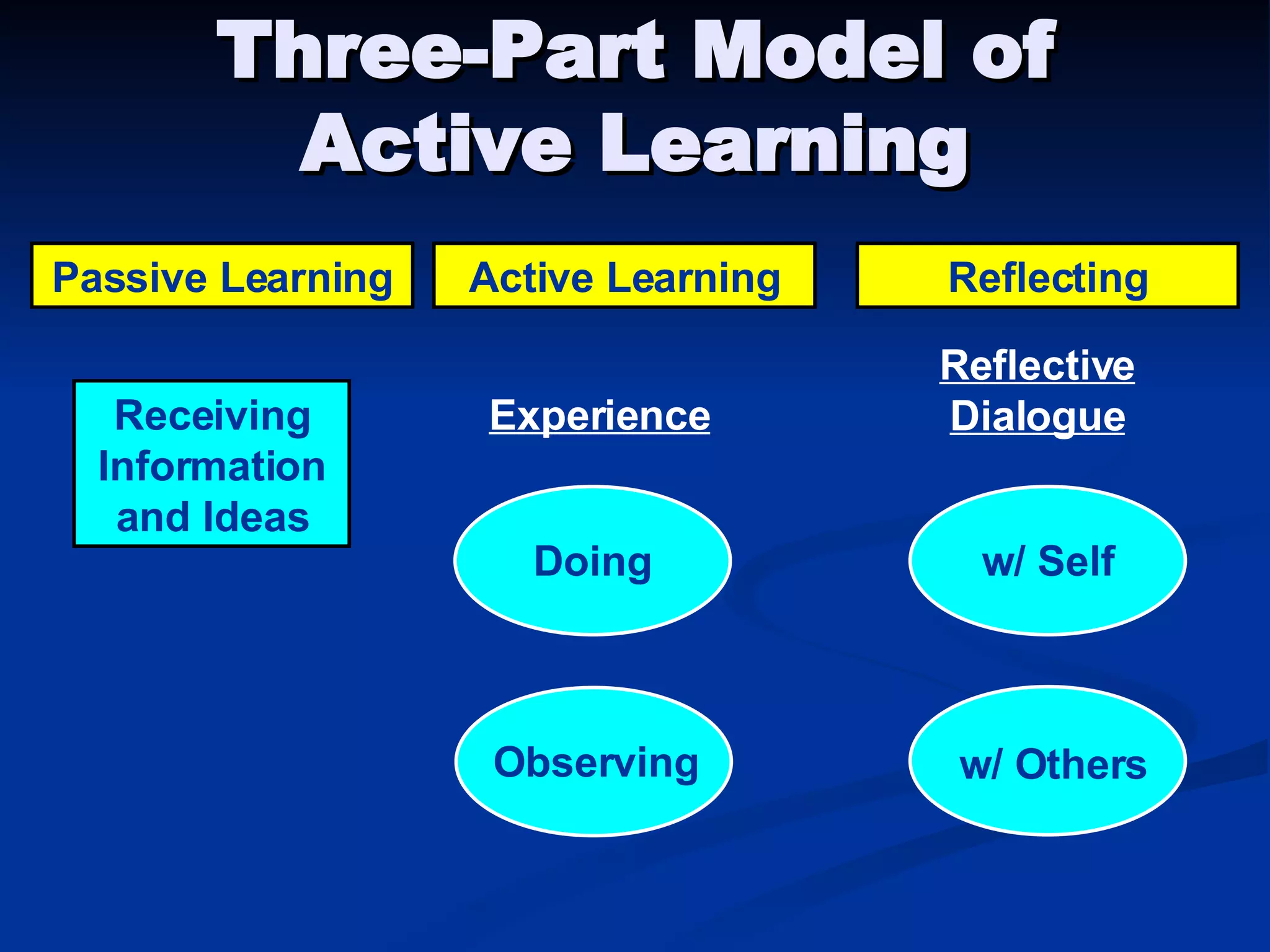
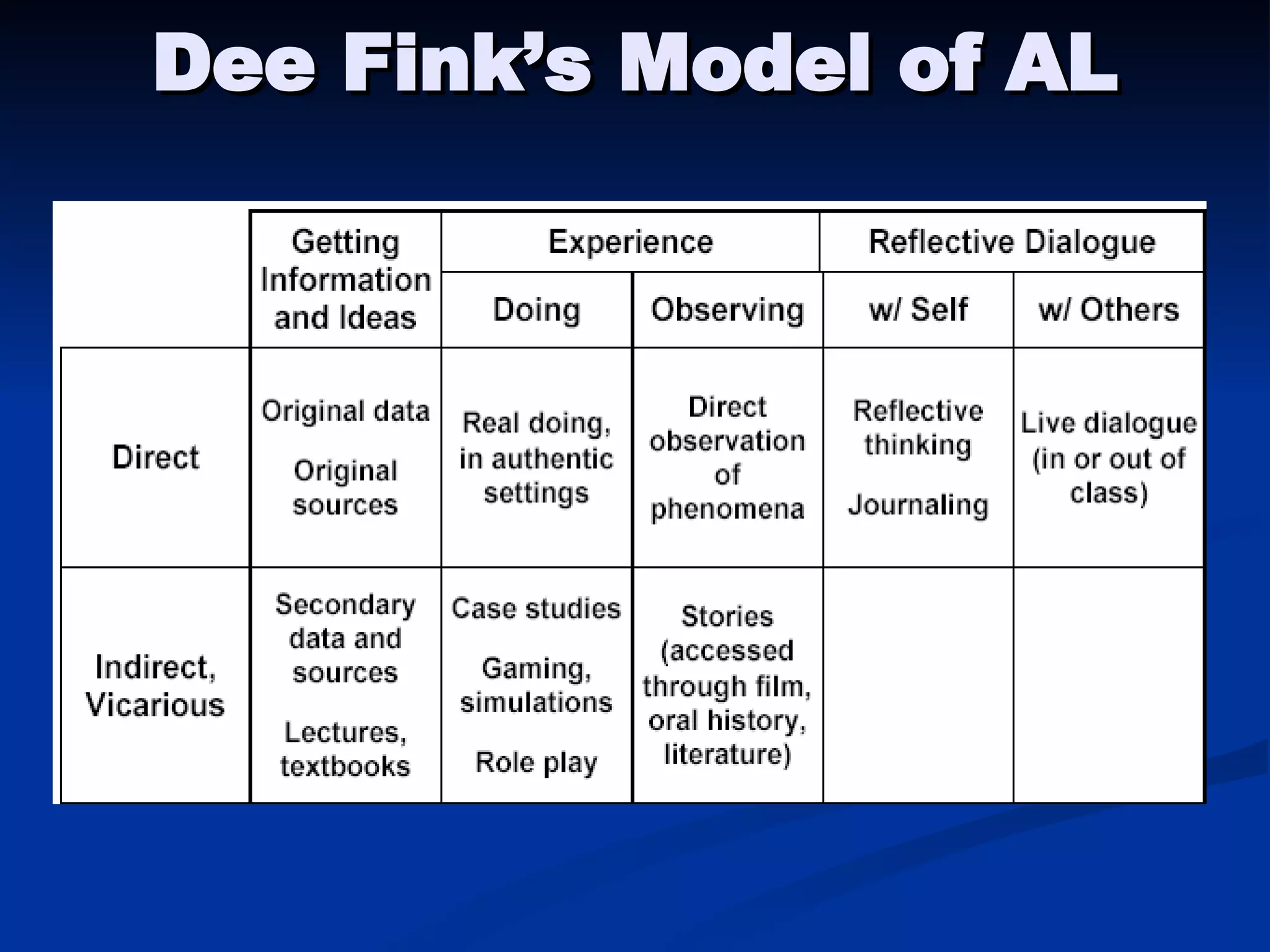
Three-Part Model ofActive Learning Active Learning Passive Learning Receiving Information and Ideas Experience Reflective Dialogue w/ Others Doing Observing w/ Self Reflecting
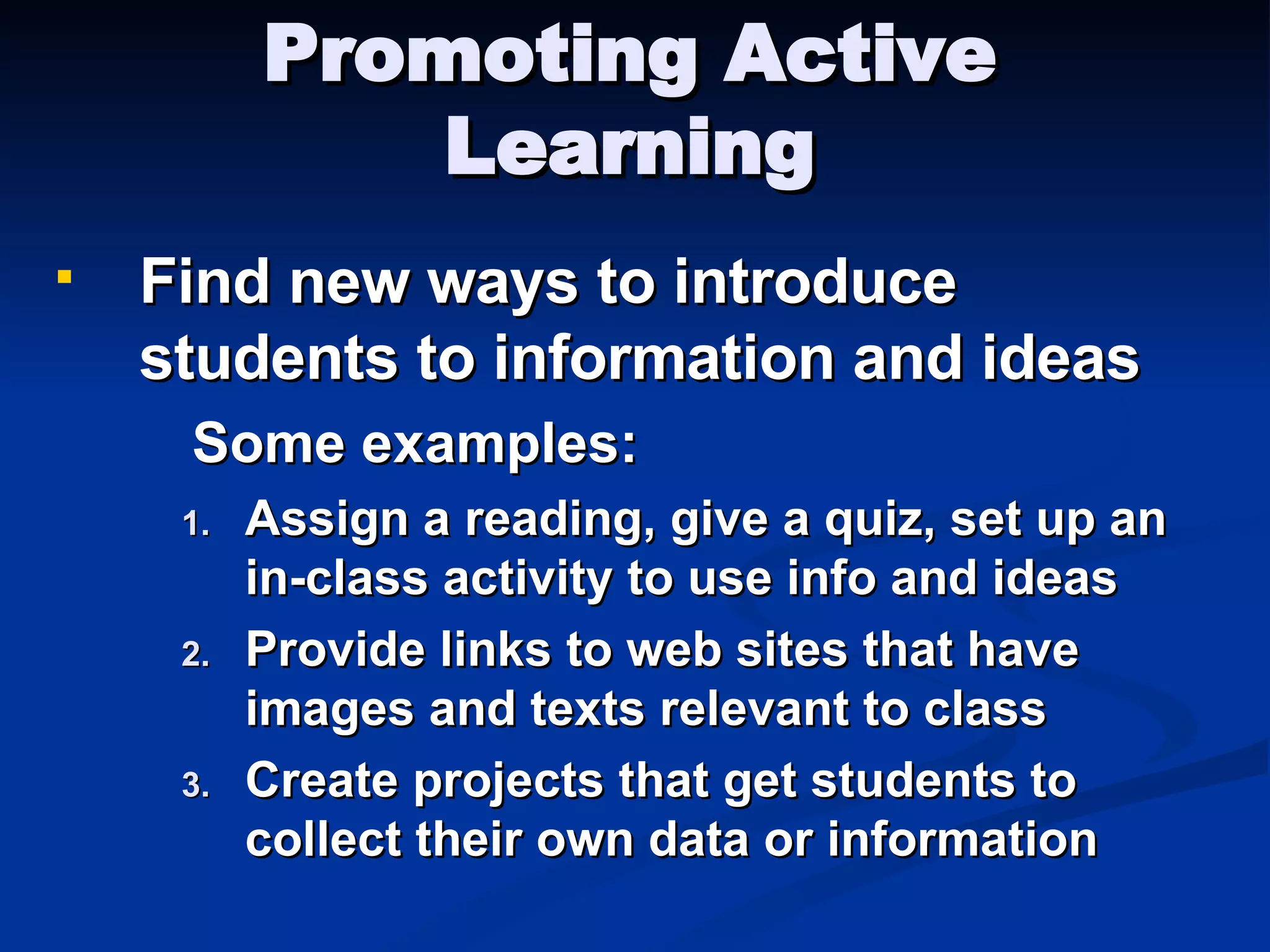
Promoting Active LearningFind new ways to introduce students to information and ideas Some examples: Assign a reading, give a quiz, set up an in-class activity to use info and ideas Provide links to web sites that have images and texts relevant to class Create projects that get students to collect their own data or information
10.
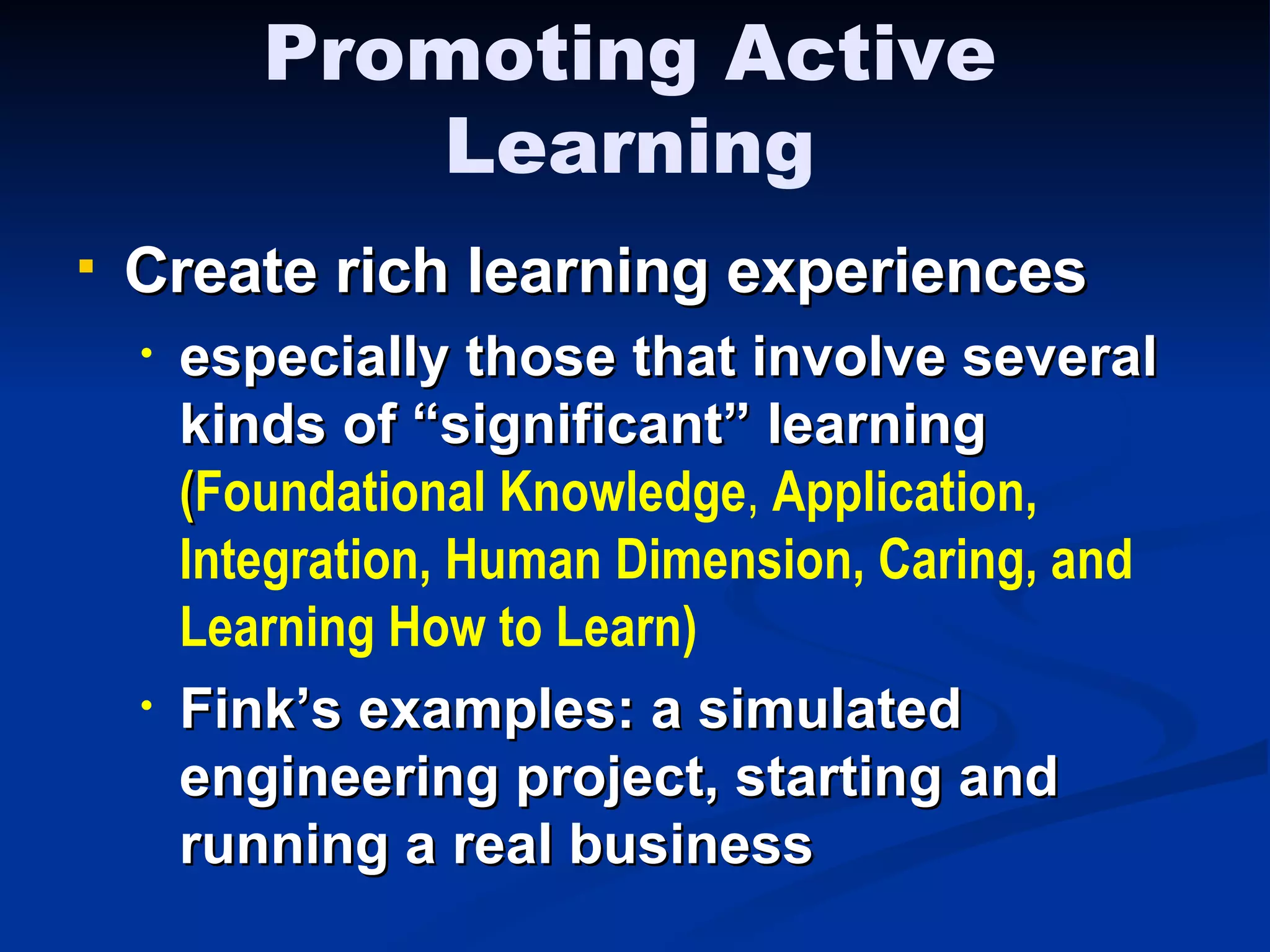
Create rich learningexperiences especially those that involve several kinds of “significant” learning ( Foundational Knowledge , Application, Integration, Human Dimension, Caring, and Learning How to Learn) Fink’s examples: a simulated engineering project, starting and running a real business Promoting Active Learning
11.
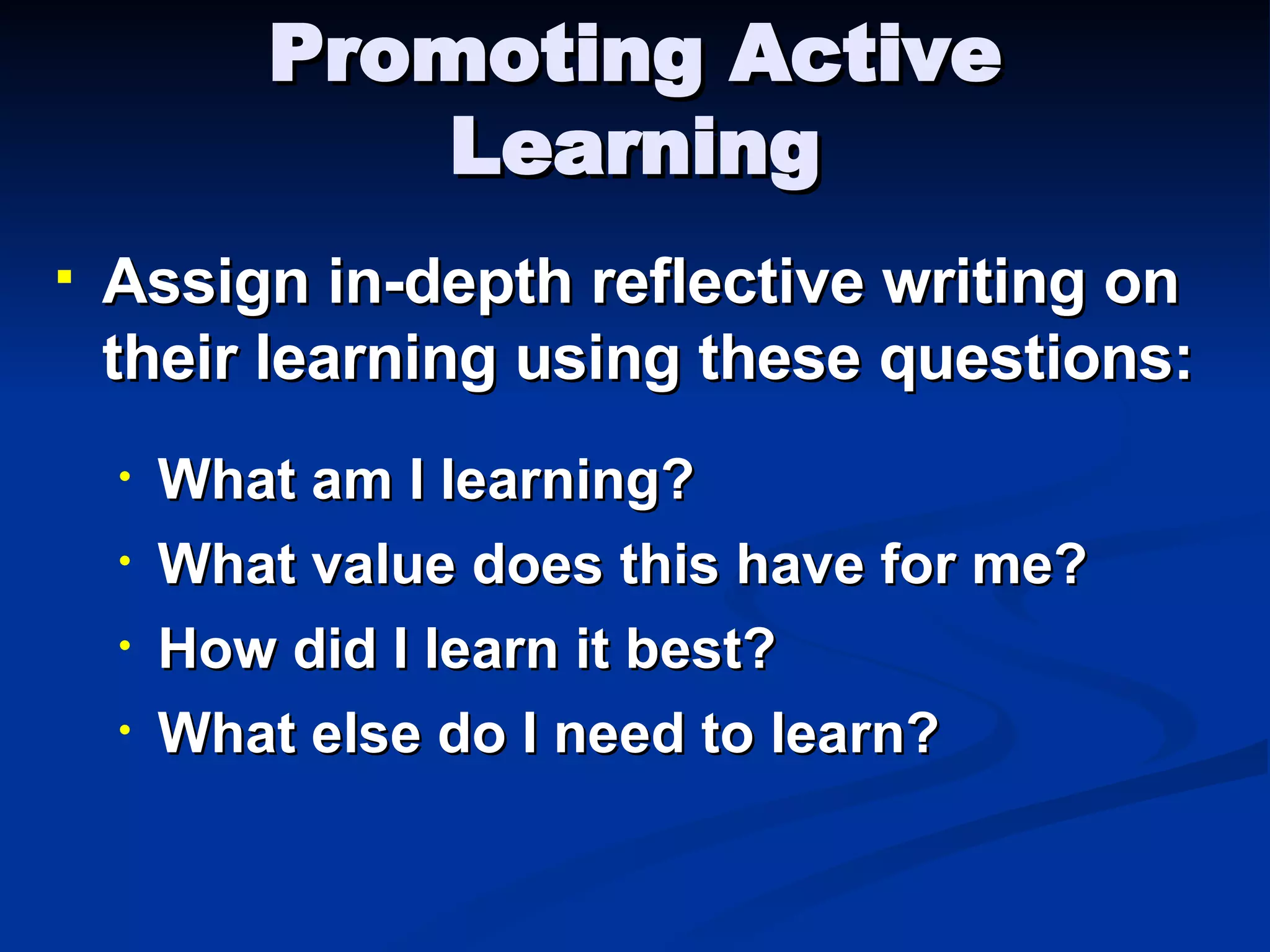
Promoting Active LearningAssign in-depth reflective writing on their learning using these questions: What am I learning? What value does this have for me? How did I learn it best? What else do I need to learn?
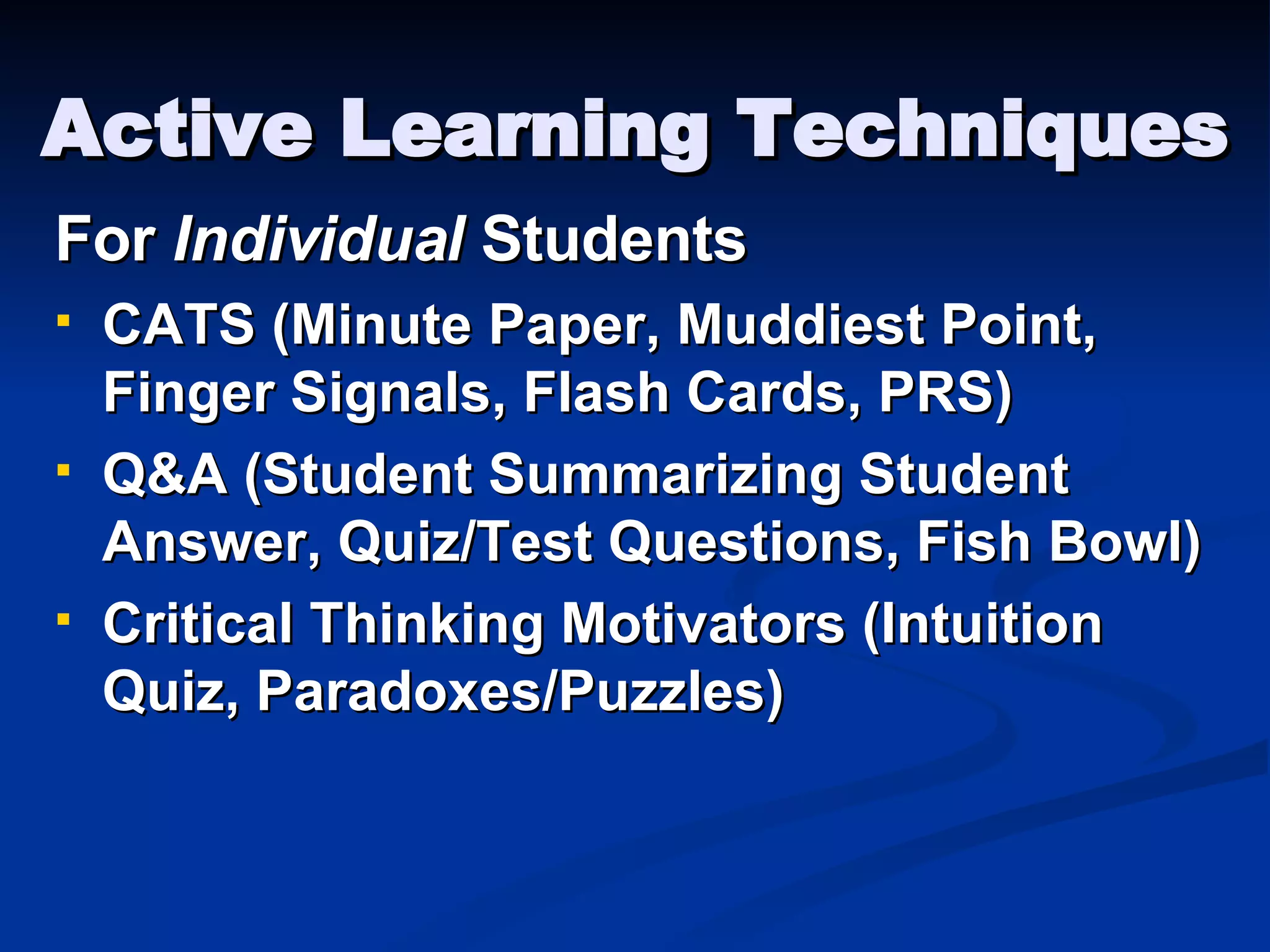
Active Learning TechniquesFor Individual Students CATS (Minute Paper, Muddiest Point, Finger Signals, Flash Cards, PRS) Q&A (Student Summarizing Student Answer, Quiz/Test Questions, Fish Bowl) Critical Thinking Motivators (Intuition Quiz, Paradoxes/Puzzles)
14.
Active Learning TechniquesHow have you tried to use active learning techniques for pairs and groups of students?
15.
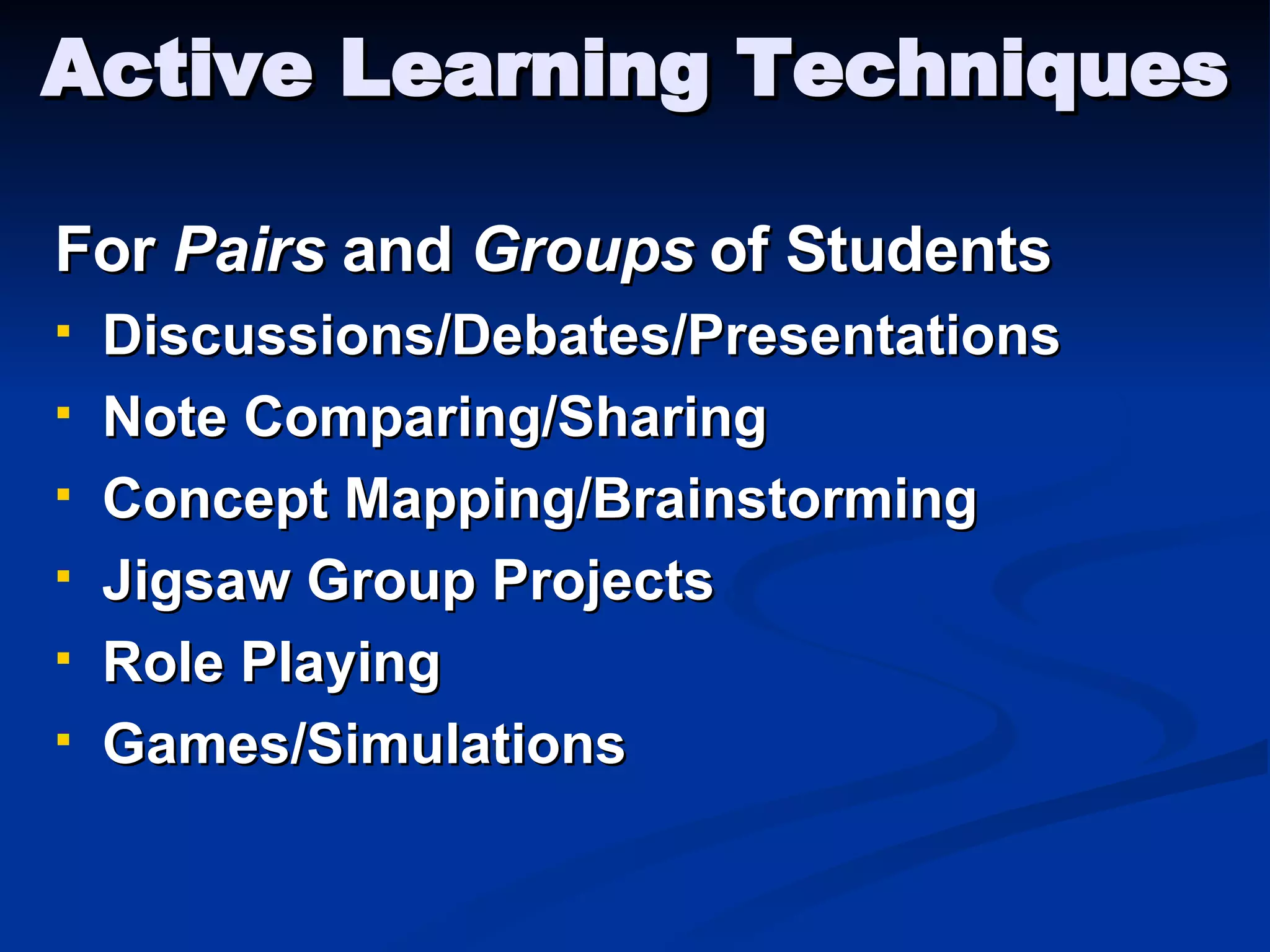
Active Learning TechniquesFor Pairs and Groups of Students Discussions/Debates/Presentations Note Comparing/Sharing Concept Mapping/Brainstorming Jigsaw Group Projects Role Playing Games/Simulations


![Active learning methods in higher education [compatibility mode]](https://cdn.slidesharecdn.com/ss_thumbnails/activelearningmethodsinhighereducationcompatibilitymode-141110040033-conversion-gate02-thumbnail.jpg?width=640&height=640&fit=bounds)


