Inquiry-Based Learning
EDT 5:30-8:20
By: Stacy Lujan, Luis Martinez, Paulina
Lopez-Gonzalez
What is Inquiry-Based Learning?
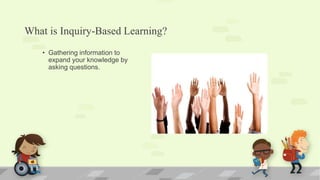
‱ Gathering information to
expand your knowledge by
asking questions.
How is Inquiry-Based Learning Used?
Inquiry
‱ Curiosity Satisfied
‱ Class Engagement
‱ Peer intercommunication
‱ Independent Learning
Traditional
‱ Fact Based
‱ Memorization
‱ Repetition
‱ Lack of Curiosity
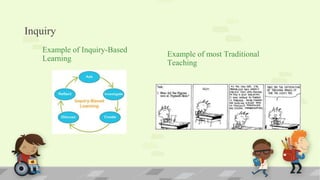
Inquiry
Example of Inquiry-Based
Learning
Example of most Traditional
Teaching
The Importance of Inquiry
-Inquiry implies a "need or want to know" premise.
-Inquiry is not so much seeking the right answer, is rather seeking
appropriate resolutions to questions and issues.
-inquiry-based learning is not a technique instead is a process that
helps to increase the intellectual engagement and deep
understanding of learners by:
● Develop their questioning, research and communication skills
● Collaborate outside the classroom
● Solve problems and create solutions.
● Participate in the creation of ideas and knowledge
How Does Inquiry Help Students
Inquiry- Based Learning helps develop:
‱ Critical thinking skills
‱ Ability to portray coherent thoughts
‱ Debate skills
‱ Listening Skills
‱ Inquisitiveness
Applying Inquiry
In-Class Application
‱ Take note of the questions imposed by students
‱ Lead class discussion by the questions given
‱ Allow for students to state their thoughts without interruption
‱ Encourage friendly debates between the students
‱ Superimpose questions
‱ Leave students wanting to know more
10 Tips for IBL
1.Give Yourself time to Prepare
2.Use collaborative learning
3.Age-appropriate Activities
4.Developing good questions
5.Incorporate discovery into lessons
6.Incorporate observation into lessons
7.Use measurement in lessons
8.Use model-building exercises
9.Incorporate design Techniques
10.Incorporate Hands-On activities
Pro-Cons of Inquiry Based Learning
Pros
‱ Embraces Curiosity
‱ Engages students in lessons
‱ Develops the Mind
‱ Creates collaboration
‱ Critical Thinking
Cons
-Time Consuming
- Wrong solutions
- Teachers have to be a “guide on
the side.”
Final Thoughts On Inquiry-Based Learning
Inquiry-Based Learning
In conclusion, Inquiry is seeking for information or knowledge by questioning.
- Individuals are able to learn by investigating scenarios and problems, and through social
experiences.
- Effective inquiry is more than just asking questions.
- Inquiry-Based Learning is when individuals attempt to convert information and data
into useful knowledge.
- Inquiry learning involves several factors: a context for questions, a framework for
questions, a focus for questions, and different levels of questions.
Video
Sources Cited
"Peak Educational Resources: Inquiry-based Learning."
Pinterest. Web. 11 Feb. 2016.
<https://www.pinterest.com/pin/71142869086074367/>.
“Instructional Design Models and Theories: Inquiry-based
Learning Model.” Web. 16 Feb. 2016.
<http://elearningindustry.com/inquiry-based-learning-model>.
“10 Tips for Inquiry-Based Learning.” Web. 16 Feb. 2016.
<http://www.worksheetlibrary.com/teachingtips/inquirybasedlearn
ingtips.html>.

Inquiry-Based Learning

  • 1.
    Inquiry-Based Learning EDT 5:30-8:20 By:Stacy Lujan, Luis Martinez, Paulina Lopez-Gonzalez
  • 2.
    What is Inquiry-BasedLearning? ‱ Gathering information to expand your knowledge by asking questions.
  • 3.
    How is Inquiry-BasedLearning Used? Inquiry ‱ Curiosity Satisfied ‱ Class Engagement ‱ Peer intercommunication ‱ Independent Learning Traditional ‱ Fact Based ‱ Memorization ‱ Repetition ‱ Lack of Curiosity
  • 4.
  • 5.
    The Importance ofInquiry -Inquiry implies a "need or want to know" premise. -Inquiry is not so much seeking the right answer, is rather seeking appropriate resolutions to questions and issues. -inquiry-based learning is not a technique instead is a process that helps to increase the intellectual engagement and deep understanding of learners by: ● Develop their questioning, research and communication skills ● Collaborate outside the classroom ● Solve problems and create solutions. ● Participate in the creation of ideas and knowledge
  • 6.
    How Does InquiryHelp Students Inquiry- Based Learning helps develop: ‱ Critical thinking skills ‱ Ability to portray coherent thoughts ‱ Debate skills ‱ Listening Skills ‱ Inquisitiveness
  • 7.
    Applying Inquiry In-Class Application ‱Take note of the questions imposed by students ‱ Lead class discussion by the questions given ‱ Allow for students to state their thoughts without interruption ‱ Encourage friendly debates between the students ‱ Superimpose questions ‱ Leave students wanting to know more
  • 8.
    10 Tips forIBL 1.Give Yourself time to Prepare 2.Use collaborative learning 3.Age-appropriate Activities 4.Developing good questions 5.Incorporate discovery into lessons 6.Incorporate observation into lessons 7.Use measurement in lessons 8.Use model-building exercises 9.Incorporate design Techniques 10.Incorporate Hands-On activities
  • 9.
    Pro-Cons of InquiryBased Learning Pros ‱ Embraces Curiosity ‱ Engages students in lessons ‱ Develops the Mind ‱ Creates collaboration ‱ Critical Thinking Cons -Time Consuming - Wrong solutions - Teachers have to be a “guide on the side.”
  • 10.
    Final Thoughts OnInquiry-Based Learning Inquiry-Based Learning In conclusion, Inquiry is seeking for information or knowledge by questioning. - Individuals are able to learn by investigating scenarios and problems, and through social experiences. - Effective inquiry is more than just asking questions. - Inquiry-Based Learning is when individuals attempt to convert information and data into useful knowledge. - Inquiry learning involves several factors: a context for questions, a framework for questions, a focus for questions, and different levels of questions.
  • 11.
  • 12.
    Sources Cited "Peak EducationalResources: Inquiry-based Learning." Pinterest. Web. 11 Feb. 2016. <https://www.pinterest.com/pin/71142869086074367/>. “Instructional Design Models and Theories: Inquiry-based Learning Model.” Web. 16 Feb. 2016. <http://elearningindustry.com/inquiry-based-learning-model>. “10 Tips for Inquiry-Based Learning.” Web. 16 Feb. 2016. <http://www.worksheetlibrary.com/teachingtips/inquirybasedlearn ingtips.html>.