Downloaded 41 times

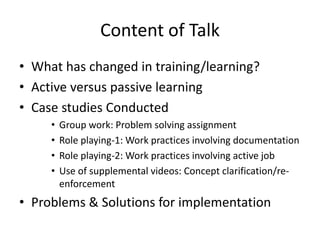
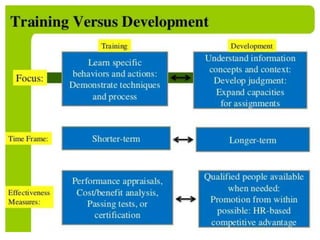


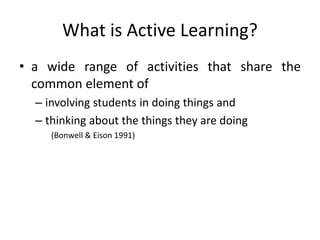
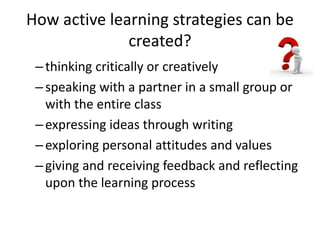
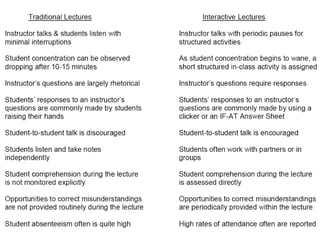
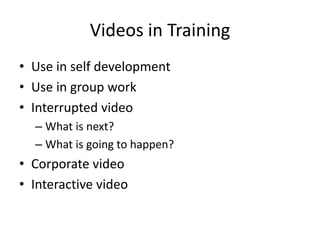
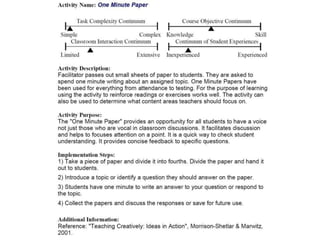

This document discusses using active learning strategies to enhance training and learning. It defines active learning as involving students in activities that promote thinking and doing, rather than passive listening. Research shows active learning improves conceptual understanding and problem-solving over traditional lectures. The document provides examples of active learning strategies like case studies, group work, role-playing, and supplemental videos. It also addresses common problems in implementing active learning, such as reduced content coverage, preparation time, large class sizes, and student resistance to new approaches. Overall, the document advocates active learning as a best practice for developing workforce skills.


