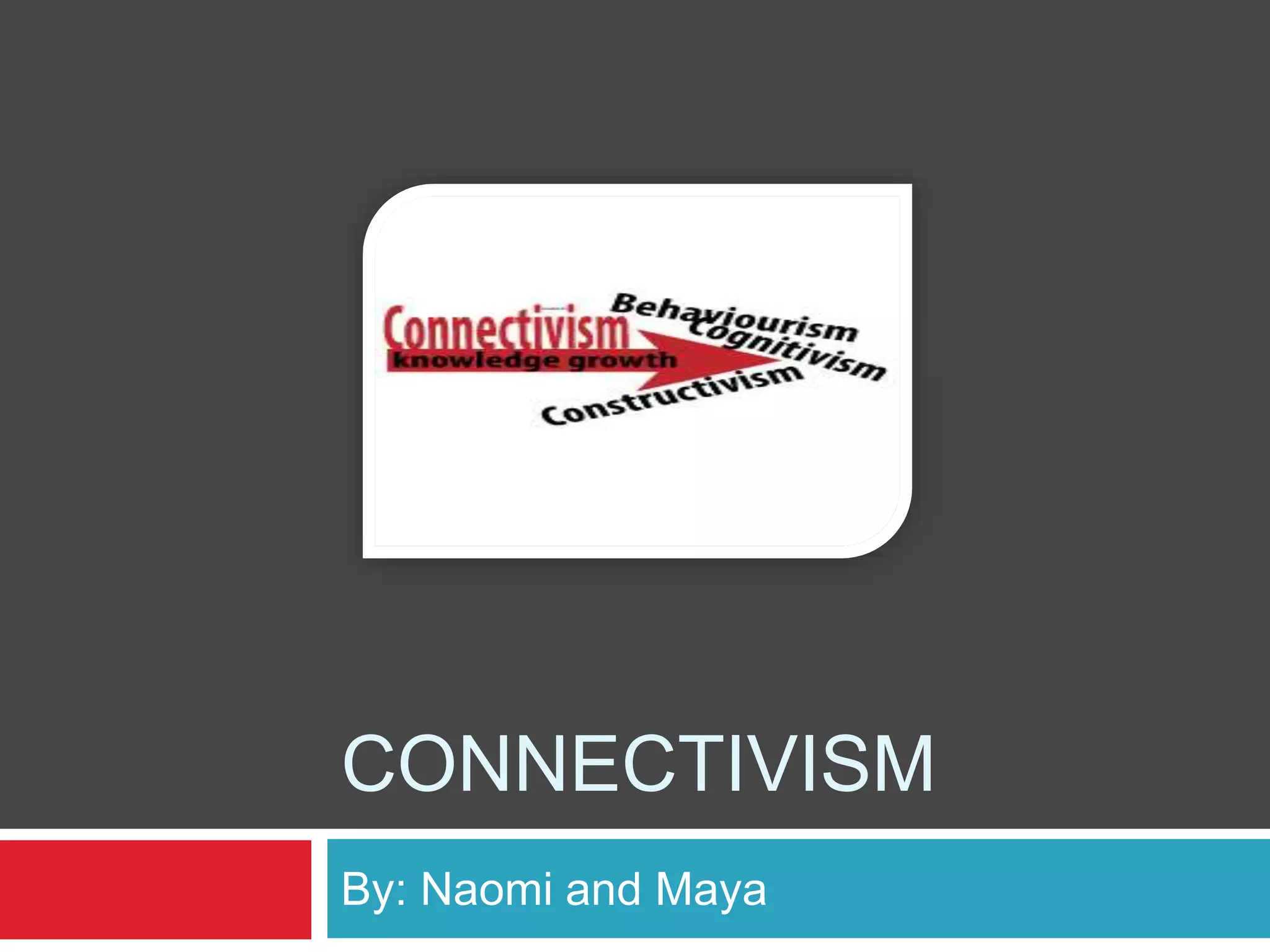
CONNECTIVISM
By: Naomi and Maya
What is Connectivism?
 The idea that knowledge
exists everywhere and is
accessed and organized by
the learner.
 Learning is the process of
creating connections and
developing a network.
 Part of learning is
considering the value of
information, and
determining if it is useful.
History of Connectivism
 George Siemens (2004/2005), along with
Stephen Downes argued that the current
learning theories were limiting, and suggested
that a new theory was needed.
 The amount of knowledge in
the world is increasing at an
extraordinary rate, and the
ability to discern important
from unimportant is
increasingly a modern skill
worth developing.
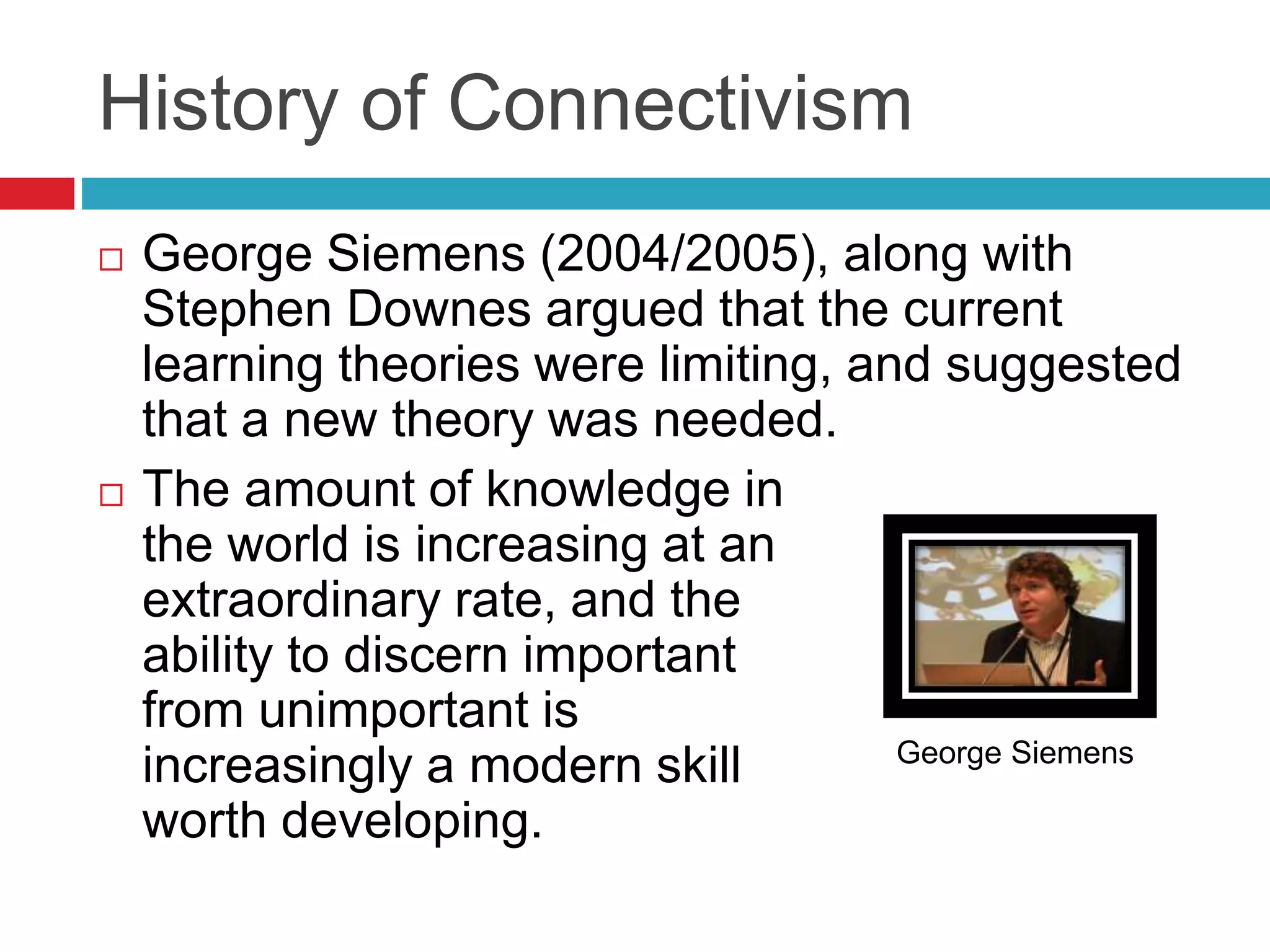
George Siemens
Evolution of Connectivism
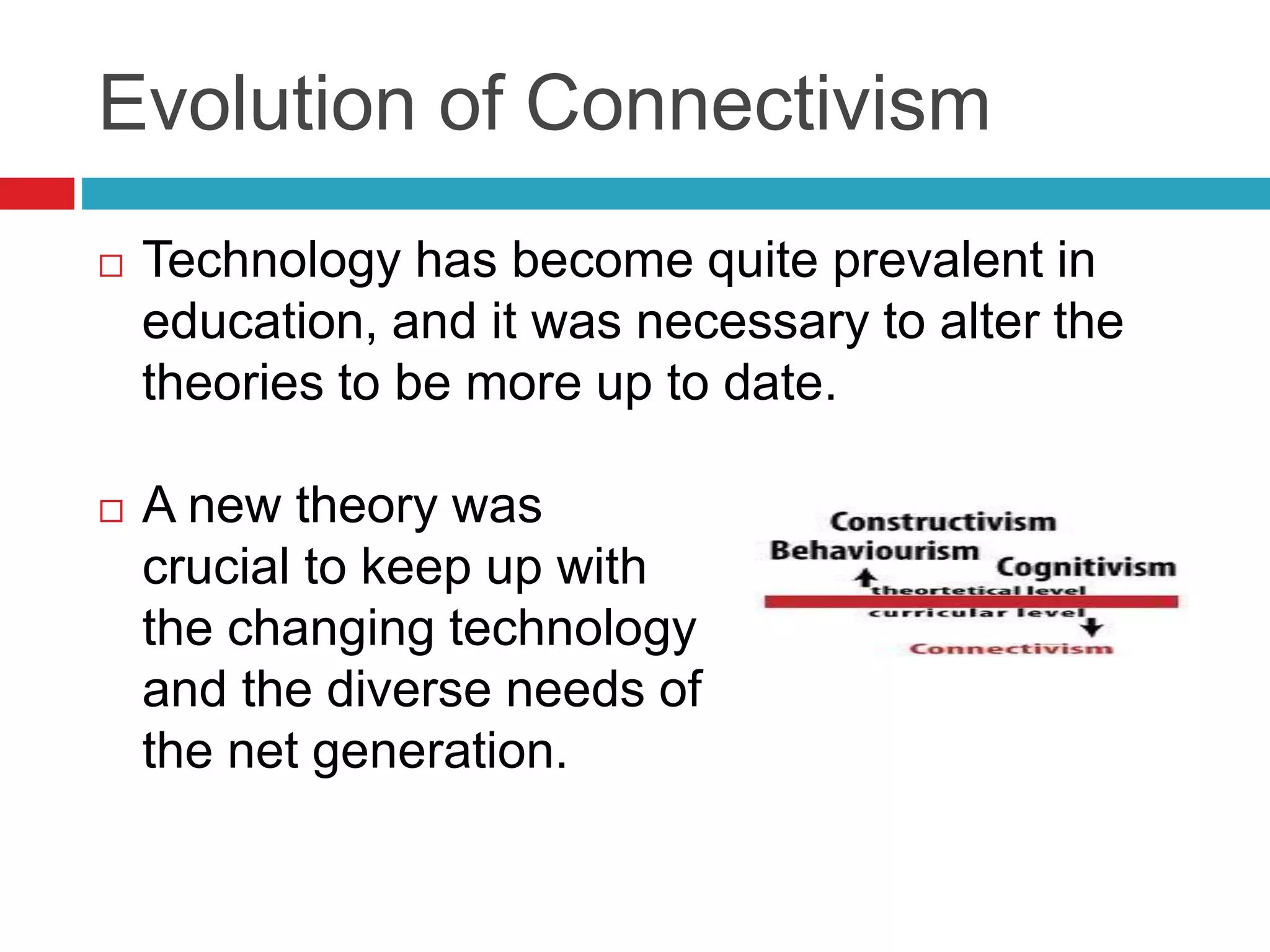
 Technology has become quite prevalent in
education, and it was necessary to alter the
theories to be more up to date.
 A new theory was
crucial to keep up with
the changing technology
and the diverse needs of
the net generation.
Connectivism
 Technology is an integral part of learning, and
its use can be limited though the lenses of
older theories.
 Networked learning allows experiences to be
shared and learning to be more effective.
 Information is all connected, and the extreme
amounts can lead to chaos.
 Connectivism attempts to integrate the realities
of our modern connected world into a process
that redefines learning.
Principles of Connectivism
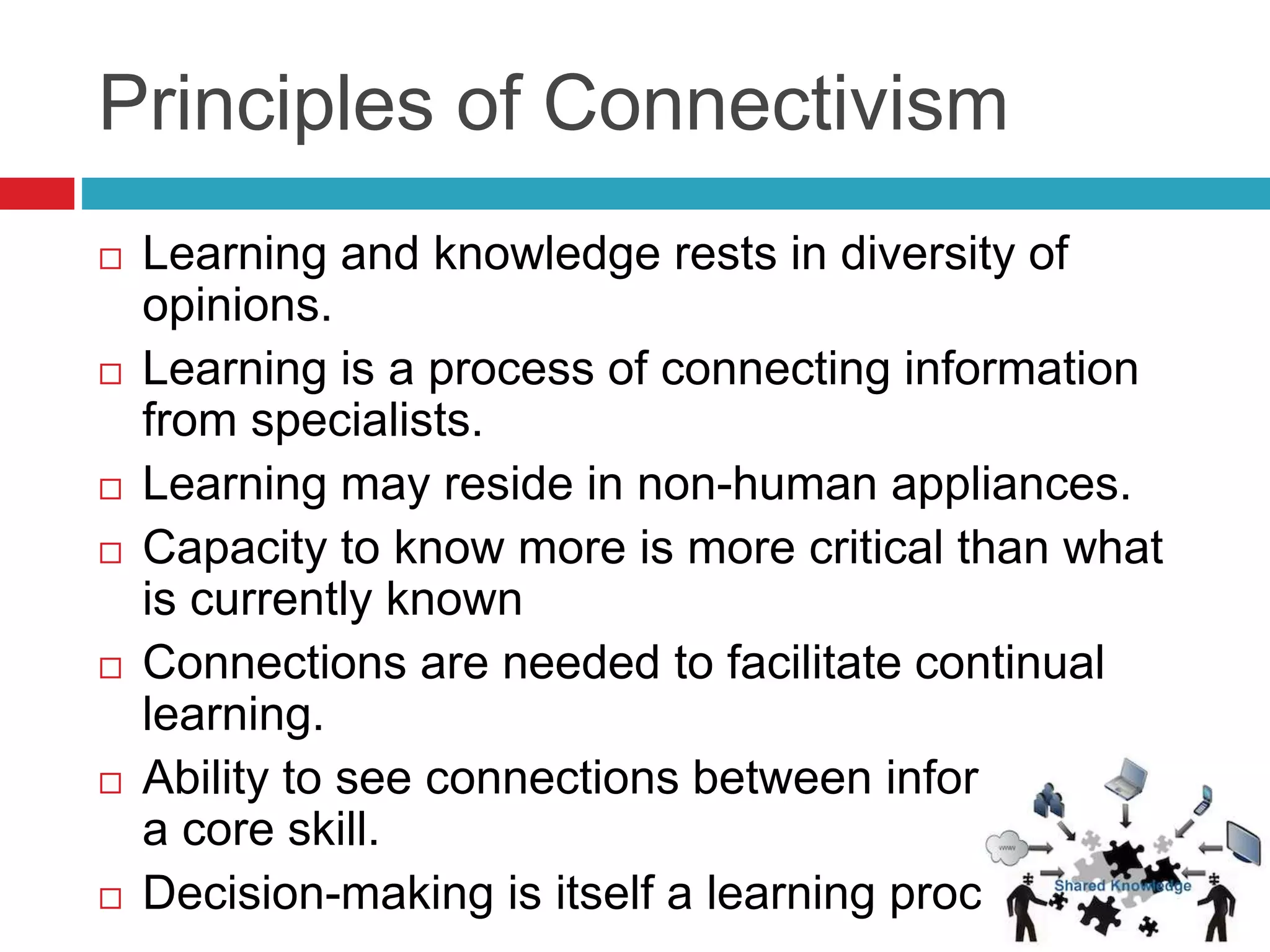
 Learning and knowledge rests in diversity of
opinions.
 Learning is a process of connecting information
from specialists.
 Learning may reside in non-human appliances.
 Capacity to know more is more critical than what
is currently known
 Connections are needed to facilitate continual
learning.
 Ability to see connections between information is
a core skill.
 Decision-making is itself a learning process.
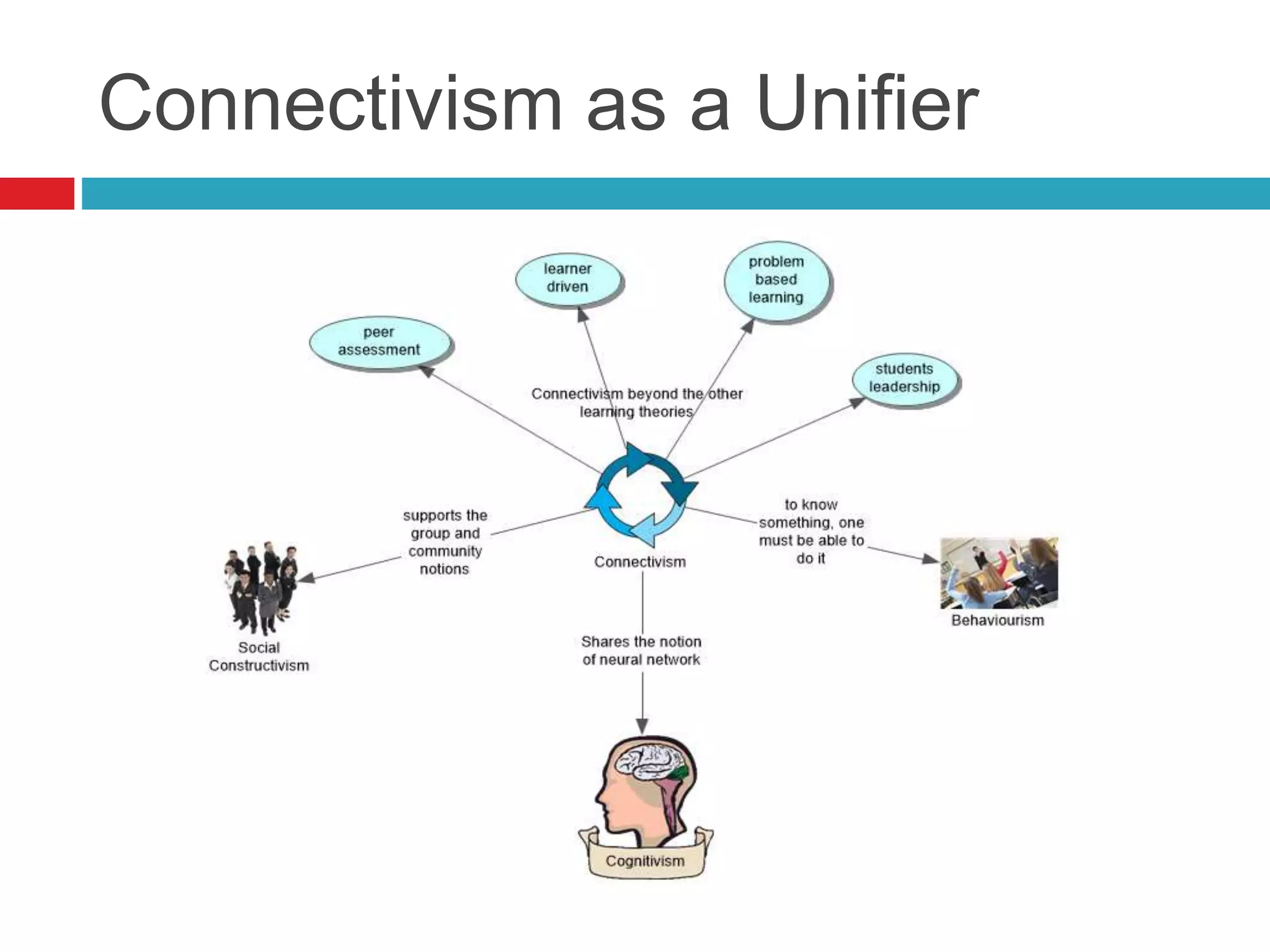
Connectivism as a Unifier
Impact on Education
 Positive
Information are readily available
 Negative
Retention of information is no longer important
Impact on education cont.
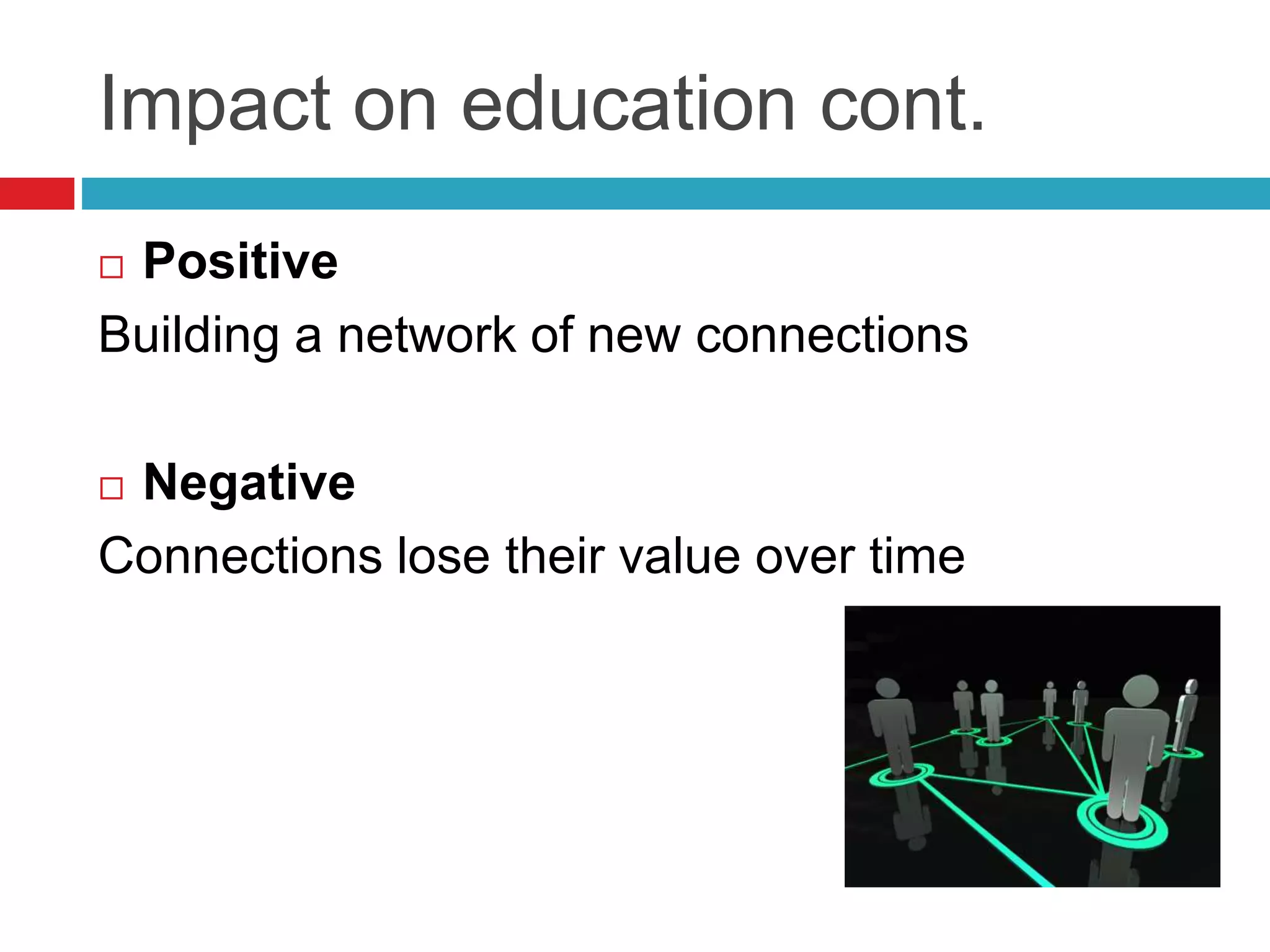
 Positive
Building a network of new connections
 Negative
Connections lose their value over time
Impact on education cont.
 Positive
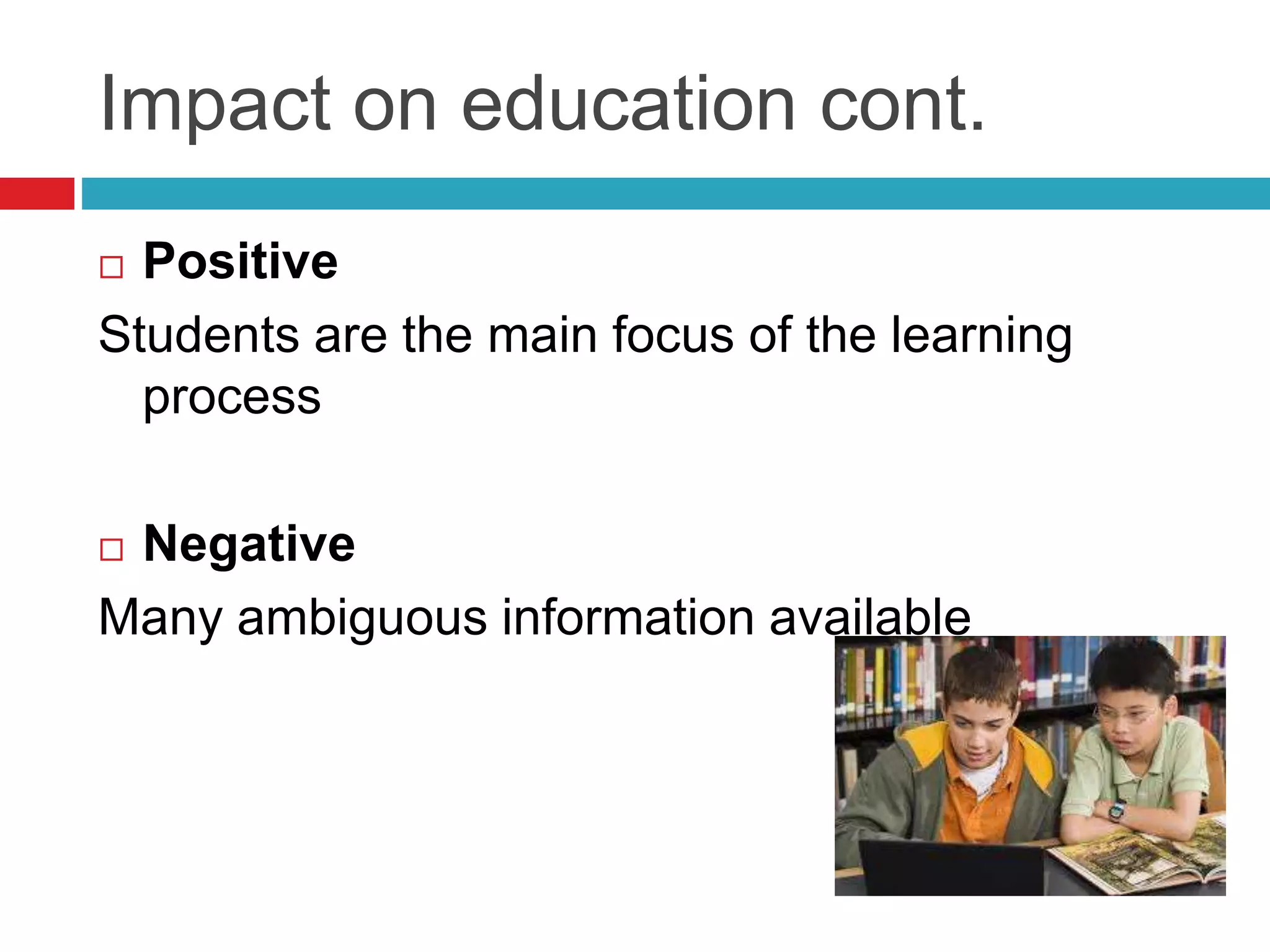
Students are the main focus of the learning
process
 Negative
Many ambiguous information available
References
 https://education-2020.wikispaces.com/Connectivism
 Elements of Connectivism by Steven Downes -
http://www.slideshare.net/Downes/elements-of-
connectivism
 Siemens, George, Connectivism: A Learning Theory
for the Digital Age December 12, 2004.
 John Barnett, Vance McPherson, and Rachel M.
Sandieson :Connected teaching and learning: The
uses and implications of connectivism in an online
class, Australasian Journal of Educational Technology,
2013, 29(5).
 Siemens, George, Connectivism: Learning Theory or
Pastime of the Self-Amused? November 12, 2006
Questions?

Connectivism

  • 1.
  • 2.
    What is Connectivism? The idea that knowledge exists everywhere and is accessed and organized by the learner.  Learning is the process of creating connections and developing a network.  Part of learning is considering the value of information, and determining if it is useful.
  • 3.
    History of Connectivism George Siemens (2004/2005), along with Stephen Downes argued that the current learning theories were limiting, and suggested that a new theory was needed.  The amount of knowledge in the world is increasing at an extraordinary rate, and the ability to discern important from unimportant is increasingly a modern skill worth developing. George Siemens
  • 4.
    Evolution of Connectivism Technology has become quite prevalent in education, and it was necessary to alter the theories to be more up to date.  A new theory was crucial to keep up with the changing technology and the diverse needs of the net generation.
  • 5.
    Connectivism  Technology isan integral part of learning, and its use can be limited though the lenses of older theories.  Networked learning allows experiences to be shared and learning to be more effective.  Information is all connected, and the extreme amounts can lead to chaos.  Connectivism attempts to integrate the realities of our modern connected world into a process that redefines learning.
  • 6.
    Principles of Connectivism Learning and knowledge rests in diversity of opinions.  Learning is a process of connecting information from specialists.  Learning may reside in non-human appliances.  Capacity to know more is more critical than what is currently known  Connections are needed to facilitate continual learning.  Ability to see connections between information is a core skill.  Decision-making is itself a learning process.
  • 7.
  • 8.
    Impact on Education Positive Information are readily available  Negative Retention of information is no longer important
  • 9.
    Impact on educationcont.  Positive Building a network of new connections  Negative Connections lose their value over time
  • 10.
    Impact on educationcont.  Positive Students are the main focus of the learning process  Negative Many ambiguous information available
  • 11.
    References  https://education-2020.wikispaces.com/Connectivism  Elementsof Connectivism by Steven Downes - http://www.slideshare.net/Downes/elements-of- connectivism  Siemens, George, Connectivism: A Learning Theory for the Digital Age December 12, 2004.  John Barnett, Vance McPherson, and Rachel M. Sandieson :Connected teaching and learning: The uses and implications of connectivism in an online class, Australasian Journal of Educational Technology, 2013, 29(5).  Siemens, George, Connectivism: Learning Theory or Pastime of the Self-Amused? November 12, 2006
  • 12.