AAccttiivvee CCoonntteenntt NNeettwwoorrkkiinngg 
((AACCNN)) 
Tal Lavian
Goals 
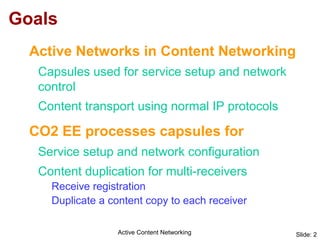
 Active Networks in Content Networking 
 Capsules used for service setup and network 
control 
 Content transport using normal IP protocols 
 CO2 EE processes capsules for 
 Service setup and network configuration 
 Content duplication for multi-receivers 
 Receive registration 
 Duplicate a content copy to each receiver 
Active Content Networking Slide: 2
What’s distinguished? 
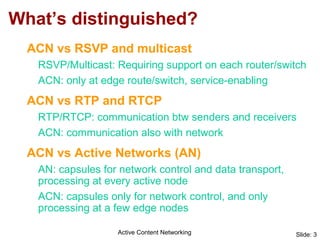
 ACN vs RSVP and multicast 
 RSVP/Multicast: Requiring support on each router/switch 
 ACN: only at edge route/switch, service-enabling 
 ACN vs RTP and RTCP 
 RTP/RTCP: communication btw senders and receivers 
 ACN: communication also with network 
 ACN vs Active Networks (AN) 
 AN: capsules for network control and data transport, 
processing at every active node 
 ACN: capsules only for network control, and only 
processing at a few edge nodes 
Active Content Networking Slide: 3
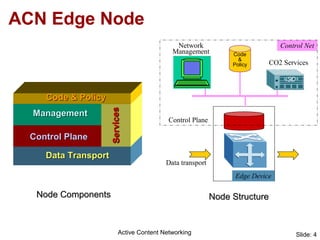
ACN Edge Node 
Services 
Control Plane 
Control Net 
Active Content Networking Slide: 4 
CCooddee  PPoolliiccyy 
MMaannaaggeemmeenntt 
CCoonnttrrooll PPllaannee 
DDaattaa TTrraannssppoorrtt 
NNooddee CCoommppoonneennttss 
Code 
 
Policy 
Data transport 
Edge Device 
Network 
Management 
CO2 Services 
iSD 
NNooddee SSttrruuccttuurree
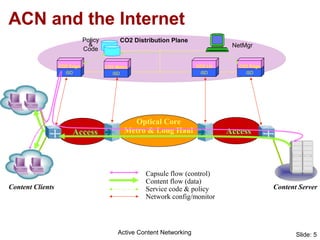
ACN and the Internet 
Active Content Networking Slide: 5 
CO2 Edge 
iSD 
CO2 Distribution Plane 
CO2 LH 
iSD 
CO2 Edge 
iSD 
Policy 
 
Code 
CO2 Metro 
iSD 
NetMgr 
Optical Core 
AcAccecsesss Metro  Long Haul Access 
Capsule flow (control) 
Content flow (data) 
Service code  policy 
Network config/monitor 
Content Clients Content Server
Issues 
 CO2 Distribution Plane 
 Capsule-based Control flow 
 Content Data flow 
 Control and Data flows: in- or off-band 
 Benefits 
 Shortcomings 
Active Content Networking Slide: 6
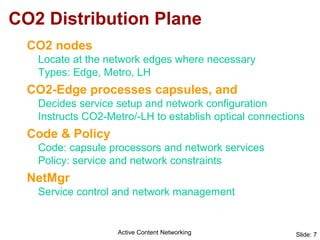
CO2 Distribution Plane 
 CO2 nodes 
 Locate at the network edges where necessary 
 Types: Edge, Metro, LH 
 CO2-Edge processes capsules, and 
 Decides service setup and network configuration 
 Instructs CO2-Metro/-LH to establish optical connections 
 Code  Policy 
 Code: capsule processors and network services 
 Policy: service and network constraints 
 NetMgr 
 Service control and network management 
Active Content Networking Slide: 7
Capsule-based Control Flow 
 Capsule: ANEP-based active packets 
 Purposes: 
Active Content Networking Slide: 8 
 User signaling 
 Content service setup: enabling/disabling, etc 
 Network configuration: bandwidth, routes 
 Feedbacks btw senders and receivers 
 Service requests and grants/permission 
 Traffic statistics, and QoS 
 Processing at CO2-Edge 
 Downloading processor code
Content Data Flow 
 Based on normal IP protocols 
 Like UDP/RTP 
 No capsule is required 
 Content Duplication by CO2-Edge 
 When more than one receiver exists 
 Why? Traffic congestion is most often here! 
Active Content Networking Slide: 9
Content Control and Data Flows 
 One connection: in-band 
 Under same UDP encapsulation 
 Resource saving 
 Capsule and Data have different payloads 
 But complex payload processing 
 But data transport may have to wait 
 Two connections: off-band 
 One for capsule and one for data 
 Separated communications 
 Network can be set up before data traffic starts 
Active Content Networking Slide: 10
Benefits 
 Easy content service setup 
 “On-the-fly” by capsules 
 Based on CO2 
 Fewer capsules and their processing 
 At CO2 edge node only 
 Little interference with data path 
 Technology integration 
 Network signaling, like RSVP 
 Data transport, like RTP 
 Traffic feedback, like RTCP 
 Content duplication, like multicast 
Active Content Networking Slide: 11
Shortcomings 
 Specific hardware support 
 Capsule redirection 
 Content filtering 
 Content duplicating 
 Inter-node CO2 communication 
Active Content Networking Slide: 12

Active Content Networking(ACN)

  • 1.
  • 2.
    Goals ActiveNetworks in Content Networking Capsules used for service setup and network control Content transport using normal IP protocols CO2 EE processes capsules for Service setup and network configuration Content duplication for multi-receivers Receive registration Duplicate a content copy to each receiver Active Content Networking Slide: 2
  • 3.
    What’s distinguished? ACN vs RSVP and multicast RSVP/Multicast: Requiring support on each router/switch ACN: only at edge route/switch, service-enabling ACN vs RTP and RTCP RTP/RTCP: communication btw senders and receivers ACN: communication also with network ACN vs Active Networks (AN) AN: capsules for network control and data transport, processing at every active node ACN: capsules only for network control, and only processing at a few edge nodes Active Content Networking Slide: 3
  • 4.
    ACN Edge Node Services Control Plane Control Net Active Content Networking Slide: 4 CCooddee PPoolliiccyy MMaannaaggeemmeenntt CCoonnttrrooll PPllaannee DDaattaa TTrraannssppoorrtt NNooddee CCoommppoonneennttss Code Policy Data transport Edge Device Network Management CO2 Services iSD NNooddee SSttrruuccttuurree
  • 5.
    ACN and theInternet Active Content Networking Slide: 5 CO2 Edge iSD CO2 Distribution Plane CO2 LH iSD CO2 Edge iSD Policy Code CO2 Metro iSD NetMgr Optical Core AcAccecsesss Metro Long Haul Access Capsule flow (control) Content flow (data) Service code policy Network config/monitor Content Clients Content Server
  • 6.
    Issues CO2Distribution Plane Capsule-based Control flow Content Data flow Control and Data flows: in- or off-band Benefits Shortcomings Active Content Networking Slide: 6
  • 7.
    CO2 Distribution Plane CO2 nodes Locate at the network edges where necessary Types: Edge, Metro, LH CO2-Edge processes capsules, and Decides service setup and network configuration Instructs CO2-Metro/-LH to establish optical connections Code Policy Code: capsule processors and network services Policy: service and network constraints NetMgr Service control and network management Active Content Networking Slide: 7
  • 8.
    Capsule-based Control Flow Capsule: ANEP-based active packets Purposes: Active Content Networking Slide: 8 User signaling Content service setup: enabling/disabling, etc Network configuration: bandwidth, routes Feedbacks btw senders and receivers Service requests and grants/permission Traffic statistics, and QoS Processing at CO2-Edge Downloading processor code
  • 9.
    Content Data Flow Based on normal IP protocols Like UDP/RTP No capsule is required Content Duplication by CO2-Edge When more than one receiver exists Why? Traffic congestion is most often here! Active Content Networking Slide: 9
  • 10.
    Content Control andData Flows One connection: in-band Under same UDP encapsulation Resource saving Capsule and Data have different payloads But complex payload processing But data transport may have to wait Two connections: off-band One for capsule and one for data Separated communications Network can be set up before data traffic starts Active Content Networking Slide: 10
  • 11.
    Benefits Easycontent service setup “On-the-fly” by capsules Based on CO2 Fewer capsules and their processing At CO2 edge node only Little interference with data path Technology integration Network signaling, like RSVP Data transport, like RTP Traffic feedback, like RTCP Content duplication, like multicast Active Content Networking Slide: 11
  • 12.
    Shortcomings Specifichardware support Capsule redirection Content filtering Content duplicating Inter-node CO2 communication Active Content Networking Slide: 12