

Amit Biswas
ID: 143003014
Department of Textile engineering
Green University of Bangladesh
Acrylics:
 A manufactured fiber in which the fiber forming substance is
any long chain synthetic polymer composed of at least 85% by
weight of acrylonitrile units . these fibers have an average
molecular weight of ~100,000, about 1900 monomer units.
Acrylonitrile:
 The substance from which acrylic fibers are made and from
which the generic name is derived was first made in Germany
in 1893 .
 Resilient and retains shape
 Quick drying
 Resistant to water damage, sunlight and does
not fade
 Resistant to mold, mildew and insects
 Flammable
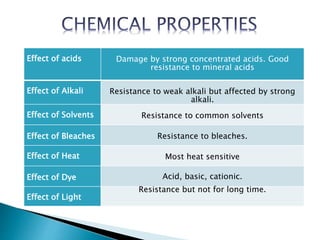
Effect of acids Damage by strong concentrated acids. Good
resistance to mineral acids
Effect of Alkali Resistance to weak alkali but affected by strong
alkali.
Effect of Solvents Resistance to common solvents
Effect of Bleaches Resistance to bleaches.
Effect of Heat Most heat sensitive
Effect of Dye Acid, basic, cationic.
Effect of Light
Resistance but not for long time.
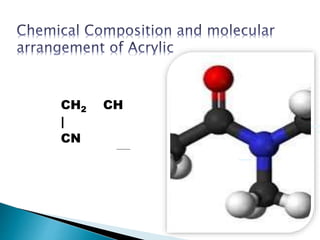
CH2 CH
|
CN
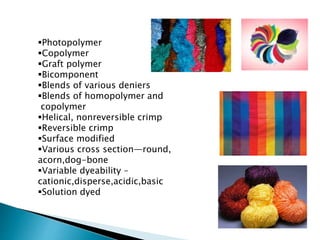
Photopolymer
Copolymer
Graft polymer
Bicomponent
Blends of various deniers
Blends of homopolymer and
copolymer
Helical, nonreversible crimp
Reversible crimp
Surface modified
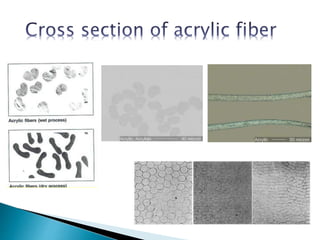
Various cross section—round,
acorn,dog-bone
Variable dyeability –
cationic,disperse,acidic,basic
Solution dyed
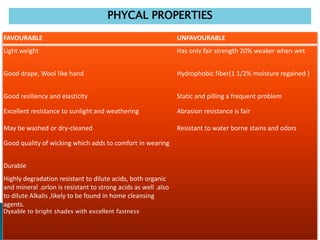
FAVOURABLE UNFAVOURABLE
Light weight Has only fair strength 20% weaker when wet
Good drape, Wool like hand Hydrophobic fiber(1 1/2% moisture regained )
Good resiliency and elasticity Static and pilling a frequent problem
Excellent resistance to sunlight and weathering Abrasion resistance is fair
May be washed or dry-cleaned Resistant to water borne stains and odors
Good quality of wicking which adds to comfort in wearing
Durable
Highly degradation resistant to dilute acids, both organic
and mineral .orlon is resistant to strong acids as well .also
to dilute Alkalis ,likely to be found in home cleansing
agents.
Dyeable to bright shades with excellent fastness
PHYCAL PROPERTIES
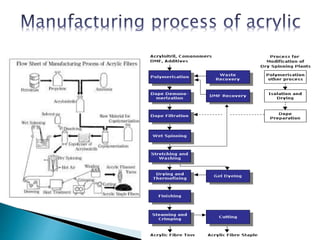
The acrylic process is a "one step technology", with
the following main characteristics
1. polymerization in solution
2. direct feeding of the dope to spinning
3. wet spinning.
4. DMF as solvent for both polymerization and spinning
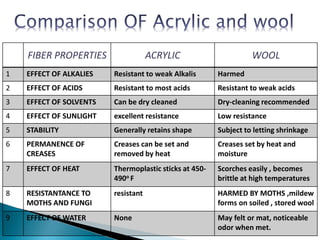
S.N
O FIBER PROPERTIES ACRYLIC WOOL
1 EFFECT OF ALKALIES Resistant to weak Alkalis Harmed
2 EFFECT OF ACIDS Resistant to most acids Resistant to weak acids
3 EFFECT OF SOLVENTS Can be dry cleaned Dry-cleaning recommended
4 EFFECT OF SUNLIGHT excellent resistance Low resistance
5 STABILITY Generally retains shape Subject to letting shrinkage
6 PERMANENCE OF
CREASES
Creases can be set and
removed by heat
Creases set by heat and
moisture
7 EFFECT OF HEAT Thermoplastic sticks at 450-
490o F
Scorches easily , becomes
brittle at high temperatures
8 RESISTANTANCE TO
MOTHS AND FUNGI
resistant HARMED BY MOTHS ,mildew
forms on soiled , stored wool
9 EFFECT OF WATER None May felt or mat, noticeable
odor when met.
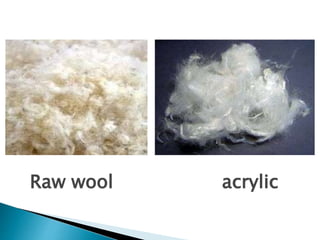
Raw wool acrylic
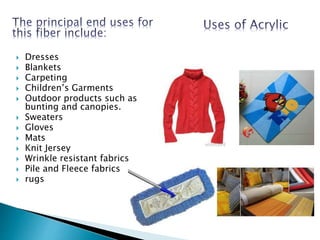
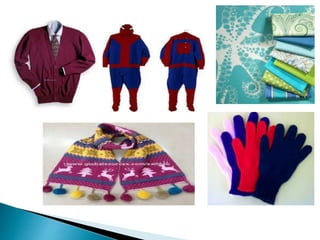
 Dresses
 Blankets
 Carpeting
 Children’s Garments
 Outdoor products such as
bunting and canopies.
 Sweaters
 Gloves
 Mats
 Knit Jersey
 Wrinkle resistant fabrics
 Pile and Fleece fabrics
 rugs
Thank you

Acrylic fibre

  • 1.
    Amit Biswas ID: 143003014 Departmentof Textile engineering Green University of Bangladesh
  • 3.
    Acrylics:  A manufacturedfiber in which the fiber forming substance is any long chain synthetic polymer composed of at least 85% by weight of acrylonitrile units . these fibers have an average molecular weight of ~100,000, about 1900 monomer units. Acrylonitrile:  The substance from which acrylic fibers are made and from which the generic name is derived was first made in Germany in 1893 .
  • 4.
     Resilient andretains shape  Quick drying  Resistant to water damage, sunlight and does not fade  Resistant to mold, mildew and insects  Flammable
  • 5.
    Effect of acidsDamage by strong concentrated acids. Good resistance to mineral acids Effect of Alkali Resistance to weak alkali but affected by strong alkali. Effect of Solvents Resistance to common solvents Effect of Bleaches Resistance to bleaches. Effect of Heat Most heat sensitive Effect of Dye Acid, basic, cationic. Effect of Light Resistance but not for long time.
  • 6.
  • 7.
    Photopolymer Copolymer Graft polymer Bicomponent Blends ofvarious deniers Blends of homopolymer and copolymer Helical, nonreversible crimp Reversible crimp Surface modified Various cross section—round, acorn,dog-bone Variable dyeability – cationic,disperse,acidic,basic Solution dyed
  • 8.
    FAVOURABLE UNFAVOURABLE Light weightHas only fair strength 20% weaker when wet Good drape, Wool like hand Hydrophobic fiber(1 1/2% moisture regained ) Good resiliency and elasticity Static and pilling a frequent problem Excellent resistance to sunlight and weathering Abrasion resistance is fair May be washed or dry-cleaned Resistant to water borne stains and odors Good quality of wicking which adds to comfort in wearing Durable Highly degradation resistant to dilute acids, both organic and mineral .orlon is resistant to strong acids as well .also to dilute Alkalis ,likely to be found in home cleansing agents. Dyeable to bright shades with excellent fastness PHYCAL PROPERTIES
  • 10.
    The acrylic processis a "one step technology", with the following main characteristics 1. polymerization in solution 2. direct feeding of the dope to spinning 3. wet spinning. 4. DMF as solvent for both polymerization and spinning
  • 12.
    S.N O FIBER PROPERTIESACRYLIC WOOL 1 EFFECT OF ALKALIES Resistant to weak Alkalis Harmed 2 EFFECT OF ACIDS Resistant to most acids Resistant to weak acids 3 EFFECT OF SOLVENTS Can be dry cleaned Dry-cleaning recommended 4 EFFECT OF SUNLIGHT excellent resistance Low resistance 5 STABILITY Generally retains shape Subject to letting shrinkage 6 PERMANENCE OF CREASES Creases can be set and removed by heat Creases set by heat and moisture 7 EFFECT OF HEAT Thermoplastic sticks at 450- 490o F Scorches easily , becomes brittle at high temperatures 8 RESISTANTANCE TO MOTHS AND FUNGI resistant HARMED BY MOTHS ,mildew forms on soiled , stored wool 9 EFFECT OF WATER None May felt or mat, noticeable odor when met.
  • 13.
  • 14.
     Dresses  Blankets Carpeting  Children’s Garments  Outdoor products such as bunting and canopies.  Sweaters  Gloves  Mats  Knit Jersey  Wrinkle resistant fabrics  Pile and Fleece fabrics  rugs
  • 16.