

AMIT BISWAS
ID : 143003014
Department of Textile Engineering
Green University of Bangladesh
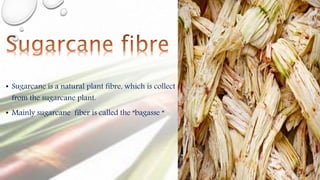
• Sugarcane is a natural plant fibre, which is collect
from the sugarcane plant.
• Mainly sugarcane fiber is called the “bagasse “
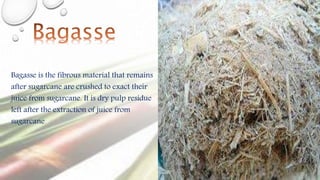
Bagasse is the fibrous material that remains
after sugarcane are crushed to exact their
juice from sugarcane. It is dry pulp residue
left after the extraction of juice from
sugarcane
• Crystallinity : between 63 % - 68%
• Fibre fineness : according to maturity level.
• Moisture absorption : no chance 13% - 18% (no chance )
• Elastic recovery : 50 % - 60%
• Torsional rigidity : varies between maturity lavel
• Flexural rigidity : 0.015 g/𝑐𝑚2 to 0.032 g/𝑐𝑚2
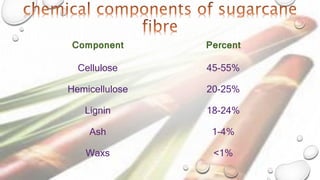
Component Percent
Cellulose 45-55%
Hemicellulose 20-25%
Lignin 18-24%
Ash 1-4%
Waxs <1%
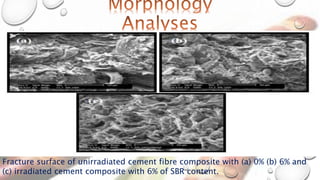
Fracture surface of unirradiated cement fibre composite with (a) 0% (b) 6% and
(c) irradiated cement composite with 6% of SBR content.
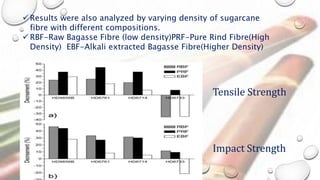
 Results were also analyzed by varying density of sugarcane
fibre with different compositions.
 RBF-Raw Bagasse Fibre (low density)PRF-Pure Rind Fibre(High
Density) EBF-Alkali extracted Bagasse Fibre(Higher Density)
Tensile Strength
Impact Strength
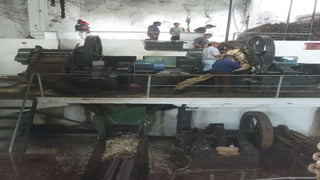
At first juice are extract from the sugarcane
After extraction of juice the bagasse are
collected for extraction of fibre
The soft core part pith is removed from the
bagasse manually to get outer hard ring
 The samples are then taken into hot
water treatment
 The samples are then dried in the
sunlight
 Then these samples are in the
chemical treatment
 After chemicals treatment the fibres are
separated
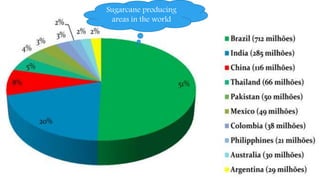
Sugarcane producing
areas in the world
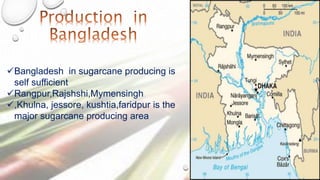
Bangladesh in sugarcane producing is
self sufficient
Rangpur,Rajshshi,Mymensingh
,Khulna, jessore, kushtia,faridpur is the
major sugarcane producing area
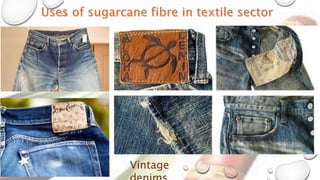
Vintage
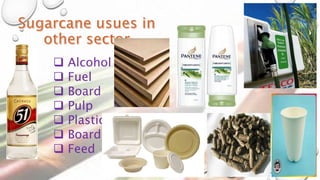
 Alcohol
 Fuel
 Board
 Pulp
 Plastic
 Board
 Feed
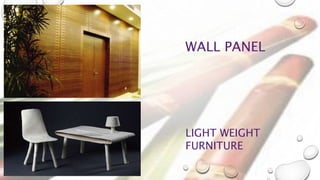
WALL PANEL
LIGHT WEIGHT
FURNITURE
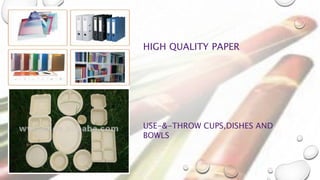
HIGH QUALITY PAPER
USE-&-THROW CUPS,DISHES AND
BOWLS
• MADE FROM AGRICULTURE WASTE.
• LOW COST.
• BIODEGRADABLE.
• COMPARATIVELY HIGH TENSILE STRENGTH.
• HIGH IMPACT STRENGTH.
• WEIGHT IS LOW.
• EASILY AVAILABLE.
Sugarcane fibre

Sugarcane fibre

  • 1.
    AMIT BISWAS ID :143003014 Department of Textile Engineering Green University of Bangladesh
  • 3.
    • Sugarcane isa natural plant fibre, which is collect from the sugarcane plant. • Mainly sugarcane fiber is called the “bagasse “
  • 4.
    Bagasse is thefibrous material that remains after sugarcane are crushed to exact their juice from sugarcane. It is dry pulp residue left after the extraction of juice from sugarcane
  • 5.
    • Crystallinity :between 63 % - 68% • Fibre fineness : according to maturity level. • Moisture absorption : no chance 13% - 18% (no chance ) • Elastic recovery : 50 % - 60% • Torsional rigidity : varies between maturity lavel • Flexural rigidity : 0.015 g/𝑐𝑚2 to 0.032 g/𝑐𝑚2
  • 6.
    Component Percent Cellulose 45-55% Hemicellulose20-25% Lignin 18-24% Ash 1-4% Waxs <1%
  • 8.
    Fracture surface ofunirradiated cement fibre composite with (a) 0% (b) 6% and (c) irradiated cement composite with 6% of SBR content.
  • 9.
     Results werealso analyzed by varying density of sugarcane fibre with different compositions.  RBF-Raw Bagasse Fibre (low density)PRF-Pure Rind Fibre(High Density) EBF-Alkali extracted Bagasse Fibre(Higher Density) Tensile Strength Impact Strength
  • 10.
    At first juiceare extract from the sugarcane After extraction of juice the bagasse are collected for extraction of fibre The soft core part pith is removed from the bagasse manually to get outer hard ring  The samples are then taken into hot water treatment  The samples are then dried in the sunlight  Then these samples are in the chemical treatment  After chemicals treatment the fibres are separated
  • 13.
  • 14.
    Bangladesh in sugarcaneproducing is self sufficient Rangpur,Rajshshi,Mymensingh ,Khulna, jessore, kushtia,faridpur is the major sugarcane producing area
  • 15.
  • 17.
     Alcohol  Fuel Board  Pulp  Plastic  Board  Feed
  • 18.
  • 19.
    HIGH QUALITY PAPER USE-&-THROWCUPS,DISHES AND BOWLS
  • 20.
    • MADE FROMAGRICULTURE WASTE. • LOW COST. • BIODEGRADABLE. • COMPARATIVELY HIGH TENSILE STRENGTH. • HIGH IMPACT STRENGTH. • WEIGHT IS LOW. • EASILY AVAILABLE.