
ACCOUNTING STANDARDS
ACCOUNTING STANDARD 11
 “THE EFFECT OF CHANGES IN FOREIGN
EXCHANGE”
 Issued by the Institute of Chartered Accountanats of
India
 Commencing from 1-04-2004
APPLICABILITY
 To the firms who are
 In Accounting Transaction in Foreign Exchange
 Transleting Financial Statements in Foreign Exchange
 In Deal with Accounting of Foreign Currency
Transaction in the Nature of Foreign Exchange Contract
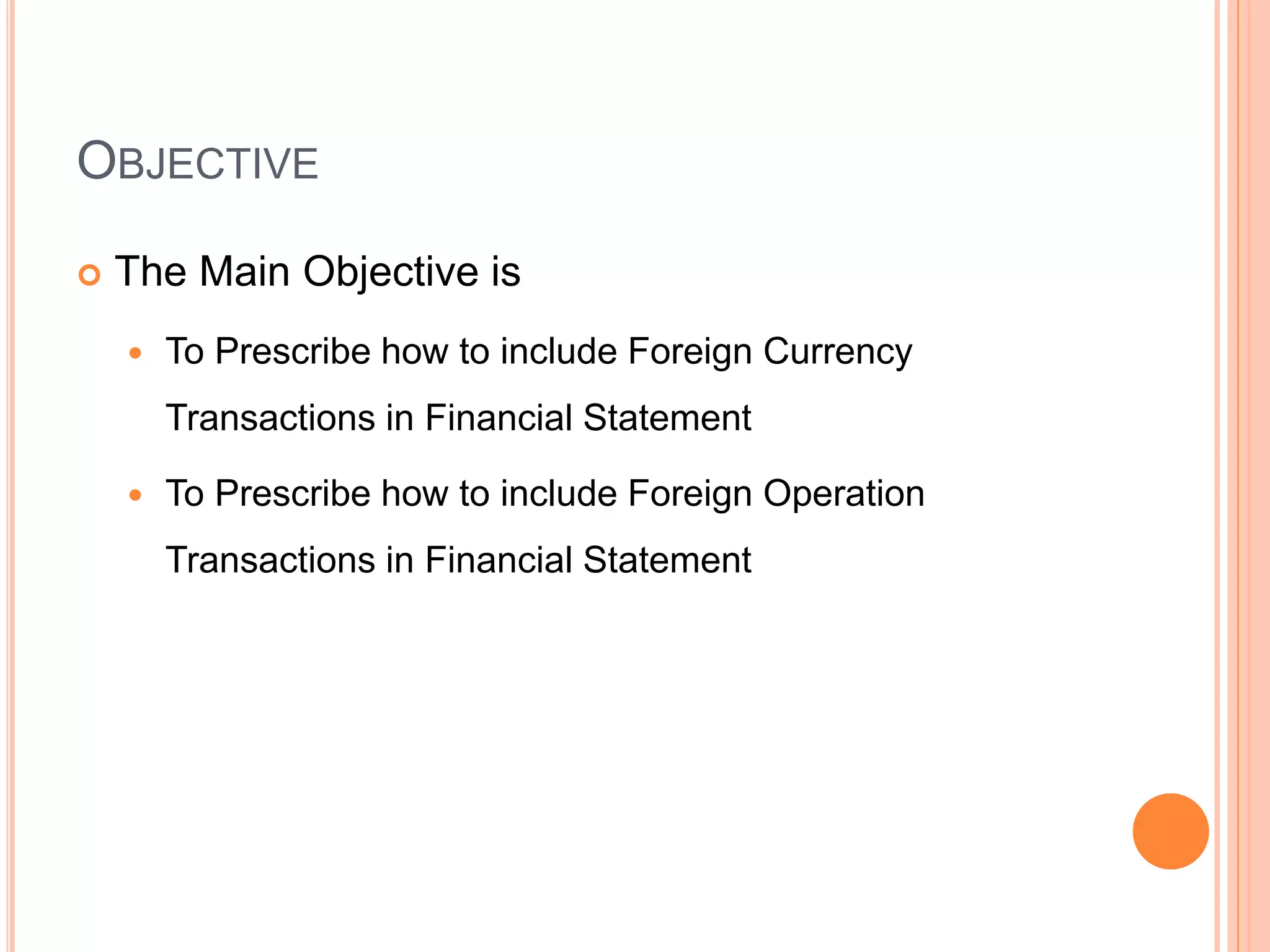
OBJECTIVE
 The Main Objective is
 To Prescribe how to include Foreign Currency
Transactions in Financial Statement
 To Prescribe how to include Foreign Operation
Transactions in Financial Statement
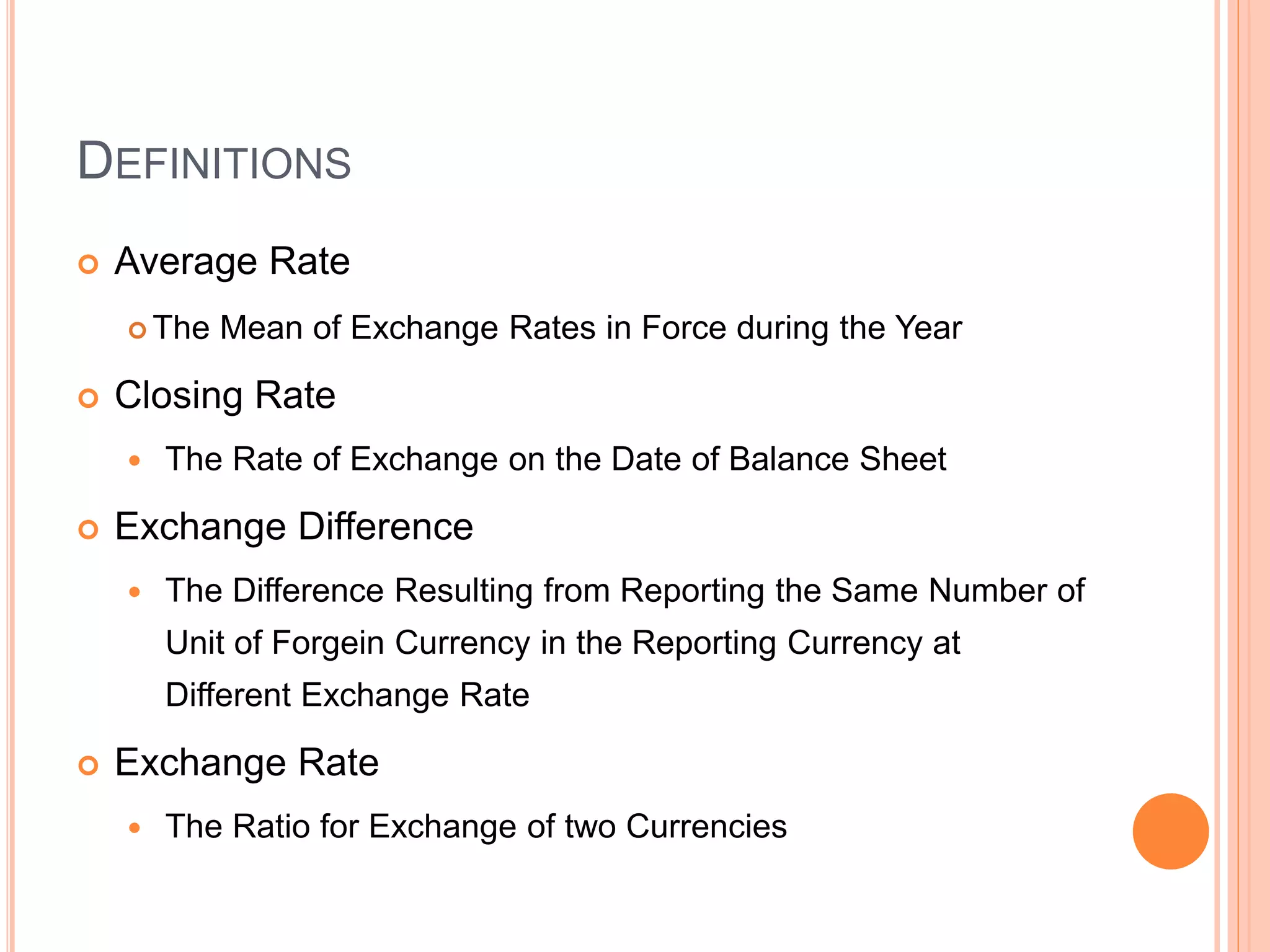
DEFINITIONS
 Average Rate
 The Mean of Exchange Rates in Force during the Year
 Closing Rate
 The Rate of Exchange on the Date of Balance Sheet
 Exchange Difference
 The Difference Resulting from Reporting the Same Number of
Unit of Forgein Currency in the Reporting Currency at
Different Exchange Rate
 Exchange Rate
 The Ratio for Exchange of two Currencies
 Foreign Currency
 The Currency Other than Reporting Currency
 Foreign Operations
 The Business Activity Conducted in Country other than
Country of Reporting Enterprise
 Forward Exchange Contract
 An Agreement to Exchange Different Currency at
Forward Rate
 Forward Rate
 The Spwcified Exchange Rate for Exchanges of Two
Currencies at Specified Future Date
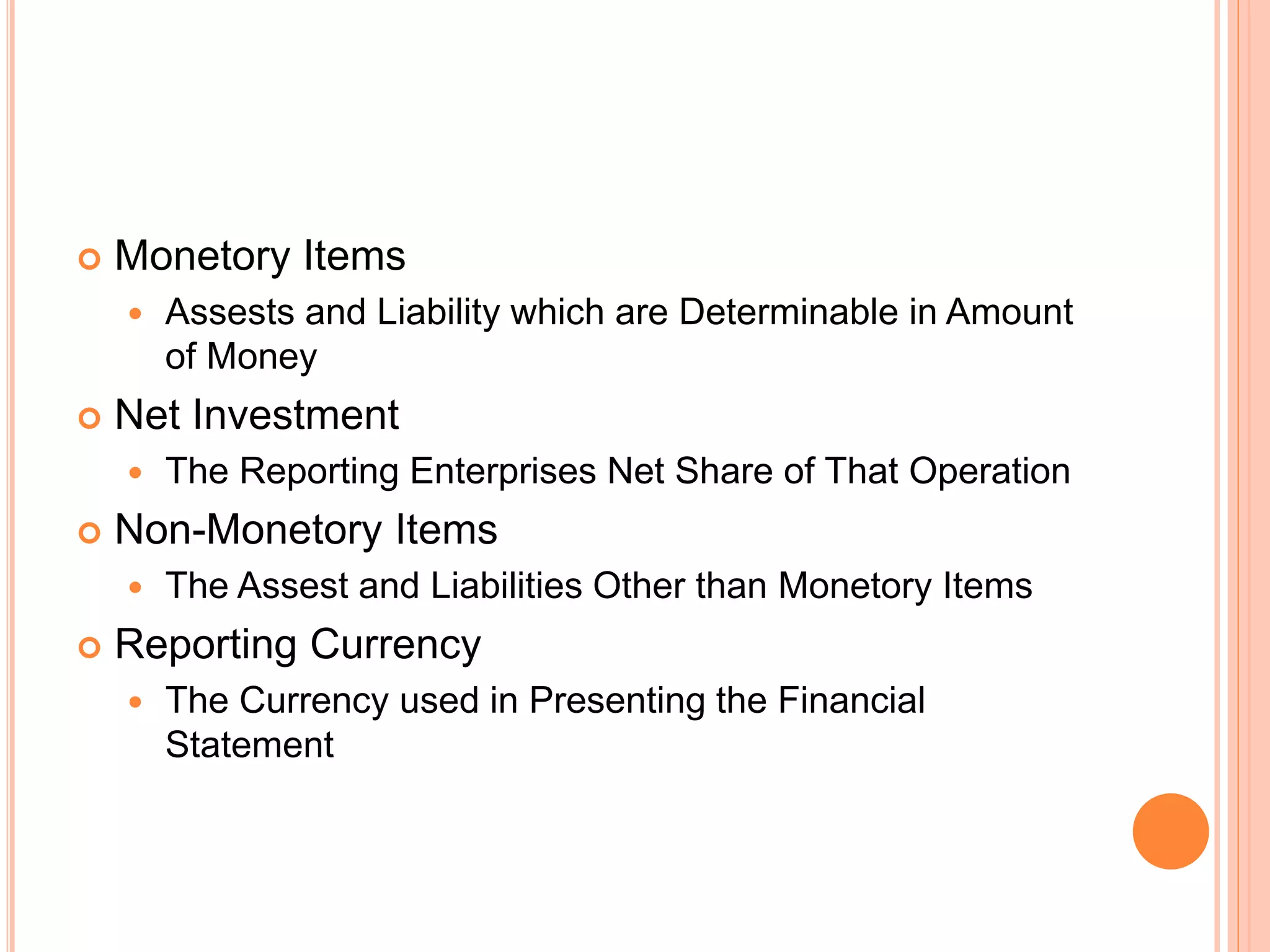
 Monetory Items
 Assests and Liability which are Determinable in Amount
of Money
 Net Investment
 The Reporting Enterprises Net Share of That Operation
 Non-Monetory Items
 The Assest and Liabilities Other than Monetory Items
 Reporting Currency
 The Currency used in Presenting the Financial
Statement
INITIAL RECOGNITION
 A Transaction which is Denominated in Foreign
Currency
 Including Following Transaction
 Buying and Selling of Goods and Services in Foreign
Corrency
 Borrowing and Lending Fund in Foreign Currency
 Acquiring or Desposing of Assets
 Incuring or settling Liabilities
REPORTING AND REPORTING RATES
 Fixed Assets – Rate Preveiling on the date of
Acqusition
 Current Assets – Closing Rate
 Current Liabilities – Closing Rate
 Equity and Borrowing – Historical Rate Prevalent at
the Date of Recording
RECOGNITION OF EXCHANGE DIFFERENCE
 Exchange Differences arising on Settlement of
Monetary items
 Difference in Rates
 From Those at which they were Initially Recorded
During the Period and
 At Which they are Consolidated in Enterprise Financial
Statement
The Difference is to be Transferred to Profit and Loss Accounts
DISCLOSURE IN FINANCIAL STATEMENT
 The Amount of Exchange Differences included in
the Profit and Loss Account; and
 Net Exchange Differences Accumulated in Foreign
Currency Translation Reserve as a Separate
Component of Shareholders’ Funds, and
 Reconciliation of the Amount of such Exchange
Differences at the Beginning and End of the Period
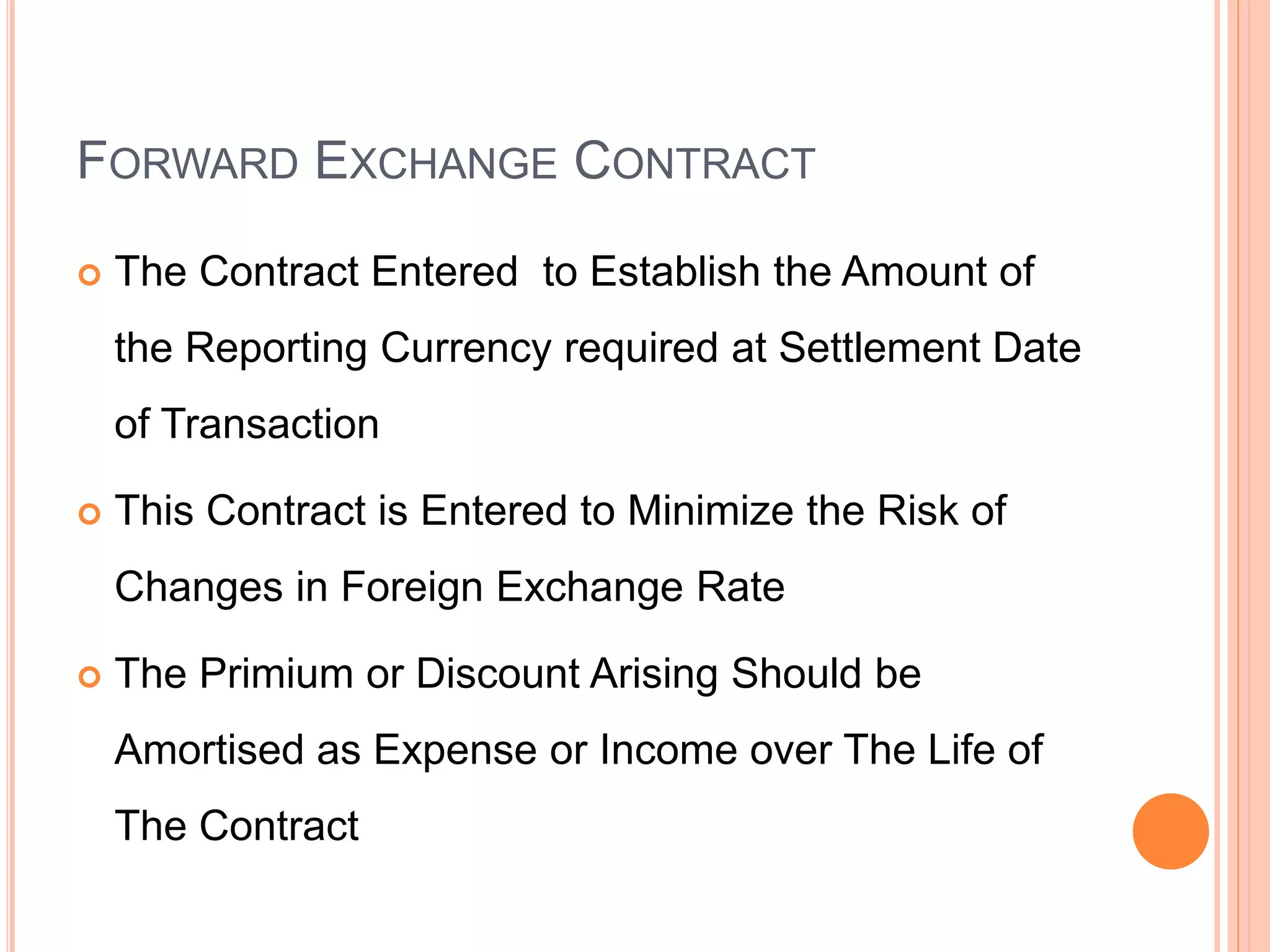
FORWARD EXCHANGE CONTRACT
 The Contract Entered to Establish the Amount of
the Reporting Currency required at Settlement Date
of Transaction
 This Contract is Entered to Minimize the Risk of
Changes in Foreign Exchange Rate
 The Primium or Discount Arising Should be
Amortised as Expense or Income over The Life of
The Contract
ACCOUNTING STANDARD 16
 Accounting Treatment of “BORROWING COST”
 Issued by The institute of Chartered Accountant Of
India
 Commencing From 1-04-2000
DEFINITIONS
 Borrowing Cost
The Interest and Other cost Which is Incurred by an
Enterprise in Relation to Borrowing of Funds
 Qualifying Asset
 Assets that Takes Substaintial Time Period to Keep
Ready to Use or Sale
 Specific Borrowing
 If any Enterprise Bowwored Money for Specefic
Purpose or for Qualifying assets then it is said to be
Specific Borrowing
 In other case, It will be General Borrowing
APLLICABILITY
Borrowing
Qualifying
Asset
AS 16
Applicable
If there is General Borrowing then the Interest will be Dirctly
Charged to Profit and Loss Account
RECOGNITION
 As per AS – 16, amount of borrowing cost should
be recorded or recognized in the financial
statement as follows
 If any Borrowing Cost is incurred for Qualifying Assets
then It should be Capitalized
 If any Borrowing Cost is Not having any Connection with
Q.A. then It should be transfer to Profit and Loss
Account
THANK YOU
Presented By:-
Tushar Rathi

Accounting Standard 11 and Accounting Standard 16

  • 1.
  • 2.
    ACCOUNTING STANDARD 11 “THE EFFECT OF CHANGES IN FOREIGN EXCHANGE”  Issued by the Institute of Chartered Accountanats of India  Commencing from 1-04-2004
  • 3.
    APPLICABILITY  To thefirms who are  In Accounting Transaction in Foreign Exchange  Transleting Financial Statements in Foreign Exchange  In Deal with Accounting of Foreign Currency Transaction in the Nature of Foreign Exchange Contract
  • 4.
    OBJECTIVE  The MainObjective is  To Prescribe how to include Foreign Currency Transactions in Financial Statement  To Prescribe how to include Foreign Operation Transactions in Financial Statement
  • 5.
    DEFINITIONS  Average Rate The Mean of Exchange Rates in Force during the Year  Closing Rate  The Rate of Exchange on the Date of Balance Sheet  Exchange Difference  The Difference Resulting from Reporting the Same Number of Unit of Forgein Currency in the Reporting Currency at Different Exchange Rate  Exchange Rate  The Ratio for Exchange of two Currencies
  • 6.
     Foreign Currency The Currency Other than Reporting Currency  Foreign Operations  The Business Activity Conducted in Country other than Country of Reporting Enterprise  Forward Exchange Contract  An Agreement to Exchange Different Currency at Forward Rate  Forward Rate  The Spwcified Exchange Rate for Exchanges of Two Currencies at Specified Future Date
  • 7.
     Monetory Items Assests and Liability which are Determinable in Amount of Money  Net Investment  The Reporting Enterprises Net Share of That Operation  Non-Monetory Items  The Assest and Liabilities Other than Monetory Items  Reporting Currency  The Currency used in Presenting the Financial Statement
  • 8.
    INITIAL RECOGNITION  ATransaction which is Denominated in Foreign Currency  Including Following Transaction  Buying and Selling of Goods and Services in Foreign Corrency  Borrowing and Lending Fund in Foreign Currency  Acquiring or Desposing of Assets  Incuring or settling Liabilities
  • 9.
    REPORTING AND REPORTINGRATES  Fixed Assets – Rate Preveiling on the date of Acqusition  Current Assets – Closing Rate  Current Liabilities – Closing Rate  Equity and Borrowing – Historical Rate Prevalent at the Date of Recording
  • 10.
    RECOGNITION OF EXCHANGEDIFFERENCE  Exchange Differences arising on Settlement of Monetary items  Difference in Rates  From Those at which they were Initially Recorded During the Period and  At Which they are Consolidated in Enterprise Financial Statement The Difference is to be Transferred to Profit and Loss Accounts
  • 11.
    DISCLOSURE IN FINANCIALSTATEMENT  The Amount of Exchange Differences included in the Profit and Loss Account; and  Net Exchange Differences Accumulated in Foreign Currency Translation Reserve as a Separate Component of Shareholders’ Funds, and  Reconciliation of the Amount of such Exchange Differences at the Beginning and End of the Period
  • 12.
    FORWARD EXCHANGE CONTRACT The Contract Entered to Establish the Amount of the Reporting Currency required at Settlement Date of Transaction  This Contract is Entered to Minimize the Risk of Changes in Foreign Exchange Rate  The Primium or Discount Arising Should be Amortised as Expense or Income over The Life of The Contract
  • 13.
    ACCOUNTING STANDARD 16 Accounting Treatment of “BORROWING COST”  Issued by The institute of Chartered Accountant Of India  Commencing From 1-04-2000
  • 14.
    DEFINITIONS  Borrowing Cost TheInterest and Other cost Which is Incurred by an Enterprise in Relation to Borrowing of Funds  Qualifying Asset  Assets that Takes Substaintial Time Period to Keep Ready to Use or Sale
  • 15.
     Specific Borrowing If any Enterprise Bowwored Money for Specefic Purpose or for Qualifying assets then it is said to be Specific Borrowing  In other case, It will be General Borrowing
  • 16.
    APLLICABILITY Borrowing Qualifying Asset AS 16 Applicable If thereis General Borrowing then the Interest will be Dirctly Charged to Profit and Loss Account
  • 17.
    RECOGNITION  As perAS – 16, amount of borrowing cost should be recorded or recognized in the financial statement as follows  If any Borrowing Cost is incurred for Qualifying Assets then It should be Capitalized  If any Borrowing Cost is Not having any Connection with Q.A. then It should be transfer to Profit and Loss Account
  • 18.