Determinants of Foreign
Exchange
DEFINITIONS
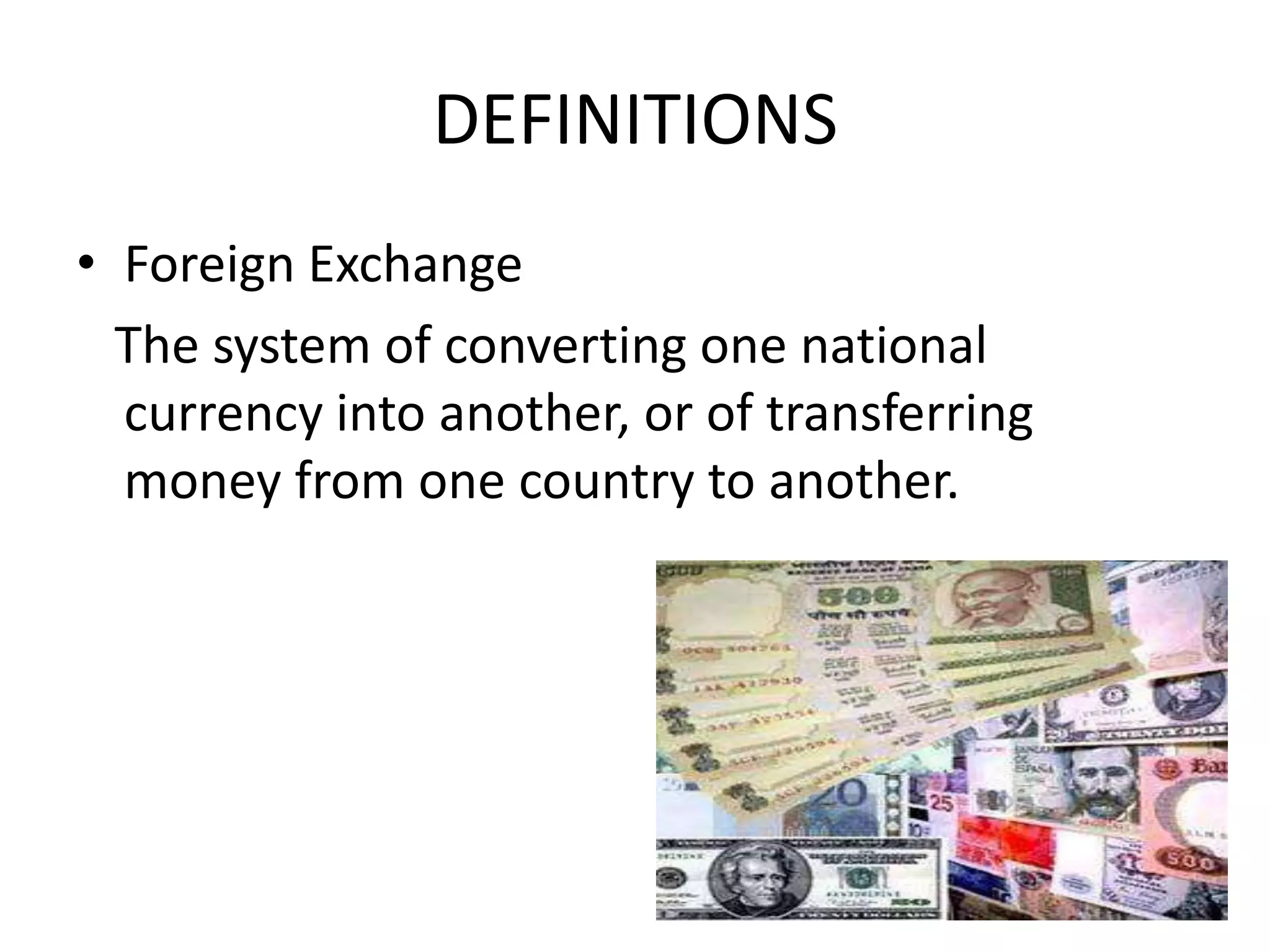
• Foreign Exchange
The system of converting one national
currency into another, or of transferring
money from one country to another.
• Foreign Exchange Market
 Forex market is a place in which foreign
exchange transactions take place.
 A market in which National currencies are
bought and sold against one another
The foreign exchange market is one of the
largest markets in the world. By some
estimates, about 3.2 trillion USD worth of
currency changes hands every day.
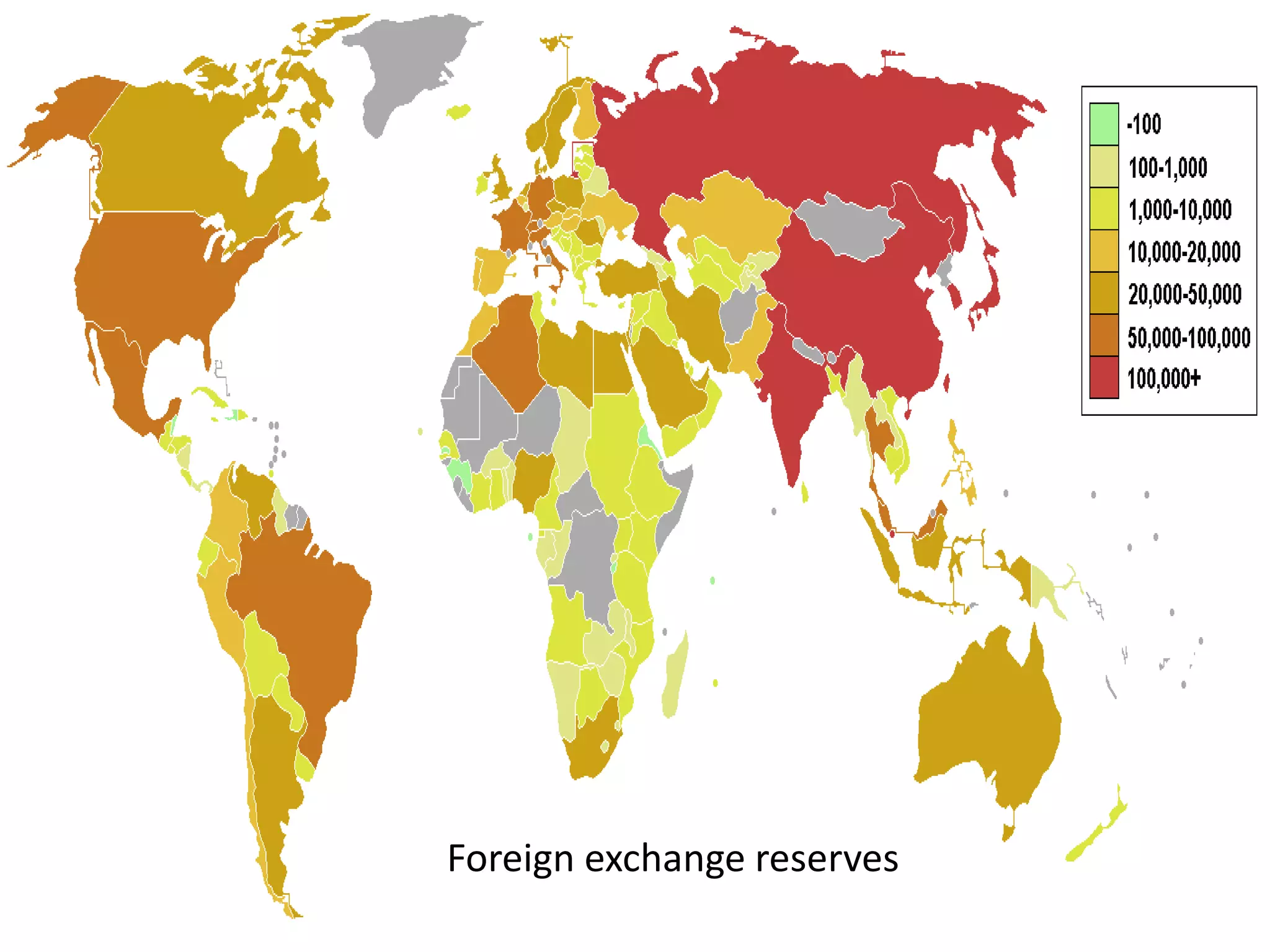
Foreign exchange reserves
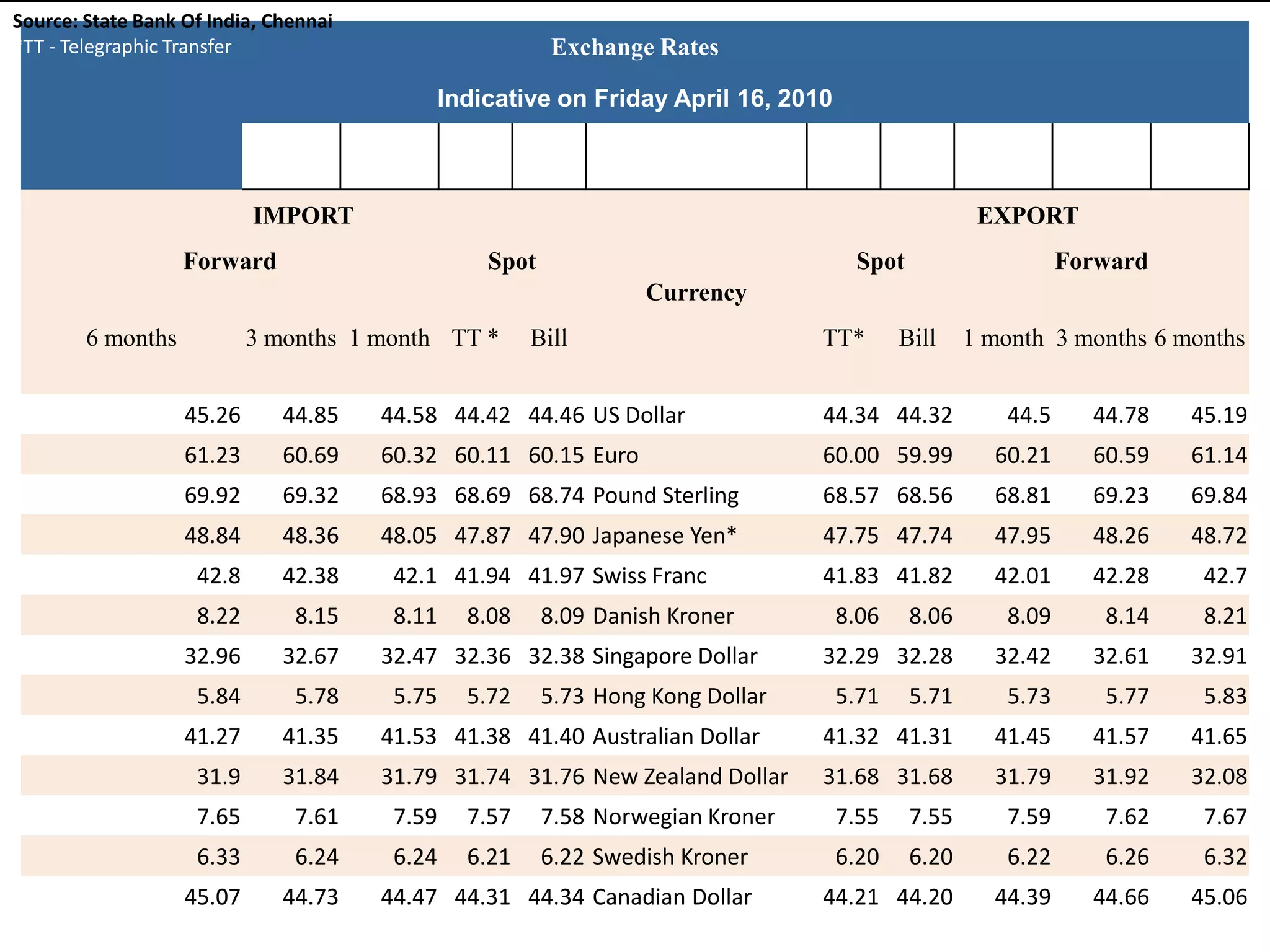
Exchange Rates
Indicative on Friday April 16, 2010
IMPORT
Currency
EXPORT
Forward Spot Spot Forward
6 months 3 months 1 month TT * Bill TT* Bill 1 month 3 months 6 months
45.26 44.85 44.58 44.42 44.46 US Dollar 44.34 44.32 44.5 44.78 45.19
61.23 60.69 60.32 60.11 60.15 Euro 60.00 59.99 60.21 60.59 61.14
69.92 69.32 68.93 68.69 68.74 Pound Sterling 68.57 68.56 68.81 69.23 69.84
48.84 48.36 48.05 47.87 47.90 Japanese Yen* 47.75 47.74 47.95 48.26 48.72
42.8 42.38 42.1 41.94 41.97 Swiss Franc 41.83 41.82 42.01 42.28 42.7
8.22 8.15 8.11 8.08 8.09 Danish Kroner 8.06 8.06 8.09 8.14 8.21
32.96 32.67 32.47 32.36 32.38 Singapore Dollar 32.29 32.28 32.42 32.61 32.91
5.84 5.78 5.75 5.72 5.73 Hong Kong Dollar 5.71 5.71 5.73 5.77 5.83
41.27 41.35 41.53 41.38 41.40 Australian Dollar 41.32 41.31 41.45 41.57 41.65
31.9 31.84 31.79 31.74 31.76 New Zealand Dollar 31.68 31.68 31.79 31.92 32.08
7.65 7.61 7.59 7.57 7.58 Norwegian Kroner 7.55 7.55 7.59 7.62 7.67
6.33 6.24 6.24 6.21 6.22 Swedish Kroner 6.20 6.20 6.22 6.26 6.32
45.07 44.73 44.47 44.31 44.34 Canadian Dollar 44.21 44.20 44.39 44.66 45.06
Source: State Bank Of India, Chennai
*TT - Telegraphic Transfer
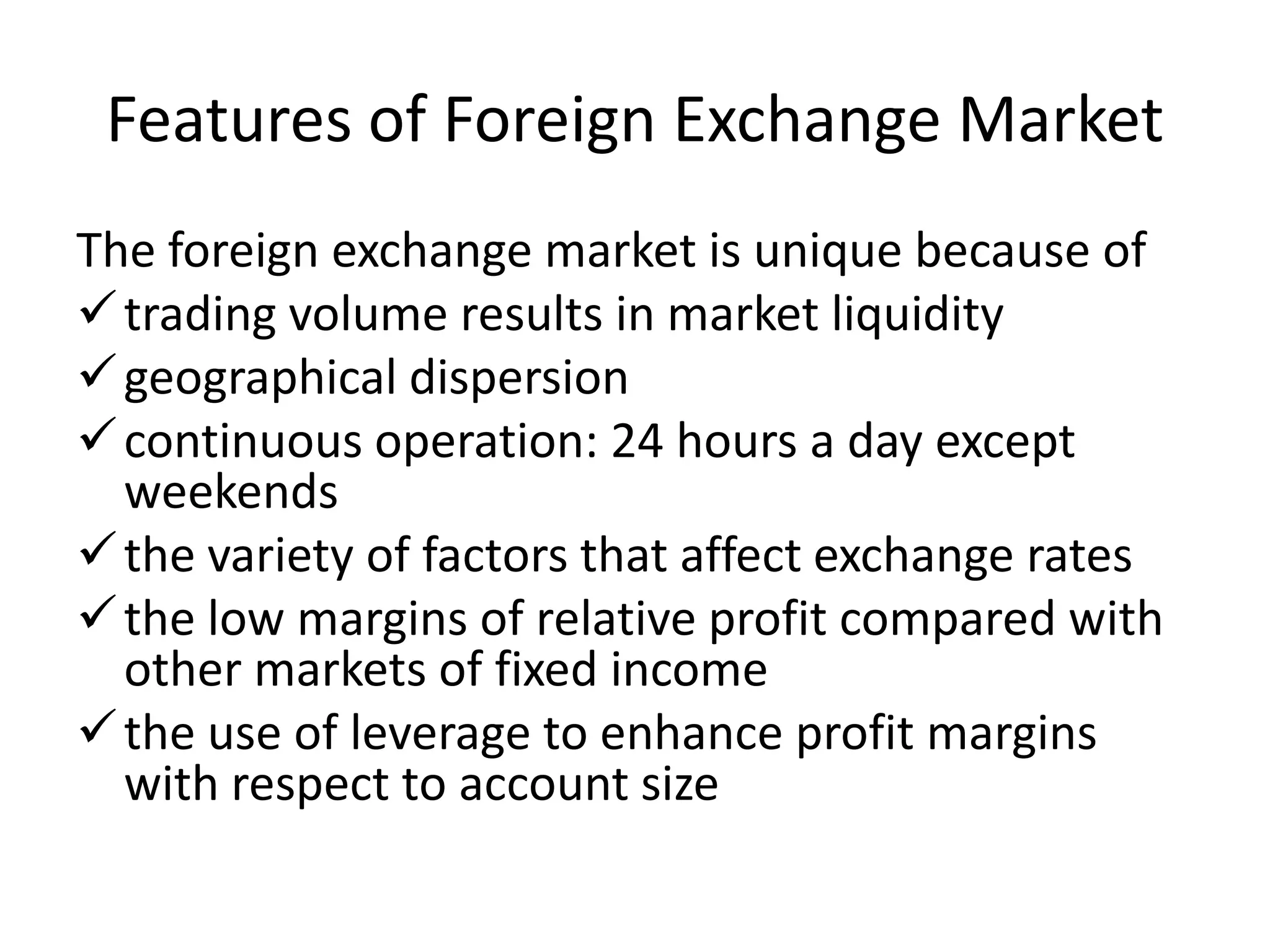
Features of Foreign Exchange Market
The foreign exchange market is unique because of
trading volume results in market liquidity
geographical dispersion
continuous operation: 24 hours a day except
weekends
the variety of factors that affect exchange rates
the low margins of relative profit compared with
other markets of fixed income
the use of leverage to enhance profit margins
with respect to account size
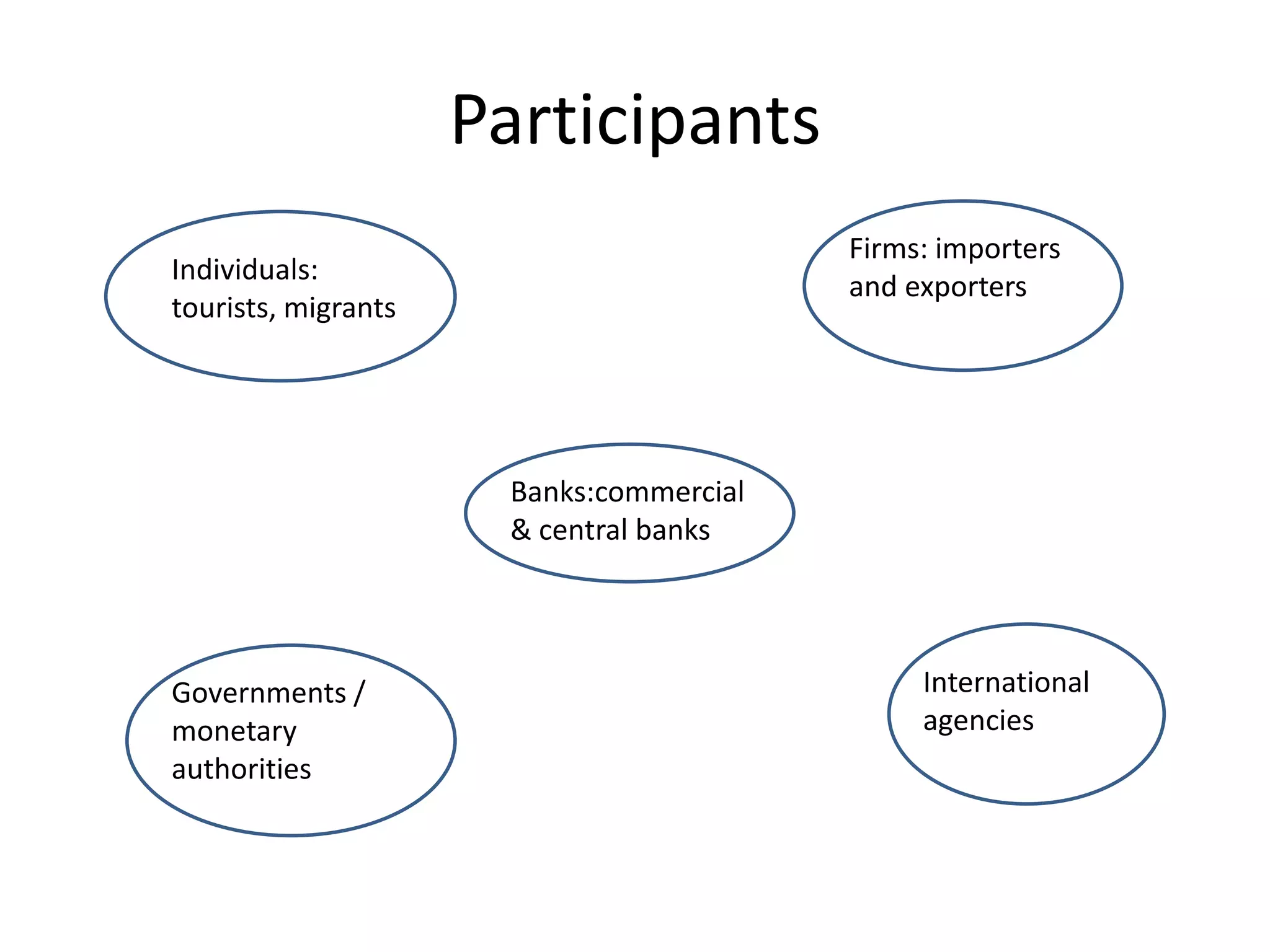
Participants
Individuals:
tourists, migrants
Firms: importers
and exporters
Banks:commercial
& central banks
Governments /
monetary
authorities
International
agencies
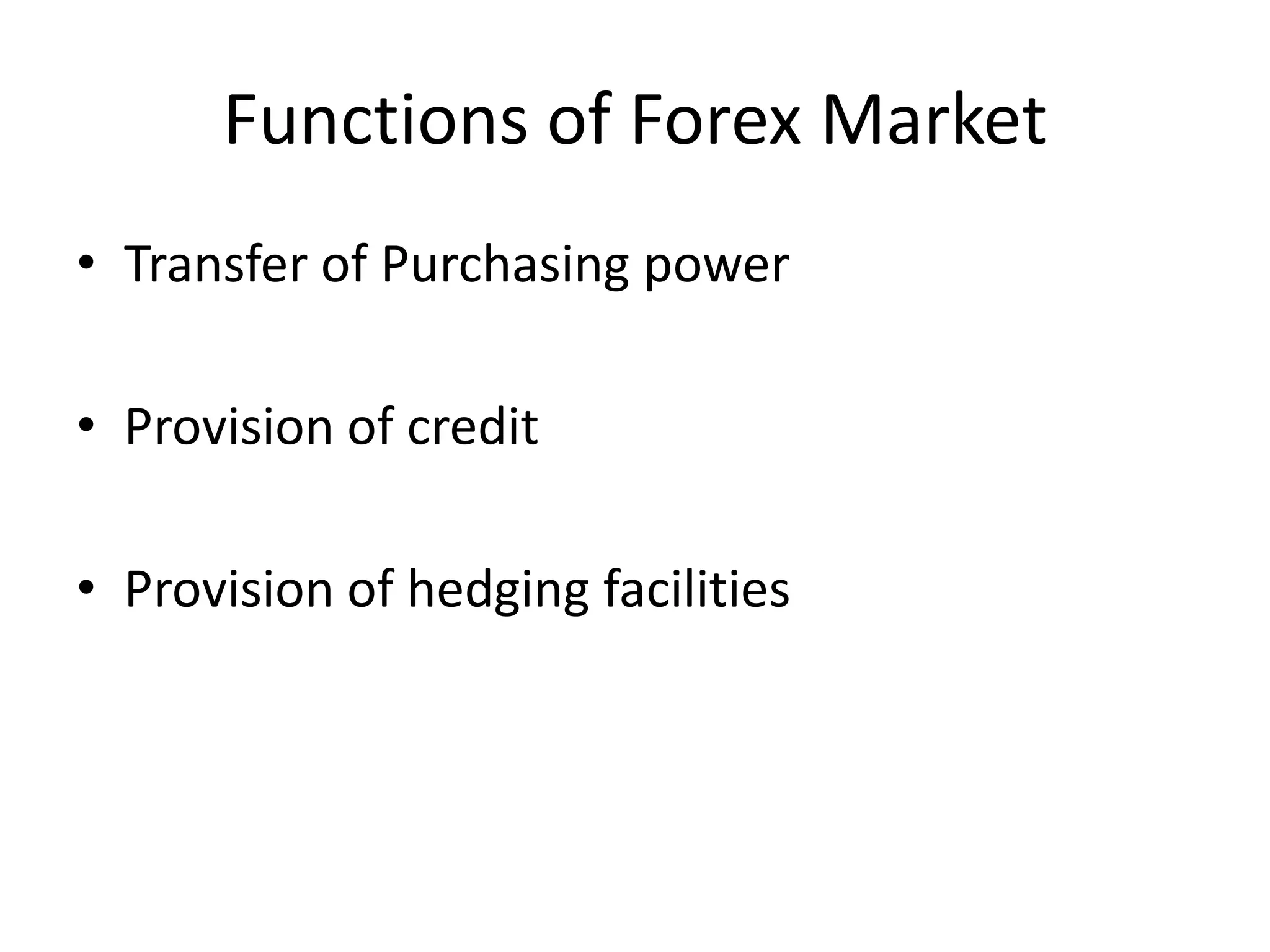
Functions of Forex Market
• Transfer of Purchasing power
• Provision of credit
• Provision of hedging facilities
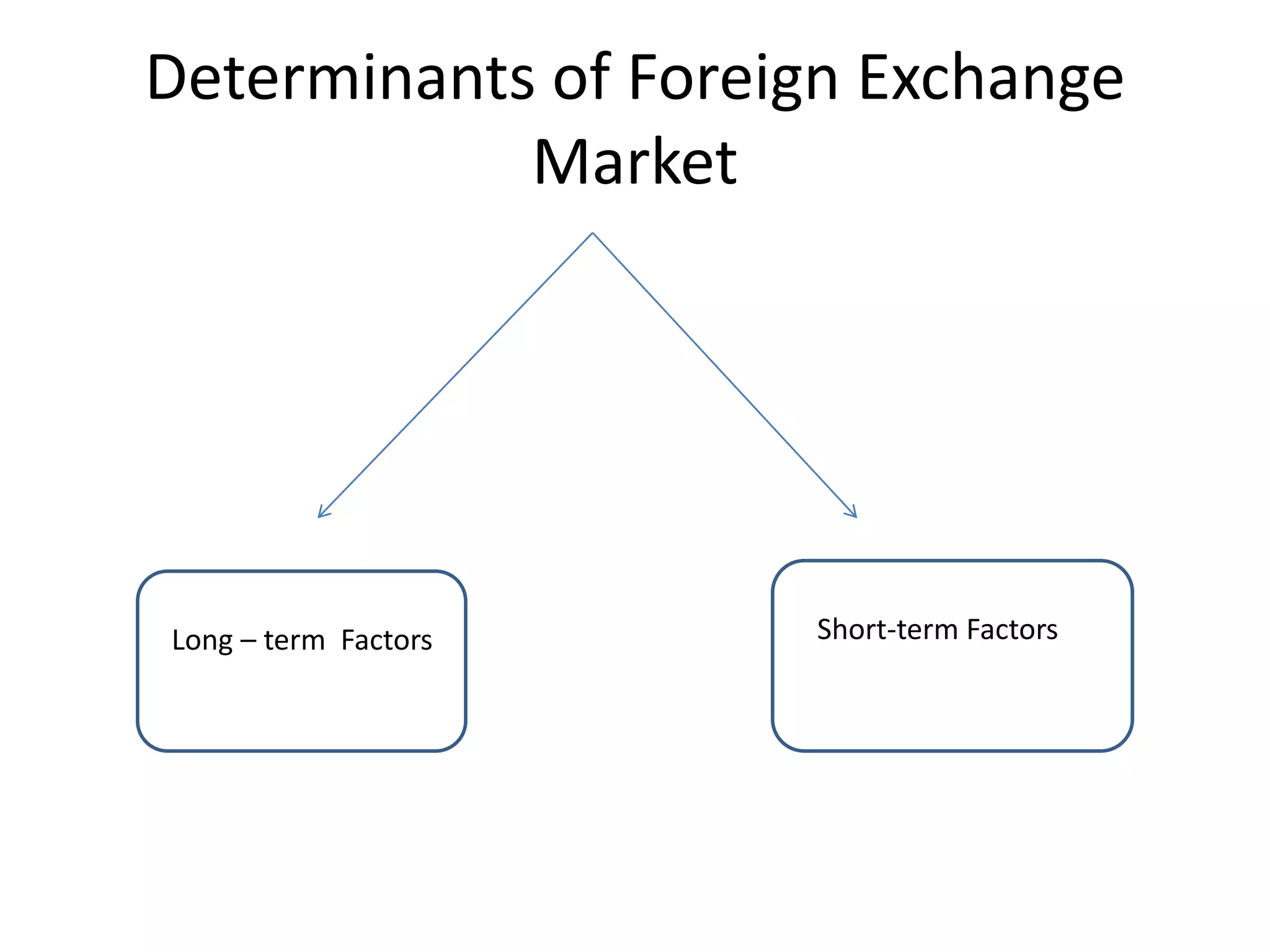
Determinants of Foreign Exchange
Market
Long – term Factors Short-term Factors
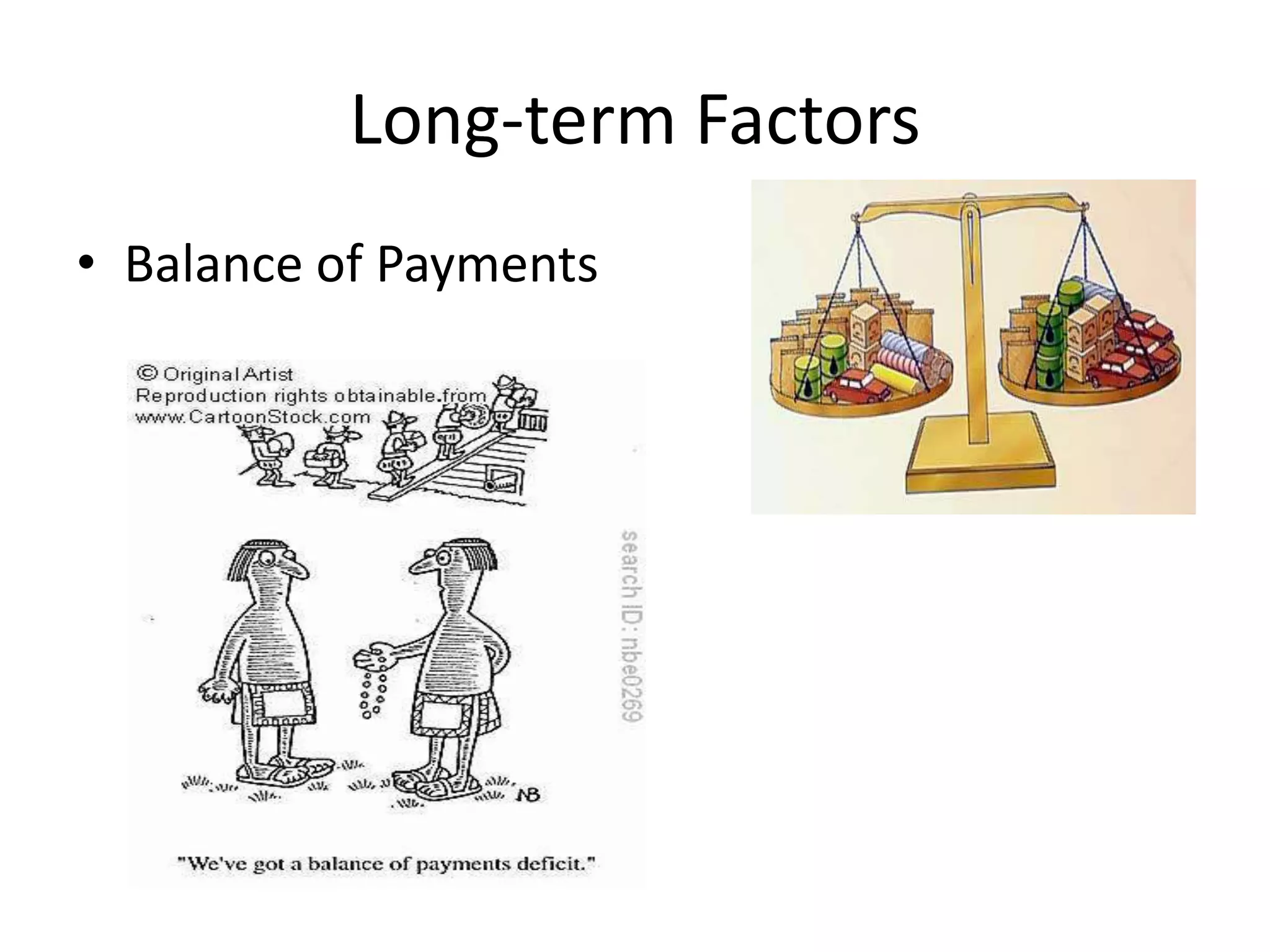
Long-term Factors
• Balance of Payments
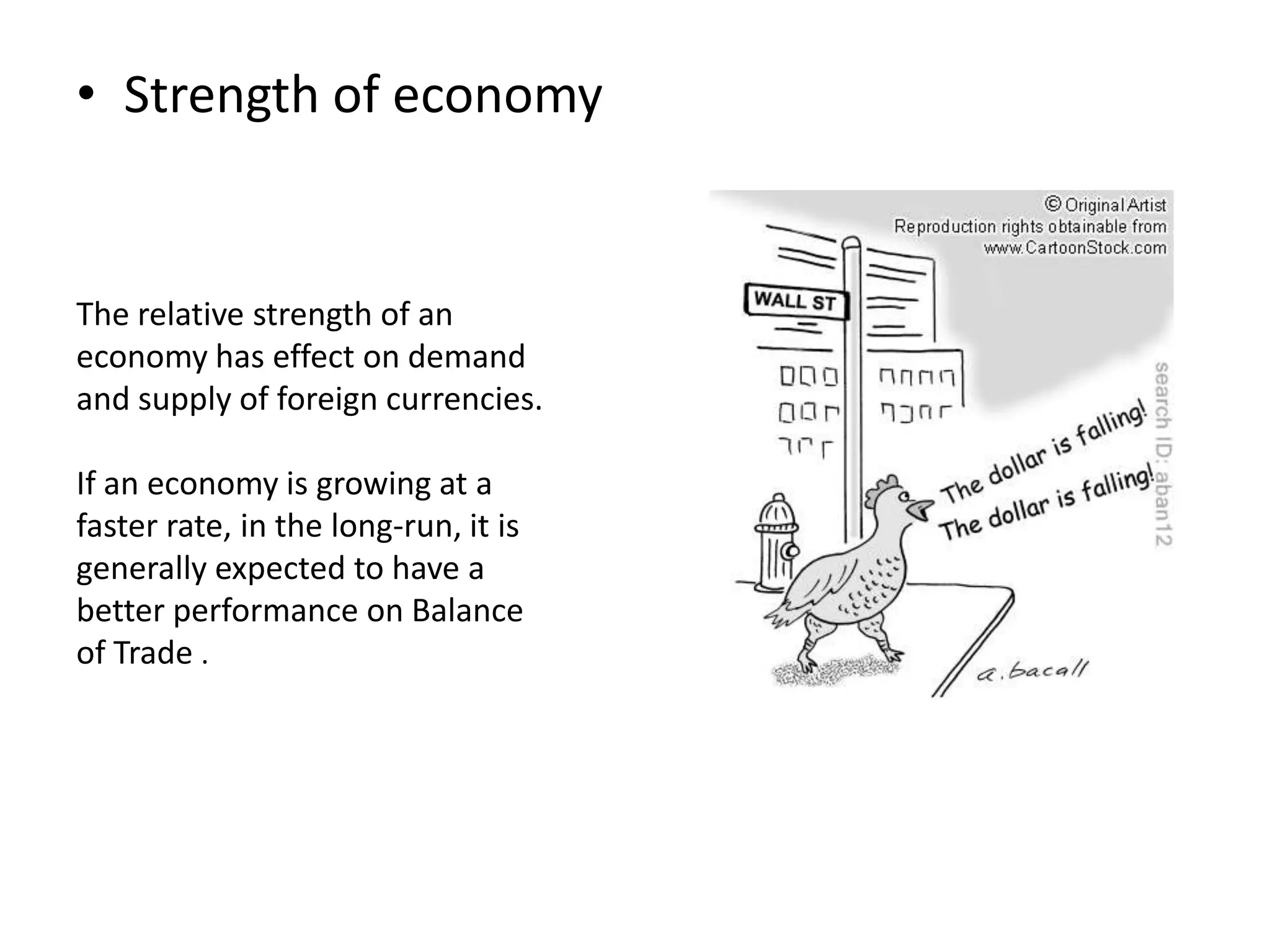
• Strength of economy
The relative strength of an
economy has effect on demand
and supply of foreign currencies.
If an economy is growing at a
faster rate, in the long-run, it is
generally expected to have a
better performance on Balance
of Trade .
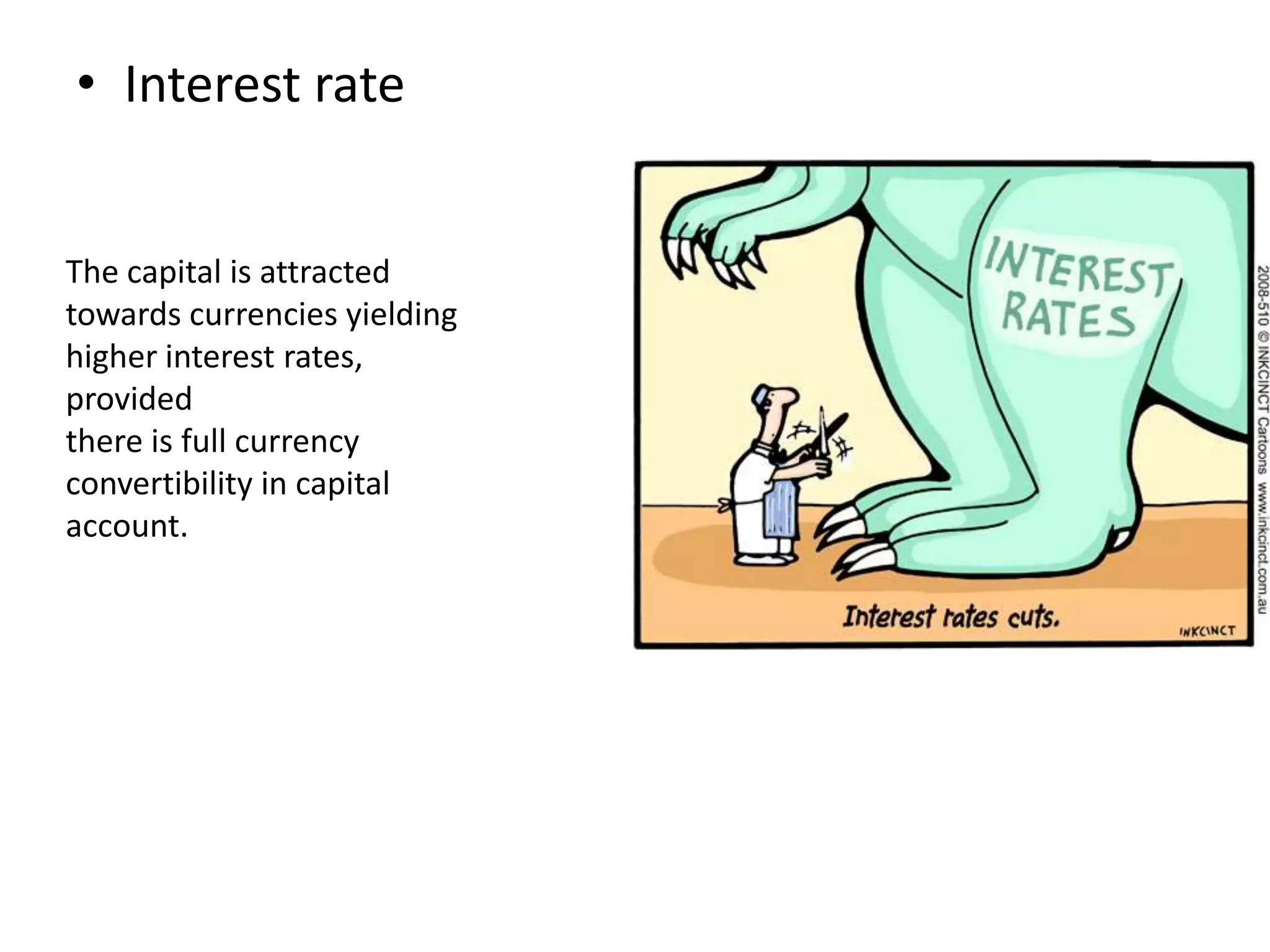
• Interest rate
The capital is attracted
towards currencies yielding
higher interest rates,
provided
there is full currency
convertibility in capital
account.
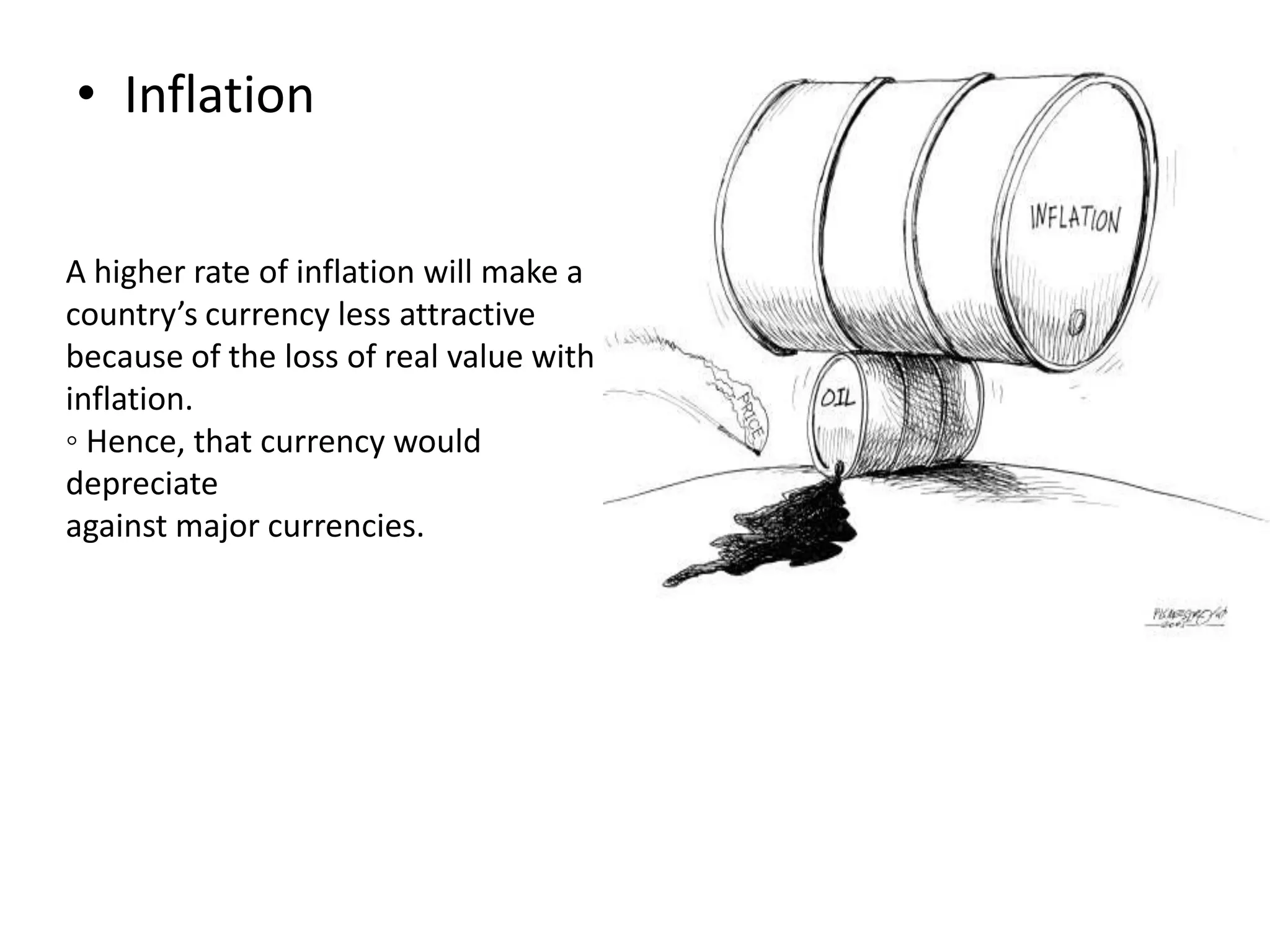
• Inflation
A higher rate of inflation will make a
country’s currency less attractive
because of the loss of real value with
inflation.
◦ Hence, that currency would
depreciate
against major currencies.
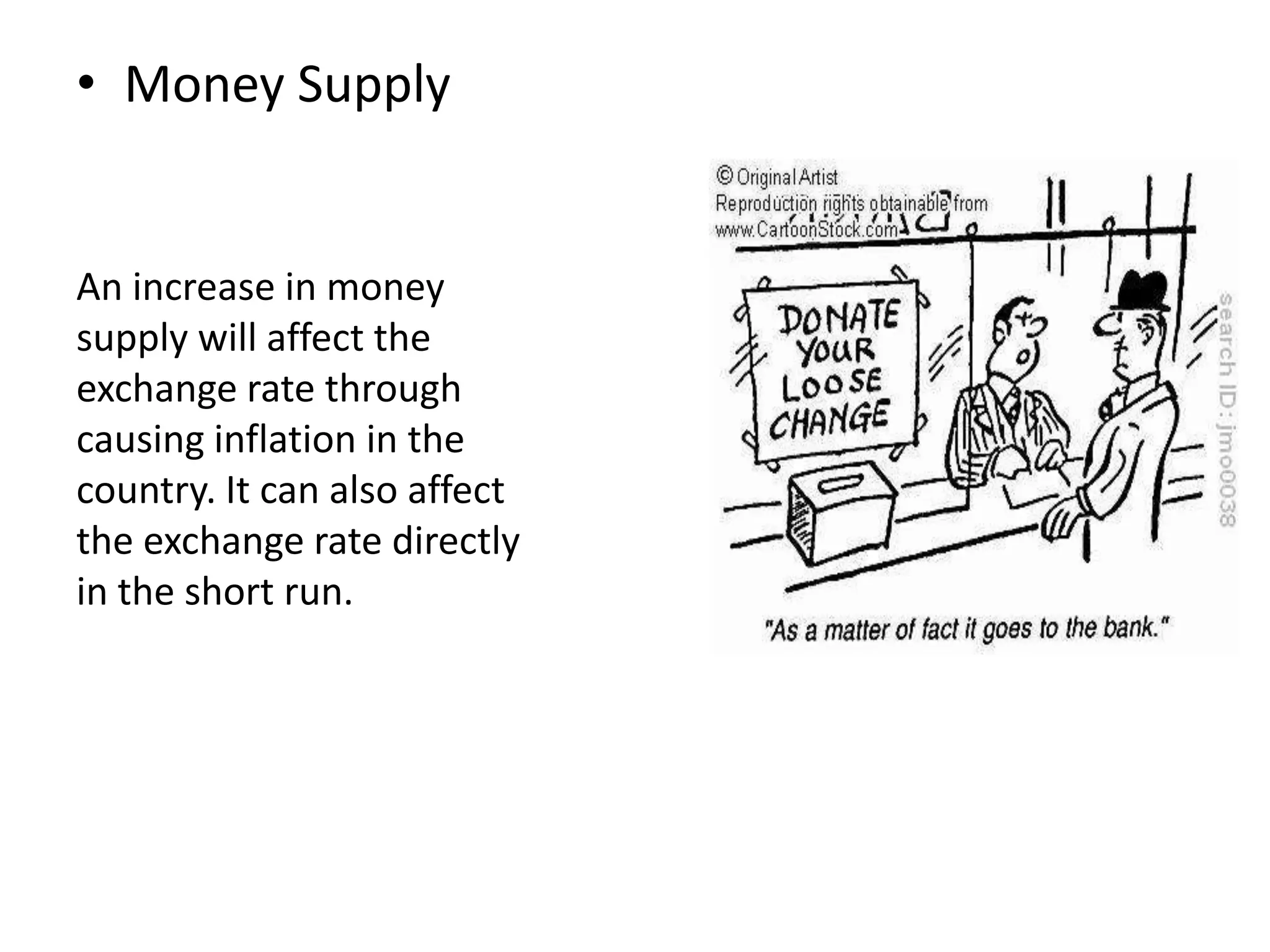
• Money Supply
An increase in money
supply will affect the
exchange rate through
causing inflation in the
country. It can also affect
the exchange rate directly
in the short run.
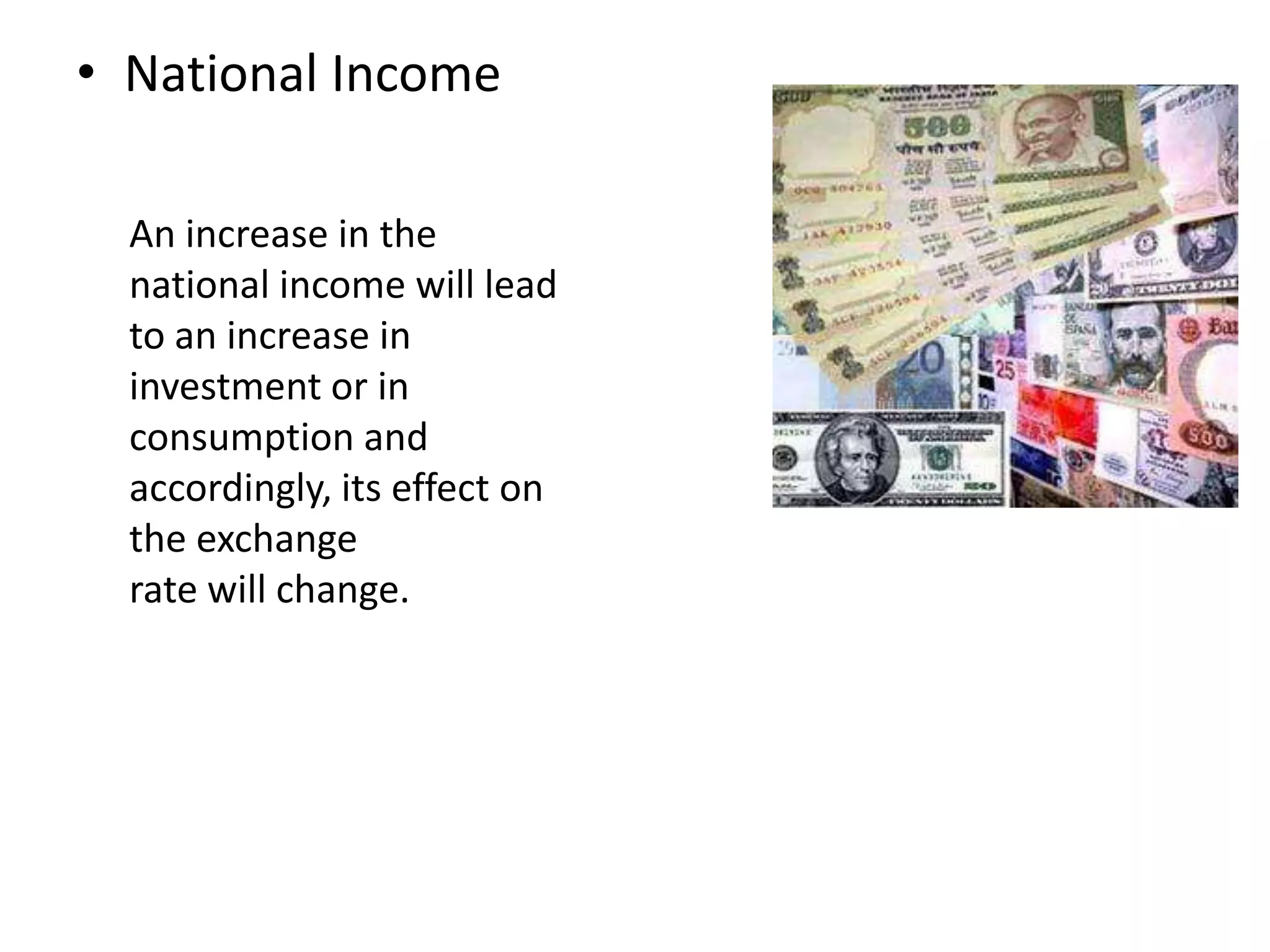
• National Income
An increase in the
national income will lead
to an increase in
investment or in
consumption and
accordingly, its effect on
the exchange
rate will change.
Short term factors
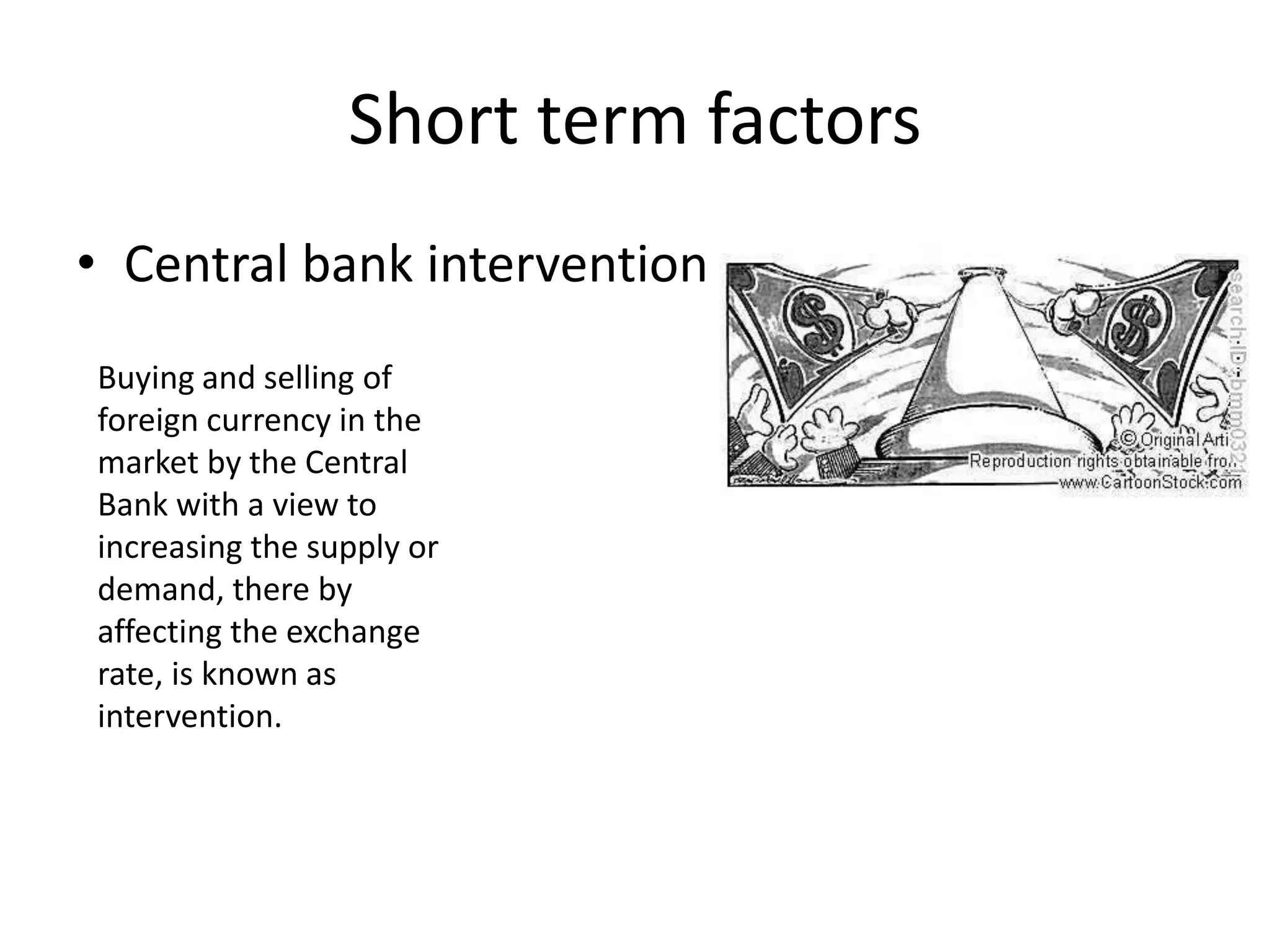
• Central bank intervention
Buying and selling of
foreign currency in the
market by the Central
Bank with a view to
increasing the supply or
demand, there by
affecting the exchange
rate, is known as
intervention.
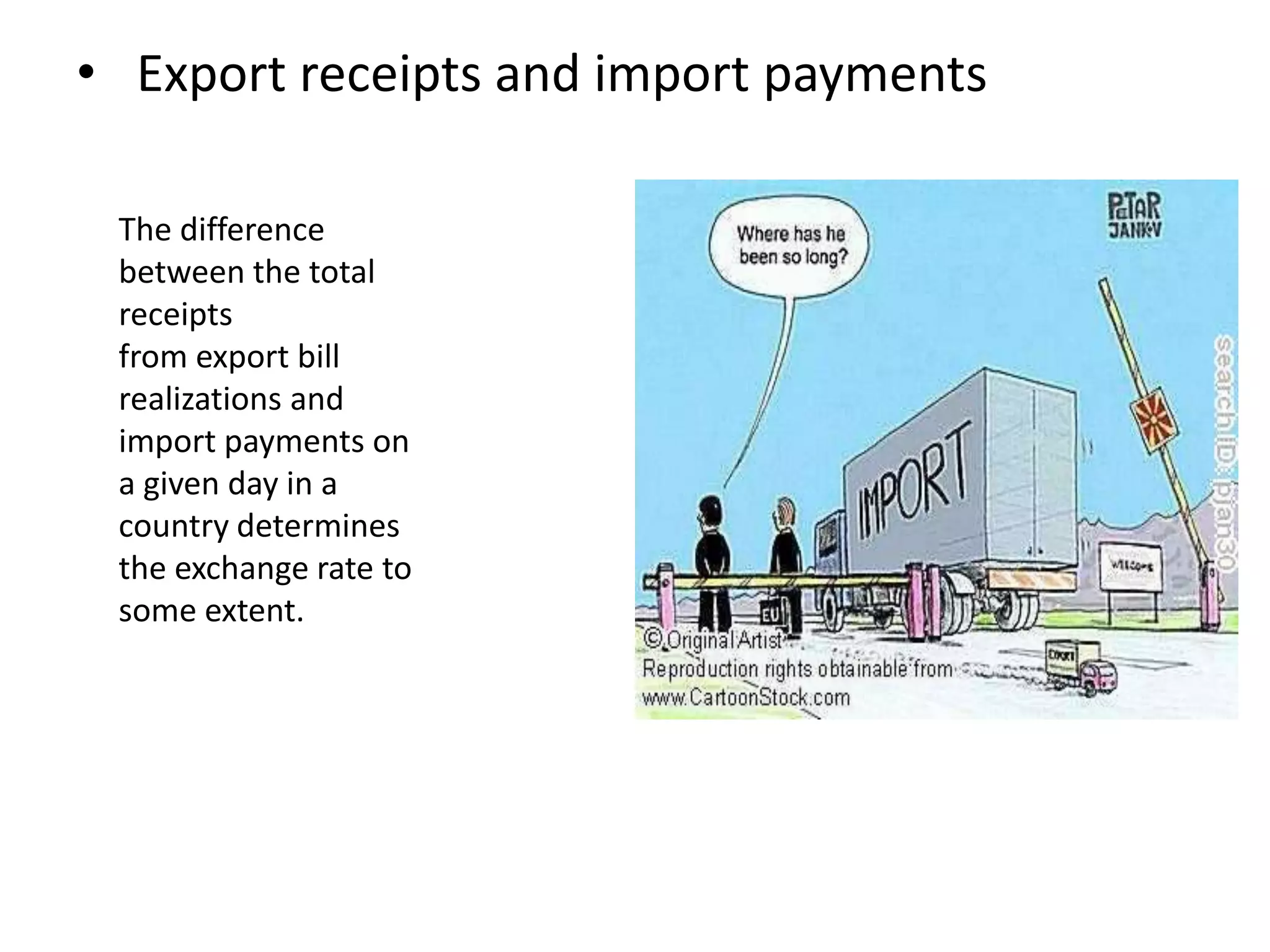
• Export receipts and import payments
The difference
between the total
receipts
from export bill
realizations and
import payments on
a given day in a
country determines
the exchange rate to
some extent.
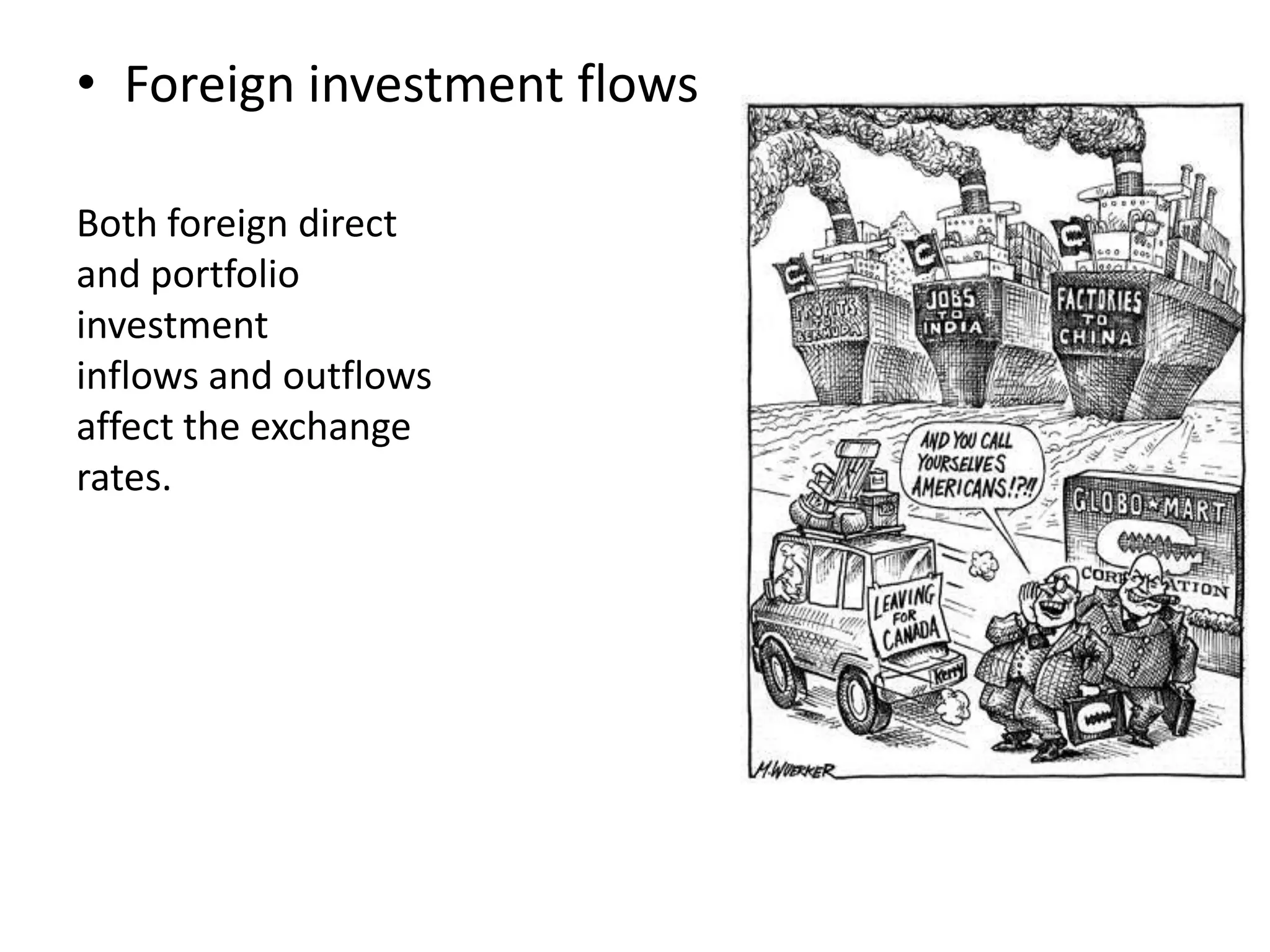
• Foreign investment flows
Both foreign direct
and portfolio
investment
inflows and outflows
affect the exchange
rates.
• Political factors
Factors like war.
Announcement of
election results, oil
price increase etc
will cause
exchange rate
fluctuations.
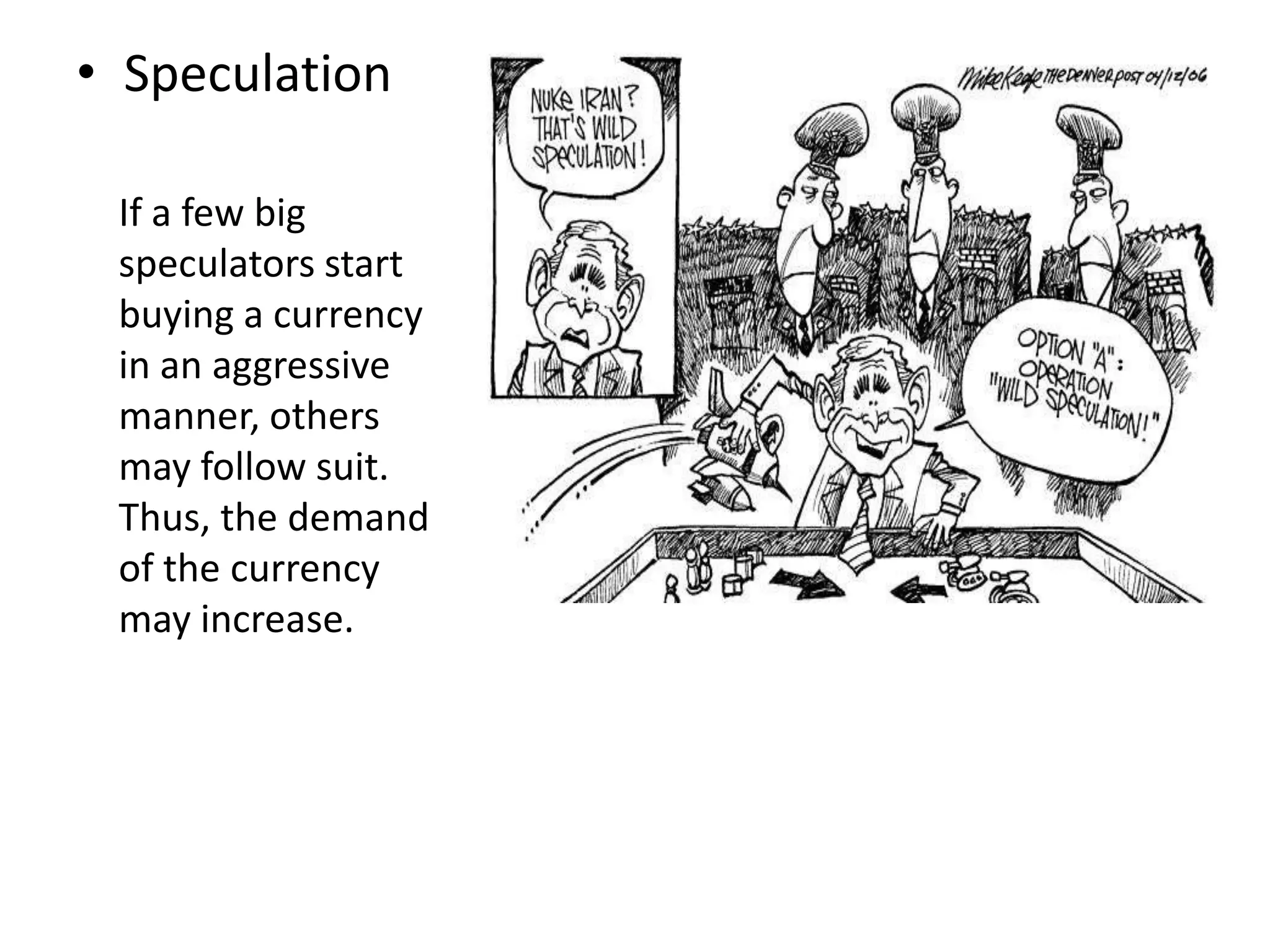
• Speculation
If a few big
speculators start
buying a currency
in an aggressive
manner, others
may follow suit.
Thus, the demand
of the currency
may increase.
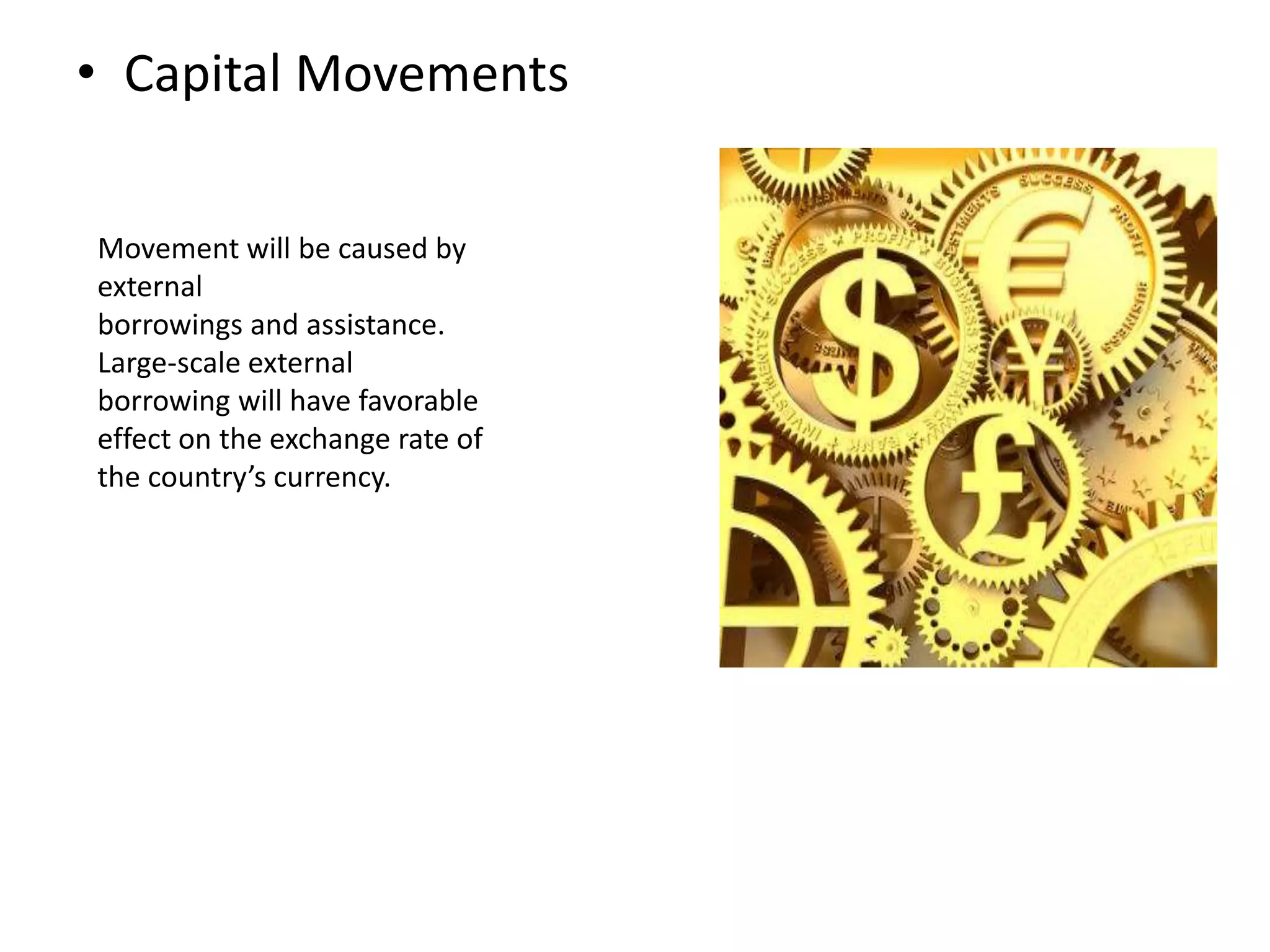
• Capital Movements
Movement will be caused by
external
borrowings and assistance.
Large-scale external
borrowing will have favorable
effect on the exchange rate of
the country’s currency.
FEMA
• The Foreign Exchange Management Act or in short FEMA has been introduced as a
replacement for earlier Foreign Exchange Regulation Act (FERA). FEMA came into
act on the 1st day of June, 2000.
The main objective behind the Foreign Exchange Management Act (1999) is to
consolidate and amend the law relating to foreign exchange with objective of
facilitating external trade and payments and for promoting the orderly
development and maintenance of foreign exchange market in India.
FEMA is applicable to the all parts of India. The act is also applicable to all
branches, offices and agencies outside India owned or controlled by a person who
is resident of India.
FEMA head-office also known as Enforcement Directorate is situated in New Delhi
and is headed by a Director. The Directorate is further divided into 5 zonal offices
at Delhi, Bombay, Calcutta, Madras and Jalandhar and each office is headed by a
Deputy Directors. Each zone is further divided into 7 sub-zonal offices headed by
the Assistant Directors and 5 field units headed by the Chief Enforcement Officers
Conclusion
• Liquid Investment- foreign exchange market has the advantage of being
extremely liquid. What this means is that investors would be able to
withdraw from their investments at any point in time relatively easily.
This is due to the fact that the foreign exchange market has a global
market, which means searching for a buyer to purchase a particular
currency which you are interested to sell is usually not a big problem.
• Convenience-foreign currency exchange trading is extremely convenient.
Organized as an over-the-counter market, foreign exchange traders from
all over the world are brought into contact each day via the internet. This
means that traders would be able to trade with one another 24 hours a
day, five days a week.
• FACILITATES TRADE AND DEVELOPMENT

Determinants of foreign exchange

  • 1.
  • 2.
    DEFINITIONS • Foreign Exchange Thesystem of converting one national currency into another, or of transferring money from one country to another.
  • 3.
    • Foreign ExchangeMarket  Forex market is a place in which foreign exchange transactions take place.  A market in which National currencies are bought and sold against one another The foreign exchange market is one of the largest markets in the world. By some estimates, about 3.2 trillion USD worth of currency changes hands every day.
  • 4.
  • 5.
    Exchange Rates Indicative onFriday April 16, 2010 IMPORT Currency EXPORT Forward Spot Spot Forward 6 months 3 months 1 month TT * Bill TT* Bill 1 month 3 months 6 months 45.26 44.85 44.58 44.42 44.46 US Dollar 44.34 44.32 44.5 44.78 45.19 61.23 60.69 60.32 60.11 60.15 Euro 60.00 59.99 60.21 60.59 61.14 69.92 69.32 68.93 68.69 68.74 Pound Sterling 68.57 68.56 68.81 69.23 69.84 48.84 48.36 48.05 47.87 47.90 Japanese Yen* 47.75 47.74 47.95 48.26 48.72 42.8 42.38 42.1 41.94 41.97 Swiss Franc 41.83 41.82 42.01 42.28 42.7 8.22 8.15 8.11 8.08 8.09 Danish Kroner 8.06 8.06 8.09 8.14 8.21 32.96 32.67 32.47 32.36 32.38 Singapore Dollar 32.29 32.28 32.42 32.61 32.91 5.84 5.78 5.75 5.72 5.73 Hong Kong Dollar 5.71 5.71 5.73 5.77 5.83 41.27 41.35 41.53 41.38 41.40 Australian Dollar 41.32 41.31 41.45 41.57 41.65 31.9 31.84 31.79 31.74 31.76 New Zealand Dollar 31.68 31.68 31.79 31.92 32.08 7.65 7.61 7.59 7.57 7.58 Norwegian Kroner 7.55 7.55 7.59 7.62 7.67 6.33 6.24 6.24 6.21 6.22 Swedish Kroner 6.20 6.20 6.22 6.26 6.32 45.07 44.73 44.47 44.31 44.34 Canadian Dollar 44.21 44.20 44.39 44.66 45.06 Source: State Bank Of India, Chennai *TT - Telegraphic Transfer
  • 6.
    Features of ForeignExchange Market The foreign exchange market is unique because of trading volume results in market liquidity geographical dispersion continuous operation: 24 hours a day except weekends the variety of factors that affect exchange rates the low margins of relative profit compared with other markets of fixed income the use of leverage to enhance profit margins with respect to account size
  • 7.
    Participants Individuals: tourists, migrants Firms: importers andexporters Banks:commercial & central banks Governments / monetary authorities International agencies
  • 8.
    Functions of ForexMarket • Transfer of Purchasing power • Provision of credit • Provision of hedging facilities
  • 9.
    Determinants of ForeignExchange Market Long – term Factors Short-term Factors
  • 10.
  • 11.
    • Strength ofeconomy The relative strength of an economy has effect on demand and supply of foreign currencies. If an economy is growing at a faster rate, in the long-run, it is generally expected to have a better performance on Balance of Trade .
  • 12.
    • Interest rate Thecapital is attracted towards currencies yielding higher interest rates, provided there is full currency convertibility in capital account.
  • 13.
    • Inflation A higherrate of inflation will make a country’s currency less attractive because of the loss of real value with inflation. ◦ Hence, that currency would depreciate against major currencies.
  • 14.
    • Money Supply Anincrease in money supply will affect the exchange rate through causing inflation in the country. It can also affect the exchange rate directly in the short run.
  • 15.
    • National Income Anincrease in the national income will lead to an increase in investment or in consumption and accordingly, its effect on the exchange rate will change.
  • 16.
    Short term factors •Central bank intervention Buying and selling of foreign currency in the market by the Central Bank with a view to increasing the supply or demand, there by affecting the exchange rate, is known as intervention.
  • 17.
    • Export receiptsand import payments The difference between the total receipts from export bill realizations and import payments on a given day in a country determines the exchange rate to some extent.
  • 18.
    • Foreign investmentflows Both foreign direct and portfolio investment inflows and outflows affect the exchange rates.
  • 19.
    • Political factors Factorslike war. Announcement of election results, oil price increase etc will cause exchange rate fluctuations.
  • 20.
    • Speculation If afew big speculators start buying a currency in an aggressive manner, others may follow suit. Thus, the demand of the currency may increase.
  • 21.
    • Capital Movements Movementwill be caused by external borrowings and assistance. Large-scale external borrowing will have favorable effect on the exchange rate of the country’s currency.
  • 22.
    FEMA • The ForeignExchange Management Act or in short FEMA has been introduced as a replacement for earlier Foreign Exchange Regulation Act (FERA). FEMA came into act on the 1st day of June, 2000. The main objective behind the Foreign Exchange Management Act (1999) is to consolidate and amend the law relating to foreign exchange with objective of facilitating external trade and payments and for promoting the orderly development and maintenance of foreign exchange market in India. FEMA is applicable to the all parts of India. The act is also applicable to all branches, offices and agencies outside India owned or controlled by a person who is resident of India. FEMA head-office also known as Enforcement Directorate is situated in New Delhi and is headed by a Director. The Directorate is further divided into 5 zonal offices at Delhi, Bombay, Calcutta, Madras and Jalandhar and each office is headed by a Deputy Directors. Each zone is further divided into 7 sub-zonal offices headed by the Assistant Directors and 5 field units headed by the Chief Enforcement Officers
  • 23.
    Conclusion • Liquid Investment-foreign exchange market has the advantage of being extremely liquid. What this means is that investors would be able to withdraw from their investments at any point in time relatively easily. This is due to the fact that the foreign exchange market has a global market, which means searching for a buyer to purchase a particular currency which you are interested to sell is usually not a big problem. • Convenience-foreign currency exchange trading is extremely convenient. Organized as an over-the-counter market, foreign exchange traders from all over the world are brought into contact each day via the internet. This means that traders would be able to trade with one another 24 hours a day, five days a week. • FACILITATES TRADE AND DEVELOPMENT

Editor's Notes

  • #15 Role of fiscal and monetary policy