AccelerationAcceleration
September 18, 2013September 18, 2013
ObjectivesObjectives
1.1. Calculate accelerationCalculate acceleration
2.2. Describe acceleration on a Speed vs.Describe acceleration on a Speed vs.
Time graphTime graph
AccelerationAcceleration
 Galileo developed this idea as wellGalileo developed this idea as well
 Found that balls rolling down an inclineFound that balls rolling down an incline
rolled faster and fasterrolled faster and faster
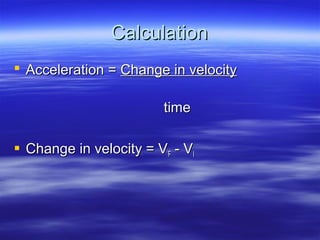
CalculationCalculation
 Acceleration =Acceleration = Change in velocityChange in velocity
timetime
 Change in velocity = VChange in velocity = VFF - V- VII
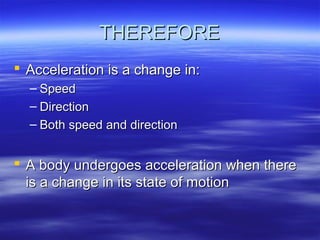
THEREFORETHEREFORE
 Acceleration is a change in:Acceleration is a change in:
– SpeedSpeed
– DirectionDirection
– Both speed and directionBoth speed and direction
 A body undergoes acceleration when thereA body undergoes acceleration when there
is a change in its state of motionis a change in its state of motion
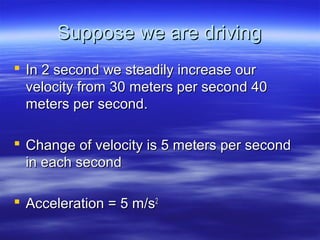
Suppose we are drivingSuppose we are driving
 In 2 second we steadily increase ourIn 2 second we steadily increase our
velocity from 30 meters per second 40velocity from 30 meters per second 40
meters per second.meters per second.
 Change of velocity is 5 meters per secondChange of velocity is 5 meters per second
in each secondin each second
 Acceleration = 5 m/sAcceleration = 5 m/s22
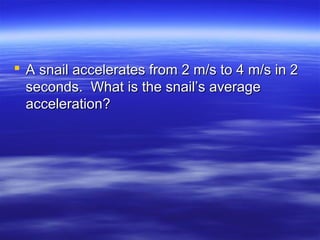
 A snail accelerates from 2 m/s to 4 m/s in 2A snail accelerates from 2 m/s to 4 m/s in 2
seconds. What is the snail’s averageseconds. What is the snail’s average
acceleration?acceleration?
ForcesForces
September 20, 2013September 20, 2013
ObjectivesObjectives
1.1. Explain the difference between BalanceExplain the difference between Balance
and Unbalance Forcesand Unbalance Forces
2.2. Describe and calculate the relationshipDescribe and calculate the relationship
between mass, acceleration, and Forcebetween mass, acceleration, and Force
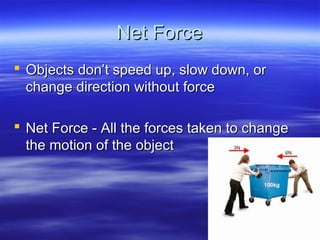
Net ForceNet Force
 Objects don’t speed up, slow down, orObjects don’t speed up, slow down, or
change direction without forcechange direction without force
 Net Force - All the forces taken to changeNet Force - All the forces taken to change
the motion of the objectthe motion of the object
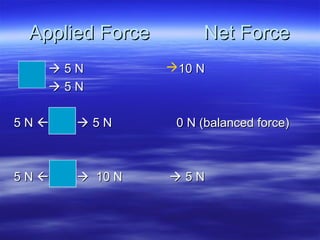
Applied Force Net ForceApplied Force Net Force
 5 N5 N
 5 N5 N
5 N5 N   5 N5 N
5 N5 N   10 N10 N
10 N10 N
0 N (balanced force)0 N (balanced force)
 5 N5 N
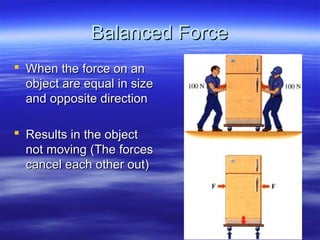
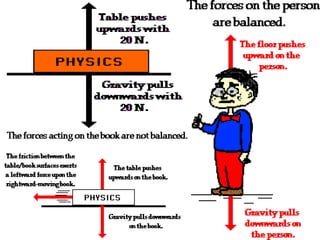
Balanced ForceBalanced Force
 When the force on anWhen the force on an
object are equal in sizeobject are equal in size
and opposite directionand opposite direction
 Results in the objectResults in the object
not moving (The forcesnot moving (The forces
cancel each other out)cancel each other out)
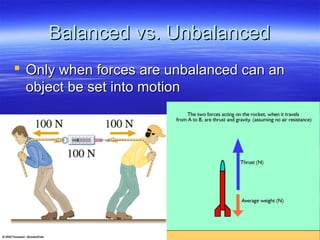
Balanced vs. UnbalancedBalanced vs. Unbalanced
 Only when forces are unbalanced can anOnly when forces are unbalanced can an
object be set into motionobject be set into motion
Force and AccelerationForce and Acceleration
 Any object that accelerates depends on aAny object that accelerates depends on a
force to make it accelerateforce to make it accelerate
 What is the force in a free fall?What is the force in a free fall?
 Acceleration ~ Net ForceAcceleration ~ Net Force
 If you push on a shopping cart it willIf you push on a shopping cart it will
accelerate. If you apply four times the netaccelerate. If you apply four times the net
force, how much greater will theforce, how much greater will the
acceleration be?acceleration be?
 If the net force acting on a sports car isIf the net force acting on a sports car is
increased by five, how much greater willincreased by five, how much greater will
the acceleration be?the acceleration be?
Free FallFree Fall
 When air resistance doesn’t affect theWhen air resistance doesn’t affect the
motion of a falling objectmotion of a falling object
 Free falling objects gain speed at the rate ofFree falling objects gain speed at the rate of
9.8 m/s every second9.8 m/s every second
 9.8 m/s9.8 m/s22
GravityGravity
 Objects in free fall gain speed because ofObjects in free fall gain speed because of
gravitygravity
 Gravity is 9.8 m/sGravity is 9.8 m/s22
 What about if you throw an object up?What about if you throw an object up?
Mass and InertiaMass and Inertia
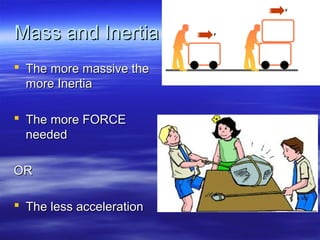
 The more massive theThe more massive the
more Inertiamore Inertia
 The more FORCEThe more FORCE
neededneeded
OROR
 The less accelerationThe less acceleration
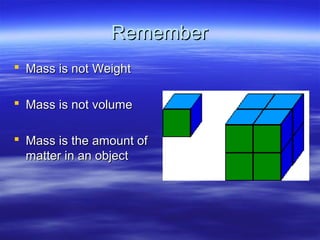
RememberRemember
 Mass is not WeightMass is not Weight
 Mass is not volumeMass is not volume
 Mass is the amount ofMass is the amount of
matter in an objectmatter in an object
Weight is ForceWeight is Force
 Force due to gravity that act’s on an object’sForce due to gravity that act’s on an object’s
massmass
 Mass doesn’t change, weight can (Moon vs.Mass doesn’t change, weight can (Moon vs.
Earth)Earth)
 Mass is proportional to WeightMass is proportional to Weight
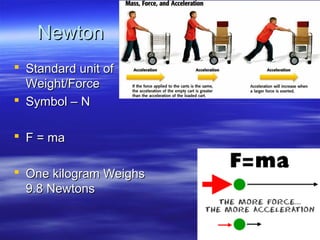
NewtonNewton
 Standard unit ofStandard unit of
Weight/ForceWeight/Force
 Symbol – NSymbol – N
 F = maF = ma
 One kilogram WeighsOne kilogram Weighs
9.8 Newtons9.8 Newtons

Acceleration and force 2010

  • 1.
  • 2.
    ObjectivesObjectives 1.1. Calculate accelerationCalculateacceleration 2.2. Describe acceleration on a Speed vs.Describe acceleration on a Speed vs. Time graphTime graph
  • 3.
    AccelerationAcceleration  Galileo developedthis idea as wellGalileo developed this idea as well  Found that balls rolling down an inclineFound that balls rolling down an incline rolled faster and fasterrolled faster and faster
  • 4.
    CalculationCalculation  Acceleration =Acceleration= Change in velocityChange in velocity timetime  Change in velocity = VChange in velocity = VFF - V- VII
  • 5.
    THEREFORETHEREFORE  Acceleration isa change in:Acceleration is a change in: – SpeedSpeed – DirectionDirection – Both speed and directionBoth speed and direction  A body undergoes acceleration when thereA body undergoes acceleration when there is a change in its state of motionis a change in its state of motion
  • 6.
    Suppose we aredrivingSuppose we are driving  In 2 second we steadily increase ourIn 2 second we steadily increase our velocity from 30 meters per second 40velocity from 30 meters per second 40 meters per second.meters per second.  Change of velocity is 5 meters per secondChange of velocity is 5 meters per second in each secondin each second  Acceleration = 5 m/sAcceleration = 5 m/s22
  • 7.
     A snailaccelerates from 2 m/s to 4 m/s in 2A snail accelerates from 2 m/s to 4 m/s in 2 seconds. What is the snail’s averageseconds. What is the snail’s average acceleration?acceleration?
  • 8.
  • 9.
    ObjectivesObjectives 1.1. Explain thedifference between BalanceExplain the difference between Balance and Unbalance Forcesand Unbalance Forces 2.2. Describe and calculate the relationshipDescribe and calculate the relationship between mass, acceleration, and Forcebetween mass, acceleration, and Force
  • 10.
    Net ForceNet Force Objects don’t speed up, slow down, orObjects don’t speed up, slow down, or change direction without forcechange direction without force  Net Force - All the forces taken to changeNet Force - All the forces taken to change the motion of the objectthe motion of the object
  • 11.
    Applied Force NetForceApplied Force Net Force  5 N5 N  5 N5 N 5 N5 N   5 N5 N 5 N5 N   10 N10 N 10 N10 N 0 N (balanced force)0 N (balanced force)  5 N5 N
  • 12.
    Balanced ForceBalanced Force When the force on anWhen the force on an object are equal in sizeobject are equal in size and opposite directionand opposite direction  Results in the objectResults in the object not moving (The forcesnot moving (The forces cancel each other out)cancel each other out)
  • 13.
    Balanced vs. UnbalancedBalancedvs. Unbalanced  Only when forces are unbalanced can anOnly when forces are unbalanced can an object be set into motionobject be set into motion
  • 15.
    Force and AccelerationForceand Acceleration  Any object that accelerates depends on aAny object that accelerates depends on a force to make it accelerateforce to make it accelerate  What is the force in a free fall?What is the force in a free fall?  Acceleration ~ Net ForceAcceleration ~ Net Force
  • 16.
     If youpush on a shopping cart it willIf you push on a shopping cart it will accelerate. If you apply four times the netaccelerate. If you apply four times the net force, how much greater will theforce, how much greater will the acceleration be?acceleration be?  If the net force acting on a sports car isIf the net force acting on a sports car is increased by five, how much greater willincreased by five, how much greater will the acceleration be?the acceleration be?
  • 17.
    Free FallFree Fall When air resistance doesn’t affect theWhen air resistance doesn’t affect the motion of a falling objectmotion of a falling object  Free falling objects gain speed at the rate ofFree falling objects gain speed at the rate of 9.8 m/s every second9.8 m/s every second  9.8 m/s9.8 m/s22
  • 18.
    GravityGravity  Objects infree fall gain speed because ofObjects in free fall gain speed because of gravitygravity  Gravity is 9.8 m/sGravity is 9.8 m/s22  What about if you throw an object up?What about if you throw an object up?
  • 19.
    Mass and InertiaMassand Inertia  The more massive theThe more massive the more Inertiamore Inertia  The more FORCEThe more FORCE neededneeded OROR  The less accelerationThe less acceleration
  • 20.
    RememberRemember  Mass isnot WeightMass is not Weight  Mass is not volumeMass is not volume  Mass is the amount ofMass is the amount of matter in an objectmatter in an object
  • 21.
    Weight is ForceWeightis Force  Force due to gravity that act’s on an object’sForce due to gravity that act’s on an object’s massmass  Mass doesn’t change, weight can (Moon vs.Mass doesn’t change, weight can (Moon vs. Earth)Earth)  Mass is proportional to WeightMass is proportional to Weight
  • 22.
    NewtonNewton  Standard unitofStandard unit of Weight/ForceWeight/Force  Symbol – NSymbol – N  F = maF = ma  One kilogram WeighsOne kilogram Weighs 9.8 Newtons9.8 Newtons