Acceleration and Force
Sec 2 and 3
Thursday 10/3/13
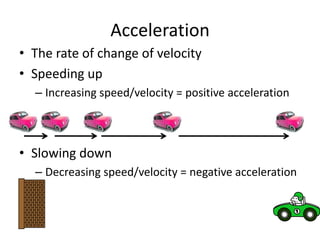
Acceleration
• The rate of change of velocity
• Speeding up
– Increasing speed/velocity = positive acceleration

• Slowing down
– Decreasing speed/velocity = negative acceleration
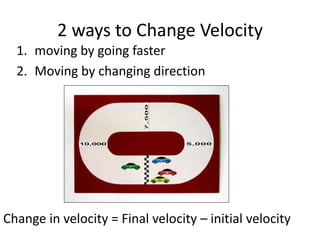
2 ways to Change Velocity
1. moving by going faster
2. Moving by changing direction

Change in velocity = Final velocity – initial velocity
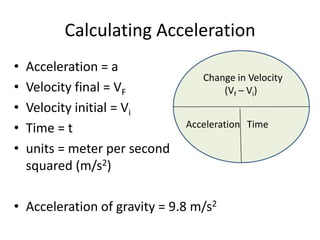
Calculating Acceleration
•
•
•
•
•

Acceleration = a
Velocity final = VF
Velocity initial = Vi
Time = t
units = meter per second
squared (m/s2)

Change in Velocity
(Vf – Vi)
Acceleration Time

• Acceleration of gravity = 9.8 m/s2
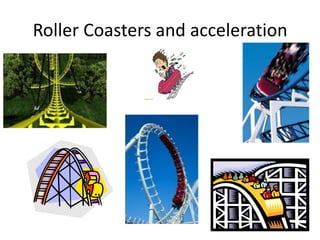
Roller Coasters and acceleration
Practice Problems
• A ball is dropped from a cliff and has an
acceleration of 9.8 m/s2 . How long will it take
for the ball to reach a speed of 24.5 m/s?

• A sprinter leaves the starting blocks with an
acceleration of 4.5 m/s2. What is the
sprinter’s speed 2 seconds later?
Homework
• 10.3 – Ch 2 Reinforcement section 2
Friday 10.4.13
• Drop box Reinforcement sec 2
• Pick up 10.4 – Reinforcement sec 3
• Force Notes
Goals
• Explain how force and motion are related
• Describe Inertia
• Explain what forces are present in a car crash
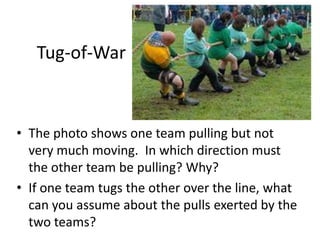
Tug-of-War

• The photo shows one team pulling but not
very much moving. In which direction must
the other team be pulling? Why?
• If one team tugs the other over the line, what
can you assume about the pulls exerted by the
two teams?
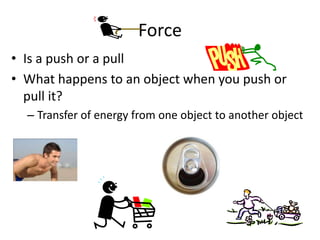
Force
• Is a push or a pull
• What happens to an object when you push or
pull it?
– Transfer of energy from one object to another object
2 types of forces
• Balanced forces – two or more forces acting
on an object in opposite directions causes a
net force of zero (no movement)

• Unbalanced forces – two forces acting on an
object in the same direction (movement in the
direction of the bigger force)
Inertia
• The tendency of an object to resist any change
in motion
– An object in motion will stay in motion until
something stops it
– An object at rest will stay at rest until acted on

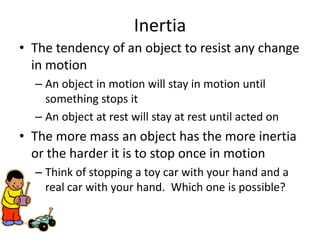
• The more mass an object has the more inertia
or the harder it is to stop once in motion
– Think of stopping a toy car with your hand and a
real car with your hand. Which one is possible?
Newton’s First Law of Motion
• An object in motion stays in motion and an
object at rest stays at rest until an unbalanced
force acts on it.
• Also known as the Law of Inertia
• Ex: car crashes and seat belts
Homework
• 10.4 Reinforcement section 3

acceleration and force

  • 1.
    Acceleration and Force Sec2 and 3 Thursday 10/3/13
  • 2.
    Acceleration • The rateof change of velocity • Speeding up – Increasing speed/velocity = positive acceleration • Slowing down – Decreasing speed/velocity = negative acceleration
  • 3.
    2 ways toChange Velocity 1. moving by going faster 2. Moving by changing direction Change in velocity = Final velocity – initial velocity
  • 4.
    Calculating Acceleration • • • • • Acceleration =a Velocity final = VF Velocity initial = Vi Time = t units = meter per second squared (m/s2) Change in Velocity (Vf – Vi) Acceleration Time • Acceleration of gravity = 9.8 m/s2
  • 5.
    Roller Coasters andacceleration
  • 6.
    Practice Problems • Aball is dropped from a cliff and has an acceleration of 9.8 m/s2 . How long will it take for the ball to reach a speed of 24.5 m/s? • A sprinter leaves the starting blocks with an acceleration of 4.5 m/s2. What is the sprinter’s speed 2 seconds later?
  • 7.
    Homework • 10.3 –Ch 2 Reinforcement section 2
  • 8.
    Friday 10.4.13 • Dropbox Reinforcement sec 2 • Pick up 10.4 – Reinforcement sec 3 • Force Notes
  • 9.
    Goals • Explain howforce and motion are related • Describe Inertia • Explain what forces are present in a car crash
  • 10.
    Tug-of-War • The photoshows one team pulling but not very much moving. In which direction must the other team be pulling? Why? • If one team tugs the other over the line, what can you assume about the pulls exerted by the two teams?
  • 11.
    Force • Is apush or a pull • What happens to an object when you push or pull it? – Transfer of energy from one object to another object
  • 12.
    2 types offorces • Balanced forces – two or more forces acting on an object in opposite directions causes a net force of zero (no movement) • Unbalanced forces – two forces acting on an object in the same direction (movement in the direction of the bigger force)
  • 13.
    Inertia • The tendencyof an object to resist any change in motion – An object in motion will stay in motion until something stops it – An object at rest will stay at rest until acted on • The more mass an object has the more inertia or the harder it is to stop once in motion – Think of stopping a toy car with your hand and a real car with your hand. Which one is possible?
  • 14.
    Newton’s First Lawof Motion • An object in motion stays in motion and an object at rest stays at rest until an unbalanced force acts on it. • Also known as the Law of Inertia • Ex: car crashes and seat belts
  • 15.