Agenda

Bell work
• Pass in Lab Reports

• Notes: Change of
Phase
• States of Matter Phet
Simulation

• Define Specific Heat
Capacity
• Distinguish between High
and Low Specific Heat.
• Give an example of each
• How does water’s Specific
heat control earth’s climate
• What is special about
Islands and Peninsula's?
Change of Phase
March 14, 2013
Objectives
1.

Explain changes in phase according to
heat and energy

2.

Define each of the phase changes
Heat Transfer
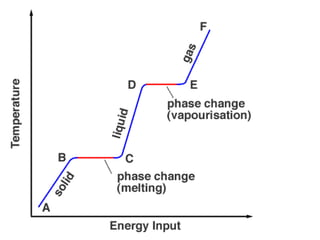
 When matter changes phase, a transfer of

thermal energy is involved
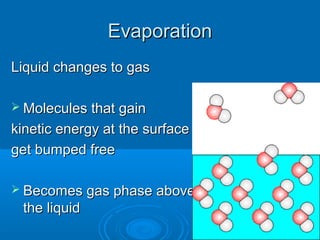
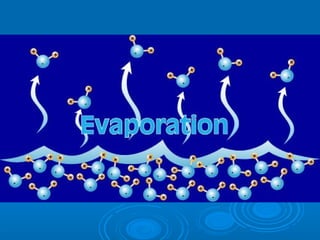
Evaporation
Liquid changes to gas
 Molecules that gain

kinetic energy at the surface
get bumped free
 Becomes gas phase above

the liquid
Evaporation
 Molecules that leave the liquid have the

most energy
 Energy of the liquid decreases
 Temperature of the liquid goes down
 EX. Perspiration
Would evaporation be a cooling process if
there were no transfer of molecular energy
from water to the air above?
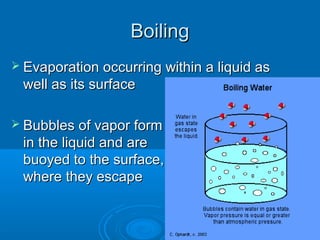
Boiling
 Evaporation occurring within a liquid as

well as its surface
 Bubbles of vapor form

in the liquid and are
buoyed to the surface,
where they escape
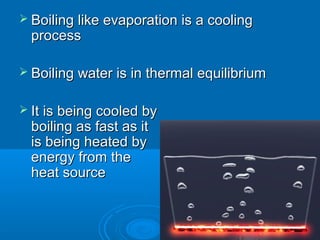
 Boiling like evaporation is a cooling

process

 Boiling water is in thermal equilibrium
 It is being cooled by

boiling as fast as it
is being heated by
energy from the
heat source
Since boiling is a cooling process, would it
be a good idea to cool your hot, sticky
hands by dipping them into boiling water?
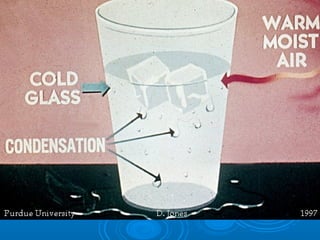
Condensation


Gas to a Liquid



High energy molecules close to the surface
become attracted to the liquid



Hit the surface with increased kinetic energy



Raising the temperature of the water



Gas has a lot of energy to give up
If the water level in a dish of water remains
unchanged from one day to the next, can
you conclude that no evaporation or
condensation is taking place?
Melting and Freezing
Melting - solid to a liquid
 heat is absorbed the molecules vibrate

more and more breaking the attractive
forces
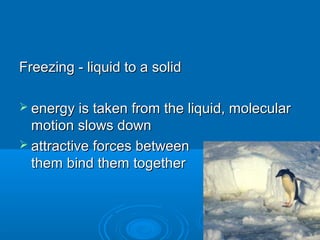
Freezing - liquid to a solid
 energy is taken from the liquid, molecular

motion slows down
 attractive forces between
them bind them together
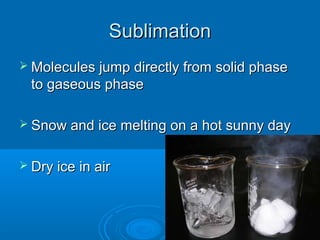
Sublimation
 Molecules jump directly from

solid phase

to gaseous phase
 Snow and ice melting on a hot sunny day
 Dry ice in air
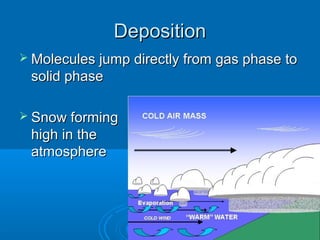
Deposition
 Molecules jump directly from

solid phase
 Snow forming

high in the
atmosphere

gas phase to

Change of phase fall 2010

  • 1.
    Agenda Bell work • Passin Lab Reports • Notes: Change of Phase • States of Matter Phet Simulation • Define Specific Heat Capacity • Distinguish between High and Low Specific Heat. • Give an example of each • How does water’s Specific heat control earth’s climate • What is special about Islands and Peninsula's?
  • 3.
  • 4.
    Objectives 1. Explain changes inphase according to heat and energy 2. Define each of the phase changes
  • 5.
    Heat Transfer  Whenmatter changes phase, a transfer of thermal energy is involved
  • 6.
    Evaporation Liquid changes togas  Molecules that gain kinetic energy at the surface get bumped free  Becomes gas phase above the liquid
  • 7.
    Evaporation  Molecules thatleave the liquid have the most energy  Energy of the liquid decreases  Temperature of the liquid goes down  EX. Perspiration
  • 9.
    Would evaporation bea cooling process if there were no transfer of molecular energy from water to the air above?
  • 10.
    Boiling  Evaporation occurringwithin a liquid as well as its surface  Bubbles of vapor form in the liquid and are buoyed to the surface, where they escape
  • 11.
     Boiling likeevaporation is a cooling process  Boiling water is in thermal equilibrium  It is being cooled by boiling as fast as it is being heated by energy from the heat source
  • 12.
    Since boiling isa cooling process, would it be a good idea to cool your hot, sticky hands by dipping them into boiling water?
  • 13.
    Condensation  Gas to aLiquid  High energy molecules close to the surface become attracted to the liquid  Hit the surface with increased kinetic energy  Raising the temperature of the water  Gas has a lot of energy to give up
  • 15.
    If the waterlevel in a dish of water remains unchanged from one day to the next, can you conclude that no evaporation or condensation is taking place?
  • 16.
    Melting and Freezing Melting- solid to a liquid  heat is absorbed the molecules vibrate more and more breaking the attractive forces
  • 17.
    Freezing - liquidto a solid  energy is taken from the liquid, molecular motion slows down  attractive forces between them bind them together
  • 18.
    Sublimation  Molecules jumpdirectly from solid phase to gaseous phase  Snow and ice melting on a hot sunny day  Dry ice in air
  • 19.
    Deposition  Molecules jumpdirectly from solid phase  Snow forming high in the atmosphere gas phase to