Abdominal Wall
&
Abdominal incision
OBJECTIVES
• Introduction
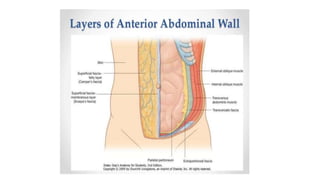
• Layer of abdominal wall
• Cutaneous nerve
• Cutaneous artery
• Quadrant /Region
• Abdominal incision
• Complications
Abdominal Wall
Xiphoid process
Cutaneous artery
Quadrants and Regions
L1
L5
Abdominal Incision
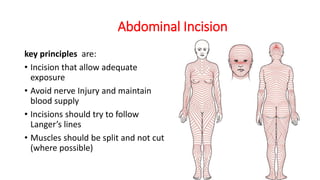
key principles are:
• Incision that allow adequate
exposure
• Avoid nerve Injury and maintain
blood supply
• Incisions should try to follow
Langer’s lines
• Muscles should be split and not cut
(where possible)
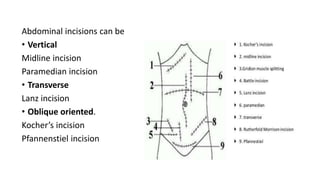
Abdominal incisions can be
• Vertical
Midline incision
Paramedian incision
• Transverse
Lanz incision
• Oblique oriented.
Kocher’s incision
Pfannenstiel incision
Abdominal incision
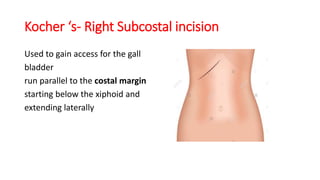
Kocher ‘s- Right Subcostal incision
Used to gain access for the gall
bladder
run parallel to the costal margin
starting below the xiphoid and
extending laterally
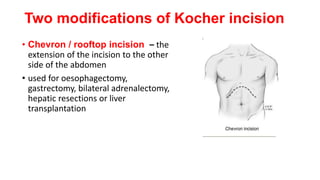
Two modifications of Kocher incision
• Chevron / rooftop incision – the
extension of the incision to the other
side of the abdomen
• used for oesophagectomy,
gastrectomy, bilateral adrenalectomy,
hepatic resections or liver
transplantation
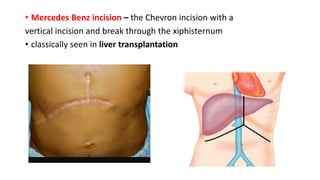
• Mercedes Benz incision – the Chevron incision with a
vertical incision and break through the xiphisternum
• classically seen in liver transplantation
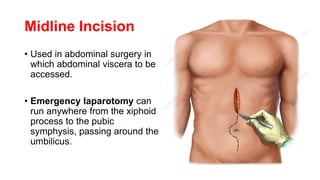
Midline Incision
• Used in abdominal surgery in
which abdominal viscera to be
accessed.
• Emergency laparotomy can
run anywhere from the xiphoid
process to the pubic
symphysis, passing around the
umbilicus.
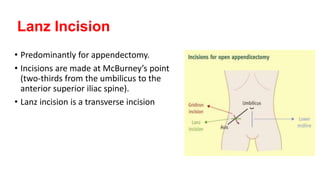
Lanz Incision
• Predominantly for appendectomy.
• Incisions are made at McBurney’s point
(two-thirds from the umbilicus to the
anterior superior iliac spine).
• Lanz incision is a transverse incision
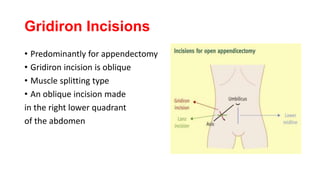
Gridiron Incisions
• Predominantly for appendectomy
• Gridiron incision is oblique
• Muscle splitting type
• An oblique incision made
in the right lower quadrant
of the abdomen
Rutherford-Morrison incision
• 'hockey-stick' incision.
• oblique, curvilinear muscle-cutting incision
• Provide good access to the right or left
colon and bladder for renal
transplantation, colonic resection,
caecostomy
Pfannenstiel incision
• Incision is commonly called the "bikini line incision“
• most common method for Caesarian sections
Laparoscopic Port Sites
• Laparoscopic surgery (keyhole surgery)
• Small incisions to be made in the skin
Mainly done for gall bladder removal
• Nerve injury, incisional hernia or
contamination were minimized
Complication following incision
• Nerve injury
• Surgical site infection
• Wound dehiscence
• Incisional hernia
Wound dehiscence
Wound fails to heal
Re-open a few days after surgery (most common in abdominal surgery).
It can be divided into two clinical entities:
• Superficial
• Full-thickness
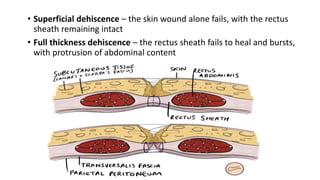
• Superficial dehiscence – the skin wound alone fails, with the rectus
sheath remaining intact
• Full thickness dehiscence – the rectus sheath fails to heal and bursts,
with protrusion of abdominal content
Incisional hernia
• Protrusion of peritoneal fold or an organ through a surgical incision.
Suprapubic catheterization
• Placement of a drainage tube into urinary bladder just above pubic symphysis
• Generally considered more comfortable for male patients with long term catheter
requirements.
• Percutaneous approaches are often performed under vision with a rigid or
flexible cystoscope
Technique
• open technique and percutaneous technique
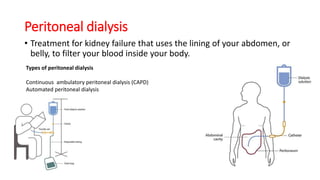
Peritoneal dialysis
• Treatment for kidney failure that uses the lining of your abdomen, or
belly, to filter your blood inside your body.
Types of peritoneal dialysis
Continuous ambulatory peritoneal dialysis (CAPD)
Automated peritoneal dialysis
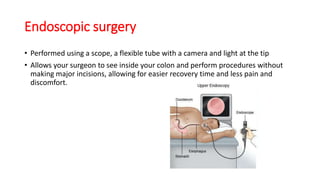
Endoscopic surgery
• Performed using a scope, a flexible tube with a camera and light at the tip
• Allows your surgeon to see inside your colon and perform procedures without
making major incisions, allowing for easier recovery time and less pain and
discomfort.
Thank you

Abdominal Wall.pptx

  • 1.
  • 2.
    OBJECTIVES • Introduction • Layerof abdominal wall • Cutaneous nerve • Cutaneous artery • Quadrant /Region • Abdominal incision • Complications
  • 3.
  • 6.
  • 7.
  • 9.
    Abdominal Incision key principlesare: • Incision that allow adequate exposure • Avoid nerve Injury and maintain blood supply • Incisions should try to follow Langer’s lines • Muscles should be split and not cut (where possible)
  • 10.
    Abdominal incisions canbe • Vertical Midline incision Paramedian incision • Transverse Lanz incision • Oblique oriented. Kocher’s incision Pfannenstiel incision
  • 11.
  • 12.
    Kocher ‘s- RightSubcostal incision Used to gain access for the gall bladder run parallel to the costal margin starting below the xiphoid and extending laterally
  • 13.
    Two modifications ofKocher incision • Chevron / rooftop incision – the extension of the incision to the other side of the abdomen • used for oesophagectomy, gastrectomy, bilateral adrenalectomy, hepatic resections or liver transplantation
  • 14.
    • Mercedes Benzincision – the Chevron incision with a vertical incision and break through the xiphisternum • classically seen in liver transplantation
  • 15.
    Midline Incision • Usedin abdominal surgery in which abdominal viscera to be accessed. • Emergency laparotomy can run anywhere from the xiphoid process to the pubic symphysis, passing around the umbilicus.
  • 16.
    Lanz Incision • Predominantlyfor appendectomy. • Incisions are made at McBurney’s point (two-thirds from the umbilicus to the anterior superior iliac spine). • Lanz incision is a transverse incision
  • 17.
    Gridiron Incisions • Predominantlyfor appendectomy • Gridiron incision is oblique • Muscle splitting type • An oblique incision made in the right lower quadrant of the abdomen
  • 18.
    Rutherford-Morrison incision • 'hockey-stick'incision. • oblique, curvilinear muscle-cutting incision • Provide good access to the right or left colon and bladder for renal transplantation, colonic resection, caecostomy
  • 19.
    Pfannenstiel incision • Incisionis commonly called the "bikini line incision“ • most common method for Caesarian sections
  • 20.
    Laparoscopic Port Sites •Laparoscopic surgery (keyhole surgery) • Small incisions to be made in the skin Mainly done for gall bladder removal • Nerve injury, incisional hernia or contamination were minimized
  • 21.
    Complication following incision •Nerve injury • Surgical site infection • Wound dehiscence • Incisional hernia
  • 22.
    Wound dehiscence Wound failsto heal Re-open a few days after surgery (most common in abdominal surgery). It can be divided into two clinical entities: • Superficial • Full-thickness
  • 23.
    • Superficial dehiscence– the skin wound alone fails, with the rectus sheath remaining intact • Full thickness dehiscence – the rectus sheath fails to heal and bursts, with protrusion of abdominal content
  • 24.
    Incisional hernia • Protrusionof peritoneal fold or an organ through a surgical incision.
  • 25.
    Suprapubic catheterization • Placementof a drainage tube into urinary bladder just above pubic symphysis • Generally considered more comfortable for male patients with long term catheter requirements. • Percutaneous approaches are often performed under vision with a rigid or flexible cystoscope Technique • open technique and percutaneous technique
  • 26.
    Peritoneal dialysis • Treatmentfor kidney failure that uses the lining of your abdomen, or belly, to filter your blood inside your body. Types of peritoneal dialysis Continuous ambulatory peritoneal dialysis (CAPD) Automated peritoneal dialysis
  • 27.
    Endoscopic surgery • Performedusing a scope, a flexible tube with a camera and light at the tip • Allows your surgeon to see inside your colon and perform procedures without making major incisions, allowing for easier recovery time and less pain and discomfort.
  • 28.