Cerebellum
Presenter - Rahul Sharma
Contents
• Gross appearance of cerebellum
• Structure of cerebellum
• Functional division of cerebellum
• Afferent & efferent pathways
• Clinical
• MCQ’s
• Clinical Vignettes
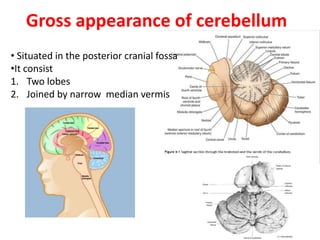
Gross appearance of cerebellum
• Situated in the posterior cranial fossa
•It consist
1. Two lobes
2. Joined by narrow median vermis
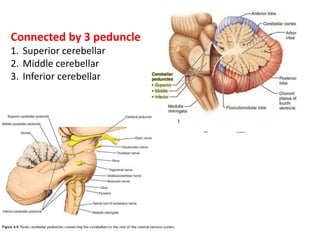
Connected by 3 peduncle
1. Superior cerebellar
2. Middle cerebellar
3. Inferior cerebellar
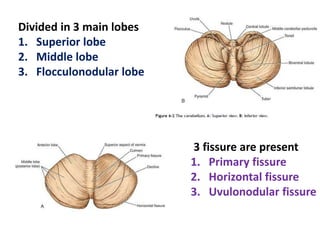
Divided in 3 main lobes
1. Superior lobe
2. Middle lobe
3. Flocculonodular lobe
3 fissure are present
1. Primary fissure
2. Horizontal fissure
3. Uvulonodular fissure
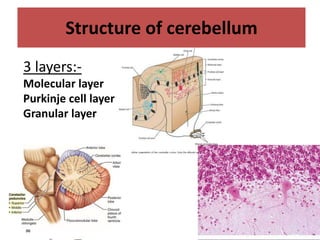
3 layers:-
Molecular layer
Purkinje cell layer
Granular layer
Structure of cerebellum
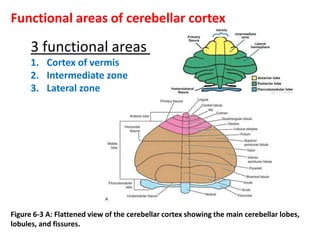
Figure 6-3 A: Flattened view of the cerebellar cortex showing the main cerebellar lobes,
lobules, and fissures.
Functional areas of cerebellar cortex
3 functional areas
1. Cortex of vermis
2. Intermediate zone
3. Lateral zone
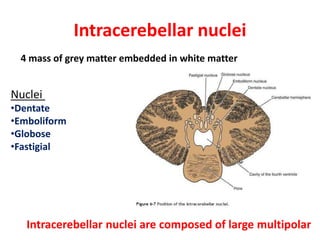
Intracerebellar nuclei
4 mass of grey matter embedded in white matter
Nuclei
•Dentate
•Emboliform
•Globose
•Fastigial
Intracerebellar nuclei are composed of large multipolar
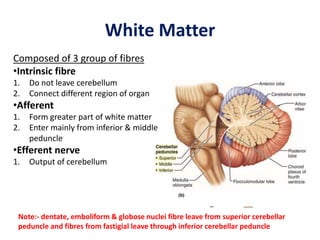
White Matter
Composed of 3 group of fibres
•Intrinsic fibre
1. Do not leave cerebellum
2. Connect different region of organ
•Afferent
1. Form greater part of white matter
2. Enter mainly from inferior & middle
peduncle
•Efferent nerve
1. Output of cerebellum
Note:- dentate, emboliform & globose nuclei fibre leave from superior cerebellar
peduncle and fibres from fastigial leave through inferior cerebellar peduncle
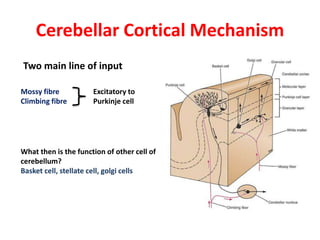
Cerebellar Cortical Mechanism
Two main line of input
Mossy fibre
Climbing fibre
Excitatory to
Purkinje cell
What then is the function of other cell of
cerebellum?
Basket cell, stellate cell, golgi cells
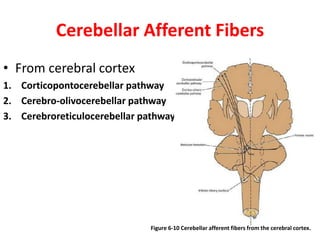
Cerebellar Afferent Fibers
• From cerebral cortex
1. Corticopontocerebellar pathway
2. Cerebro-olivocerebellar pathway
3. Cerebroreticulocerebellar pathway
Figure 6-10 Cerebellar afferent fibers from the cerebral cortex.
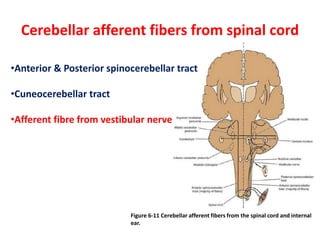
Cerebellar afferent fibers from spinal cord
Figure 6-11 Cerebellar afferent fibers from the spinal cord and internal
ear.
•Anterior & Posterior spinocerebellar tract
•Cuneocerebellar tract
•Afferent fibre from vestibular nerve
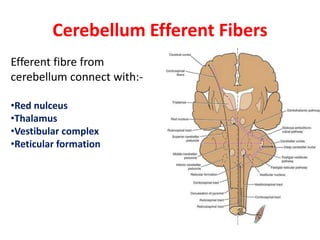
Cerebellum Efferent Fibers
Efferent fibre from
cerebellum connect with:-
•Red nulceus
•Thalamus
•Vestibular complex
•Reticular formation
ARTERIAL SUPPLY OF CEREBELLUM
• Superior cerebellar artery
• Anterior inferior cerebellar artery
• Posterior inferior cerebellar artery
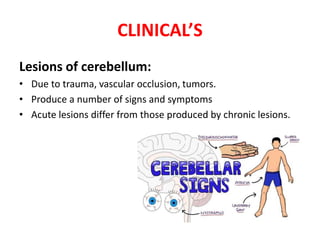
CLINICAL’S
Lesions of cerebellum:
• Due to trauma, vascular occlusion, tumors.
• Produce a number of signs and symptoms
• Acute lesions differ from those produced by chronic lesions.
Following symptoms and signs are characteristic of
Cerebellar dysfunction.
1. Hypotonia
2. Postural Changes and Alteration of Gait
3. Disturbances of Voluntary Movement (Ataxia)
4. Dysdiadochokinesia
5. Disturbances of Reflexes
6. Nystagmus
7. Disorders of Speech
Cerebellar Syndromes
Vermis Syndrome
• Common cause of vermis syndrome is medullo
blastoma of vermis
• Involvement of flocculonodular lobe
• Signs and symptoms related to vestibular system
• Muscle incoordination involves head and trunk and
not the limbs
Cerebellar Hemisphere Syndrome
• Tumors of cerebellum result cerebellar hemisphere syndrome
• symptoms and signs are usually unilateral
• Ipsilataeral involvment of muscles
• Movements of limbs, especially arms, are disturbed. Swaying
and falling to the side of the lesion often occur.
• Dysarthria and nystagmus
• Lateral involvment of lobe result in delays in initiating
movements and inability to move all limb segments together
in a coordinated manner but show a tendency to move one
joint at a time.
MCQ
• Superior cerbellar peduncle contains which of the
following?
a) Posterior spinocerebellar
b) Olivocrebellar tract
c) Vestibulocerebellar
d) Anterior spinocerebellar
Anterior spinocerebellar
BD_Chaurasia’s_Human_Anatomy, Volume 3 - Head-Neck and Brain 6th Edition, pg no 408
• Which of the following region of cerebllum is
concerned with planning and programming muscular
activities?
a) Intermediate zone
b) Vermis
c) Lateral zone
d) Flocculonodular zone
Lateral zone
BD_Chaurasia’s_Human_Anatomy, Volume 3 - Head-Neck and Brain 6th Edition, pg no 408
• Cerebellum consist numerous lobe, which lobe is the
smallest one?
a) Flocculonodular lobe
b) Middle lobe
c) Anterior lobe
d) Posterior lobe
BD_Chaurasia’s_Human_Anatomy, Volume 3 - Head-Neck and Brain 6th
Edition, pg no 408
a) Flocculonodular lobe
Clinical Vignette
• Two physicians are talking in the street when one turns to the
other and says, "Look at that man over there. Look at the way
he is walking. He Is not swinging his right arm at all; it is just
hanging down by his side. I wonder If he has a cerebellar
lesion." Does a person with a unilateral cerebellar hemisphere
tumor tend to hold the arm limply at the side when he walks?
a unillateral lesion involving one cerebellar
hemisphere demonstrates absence of
coordination between different groups of
muscles on the same side of the body
Ans YES
References
• Richard_S_Snell_Clinical_Neuroanatomy_7
edition
• Gray's Anatomy-The Anatomical Basis of
Clinical Practice 41st Edition - 2015

cerebellum.pptx

  • 1.
  • 2.
    Contents • Gross appearanceof cerebellum • Structure of cerebellum • Functional division of cerebellum • Afferent & efferent pathways • Clinical • MCQ’s • Clinical Vignettes
  • 3.
    Gross appearance ofcerebellum • Situated in the posterior cranial fossa •It consist 1. Two lobes 2. Joined by narrow median vermis
  • 4.
    Connected by 3peduncle 1. Superior cerebellar 2. Middle cerebellar 3. Inferior cerebellar
  • 5.
    Divided in 3main lobes 1. Superior lobe 2. Middle lobe 3. Flocculonodular lobe 3 fissure are present 1. Primary fissure 2. Horizontal fissure 3. Uvulonodular fissure
  • 6.
    3 layers:- Molecular layer Purkinjecell layer Granular layer Structure of cerebellum
  • 7.
    Figure 6-3 A:Flattened view of the cerebellar cortex showing the main cerebellar lobes, lobules, and fissures. Functional areas of cerebellar cortex 3 functional areas 1. Cortex of vermis 2. Intermediate zone 3. Lateral zone
  • 8.
    Intracerebellar nuclei 4 massof grey matter embedded in white matter Nuclei •Dentate •Emboliform •Globose •Fastigial Intracerebellar nuclei are composed of large multipolar
  • 9.
    White Matter Composed of3 group of fibres •Intrinsic fibre 1. Do not leave cerebellum 2. Connect different region of organ •Afferent 1. Form greater part of white matter 2. Enter mainly from inferior & middle peduncle •Efferent nerve 1. Output of cerebellum Note:- dentate, emboliform & globose nuclei fibre leave from superior cerebellar peduncle and fibres from fastigial leave through inferior cerebellar peduncle
  • 10.
    Cerebellar Cortical Mechanism Twomain line of input Mossy fibre Climbing fibre Excitatory to Purkinje cell What then is the function of other cell of cerebellum? Basket cell, stellate cell, golgi cells
  • 11.
    Cerebellar Afferent Fibers •From cerebral cortex 1. Corticopontocerebellar pathway 2. Cerebro-olivocerebellar pathway 3. Cerebroreticulocerebellar pathway Figure 6-10 Cerebellar afferent fibers from the cerebral cortex.
  • 12.
    Cerebellar afferent fibersfrom spinal cord Figure 6-11 Cerebellar afferent fibers from the spinal cord and internal ear. •Anterior & Posterior spinocerebellar tract •Cuneocerebellar tract •Afferent fibre from vestibular nerve
  • 13.
    Cerebellum Efferent Fibers Efferentfibre from cerebellum connect with:- •Red nulceus •Thalamus •Vestibular complex •Reticular formation
  • 14.
    ARTERIAL SUPPLY OFCEREBELLUM • Superior cerebellar artery • Anterior inferior cerebellar artery • Posterior inferior cerebellar artery
  • 15.
    CLINICAL’S Lesions of cerebellum: •Due to trauma, vascular occlusion, tumors. • Produce a number of signs and symptoms • Acute lesions differ from those produced by chronic lesions.
  • 16.
    Following symptoms andsigns are characteristic of Cerebellar dysfunction. 1. Hypotonia 2. Postural Changes and Alteration of Gait 3. Disturbances of Voluntary Movement (Ataxia) 4. Dysdiadochokinesia 5. Disturbances of Reflexes 6. Nystagmus 7. Disorders of Speech
  • 17.
    Cerebellar Syndromes Vermis Syndrome •Common cause of vermis syndrome is medullo blastoma of vermis • Involvement of flocculonodular lobe • Signs and symptoms related to vestibular system • Muscle incoordination involves head and trunk and not the limbs
  • 18.
    Cerebellar Hemisphere Syndrome •Tumors of cerebellum result cerebellar hemisphere syndrome • symptoms and signs are usually unilateral • Ipsilataeral involvment of muscles • Movements of limbs, especially arms, are disturbed. Swaying and falling to the side of the lesion often occur. • Dysarthria and nystagmus • Lateral involvment of lobe result in delays in initiating movements and inability to move all limb segments together in a coordinated manner but show a tendency to move one joint at a time.
  • 19.
    MCQ • Superior cerbellarpeduncle contains which of the following? a) Posterior spinocerebellar b) Olivocrebellar tract c) Vestibulocerebellar d) Anterior spinocerebellar Anterior spinocerebellar BD_Chaurasia’s_Human_Anatomy, Volume 3 - Head-Neck and Brain 6th Edition, pg no 408
  • 20.
    • Which ofthe following region of cerebllum is concerned with planning and programming muscular activities? a) Intermediate zone b) Vermis c) Lateral zone d) Flocculonodular zone Lateral zone BD_Chaurasia’s_Human_Anatomy, Volume 3 - Head-Neck and Brain 6th Edition, pg no 408
  • 21.
    • Cerebellum consistnumerous lobe, which lobe is the smallest one? a) Flocculonodular lobe b) Middle lobe c) Anterior lobe d) Posterior lobe BD_Chaurasia’s_Human_Anatomy, Volume 3 - Head-Neck and Brain 6th Edition, pg no 408 a) Flocculonodular lobe
  • 22.
    Clinical Vignette • Twophysicians are talking in the street when one turns to the other and says, "Look at that man over there. Look at the way he is walking. He Is not swinging his right arm at all; it is just hanging down by his side. I wonder If he has a cerebellar lesion." Does a person with a unilateral cerebellar hemisphere tumor tend to hold the arm limply at the side when he walks? a unillateral lesion involving one cerebellar hemisphere demonstrates absence of coordination between different groups of muscles on the same side of the body Ans YES
  • 23.
    References • Richard_S_Snell_Clinical_Neuroanatomy_7 edition • Gray'sAnatomy-The Anatomical Basis of Clinical Practice 41st Edition - 2015

Editor's Notes

  • #8 Figure 6-3 A: Flattened view of the cerebellar cortex showing the main cerebellar lobes, lobules, and fissures.