Emergency First Aid
   for Children
    9. Poisoning
"Around 30,000 poisoning incidents a year
involve infants and toddlers. More than half
of the cases involve medicines*. It’s
important that anyone looking after a child
remembers to keep medicines locked
away."

* DTI figures for 1999
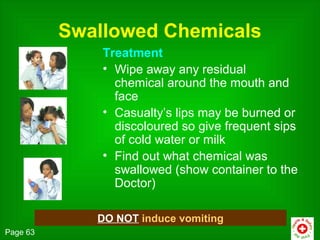
Swallowed Chemicals
              Treatment
              • Wipe away any residual
                chemical around the mouth and
                face
              • Casualty’s lips may be burned or
                discoloured so give frequent sips
                of cold water or milk
              • Find out what chemical was
                swallowed (show container to the
                Doctor)

             DO NOT induce vomiting
Page 63
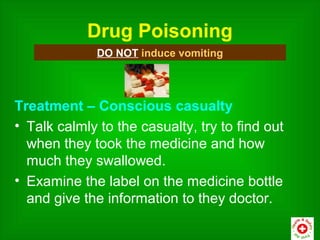
Drug Poisoning
              DO NOT induce vomiting


Treatment – Conscious casualty
• Talk calmly to the casualty, try to find out
  when they took the medicine and how
  much they swallowed.
• Examine the label on the medicine bottle
  and give the information to they doctor.
Drug Poisoning
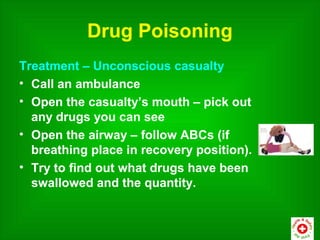
Treatment – Unconscious casualty
• Call an ambulance
• Open the casualty’s mouth – pick out
  any drugs you can see
• Open the airway – follow ABCs (if
  breathing place in recovery position).
• Try to find out what drugs have been
  swallowed and the quantity.
Anaphylactic Shock
 • Is a massive allergic reaction that can
   develop a short time after contact with a
   trigger substance – which may be a
   particular drug, the sting of a particular
   insect, or the ingestion of a particular food.

 • If untreated can kill


Page 36
Anaphylactic Shock
    Signs & Symptoms
          •   Intensely itchy rash, often with white raised areas
          •   Sudden drop in blood pressure
          •   Extreme anxiety, including sense of imminent death
          •   Swollen, face, lips, tongue and throat
          •   Rapid pulse
          •   Puffy eyes
          •   Difficulty speaking or swallowing
          •   Wheezing, tight chest or breathing difficulty
          •   Abdominal pain, feelings of nausea
          •   Faintness
          •   Loss of consciousness
                     CALL AN AMBULANCE
Page 36
Alcohol Poisoning
Recognising:
• Strong smell of alcohol
• Flushed and moist face
• Slurred speech
• Staggering
• Deep noisy breath
• Nausea
• Bounding pulse
Alcohol Poisoning
• Call a doctor
• Allow casualty to rest
• Place bowl nearby in case they are sick
• If casualty falls asleep check to make sure
 they can be easily roused.

• If unconscious, follow ABCs and if
 breathing place in recovery position.
Plant Poisoning
                 DO NOT induce vomiting.
      If casualty is sick, show a sample to the Doctor

 Treatment
 • Try to find out what the casualty has
   eaten, keep a sample to show the Doctor
 • Look inside their mouth – pick out any
   remaining pieces of plant.
 • If unconscious, follow ABCs and if
   breathing place in recovery position.

Page 63
Emergency First Aid
   for Children

   End of Section

9 poisoning

  • 1.
    Emergency First Aid for Children 9. Poisoning
  • 2.
    "Around 30,000 poisoningincidents a year involve infants and toddlers. More than half of the cases involve medicines*. It’s important that anyone looking after a child remembers to keep medicines locked away." * DTI figures for 1999
  • 3.
    Swallowed Chemicals Treatment • Wipe away any residual chemical around the mouth and face • Casualty’s lips may be burned or discoloured so give frequent sips of cold water or milk • Find out what chemical was swallowed (show container to the Doctor) DO NOT induce vomiting Page 63
  • 4.
    Drug Poisoning DO NOT induce vomiting Treatment – Conscious casualty • Talk calmly to the casualty, try to find out when they took the medicine and how much they swallowed. • Examine the label on the medicine bottle and give the information to they doctor.
  • 5.
    Drug Poisoning Treatment –Unconscious casualty • Call an ambulance • Open the casualty’s mouth – pick out any drugs you can see • Open the airway – follow ABCs (if breathing place in recovery position). • Try to find out what drugs have been swallowed and the quantity.
  • 6.
    Anaphylactic Shock •Is a massive allergic reaction that can develop a short time after contact with a trigger substance – which may be a particular drug, the sting of a particular insect, or the ingestion of a particular food. • If untreated can kill Page 36
  • 7.
    Anaphylactic Shock Signs & Symptoms • Intensely itchy rash, often with white raised areas • Sudden drop in blood pressure • Extreme anxiety, including sense of imminent death • Swollen, face, lips, tongue and throat • Rapid pulse • Puffy eyes • Difficulty speaking or swallowing • Wheezing, tight chest or breathing difficulty • Abdominal pain, feelings of nausea • Faintness • Loss of consciousness CALL AN AMBULANCE Page 36
  • 8.
    Alcohol Poisoning Recognising: • Strongsmell of alcohol • Flushed and moist face • Slurred speech • Staggering • Deep noisy breath • Nausea • Bounding pulse
  • 9.
    Alcohol Poisoning • Calla doctor • Allow casualty to rest • Place bowl nearby in case they are sick • If casualty falls asleep check to make sure they can be easily roused. • If unconscious, follow ABCs and if breathing place in recovery position.
  • 10.
    Plant Poisoning DO NOT induce vomiting. If casualty is sick, show a sample to the Doctor Treatment • Try to find out what the casualty has eaten, keep a sample to show the Doctor • Look inside their mouth – pick out any remaining pieces of plant. • If unconscious, follow ABCs and if breathing place in recovery position. Page 63
  • 11.
    Emergency First Aid for Children End of Section