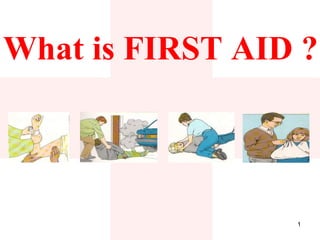
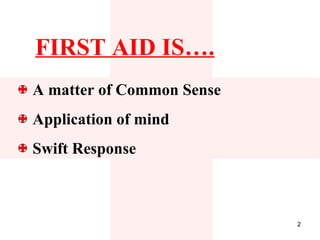
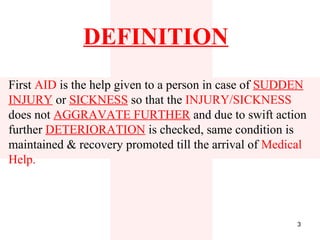
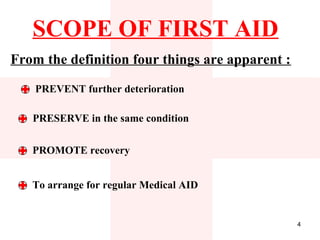
What is FIRST AID ?


                 1
FIRST AID IS….
A matter of Common Sense
Application of mind
Swift Response


                           2
DEFINITION
First AID is the help given to a person in case of SUDDEN
INJURY or SICKNESS so that the INJURY/SICKNESS
does not AGGRAVATE FURTHER and due to swift action
further DETERIORATION is checked, same condition is
maintained & recovery promoted till the arrival of Medical
Help.


                                                        3
SCOPE OF FIRST AID
From the definition four things are apparent :

    PREVENT further deterioration

   PRESERVE in the same condition


   PROMOTE recovery


   To arrange for regular Medical AID


                                                 4
METHOD OF FIRST AID
    Diagnosis

    Treatment

    Disposal
                      5
PRIORITIES OF FIRST AID
   Check Breathing
   Check Blood loss
   Treat Shock
   Treat Fracture
   Look For Simple Injuries
   Disposal
                              6
CHECK BREATHING
       Can Hear It

       Can Feel It

       Can Observe It

(Normal Person Breathes 15-18 Times In One Minute)
                                                     7
ARTIFICIAL RESPIRATION
        Mouth To Mouth

        Mouth To Nose
         @ 10 Breaths Per Minute
                    &
                Check Pulse

  Give 2 ventilations if there is no breathing
                                                 8
CHEST COMPRESSION
 (Give 30 Compression if there is no Circulation)


                                                    9
RECOVERY POSITION
   (In case of unconscious casualty)


                                       10
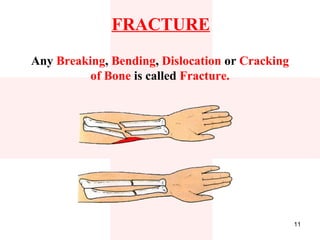
FRACTURE
Any Breaking, Bending, Dislocation or Cracking
          of Bone is called Fracture.


                                                 11
FRACTURE : SIGNS & SYMPTOMS
   Pain
   Swelling
   Tenderness
   Loss of Power
   Deformity
   Unnatural Movement
   Irregularity
   Crapitus
                         12
FRACTURE TREATMENT
  Make The Patient Comfortable
  Prevent Any Movement
  Check Bleeding
  Treat for Shock
  Immobilize the Limb
  Give Support
  Transportation.
                                 13
WOUNDS
Any cut in the outer surface of the body is a
wound or impairment in the blood vessels.

Wounds are of two types:


   OPEN

   CLOSED (mostly head injuries)


                                                14
WOUNDS
         TREATMENT

LAYDOWN THE PATIENT OR ASK HIM TO SIT
DOWN

LIFT THE LIMB IF POSSIBLE

APPLY PRESSURE – ON THE WOUND
               - ON PRESSURE POINT


                                     15
WOUNDS
             TREATMENT

In the case of INTERNAL BLEEDING:


 APPLY COLD FORMULATIONS

 APPLY TOURNIQUET (All precautions)


                                      16
BURNS & SCALDS
Burn is an injury to the body by excessive heat or excessive
cold.
Burns : Dry Heat (fire, flame, metal, sun, electricity etc
        and friction

Scalds : Moist Heat (steam, boiling water, milk, tea, oil etc)

Chemical
Burns    : Acids : H SO , Nitric Acid, Hcl
                      2   4


            Alkalis : Caustic Soda, Potash, Ammonia or
                      quick lime
                                                             17
            Gases : Liquid O or Nitrogen
                              2
BURNS & SCALDS
MANAGEMENT
Reassure the patient
Clean wrap the wound
Cover the wound
Wash with fresh water
Keep the patient warm
Keep hands above the heart & feet elevated
Keep the face prop & observe continuously
Cold pack may also be applied (not excessive cold)
Do not remove clothing
Do not break blisters
Treat for shock
Move quickly to hospital
Remove ring, watch, bangles, belt & boots
Can give weak soda & salt solution if patient is conscious
and not vomiting.                                        18
BURNS & SCALDS
FOR MINOR BURNS

Clean the Area
Submerge in water
Give soda & salt solution
Cover Dry
Warm drinks
Wash well for chemical corrosive burns
Can also neutralize and dilute
Remove contaminated clothing
Wash the face/eye sideways
No rubbing of eyes


                                         19
POISON
Poison is any such thing which after coming into contact or
entering the body is capable of causing harm or leads to death

    It can be:

    Accidental or
    Intentional

    Can enter the Body:

    Through mouth (solid or liquid)
    Through skin (injection or sting etc)
    Through nose (gases or toxic fumes)

                                                            20
POISON
 TREATMENT
Call the doctor immediately
Keep samples, if possible, of poison, bottle, box or vomit
If Unconscious
        -Do not induce vomiting
        -Keep the patient in recovery position
        -Artificial respiration, if needed
If Conscious
        -Give enough water to drink
        -Do not induce vomiting if acid, alkali or any other chemical
         is taken
        -Induce vomiting in other cases
                (a) By luke warm salty water
                (b) By irritating tongue/throat
Give antidote if available
                                                                 21
Keep the patient warm
SIMPLE INJURY
Disinfect the wound
Wash with water
Cover with any clean thing
Don’t apply any lotion except
diluted mercurochrome Tincture
Iodine etc.
Use disinfectant sprays if available
                                   22
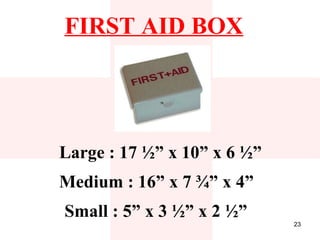
FIRST AID BOX


Large : 17 ½” x 10” x 6 ½”
Medium : 16” x 7 ¾” x 4”
Small : 5” x 3 ½” x 2 ½”
                             23
FIRST AID BOX
    CONTENTS

   Equipment
   Dressings
   Medicine for Local
   Application
   Medicine for Oral
   Application
                        24
FIRST AID BOX
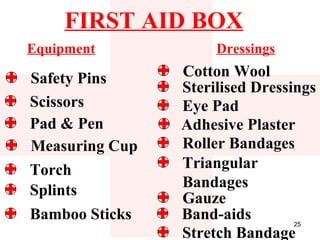
Equipment            Dressings

Safety Pins     Cotton Wool
                Sterilised Dressings
Scissors        Eye Pad
Pad & Pen       Adhesive Plaster
Measuring Cup   Roller Bandages
Torch           Triangular
                Bandages
Splints         Gauze
Bamboo Sticks   Band-aids        25
                Stretch Bandage
FIRST AID BOX
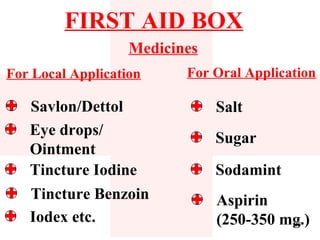
                   Medicines
For Local Application     For Oral Application

   Savlon/Dettol               Salt
   Eye drops/                  Sugar
   Ointment
   Tincture Iodine             Sodamint
   Tincture Benzoin            Aspirin
   Iodex etc.                  (250-350 mg.)
                                          26
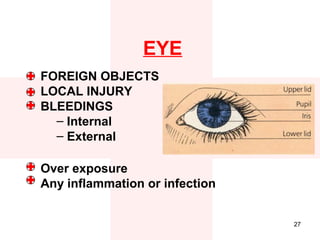
EYE
FOREIGN OBJECTS
LOCAL INJURY
BLEEDINGS
  – Internal
  – External

Over exposure
Any inflammation or infection


                                27
DONT’S


DO NOT RUB THE EYES
DO NOT PANIC
DO NOT USE ANY MEDICINE


                          28
DO’S
KEEP CALM
REMOVE FOREIGN OBJECTS IF
POSSIBLE
GIVE COLD COMPRESS IN CASE OF
INTERNAL BLEEDING
WASH THE EYE WITH FRESH WATER
FOR
– ANY CHEMICAL BURN
– SMALL FOREIGN OBJECT

                            29
TRAFFIC SIGNAL
Stop, look, listen, look again, look again.
Then cross the road with SAFETY on your brain!
Stop, look, listen, look again, look again.
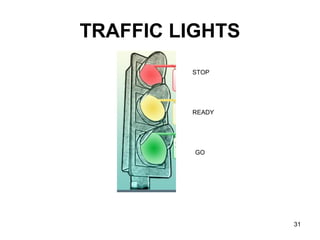
TRAFFIC LIGHTS
         STOP


         READY


          GO


                 31
Hand Signal – Police


                       32
TRAFFIC LIGHTS
 (Pedestrian Go)


                   33
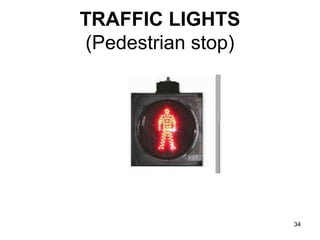
TRAFFIC LIGHTS
(Pedestrian stop)


                    34
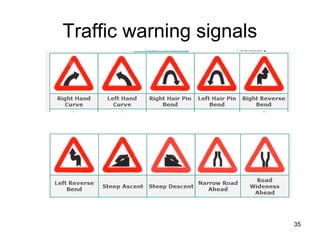
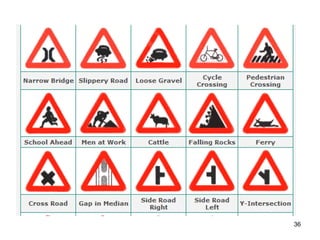
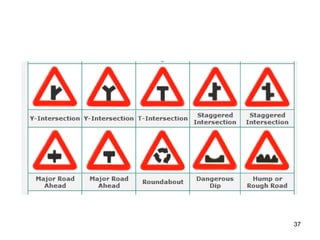
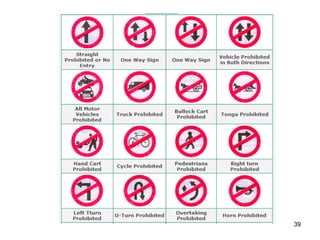
Traffic warning signals


                          35
36
37
38
39

First aid

  • 1.
  • 2.
    FIRST AID IS…. Amatter of Common Sense Application of mind Swift Response 2
  • 3.
    DEFINITION First AID isthe help given to a person in case of SUDDEN INJURY or SICKNESS so that the INJURY/SICKNESS does not AGGRAVATE FURTHER and due to swift action further DETERIORATION is checked, same condition is maintained & recovery promoted till the arrival of Medical Help. 3
  • 4.
    SCOPE OF FIRSTAID From the definition four things are apparent : PREVENT further deterioration PRESERVE in the same condition PROMOTE recovery To arrange for regular Medical AID 4
  • 5.
    METHOD OF FIRSTAID Diagnosis Treatment Disposal 5
  • 6.
    PRIORITIES OF FIRSTAID Check Breathing Check Blood loss Treat Shock Treat Fracture Look For Simple Injuries Disposal 6
  • 7.
    CHECK BREATHING Can Hear It Can Feel It Can Observe It (Normal Person Breathes 15-18 Times In One Minute) 7
  • 8.
    ARTIFICIAL RESPIRATION Mouth To Mouth Mouth To Nose @ 10 Breaths Per Minute & Check Pulse Give 2 ventilations if there is no breathing 8
  • 9.
    CHEST COMPRESSION (Give30 Compression if there is no Circulation) 9
  • 10.
    RECOVERY POSITION (In case of unconscious casualty) 10
  • 11.
    FRACTURE Any Breaking, Bending,Dislocation or Cracking of Bone is called Fracture. 11
  • 12.
    FRACTURE : SIGNS& SYMPTOMS Pain Swelling Tenderness Loss of Power Deformity Unnatural Movement Irregularity Crapitus 12
  • 13.
    FRACTURE TREATMENT Make The Patient Comfortable Prevent Any Movement Check Bleeding Treat for Shock Immobilize the Limb Give Support Transportation. 13
  • 14.
    WOUNDS Any cut inthe outer surface of the body is a wound or impairment in the blood vessels. Wounds are of two types: OPEN CLOSED (mostly head injuries) 14
  • 15.
    WOUNDS TREATMENT LAYDOWN THE PATIENT OR ASK HIM TO SIT DOWN LIFT THE LIMB IF POSSIBLE APPLY PRESSURE – ON THE WOUND - ON PRESSURE POINT 15
  • 16.
    WOUNDS TREATMENT In the case of INTERNAL BLEEDING: APPLY COLD FORMULATIONS APPLY TOURNIQUET (All precautions) 16
  • 17.
    BURNS & SCALDS Burnis an injury to the body by excessive heat or excessive cold. Burns : Dry Heat (fire, flame, metal, sun, electricity etc and friction Scalds : Moist Heat (steam, boiling water, milk, tea, oil etc) Chemical Burns : Acids : H SO , Nitric Acid, Hcl 2 4 Alkalis : Caustic Soda, Potash, Ammonia or quick lime 17 Gases : Liquid O or Nitrogen 2
  • 18.
    BURNS & SCALDS MANAGEMENT Reassurethe patient Clean wrap the wound Cover the wound Wash with fresh water Keep the patient warm Keep hands above the heart & feet elevated Keep the face prop & observe continuously Cold pack may also be applied (not excessive cold) Do not remove clothing Do not break blisters Treat for shock Move quickly to hospital Remove ring, watch, bangles, belt & boots Can give weak soda & salt solution if patient is conscious and not vomiting. 18
  • 19.
    BURNS & SCALDS FORMINOR BURNS Clean the Area Submerge in water Give soda & salt solution Cover Dry Warm drinks Wash well for chemical corrosive burns Can also neutralize and dilute Remove contaminated clothing Wash the face/eye sideways No rubbing of eyes 19
  • 20.
    POISON Poison is anysuch thing which after coming into contact or entering the body is capable of causing harm or leads to death It can be: Accidental or Intentional Can enter the Body: Through mouth (solid or liquid) Through skin (injection or sting etc) Through nose (gases or toxic fumes) 20
  • 21.
    POISON TREATMENT Call thedoctor immediately Keep samples, if possible, of poison, bottle, box or vomit If Unconscious -Do not induce vomiting -Keep the patient in recovery position -Artificial respiration, if needed If Conscious -Give enough water to drink -Do not induce vomiting if acid, alkali or any other chemical is taken -Induce vomiting in other cases (a) By luke warm salty water (b) By irritating tongue/throat Give antidote if available 21 Keep the patient warm
  • 22.
    SIMPLE INJURY Disinfect thewound Wash with water Cover with any clean thing Don’t apply any lotion except diluted mercurochrome Tincture Iodine etc. Use disinfectant sprays if available 22
  • 23.
    FIRST AID BOX Large: 17 ½” x 10” x 6 ½” Medium : 16” x 7 ¾” x 4” Small : 5” x 3 ½” x 2 ½” 23
  • 24.
    FIRST AID BOX CONTENTS Equipment Dressings Medicine for Local Application Medicine for Oral Application 24
  • 25.
    FIRST AID BOX Equipment Dressings Safety Pins Cotton Wool Sterilised Dressings Scissors Eye Pad Pad & Pen Adhesive Plaster Measuring Cup Roller Bandages Torch Triangular Bandages Splints Gauze Bamboo Sticks Band-aids 25 Stretch Bandage
  • 26.
    FIRST AID BOX Medicines For Local Application For Oral Application Savlon/Dettol Salt Eye drops/ Sugar Ointment Tincture Iodine Sodamint Tincture Benzoin Aspirin Iodex etc. (250-350 mg.) 26
  • 27.
    EYE FOREIGN OBJECTS LOCAL INJURY BLEEDINGS – Internal – External Over exposure Any inflammation or infection 27
  • 28.
    DONT’S DO NOT RUBTHE EYES DO NOT PANIC DO NOT USE ANY MEDICINE 28
  • 29.
    DO’S KEEP CALM REMOVE FOREIGNOBJECTS IF POSSIBLE GIVE COLD COMPRESS IN CASE OF INTERNAL BLEEDING WASH THE EYE WITH FRESH WATER FOR – ANY CHEMICAL BURN – SMALL FOREIGN OBJECT 29
  • 30.
    TRAFFIC SIGNAL Stop, look,listen, look again, look again. Stop, look, listen, look again, look again. Then cross the road with SAFETY on your brain! Stop, look, listen, look again, look again.
  • 31.
    TRAFFIC LIGHTS STOP READY GO 31
  • 32.
    Hand Signal –Police 32
  • 33.
  • 34.
  • 35.
  • 36.
  • 37.
  • 38.
  • 39.