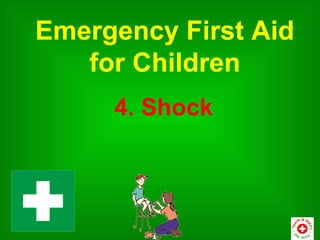
Emergency First Aid
   for Children
     4. Shock
Dealing with Shock
  • Shock – insufficient oxygen reaching the
            tissues

              Any trauma or illness that reduces
              blood circulation is capable of
              causing shock.


Page 34-35
Dealing with Shock
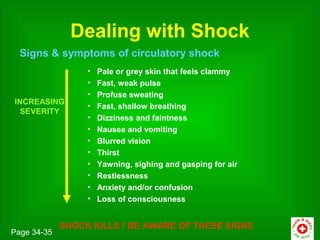
  Signs & symptoms of circulatory shock
                  •   Pale or grey skin that feels clammy
                  •   Fast, weak pulse
                  •   Profuse sweating
INCREASING
                  •   Fast, shallow breathing
  SEVERITY
                  •   Dizziness and faintness
                  •   Nausea and vomiting
                  •   Blurred vision
                  •   Thirst
                  •   Yawning, sighing and gasping for air
                  •   Restlessness
                  •   Anxiety and/or confusion
                  •   Loss of consciousness


             SHOCK KILLS ! BE AWARE OF THESE SIGNS
Page 34-35
Dealing with Shock
    The most likely cause of shock in a child is
    serious bleeding or severe burn or scald –
    these injuries must be treated without
    delay.


     DO NOT give the child anything to drink or
     eat. If he is thirsty, moisten his lips with
     water.

Page 34-35
Dealing with Shock
 • TREATMENT
 Your aims are:

 •   To recognise shock
 •   To treat any obvious cause
 •   To improve the blood supply to the brain, heart & lungs
 •   To arrange urgent removal to hospital


                                WARNING
         Do not try to warm the casualty by any other means other than
         covering with a blanket – overheating the body will increase
         the danger

Page 34-35
Dealing with Shock


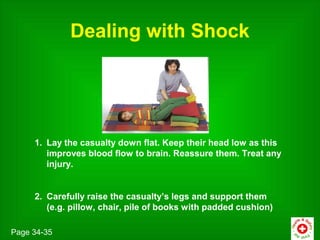
     1. Lay the casualty down flat. Keep their head low as this
        improves blood flow to brain. Reassure them. Treat any
        injury.


     2. Carefully raise the casualty’s legs and support them
        (e.g. pillow, chair, pile of books with padded cushion)

Page 34-35
Dealing with Shock

                                                        TRY NOT TO
                                                     LEAVE A CHILD IN
                                                          SHOCK
                                                       UNATTENDED


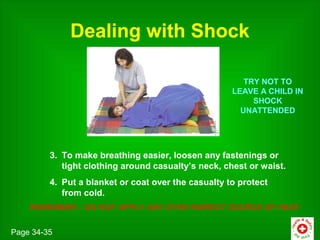
         3. To make breathing easier, loosen any fastenings or
            tight clothing around casualty’s neck, chest or waist.
         4. Put a blanket or coat over the casualty to protect
            from cold.
    REMEMBER – DO NOT APPLY ANY OTHE RDIRECT SOURCE OF HEAT


Page 34-35
Dealing with Shock
             5. Keep reassuring the casualty. Encourage them
                to talk or answer questions – this will help you
                assess their condition.


       KEEP                                         If casualty looses
    MONITORING                                  consciousness, assess
     THE PULSE                                     their condition. Be
                                                        prepared to
                                                       resuscitate. If
                                                 breathing, place them
                                                      in the recovery
                                                          position.

Page 34-35
Dealing with Shock
 • TREATMENT Warmth

                   Air
                   Rest
                   Mental Rest
                   Treatment
                   Help
Page 34-35
Emergency First Aid
   for Children

   End of Section

4 shock

  • 1.
    Emergency First Aid for Children 4. Shock
  • 2.
    Dealing with Shock • Shock – insufficient oxygen reaching the tissues Any trauma or illness that reduces blood circulation is capable of causing shock. Page 34-35
  • 3.
    Dealing with Shock Signs & symptoms of circulatory shock • Pale or grey skin that feels clammy • Fast, weak pulse • Profuse sweating INCREASING • Fast, shallow breathing SEVERITY • Dizziness and faintness • Nausea and vomiting • Blurred vision • Thirst • Yawning, sighing and gasping for air • Restlessness • Anxiety and/or confusion • Loss of consciousness SHOCK KILLS ! BE AWARE OF THESE SIGNS Page 34-35
  • 4.
    Dealing with Shock The most likely cause of shock in a child is serious bleeding or severe burn or scald – these injuries must be treated without delay. DO NOT give the child anything to drink or eat. If he is thirsty, moisten his lips with water. Page 34-35
  • 5.
    Dealing with Shock • TREATMENT Your aims are: • To recognise shock • To treat any obvious cause • To improve the blood supply to the brain, heart & lungs • To arrange urgent removal to hospital WARNING Do not try to warm the casualty by any other means other than covering with a blanket – overheating the body will increase the danger Page 34-35
  • 6.
    Dealing with Shock 1. Lay the casualty down flat. Keep their head low as this improves blood flow to brain. Reassure them. Treat any injury. 2. Carefully raise the casualty’s legs and support them (e.g. pillow, chair, pile of books with padded cushion) Page 34-35
  • 7.
    Dealing with Shock TRY NOT TO LEAVE A CHILD IN SHOCK UNATTENDED 3. To make breathing easier, loosen any fastenings or tight clothing around casualty’s neck, chest or waist. 4. Put a blanket or coat over the casualty to protect from cold. REMEMBER – DO NOT APPLY ANY OTHE RDIRECT SOURCE OF HEAT Page 34-35
  • 8.
    Dealing with Shock 5. Keep reassuring the casualty. Encourage them to talk or answer questions – this will help you assess their condition. KEEP If casualty looses MONITORING consciousness, assess THE PULSE their condition. Be prepared to resuscitate. If breathing, place them in the recovery position. Page 34-35
  • 9.
    Dealing with Shock • TREATMENT Warmth Air Rest Mental Rest Treatment Help Page 34-35
  • 10.
    Emergency First Aid for Children End of Section