Emergency First Aid
   for Children
   7. Wounds and
      Bleeding
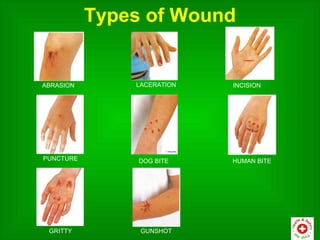
Types of Wound


ABRASION       LACERATION   INCISION


PUNCTURE        DOG BITE    HUMAN BITE


 GRITTY         GUNSHOT
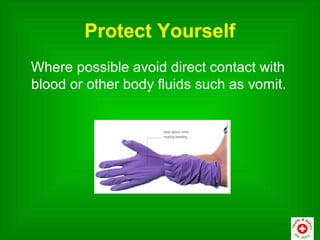
Protect Yourself
Where possible avoid direct contact with
blood or other body fluids such as vomit.
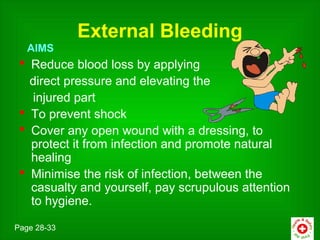
External Bleeding
   AIMS
  Reduce blood loss by applying
   direct pressure and elevating the
    injured part
  To prevent shock
  Cover any open wound with a dressing, to
   protect it from infection and promote natural
   healing
  Minimise the risk of infection, between the
   casualty and yourself, pay scrupulous attention
   to hygiene.

Page 28-33
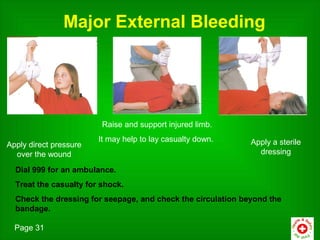
Major External Bleeding


                         Raise and support injured limb.
                        It may help to lay casualty down.     Apply a sterile
Apply direct pressure
  over the wound                                                dressing

  Dial 999 for an ambulance.
  Treat the casualty for shock.
  Check the dressing for seepage, and check the circulation beyond the
  bandage.

  Page 31
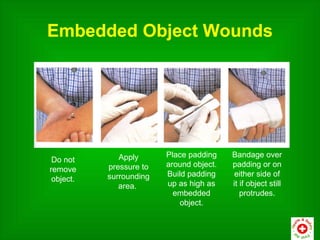
Embedded Object Wounds


              Apply      Place padding    Bandage over
 Do not
           pressure to   around object.   padding or on
remove
           surrounding   Build padding     either side of
 object.
              area.      up as high as    it if object still
                           embedded          protrudes.
                            object.
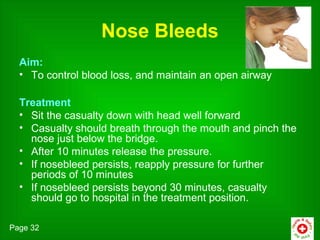
Nose Bleeds
  Aim:
  • To control blood loss, and maintain an open airway

  Treatment
  • Sit the casualty down with head well forward
  • Casualty should breath through the mouth and pinch the
    nose just below the bridge.
  • After 10 minutes release the pressure.
  • If nosebleed persists, reapply pressure for further
    periods of 10 minutes
  • If nosebleed persists beyond 30 minutes, casualty
    should go to hospital in the treatment position.

Page 32
Bleeding from the Mouth
 Aims
 • To control bleeding
 • Safeguard airway by preventing inhalation
   of blood


Page 33
Bleeding from the Mouth
 Possible causes

 • Cuts to tongue, lips or lining of the mouth
 • Tooth socket bleeding may be the result of
   loss of tooth


Page 33
Bleeding from the Mouth

  Treatment

  • Lean casualty forward
  • Place a gauze dressing pad over the wound and
    ask casualty to apply pressure
  • If bleeding has not stopped after 30 minutes, the
    casualty should go to hospital


Page 33
Knocked Out Tooth
    An “Adult” tooth may be replanted. Do not clean it. Put the tooth in milk.


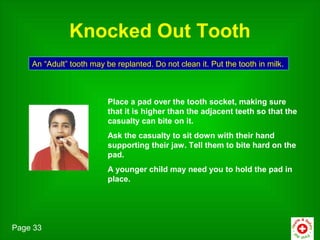
                          Place a pad over the tooth socket, making sure
                          that it is higher than the adjacent teeth so that the
                          casualty can bite on it.
                          Ask the casualty to sit down with their hand
                          supporting their jaw. Tell them to bite hard on the
                          pad.
                          A younger child may need you to hold the pad in
                          place.


Page 33
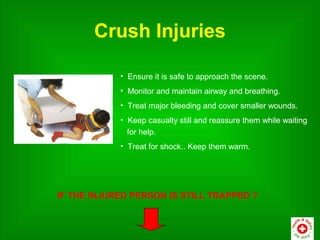
Crush Injuries

            • Ensure it is safe to approach the scene.
            • Monitor and maintain airway and breathing.
            • Treat major bleeding and cover smaller wounds.
            • Keep casualty still and reassure them while waiting
              for help.
            • Treat for shock.. Keep them warm.


IF THE INJURED PERSON IS STILL TRAPPED ?
Crush Injuries
            Casualty Still Trapped
 • Additional risks to casualty if still trapped, releasing the
   body may bring on severe shock.
 • Even greater concern is “crush syndrome”

IF THE CASUALTY HAS BEEN TRAPPED FOR LESS THAN 15 MINUTES


     Crush syndrome takes some time to develop. If you can do so,
         safely remove the object. Treat as for crush injuries.

IF THE CASUALTY HAS BEEN TRAPPED FOR LONGER THAN 15 MINUTES

                  DO NOT RELEASE THE CASUALTY

             Make an early call for help. Treat as for crush injuries.
Recognising Internal Bleeding
•   Casualty show signs of shock (cold, clammy, pale skin, loss of
    consciousness , thirst, general weakness, a fast weak pulse)

•   Casualty coughs up blood

•   Passing blood from rectum

•   Casualty has been in an accident where they fell from height,
    stopped suddenly etc

•   Casualty has bruising and/or swelling – may be “pattern bruising” at
    site of injury

•   Blood coming from nose or mouth after head injury
Internal Bleeding
Aims

• Arrange urgent removal to hospital
• Minimise shock
Internal Bleeding
Treatment
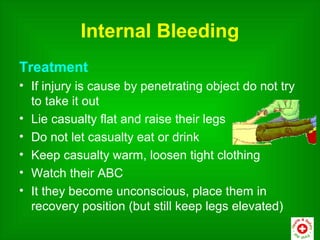
• If injury is cause by penetrating object do not try
  to take it out
• Lie casualty flat and raise their legs
• Do not let casualty eat or drink
• Keep casualty warm, loosen tight clothing
• Watch their ABC
• It they become unconscious, place them in
  recovery position (but still keep legs elevated)
Palm Wounds
AIMS
• Control blood loss
• Arrange transport to hospital

 The palm is richly supplied with blood and a wound may
 bleed profusely.
 A deep wound may sever tendons and nerves.
Palm Wounds
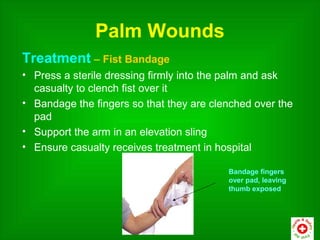
Treatment – Fist Bandage
• Press a sterile dressing firmly into the palm and ask
  casualty to clench fist over it
• Bandage the fingers so that they are clenched over the
  pad
• Support the arm in an elevation sling
• Ensure casualty receives treatment in hospital

                                          Bandage fingers
                                          over pad, leaving
                                          thumb exposed
Amputation
Aims
• To minimise blood loss and shock
• To preserve the amputated part
Treatment
• Control blood loss by applying direct pressure and
  raising the injured part. (Do NOT use tourniquet).
• Apply a sterile dressing or non-fluffy clean pad
  secured with a bandage.
• Treat the casualty for shock. Dial 999 for an
  ambulance.
Care of the Amputated Part
• Wrap the severed part in kitchen film or a plastic
  bag.

• Wrap the bag in soft fabric.

• Put a bag filled with ice cubes around the fabric.

• Put the whole package in another container. Mark
  with the time of injury and the casualty’s name. Give
  it to the ambulance attendant.
Chest Wound
• A chest wound may cause sever internal
  damage.

• The lungs are particularly vulnerable, and
  breathing problems, shock, and collapsed
  lung may follow an injury.

• It is important to make an airtight seal over
  the wound to prevent air entering the cavity.
Chest Wound
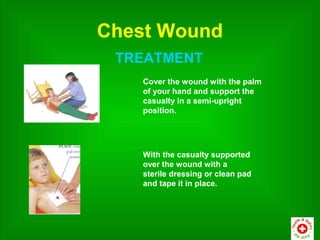
 TREATMENT
    Cover the wound with the palm
    of your hand and support the
    casualty in a semi-upright
    position.


    With the casualty supported
    over the wound with a
    sterile dressing or clean pad
    and tape it in place.
Chest Wound
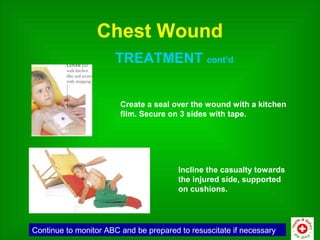
                      TREATMENT cont’d


                        Create a seal over the wound with a kitchen
                        film. Secure on 3 sides with tape.


                                        Incline the casualty towards
                                        the injured side, supported
                                        on cushions.


Continue to monitor ABC and be prepared to resuscitate if necessary
Emergency First Aid
   for Children

   End of Section

7 wounds and bleeding

  • 1.
    Emergency First Aid for Children 7. Wounds and Bleeding
  • 2.
    Types of Wound ABRASION LACERATION INCISION PUNCTURE DOG BITE HUMAN BITE GRITTY GUNSHOT
  • 3.
    Protect Yourself Where possibleavoid direct contact with blood or other body fluids such as vomit.
  • 4.
    External Bleeding AIMS  Reduce blood loss by applying direct pressure and elevating the injured part  To prevent shock  Cover any open wound with a dressing, to protect it from infection and promote natural healing  Minimise the risk of infection, between the casualty and yourself, pay scrupulous attention to hygiene. Page 28-33
  • 5.
    Major External Bleeding Raise and support injured limb. It may help to lay casualty down. Apply a sterile Apply direct pressure over the wound dressing Dial 999 for an ambulance. Treat the casualty for shock. Check the dressing for seepage, and check the circulation beyond the bandage. Page 31
  • 6.
    Embedded Object Wounds Apply Place padding Bandage over Do not pressure to around object. padding or on remove surrounding Build padding either side of object. area. up as high as it if object still embedded protrudes. object.
  • 7.
    Nose Bleeds Aim: • To control blood loss, and maintain an open airway Treatment • Sit the casualty down with head well forward • Casualty should breath through the mouth and pinch the nose just below the bridge. • After 10 minutes release the pressure. • If nosebleed persists, reapply pressure for further periods of 10 minutes • If nosebleed persists beyond 30 minutes, casualty should go to hospital in the treatment position. Page 32
  • 8.
    Bleeding from theMouth Aims • To control bleeding • Safeguard airway by preventing inhalation of blood Page 33
  • 9.
    Bleeding from theMouth Possible causes • Cuts to tongue, lips or lining of the mouth • Tooth socket bleeding may be the result of loss of tooth Page 33
  • 10.
    Bleeding from theMouth Treatment • Lean casualty forward • Place a gauze dressing pad over the wound and ask casualty to apply pressure • If bleeding has not stopped after 30 minutes, the casualty should go to hospital Page 33
  • 11.
    Knocked Out Tooth An “Adult” tooth may be replanted. Do not clean it. Put the tooth in milk. Place a pad over the tooth socket, making sure that it is higher than the adjacent teeth so that the casualty can bite on it. Ask the casualty to sit down with their hand supporting their jaw. Tell them to bite hard on the pad. A younger child may need you to hold the pad in place. Page 33
  • 12.
    Crush Injuries • Ensure it is safe to approach the scene. • Monitor and maintain airway and breathing. • Treat major bleeding and cover smaller wounds. • Keep casualty still and reassure them while waiting for help. • Treat for shock.. Keep them warm. IF THE INJURED PERSON IS STILL TRAPPED ?
  • 13.
    Crush Injuries Casualty Still Trapped • Additional risks to casualty if still trapped, releasing the body may bring on severe shock. • Even greater concern is “crush syndrome” IF THE CASUALTY HAS BEEN TRAPPED FOR LESS THAN 15 MINUTES Crush syndrome takes some time to develop. If you can do so, safely remove the object. Treat as for crush injuries. IF THE CASUALTY HAS BEEN TRAPPED FOR LONGER THAN 15 MINUTES DO NOT RELEASE THE CASUALTY Make an early call for help. Treat as for crush injuries.
  • 14.
    Recognising Internal Bleeding • Casualty show signs of shock (cold, clammy, pale skin, loss of consciousness , thirst, general weakness, a fast weak pulse) • Casualty coughs up blood • Passing blood from rectum • Casualty has been in an accident where they fell from height, stopped suddenly etc • Casualty has bruising and/or swelling – may be “pattern bruising” at site of injury • Blood coming from nose or mouth after head injury
  • 15.
    Internal Bleeding Aims • Arrangeurgent removal to hospital • Minimise shock
  • 16.
    Internal Bleeding Treatment • Ifinjury is cause by penetrating object do not try to take it out • Lie casualty flat and raise their legs • Do not let casualty eat or drink • Keep casualty warm, loosen tight clothing • Watch their ABC • It they become unconscious, place them in recovery position (but still keep legs elevated)
  • 17.
    Palm Wounds AIMS • Controlblood loss • Arrange transport to hospital The palm is richly supplied with blood and a wound may bleed profusely. A deep wound may sever tendons and nerves.
  • 18.
    Palm Wounds Treatment –Fist Bandage • Press a sterile dressing firmly into the palm and ask casualty to clench fist over it • Bandage the fingers so that they are clenched over the pad • Support the arm in an elevation sling • Ensure casualty receives treatment in hospital Bandage fingers over pad, leaving thumb exposed
  • 19.
    Amputation Aims • To minimiseblood loss and shock • To preserve the amputated part Treatment • Control blood loss by applying direct pressure and raising the injured part. (Do NOT use tourniquet). • Apply a sterile dressing or non-fluffy clean pad secured with a bandage. • Treat the casualty for shock. Dial 999 for an ambulance.
  • 20.
    Care of theAmputated Part • Wrap the severed part in kitchen film or a plastic bag. • Wrap the bag in soft fabric. • Put a bag filled with ice cubes around the fabric. • Put the whole package in another container. Mark with the time of injury and the casualty’s name. Give it to the ambulance attendant.
  • 21.
    Chest Wound • Achest wound may cause sever internal damage. • The lungs are particularly vulnerable, and breathing problems, shock, and collapsed lung may follow an injury. • It is important to make an airtight seal over the wound to prevent air entering the cavity.
  • 22.
    Chest Wound TREATMENT Cover the wound with the palm of your hand and support the casualty in a semi-upright position. With the casualty supported over the wound with a sterile dressing or clean pad and tape it in place.
  • 23.
    Chest Wound TREATMENT cont’d Create a seal over the wound with a kitchen film. Secure on 3 sides with tape. Incline the casualty towards the injured side, supported on cushions. Continue to monitor ABC and be prepared to resuscitate if necessary
  • 24.
    Emergency First Aid for Children End of Section