Emergency First Aid
   for Children
  5. Disorders of
  Consciousness
Epileptic Seizures


• Caused by instability of electrical activity in
  the brain

• Over 40 types of seizure which may be
  partial or full-blown


Page 37
Partial Epileptic Seizure
• During a minor fit (petit mal) a person may
  appear to have switched off, maybe some
  facial twitching or distracted movements.

Treatment
• Stay with casualty and reassure them.
• Arrange for them to see a doctor


Page 37
Major Epileptic Seizure
NOTE

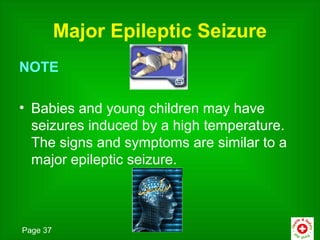
• Babies and young children may have
  seizures induced by a high temperature.
  The signs and symptoms are similar to a
  major epileptic seizure.


Page 37
Major Epileptic Seizure
 A seizure MAY progress through the following
 stages:

 Rigidity and arching of back
 Breathing may cease
 Jerking movements
 Froth or bubbles around the mouth
 Bladder or bowel control lost
 Dazed feeling

Page 37
Major Epileptic Seizure
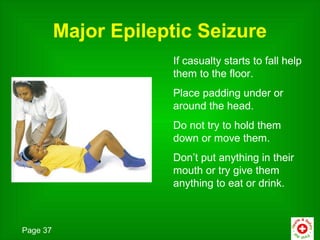
                      If casualty starts to fall help
                      them to the floor.
                      Place padding under or
                      around the head.
                      Do not try to hold them
                      down or move them.
                      Don’t put anything in their
                      mouth or try give them
                      anything to eat or drink.


Page 37
Major Epileptic Seizure


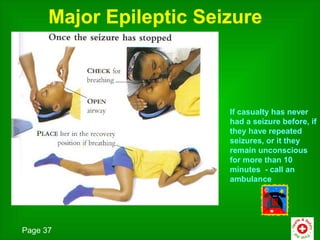
                         If casualty has never
                         had a seizure before, if
                         they have repeated
                         seizures, or it they
                         remain unconscious
                         for more than 10
                         minutes - call an
                         ambulance


Page 37
Diabetic Emergency
Recognising low blood sugar
• Weakness or hunger
• Confused or aggressive behaviour
• Sweating
• Very pale face
• Strong bounding pulse
• Shallow breathing

Page 53
Diabetic Emergency
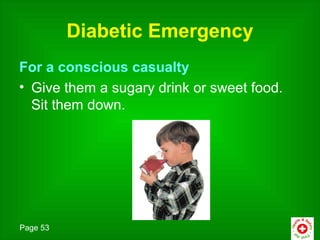
For a conscious casualty
• Give them a sugary drink or sweet food.
  Sit them down.


Page 53
Diabetic Emergency
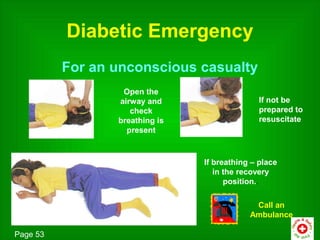
          For an unconscious casualty
                  Open the
                 airway and                    If not be
                    check                      prepared to
                 breathing is                  resuscitate
                   present


                                If breathing – place
                                   in the recovery
                                      position..

                                             Call an
                                            Ambulance

Page 53
Faint
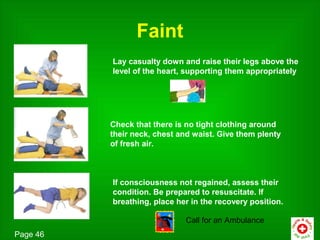
          Lay casualty down and raise their legs above the
          level of the heart, supporting them appropriately


          Check that there is no tight clothing around
          their neck, chest and waist. Give them plenty
          of fresh air.


          If consciousness not regained, assess their
          condition. Be prepared to resuscitate. If
          breathing, place her in the recovery position.

                             Call for an Ambulance
Page 46
Emergency First Aid
   for Children

   End of Section

5 disorders of consiousness

  • 1.
    Emergency First Aid for Children 5. Disorders of Consciousness
  • 2.
    Epileptic Seizures • Causedby instability of electrical activity in the brain • Over 40 types of seizure which may be partial or full-blown Page 37
  • 3.
    Partial Epileptic Seizure •During a minor fit (petit mal) a person may appear to have switched off, maybe some facial twitching or distracted movements. Treatment • Stay with casualty and reassure them. • Arrange for them to see a doctor Page 37
  • 4.
    Major Epileptic Seizure NOTE •Babies and young children may have seizures induced by a high temperature. The signs and symptoms are similar to a major epileptic seizure. Page 37
  • 5.
    Major Epileptic Seizure A seizure MAY progress through the following stages:  Rigidity and arching of back  Breathing may cease  Jerking movements  Froth or bubbles around the mouth  Bladder or bowel control lost  Dazed feeling Page 37
  • 6.
    Major Epileptic Seizure If casualty starts to fall help them to the floor. Place padding under or around the head. Do not try to hold them down or move them. Don’t put anything in their mouth or try give them anything to eat or drink. Page 37
  • 7.
    Major Epileptic Seizure If casualty has never had a seizure before, if they have repeated seizures, or it they remain unconscious for more than 10 minutes - call an ambulance Page 37
  • 8.
    Diabetic Emergency Recognising lowblood sugar • Weakness or hunger • Confused or aggressive behaviour • Sweating • Very pale face • Strong bounding pulse • Shallow breathing Page 53
  • 9.
    Diabetic Emergency For aconscious casualty • Give them a sugary drink or sweet food. Sit them down. Page 53
  • 10.
    Diabetic Emergency For an unconscious casualty Open the airway and If not be check prepared to breathing is resuscitate present If breathing – place in the recovery position.. Call an Ambulance Page 53
  • 11.
    Faint Lay casualty down and raise their legs above the level of the heart, supporting them appropriately Check that there is no tight clothing around their neck, chest and waist. Give them plenty of fresh air. If consciousness not regained, assess their condition. Be prepared to resuscitate. If breathing, place her in the recovery position. Call for an Ambulance Page 46
  • 12.
    Emergency First Aid for Children End of Section