9-aminoacridines
Antimalarial drugs
Acridines
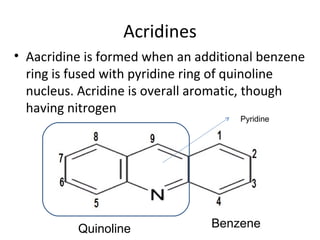
• Aacridine is formed when an additional benzene
  ring is fused with pyridine ring of quinoline
  nucleus. Acridine is overall aromatic, though
  having nitrogen
                                     Pyridine


          Quinoline             Benzene
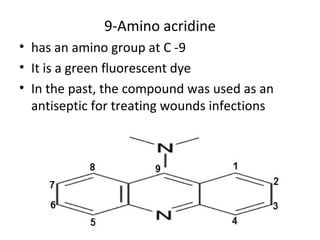
9-Amino acridine
• has an amino group at C -9
• It is a green fluorescent dye
• In the past, the compound was used as an
  antiseptic for treating wounds infections
Structure Activity Relationship
• Various types of acridines were synthesized
• Acridine has weak antiseptic and antibacterial
  activity
• When a side chain – 2 amino, 5 diethylamino
  pentane- is introduced at C-9, the compound
  becomes antimalarial
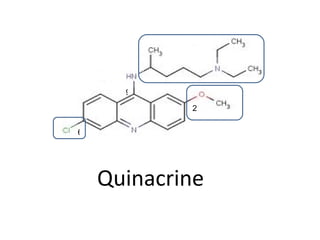
• When methoxy at position 2 and Cl at 6 are
  introduced –quinacrine- which is antimalarial
• Quinacrine was the 1st synthetic agent that
  was used before quinolines
9

            2


6


    Quinacrine
• When methoxy is shifted to position 6 and Cl to
  2 (interchanged)-loss of antimalarial activity
• When methoxy is replaced by ethoxy, toxicity is
  increased
• When methoxy is rotated to any other position
  1, 3, 4, then 50% activity is lost
• When Cl is replaced with other halogens there is
  successive loss of activity
• Side chain – 2 amino, 5 diethylamino pentane-
  has no antimalarial activity but when attached
  to aromatic system the compound became
  antimalarial
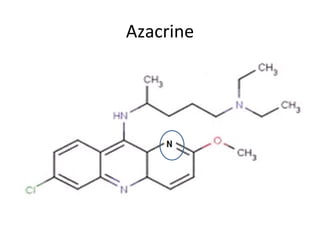
• When at position-1, a N is introduced –
  azacrine- which has good antimalarial activity
  and rapid onset of action
Azacrine
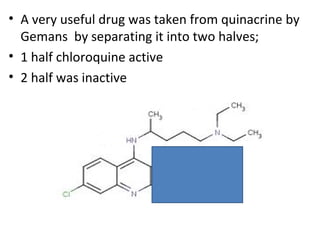
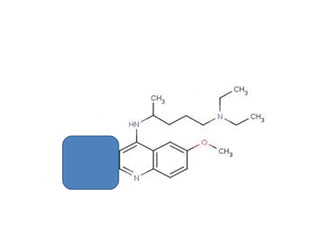
• A very useful drug was taken from quinacrine by
  Gemans by separating it into two halves;
• 1 half chloroquine active
• 2 half was inactive
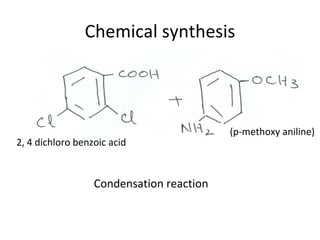
Chemical synthesis


                                          (p-methoxy aniline)
2, 4 dichloro benzoic acid


                  Condensation reaction
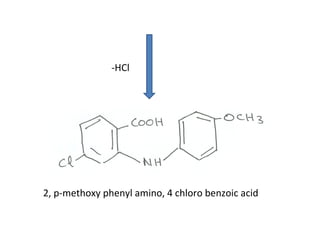
-HCl


2, p-methoxy phenyl amino, 4 chloro benzoic acid
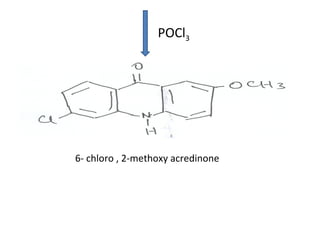
POCl3


6- chloro , 2-methoxy acredinone
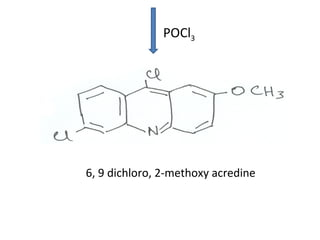
POCl3


6, 9 dichloro, 2-methoxy acredine
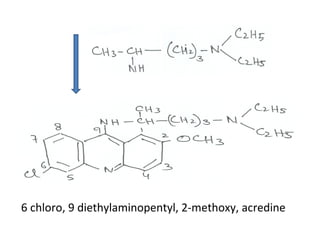
2


6 chloro, 9 diethylaminopentyl, 2-methoxy, acredine
Therapeutic uses
• Treating erythrocytic stage of malaria
• Earlier, was used in treating black water fever
• Have anthalmentic activity against intestinal
  parasites
• It is eliminated slowly and have side effects
Non-therapeutic use
• Being green fluorescent dye, used to visualize
  blood cells, particularly platelets
• Platelets store the dye in dense granules
Side effects
• Gastric irritation
• Staining of tongue and skin

9 aminoacridine

  • 1.
  • 2.
    Acridines • Aacridine isformed when an additional benzene ring is fused with pyridine ring of quinoline nucleus. Acridine is overall aromatic, though having nitrogen Pyridine Quinoline Benzene
  • 3.
    9-Amino acridine • hasan amino group at C -9 • It is a green fluorescent dye • In the past, the compound was used as an antiseptic for treating wounds infections
  • 4.
    Structure Activity Relationship •Various types of acridines were synthesized • Acridine has weak antiseptic and antibacterial activity • When a side chain – 2 amino, 5 diethylamino pentane- is introduced at C-9, the compound becomes antimalarial • When methoxy at position 2 and Cl at 6 are introduced –quinacrine- which is antimalarial • Quinacrine was the 1st synthetic agent that was used before quinolines
  • 5.
    9 2 6 Quinacrine
  • 6.
    • When methoxyis shifted to position 6 and Cl to 2 (interchanged)-loss of antimalarial activity • When methoxy is replaced by ethoxy, toxicity is increased • When methoxy is rotated to any other position 1, 3, 4, then 50% activity is lost • When Cl is replaced with other halogens there is successive loss of activity
  • 7.
    • Side chain– 2 amino, 5 diethylamino pentane- has no antimalarial activity but when attached to aromatic system the compound became antimalarial • When at position-1, a N is introduced – azacrine- which has good antimalarial activity and rapid onset of action
  • 8.
  • 9.
    • A veryuseful drug was taken from quinacrine by Gemans by separating it into two halves; • 1 half chloroquine active • 2 half was inactive
  • 11.
    Chemical synthesis (p-methoxy aniline) 2, 4 dichloro benzoic acid Condensation reaction
  • 12.
    -HCl 2, p-methoxy phenylamino, 4 chloro benzoic acid
  • 13.
    POCl3 6- chloro ,2-methoxy acredinone
  • 14.
    POCl3 6, 9 dichloro,2-methoxy acredine
  • 15.
    2 6 chloro, 9diethylaminopentyl, 2-methoxy, acredine
  • 16.
    Therapeutic uses • Treatingerythrocytic stage of malaria • Earlier, was used in treating black water fever • Have anthalmentic activity against intestinal parasites • It is eliminated slowly and have side effects
  • 17.
    Non-therapeutic use • Beinggreen fluorescent dye, used to visualize blood cells, particularly platelets • Platelets store the dye in dense granules
  • 18.
    Side effects • Gastricirritation • Staining of tongue and skin