AntihistaminesAntihistamines
ByBy
Dr. Saad Raheem AbedDr. Saad Raheem Abed
2016
AntihistaminesAntihistamines
Outline
 What is the antihistamines.
 What is histamine.
 What is the receptors.
 What is the clinical uses of antihistamines.
 Side effects of antihistamines.
 What is the contraindications.
 Classes of antihistamines.
What is an antihistamine?
 A drug that reduces or eliminates the effects
mediated by the chemical histamine.
 Histamine is released by your body during an allergic
reaction and acts on a specific histamine receptor
 True antihistamines are only the agents that produce
a therapeutic effect that is mediated by negative
modulation of histamine receptors (other agents may
have antihistaminergic action but are not true
antihistamines)
 The term antihistamine only refers to H1 receptor
antagonists (actually inverse agonists)
 Antihistamines compete with histamine for binding
sites at the receptors.
Histamine: Storage and
Release
Histamine Stored in complex with:
 Heparin
 Chondroitin sulphate
 Eosinophilic Chemotactic Factor
 Nnutrophilic Chemotactic Factor
 Proteases
Histamine: Storage and
Release
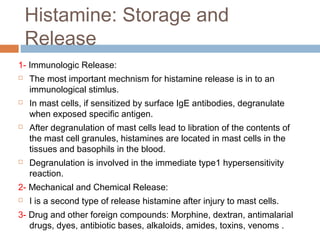
1- Immunologic Release:
 The most important mechnism for histamine release is in to an
immunological stimlus.
 In mast cells, if sensitized by surface IgE antibodies, degranulate
when exposed specific antigen.
 After degranulation of mast cells lead to libration of the contents of
the mast cell granules, histamines are located in mast cells in the
tissues and basophils in the blood.
 Degranulation is involved in the immediate type1 hypersensitivity
reaction.
2- Mechanical and Chemical Release:
 I is a second type of release histamine after injury to mast cells.
3- Drug and other foreign compounds: Morphine, dextran, antimalarial
drugs, dyes, antibiotic bases, alkaloids, amides, toxins, venoms .
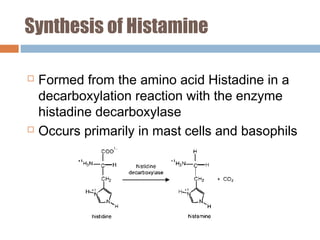
Synthesis of Histamine
 Formed from the amino acid Histadine in a
decarboxylation reaction with the enzyme
histadine decarboxylase
 Occurs primarily in mast cells and basophils
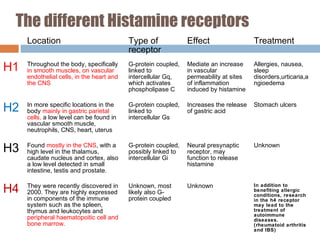
The different Histamine receptors
Location Type of
receptor
Effect Treatment
H1 Throughout the body, specifically
in smooth muscles, on vascular
endothelial cells, in the heart and
the CNS
G-protein coupled,
linked to
intercellular Gq,
which activates
phospholipase C
Mediate an increase
in vascular
permeability at sites
of inflammation
induced by histamine
Allergies, nausea,
sleep
disorders,urticaria,a
ngioedema
H2 In more specific locations in the
body mainly in gastric parietal
cells, a low level can be found in
vascular smooth muscle,
neutrophils, CNS, heart, uterus
G-protein coupled,
linked to
intercellular Gs
Increases the release
of gastric acid
Stomach ulcers
H3 Found mostly in the CNS, with a
high level in the thalamus,
caudate nucleus and cortex, also
a low level detected in small
intestine, testis and prostate.
G-protein coupled,
possibly linked to
intercellular Gi
Neural presynaptic
receptor, may
function to release
histamine
Unknown
H4 They were recently discovered in
2000. They are highly expressed
in components of the immune
system such as the spleen,
thymus and leukocytes and
peripheral haematopoitic cell and
bone marrow.
Unknown, most
likely also G-
protein coupled
Unknown In addition to
benefiting allergic
conditions, research
in the h4 receptor
may lead to the
treatment of
autoimmune
diseases.
(rheumatoid arthritis
and IBS)
Dermatological Indications for Treatment with
H1 Antihistamines
 Acute urticaria
 Chronic idiopathic urticaria
 Physical urticarias and dermatographism
 Atopic dermatitis (less evidence)
 Urticaria Pigmentosea & Systemic mastocytosis
 Pruritus associated with other conditions
Other Clinical Uses of
Antihistamines
 Allergic rhinitis (common cold)
 Allergic conjunctivitis (pink eye)
 Anaphylactic reactions (severe allergies)
 Nausea and vomiting (first generation H1-
antihistamines)
 Sedation (first generation H1-antihistamines)
Side effects
 Associated with the first generation H1-antihistamines and due to
their lack of selectivity for the H1 receptor and anti-cholinergic
activity. Side effects are due to CNS depression:
 Sedation
 Dizziness
 Tinnitus (ringing in the ear)
 Blurred vision
 Euphoria
 Uncoordination
 Anxiety
 Insomnia
 Tremor
 Nausea/vomitting
 Dry mouth/dry cough
 Newer second generation H1-antihistamines are more selective
for the peripheral histamine receptors and have far less side
effects (drowsiness, fatigue, headache, nausea and dry mouth)
Special Patient Populations
1-CHILDREN
Many of the sedating and low-sedating H1 antihistamines can be safely used in children with appropriate
dosing. Children may be more susceptible to certain side effects associated with first-generation drugs,
such as excitation and insomnia. Acute poisoning may develop but is rare; hallucinations, ataxia,
incoordination, athetosis, and convulsions are the major features.
2-ELDERLY
Caution should be used when treating elderly patients, and decreased creatinine clearance, co-morbid
conditions, and potential drug interactions should be taken into account. Older individuals may also be
more susceptible to anticholinergic effects, particularly urinary retention and hesitancy, constipation, and
postural hypotension.
3-PREGNANT WOMEN
There are limited guidelines for the use of H1 antihistamines to treat pregnant women. Most
H1 antihistamines are classified as U.S. Food and Drug Administration (FDA) pregnancy
category B or category C. Based on earlier reports linking H1 antihistamines to fetal
malformations, particularly cleft palate defects, H1 antihistamines are customarily avoided in
the first trimester of pregnancy.
4-BREAST-FEEDING WOMEN
No formal studies have been performed on the safety of H1 antihistamines during breast-
feeding. Theoretically, first-generation drugs may diminish milk supply via anticholinergic
effects. Clemastine, diphenhydramine, promethazine, triprolidine, cetirizine, loratadine,
fexofenadine, and desloratadine are all known to be excreted in breast milk; their effects on
the nursing infant are not known.
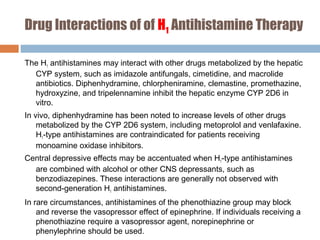
Drug Interactions of of H1 Antihistamine Therapy
The H1 antihistamines may interact with other drugs metabolized by the hepatic
CYP system, such as imidazole antifungals, cimetidine, and macrolide
antibiotics. Diphenhydramine, chlorpheniramine, clemastine, promethazine,
hydroxyzine, and tripelennamine inhibit the hepatic enzyme CYP 2D6 in
vitro.
In vivo, diphenhydramine has been noted to increase levels of other drugs
metabolized by the CYP 2D6 system, including metoprolol and venlafaxine.
H1-type antihistamines are contraindicated for patients receiving
monoamine oxidase inhibitors.
Central depressive effects may be accentuated when H1-type antihistamines
are combined with alcohol or other CNS depressants, such as
benzodiazepines. These interactions are generally not observed with
second-generation H1 antihistamines.
In rare circumstances, antihistamines of the phenothiazine group may block
and reverse the vasopressor effect of epinephrine. If individuals receiving a
phenothiazine require a vasopressor agent, norepinephrine or
phenylephrine should be used.
Factors for Risk-Benefit Assessment of H1
Antihistamine Therapy
 Risks
 History of cardiac arrhythmias, particularly ventricular
arrhythmias
 First trimester of pregnancy
 Prostatic hypertrophy
 Contraindications
 Narrow-angle glaucoma
 Concomitant use of monoamine oxidase inhibitors
Classes of First generation H1 receptor
antagonist antihistamines
 Ethylenediamines
 Ethanolamines
 Alkylamines
 Piperazines
 Tricyclics
 Piperadines
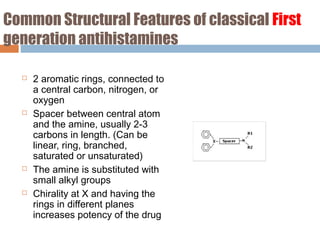
Common Structural Features of classical First
generation antihistamines
 2 aromatic rings, connected to
a central carbon, nitrogen, or
oxygen
 Spacer between central atom
and the amine, usually 2-3
carbons in length. (Can be
linear, ring, branched,
saturated or unsaturated)
 The amine is substituted with
small alkyl groups
 Chirality at X and having the
rings in different planes
increases potency of the drug
Mechanism of Action
 H1 antihistamines are inverse agonists that reversibly
bind and stabilize the inactive form of the H1 receptor,
thereby favoring the inactive state.
 So the H1 receptor antihistamines decrease production
of pro-inflammatory cytokines, expression of cell
adhesion molecules, and chemotaxis of eosinophils and
other cells H1 antihistamines may also decrease
mediator release from mast cells and basophils through
inhibition of calcium ion channels.
 In addition to having antihistamine actions, first-
generation H1 antihistamines can also act on muscarinic,
α-adrenergic, and serotonin receptors and cardiac ion
channels
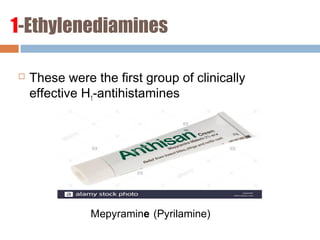
1-Ethylenediamines
 These were the first group of clinically
effective H1-antihistamines
Mepyramine (Pyrilamine)
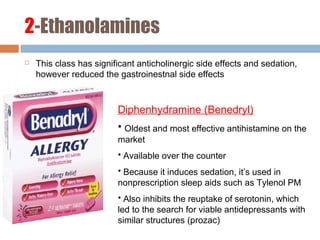
2-Ethanolamines
 This class has significant anticholinergic side effects and sedation,
however reduced the gastroinestnal side effects
Diphenhydramine (Benedryl)
• Oldest and most effective antihistamine on the
market
• Available over the counter
• Because it induces sedation, it’s used in
nonprescription sleep aids such as Tylenol PM
• Also inhibits the reuptake of serotonin, which
led to the search for viable antidepressants with
similar structures (prozac)
FORMULATION and DOSAGE OF
DIPHENHYDRAMINE
1) 25-, 50-mg tablet
Adult: 25-50 mg q4-6h
2) 12.5 mg/5 mL syrup
Age 6-12 yr: 12.5-25 mg q4-6h
Ethanolamines
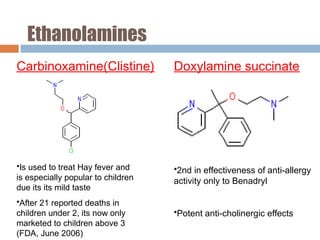
Carbinoxamine(Clistine) Doxylamine succinate
•2nd in effectiveness of anti-allergy
activity only to Benadryl
•Potent anti-cholinergic effects
•Is used to treat Hay fever and
is especially popular to children
due its its mild taste
•After 21 reported deaths in
children under 2, its now only
marketed to children above 3
(FDA, June 2006)
Ethanolamines
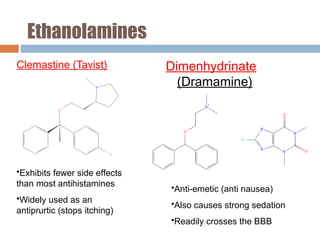
Clemastine (Tavist) Dimenhydrinate
(Dramamine)
•Exhibits fewer side effects
than most antihistamines
•Widely used as an
antiprurtic (stops itching)
•Anti-emetic (anti nausea)
•Also causes strong sedation
•Readily crosses the BBB
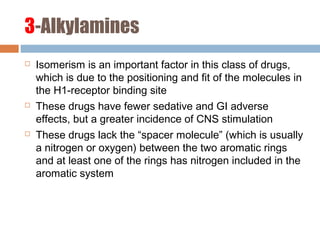
3-Alkylamines
 Isomerism is an important factor in this class of drugs,
which is due to the positioning and fit of the molecules in
the H1-receptor binding site
 These drugs have fewer sedative and GI adverse
effects, but a greater incidence of CNS stimulation
 These drugs lack the “spacer molecule” (which is usually
a nitrogen or oxygen) between the two aromatic rings
and at least one of the rings has nitrogen included in the
aromatic system
Akylamines
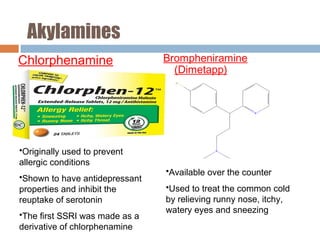
Chlorphenamine Brompheniramine
(Dimetapp)
•Originally used to prevent
allergic conditions
•Shown to have antidepressant
properties and inhibit the
reuptake of serotonin
•The first SSRI was made as a
derivative of chlorphenamine
•Available over the counter
•Used to treat the common cold
by relieving runny nose, itchy,
watery eyes and sneezing
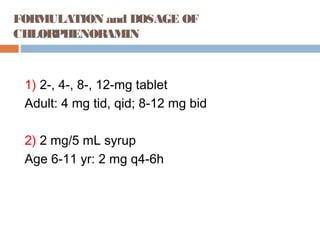
FORMULATION and DOSAGE OF
CHLORPHENORAMIN
1) 2-, 4-, 8-, 12-mg tablet
Adult: 4 mg tid, qid; 8-12 mg bid
2) 2 mg/5 mL syrup
Age 6-11 yr: 2 mg q4-6h
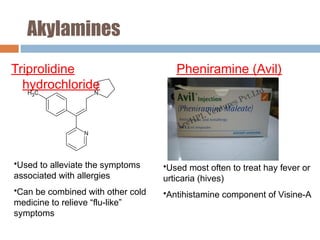
Akylamines
Triprolidine
hydrochloride
Pheniramine (Avil)
•Used to alleviate the symptoms
associated with allergies
•Can be combined with other cold
medicine to relieve “flu-like”
symptoms
•Used most often to treat hay fever or
urticaria (hives)
•Antihistamine component of Visine-A
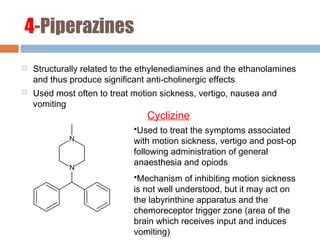
4-Piperazines
 Structurally related to the ethylenediamines and the ethanolamines
and thus produce significant anti-cholinergic effects
 Used most often to treat motion sickness, vertigo, nausea and
vomiting
•Used to treat the symptoms associated
with motion sickness, vertigo and post-op
following administration of general
anaesthesia and opiods
•Mechanism of inhibiting motion sickness
is not well understood, but it may act on
the labyrinthine apparatus and the
chemoreceptor trigger zone (area of the
brain which receives input and induces
vomiting)
Cyclizine
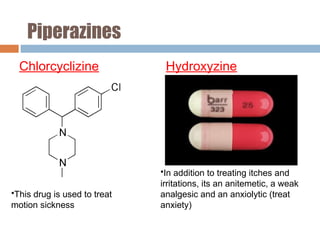
Piperazines
Chlorcyclizine Hydroxyzine
•In addition to treating itches and
irritations, its an anitemetic, a weak
analgesic and an anxiolytic (treat
anxiety)
•This drug is used to treat
motion sickness
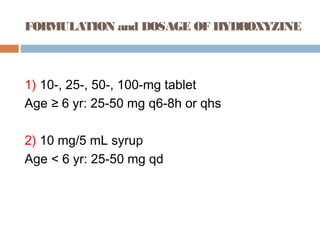
FORMULATION and DOSAGE OF HYDROXYZINE
1) 10-, 25-, 50-, 100-mg tablet
Age ≥ 6 yr: 25-50 mg q6-8h or qhs
2) 10 mg/5 mL syrup
Age < 6 yr: 25-50 mg qd
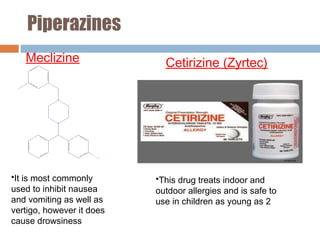
Piperazines
Meclizine Cetirizine (Zyrtec)
•It is most commonly
used to inhibit nausea
and vomiting as well as
vertigo, however it does
cause drowsiness
•This drug treats indoor and
outdoor allergies and is safe to
use in children as young as 2
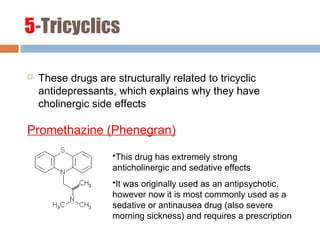
5-Tricyclics
 These drugs are structurally related to tricyclic
antidepressants, which explains why they have
cholinergic side effects
Promethazine (Phenegran)
•This drug has extremely strong
anticholinergic and sedative effects
•It was originally used as an antipsychotic,
however now it is most commonly used as a
sedative or antinausea drug (also severe
morning sickness) and requires a prescription
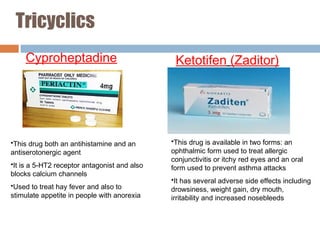
Tricyclics
Cyproheptadine Ketotifen (Zaditor)
•This drug both an antihistamine and an
antiserotonergic agent
•It is a 5-HT2 receptor antagonist and also
blocks calcium channels
•Used to treat hay fever and also to
stimulate appetite in people with anorexia
•This drug is available in two forms: an
ophthalmic form used to treat allergic
conjunctivitis or itchy red eyes and an oral
form used to prevent asthma attacks
•It has several adverse side effects including
drowsiness, weight gain, dry mouth,
irritability and increased nosebleeds
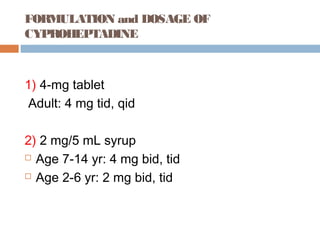
FORMULATION and DOSAGE OF
CYPROHEPTADINE
1) 4-mg tablet
Adult: 4 mg tid, qid
2) 2 mg/5 mL syrup
 Age 7-14 yr: 4 mg bid, tid
 Age 2-6 yr: 2 mg bid, tid
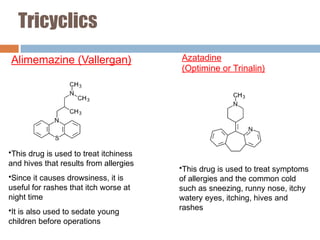
Tricyclics
Alimemazine (Vallergan) Azatadine
(Optimine or Trinalin)
•This drug is used to treat itchiness
and hives that results from allergies
•Since it causes drowsiness, it is
useful for rashes that itch worse at
night time
•It is also used to sedate young
children before operations
•This drug is used to treat symptoms
of allergies and the common cold
such as sneezing, runny nose, itchy
watery eyes, itching, hives and
rashes
Tricyclics
 The tricyclic antidepressant most commonly used in
dermatology is doxepin. Oral doxepin has been used
successfully in the treatment of refractory chronic
idiopathic urticaria, physical urticaria, and pruritus
associated with systemic conditions. Topical
preparations are also available. topical doxepin cream
reduced pruritus in patients with atopic dermatitis and
lichen simplex chronicus. Sedation is the most common
adverse effect with both the oral form and the topical
form, which is absorbed percutaneously.
 Oral doxepin has been classified by the FDA as a
pregnancy category C drug; topical doxepin is classified
as a pregnancy category B drug.
Second generation H1-receptor
antagonists
 These are the newer drugs and they are much more
selective for the peripheral H1-receptors involved in
allergies as opposed to the H1-receptors in the CNS.
 These agents are chemically derived from the first
generation agents, for example Cetrizine is a metabolite of
Hydroxyzine.
 These agents bind non competitivelly to the H1-receptors,
they are not easily displased by histamen, dissociated
slowely and have a longer duration of action than the first.
 Therefore, these drugs provide the same relief with many
fewer adverse side effects.
 They are however Electrostatic charge, bulkier and less
lipophilic than the first generation drugs, therefore they do
not cross the BBB as readily.
Second generation H1-receptor
antagonists
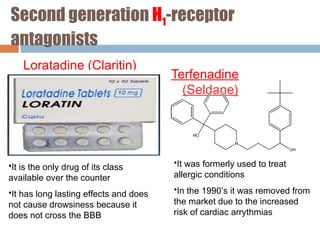
Loratadine (Claritin)
Terfenadine
(Seldane)
•It is the only drug of its class
available over the counter
•It has long lasting effects and does
not cause drowsiness because it
does not cross the BBB
•It was formerly used to treat
allergic conditions
•In the 1990’s it was removed from
the market due to the increased
risk of cardiac arrythmias
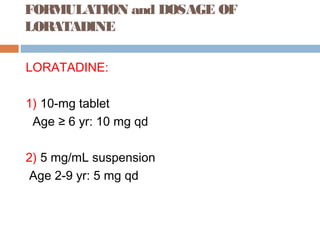
FORMULATION and DOSAGE OF
LORATADINE
LORATADINE:
1) 10-mg tablet
Age ≥ 6 yr: 10 mg qd
2) 5 mg/mL suspension
Age 2-9 yr: 5 mg qd
Second generation H1-receptor
antagonists
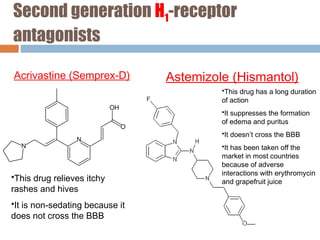
Acrivastine (Semprex-D) Astemizole (Hismantol)
•This drug has a long duration
of action
•It suppresses the formation
of edema and puritus
•It doesn’t cross the BBB
•It has been taken off the
market in most countries
because of adverse
interactions with erythromycin
and grapefruit juice
•This drug relieves itchy
rashes and hives
•It is non-sedating because it
does not cross the BBB
Second generation H1-receptor
antagonists
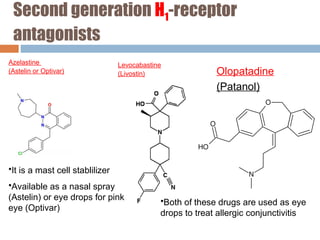
Azelastine
(Astelin or Optivar)
Levocabastine
(Livostin)
•It is a mast cell stablilizer
•Available as a nasal spray
(Astelin) or eye drops for pink
eye (Optivar)
•Both of these drugs are used as eye
drops to treat allergic conjunctivitis
Olopatadine
(Patanol)
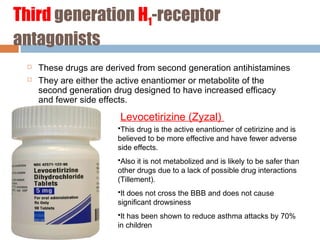
Third generation H1-receptor
antagonists
 These drugs are derived from second generation antihistamines
 They are either the active enantiomer or metabolite of the
second generation drug designed to have increased efficacy
and fewer side effects.
Levocetirizine (Zyzal)
•This drug is the active enantiomer of cetirizine and is
believed to be more effective and have fewer adverse
side effects.
•Also it is not metabolized and is likely to be safer than
other drugs due to a lack of possible drug interactions
(Tillement).
•It does not cross the BBB and does not cause
significant drowsiness
•It has been shown to reduce asthma attacks by 70%
in children
Third generation H1-receptor
antagonists
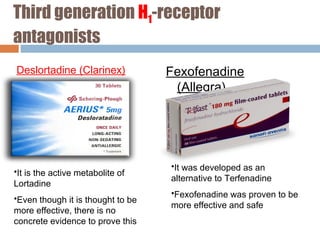
Deslortadine (Clarinex) Fexofenadine
(Allegra)
•It is the active metabolite of
Lortadine
•Even though it is thought to be
more effective, there is no
concrete evidence to prove this
•It was developed as an
alternative to Terfenadine
•Fexofenadine was proven to be
more effective and safe
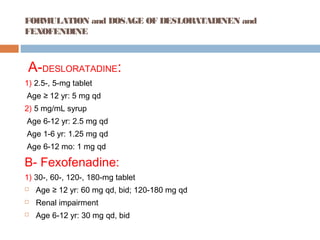
FORMULATION and DOSAGE OF DESLORATADINEN and
FEXOFENDINE
A-DESLORATADINE:
1) 2.5-, 5-mg tablet
Age ≥ 12 yr: 5 mg qd
2) 5 mg/mL syrup
Age 6-12 yr: 2.5 mg qd
Age 1-6 yr: 1.25 mg qd
Age 6-12 mo: 1 mg qd
B- Fexofenadine:
1) 30-, 60-, 120-, 180-mg tablet
 Age ≥ 12 yr: 60 mg qd, bid; 120-180 mg qd
 Renal impairment
 Age 6-12 yr: 30 mg qd, bid
H2-receptor antagonists
 1-Cimetidine [Tagamet]
 2-Ranitdine [Zantac]
 3-Famotidine [Pepcid]
 4-Nizatidine [Axid]
Mechanism of Action
 Similar to their H1-binding counterparts, H2 antihistamines are
inverse agonists that bind H2 receptors located throughout the body,
including epithelial and endothelial cells.
 More recently, there is evidence that H2 receptors are expressed on
mast cells and dermal dendritic cells as well. Through binding of
these receptors.
 H2 antihistamines may mediate cutaneous vascular permeability,
local release of inflammatory mediators and cellular recruitment,
and antigen presentation, but these pathways remain poorly
understood, and their clinical significance is unknown.

Displaces histamine from the H2 receptors, a G- protein coupled
receptor, because histamine activates cAMP, H2 blockers leads to
a decrease in cAMP and a concomitant decrease in Ca ion.
H2-receptor antagonist Pharmacological Effects
 1-Competitive antagonsts at the H2 receptors.
 2-Inhibits secretory function of gastric mucosa.
 3-Few other effects than those on gastric
secretion.
 4-Reduce gastric acid volume & concentration
of pepsin.
Dermatologic Indications for
Treatment with H2 Antihistamines.
 Acute allergic reactions.
 Chronic urticaria.
 Urticaria pigmentosa and systemic
mastocytosis.
 Pruritus associated with other conditions.
Most Common Side Effects
 1- Diarrhea
 2-Dizziness
 3-Somnolenece
 4-Headache
 5-Rash
 6-Constipation
 7-Vomiting
 8-Arthralgia
 Gynecomastia
Special Patient Populations
1-CHILDREN
The H2 antihistamines, ranitidine and famotidine have
pharmacokinetics that have been relatively well.
studied in children, and these drugs have acceptable safety profiles
with appropriate dosing. Cimetidine and nizatidine are not
recommended for children. One adverse effect unique to children is
an uncommon but drug class-wide risk of necrotizing enterocolitis in
neonates.
2-ELDERLY
Older patients may require downward adjustment of dosage to
accommodate decreased creatinine clearance, as well as careful
review of medication lists. Elderly patients also appear more
susceptible to CNS disturbances such as confusion and dizziness.
3-PREGNANT WOMEN
 The H2 antihistamines are classified as FDA pregnancy category B
Drug Interactions of H2-receptor antagonist
 Through inhibition of the CYP system, cimetidine increases the
serum levels of numerous drugs, including some of the most
common medications used in the care of the medical patient.Of
note, cimetidine increases levels of warfarin and may cause
dangerous increases in prothrombin time and risk of bleeding.
Cimetidine also interacts with many cardiac drugs—several β
blockers, calcium channel blockers, amiodarone, antiarrhythmic
agents, among others. Other common drugs with which cimetidine
interacts are phenytoin, several benzodiazepines, metformin,
sulfonylureas, and selective serotonin reuptake inhibitors.
Although ranitidine interacts with other medications less frequently
than does cimetidine, significant interactions with fentanyl,
metoprolol, midazolam, nifedipine, theophylline, and warfarin have
been observed.Ranitidine may decrease the absorption of
diazepam and reduce its plasma concentration by 25 percent.
Famotidine and nizatidine are associated with fewer drug
H3-receptor antagonists
 Believe to act as feedback inhibitors in a wide
variety of organ system in the CNS, agonists
cause sedation
 GI:-agonists dowen regulate histamine.
Thereby decreasing gastrin.
 Lung:-agoninsts have a bronchodilater effect.
 Mechanism of Action= G-protein coupled
receptor, decrease of intracellular Calcium.
Thank you
For
Listen

Antihistamine presentation

  • 1.
  • 2.
  • 3.
    Outline  What isthe antihistamines.  What is histamine.  What is the receptors.  What is the clinical uses of antihistamines.  Side effects of antihistamines.  What is the contraindications.  Classes of antihistamines.
  • 4.
    What is anantihistamine?  A drug that reduces or eliminates the effects mediated by the chemical histamine.  Histamine is released by your body during an allergic reaction and acts on a specific histamine receptor  True antihistamines are only the agents that produce a therapeutic effect that is mediated by negative modulation of histamine receptors (other agents may have antihistaminergic action but are not true antihistamines)  The term antihistamine only refers to H1 receptor antagonists (actually inverse agonists)  Antihistamines compete with histamine for binding sites at the receptors.
  • 5.
    Histamine: Storage and Release HistamineStored in complex with:  Heparin  Chondroitin sulphate  Eosinophilic Chemotactic Factor  Nnutrophilic Chemotactic Factor  Proteases
  • 6.
    Histamine: Storage and Release 1-Immunologic Release:  The most important mechnism for histamine release is in to an immunological stimlus.  In mast cells, if sensitized by surface IgE antibodies, degranulate when exposed specific antigen.  After degranulation of mast cells lead to libration of the contents of the mast cell granules, histamines are located in mast cells in the tissues and basophils in the blood.  Degranulation is involved in the immediate type1 hypersensitivity reaction. 2- Mechanical and Chemical Release:  I is a second type of release histamine after injury to mast cells. 3- Drug and other foreign compounds: Morphine, dextran, antimalarial drugs, dyes, antibiotic bases, alkaloids, amides, toxins, venoms .
  • 7.
    Synthesis of Histamine Formed from the amino acid Histadine in a decarboxylation reaction with the enzyme histadine decarboxylase  Occurs primarily in mast cells and basophils
  • 8.
    The different Histaminereceptors Location Type of receptor Effect Treatment H1 Throughout the body, specifically in smooth muscles, on vascular endothelial cells, in the heart and the CNS G-protein coupled, linked to intercellular Gq, which activates phospholipase C Mediate an increase in vascular permeability at sites of inflammation induced by histamine Allergies, nausea, sleep disorders,urticaria,a ngioedema H2 In more specific locations in the body mainly in gastric parietal cells, a low level can be found in vascular smooth muscle, neutrophils, CNS, heart, uterus G-protein coupled, linked to intercellular Gs Increases the release of gastric acid Stomach ulcers H3 Found mostly in the CNS, with a high level in the thalamus, caudate nucleus and cortex, also a low level detected in small intestine, testis and prostate. G-protein coupled, possibly linked to intercellular Gi Neural presynaptic receptor, may function to release histamine Unknown H4 They were recently discovered in 2000. They are highly expressed in components of the immune system such as the spleen, thymus and leukocytes and peripheral haematopoitic cell and bone marrow. Unknown, most likely also G- protein coupled Unknown In addition to benefiting allergic conditions, research in the h4 receptor may lead to the treatment of autoimmune diseases. (rheumatoid arthritis and IBS)
  • 9.
    Dermatological Indications forTreatment with H1 Antihistamines  Acute urticaria  Chronic idiopathic urticaria  Physical urticarias and dermatographism  Atopic dermatitis (less evidence)  Urticaria Pigmentosea & Systemic mastocytosis  Pruritus associated with other conditions
  • 10.
    Other Clinical Usesof Antihistamines  Allergic rhinitis (common cold)  Allergic conjunctivitis (pink eye)  Anaphylactic reactions (severe allergies)  Nausea and vomiting (first generation H1- antihistamines)  Sedation (first generation H1-antihistamines)
  • 11.
    Side effects  Associatedwith the first generation H1-antihistamines and due to their lack of selectivity for the H1 receptor and anti-cholinergic activity. Side effects are due to CNS depression:  Sedation  Dizziness  Tinnitus (ringing in the ear)  Blurred vision  Euphoria  Uncoordination  Anxiety  Insomnia  Tremor  Nausea/vomitting  Dry mouth/dry cough  Newer second generation H1-antihistamines are more selective for the peripheral histamine receptors and have far less side effects (drowsiness, fatigue, headache, nausea and dry mouth)
  • 12.
    Special Patient Populations 1-CHILDREN Manyof the sedating and low-sedating H1 antihistamines can be safely used in children with appropriate dosing. Children may be more susceptible to certain side effects associated with first-generation drugs, such as excitation and insomnia. Acute poisoning may develop but is rare; hallucinations, ataxia, incoordination, athetosis, and convulsions are the major features. 2-ELDERLY Caution should be used when treating elderly patients, and decreased creatinine clearance, co-morbid conditions, and potential drug interactions should be taken into account. Older individuals may also be more susceptible to anticholinergic effects, particularly urinary retention and hesitancy, constipation, and postural hypotension.
  • 13.
    3-PREGNANT WOMEN There arelimited guidelines for the use of H1 antihistamines to treat pregnant women. Most H1 antihistamines are classified as U.S. Food and Drug Administration (FDA) pregnancy category B or category C. Based on earlier reports linking H1 antihistamines to fetal malformations, particularly cleft palate defects, H1 antihistamines are customarily avoided in the first trimester of pregnancy. 4-BREAST-FEEDING WOMEN No formal studies have been performed on the safety of H1 antihistamines during breast- feeding. Theoretically, first-generation drugs may diminish milk supply via anticholinergic effects. Clemastine, diphenhydramine, promethazine, triprolidine, cetirizine, loratadine, fexofenadine, and desloratadine are all known to be excreted in breast milk; their effects on the nursing infant are not known.
  • 14.
    Drug Interactions ofof H1 Antihistamine Therapy The H1 antihistamines may interact with other drugs metabolized by the hepatic CYP system, such as imidazole antifungals, cimetidine, and macrolide antibiotics. Diphenhydramine, chlorpheniramine, clemastine, promethazine, hydroxyzine, and tripelennamine inhibit the hepatic enzyme CYP 2D6 in vitro. In vivo, diphenhydramine has been noted to increase levels of other drugs metabolized by the CYP 2D6 system, including metoprolol and venlafaxine. H1-type antihistamines are contraindicated for patients receiving monoamine oxidase inhibitors. Central depressive effects may be accentuated when H1-type antihistamines are combined with alcohol or other CNS depressants, such as benzodiazepines. These interactions are generally not observed with second-generation H1 antihistamines. In rare circumstances, antihistamines of the phenothiazine group may block and reverse the vasopressor effect of epinephrine. If individuals receiving a phenothiazine require a vasopressor agent, norepinephrine or phenylephrine should be used.
  • 15.
    Factors for Risk-BenefitAssessment of H1 Antihistamine Therapy  Risks  History of cardiac arrhythmias, particularly ventricular arrhythmias  First trimester of pregnancy  Prostatic hypertrophy  Contraindications  Narrow-angle glaucoma  Concomitant use of monoamine oxidase inhibitors
  • 16.
    Classes of Firstgeneration H1 receptor antagonist antihistamines  Ethylenediamines  Ethanolamines  Alkylamines  Piperazines  Tricyclics  Piperadines
  • 17.
    Common Structural Featuresof classical First generation antihistamines  2 aromatic rings, connected to a central carbon, nitrogen, or oxygen  Spacer between central atom and the amine, usually 2-3 carbons in length. (Can be linear, ring, branched, saturated or unsaturated)  The amine is substituted with small alkyl groups  Chirality at X and having the rings in different planes increases potency of the drug
  • 18.
    Mechanism of Action H1 antihistamines are inverse agonists that reversibly bind and stabilize the inactive form of the H1 receptor, thereby favoring the inactive state.  So the H1 receptor antihistamines decrease production of pro-inflammatory cytokines, expression of cell adhesion molecules, and chemotaxis of eosinophils and other cells H1 antihistamines may also decrease mediator release from mast cells and basophils through inhibition of calcium ion channels.  In addition to having antihistamine actions, first- generation H1 antihistamines can also act on muscarinic, α-adrenergic, and serotonin receptors and cardiac ion channels
  • 19.
    1-Ethylenediamines  These werethe first group of clinically effective H1-antihistamines Mepyramine (Pyrilamine)
  • 20.
    2-Ethanolamines  This classhas significant anticholinergic side effects and sedation, however reduced the gastroinestnal side effects Diphenhydramine (Benedryl) • Oldest and most effective antihistamine on the market • Available over the counter • Because it induces sedation, it’s used in nonprescription sleep aids such as Tylenol PM • Also inhibits the reuptake of serotonin, which led to the search for viable antidepressants with similar structures (prozac)
  • 21.
    FORMULATION and DOSAGEOF DIPHENHYDRAMINE 1) 25-, 50-mg tablet Adult: 25-50 mg q4-6h 2) 12.5 mg/5 mL syrup Age 6-12 yr: 12.5-25 mg q4-6h
  • 22.
    Ethanolamines Carbinoxamine(Clistine) Doxylamine succinate •2ndin effectiveness of anti-allergy activity only to Benadryl •Potent anti-cholinergic effects •Is used to treat Hay fever and is especially popular to children due its its mild taste •After 21 reported deaths in children under 2, its now only marketed to children above 3 (FDA, June 2006)
  • 23.
    Ethanolamines Clemastine (Tavist) Dimenhydrinate (Dramamine) •Exhibitsfewer side effects than most antihistamines •Widely used as an antiprurtic (stops itching) •Anti-emetic (anti nausea) •Also causes strong sedation •Readily crosses the BBB
  • 24.
    3-Alkylamines  Isomerism isan important factor in this class of drugs, which is due to the positioning and fit of the molecules in the H1-receptor binding site  These drugs have fewer sedative and GI adverse effects, but a greater incidence of CNS stimulation  These drugs lack the “spacer molecule” (which is usually a nitrogen or oxygen) between the two aromatic rings and at least one of the rings has nitrogen included in the aromatic system
  • 25.
    Akylamines Chlorphenamine Brompheniramine (Dimetapp) •Originally usedto prevent allergic conditions •Shown to have antidepressant properties and inhibit the reuptake of serotonin •The first SSRI was made as a derivative of chlorphenamine •Available over the counter •Used to treat the common cold by relieving runny nose, itchy, watery eyes and sneezing
  • 26.
    FORMULATION and DOSAGEOF CHLORPHENORAMIN 1) 2-, 4-, 8-, 12-mg tablet Adult: 4 mg tid, qid; 8-12 mg bid 2) 2 mg/5 mL syrup Age 6-11 yr: 2 mg q4-6h
  • 27.
    Akylamines Triprolidine hydrochloride Pheniramine (Avil) •Used toalleviate the symptoms associated with allergies •Can be combined with other cold medicine to relieve “flu-like” symptoms •Used most often to treat hay fever or urticaria (hives) •Antihistamine component of Visine-A
  • 28.
    4-Piperazines  Structurally relatedto the ethylenediamines and the ethanolamines and thus produce significant anti-cholinergic effects  Used most often to treat motion sickness, vertigo, nausea and vomiting •Used to treat the symptoms associated with motion sickness, vertigo and post-op following administration of general anaesthesia and opiods •Mechanism of inhibiting motion sickness is not well understood, but it may act on the labyrinthine apparatus and the chemoreceptor trigger zone (area of the brain which receives input and induces vomiting) Cyclizine
  • 29.
    Piperazines Chlorcyclizine Hydroxyzine •In additionto treating itches and irritations, its an anitemetic, a weak analgesic and an anxiolytic (treat anxiety) •This drug is used to treat motion sickness
  • 30.
    FORMULATION and DOSAGEOF HYDROXYZINE 1) 10-, 25-, 50-, 100-mg tablet Age ≥ 6 yr: 25-50 mg q6-8h or qhs 2) 10 mg/5 mL syrup Age < 6 yr: 25-50 mg qd
  • 31.
    Piperazines Meclizine Cetirizine (Zyrtec) •Itis most commonly used to inhibit nausea and vomiting as well as vertigo, however it does cause drowsiness •This drug treats indoor and outdoor allergies and is safe to use in children as young as 2
  • 32.
    5-Tricyclics  These drugsare structurally related to tricyclic antidepressants, which explains why they have cholinergic side effects Promethazine (Phenegran) •This drug has extremely strong anticholinergic and sedative effects •It was originally used as an antipsychotic, however now it is most commonly used as a sedative or antinausea drug (also severe morning sickness) and requires a prescription
  • 33.
    Tricyclics Cyproheptadine Ketotifen (Zaditor) •Thisdrug both an antihistamine and an antiserotonergic agent •It is a 5-HT2 receptor antagonist and also blocks calcium channels •Used to treat hay fever and also to stimulate appetite in people with anorexia •This drug is available in two forms: an ophthalmic form used to treat allergic conjunctivitis or itchy red eyes and an oral form used to prevent asthma attacks •It has several adverse side effects including drowsiness, weight gain, dry mouth, irritability and increased nosebleeds
  • 34.
    FORMULATION and DOSAGEOF CYPROHEPTADINE 1) 4-mg tablet Adult: 4 mg tid, qid 2) 2 mg/5 mL syrup  Age 7-14 yr: 4 mg bid, tid  Age 2-6 yr: 2 mg bid, tid
  • 35.
    Tricyclics Alimemazine (Vallergan) Azatadine (Optimineor Trinalin) •This drug is used to treat itchiness and hives that results from allergies •Since it causes drowsiness, it is useful for rashes that itch worse at night time •It is also used to sedate young children before operations •This drug is used to treat symptoms of allergies and the common cold such as sneezing, runny nose, itchy watery eyes, itching, hives and rashes
  • 36.
    Tricyclics  The tricyclicantidepressant most commonly used in dermatology is doxepin. Oral doxepin has been used successfully in the treatment of refractory chronic idiopathic urticaria, physical urticaria, and pruritus associated with systemic conditions. Topical preparations are also available. topical doxepin cream reduced pruritus in patients with atopic dermatitis and lichen simplex chronicus. Sedation is the most common adverse effect with both the oral form and the topical form, which is absorbed percutaneously.  Oral doxepin has been classified by the FDA as a pregnancy category C drug; topical doxepin is classified as a pregnancy category B drug.
  • 37.
    Second generation H1-receptor antagonists These are the newer drugs and they are much more selective for the peripheral H1-receptors involved in allergies as opposed to the H1-receptors in the CNS.  These agents are chemically derived from the first generation agents, for example Cetrizine is a metabolite of Hydroxyzine.  These agents bind non competitivelly to the H1-receptors, they are not easily displased by histamen, dissociated slowely and have a longer duration of action than the first.  Therefore, these drugs provide the same relief with many fewer adverse side effects.  They are however Electrostatic charge, bulkier and less lipophilic than the first generation drugs, therefore they do not cross the BBB as readily.
  • 38.
    Second generation H1-receptor antagonists Loratadine(Claritin) Terfenadine (Seldane) •It is the only drug of its class available over the counter •It has long lasting effects and does not cause drowsiness because it does not cross the BBB •It was formerly used to treat allergic conditions •In the 1990’s it was removed from the market due to the increased risk of cardiac arrythmias
  • 39.
    FORMULATION and DOSAGEOF LORATADINE LORATADINE: 1) 10-mg tablet Age ≥ 6 yr: 10 mg qd 2) 5 mg/mL suspension Age 2-9 yr: 5 mg qd
  • 40.
    Second generation H1-receptor antagonists Acrivastine(Semprex-D) Astemizole (Hismantol) •This drug has a long duration of action •It suppresses the formation of edema and puritus •It doesn’t cross the BBB •It has been taken off the market in most countries because of adverse interactions with erythromycin and grapefruit juice •This drug relieves itchy rashes and hives •It is non-sedating because it does not cross the BBB
  • 41.
    Second generation H1-receptor antagonists Azelastine (Astelinor Optivar) Levocabastine (Livostin) •It is a mast cell stablilizer •Available as a nasal spray (Astelin) or eye drops for pink eye (Optivar) •Both of these drugs are used as eye drops to treat allergic conjunctivitis Olopatadine (Patanol)
  • 42.
    Third generation H1-receptor antagonists These drugs are derived from second generation antihistamines  They are either the active enantiomer or metabolite of the second generation drug designed to have increased efficacy and fewer side effects. Levocetirizine (Zyzal) •This drug is the active enantiomer of cetirizine and is believed to be more effective and have fewer adverse side effects. •Also it is not metabolized and is likely to be safer than other drugs due to a lack of possible drug interactions (Tillement). •It does not cross the BBB and does not cause significant drowsiness •It has been shown to reduce asthma attacks by 70% in children
  • 43.
    Third generation H1-receptor antagonists Deslortadine(Clarinex) Fexofenadine (Allegra) •It is the active metabolite of Lortadine •Even though it is thought to be more effective, there is no concrete evidence to prove this •It was developed as an alternative to Terfenadine •Fexofenadine was proven to be more effective and safe
  • 44.
    FORMULATION and DOSAGEOF DESLORATADINEN and FEXOFENDINE A-DESLORATADINE: 1) 2.5-, 5-mg tablet Age ≥ 12 yr: 5 mg qd 2) 5 mg/mL syrup Age 6-12 yr: 2.5 mg qd Age 1-6 yr: 1.25 mg qd Age 6-12 mo: 1 mg qd B- Fexofenadine: 1) 30-, 60-, 120-, 180-mg tablet  Age ≥ 12 yr: 60 mg qd, bid; 120-180 mg qd  Renal impairment  Age 6-12 yr: 30 mg qd, bid
  • 45.
    H2-receptor antagonists  1-Cimetidine[Tagamet]  2-Ranitdine [Zantac]  3-Famotidine [Pepcid]  4-Nizatidine [Axid]
  • 46.
    Mechanism of Action Similar to their H1-binding counterparts, H2 antihistamines are inverse agonists that bind H2 receptors located throughout the body, including epithelial and endothelial cells.  More recently, there is evidence that H2 receptors are expressed on mast cells and dermal dendritic cells as well. Through binding of these receptors.  H2 antihistamines may mediate cutaneous vascular permeability, local release of inflammatory mediators and cellular recruitment, and antigen presentation, but these pathways remain poorly understood, and their clinical significance is unknown.  Displaces histamine from the H2 receptors, a G- protein coupled receptor, because histamine activates cAMP, H2 blockers leads to a decrease in cAMP and a concomitant decrease in Ca ion.
  • 47.
    H2-receptor antagonist PharmacologicalEffects  1-Competitive antagonsts at the H2 receptors.  2-Inhibits secretory function of gastric mucosa.  3-Few other effects than those on gastric secretion.  4-Reduce gastric acid volume & concentration of pepsin.
  • 48.
    Dermatologic Indications for Treatmentwith H2 Antihistamines.  Acute allergic reactions.  Chronic urticaria.  Urticaria pigmentosa and systemic mastocytosis.  Pruritus associated with other conditions.
  • 49.
    Most Common SideEffects  1- Diarrhea  2-Dizziness  3-Somnolenece  4-Headache  5-Rash  6-Constipation  7-Vomiting  8-Arthralgia  Gynecomastia
  • 50.
    Special Patient Populations 1-CHILDREN TheH2 antihistamines, ranitidine and famotidine have pharmacokinetics that have been relatively well. studied in children, and these drugs have acceptable safety profiles with appropriate dosing. Cimetidine and nizatidine are not recommended for children. One adverse effect unique to children is an uncommon but drug class-wide risk of necrotizing enterocolitis in neonates. 2-ELDERLY Older patients may require downward adjustment of dosage to accommodate decreased creatinine clearance, as well as careful review of medication lists. Elderly patients also appear more susceptible to CNS disturbances such as confusion and dizziness. 3-PREGNANT WOMEN  The H2 antihistamines are classified as FDA pregnancy category B
  • 51.
    Drug Interactions ofH2-receptor antagonist  Through inhibition of the CYP system, cimetidine increases the serum levels of numerous drugs, including some of the most common medications used in the care of the medical patient.Of note, cimetidine increases levels of warfarin and may cause dangerous increases in prothrombin time and risk of bleeding. Cimetidine also interacts with many cardiac drugs—several β blockers, calcium channel blockers, amiodarone, antiarrhythmic agents, among others. Other common drugs with which cimetidine interacts are phenytoin, several benzodiazepines, metformin, sulfonylureas, and selective serotonin reuptake inhibitors. Although ranitidine interacts with other medications less frequently than does cimetidine, significant interactions with fentanyl, metoprolol, midazolam, nifedipine, theophylline, and warfarin have been observed.Ranitidine may decrease the absorption of diazepam and reduce its plasma concentration by 25 percent. Famotidine and nizatidine are associated with fewer drug
  • 52.
    H3-receptor antagonists  Believeto act as feedback inhibitors in a wide variety of organ system in the CNS, agonists cause sedation  GI:-agonists dowen regulate histamine. Thereby decreasing gastrin.  Lung:-agoninsts have a bronchodilater effect.  Mechanism of Action= G-protein coupled receptor, decrease of intracellular Calcium.
  • 53.

Editor's Notes

  • #21 The anticholinergic side effects may include: motor impairment, dry mouth/throat, flushed skin, rapid or irregular heart beat, blurred vision, sensitivity to light, pupil dilation, urinary retention, constipation, difficulty concintrating, short term memory loss, visual disturbances, hallucinations, confusion, erectile dysfunction, and delirium
  • #24 Dramamine is actually a combination of two drugs: diphenhydramine (Benadryl) and 8-chlorotheophillinate (similar to caffeine and is a mild CNS stimulator)