Indian Civilization
South Asia
 South Asia consists od India, Pakistan
  Bangladesh, Afghanistan, Bhutan, Sri
  Langka, Nepal and Maldives.
 It is also known as the subcontinent of
  India.
 The Himalayas separate South Asia
  from the rest of the continent.
 Groups of people with conquests and
  migrations brought their language and
  tradition .
Geography of India
Geography of India
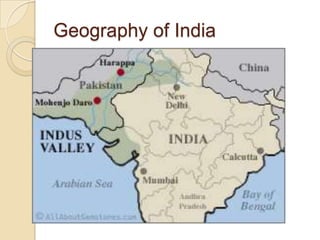
 The cities situated near the Indus
  Valley are the first civilization
  emerged.
 The remains in of cities of Mohenjo-
  Daro and Harappa was discovered by
  the archeologists.
 The indus land was much larger since
  this emcompassed a huge portion of
  northwest ancient India (modern day
  Pakistan).
The Indus River
The Indus River
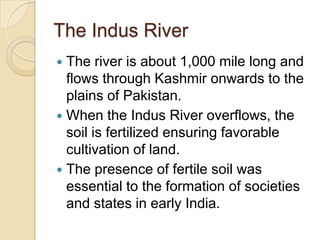
 The river is about 1,000 mile long and
  flows through Kashmir onwards to the
  plains of Pakistan.
 When the Indus River overflows, the
  soil is fertilized ensuring favorable
  cultivation of land.
 The presence of fertile soil was
  essential to the formation of societies
  and states in early India.
Harappan Civilization
 Located in the anncient city of
  Harappa and emerged around 2700
  B.C.E
 Has a population around 40,000
  people.
 The houses were square – shaped
  and had wide spaces.
 The use of toilets and bathrooms by
  early Indians were the first application
  of sewerage system in the world.
Harappan Civilization
 They domesticated animals like
  elephants, sheeps, and goats.
 They were the first people to plant
  cotton and weave clothes out of these
  materials.
 They have a standard system of
  weights and measures for grain and
  gold.
 Harappan society divided into groups.
 Harappans established trade
The Aryans
 The Harappans attained their
  peakness of great around 2000 B.C.E
 The Aryans Invasion began in 1500
  B.C.E and destroted Harappa.
 The Aryans used the mountains as
  routes.
 The Harappans are unable to
  overcome the Aryans so they migrated
  towards the Southern part of India.
Vedic Period
 The Vedic period is the Aryan way of
  life from 1500 B.C.E until the 500
  B.C.E.
 The Aryans brought their own
  language which became known as
  Sanskrit which is the classical
  language of Indian literature.
 The “Vedas” is a collection of books
  on batlle hyms, sacred rituals, sayins
  and tales.
Vedic Period
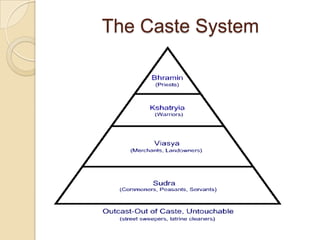
 The society was divided into noble
  warriors, priests and ordinary people.
 The tasks of the warriors are to lead
  and run everyday affairs of the society.
 Towards the end of the Vedic period,
  the priests began to wield more power
  than the warrior class.The teachings
  concerning people and God gradually
  became more important in the society.
The Caste System
Establishment of Empires and
Kingdoms
 Their political structure transformed from a
  simple administration into larger states.
 They realized the need to collect taxes,
  organize their perspective tools, and bulid
  new ciies and roads.
 Example of the city states are Magadha,
  Kosala, Kro, and Gandhara.
The Persians
 A persian force led by Cyrus the Great
  invaded northwest India.
 Darius, Cyrus Successor was able to
  conquer Indus Valley and Punjab.
 The region of India became part of the
  Persian empire for nearly two
  centuries.
 Persian cities became centers of
  learning.
Alexander the Great
 Alexander the Great defeated the
  combined power of the Persians and
  the Indians.
 Alexander and his men are able to
  cross the Indus River.
 Alexander reluctantly left India
  because his troops were already
  exhausted and most of them have
  illnesses and misfortunes.
Mauryan Empire
 Established by Chandragupta Maurya
 She had an effective but harsh
  governance who was influenced by
  kautilya, author of Arthashastra, a
  book that contains essential ideas on
  political strategies and effective
  administration.
 Ashoka or Asoka is known as the
  greatest Mauryan leader because he
  renounced violence and eventually
  followed the teachings of the Buddha.
Mauryan Empire
 After Asoka’s death, leaders who
  succeeded him are unable to
  effectively control the whole empire.
 Several city states far from the capital
  secede from the Empire.
 During the downfall of the Mauryan
  Empire, various Indian states clash for
  supremacy.
Kushana Kingdom
 India’s northwestern frontier witnessed
  the arrival of outsiders like the
  Bactarians, Scythians, and Yuezhi.
 The Yuezhi extablished the kingdom.
 Kaniksha, the most renowned
  Kushana king made commercial
  activities flourish.
Satavahana Kingdom
 Located in the southern part of India.
 The politics and administration was
  influenced by the Maurya.
Gupta Empire
 Considered as the classical period of
  India.
 Northern India was unified once again.
 The empire had a well organized
  government.
 Knowledge in astronomy,
  mathematics, surgery, literature, arts,
  and science flourished.
 The empire collapsed when the White
  Huns invaded Northern India.
Gupta Empire
 Political turmoil was once again
  experienced while the city states were
  broken apart.
 Political disintegration was continued
  until the establichment of the Mogul
  Empire by the Muslims in India in the
  16th century.
Contributions of the Indian
Civilization
 Urban planning
 The four great religions: Hinduism,
  Buddhism, Jainism, and Sikhism.
 The use of sewage system
 Knowledge in measurement
 The decimal system
 Vedas
 Taj Mahal in Agra
 Knowledge in Algebra

Indian civilization

  • 1.
  • 2.
    South Asia  SouthAsia consists od India, Pakistan Bangladesh, Afghanistan, Bhutan, Sri Langka, Nepal and Maldives.  It is also known as the subcontinent of India.  The Himalayas separate South Asia from the rest of the continent.  Groups of people with conquests and migrations brought their language and tradition .
  • 3.
  • 4.
    Geography of India The cities situated near the Indus Valley are the first civilization emerged.  The remains in of cities of Mohenjo- Daro and Harappa was discovered by the archeologists.  The indus land was much larger since this emcompassed a huge portion of northwest ancient India (modern day Pakistan).
  • 5.
  • 6.
    The Indus River The river is about 1,000 mile long and flows through Kashmir onwards to the plains of Pakistan.  When the Indus River overflows, the soil is fertilized ensuring favorable cultivation of land.  The presence of fertile soil was essential to the formation of societies and states in early India.
  • 7.
    Harappan Civilization  Locatedin the anncient city of Harappa and emerged around 2700 B.C.E  Has a population around 40,000 people.  The houses were square – shaped and had wide spaces.  The use of toilets and bathrooms by early Indians were the first application of sewerage system in the world.
  • 8.
    Harappan Civilization  Theydomesticated animals like elephants, sheeps, and goats.  They were the first people to plant cotton and weave clothes out of these materials.  They have a standard system of weights and measures for grain and gold.  Harappan society divided into groups.  Harappans established trade
  • 9.
    The Aryans  TheHarappans attained their peakness of great around 2000 B.C.E  The Aryans Invasion began in 1500 B.C.E and destroted Harappa.  The Aryans used the mountains as routes.  The Harappans are unable to overcome the Aryans so they migrated towards the Southern part of India.
  • 10.
    Vedic Period  TheVedic period is the Aryan way of life from 1500 B.C.E until the 500 B.C.E.  The Aryans brought their own language which became known as Sanskrit which is the classical language of Indian literature.  The “Vedas” is a collection of books on batlle hyms, sacred rituals, sayins and tales.
  • 11.
    Vedic Period  Thesociety was divided into noble warriors, priests and ordinary people.  The tasks of the warriors are to lead and run everyday affairs of the society.  Towards the end of the Vedic period, the priests began to wield more power than the warrior class.The teachings concerning people and God gradually became more important in the society.
  • 12.
  • 13.
    Establishment of Empiresand Kingdoms  Their political structure transformed from a simple administration into larger states.  They realized the need to collect taxes, organize their perspective tools, and bulid new ciies and roads.  Example of the city states are Magadha, Kosala, Kro, and Gandhara.
  • 14.
    The Persians  Apersian force led by Cyrus the Great invaded northwest India.  Darius, Cyrus Successor was able to conquer Indus Valley and Punjab.  The region of India became part of the Persian empire for nearly two centuries.  Persian cities became centers of learning.
  • 15.
    Alexander the Great Alexander the Great defeated the combined power of the Persians and the Indians.  Alexander and his men are able to cross the Indus River.  Alexander reluctantly left India because his troops were already exhausted and most of them have illnesses and misfortunes.
  • 16.
    Mauryan Empire  Establishedby Chandragupta Maurya  She had an effective but harsh governance who was influenced by kautilya, author of Arthashastra, a book that contains essential ideas on political strategies and effective administration.  Ashoka or Asoka is known as the greatest Mauryan leader because he renounced violence and eventually followed the teachings of the Buddha.
  • 17.
    Mauryan Empire  AfterAsoka’s death, leaders who succeeded him are unable to effectively control the whole empire.  Several city states far from the capital secede from the Empire.  During the downfall of the Mauryan Empire, various Indian states clash for supremacy.
  • 18.
    Kushana Kingdom  India’snorthwestern frontier witnessed the arrival of outsiders like the Bactarians, Scythians, and Yuezhi.  The Yuezhi extablished the kingdom.  Kaniksha, the most renowned Kushana king made commercial activities flourish.
  • 19.
    Satavahana Kingdom  Locatedin the southern part of India.  The politics and administration was influenced by the Maurya.
  • 20.
    Gupta Empire  Consideredas the classical period of India.  Northern India was unified once again.  The empire had a well organized government.  Knowledge in astronomy, mathematics, surgery, literature, arts, and science flourished.  The empire collapsed when the White Huns invaded Northern India.
  • 21.
    Gupta Empire  Politicalturmoil was once again experienced while the city states were broken apart.  Political disintegration was continued until the establichment of the Mogul Empire by the Muslims in India in the 16th century.
  • 22.
    Contributions of theIndian Civilization  Urban planning  The four great religions: Hinduism, Buddhism, Jainism, and Sikhism.  The use of sewage system  Knowledge in measurement  The decimal system  Vedas  Taj Mahal in Agra  Knowledge in Algebra