Company Building
Final of the Four Steps

This presentation is made possible by the support of the American People through the United States Agency
for International Development (USAID). The contents of this presentation are the sole responsibility of Rick
Rasmussen and do not necessarily reflect the views of USAID or the United States Government.
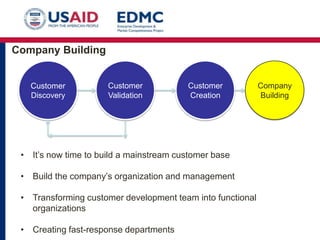
Company Building

Customer
Discovery

Customer
Validation

Customer
Creation

•

It’s now time to build a mainstream customer base

•

Build the company’s organization and management

•

Transforming customer development team into functional
organizations

•

Creating fast-response departments

Company
Building
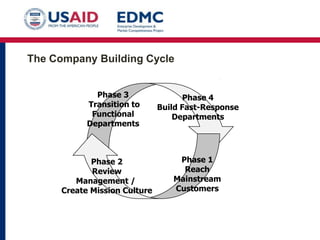
The Company Building Cycle
Phase 3
Transition to
Functional
Departments

Phase 2
Review
Management /
Create Mission Culture

Phase 4
Build Fast-Response
Departments

Phase 1
Reach
Mainstream
Customers
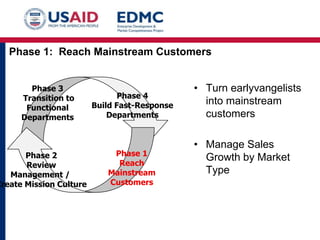
Phase 1: Reach Mainstream Customers
Phase 3
Transition to
Functional
Departments

Phase 2
Review
Management /
Create Mission Culture

Phase 4
Build Fast-Response
Departments

Phase 1
Reach
Mainstream
Customers

• Turn earlyvangelists
into mainstream
customers
• Manage Sales
Growth by Market
Type
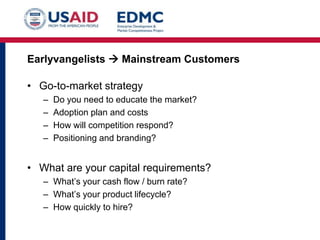
Earlyvangelists  Mainstream Customers

• Go-to-market strategy
–
–
–
–

Do you need to educate the market?
Adoption plan and costs
How will competition respond?
Positioning and branding?

• What are your capital requirements?
– What’s your cash flow / burn rate?
– What’s your product lifecycle?
– How quickly to hire?
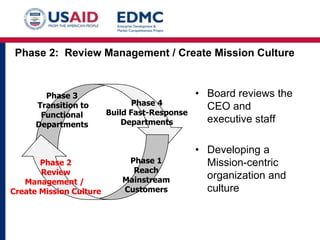
Phase 2: Review Management / Create Mission Culture

Phase 3
Transition to
Functional
Departments

Phase 2
Review
Management /
Create Mission Culture

Phase 4
Build Fast-Response
Departments

Phase 1
Reach
Mainstream
Customers

• Board reviews the
CEO and
executive staff
• Developing a
Mission-centric
organization and
culture
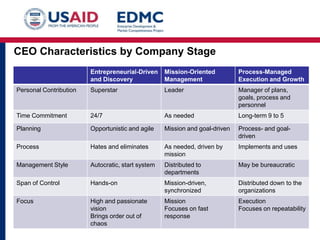
CEO Characteristics by Company Stage
Entrepreneurial-Driven
and Discovery

Mission-Oriented
Management

Process-Managed
Execution and Growth

Personal Contribution

Superstar

Leader

Manager of plans,
goals, process and
personnel

Time Commitment

24/7

As needed

Long-term 9 to 5

Planning

Opportunistic and agile

Mission and goal-driven

Process- and goaldriven

Process

Hates and eliminates

As needed, driven by
mission

Implements and uses

Management Style

Autocratic, start system

Distributed to
departments

May be bureaucratic

Span of Control

Hands-on

Mission-driven,
synchronized

Distributed down to the
organizations

Focus

High and passionate
vision
Brings order out of
chaos

Mission
Focuses on fast
response

Execution
Focuses on repeatability
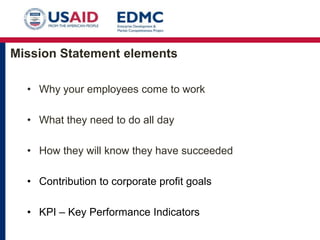
Mission Statement elements
• Why your employees come to work
• What they need to do all day
• How they will know they have succeeded
• Contribution to corporate profit goals
• KPI – Key Performance Indicators
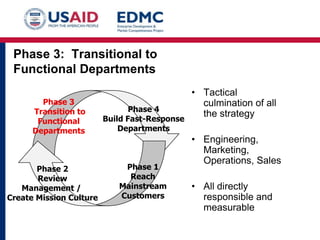
Phase 3: Transitional to
Functional Departments
Phase 3
Transition to
Functional
Departments

Phase 2
Review
Management /
Create Mission Culture

• Tactical
culmination of all
Phase 4
the strategy
Build Fast-Response
Departments

Phase 1
Reach
Mainstream
Customers

• Engineering,
Marketing,
Operations, Sales
• All directly
responsible and
measurable
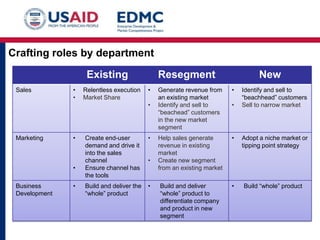
Crafting roles by department
Existing
Sales

•
•

Relentless execution
Market Share

Resegment
•
•

Marketing

•

•
Business
Development

•

Create end-user
demand and drive it
into the sales
channel
Ensure channel has
the tools

•

Build and deliver the
“whole” product

•

•

New

Generate revenue from
an existing market
Identify and sell to
“beachead” customers
in the new market
segment

•

Help sales generate
revenue in existing
market
Create new segment
from an existing market

•

Adopt a niche market or
tipping point strategy

Build and deliver
“whole” product to
differentiate company
and product in new
segment

•

Build “whole” product

•

Identify and sell to
“beachhead” customers
Sell to narrow market
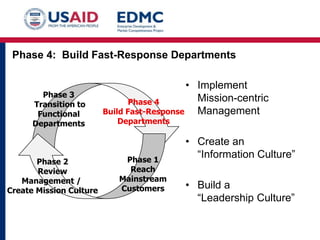
Phase 4: Build Fast-Response Departments

Phase 3
Transition to
Functional
Departments

Phase 2
Review
Management /
Create Mission Culture

• Implement
Mission-centric
Phase 4
Management
Build Fast-Response
Departments

Phase 1
Reach
Mainstream
Customers

• Create an
“Information Culture”
• Build a
“Leadership Culture”
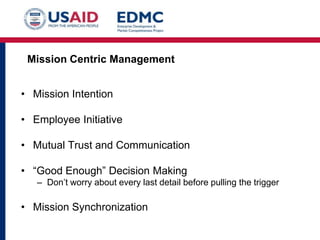
Mission Centric Management
• Mission Intention
• Employee Initiative

• Mutual Trust and Communication
• “Good Enough” Decision Making
– Don’t worry about every last detail before pulling the trigger

• Mission Synchronization
End Goals
• Growth beyond a startup into a sustainable company
• Alignment between management style and company
phase

• Understand your product life cycle
– Continue to set up new pods of innovation
– Keep using startup methodologies to refresh the company

• Congratulations on getting this far.
• Keep it going!
• Build a great company…!

6.1 company building

  • 1.
    Company Building Final ofthe Four Steps This presentation is made possible by the support of the American People through the United States Agency for International Development (USAID). The contents of this presentation are the sole responsibility of Rick Rasmussen and do not necessarily reflect the views of USAID or the United States Government.
  • 2.
    Company Building Customer Discovery Customer Validation Customer Creation • It’s nowtime to build a mainstream customer base • Build the company’s organization and management • Transforming customer development team into functional organizations • Creating fast-response departments Company Building
  • 3.
    The Company BuildingCycle Phase 3 Transition to Functional Departments Phase 2 Review Management / Create Mission Culture Phase 4 Build Fast-Response Departments Phase 1 Reach Mainstream Customers
  • 4.
    Phase 1: ReachMainstream Customers Phase 3 Transition to Functional Departments Phase 2 Review Management / Create Mission Culture Phase 4 Build Fast-Response Departments Phase 1 Reach Mainstream Customers • Turn earlyvangelists into mainstream customers • Manage Sales Growth by Market Type
  • 5.
    Earlyvangelists  MainstreamCustomers • Go-to-market strategy – – – – Do you need to educate the market? Adoption plan and costs How will competition respond? Positioning and branding? • What are your capital requirements? – What’s your cash flow / burn rate? – What’s your product lifecycle? – How quickly to hire?
  • 6.
    Phase 2: ReviewManagement / Create Mission Culture Phase 3 Transition to Functional Departments Phase 2 Review Management / Create Mission Culture Phase 4 Build Fast-Response Departments Phase 1 Reach Mainstream Customers • Board reviews the CEO and executive staff • Developing a Mission-centric organization and culture
  • 7.
    CEO Characteristics byCompany Stage Entrepreneurial-Driven and Discovery Mission-Oriented Management Process-Managed Execution and Growth Personal Contribution Superstar Leader Manager of plans, goals, process and personnel Time Commitment 24/7 As needed Long-term 9 to 5 Planning Opportunistic and agile Mission and goal-driven Process- and goaldriven Process Hates and eliminates As needed, driven by mission Implements and uses Management Style Autocratic, start system Distributed to departments May be bureaucratic Span of Control Hands-on Mission-driven, synchronized Distributed down to the organizations Focus High and passionate vision Brings order out of chaos Mission Focuses on fast response Execution Focuses on repeatability
  • 8.
    Mission Statement elements •Why your employees come to work • What they need to do all day • How they will know they have succeeded • Contribution to corporate profit goals • KPI – Key Performance Indicators
  • 9.
    Phase 3: Transitionalto Functional Departments Phase 3 Transition to Functional Departments Phase 2 Review Management / Create Mission Culture • Tactical culmination of all Phase 4 the strategy Build Fast-Response Departments Phase 1 Reach Mainstream Customers • Engineering, Marketing, Operations, Sales • All directly responsible and measurable
  • 10.
    Crafting roles bydepartment Existing Sales • • Relentless execution Market Share Resegment • • Marketing • • Business Development • Create end-user demand and drive it into the sales channel Ensure channel has the tools • Build and deliver the “whole” product • • New Generate revenue from an existing market Identify and sell to “beachead” customers in the new market segment • Help sales generate revenue in existing market Create new segment from an existing market • Adopt a niche market or tipping point strategy Build and deliver “whole” product to differentiate company and product in new segment • Build “whole” product • Identify and sell to “beachhead” customers Sell to narrow market
  • 11.
    Phase 4: BuildFast-Response Departments Phase 3 Transition to Functional Departments Phase 2 Review Management / Create Mission Culture • Implement Mission-centric Phase 4 Management Build Fast-Response Departments Phase 1 Reach Mainstream Customers • Create an “Information Culture” • Build a “Leadership Culture”
  • 12.
    Mission Centric Management •Mission Intention • Employee Initiative • Mutual Trust and Communication • “Good Enough” Decision Making – Don’t worry about every last detail before pulling the trigger • Mission Synchronization
  • 13.
    End Goals • Growthbeyond a startup into a sustainable company • Alignment between management style and company phase • Understand your product life cycle – Continue to set up new pods of innovation – Keep using startup methodologies to refresh the company • Congratulations on getting this far. • Keep it going! • Build a great company…!