Preparing to Sell?
Topics and Tips for a Successful
Transition
Presented By
Kurt M. Trimarchi, CPA, CM&AA – Managing Partner
David B. Blain, CPA, CVA - Partner
Kurt Trimarchi
• CPA, CM&AA
• Managing Partner
• ktrimarchi@macpas.com
David Blain
• CPA, CVA
• Partner
• dblain@macpas.com
About Us
WebinarAgenda
This webinar will focus on key concepts in planning and
preparing for a business transition.
The webinar will focus on addressing:
• Preliminary planning and preparation for transition.
• Understanding business value.
• Tax consequences and tax structuring matters.
• Pitfalls to avoid and be aware of.
• Other unintended consequences.
Begin With The End In Mind
What should you do in advance of selling your
business?
•Financial Reporting
•Team
•Valuation
•Structure
Team
1. Third Party Support – Business/Transaction Advisory,
Attorney, CPA/CVA.
2. Internal Team – Senior management, key operations
personnel, finance/accounting.
3. Other Trusted Advisors
Having the right team of professionals is key
to a successful transition.
Financial Reporting
1. Review Financial Reporting Dept. and Internal Control
Environment.
2. Consider an Audit (especially for financial buyer).
3. Quality of Earnings – EBITDA and Cash Flow.
Cash Flow
• Usually defined as Free Available Cash after all expenses
have been paid.
• Expenses would include all operating expenses including
taxes, interest on debt and capital requirements.
• Free cash flow does not include depreciation and
amortization – non-cash items.
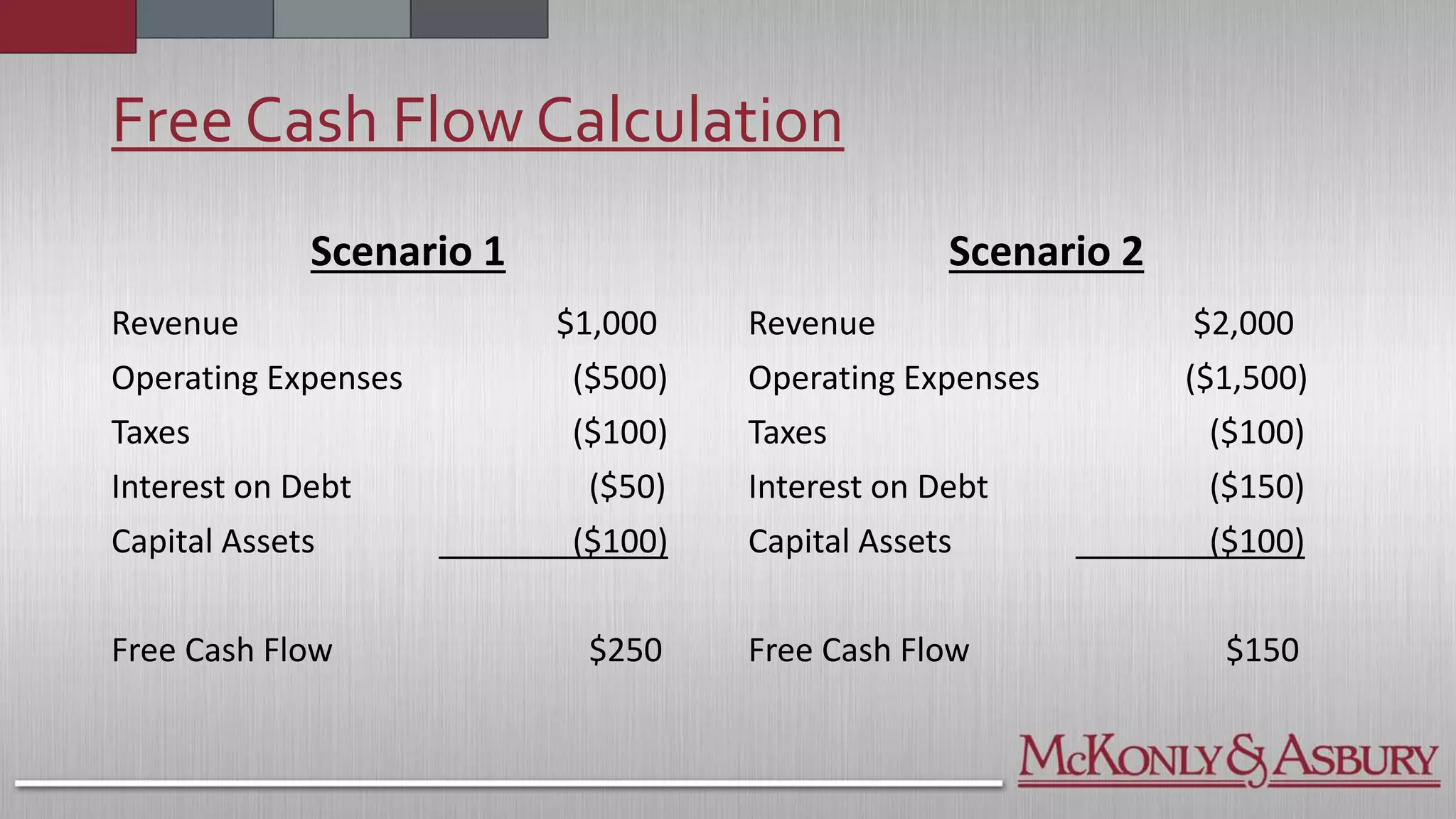
Free Cash Flow Calculation
Scenario 1
Revenue $1,000
Operating Expenses ($500)
Taxes ($100)
Interest on Debt ($50)
Capital Assets ($100)
Free Cash Flow $250
Scenario 2
Revenue $2,000
Operating Expenses ($1,500)
Taxes ($100)
Interest on Debt ($150)
Capital Assets ($100)
Free Cash Flow $150
Cash Flow Analysis
• From the valuators perspective, scenario 1 provides more
value – More free available cash from that business model.
• Value could be impacted by discount rates but overall the
free cash flow drives value.
CASH IS STILL KING
Valuation Consideration
What is BusinessValuation?
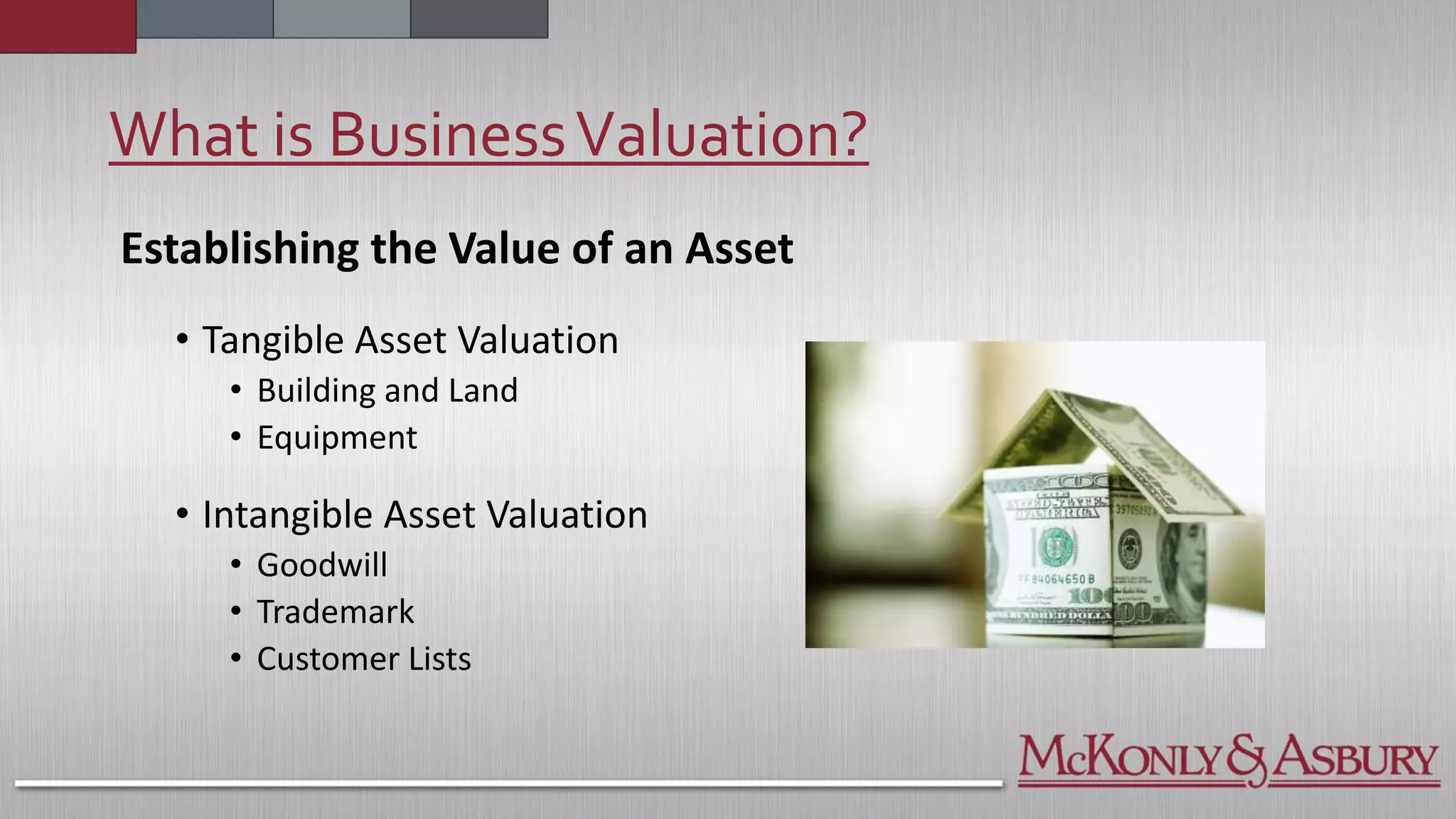
Establishing the Value of an Asset
• Tangible Asset Valuation
• Building and Land
• Equipment
• Intangible Asset Valuation
• Goodwill
• Trademark
• Customer Lists
Asset Approach
• Adjust assets and liabilities to Fair Market Value.
MarketApproach
• Comparable transaction data.
Income Methods
• Capitalization of benefits method -- if stable.
• Cash flow/ EBITDA
• Benefits = cash flow
• Discounted future benefits -- when earnings are not stable.
Pre-Sale Ownership Structure Review
1. Review Current Ownership Structure for Planning
Opportunities and Risk Management
(Jurisdiction Shifting and Valid S Election)
2. Review Entity Type
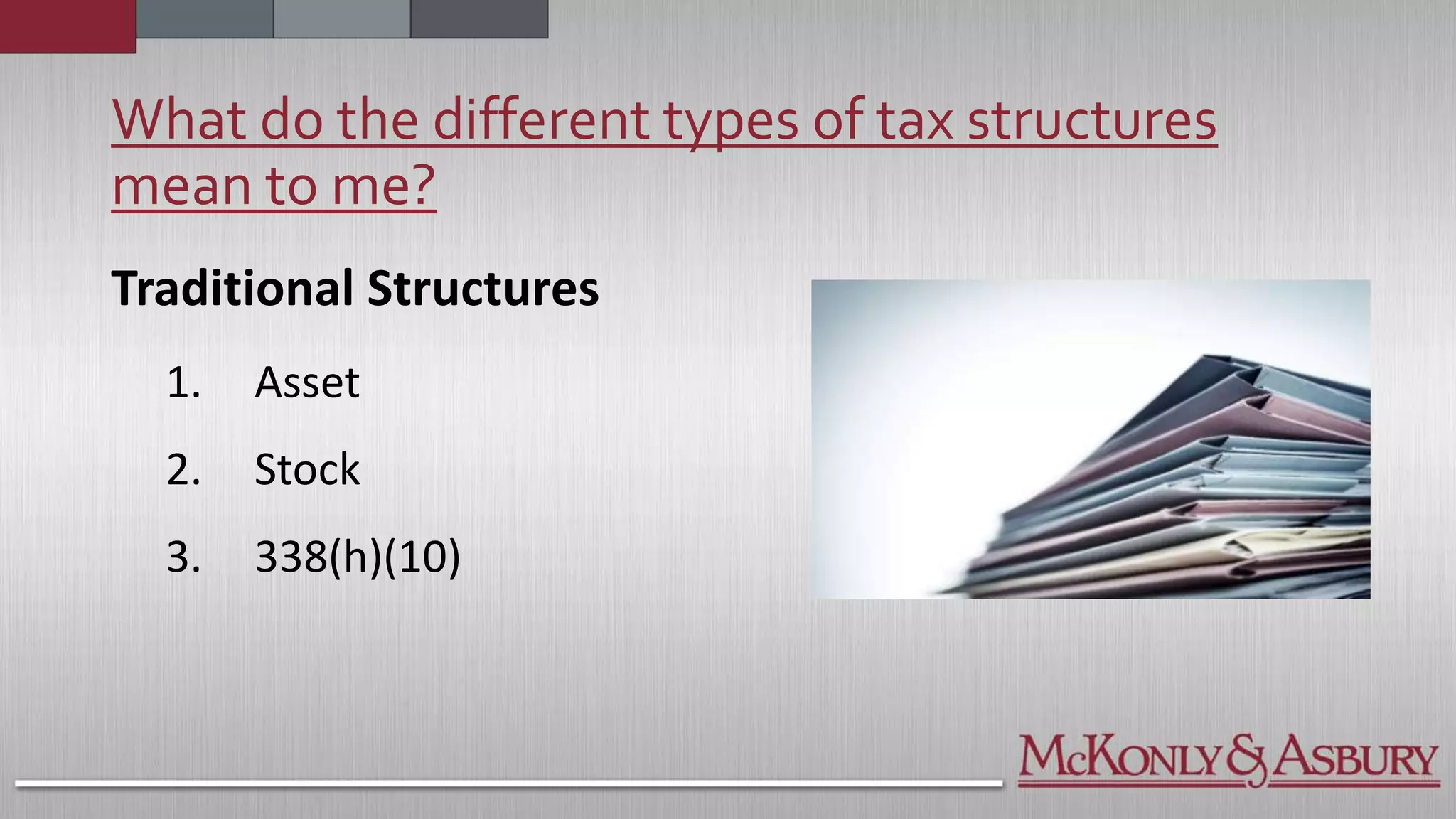
What do the different types of tax structures
mean to me?
Traditional Structures
1. Asset
2. Stock
3. 338(h)(10)
TransitionWithin the Family
1. GRAT
2. IDGT
3. IDBT
4. GIFT
Pitfalls and Consequences
• Be honest about your business.
• Use highly qualified professionals.
• Communicate, communicate, communicate.
• Begin with the End in mind.
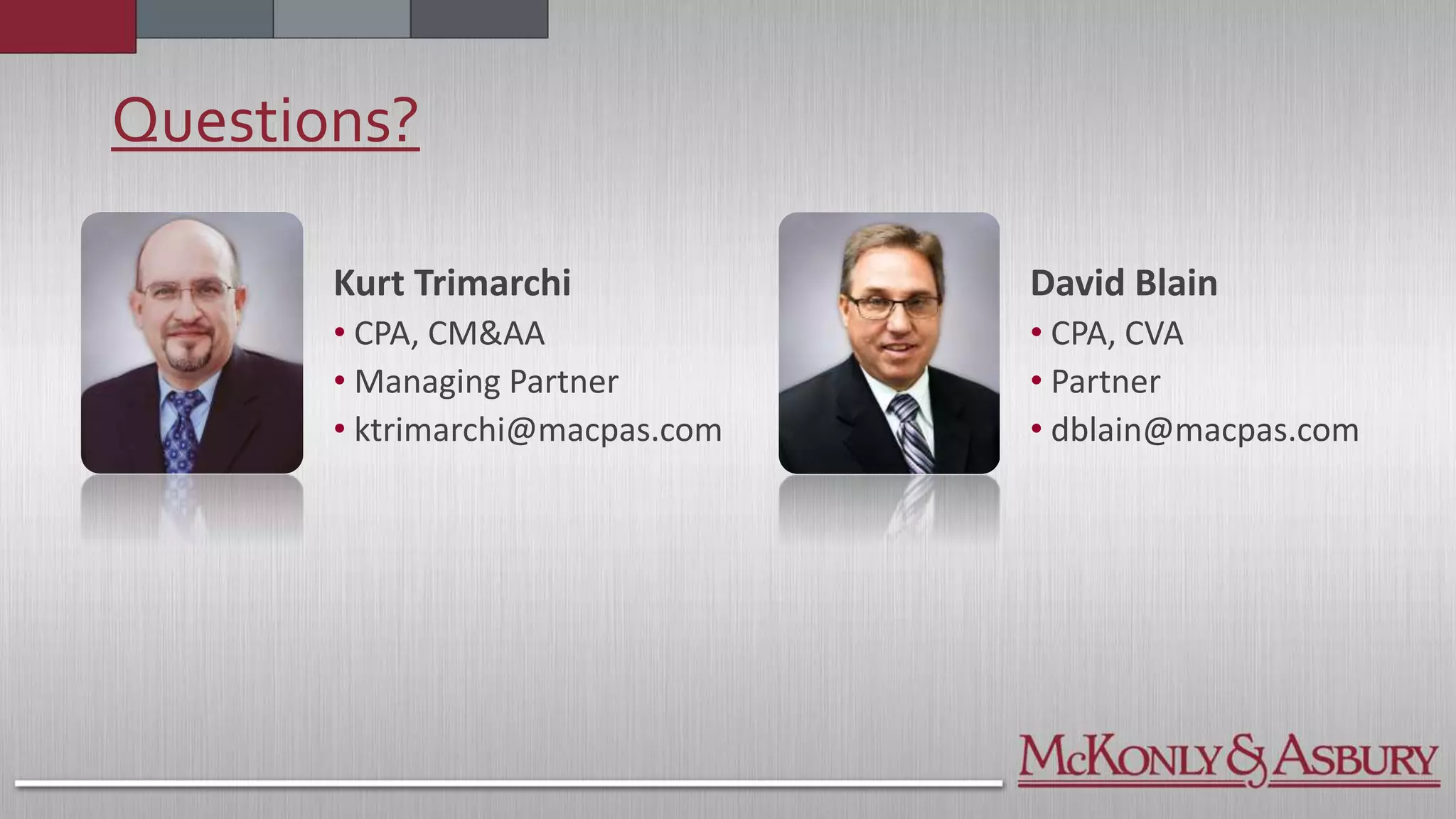
Kurt Trimarchi
• CPA, CM&AA
• Managing Partner
• ktrimarchi@macpas.com
David Blain
• CPA, CVA
• Partner
• dblain@macpas.com
Questions?
Building Successful
Employee Relationships
A Cornerstone to Fraud Prevention
and Risk Management

Preparing to Buy or Sell? Topics and Tips for a Successful Transition

  • 1.
    Preparing to Sell? Topicsand Tips for a Successful Transition Presented By Kurt M. Trimarchi, CPA, CM&AA – Managing Partner David B. Blain, CPA, CVA - Partner
  • 2.
    Kurt Trimarchi • CPA,CM&AA • Managing Partner • ktrimarchi@macpas.com David Blain • CPA, CVA • Partner • dblain@macpas.com About Us
  • 3.
    WebinarAgenda This webinar willfocus on key concepts in planning and preparing for a business transition. The webinar will focus on addressing: • Preliminary planning and preparation for transition. • Understanding business value. • Tax consequences and tax structuring matters. • Pitfalls to avoid and be aware of. • Other unintended consequences.
  • 4.
    Begin With TheEnd In Mind
  • 5.
    What should youdo in advance of selling your business? •Financial Reporting •Team •Valuation •Structure
  • 6.
    Team 1. Third PartySupport – Business/Transaction Advisory, Attorney, CPA/CVA. 2. Internal Team – Senior management, key operations personnel, finance/accounting. 3. Other Trusted Advisors Having the right team of professionals is key to a successful transition.
  • 7.
    Financial Reporting 1. ReviewFinancial Reporting Dept. and Internal Control Environment. 2. Consider an Audit (especially for financial buyer). 3. Quality of Earnings – EBITDA and Cash Flow.
  • 8.
    Cash Flow • Usuallydefined as Free Available Cash after all expenses have been paid. • Expenses would include all operating expenses including taxes, interest on debt and capital requirements. • Free cash flow does not include depreciation and amortization – non-cash items.
  • 9.
    Free Cash FlowCalculation Scenario 1 Revenue $1,000 Operating Expenses ($500) Taxes ($100) Interest on Debt ($50) Capital Assets ($100) Free Cash Flow $250 Scenario 2 Revenue $2,000 Operating Expenses ($1,500) Taxes ($100) Interest on Debt ($150) Capital Assets ($100) Free Cash Flow $150
  • 10.
    Cash Flow Analysis •From the valuators perspective, scenario 1 provides more value – More free available cash from that business model. • Value could be impacted by discount rates but overall the free cash flow drives value. CASH IS STILL KING
  • 11.
  • 12.
    What is BusinessValuation? Establishingthe Value of an Asset • Tangible Asset Valuation • Building and Land • Equipment • Intangible Asset Valuation • Goodwill • Trademark • Customer Lists
  • 13.
    Asset Approach • Adjustassets and liabilities to Fair Market Value.
  • 14.
  • 15.
    Income Methods • Capitalizationof benefits method -- if stable. • Cash flow/ EBITDA • Benefits = cash flow • Discounted future benefits -- when earnings are not stable.
  • 16.
    Pre-Sale Ownership StructureReview 1. Review Current Ownership Structure for Planning Opportunities and Risk Management (Jurisdiction Shifting and Valid S Election) 2. Review Entity Type
  • 17.
    What do thedifferent types of tax structures mean to me? Traditional Structures 1. Asset 2. Stock 3. 338(h)(10)
  • 18.
    TransitionWithin the Family 1.GRAT 2. IDGT 3. IDBT 4. GIFT
  • 19.
    Pitfalls and Consequences •Be honest about your business. • Use highly qualified professionals. • Communicate, communicate, communicate. • Begin with the End in mind.
  • 20.
    Kurt Trimarchi • CPA,CM&AA • Managing Partner • ktrimarchi@macpas.com David Blain • CPA, CVA • Partner • dblain@macpas.com Questions?
  • 21.
    Building Successful Employee Relationships ACornerstone to Fraud Prevention and Risk Management