Development Services 
vs. 
A Product Business 
This presentation is made possible by the support of the American People through the United States Agency 
for International Development (USAID). The contents of this presentation are the sole responsibility of Rick 
Rasmussen and do not necessarily reflect the views of USAID or the United States Government.
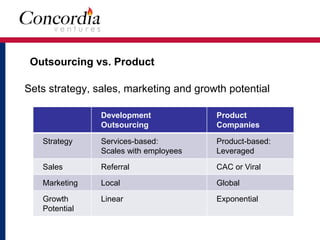
Outsourcing vs. Product 
Sets strategy, sales, marketing and growth potential 
Development 
Outsourcing 
Product 
Companies 
Strategy Services-based: 
Scales with employees 
Product-based: 
Leveraged 
Sales Referral CAC or Viral 
Marketing Local Global 
Growth 
Potential 
Linear Exponential
History of the Outsourcing Economy 
• Traditionally corporations owned, managed and directly 
controlled all of its assets and processes 
• 1950s and 1960s: Diversification 
• 1970s and 1980s: Organizations found that diversification 
bloated their management structures. 
• Outsourcing became a way to offset corporate bloat 
• Shifting focus back to their core processes 
– Handed off non-critical (non-core) procedures 
– Managed by third parties.
Reasons for Outsourcing 
• Headcount and cost reductions 
• Focusing on core competencies. 
• Gaining access to world-class capabilities 
• Freeing resources for internal R&D 
• Sharing risks and costs with a partner
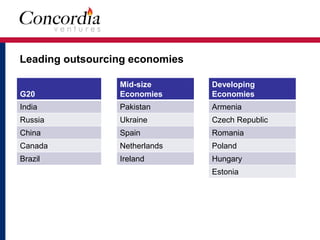
Leading outsourcing economies 
G20 
India 
Russia 
China 
Canada 
Brazil 
Mid-size 
Economies 
Pakistan 
Ukraine 
Spain 
Netherlands 
Ireland 
Developing 
Economies 
Armenia 
Czech Republic 
Romania 
Poland 
Hungary 
Estonia
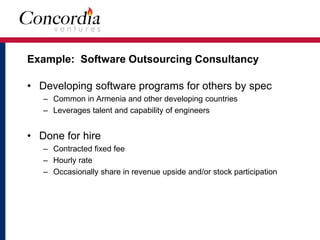
Example: Software Outsourcing Consultancy 
• Developing software programs for others by spec 
– Common in Armenia and other developing countries 
– Leverages talent and capability of engineers 
• Done for hire 
– Contracted fixed fee 
– Hourly rate 
– Occasionally share in revenue upside and/or stock participation
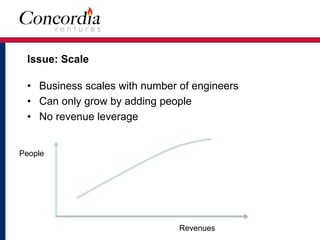
Issue: Scale 
• Business scales with number of engineers 
• Can only grow by adding people 
• No revenue leverage 
People 
Revenues
Outsourcing 
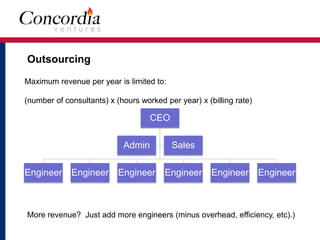
Maximum revenue per year is limited to: 
(number of consultants) x (hours worked per year) x (billing rate) 
CEO 
Admin Sales 
Engineer Engineer Engineer Engineer Engineer Engineer 
More revenue? Just add more engineers (minus overhead, efficiency, etc).)
Building an Outsourcing Business 
• Find revenues immediately and stay profitable 
• Deal flow and sustainable customers 
• If capital is needed 
– Bank loans based on: 
• Revenues 
• Cash flow 
• Accounts receivable 
– Government grants 
• Programs to encourage employment 
• Tax breaks 
• Free enterprise zones 
• A good “family business” that will likely never exit
Product-based Business 
• Using risk capital to develop a product or service 
• High risk and potentially high reward 
• Works on the principle of leverage 
– “Develop once, sell many” 
– Product can be delivered to multiple customers with 
sufficient resources 
• Perseverance and planning is required
Product-based businesses are Scalable 
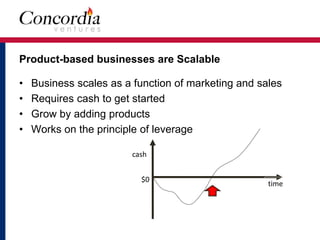
• Business scales as a function of marketing and sales 
• Requires cash to get started 
• Grow by adding products 
• Works on the principle of leverage 
$0 
time 
cash
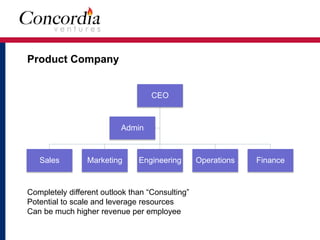
Product Company 
CEO 
Admin 
Sales Marketing Engineering Operations Finance 
Completely different outlook than “Consulting” 
Potential to scale and leverage resources 
Can be much higher revenue per employee
Financing a Product Business 
• Seed fund through other projects or through Friends & Family 
• Develop Minimum Viable Product (MVP) and engage with 
customers 
• Identify areas of traction and validate your business model 
• Seek sources of capital from risk-takers 
– Accelerators 
– Angel Investors 
– Government grants 
• Programs to encourage employment 
• Tax breaks 
• Free enterprise zones 
– Venture Capitalists 
– Corporate Ventures 
• With work, you stand a good chance to make money and scale

1.4 outsourcing vs. product

  • 1.
    Development Services vs. A Product Business This presentation is made possible by the support of the American People through the United States Agency for International Development (USAID). The contents of this presentation are the sole responsibility of Rick Rasmussen and do not necessarily reflect the views of USAID or the United States Government.
  • 2.
    Outsourcing vs. Product Sets strategy, sales, marketing and growth potential Development Outsourcing Product Companies Strategy Services-based: Scales with employees Product-based: Leveraged Sales Referral CAC or Viral Marketing Local Global Growth Potential Linear Exponential
  • 3.
    History of theOutsourcing Economy • Traditionally corporations owned, managed and directly controlled all of its assets and processes • 1950s and 1960s: Diversification • 1970s and 1980s: Organizations found that diversification bloated their management structures. • Outsourcing became a way to offset corporate bloat • Shifting focus back to their core processes – Handed off non-critical (non-core) procedures – Managed by third parties.
  • 4.
    Reasons for Outsourcing • Headcount and cost reductions • Focusing on core competencies. • Gaining access to world-class capabilities • Freeing resources for internal R&D • Sharing risks and costs with a partner
  • 6.
    Leading outsourcing economies G20 India Russia China Canada Brazil Mid-size Economies Pakistan Ukraine Spain Netherlands Ireland Developing Economies Armenia Czech Republic Romania Poland Hungary Estonia
  • 7.
    Example: Software OutsourcingConsultancy • Developing software programs for others by spec – Common in Armenia and other developing countries – Leverages talent and capability of engineers • Done for hire – Contracted fixed fee – Hourly rate – Occasionally share in revenue upside and/or stock participation
  • 8.
    Issue: Scale •Business scales with number of engineers • Can only grow by adding people • No revenue leverage People Revenues
  • 9.
    Outsourcing Maximum revenueper year is limited to: (number of consultants) x (hours worked per year) x (billing rate) CEO Admin Sales Engineer Engineer Engineer Engineer Engineer Engineer More revenue? Just add more engineers (minus overhead, efficiency, etc).)
  • 10.
    Building an OutsourcingBusiness • Find revenues immediately and stay profitable • Deal flow and sustainable customers • If capital is needed – Bank loans based on: • Revenues • Cash flow • Accounts receivable – Government grants • Programs to encourage employment • Tax breaks • Free enterprise zones • A good “family business” that will likely never exit
  • 11.
    Product-based Business •Using risk capital to develop a product or service • High risk and potentially high reward • Works on the principle of leverage – “Develop once, sell many” – Product can be delivered to multiple customers with sufficient resources • Perseverance and planning is required
  • 12.
    Product-based businesses areScalable • Business scales as a function of marketing and sales • Requires cash to get started • Grow by adding products • Works on the principle of leverage $0 time cash
  • 13.
    Product Company CEO Admin Sales Marketing Engineering Operations Finance Completely different outlook than “Consulting” Potential to scale and leverage resources Can be much higher revenue per employee
  • 14.
    Financing a ProductBusiness • Seed fund through other projects or through Friends & Family • Develop Minimum Viable Product (MVP) and engage with customers • Identify areas of traction and validate your business model • Seek sources of capital from risk-takers – Accelerators – Angel Investors – Government grants • Programs to encourage employment • Tax breaks • Free enterprise zones – Venture Capitalists – Corporate Ventures • With work, you stand a good chance to make money and scale