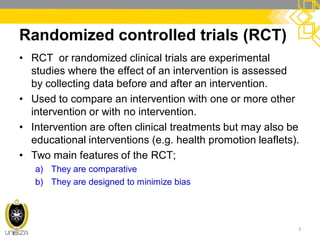
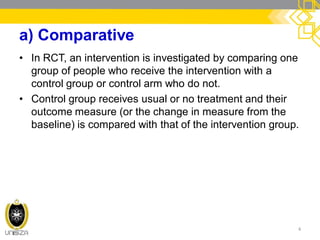
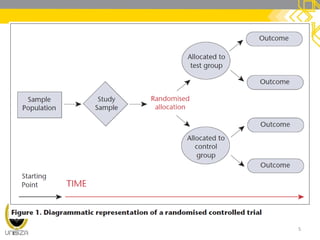
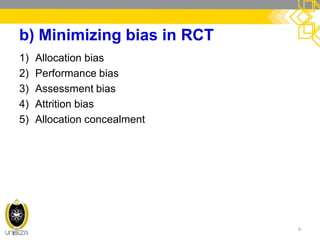
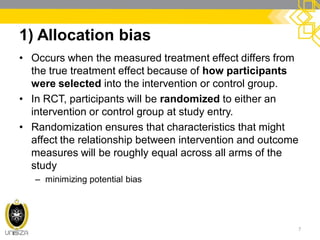
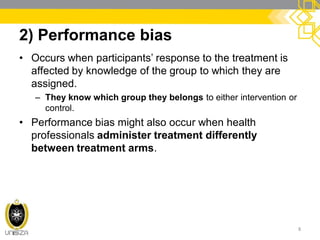
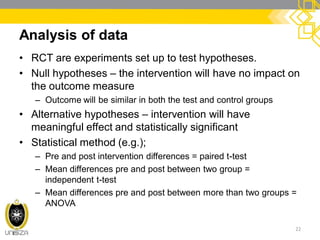
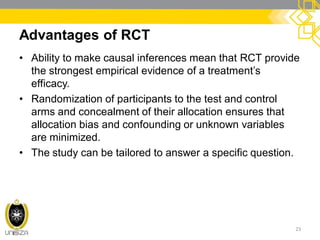
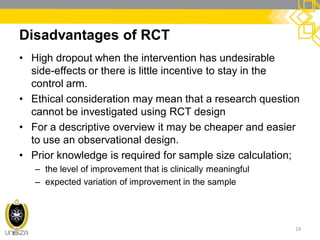
Randomized controlled trials (RCTs) are experimental studies that assess the effect of an intervention by comparing outcomes between those who receive the intervention and a control group. RCTs minimize bias by randomly assigning participants to groups and concealing group assignments. Key factors in RCTs include sufficient sample size, stratified randomization to balance groups, blinding participants and assessors, and accounting for attrition. RCTs allow for causal inferences but have disadvantages like difficulty with some ethical questions and dropout.




![Hypothalamus short ppt by Dr. Neha [PT].pptx](https://cdn.slidesharecdn.com/ss_thumbnails/hypothalamusbydr-260124145759-b9f94a93-thumbnail.jpg?width=640&height=640&fit=bounds)


