BIAS IN CLINICAL RESEARCH
Dr. V.Sathyanarayanan M.B.B.S., M.D.
Professor of Pharmacology, SRM MCH & RC,
Kattankulathur, TAMIL NADU, INDIA
 Introduction and Definition of bias
 Where bias can happen?
 When bias can happen?
 Sources of bias
 Classification of bias
 Types of bias and measures to minimize bias
 Confounding
 Internal validity and external validity
 Summary
 Case scenarios
OUTLINE
INTRODUCTION
 Bias is a fundamental concept in epidemiology
 It is defined as ‘deviation of results or inferences from
the truth , or processes leading to such deviation’
- Grimes and Schulz, 2002
 It is the result of errors  not random but systematic
 results invalid
 Results mainly from faulty design
 study design or
 data collection,
 in the process of data analysis
 and publication
WHERE BIAS CAN HAPPEN?
systematic error [is] introduced into
sampling or testing by selecting or
encouraging one outcome or answer
over others
WHEN BIAS CAN HAPPEN ?
WHO classification
 Selection bias
 Occurs from the manner in which study population is
selected
 Most common type of bias in health research
 Seen in observational and analytical studies
 Ascertainment or information bias
 Occurs due to measurement error or misclassification of
subjects according to one or more variables
BIAS PRIOR TO STUDY/TRIAL
 Selection bias may occur during identification of the
study population
 The ideal study population is
 clearly defined,
 accessible,
 reliable, and
 at increased risk to develop the outcome of interest.
SELECTION BIAS
 when the criteria used to recruit and enrol
patients into separate study cohorts are
inherently different.
 Error introduced when the study population
does not include the target population
SELECTION BIAS
 This can be a particular problem with case-control
and retrospective cohort studies
 Prospective studies (particularly randomized, controlled
trials) are less prone
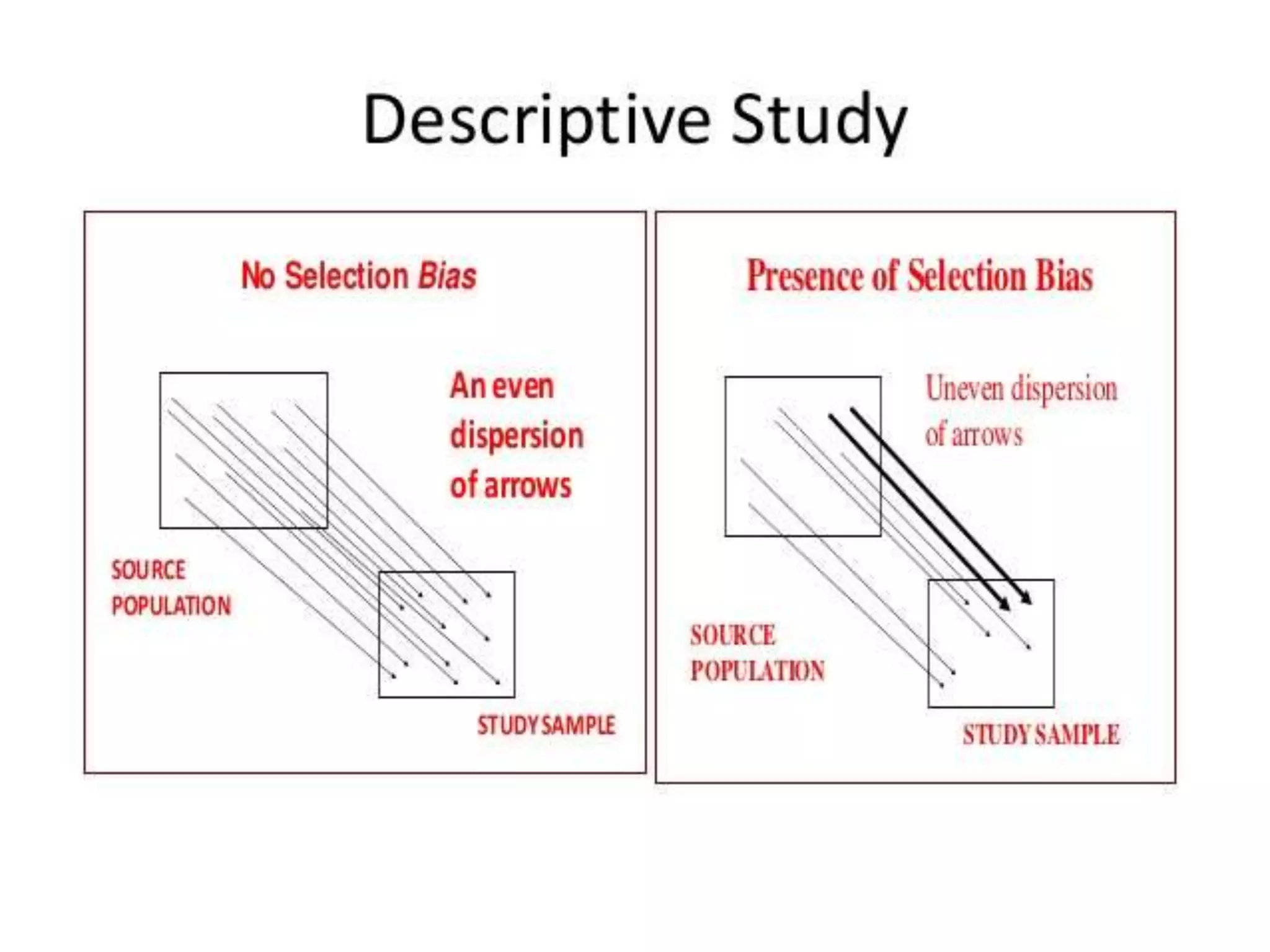
WHERE SELECTION BIAS HAPPENS?
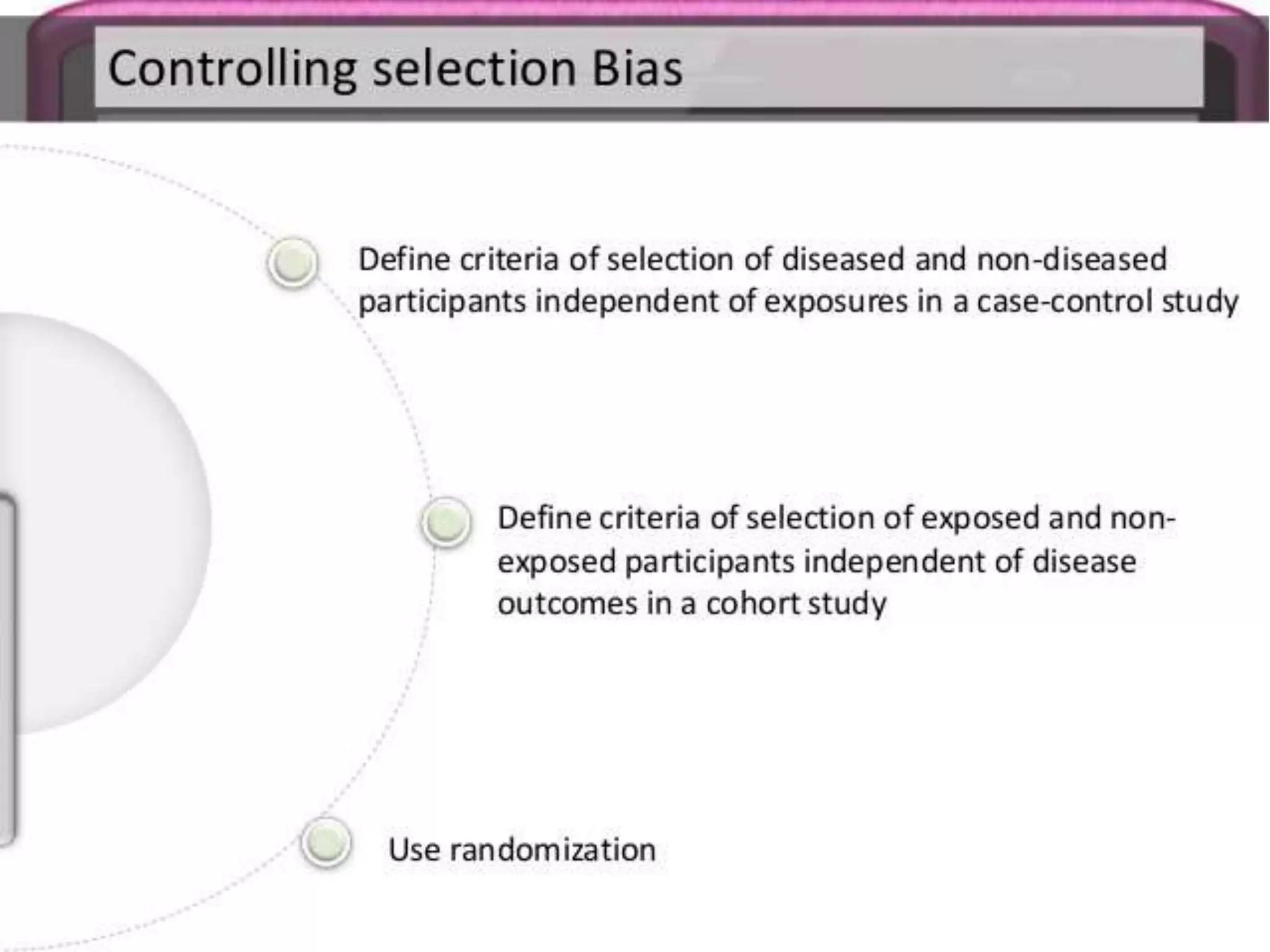
How to reduce selection bias?
 The study population should be clearly identified i.e. clear
definition of study population.
 The choice of the right comparison/ reference group
(unexposed or controls) is crucial
 In a cohort study:
 exposed and unexposed groups should be identical but for
the exposure
How to reduce selection bias?
 In a clinical trial:
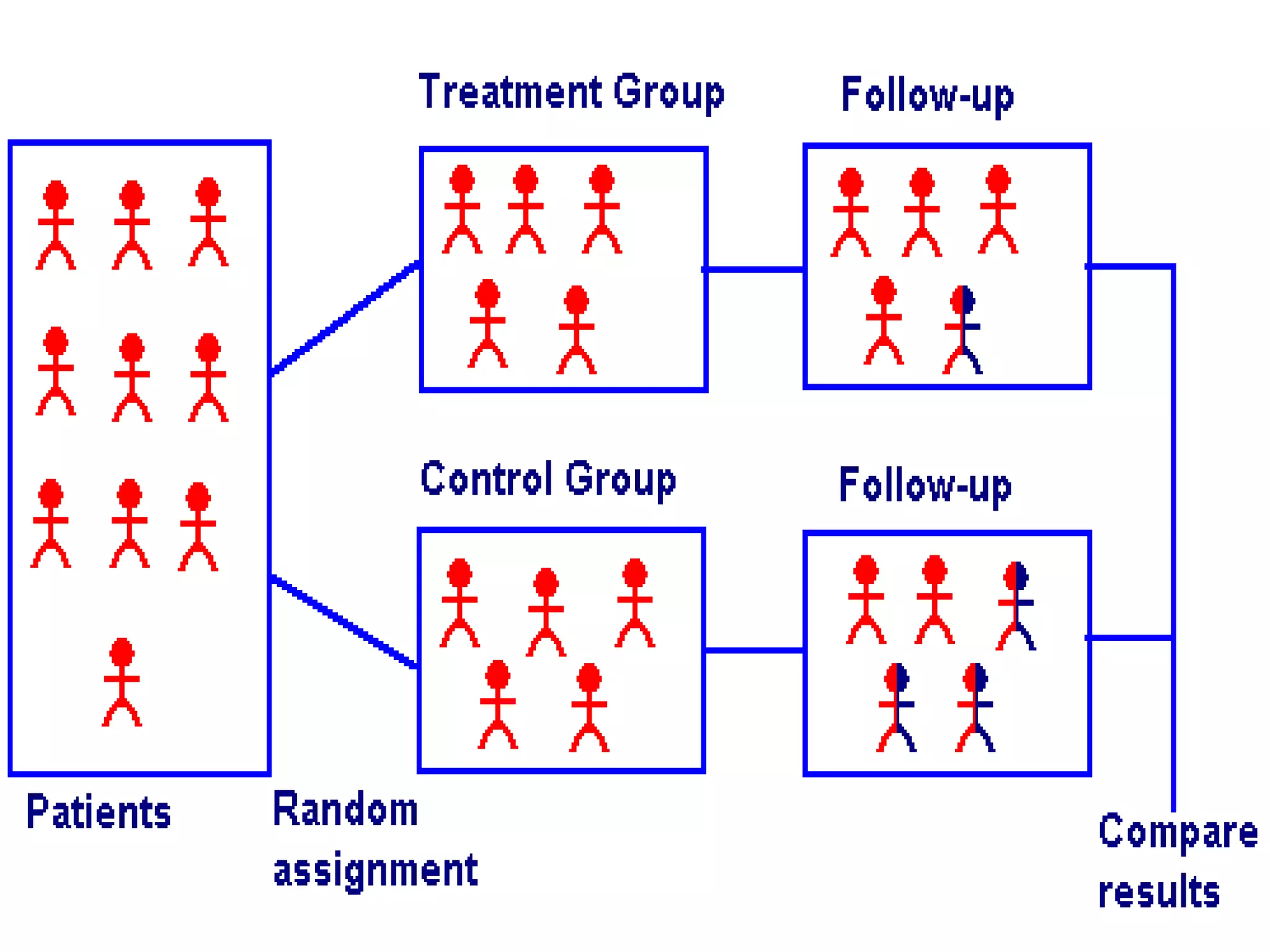
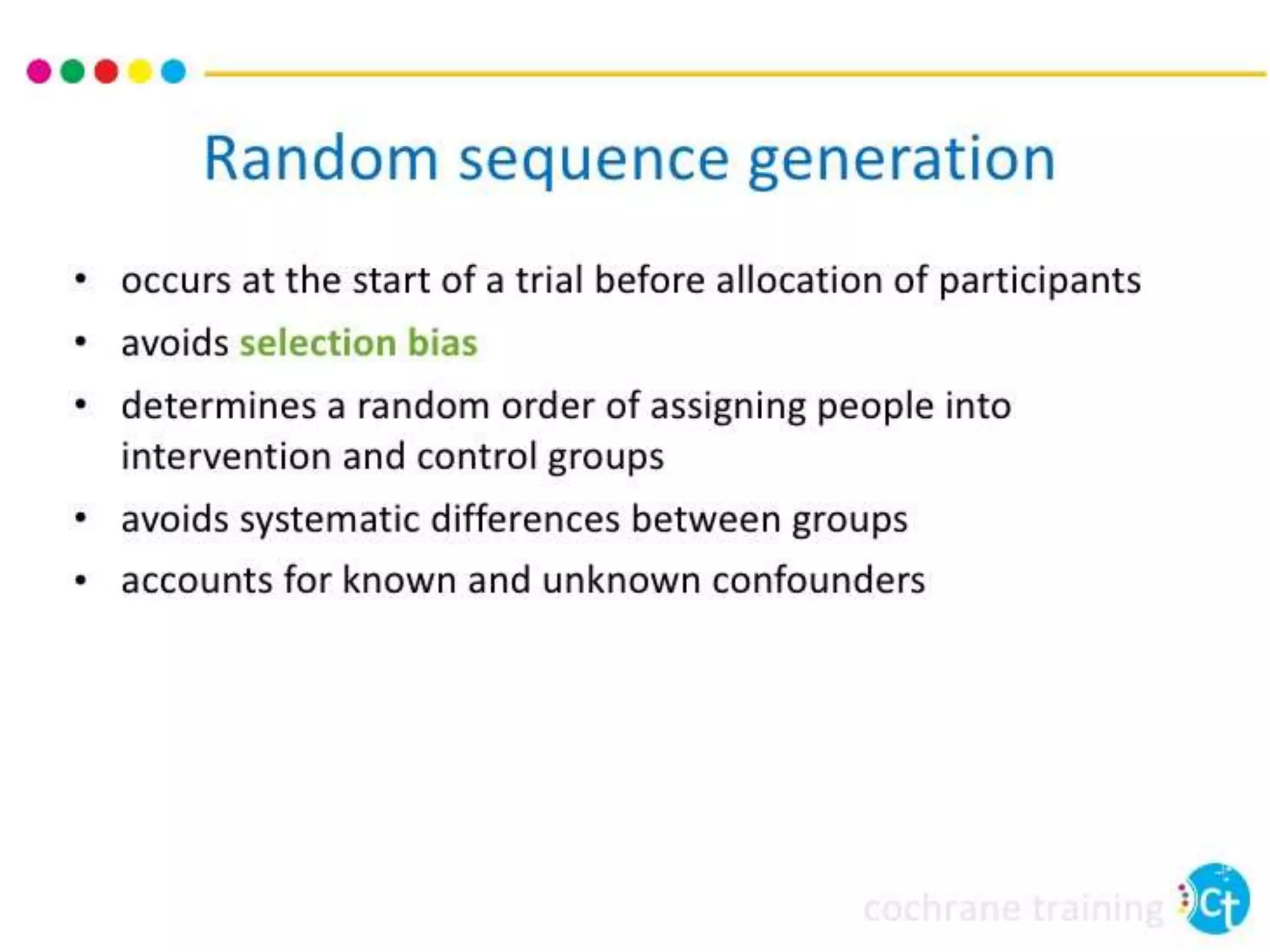
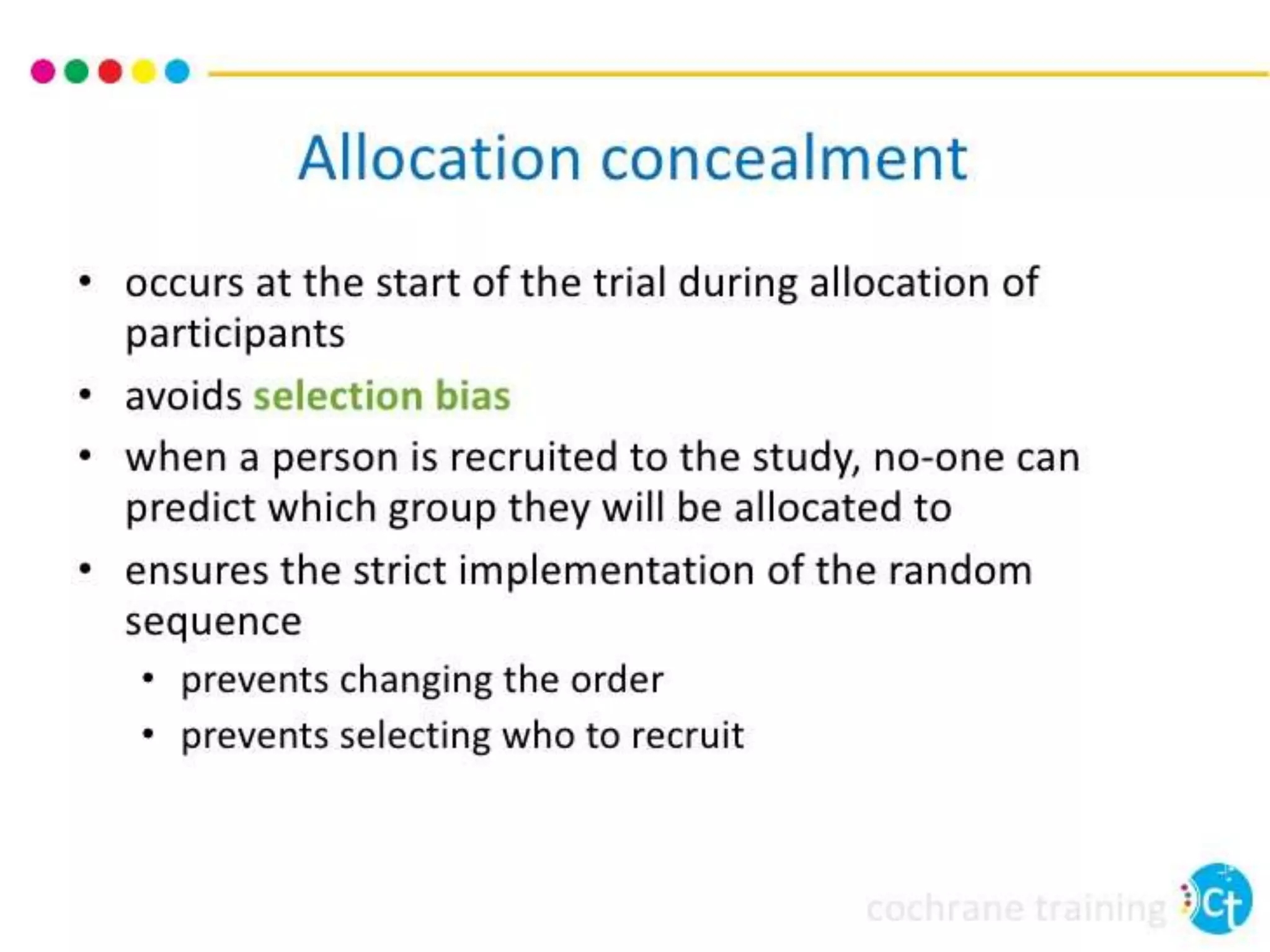
 Randomization and allocation concealment
from the investigator
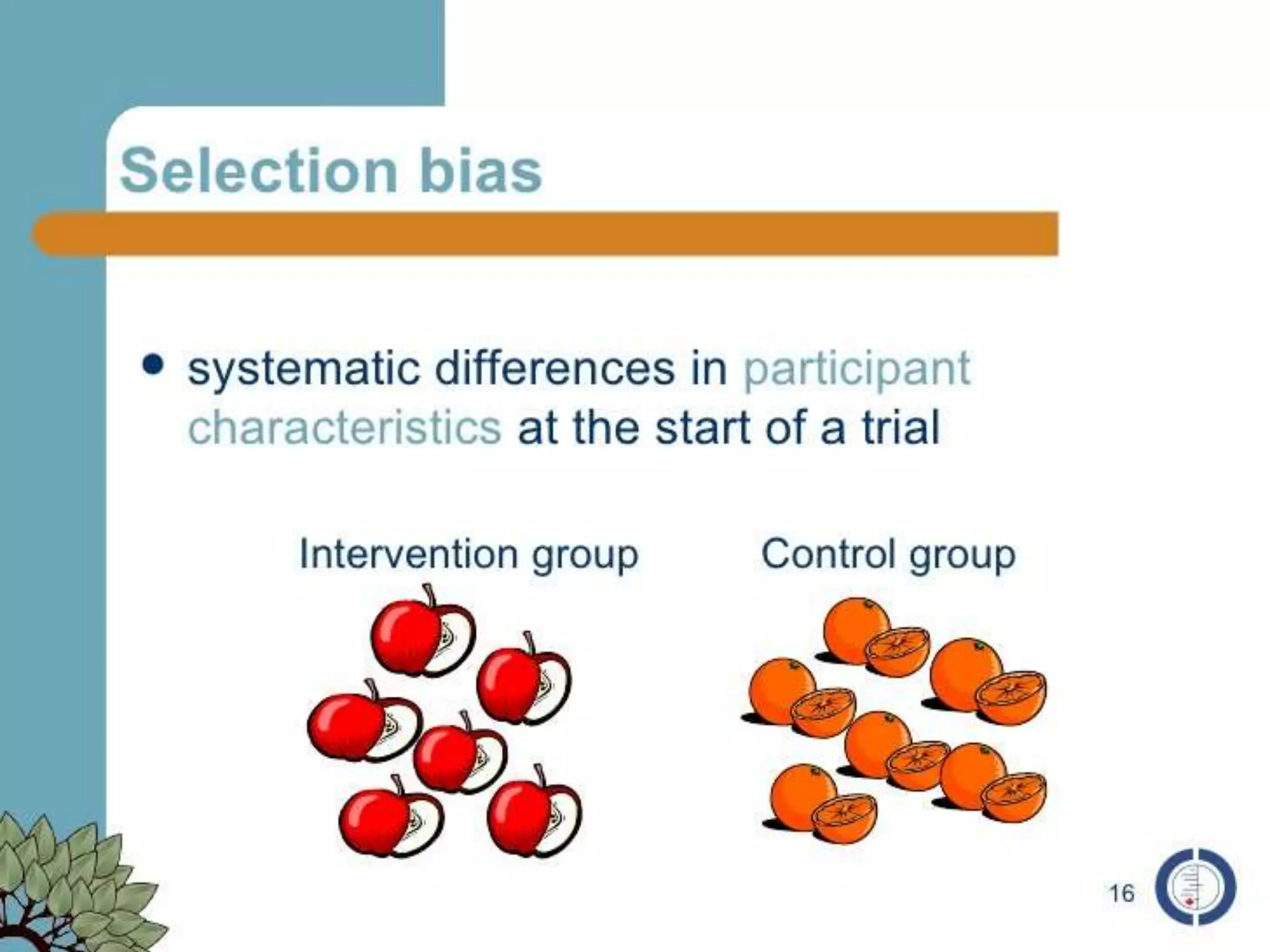
 This bias is more likely in non-randomized trials when
patient assignment to groups is performed by medical
personnel
 Channelling bias occurs when patient prognostic factors
or degree of illness dictates the study cohort into which
patients are placed.
 Channelling bias is commonly seen in pharmaceutical
trials comparing old and new drugs to one another
CHANNELLING BIAS
BIAS DURING THE STUDY
 bias occurs in the measurement of an exposure or
outcome.
 Thus, the information obtained and recorded from
patients in different study groups is unequal in some way
 Many subtypes of information bias can occur
Information bias
 interviewer bias
 chronology bias
 recall bias
 patient loss to follow-up
 bias from misclassification of patients
 performance bias
TYPES OF INFORMATION BIAS
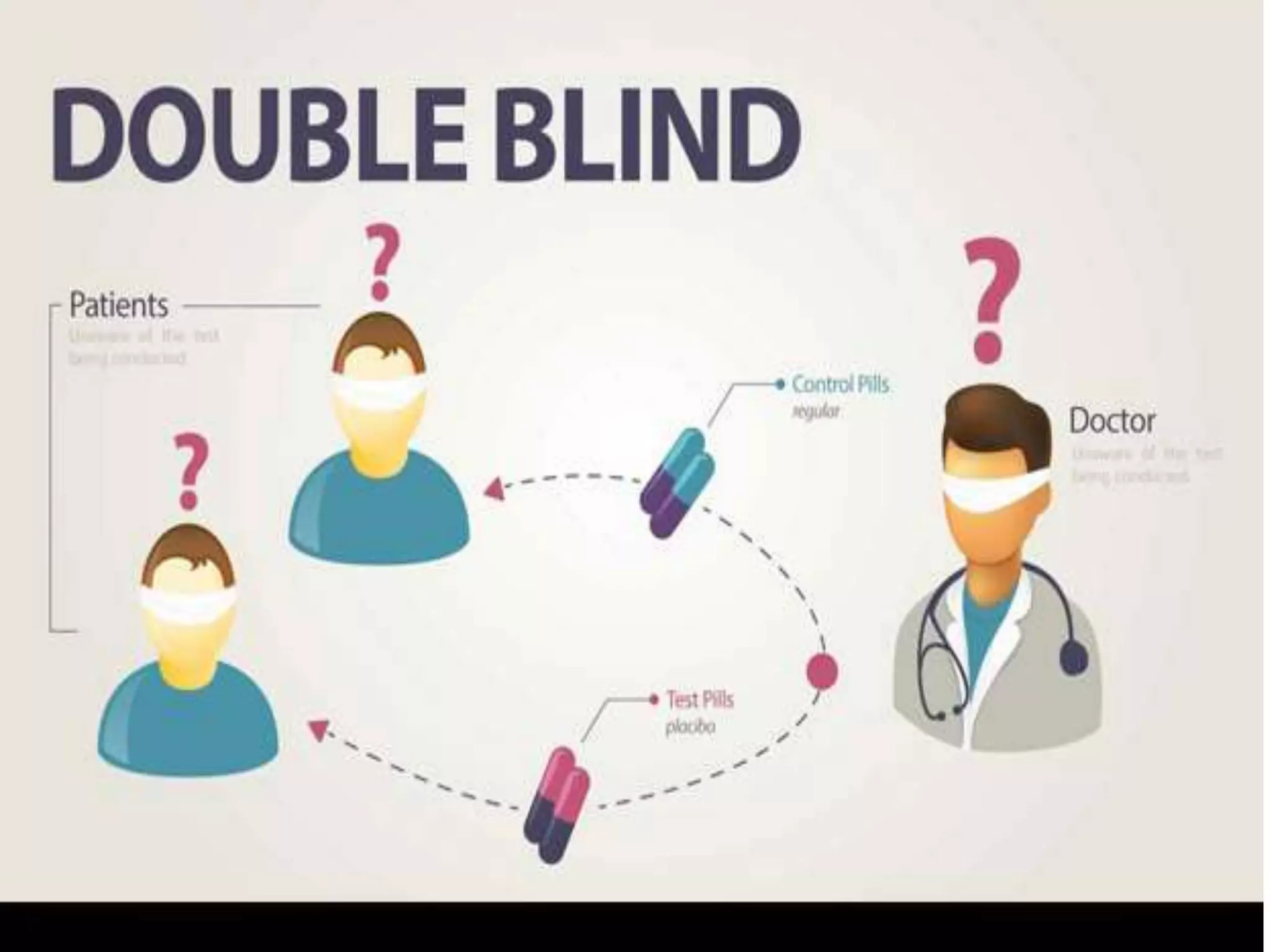
 Interviewer bias can be minimized or
eliminated if the interviewer is blinded to the
outcome of interest
Interviewer bias
 Chronology bias occurs when historic controls are used as a
comparison group for patients undergoing an intervention
 Secular trends within the medical system could affect how
disease is diagnosed, how treatments are administered, or
how preferred outcome measures are obtained
 Each of these differences could act as a source of inequality
between the historic controls and intervention groups
Chronology bias
 Chronology bias can be minimized by
conducting prospective cohort or
randomized control trials,
 or by using historic controls from only the
very recent past.
Chronology bias
 In almost all clinical studies, subjects are lost to follow-
up.
 In these instances, investigators must consider whether
these patients are fundamentally different than those
retained in the study.
 Researchers must also consider how to treat patients
lost to follow-up in their analysis.
TRANSFER BIAS
patient loss to follow-up can be minimized by
 offering convenient office hours,
 personalized patient contact via phone or email,
 and physician visits to the patient's home
TRANSFER BIAS
 In surgical trials, performance bias may complicate
efforts to establish a cause-effect relationship
between procedures and outcomes
Performance bias
 To minimize or avoid performance bias,
 investigators can consider cluster stratification of
patients, in which all patients having an operation by
one surgeon or at one hospital are placed into the
same study group, as opposed to placing individual
patients into groups.
 This will minimize performance variability within
groups and decrease performance bias
Performance bias
BIAS AFTER A TRIAL
 Bias after a trial's conclusion can occur
during data analysis or publication
BIAS AFTER A TRIAL
 researchers and trial sponsors may be unwilling to publish
unfavourable results
 Thus, positive results are more likely to be submitted for
publication than negative results.
 existing inequalities in the medical literature may sway clinicians'
opinions of the expected trial results before or during a trial.
Citation bias
 In recognition of citation bias, the International Committee of
Medical Journal Editors(ICMJE) released a consensus statement in
2004
 which required all randomized control trials to be pre-registered
with an approved clinical trials registry.
 all prospective trials not deemed purely observational be
registered with a central clinical trials registry prior to patient
enrolment.
 ICMJE member journals will not publish studies which are not
registered in advance with one of five accepted registries
Citation bias
 Confounding occurs when an observed association
is due to three factors:
 the exposure,
 the outcome of interest,
 and a third factor which is independently
associated with both the outcome of interest and
the exposure
CONFOUNDING
 Pre-trial study design is the preferred method to
control for confounding.
 Prior to the study, matching patients for
demographics (such as age or gender) and risk factors
(such as body mass index or smoking) can create
similar cohorts among identified confounders.
METHODS TO CONTROL
CONFOUNDING
 The effect of unmeasured or unknown confounders may
only be controlled by true randomization in a study
with a large sample size.
 After a study's conclusion, identified confounders can be
controlled by analyzing for an association between
exposure and outcome only in cohorts similar for the
identified confounding factor.
METHODS TO CONTROL
CONFOUNDING
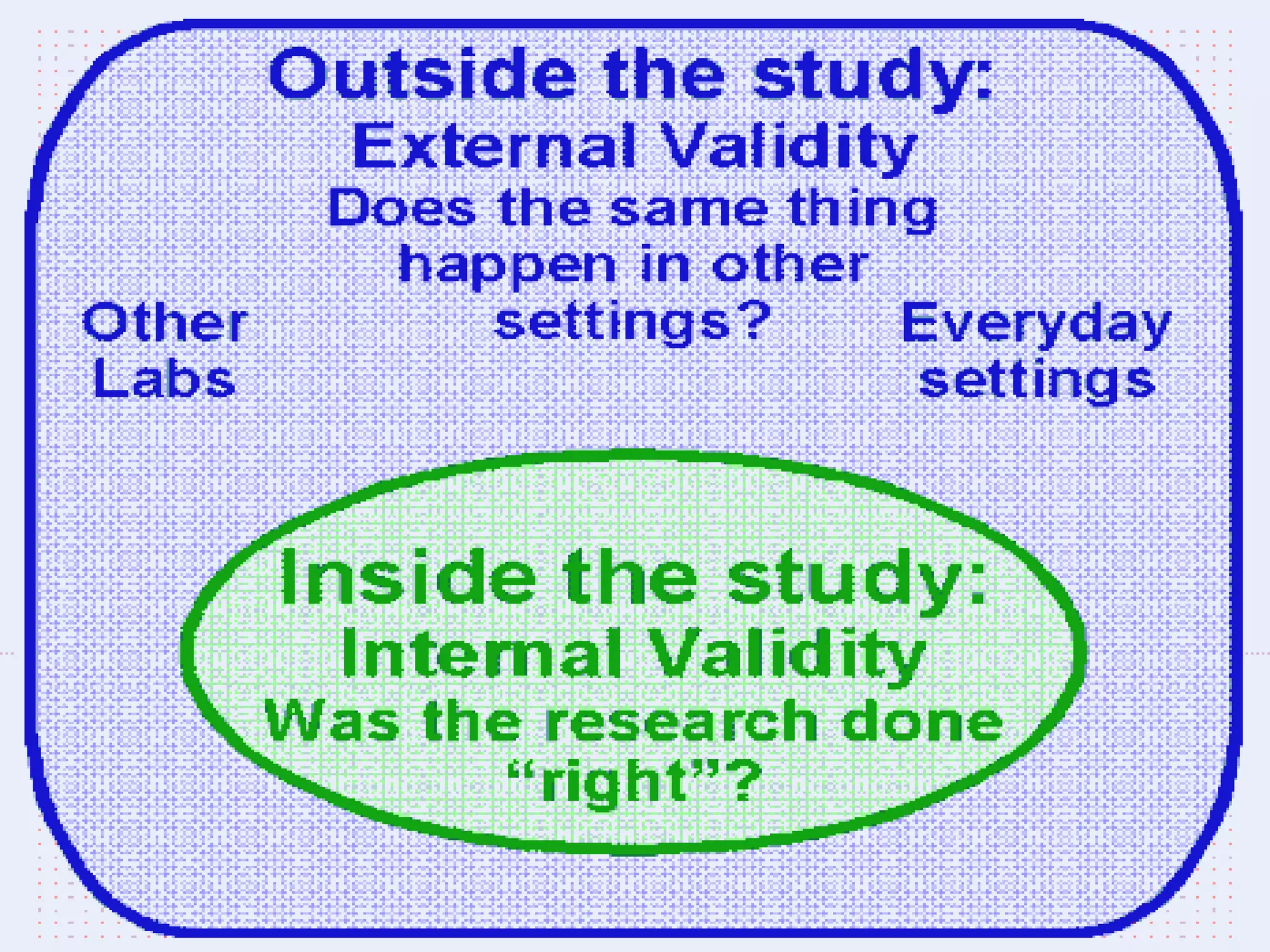
Internal validity refers to the
reliability or accuracy of the study
results
INTERNAL VALIDITY
External validity of research design
deals with the degree to which findings
are able to be generalized to other
groups or populations
EXTERNAL VALIDITY
 study design, implementation, and data analysis have
minimized or eliminated bias
 and that the findings are representative of the true
association between exposure and outcome.
 When evaluating studies, careful review of study
methodology for sources of bias enables the reader to
evaluate internal validity
HIGH INTERNAL VALIDITY
 An ideal trial design would randomize patients and blind those
collecting and analyzing data (high internal validity),
 while keeping exclusion criteria to a minimum, thus making
study and source populations closely related and allowing
generalization of results (high external validity).
 Conceptual models to assess a study's ability to be generalized
have been developed .
 Additionally, qualitative checklists can be used to assess the
external validity of clinical trials.
BALANCING INTERNAL AND
EXTERNAL VALIDITY
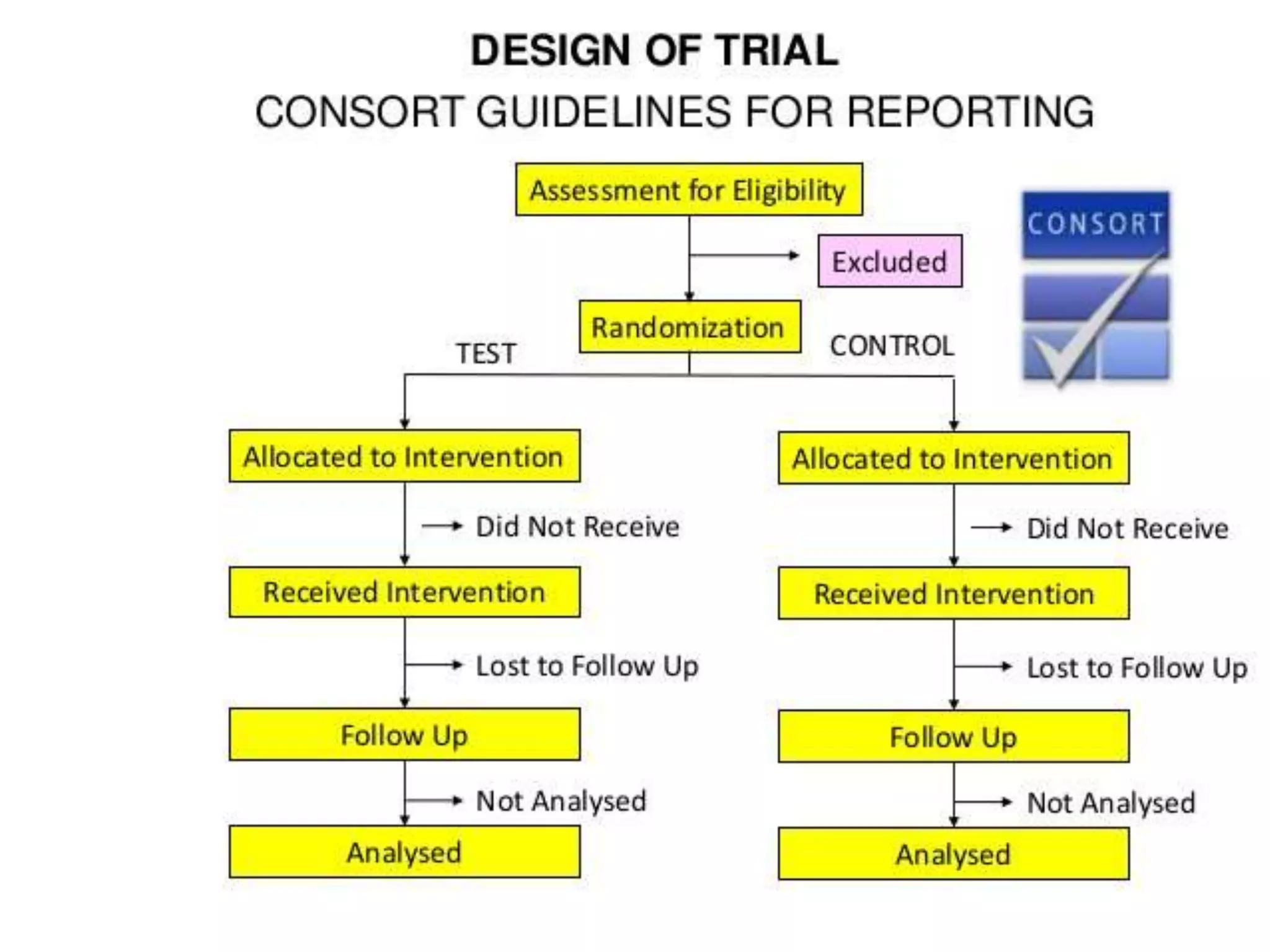
 The CONSORT statement provides a concise 22-point
checklist for authors reporting the results of RCT's.
 Manuscripts that conform to the CONSORT checklist
will provide adequate information for readers to
understand the study's methodology.
 As a result, readers can make independent judgments
on the trial's internal and external validity
CONSORT STATEMENT
SUMMARY
 Bias is any trend or deviation in truth which can
cause false conclusions
 Occurs either intentionally or unintentionally
 Due to consequences of bias, it is unethical to
conduct and publish a biased research even
unintentionally
 Confounding effect cannot be completely avoided.
SUMMARY
 Every researcher should therefore be aware of all
potential sources of bias
 and undertake all possible actions to reduce and
minimize the deviation from the truth.
 If deviation is still present, authors should confess it
in their articles by declaring the known limitations of
their work.
Case scenarios
Scenario 1
 Investigators recruited both cases and controls from a
defined catchment area in the general population. This is
often difficult to do in the absence of a comprehensive
registry. Suppose investigators had recruited all cases of
lung cancer from a comprehensive national registry,
between August 1, 2013 to July 31, 2014. What bias might be
introduced if controls were obtained from the catchment
area?
 Selection Bias
Scenario 2
 Suppose you are designing a case-control study on association
between smoking and lung cancer. Which of the following
methods of acquiring cases and controls is most practical to
reduce bias?
 Scenario 1: Cases from SRM (tertiary hospital) and controls from
xyz pulmonology clinic
 Scenario 2: Cases from SRM and controls from admission office
of SRM with diagnosis of any other cancer other than lung
cancer
 Scenario 3: Cases from SRM and controls from Chengalpet
Scenario 3
 What potential bias could have been introduced if you
found out that those who interviewed cases took 30
minutes longer on average than those who interviewed
controls?
 Selection bias
 Information bias
 Volunteer bias
 Loss to follow up bias
Scenario 4
 A study reported a significant association between long-
term use of smoking and oral cancer compared to no
smoking and oral cancer. The duration of exposure varied
among both cases and controls. What bias could arise when
trying to measure exposures that happened over different
time periods?
 Misclassification bias
 Measurement bias
 Recall bias
Scenario 5
 What effect would you observe if the interviewers were
aware of the disease status of the study subjects?
 It would benefit the validity of results since interviewer
would understand more precisely of the disease and
collect better data for cases
 The results would likely not change
 It could damage the results by introducing interviewer
bias
REFERENCES
 1. 8.4 Introduction to sources of bias in clinical trials [Internet]. [cited 2014 Dec 22].
Available from:
http://handbook.cochrane.org/chapter_8/8_4_introduction_to_sources_of_bias_in_clinica
l_trials.htm
 2. 9781405132664_4_003.indd - 9781405132664_4_003.pdf [Internet]. [cited
2014 Dec 22]. Available from:
http://www.blackwellpublishing.com/content/BPL_Images/Content_store/Sample_chapter/
9781405132664/9781405132664_4_003.pdf
 3. Delgado-Rodríguez M, Llorca J. Bias. J Epidemiol Community Health. 2004 Aug
1;58(8):635–41.
 4. bias.aspx [Internet]. [cited 2014 Dec 22]. Available from:
http://www.ashpfoundation.org/mainmenucategories/researchresourcecenter/fosteringyo
unginvestigators/ajhpresearchfundamentalsseries/bias.aspx
 5. Sackett DL. Bias in analytic research. J Chronic Dis. 1979;32(1-2):51–63.
REFERENCES
 6. Kopec JA, Esdaile JM. Bias in case-control studies. A review. J Epidemiol
Community Health. 1990 Sep;44(3):179–86.
 7. FEM - Preventing bias [Internet]. [cited 2014 Dec 22]. Available from:
https://wiki.ecdc.europa.eu/fem/w/fem/preventing-bias.aspx
 8. Pannucci CJ, Wilkins EG. Identifying and Avoiding Bias in Research. Plast
Reconstr Surg. 2010 Aug;126(2):619–25.
 9. Qualitative Research Bias - How to Recognize It [Internet]. [cited 2014 Dec
22]. Available from: http://www.focusgrouptips.com/qualitative-research.html
 10. Types of bias.pdf [Internet]. [cited 2014 Dec 22]. Available from:
http://www.medicalbiostatistics.com/Types%20of%20bias.pdf
THANK YOU..

Bias in clinical research

  • 4.
    BIAS IN CLINICALRESEARCH Dr. V.Sathyanarayanan M.B.B.S., M.D. Professor of Pharmacology, SRM MCH & RC, Kattankulathur, TAMIL NADU, INDIA
  • 5.
     Introduction andDefinition of bias  Where bias can happen?  When bias can happen?  Sources of bias  Classification of bias  Types of bias and measures to minimize bias  Confounding  Internal validity and external validity  Summary  Case scenarios OUTLINE
  • 6.
    INTRODUCTION  Bias isa fundamental concept in epidemiology  It is defined as ‘deviation of results or inferences from the truth , or processes leading to such deviation’ - Grimes and Schulz, 2002  It is the result of errors  not random but systematic  results invalid  Results mainly from faulty design
  • 7.
     study designor  data collection,  in the process of data analysis  and publication WHERE BIAS CAN HAPPEN?
  • 8.
    systematic error [is]introduced into sampling or testing by selecting or encouraging one outcome or answer over others WHEN BIAS CAN HAPPEN ?
  • 9.
    WHO classification  Selectionbias  Occurs from the manner in which study population is selected  Most common type of bias in health research  Seen in observational and analytical studies  Ascertainment or information bias  Occurs due to measurement error or misclassification of subjects according to one or more variables
  • 14.
    BIAS PRIOR TOSTUDY/TRIAL
  • 17.
     Selection biasmay occur during identification of the study population  The ideal study population is  clearly defined,  accessible,  reliable, and  at increased risk to develop the outcome of interest. SELECTION BIAS
  • 19.
     when thecriteria used to recruit and enrol patients into separate study cohorts are inherently different.  Error introduced when the study population does not include the target population SELECTION BIAS
  • 20.
     This canbe a particular problem with case-control and retrospective cohort studies  Prospective studies (particularly randomized, controlled trials) are less prone WHERE SELECTION BIAS HAPPENS?
  • 25.
    How to reduceselection bias?  The study population should be clearly identified i.e. clear definition of study population.  The choice of the right comparison/ reference group (unexposed or controls) is crucial  In a cohort study:  exposed and unexposed groups should be identical but for the exposure
  • 27.
    How to reduceselection bias?  In a clinical trial:  Randomization and allocation concealment from the investigator
  • 31.
     This biasis more likely in non-randomized trials when patient assignment to groups is performed by medical personnel  Channelling bias occurs when patient prognostic factors or degree of illness dictates the study cohort into which patients are placed.  Channelling bias is commonly seen in pharmaceutical trials comparing old and new drugs to one another CHANNELLING BIAS
  • 38.
  • 39.
     bias occursin the measurement of an exposure or outcome.  Thus, the information obtained and recorded from patients in different study groups is unequal in some way  Many subtypes of information bias can occur Information bias
  • 41.
     interviewer bias chronology bias  recall bias  patient loss to follow-up  bias from misclassification of patients  performance bias TYPES OF INFORMATION BIAS
  • 43.
     Interviewer biascan be minimized or eliminated if the interviewer is blinded to the outcome of interest Interviewer bias
  • 45.
     Chronology biasoccurs when historic controls are used as a comparison group for patients undergoing an intervention  Secular trends within the medical system could affect how disease is diagnosed, how treatments are administered, or how preferred outcome measures are obtained  Each of these differences could act as a source of inequality between the historic controls and intervention groups Chronology bias
  • 46.
     Chronology biascan be minimized by conducting prospective cohort or randomized control trials,  or by using historic controls from only the very recent past. Chronology bias
  • 50.
     In almostall clinical studies, subjects are lost to follow- up.  In these instances, investigators must consider whether these patients are fundamentally different than those retained in the study.  Researchers must also consider how to treat patients lost to follow-up in their analysis. TRANSFER BIAS
  • 52.
    patient loss tofollow-up can be minimized by  offering convenient office hours,  personalized patient contact via phone or email,  and physician visits to the patient's home TRANSFER BIAS
  • 53.
     In surgicaltrials, performance bias may complicate efforts to establish a cause-effect relationship between procedures and outcomes Performance bias
  • 54.
     To minimizeor avoid performance bias,  investigators can consider cluster stratification of patients, in which all patients having an operation by one surgeon or at one hospital are placed into the same study group, as opposed to placing individual patients into groups.  This will minimize performance variability within groups and decrease performance bias Performance bias
  • 57.
  • 58.
     Bias aftera trial's conclusion can occur during data analysis or publication BIAS AFTER A TRIAL
  • 59.
     researchers andtrial sponsors may be unwilling to publish unfavourable results  Thus, positive results are more likely to be submitted for publication than negative results.  existing inequalities in the medical literature may sway clinicians' opinions of the expected trial results before or during a trial. Citation bias
  • 61.
     In recognitionof citation bias, the International Committee of Medical Journal Editors(ICMJE) released a consensus statement in 2004  which required all randomized control trials to be pre-registered with an approved clinical trials registry.  all prospective trials not deemed purely observational be registered with a central clinical trials registry prior to patient enrolment.  ICMJE member journals will not publish studies which are not registered in advance with one of five accepted registries Citation bias
  • 65.
     Confounding occurswhen an observed association is due to three factors:  the exposure,  the outcome of interest,  and a third factor which is independently associated with both the outcome of interest and the exposure CONFOUNDING
  • 67.
     Pre-trial studydesign is the preferred method to control for confounding.  Prior to the study, matching patients for demographics (such as age or gender) and risk factors (such as body mass index or smoking) can create similar cohorts among identified confounders. METHODS TO CONTROL CONFOUNDING
  • 68.
     The effectof unmeasured or unknown confounders may only be controlled by true randomization in a study with a large sample size.  After a study's conclusion, identified confounders can be controlled by analyzing for an association between exposure and outcome only in cohorts similar for the identified confounding factor. METHODS TO CONTROL CONFOUNDING
  • 72.
    Internal validity refersto the reliability or accuracy of the study results INTERNAL VALIDITY
  • 74.
    External validity ofresearch design deals with the degree to which findings are able to be generalized to other groups or populations EXTERNAL VALIDITY
  • 77.
     study design,implementation, and data analysis have minimized or eliminated bias  and that the findings are representative of the true association between exposure and outcome.  When evaluating studies, careful review of study methodology for sources of bias enables the reader to evaluate internal validity HIGH INTERNAL VALIDITY
  • 78.
     An idealtrial design would randomize patients and blind those collecting and analyzing data (high internal validity),  while keeping exclusion criteria to a minimum, thus making study and source populations closely related and allowing generalization of results (high external validity).  Conceptual models to assess a study's ability to be generalized have been developed .  Additionally, qualitative checklists can be used to assess the external validity of clinical trials. BALANCING INTERNAL AND EXTERNAL VALIDITY
  • 79.
     The CONSORTstatement provides a concise 22-point checklist for authors reporting the results of RCT's.  Manuscripts that conform to the CONSORT checklist will provide adequate information for readers to understand the study's methodology.  As a result, readers can make independent judgments on the trial's internal and external validity CONSORT STATEMENT
  • 87.
    SUMMARY  Bias isany trend or deviation in truth which can cause false conclusions  Occurs either intentionally or unintentionally  Due to consequences of bias, it is unethical to conduct and publish a biased research even unintentionally  Confounding effect cannot be completely avoided.
  • 89.
    SUMMARY  Every researchershould therefore be aware of all potential sources of bias  and undertake all possible actions to reduce and minimize the deviation from the truth.  If deviation is still present, authors should confess it in their articles by declaring the known limitations of their work.
  • 92.
  • 93.
    Scenario 1  Investigatorsrecruited both cases and controls from a defined catchment area in the general population. This is often difficult to do in the absence of a comprehensive registry. Suppose investigators had recruited all cases of lung cancer from a comprehensive national registry, between August 1, 2013 to July 31, 2014. What bias might be introduced if controls were obtained from the catchment area?  Selection Bias
  • 94.
    Scenario 2  Supposeyou are designing a case-control study on association between smoking and lung cancer. Which of the following methods of acquiring cases and controls is most practical to reduce bias?  Scenario 1: Cases from SRM (tertiary hospital) and controls from xyz pulmonology clinic  Scenario 2: Cases from SRM and controls from admission office of SRM with diagnosis of any other cancer other than lung cancer  Scenario 3: Cases from SRM and controls from Chengalpet
  • 95.
    Scenario 3  Whatpotential bias could have been introduced if you found out that those who interviewed cases took 30 minutes longer on average than those who interviewed controls?  Selection bias  Information bias  Volunteer bias  Loss to follow up bias
  • 96.
    Scenario 4  Astudy reported a significant association between long- term use of smoking and oral cancer compared to no smoking and oral cancer. The duration of exposure varied among both cases and controls. What bias could arise when trying to measure exposures that happened over different time periods?  Misclassification bias  Measurement bias  Recall bias
  • 97.
    Scenario 5  Whateffect would you observe if the interviewers were aware of the disease status of the study subjects?  It would benefit the validity of results since interviewer would understand more precisely of the disease and collect better data for cases  The results would likely not change  It could damage the results by introducing interviewer bias
  • 99.
    REFERENCES  1. 8.4Introduction to sources of bias in clinical trials [Internet]. [cited 2014 Dec 22]. Available from: http://handbook.cochrane.org/chapter_8/8_4_introduction_to_sources_of_bias_in_clinica l_trials.htm  2. 9781405132664_4_003.indd - 9781405132664_4_003.pdf [Internet]. [cited 2014 Dec 22]. Available from: http://www.blackwellpublishing.com/content/BPL_Images/Content_store/Sample_chapter/ 9781405132664/9781405132664_4_003.pdf  3. Delgado-Rodríguez M, Llorca J. Bias. J Epidemiol Community Health. 2004 Aug 1;58(8):635–41.  4. bias.aspx [Internet]. [cited 2014 Dec 22]. Available from: http://www.ashpfoundation.org/mainmenucategories/researchresourcecenter/fosteringyo unginvestigators/ajhpresearchfundamentalsseries/bias.aspx  5. Sackett DL. Bias in analytic research. J Chronic Dis. 1979;32(1-2):51–63.
  • 100.
    REFERENCES  6. KopecJA, Esdaile JM. Bias in case-control studies. A review. J Epidemiol Community Health. 1990 Sep;44(3):179–86.  7. FEM - Preventing bias [Internet]. [cited 2014 Dec 22]. Available from: https://wiki.ecdc.europa.eu/fem/w/fem/preventing-bias.aspx  8. Pannucci CJ, Wilkins EG. Identifying and Avoiding Bias in Research. Plast Reconstr Surg. 2010 Aug;126(2):619–25.  9. Qualitative Research Bias - How to Recognize It [Internet]. [cited 2014 Dec 22]. Available from: http://www.focusgrouptips.com/qualitative-research.html  10. Types of bias.pdf [Internet]. [cited 2014 Dec 22]. Available from: http://www.medicalbiostatistics.com/Types%20of%20bias.pdf
  • 101.