Dr. Mohamed Shaheen
MBBCh, MSc, MD, IPCD, HHMD
Lecturer of Clinical Pathology- Al-Azhar University
Chief Infection Control team El-Hussien hospital
 Introduction
 Morphology
 Maturation & stages
 Methods: manual (staining)& automated.
 Methods of Counting
 Results & calculations: Corrected RC, absolute count & RPI.
 Normal range
 Interpretation: low & high.
 Discussion
Topics
 DEFINITION:
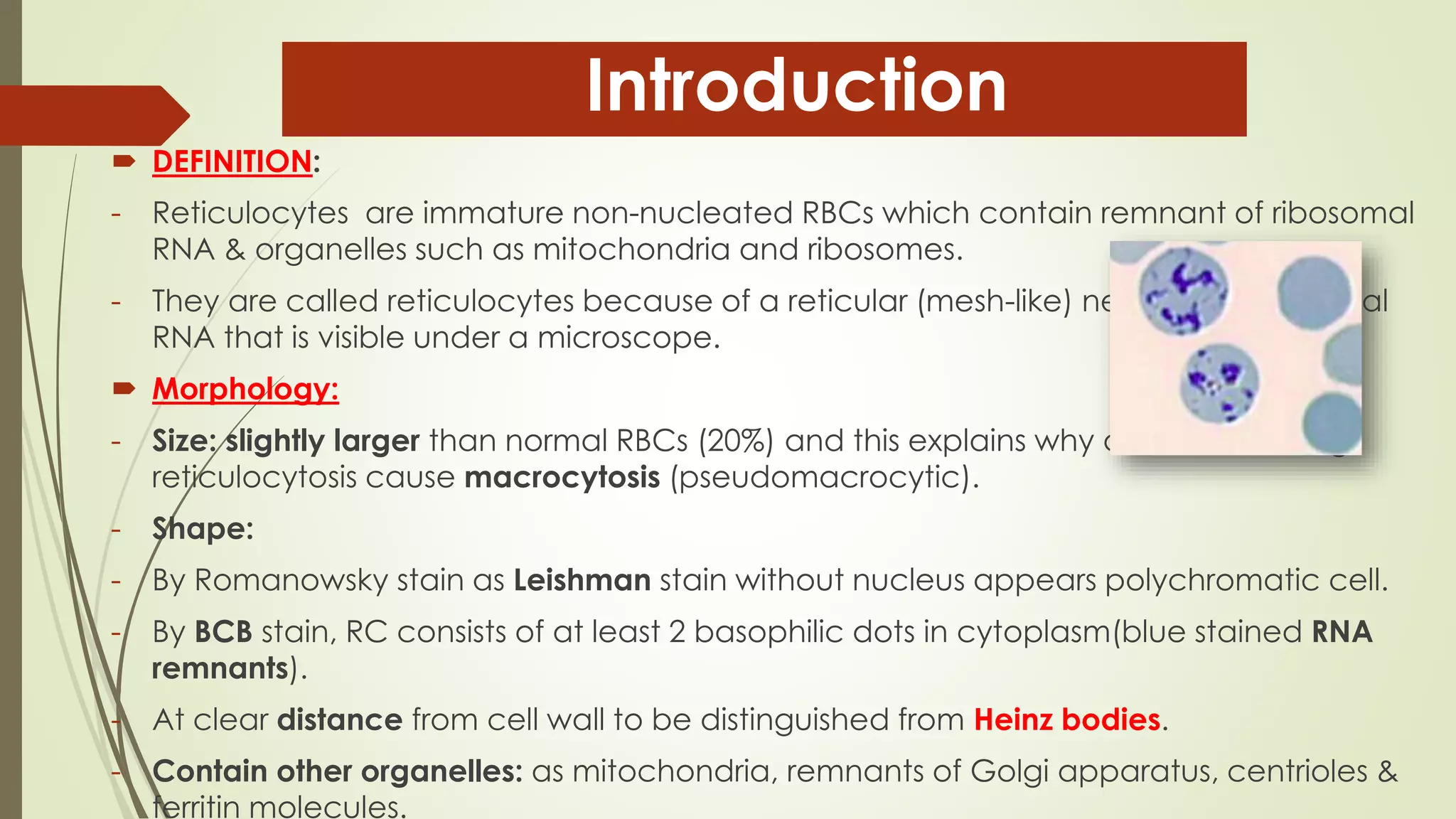
- Reticulocytes are immature non-nucleated RBCs which contain remnant of ribosomal
RNA & organelles such as mitochondria and ribosomes.
- They are called reticulocytes because of a reticular (mesh-like) network of ribosomal
RNA that is visible under a microscope.
 Morphology:
- Size: slightly larger than normal RBCs (20%) and this explains why diseases causing
reticulocytosis cause macrocytosis (pseudomacrocytic).
- Shape:
- By Romanowsky stain as Leishman stain without nucleus appears polychromatic cell.
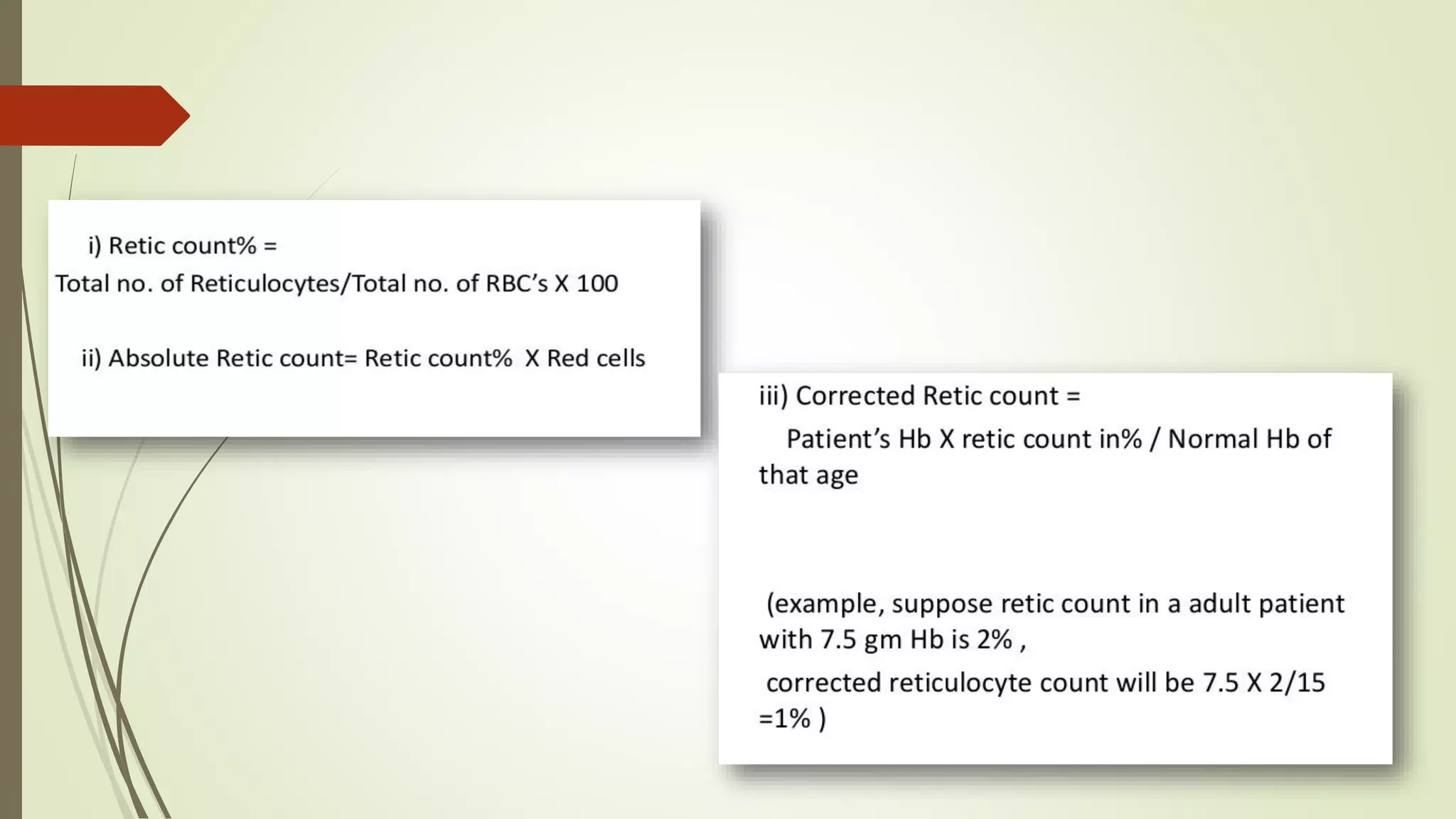
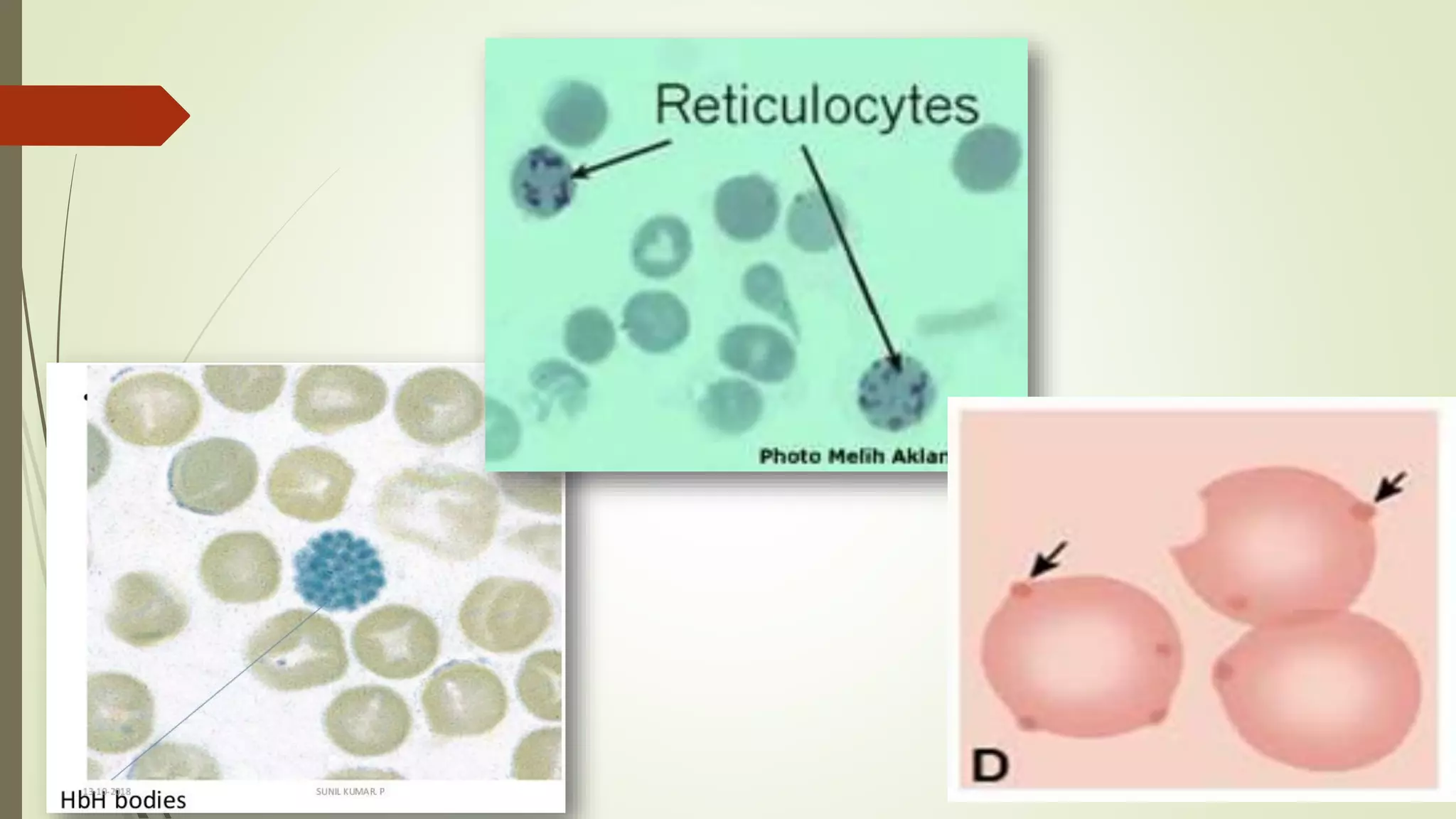
- By BCB stain, RC consists of at least 2 basophilic dots in cytoplasm(blue stained RNA
remnants).
- At clear distance from cell wall to be distinguished from Heinz bodies.
- Contain other organelles: as mitochondria, remnants of Golgi apparatus, centrioles &
ferritin molecules.
Introduction
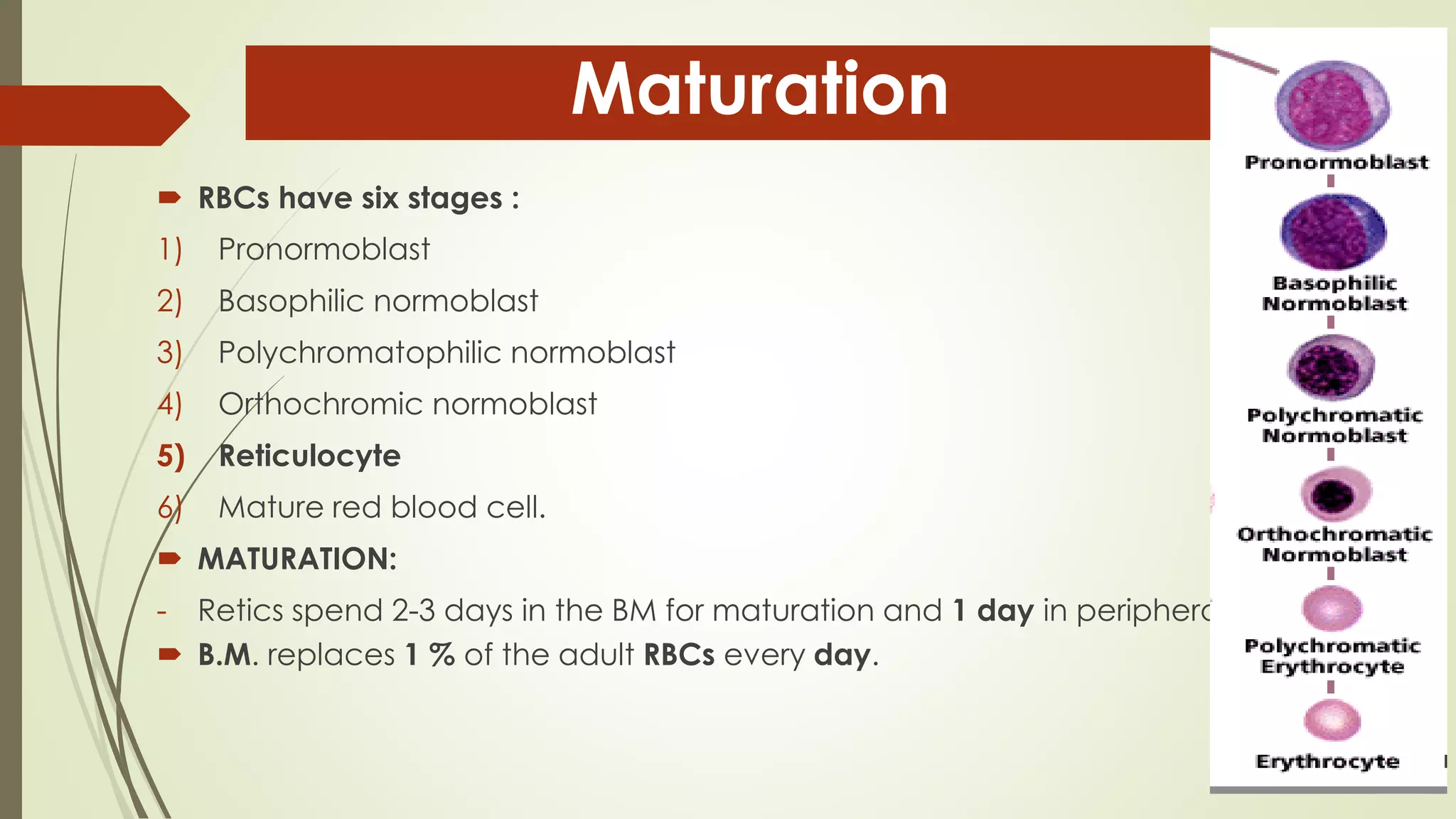
 RBCs have six stages :
1) Pronormoblast
2) Basophilic normoblast
3) Polychromatophilic normoblast
4) Orthochromic normoblast
5) Reticulocyte
6) Mature red blood cell.
 MATURATION:
- Retics spend 2-3 days in the BM for maturation and 1 day in peripheral blood.
 B.M. replaces 1 % of the adult RBCs every day.
Maturation
Function - Indication of counting
 Function:
o Immature RBCs which mature within hours to compensate defect in count or
function or Hb concentration. (Carry Hb which carry O2 from lung to tissues and
Co2 from Tissue to lung).
 Indication
o It gives an idea of BM activity level.
o Reflect effective RBCs production taking place in BM.
o All types of Anemia
o Therapeutic Monitoring of IDA & Megaloblastic anemia
o Monitoring during stem cell transplantation.
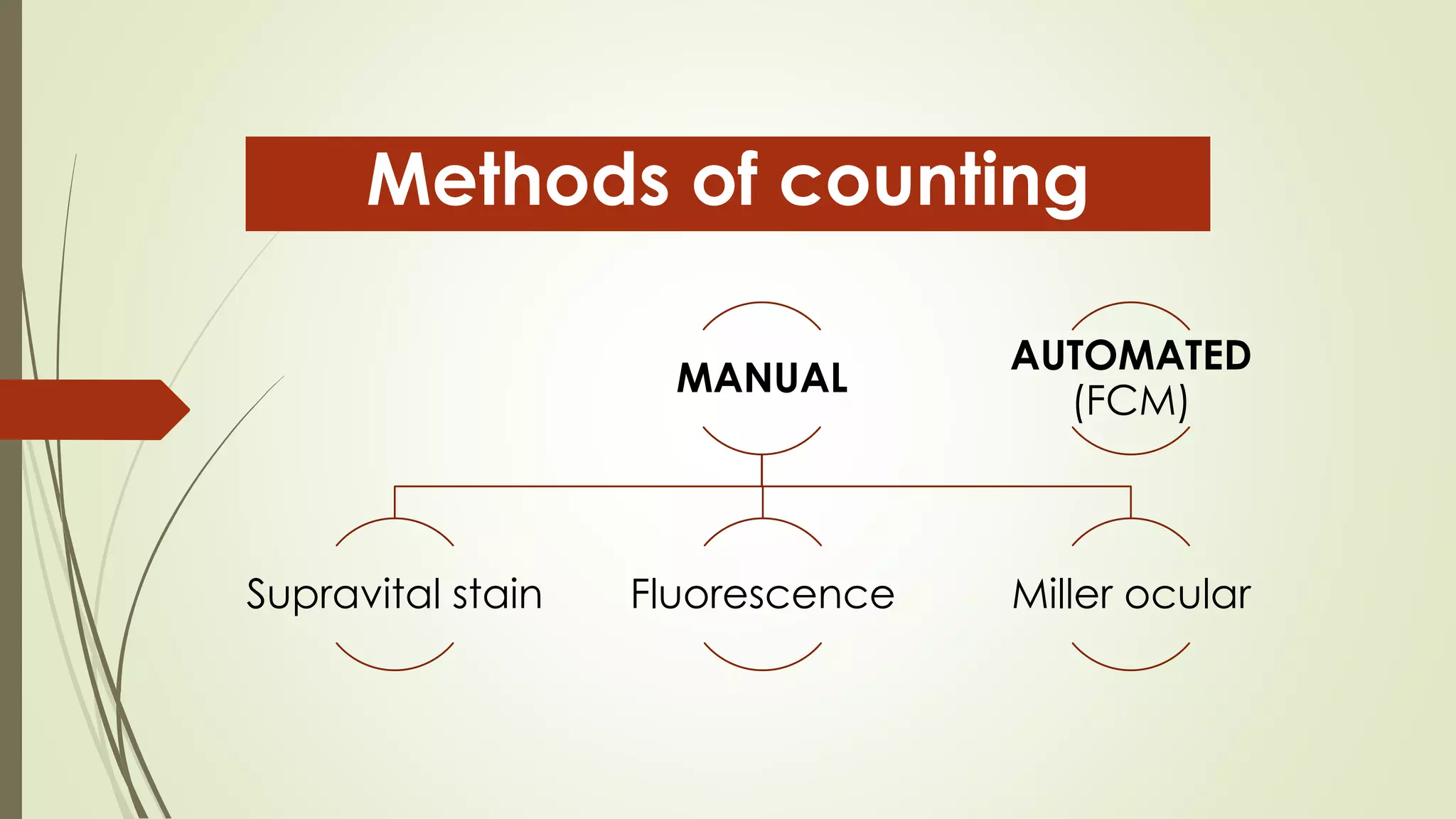
Methods of counting
MANUAL
Supravital stain Fluorescence Miller ocular
AUTOMATED
(FCM)
 SUPRAVITAL STAINS i.e. staining of viable cell in vitro = (Vital dyes)
1. Brilliant Cresyl blue: (1gm powder + 80 ml saline +20 ml Na citrate).
2. New Methylene blue: more deep ,more uniform.
3. Azure B: no precipitate, available in pure form.
 WRIGHT STAIN / Leishman stain:
- Reticulocyte appears polychromatophilic or as a macrocytic blue RBC (methanol
dissolves RNA).
 PRINCIPLE:
- To detect the presence of reticulocytes, ribosomal RNA must be stained (alive)
while they are still living. This process is called supra-vital staining.
- Ribosomal RNA, being acid, reacts with certain basic dyes to form a blue
precipitate of granules as filaments network of reticulum.
STAINING
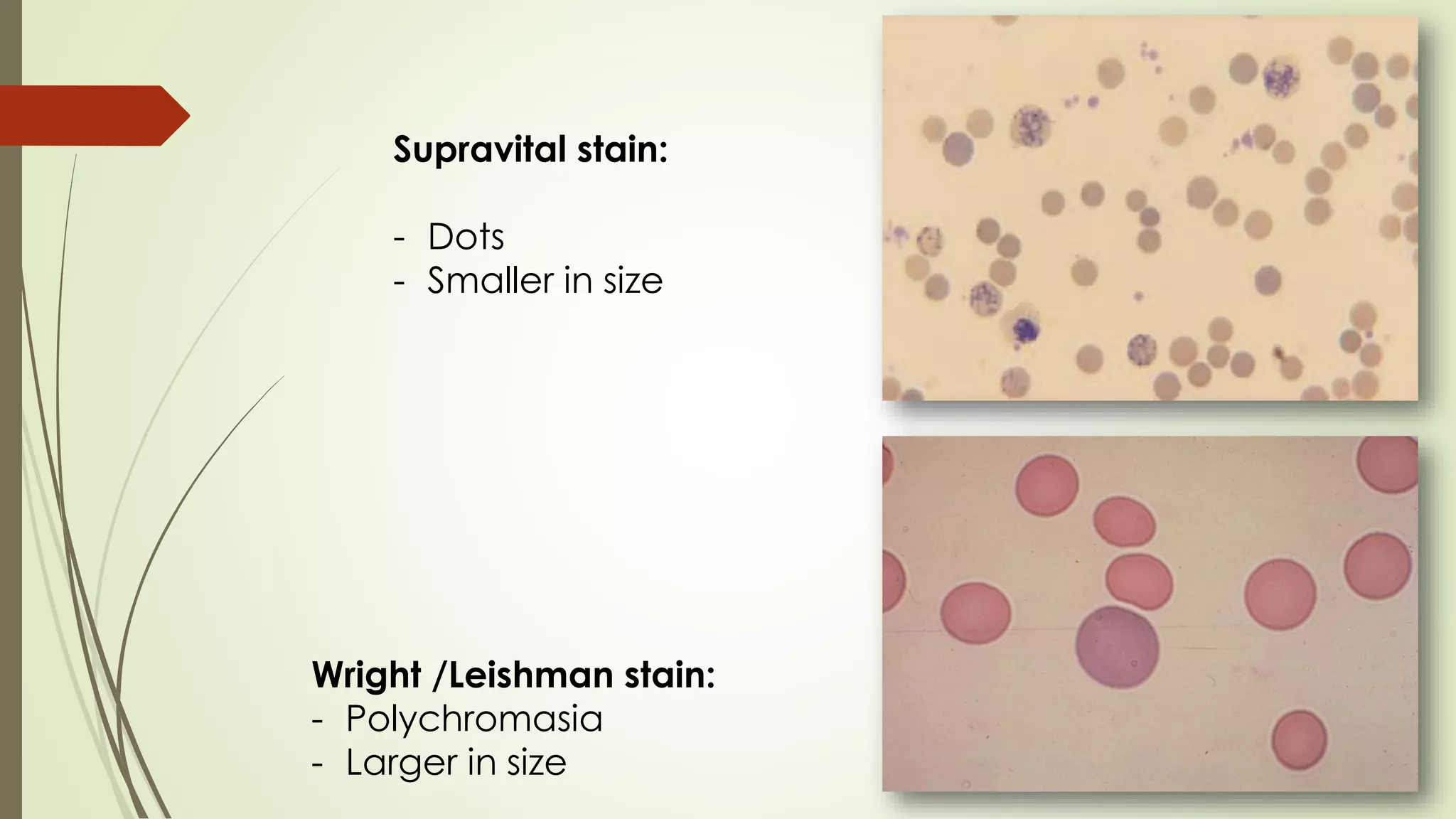
Wright /Leishman stain:
- Polychromasia
- Larger in size
Supravital stain:
- Dots
- Smaller in size
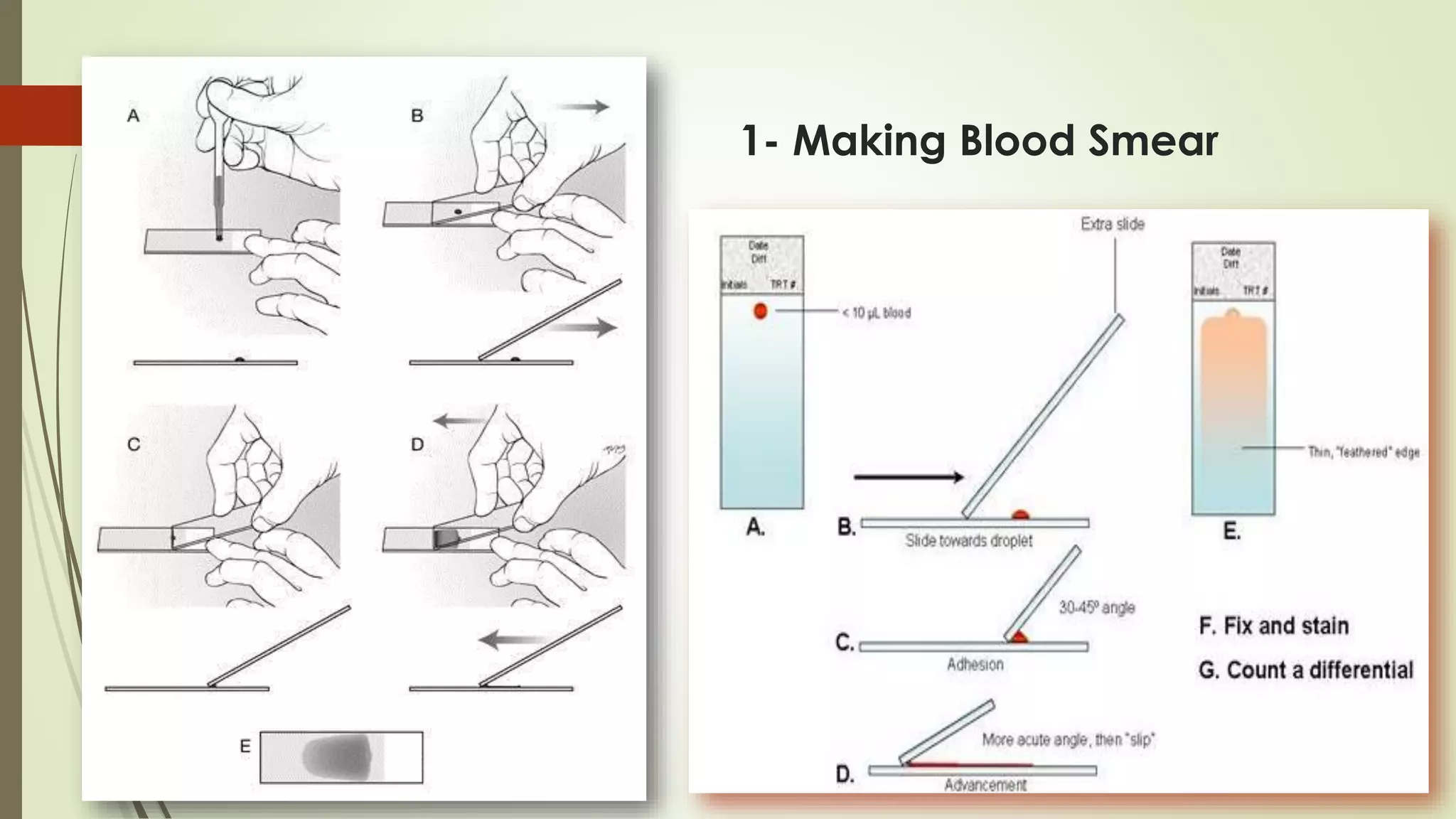
1- Making Blood Smear
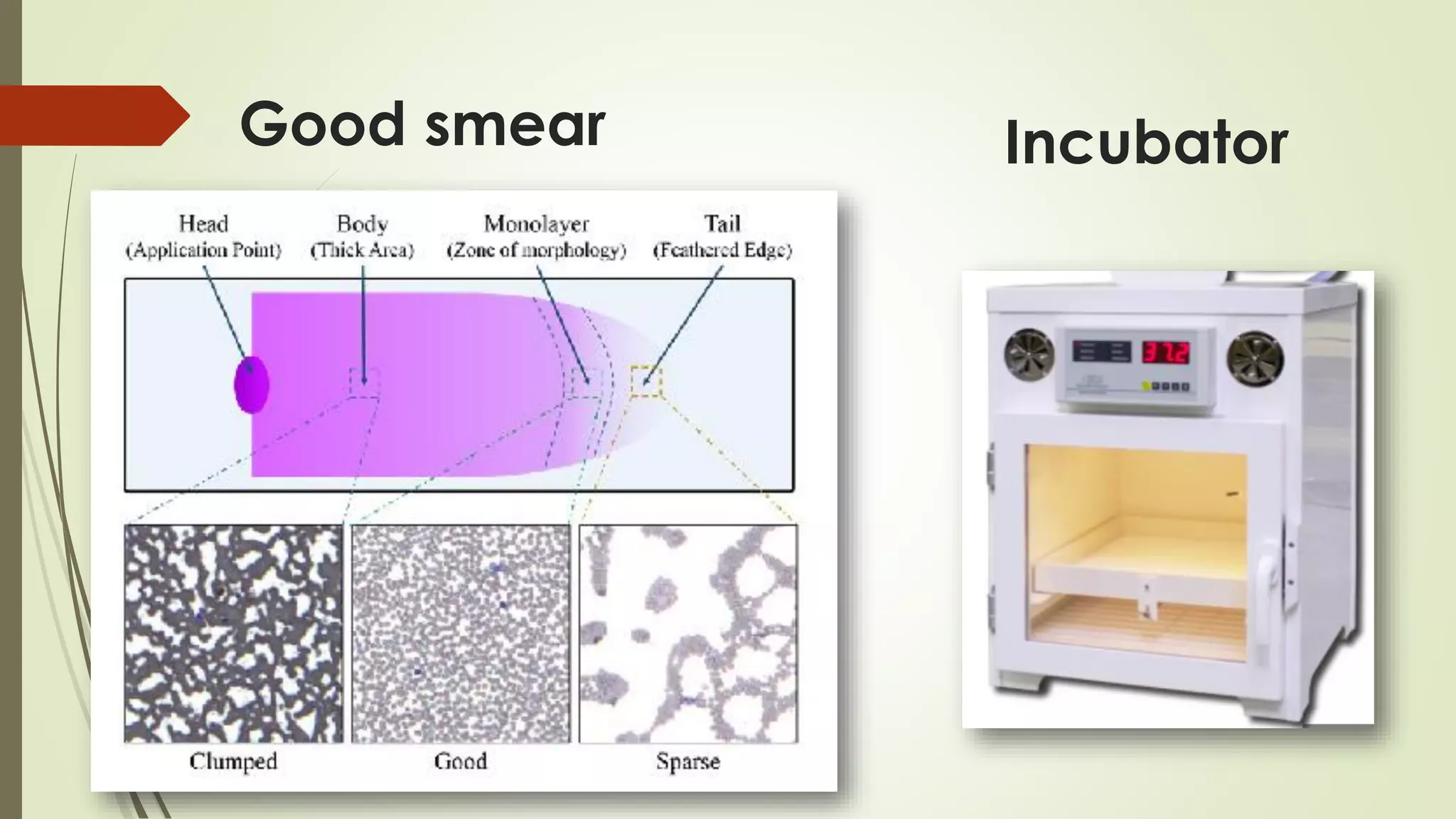
Good smear Incubator
 Reading:
 Use oil immersion lens (100 X).
 Choose area with good staining and undistorted nor overlapped cells.
 Choose field where RBC are countable (not too numerous & not too few)
 COUNTING:
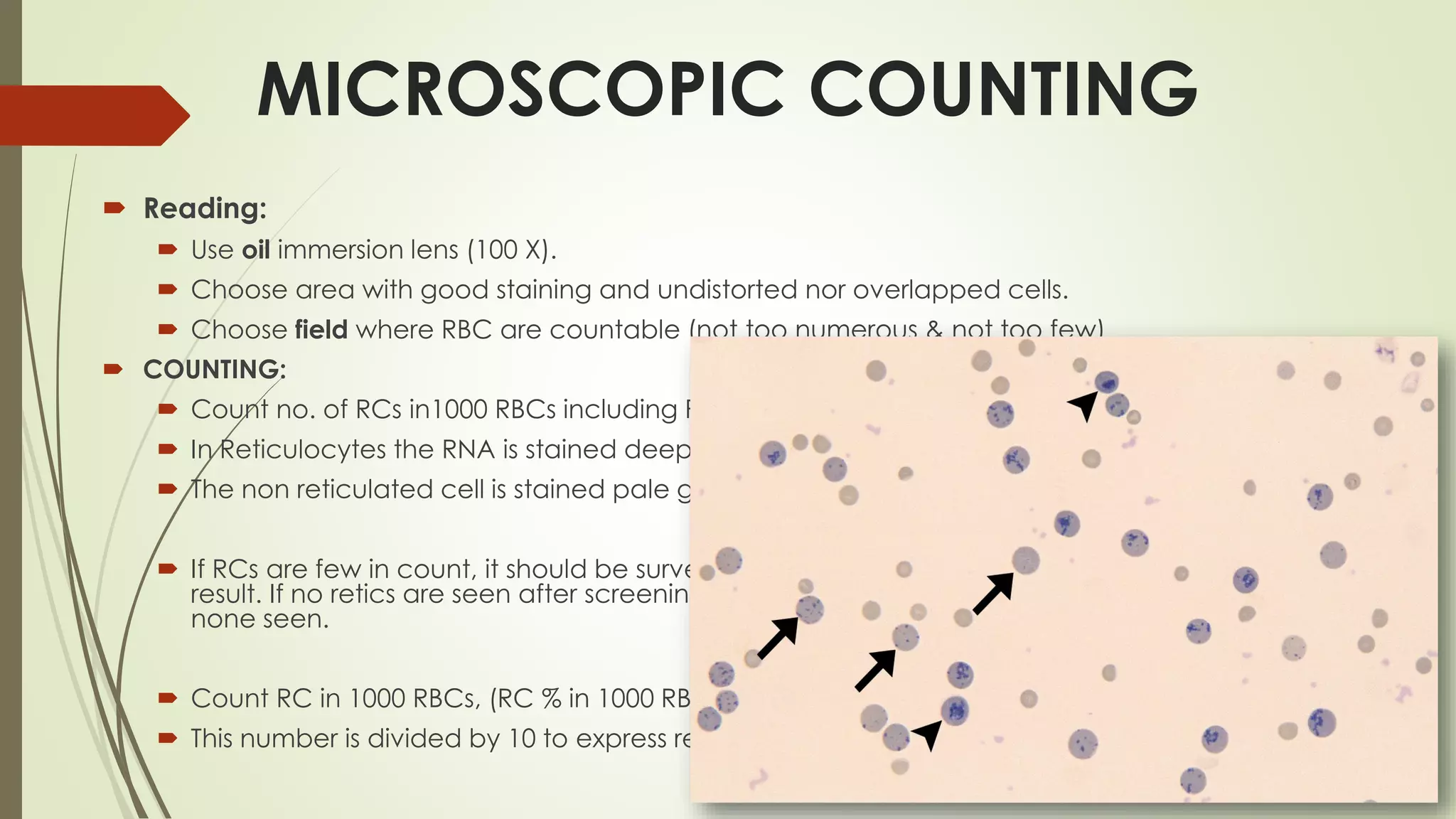
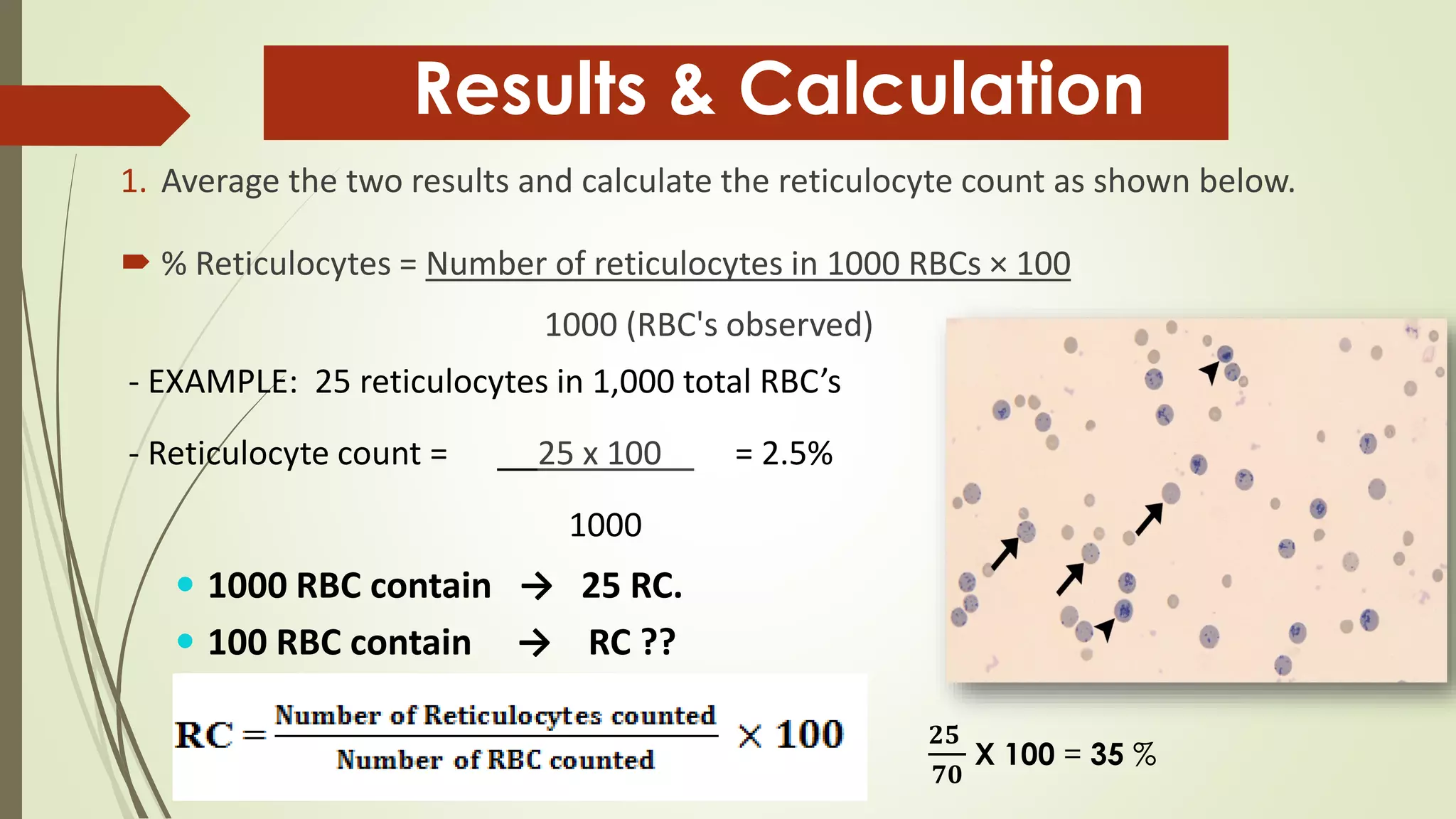
 Count no. of RCs in1000 RBCs including RCs, (RC % in 1000 RBCs).
 In Reticulocytes the RNA is stained deep blue (blue dots).
 The non reticulated cell is stained pale greenish.
 If RCs are few in count, it should be survey a large no. of RBCs to obtain precise
result. If no retics are seen after screening , at least 2 films must be examined to say
none seen.
 Count RC in 1000 RBCs, (RC % in 1000 RBCs).
 This number is divided by 10 to express reticulocyte count in percent %.
MICROSCOPIC COUNTING
1. Average the two results and calculate the reticulocyte count as shown below.
 % Reticulocytes = Number of reticulocytes in 1000 RBCs × 100
1000 (RBC's observed)
- EXAMPLE: 25 reticulocytes in 1,000 total RBC’s
- Reticulocyte count = 25 x 100 = 2.5%
1000
 1000 RBC contain → 25 RC.
 100 RBC contain → RC ??
Results & Calculation
𝟐𝟓
𝟕𝟎
X 100 = 35 %
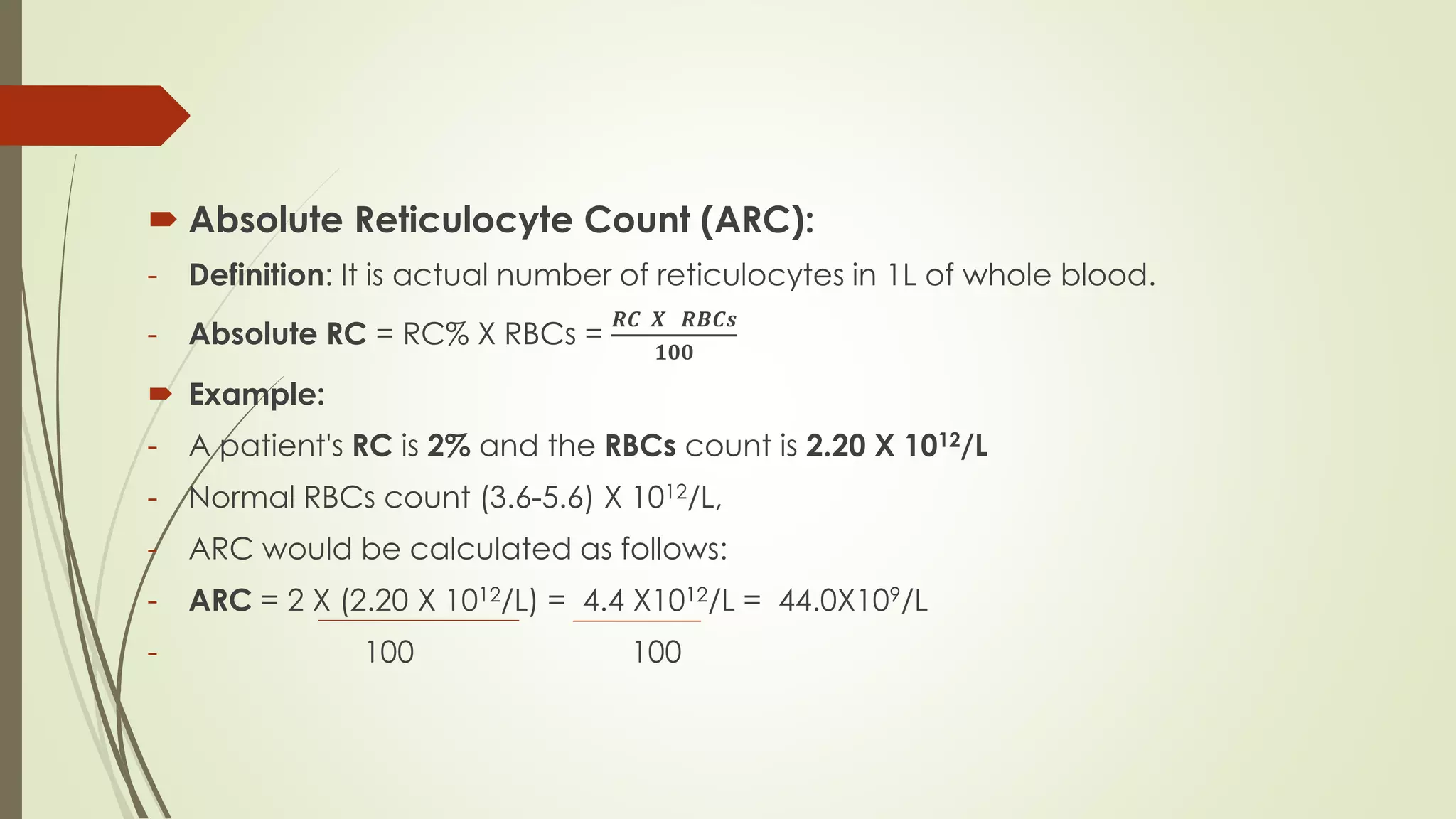
 Absolute Reticulocyte Count (ARC):
- Definition: It is actual number of reticulocytes in 1L of whole blood.
- Absolute RC = RC% X RBCs =
𝑹𝑪 𝑿 𝑹𝑩𝑪𝒔
𝟏𝟎𝟎
 Example:
- A patient's RC is 2% and the RBCs count is 2.20 X 10¹²/L
- Normal RBCs count (3.6-5.6) X 1012/L,
- ARC would be calculated as follows:
- ARC = 2 X (2.20 X 1012/L) = 4.4 X10¹²/L = 44.0X10⁹/L
- 100 100
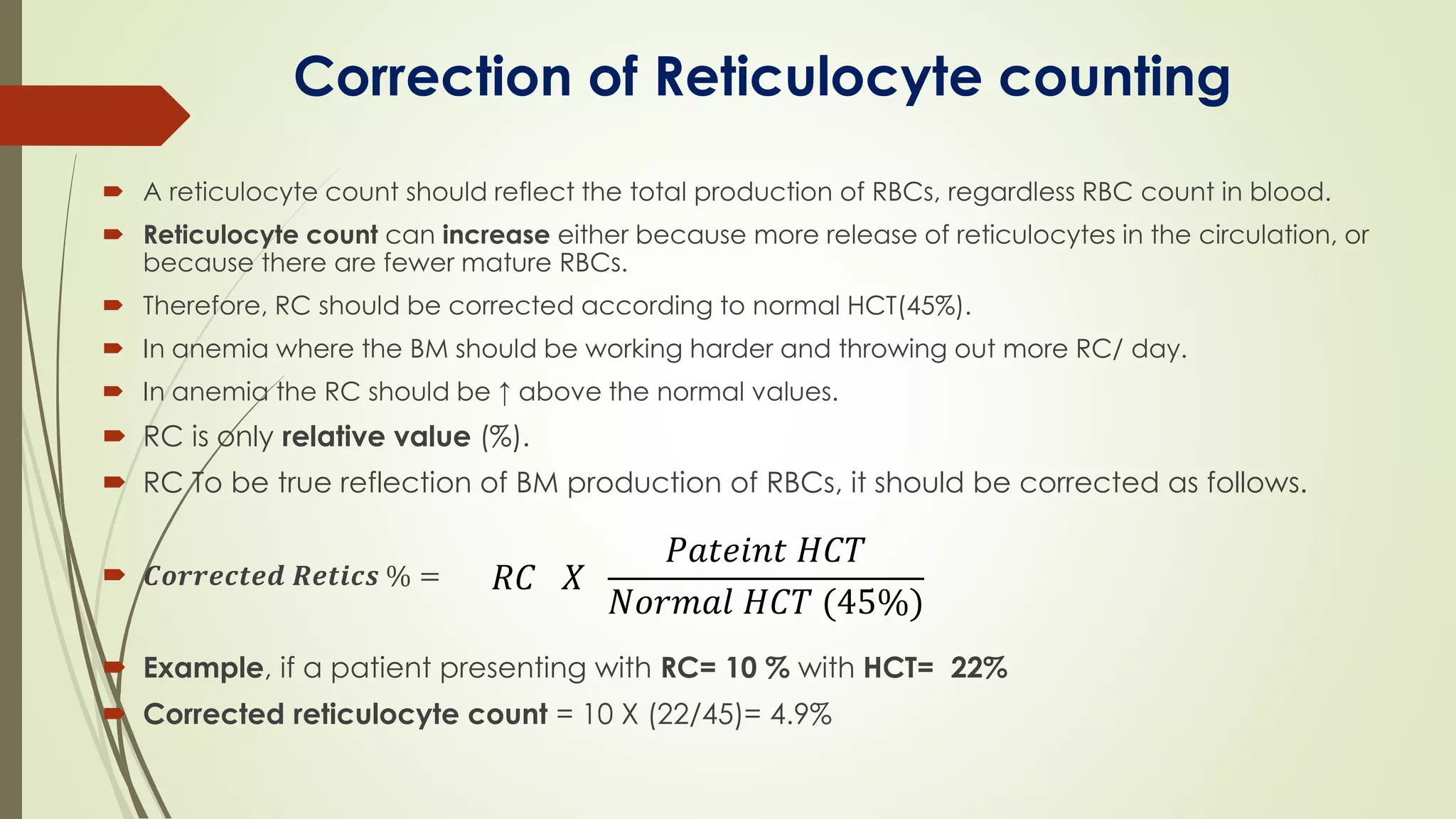
Correction of Reticulocyte counting
 A reticulocyte count should reflect the total production of RBCs, regardless RBC count in blood.
 Reticulocyte count can increase either because more release of reticulocytes in the circulation, or
because there are fewer mature RBCs.
 Therefore, RC should be corrected according to normal HCT(45%).
 In anemia where the BM should be working harder and throwing out more RC/ day.
 In anemia the RC should be ↑ above the normal values.
 RC is only relative value (%).
 RC To be true reflection of BM production of RBCs, it should be corrected as follows.
 𝑪𝒐𝒓𝒓𝒆𝒄𝒕𝒆𝒅 𝑹𝒆𝒕𝒊𝒄𝒔 % =
 Example, if a patient presenting with RC= 10 % with HCT= 22%
 Corrected reticulocyte count = 10 X (22/45)= 4.9%
𝑅𝐶 𝑋
𝑃𝑎𝑡𝑒𝑖𝑛𝑡 𝐻𝐶𝑇
𝑁𝑜𝑟𝑚𝑎𝑙 𝐻𝐶𝑇 (45%)
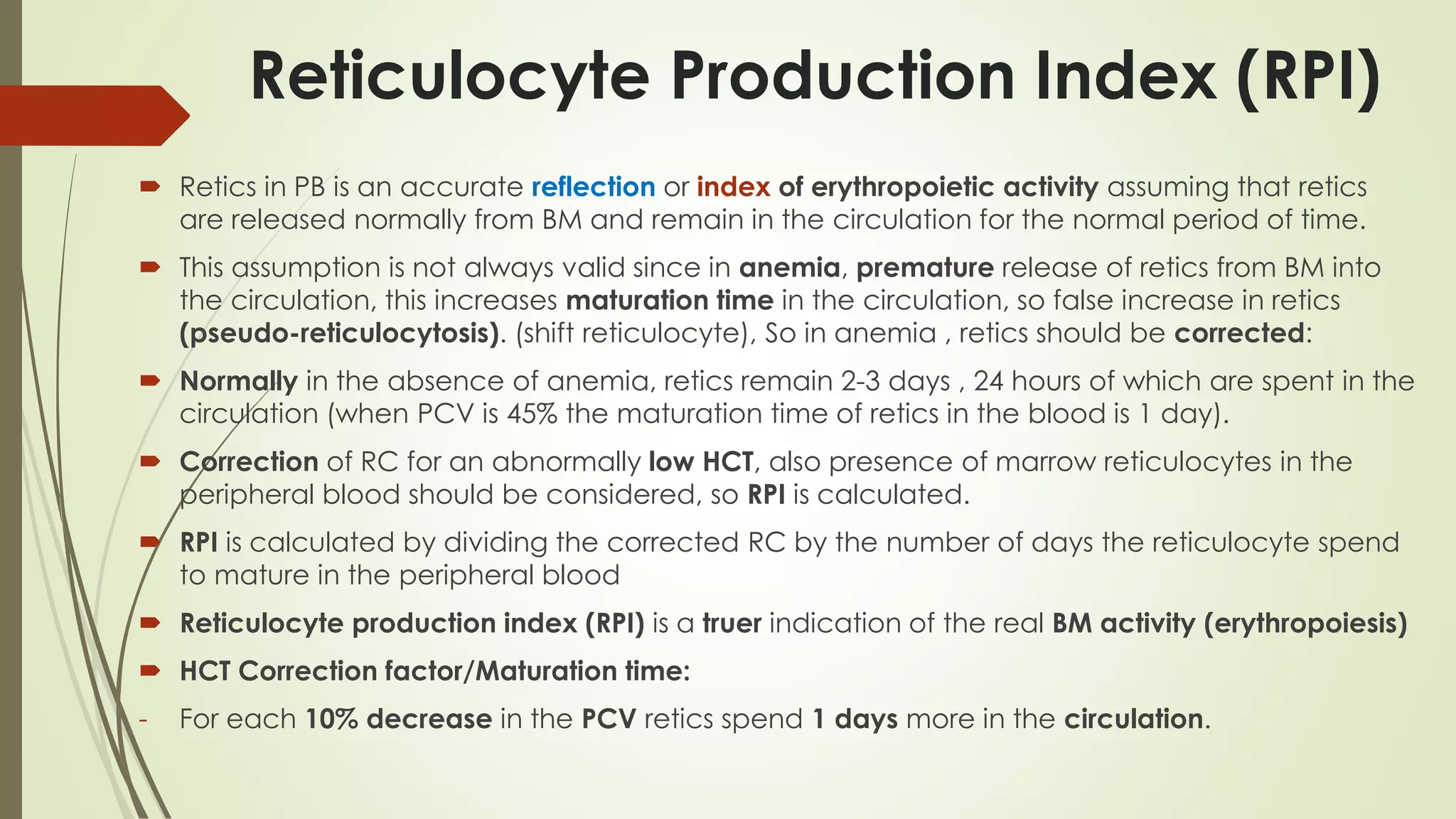
Reticulocyte Production Index (RPI)
 Retics in PB is an accurate reflection or index of erythropoietic activity assuming that retics
are released normally from BM and remain in the circulation for the normal period of time.
 This assumption is not always valid since in anemia, premature release of retics from BM into
the circulation, this increases maturation time in the circulation, so false increase in retics
(pseudo-reticulocytosis). (shift reticulocyte), So in anemia , retics should be corrected:
 Normally in the absence of anemia, retics remain 2-3 days , 24 hours of which are spent in the
circulation (when PCV is 45% the maturation time of retics in the blood is 1 day).
 Correction of RC for an abnormally low HCT, also presence of marrow reticulocytes in the
peripheral blood should be considered, so RPI is calculated.
 RPI is calculated by dividing the corrected RC by the number of days the reticulocyte spend
to mature in the peripheral blood
 Reticulocyte production index (RPI) is a truer indication of the real BM activity (erythropoiesis)
 HCT Correction factor/Maturation time:
- For each 10% decrease in the PCV retics spend 1 days more in the circulation.
 RPI =
 RPI =
 Retic Production Index (RPI) = Corrected retic count (%) / # Days (Maturation time)
 For example, a patient with a RC 10% and a HCT 25% would yield an
RPI of :
 RPI = 10% X ( 25%/ 45%) / 2 = 2.7
Reticulocyte Production index (RPI)
HCT Maturation time
or
HCT Correction factor
PCV 45-36% 1 day
PCV 35-26% 1.5 days
PCV 25-16% 2 days
PCV ≤15% 2.5 days
[𝑅𝐶 𝑋
𝑃𝑎𝑡𝑒𝑖𝑛𝑡 𝐻𝐶𝑇
𝑆𝑡𝑎𝑛𝑑𝑎𝑟𝑑 𝐻𝐶𝑇
] / Maturation index (correction factor)
𝐶𝑜𝑟𝑟𝑒𝑐𝑡𝑒𝑑 𝑅𝐶
𝑀𝑎𝑡𝑢𝑟𝑎𝑡𝑖𝑜𝑛 𝑡𝑖𝑚𝑒
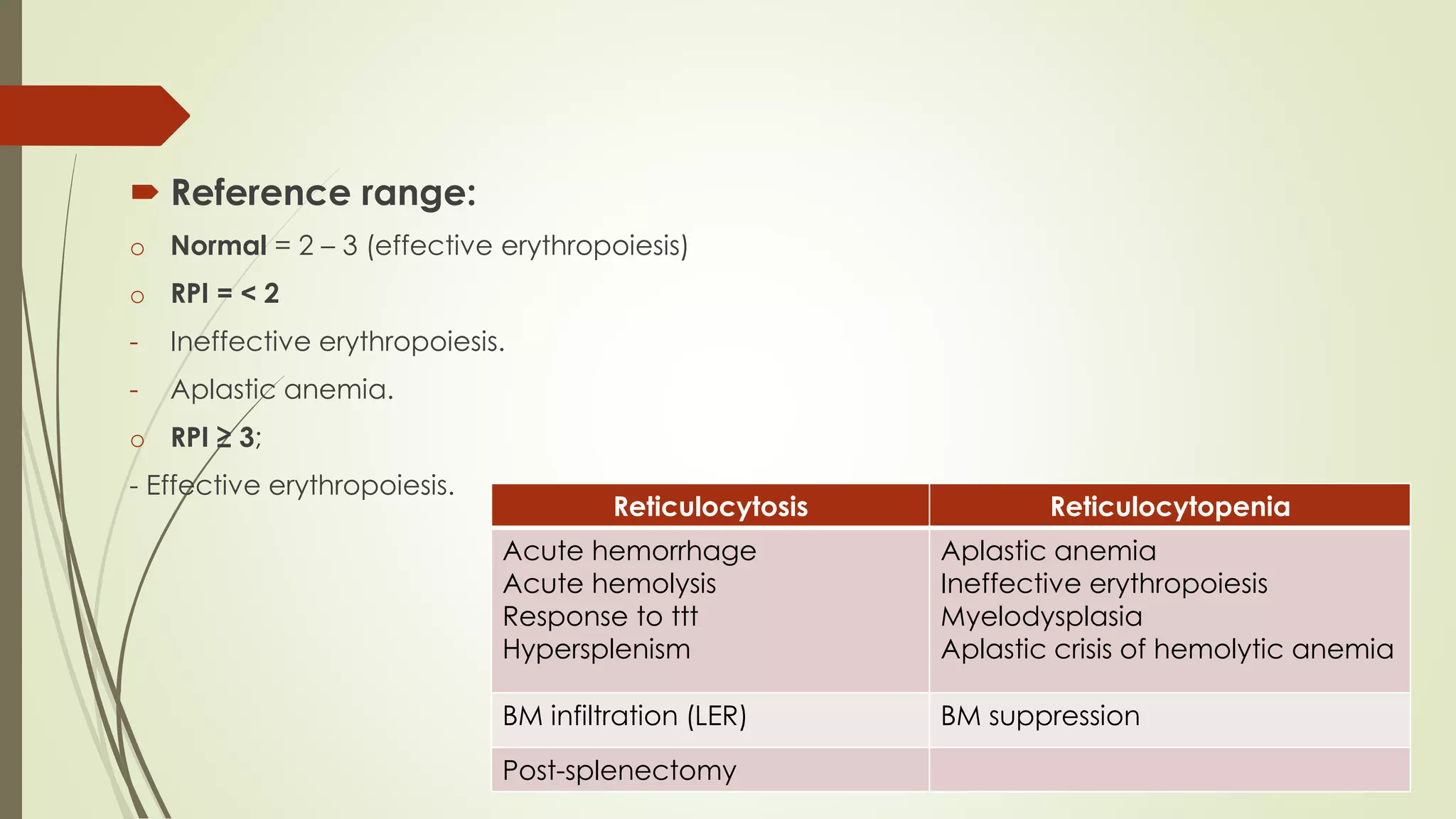
 Reference range:
o Normal = 2 – 3 (effective erythropoiesis)
o RPI = ˂ 2
- Ineffective erythropoiesis.
- Aplastic anemia.
o RPI ≥ 3;
- Effective erythropoiesis.
Reticulocytopenia
Reticulocytosis
Aplastic anemia
Ineffective erythropoiesis
Myelodysplasia
Aplastic crisis of hemolytic anemia
Acute hemorrhage
Acute hemolysis
Response to ttt
Hypersplenism
BM suppression
BM infiltration (LER)
Post-splenectomy
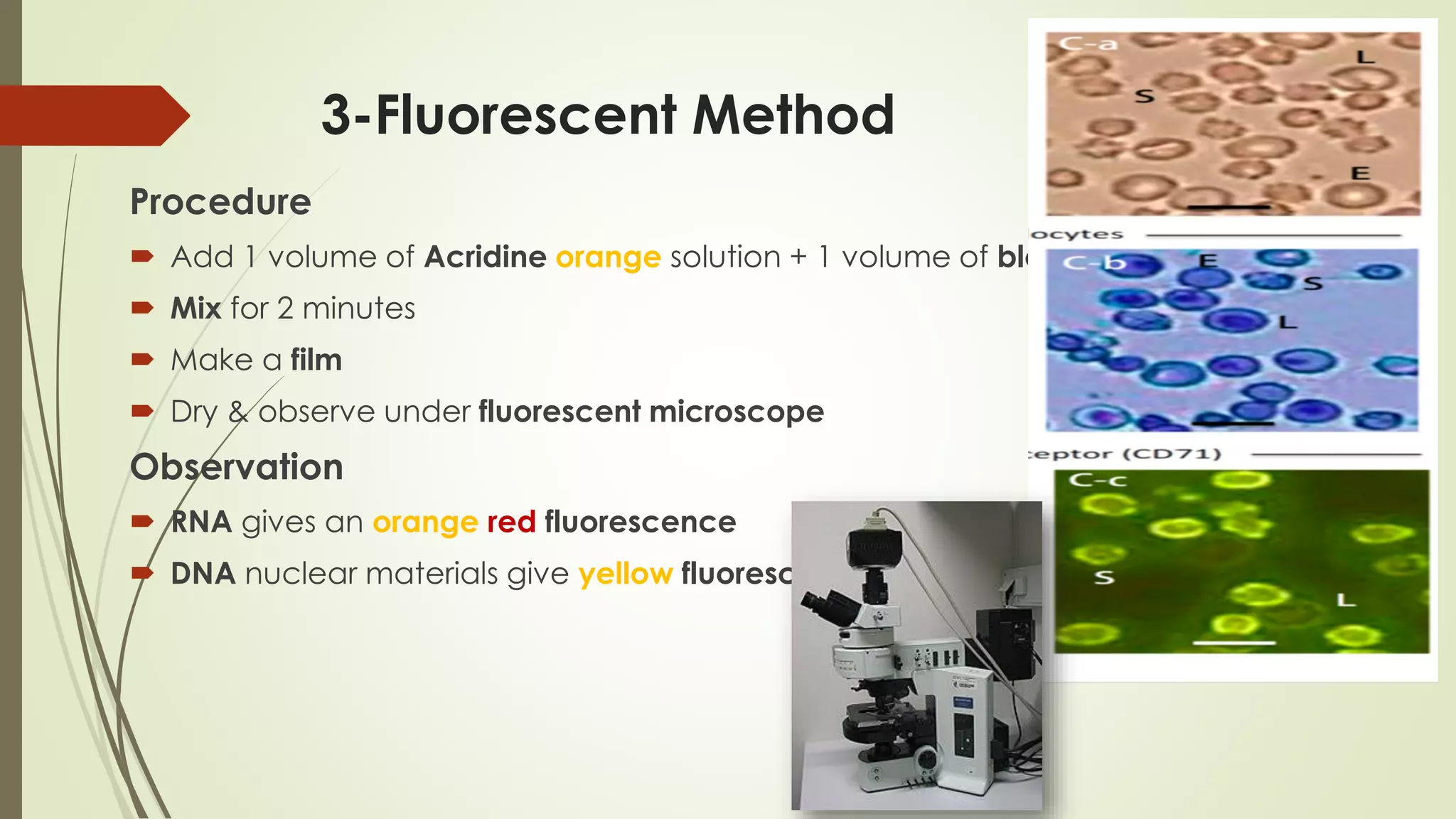
3-Fluorescent Method
Procedure
 Add 1 volume of Acridine orange solution + 1 volume of blood
 Mix for 2 minutes
 Make a film
 Dry & observe under fluorescent microscope
Observation
 RNA gives an orange red fluorescence
 DNA nuclear materials give yellow fluorescence
AUTOMATED RETICULOCYTES COUNT
 Principle:
- Using various dyes and fluorochromes combine with the RNA of RC. so; RCs
fluorescent & counted using a flow cytometer.
 Method of detection:
- Fluorescence (forward light scatter & side fluorescent emission)
 Reagent used:
- Diluent: as Tricine buffer
- Dye: as Polymethine dye + Methanol in ethylene glycol.
 The dyes used in the different systems include:
1. Auramine O or polymethine with oxazine (Sysmex),
2. Thiazole orange (ABX),
3. CD4K 530 (Abbott),
4. Non-fluorescent dyes such as oxazine 750 (Siemens)
5. Traditional New methylene blue (Beckman-Coulter, Abbott).
 After staining, it is necessary to separate the RCs from unstained RBCs, and, because
the dyes also combine with DNA of nucleated cells, these cells must also be
excluded.
 Threshold for this exclusion is determined by the intensity of fluorescence and particle
sizing. Although the separation of RCs from mature RBCs is not always clearcut,
Automated RC correlate well with manual RC.
 Advantages:
- Require small amount of sample (100ul).
- Provide: both relative & absolute count
- Precise: Precision superior to manual count because many more cells are counted
and the subjective element inherent in recognizing late reticulocytes is eliminated.
- Stable: fairly stable in stored blood for
- 1–2 days at room temperature or
- 3–5 days at 4°C.
 Disadvantages:
- Expensive
- Inaccurate: some Leucocytes and platelets and, less often RBCs inclusions as Howell–
Jolly bodies or malarial parasites count as “reticulocyte”.
- Source of errors:
- Fibrin micro clots in sample - Presence of dust in diluent
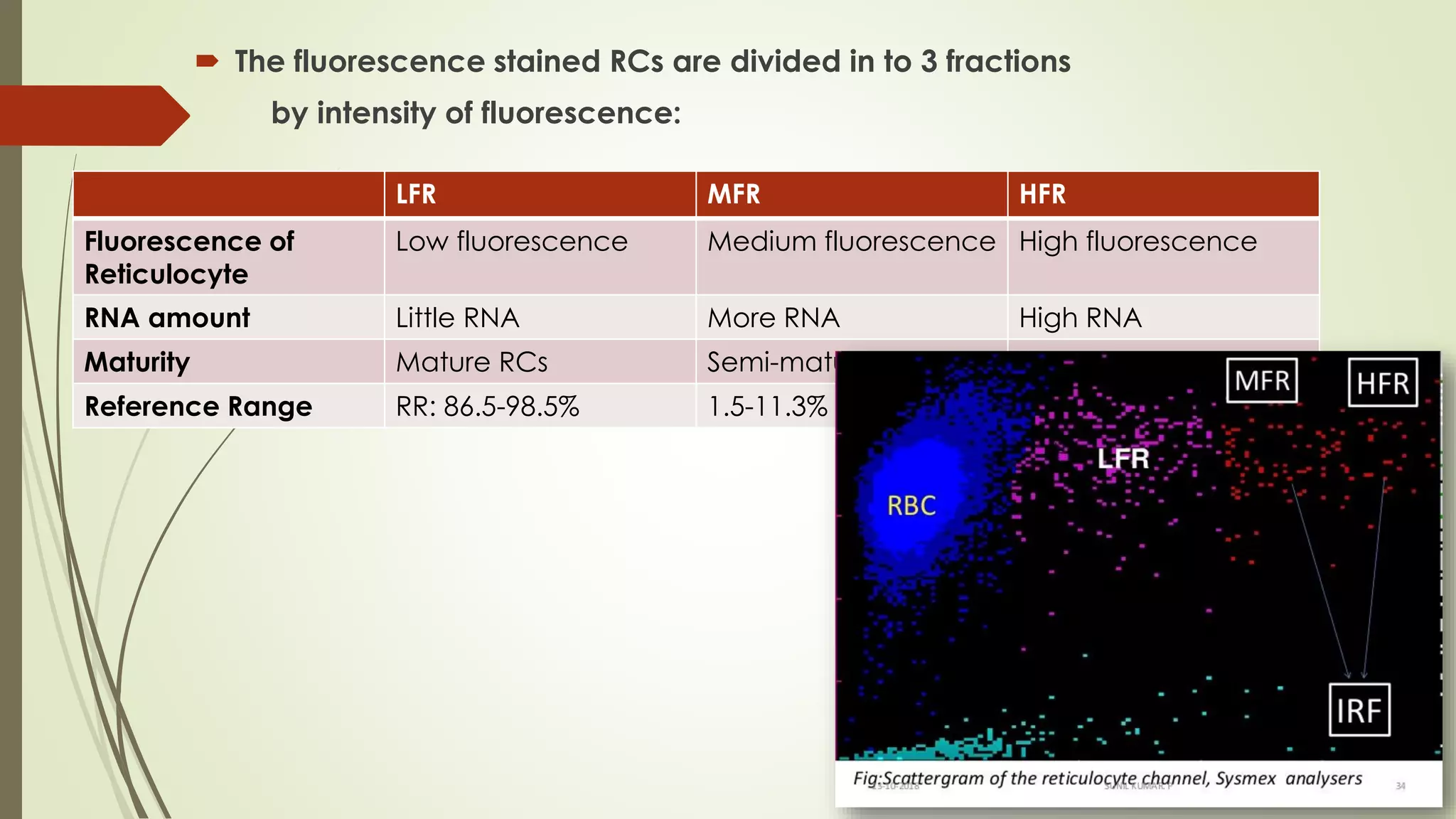
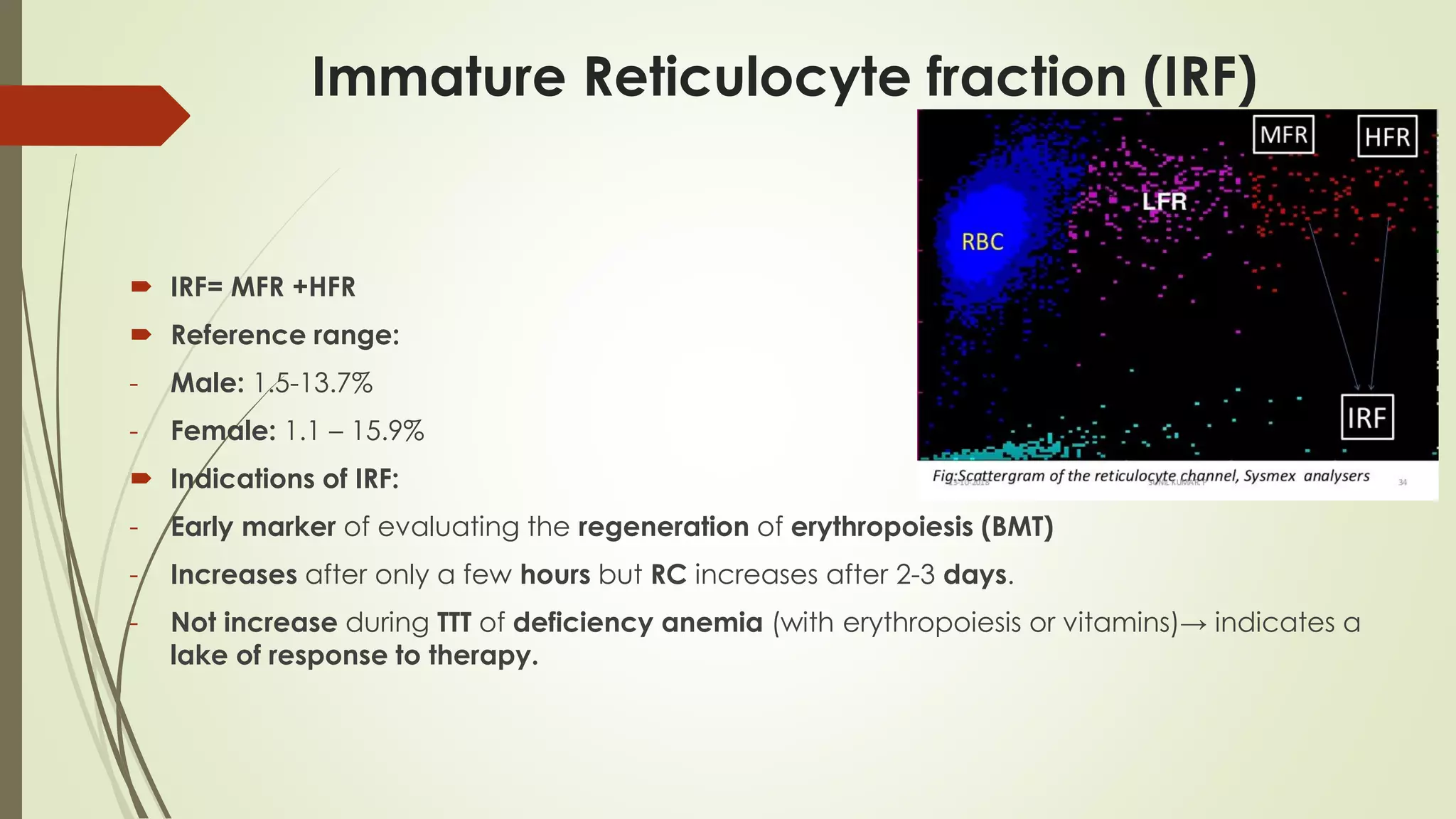
LFR MFR HFR
Fluorescence of
Reticulocyte
Low fluorescence Medium fluorescence High fluorescence
RNA amount Little RNA More RNA High RNA
Maturity Mature RCs Semi-mature RCs Immature RCs
Reference Range RR: 86.5-98.5% 1.5-11.3% 0-1.4%
 The fluorescence stained RCs are divided in to 3 fractions
by intensity of fluorescence:
Immature Reticulocyte fraction (IRF)
 IRF= MFR +HFR
 Reference range:
- Male: 1.5-13.7%
- Female: 1.1 – 15.9%
 Indications of IRF:
- Early marker of evaluating the regeneration of erythropoiesis (BMT)
- Increases after only a few hours but RC increases after 2-3 days.
- Not increase during TTT of deficiency anemia (with erythropoiesis or vitamins)→ indicates a
lake of response to therapy.
Immature Reticulocyte Fraction
 Immature reticulocytes have more RNA and fluoresce more strongly than
the mature reticulocytes.
 Increase in mean fluorescence intensity indicative of presence of immature
reticulocytes has been noted as an early sign of engraftment following BMT
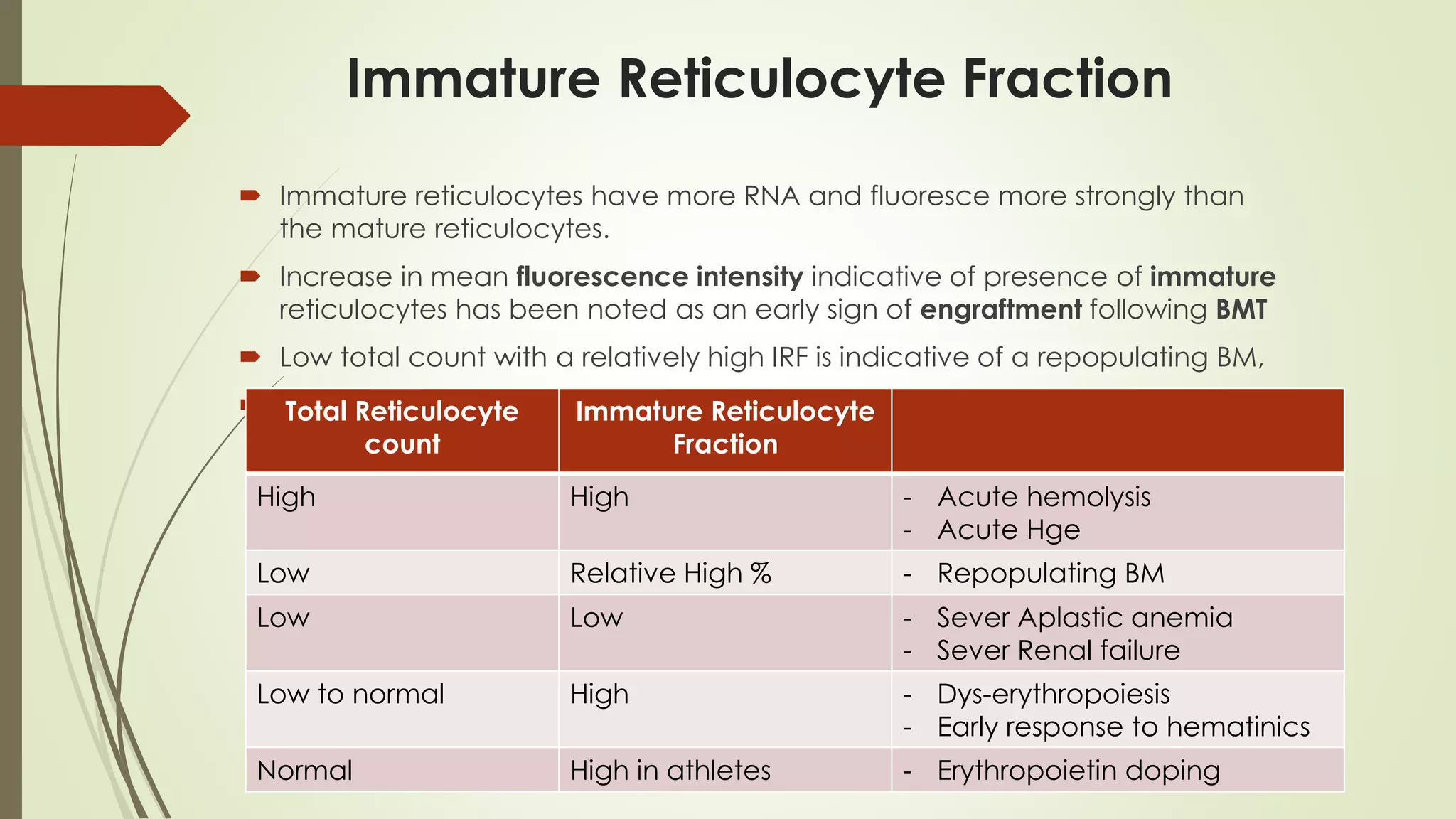
 Low total count with a relatively high IRF is indicative of a repopulating BM,
 Low to normal total count with a high IRF occurs in dys-erythropiesis and in
early response to hematinics.
Total Reticulocyte
count
Immature Reticulocyte
Fraction
High High - Acute hemolysis
- Acute Hge
Low Relative High % - Repopulating BM
Low Low - Sever Aplastic anemia
- Sever Renal failure
Low to normal High - Dys-erythropoiesis
- Early response to hematinics
Normal High in athletes - Erythropoietin doping
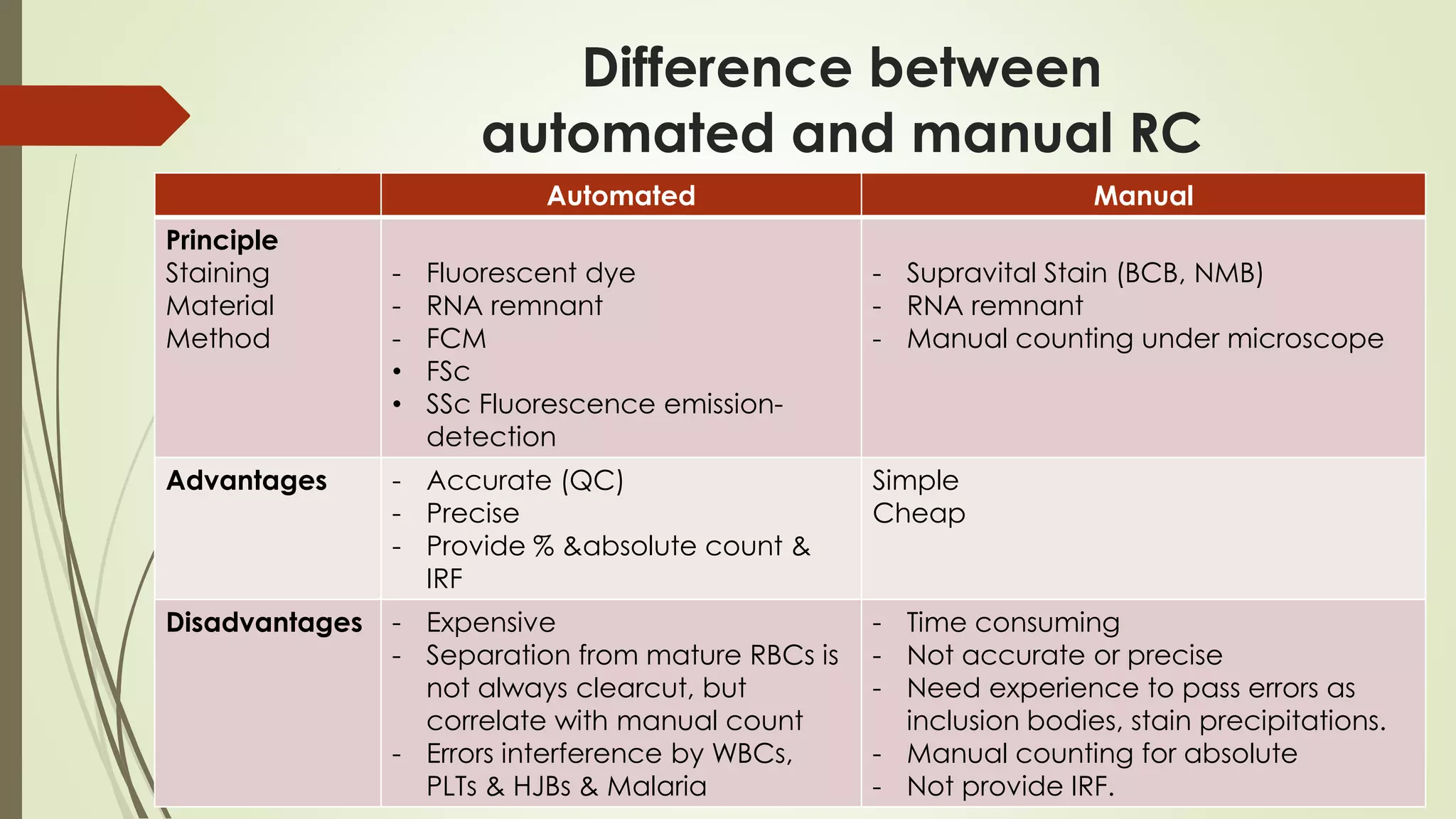
Difference between
automated and manual RC
Automated Manual
Principle
Staining
Material
Method
- Fluorescent dye
- RNA remnant
- FCM
• FSc
• SSc Fluorescence emission-
detection
- Supravital Stain (BCB, NMB)
- RNA remnant
- Manual counting under microscope
Advantages - Accurate (QC)
- Precise
- Provide % &absolute count &
IRF
Simple
Cheap
Disadvantages - Expensive
- Separation from mature RBCs is
not always clearcut, but
correlate with manual count
- Errors interference by WBCs,
PLTs & HJBs & Malaria
- Time consuming
- Not accurate or precise
- Need experience to pass errors as
inclusion bodies, stain precipitations.
- Manual counting for absolute
- Not provide IRF.
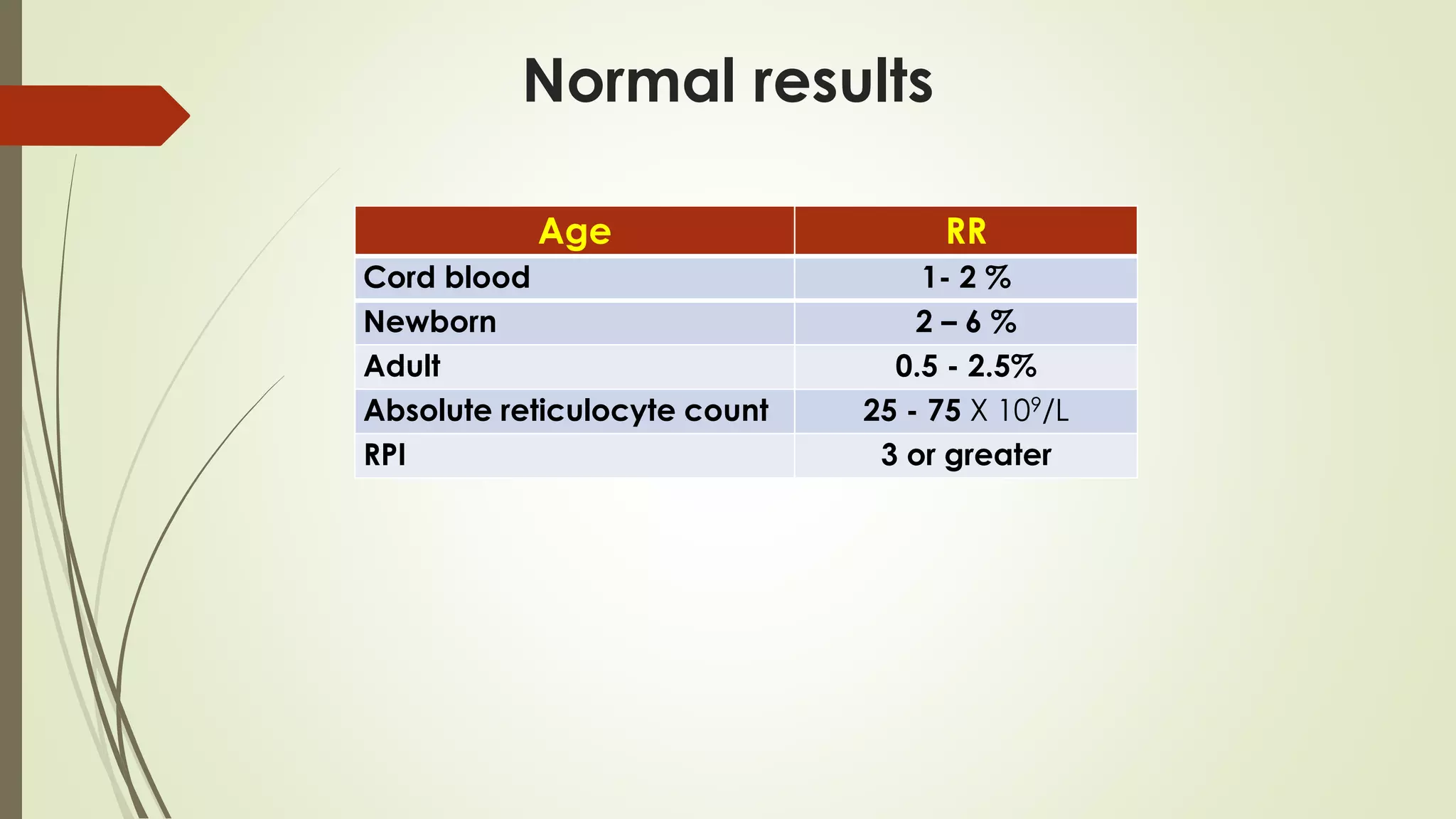
Normal results
RR
Age
1- 2 %
Cord blood
2 – 6 %
Newborn
0.5 - 2.5%
Adult
25 - 75 X 109/L
Absolute reticulocyte count
3 or greater
RPI
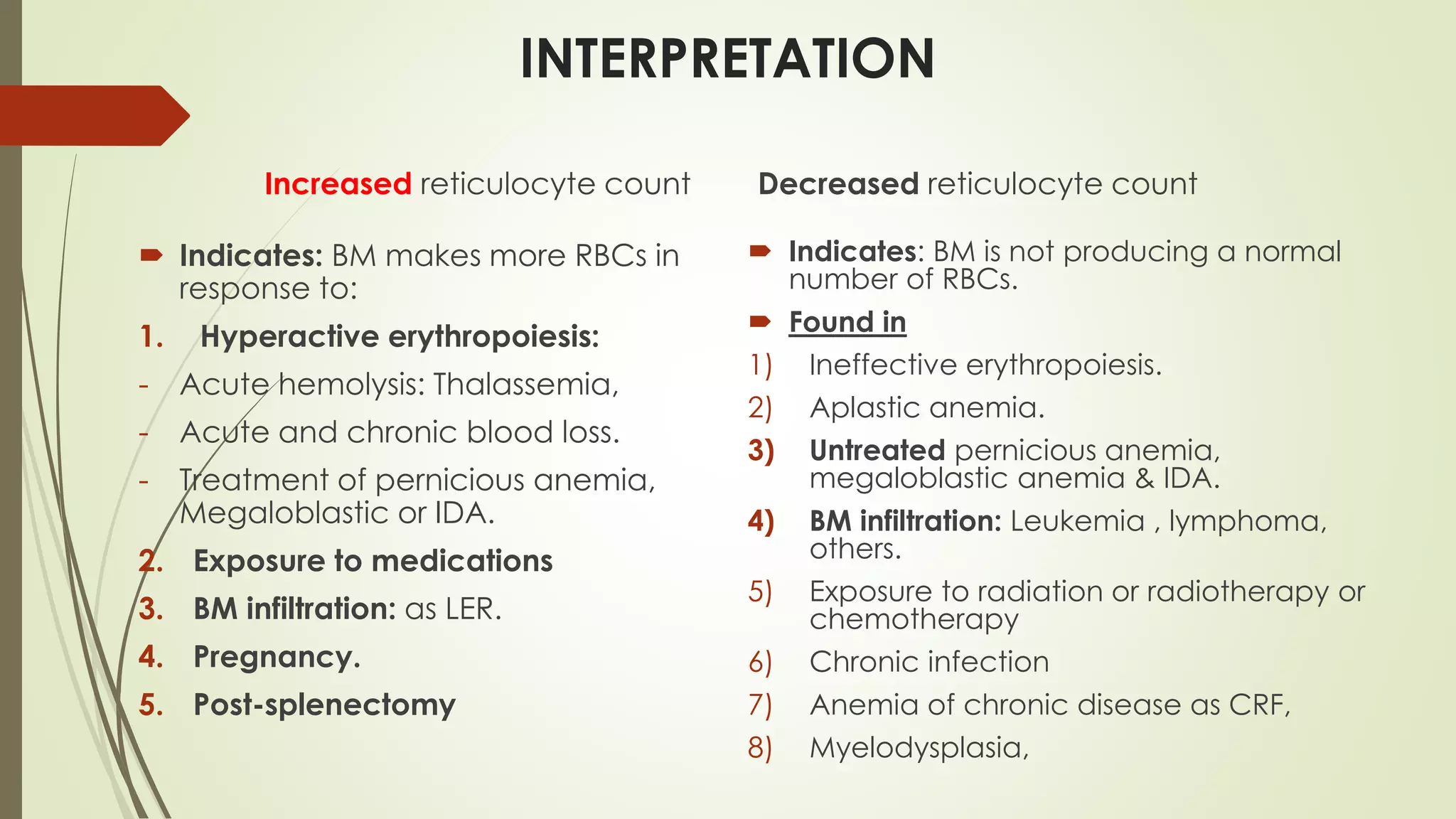
INTERPRETATION
Increased reticulocyte count
 Indicates: BM makes more RBCs in
response to:
1. Hyperactive erythropoiesis:
- Acute hemolysis: Thalassemia,
- Acute and chronic blood loss.
- Treatment of pernicious anemia,
Megaloblastic or IDA.
2. Exposure to medications
3. BM infiltration: as LER.
4. Pregnancy.
5. Post-splenectomy
Decreased reticulocyte count
 Indicates: BM is not producing a normal
number of RBCs.
 Found in
1) Ineffective erythropoiesis.
2) Aplastic anemia.
3) Untreated pernicious anemia,
megaloblastic anemia & IDA.
4) BM infiltration: Leukemia , lymphoma,
others.
5) Exposure to radiation or radiotherapy or
chemotherapy
6) Chronic infection
7) Anemia of chronic disease as CRF,
8) Myelodysplasia,
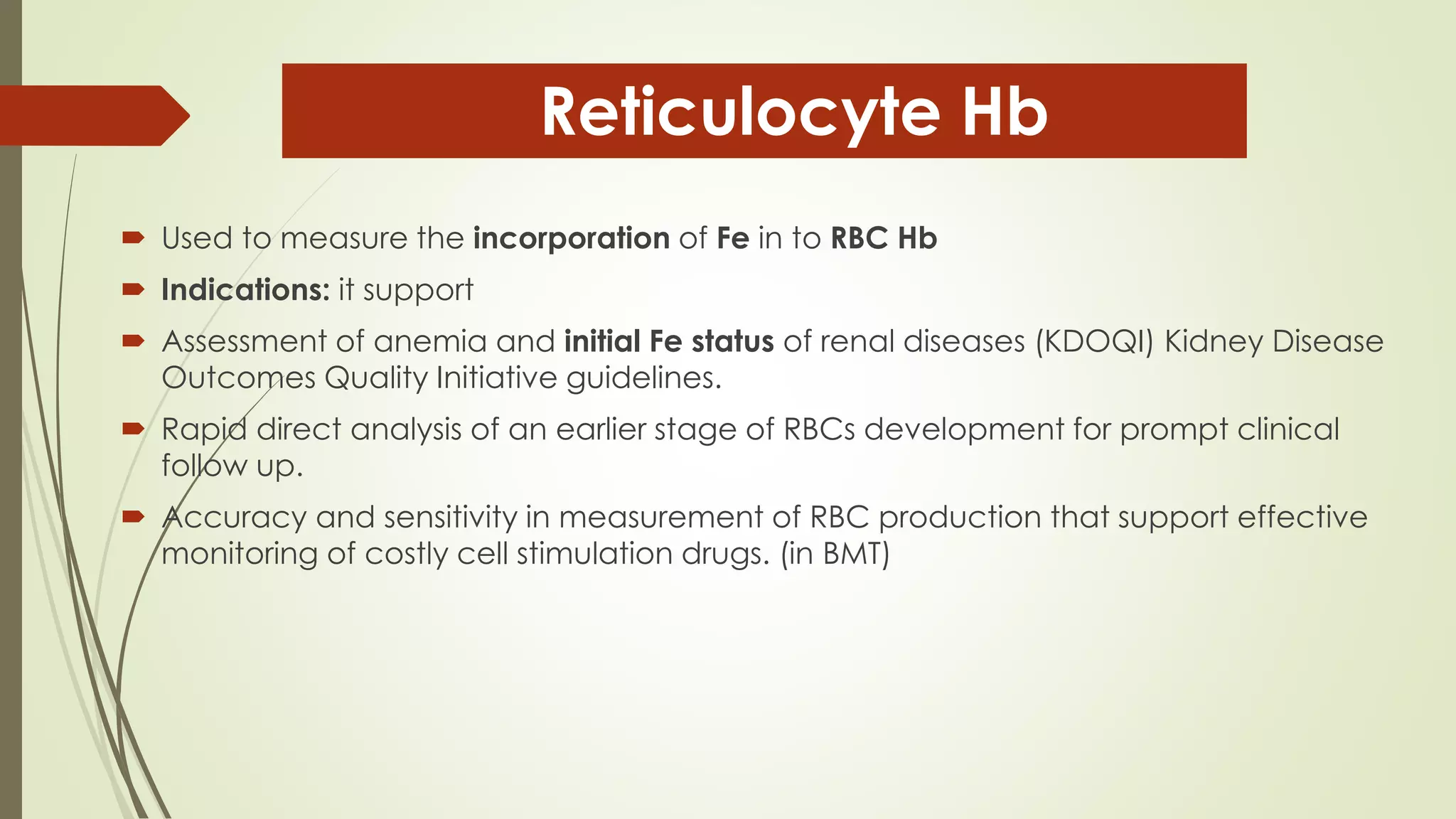
 Used to measure the incorporation of Fe in to RBC Hb
 Indications: it support
 Assessment of anemia and initial Fe status of renal diseases (KDOQI) Kidney Disease
Outcomes Quality Initiative guidelines.
 Rapid direct analysis of an earlier stage of RBCs development for prompt clinical
follow up.
 Accuracy and sensitivity in measurement of RBC production that support effective
monitoring of costly cell stimulation drugs. (in BMT)
Reticulocyte Hb
‫علي‬ ‫المحاضرة‬ ‫شرح‬
‫يوتيوب‬
Illustration Lecturer on youtube
 Reticulocyte count
 https://www.youtube.com/watch?v=bcK3Y8ZoS9M&t=77s
 Blood film
 https://www.youtube.com/watch?v=ezjO4CnEO1s&t=1447s
 Practical Hematology: V. Dacie & SM Lewis.
 Essentials of Hematology: Shirish M.Kawthalkar.
 Advanced Laboratory Methods in Hematology: R. Martin
References
Reticulocytic count .pdf

Reticulocytic count .pdf

  • 1.
    Dr. Mohamed Shaheen MBBCh,MSc, MD, IPCD, HHMD Lecturer of Clinical Pathology- Al-Azhar University Chief Infection Control team El-Hussien hospital
  • 2.
     Introduction  Morphology Maturation & stages  Methods: manual (staining)& automated.  Methods of Counting  Results & calculations: Corrected RC, absolute count & RPI.  Normal range  Interpretation: low & high.  Discussion Topics
  • 3.
     DEFINITION: - Reticulocytesare immature non-nucleated RBCs which contain remnant of ribosomal RNA & organelles such as mitochondria and ribosomes. - They are called reticulocytes because of a reticular (mesh-like) network of ribosomal RNA that is visible under a microscope.  Morphology: - Size: slightly larger than normal RBCs (20%) and this explains why diseases causing reticulocytosis cause macrocytosis (pseudomacrocytic). - Shape: - By Romanowsky stain as Leishman stain without nucleus appears polychromatic cell. - By BCB stain, RC consists of at least 2 basophilic dots in cytoplasm(blue stained RNA remnants). - At clear distance from cell wall to be distinguished from Heinz bodies. - Contain other organelles: as mitochondria, remnants of Golgi apparatus, centrioles & ferritin molecules. Introduction
  • 4.
     RBCs havesix stages : 1) Pronormoblast 2) Basophilic normoblast 3) Polychromatophilic normoblast 4) Orthochromic normoblast 5) Reticulocyte 6) Mature red blood cell.  MATURATION: - Retics spend 2-3 days in the BM for maturation and 1 day in peripheral blood.  B.M. replaces 1 % of the adult RBCs every day. Maturation
  • 5.
    Function - Indicationof counting  Function: o Immature RBCs which mature within hours to compensate defect in count or function or Hb concentration. (Carry Hb which carry O2 from lung to tissues and Co2 from Tissue to lung).  Indication o It gives an idea of BM activity level. o Reflect effective RBCs production taking place in BM. o All types of Anemia o Therapeutic Monitoring of IDA & Megaloblastic anemia o Monitoring during stem cell transplantation.
  • 6.
    Methods of counting MANUAL Supravitalstain Fluorescence Miller ocular AUTOMATED (FCM)
  • 7.
     SUPRAVITAL STAINSi.e. staining of viable cell in vitro = (Vital dyes) 1. Brilliant Cresyl blue: (1gm powder + 80 ml saline +20 ml Na citrate). 2. New Methylene blue: more deep ,more uniform. 3. Azure B: no precipitate, available in pure form.  WRIGHT STAIN / Leishman stain: - Reticulocyte appears polychromatophilic or as a macrocytic blue RBC (methanol dissolves RNA).  PRINCIPLE: - To detect the presence of reticulocytes, ribosomal RNA must be stained (alive) while they are still living. This process is called supra-vital staining. - Ribosomal RNA, being acid, reacts with certain basic dyes to form a blue precipitate of granules as filaments network of reticulum. STAINING
  • 8.
    Wright /Leishman stain: -Polychromasia - Larger in size Supravital stain: - Dots - Smaller in size
  • 9.
  • 10.
  • 11.
     Reading:  Useoil immersion lens (100 X).  Choose area with good staining and undistorted nor overlapped cells.  Choose field where RBC are countable (not too numerous & not too few)  COUNTING:  Count no. of RCs in1000 RBCs including RCs, (RC % in 1000 RBCs).  In Reticulocytes the RNA is stained deep blue (blue dots).  The non reticulated cell is stained pale greenish.  If RCs are few in count, it should be survey a large no. of RBCs to obtain precise result. If no retics are seen after screening , at least 2 films must be examined to say none seen.  Count RC in 1000 RBCs, (RC % in 1000 RBCs).  This number is divided by 10 to express reticulocyte count in percent %. MICROSCOPIC COUNTING
  • 14.
    1. Average thetwo results and calculate the reticulocyte count as shown below.  % Reticulocytes = Number of reticulocytes in 1000 RBCs × 100 1000 (RBC's observed) - EXAMPLE: 25 reticulocytes in 1,000 total RBC’s - Reticulocyte count = 25 x 100 = 2.5% 1000  1000 RBC contain → 25 RC.  100 RBC contain → RC ?? Results & Calculation 𝟐𝟓 𝟕𝟎 X 100 = 35 %
  • 15.
     Absolute ReticulocyteCount (ARC): - Definition: It is actual number of reticulocytes in 1L of whole blood. - Absolute RC = RC% X RBCs = 𝑹𝑪 𝑿 𝑹𝑩𝑪𝒔 𝟏𝟎𝟎  Example: - A patient's RC is 2% and the RBCs count is 2.20 X 10¹²/L - Normal RBCs count (3.6-5.6) X 1012/L, - ARC would be calculated as follows: - ARC = 2 X (2.20 X 1012/L) = 4.4 X10¹²/L = 44.0X10⁹/L - 100 100
  • 16.
    Correction of Reticulocytecounting  A reticulocyte count should reflect the total production of RBCs, regardless RBC count in blood.  Reticulocyte count can increase either because more release of reticulocytes in the circulation, or because there are fewer mature RBCs.  Therefore, RC should be corrected according to normal HCT(45%).  In anemia where the BM should be working harder and throwing out more RC/ day.  In anemia the RC should be ↑ above the normal values.  RC is only relative value (%).  RC To be true reflection of BM production of RBCs, it should be corrected as follows.  𝑪𝒐𝒓𝒓𝒆𝒄𝒕𝒆𝒅 𝑹𝒆𝒕𝒊𝒄𝒔 % =  Example, if a patient presenting with RC= 10 % with HCT= 22%  Corrected reticulocyte count = 10 X (22/45)= 4.9% 𝑅𝐶 𝑋 𝑃𝑎𝑡𝑒𝑖𝑛𝑡 𝐻𝐶𝑇 𝑁𝑜𝑟𝑚𝑎𝑙 𝐻𝐶𝑇 (45%)
  • 17.
    Reticulocyte Production Index(RPI)  Retics in PB is an accurate reflection or index of erythropoietic activity assuming that retics are released normally from BM and remain in the circulation for the normal period of time.  This assumption is not always valid since in anemia, premature release of retics from BM into the circulation, this increases maturation time in the circulation, so false increase in retics (pseudo-reticulocytosis). (shift reticulocyte), So in anemia , retics should be corrected:  Normally in the absence of anemia, retics remain 2-3 days , 24 hours of which are spent in the circulation (when PCV is 45% the maturation time of retics in the blood is 1 day).  Correction of RC for an abnormally low HCT, also presence of marrow reticulocytes in the peripheral blood should be considered, so RPI is calculated.  RPI is calculated by dividing the corrected RC by the number of days the reticulocyte spend to mature in the peripheral blood  Reticulocyte production index (RPI) is a truer indication of the real BM activity (erythropoiesis)  HCT Correction factor/Maturation time: - For each 10% decrease in the PCV retics spend 1 days more in the circulation.
  • 18.
     RPI = RPI =  Retic Production Index (RPI) = Corrected retic count (%) / # Days (Maturation time)  For example, a patient with a RC 10% and a HCT 25% would yield an RPI of :  RPI = 10% X ( 25%/ 45%) / 2 = 2.7 Reticulocyte Production index (RPI) HCT Maturation time or HCT Correction factor PCV 45-36% 1 day PCV 35-26% 1.5 days PCV 25-16% 2 days PCV ≤15% 2.5 days [𝑅𝐶 𝑋 𝑃𝑎𝑡𝑒𝑖𝑛𝑡 𝐻𝐶𝑇 𝑆𝑡𝑎𝑛𝑑𝑎𝑟𝑑 𝐻𝐶𝑇 ] / Maturation index (correction factor) 𝐶𝑜𝑟𝑟𝑒𝑐𝑡𝑒𝑑 𝑅𝐶 𝑀𝑎𝑡𝑢𝑟𝑎𝑡𝑖𝑜𝑛 𝑡𝑖𝑚𝑒
  • 19.
     Reference range: oNormal = 2 – 3 (effective erythropoiesis) o RPI = ˂ 2 - Ineffective erythropoiesis. - Aplastic anemia. o RPI ≥ 3; - Effective erythropoiesis. Reticulocytopenia Reticulocytosis Aplastic anemia Ineffective erythropoiesis Myelodysplasia Aplastic crisis of hemolytic anemia Acute hemorrhage Acute hemolysis Response to ttt Hypersplenism BM suppression BM infiltration (LER) Post-splenectomy
  • 20.
    3-Fluorescent Method Procedure  Add1 volume of Acridine orange solution + 1 volume of blood  Mix for 2 minutes  Make a film  Dry & observe under fluorescent microscope Observation  RNA gives an orange red fluorescence  DNA nuclear materials give yellow fluorescence
  • 21.
    AUTOMATED RETICULOCYTES COUNT Principle: - Using various dyes and fluorochromes combine with the RNA of RC. so; RCs fluorescent & counted using a flow cytometer.  Method of detection: - Fluorescence (forward light scatter & side fluorescent emission)  Reagent used: - Diluent: as Tricine buffer - Dye: as Polymethine dye + Methanol in ethylene glycol.  The dyes used in the different systems include: 1. Auramine O or polymethine with oxazine (Sysmex), 2. Thiazole orange (ABX), 3. CD4K 530 (Abbott), 4. Non-fluorescent dyes such as oxazine 750 (Siemens) 5. Traditional New methylene blue (Beckman-Coulter, Abbott).
  • 22.
     After staining,it is necessary to separate the RCs from unstained RBCs, and, because the dyes also combine with DNA of nucleated cells, these cells must also be excluded.  Threshold for this exclusion is determined by the intensity of fluorescence and particle sizing. Although the separation of RCs from mature RBCs is not always clearcut, Automated RC correlate well with manual RC.  Advantages: - Require small amount of sample (100ul). - Provide: both relative & absolute count - Precise: Precision superior to manual count because many more cells are counted and the subjective element inherent in recognizing late reticulocytes is eliminated. - Stable: fairly stable in stored blood for - 1–2 days at room temperature or - 3–5 days at 4°C.  Disadvantages: - Expensive - Inaccurate: some Leucocytes and platelets and, less often RBCs inclusions as Howell– Jolly bodies or malarial parasites count as “reticulocyte”. - Source of errors: - Fibrin micro clots in sample - Presence of dust in diluent
  • 23.
    LFR MFR HFR Fluorescenceof Reticulocyte Low fluorescence Medium fluorescence High fluorescence RNA amount Little RNA More RNA High RNA Maturity Mature RCs Semi-mature RCs Immature RCs Reference Range RR: 86.5-98.5% 1.5-11.3% 0-1.4%  The fluorescence stained RCs are divided in to 3 fractions by intensity of fluorescence:
  • 24.
    Immature Reticulocyte fraction(IRF)  IRF= MFR +HFR  Reference range: - Male: 1.5-13.7% - Female: 1.1 – 15.9%  Indications of IRF: - Early marker of evaluating the regeneration of erythropoiesis (BMT) - Increases after only a few hours but RC increases after 2-3 days. - Not increase during TTT of deficiency anemia (with erythropoiesis or vitamins)→ indicates a lake of response to therapy.
  • 25.
    Immature Reticulocyte Fraction Immature reticulocytes have more RNA and fluoresce more strongly than the mature reticulocytes.  Increase in mean fluorescence intensity indicative of presence of immature reticulocytes has been noted as an early sign of engraftment following BMT  Low total count with a relatively high IRF is indicative of a repopulating BM,  Low to normal total count with a high IRF occurs in dys-erythropiesis and in early response to hematinics. Total Reticulocyte count Immature Reticulocyte Fraction High High - Acute hemolysis - Acute Hge Low Relative High % - Repopulating BM Low Low - Sever Aplastic anemia - Sever Renal failure Low to normal High - Dys-erythropoiesis - Early response to hematinics Normal High in athletes - Erythropoietin doping
  • 26.
    Difference between automated andmanual RC Automated Manual Principle Staining Material Method - Fluorescent dye - RNA remnant - FCM • FSc • SSc Fluorescence emission- detection - Supravital Stain (BCB, NMB) - RNA remnant - Manual counting under microscope Advantages - Accurate (QC) - Precise - Provide % &absolute count & IRF Simple Cheap Disadvantages - Expensive - Separation from mature RBCs is not always clearcut, but correlate with manual count - Errors interference by WBCs, PLTs & HJBs & Malaria - Time consuming - Not accurate or precise - Need experience to pass errors as inclusion bodies, stain precipitations. - Manual counting for absolute - Not provide IRF.
  • 27.
    Normal results RR Age 1- 2% Cord blood 2 – 6 % Newborn 0.5 - 2.5% Adult 25 - 75 X 109/L Absolute reticulocyte count 3 or greater RPI
  • 28.
    INTERPRETATION Increased reticulocyte count Indicates: BM makes more RBCs in response to: 1. Hyperactive erythropoiesis: - Acute hemolysis: Thalassemia, - Acute and chronic blood loss. - Treatment of pernicious anemia, Megaloblastic or IDA. 2. Exposure to medications 3. BM infiltration: as LER. 4. Pregnancy. 5. Post-splenectomy Decreased reticulocyte count  Indicates: BM is not producing a normal number of RBCs.  Found in 1) Ineffective erythropoiesis. 2) Aplastic anemia. 3) Untreated pernicious anemia, megaloblastic anemia & IDA. 4) BM infiltration: Leukemia , lymphoma, others. 5) Exposure to radiation or radiotherapy or chemotherapy 6) Chronic infection 7) Anemia of chronic disease as CRF, 8) Myelodysplasia,
  • 29.
     Used tomeasure the incorporation of Fe in to RBC Hb  Indications: it support  Assessment of anemia and initial Fe status of renal diseases (KDOQI) Kidney Disease Outcomes Quality Initiative guidelines.  Rapid direct analysis of an earlier stage of RBCs development for prompt clinical follow up.  Accuracy and sensitivity in measurement of RBC production that support effective monitoring of costly cell stimulation drugs. (in BMT) Reticulocyte Hb
  • 30.
    ‫علي‬ ‫المحاضرة‬ ‫شرح‬ ‫يوتيوب‬ IllustrationLecturer on youtube  Reticulocyte count  https://www.youtube.com/watch?v=bcK3Y8ZoS9M&t=77s  Blood film  https://www.youtube.com/watch?v=ezjO4CnEO1s&t=1447s
  • 31.
     Practical Hematology:V. Dacie & SM Lewis.  Essentials of Hematology: Shirish M.Kawthalkar.  Advanced Laboratory Methods in Hematology: R. Martin References