Energy in Motion8SCIENCE Mon. May 16
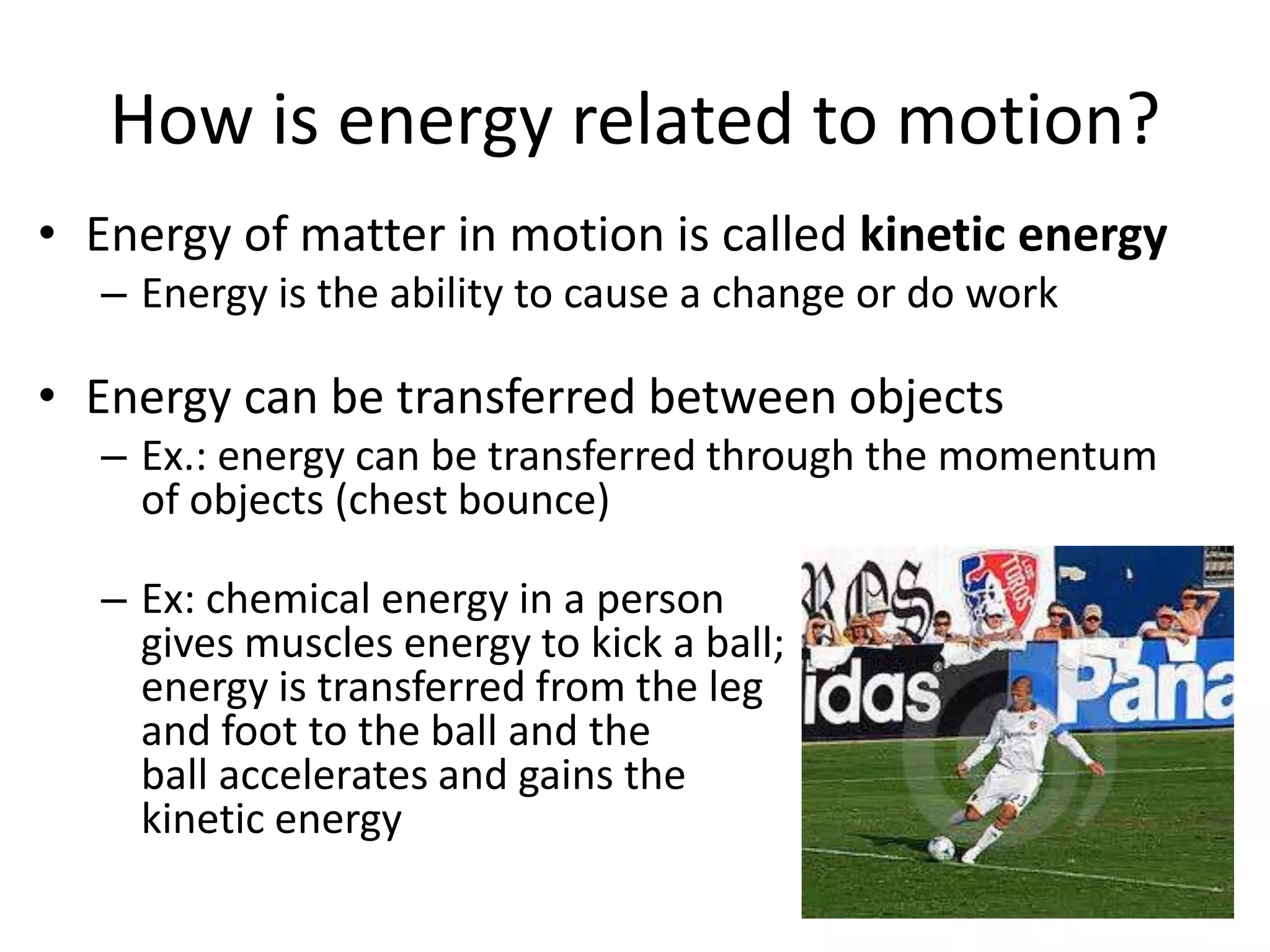
How is energy related to motion?Energy of matter in motion is called kinetic energyEnergy is the ability to cause a change or do workEnergy can be transferred between objectsEx.: energy can be transferred through the momentum of objects (chest bounce)Ex: chemical energy in a person gives muscles energy to kick a ball; energy is transferred from the leg and foot to the ball and the ball accelerates and gains the kinetic energy
Law of Conservation of EnergyEx: as you kick a soccer ball, the energy from your leg is the same amount of energy transferred to the ballThis is the law of conservation of energy:Energy is neither created or destroyed, but can only transform from one form to another
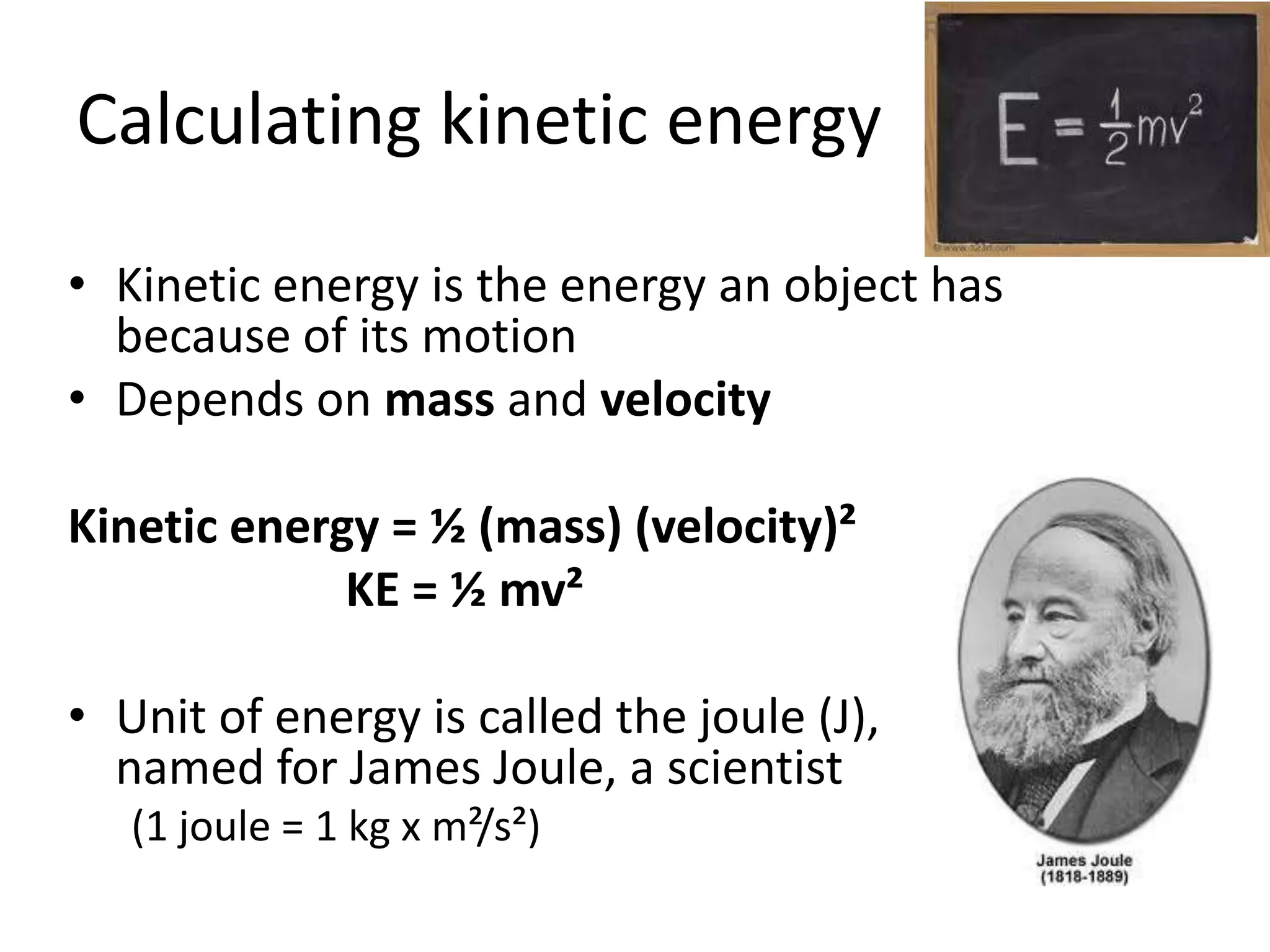
Calculating kinetic energyKinetic energy is the energy an object has because of its motionDepends on mass and velocityKinetic energy = ½ (mass) (velocity)²		  KE = ½ mv²Unit of energy is called the joule (J), named for James Joule, a scientist(1 joule = 1 kg x m²/s²)
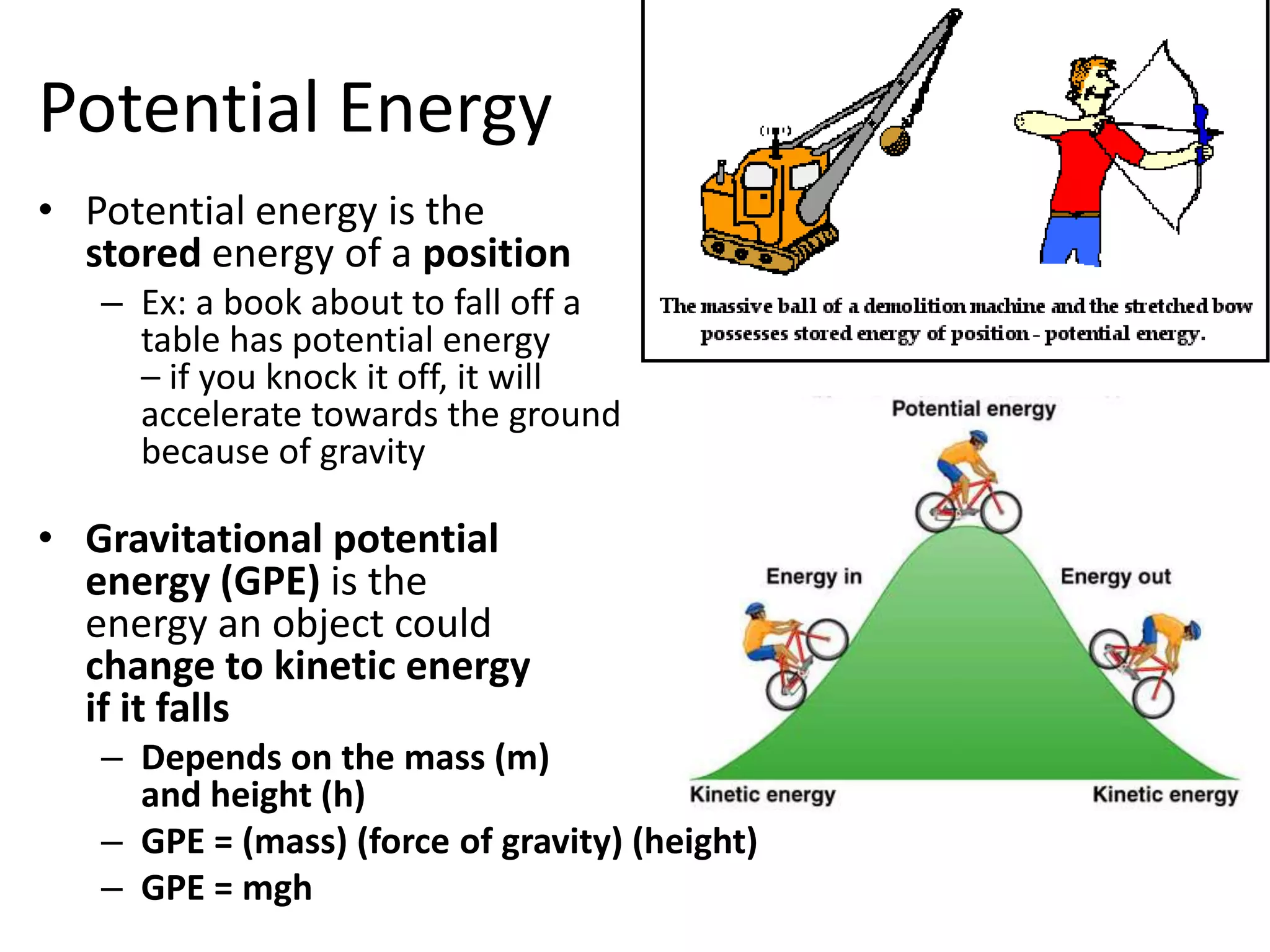
Potential EnergyPotential energy is the stored energy of a positionEx: a book about to fall off a table has potential energy – if you knock it off, it will accelerate towards the ground because of gravityGravitational potential energy (GPE) is the energy an object could change to kinetic energy if it fallsDepends on the mass (m) and height (h)GPE = (mass) (force of gravity) (height)GPE = mgh
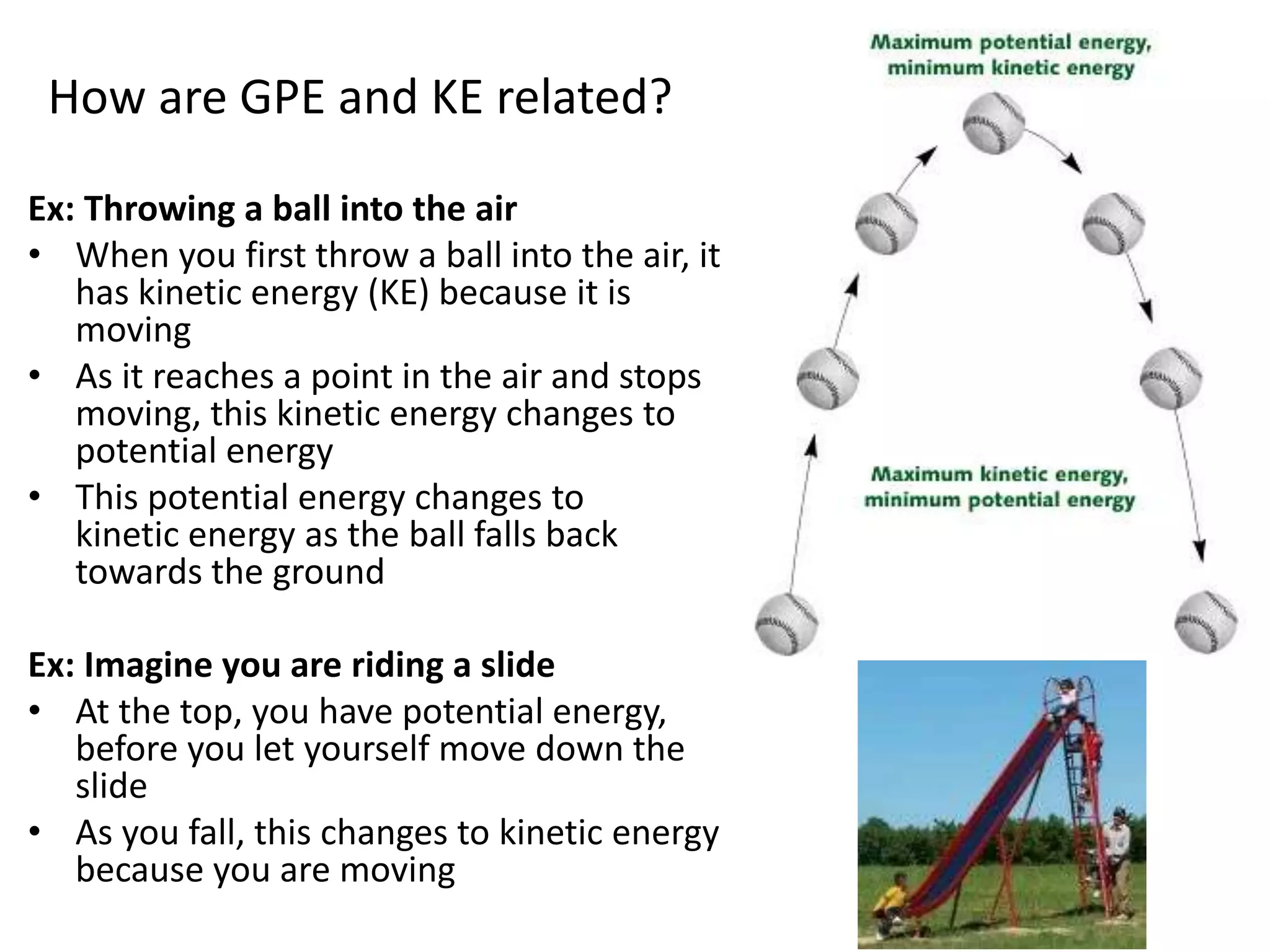
How are GPE and KE related?Ex: Throwing a ball into the airWhen you first throw a ball into the air, ithas kinetic energy (KE) because it is movingAs it reaches a point in the air and stops moving, this kinetic energy changes to potential energyThis potential energy changes to kinetic energy as the ball falls back towards the groundEx: Imagine you are riding a slideAt the top, you have potential energy, before you let yourself move down the slideAs you fall, this changes to kinetic energy because you are moving

Energy in motion

  • 1.
  • 2.
    How is energyrelated to motion?Energy of matter in motion is called kinetic energyEnergy is the ability to cause a change or do workEnergy can be transferred between objectsEx.: energy can be transferred through the momentum of objects (chest bounce)Ex: chemical energy in a person gives muscles energy to kick a ball; energy is transferred from the leg and foot to the ball and the ball accelerates and gains the kinetic energy
  • 3.
    Law of Conservationof EnergyEx: as you kick a soccer ball, the energy from your leg is the same amount of energy transferred to the ballThis is the law of conservation of energy:Energy is neither created or destroyed, but can only transform from one form to another
  • 4.
    Calculating kinetic energyKineticenergy is the energy an object has because of its motionDepends on mass and velocityKinetic energy = ½ (mass) (velocity)² KE = ½ mv²Unit of energy is called the joule (J), named for James Joule, a scientist(1 joule = 1 kg x m²/s²)
  • 5.
    Potential EnergyPotential energyis the stored energy of a positionEx: a book about to fall off a table has potential energy – if you knock it off, it will accelerate towards the ground because of gravityGravitational potential energy (GPE) is the energy an object could change to kinetic energy if it fallsDepends on the mass (m) and height (h)GPE = (mass) (force of gravity) (height)GPE = mgh
  • 6.
    How are GPEand KE related?Ex: Throwing a ball into the airWhen you first throw a ball into the air, ithas kinetic energy (KE) because it is movingAs it reaches a point in the air and stops moving, this kinetic energy changes to potential energyThis potential energy changes to kinetic energy as the ball falls back towards the groundEx: Imagine you are riding a slideAt the top, you have potential energy, before you let yourself move down the slideAs you fall, this changes to kinetic energy because you are moving