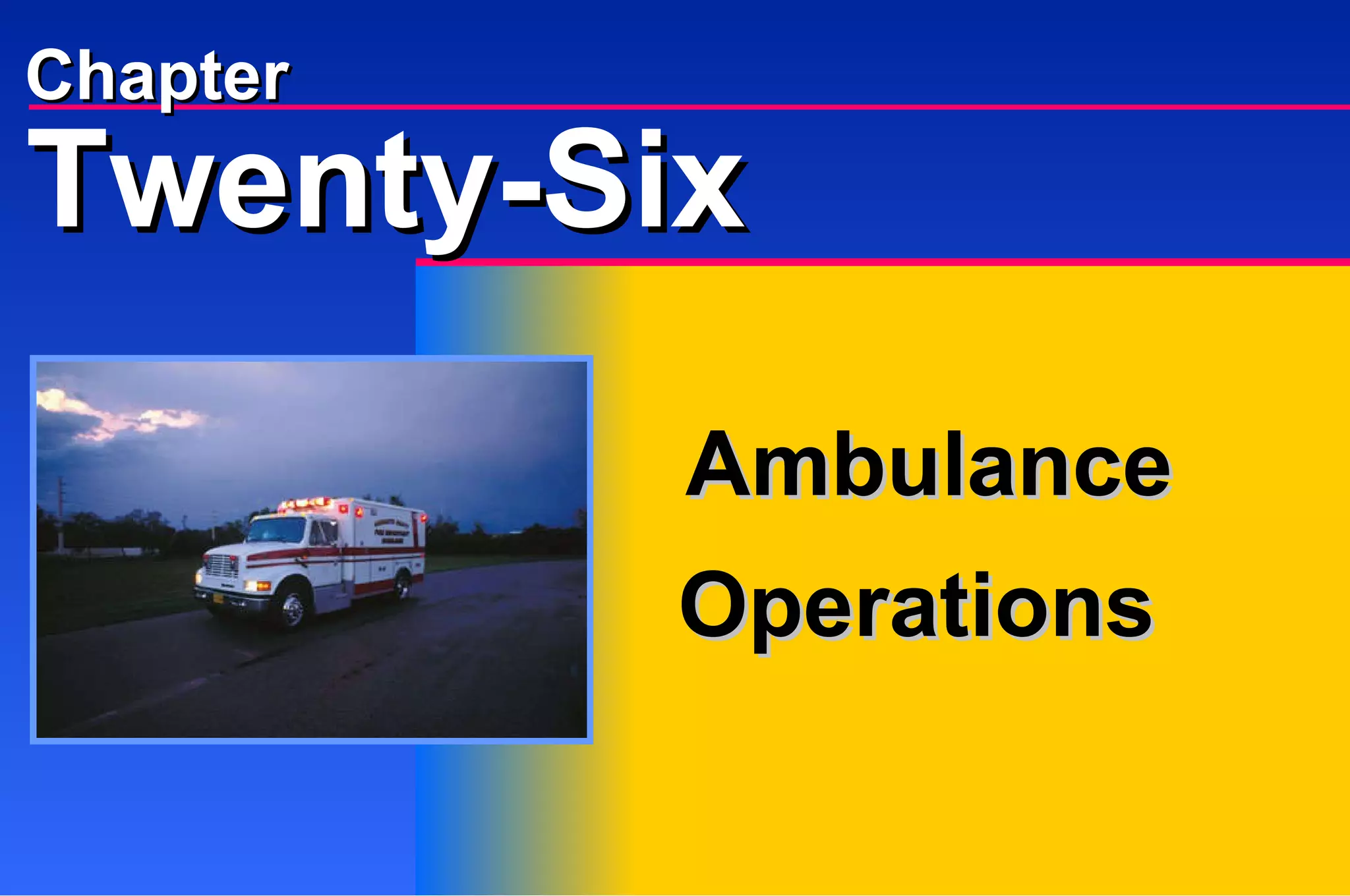
Chapter Ambulance Operations Twenty-Six
Equipment carried on ambulance and   importance of shift checks Basics of most states’ emergency    driving laws and regulations Proper emergency vehicle operation  Proper transfer of patient to the ED    staff Usefulness of aeromedical evacuation   where available CORE CONCEPTS Chapter Twenty-Six
Walk-around Communications Mechanical/fluids Life-sustaining Safety Other medical Check Equipment Is it there? Does it work? Will it fail? (Continued) Preparation for the Call
Check Equipment New body damage Fluid leaks Tire wear Warning equipment Walk-around (Continued) Preparation for the Call
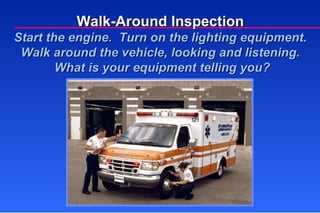
Walk-Around Inspection Start the engine.  Turn on the lighting equipment. Walk around the vehicle, looking and listening.  What is your equipment telling you?
Check Equipment Dispatch Handheld Medical control Walk-around Communications (Continued) Preparation for the Call
Check Equipment Starts Steers Stops Stays running Walk-around Communications Mechanical/fluids (Follow Agency Checklist) (Continued) Preparation for the Call
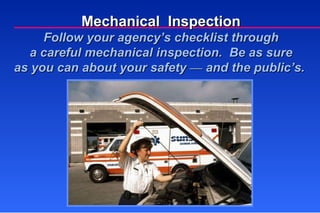
Mechanical  Inspection Follow your agency’s checklist through a careful mechanical inspection.  Be as sure as you can about your safety  —  and the public’s.
Check Equipment Suction Oxygen/resuscitation (Medication) (Defibrillation) Walk-around Communications Mechanical/fluids Life-sustaining (Continued) Preparation for the Call
BSI gear Binoculars Scene wear Check Equipment Walk-around Communications Mechanical/fluids Life-sustaining Safety (Continued) Preparation for the Call
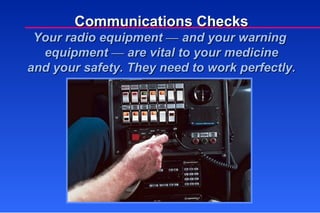
Communications Checks Your radio equipment  —  and your warning  equipment  —  are vital to your medicine and your safety. They need to work perfectly.
Check Equipment Carry-in kits Cabinet stock Personal gear Preparation for the Call Walk-around Communications Mechanical/fluids Life-sustaining Safety Other medical (Continued)
Ensure  Cleanliness Carry-in gear Ambulance interior Ambulance exterior Preparation for the Call (Continued) Disease prevention Public perception Personal pride
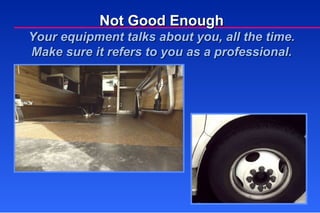
Not Good Enough Your equipment talks about you, all the time. Make sure it refers to you as a professional.
Check Equipment Medical Nonmedical Personal safety Maps Preparation for the Call (Continued)
Personnel Available for  Response At least one EMT-B in   patient compartment   (minimum staffing) Two EMT-Bs preferred Preparation for the Call (Continued)
Vehicle Inspection Preparation for the Call Engine, belts, hoses,   fluids, tires All lights, sirens Communication equipment
The new EMT-B must realize that the most modern, well-equipped ambulance is not worth the room it takes in the garage if it’s not ready to respond. A state of readiness results from a planned preventive maintenance program, periodic servicing of the vehicle, and serious daily shift checks. P RECEPTOR  P EARL
Central access  (911) 24-hour availability Trained personnel  (emergency (Continued) Dispatch medical dispatchers)
Information Nature of call Name, location,   callback number  Location of patient Number of patients   and severity Special problems   Dispatch
Procedures Wear safety belts. Notify dispatch. (Continued) En Route to Call
Driving the Ambulance Emergency vehicle   operations course is   recommended. Course is mandated    in some areas. (Continued) En Route to Call
Driving the Ambulance Good operators: Mentally/physically fit Positive attitude Capable of performing   under stress  Tolerant of other drivers (Continued) En Route to Call
Driving the Ambulance Wear safety belts: Driver and passengers Become familiar    with vehicle. Be alert to road and   weather conditions. (Continued) En Route to Call
Driving the Ambulance Use caution when using   red lights/siren. Select appropriate route. Maintain safe following   distance. Have regard for safety   of others. (Continued) En Route to Call
Driving Hazards Intersection most common   collision type (72%) Escorts and multiple-vehicle   responses.  (Motorists don’t  expect second emergency  vehicle.) (Continued) En Route to Call
Other Procedures Obtain additional info   from dispatch. Assign personnel   specific duties. Assess equipment needs. En Route to Call
Parking the Ambulance Park uphill from   leaking hazards. Park 100 feet from   wreckage. Set parking brake. (Continued) Arrival at Scene
Parking the Ambulance Use warning lights. Avoid parking where   exit will be hampered. (Continued) Arrival at Scene
Procedures Notify dispatch. Size up the scene: Safety Body substance isolation Number of patients  (Continued) Arrival at Scene
Studies have shown that red revolving beacons attract intoxicated or tired drivers. Remind new EMT-Bs to consider pulling off the road, turning off headlights, and using just amber rear-sealed beam blinkers that blink in tandem or unison to identify the size of their vehicles. P RECEPTOR  P EARL
Actions Organized Rapid/efficient Toward goal of transportation Arrival at Scene
Procedures Prepare patient for transport. Complete critical   interventions. Check dressings and splints. Secure patient to moving    device. Transferring to  the Ambulance
Tell new EMT-Bs that under NO circumstances should they simply wheel a nonemergency patient into a hospital, place him or her in a bed, and leave!  Unless the EMT-B transfers care of the patient directly to a member of the hospital staff, the EMT-B may be open to a charge of abandonment.  P RECEPTOR  P EARL
Notify dispatch. Continue ongoing assessment. Notify receiving facility. Reassure patient. Complete reports. En Route to  Receiving Facility
Notify dispatch. Use caution backing  into facility. At Receiving Facility
Verbal and written reports Transfer of care to hospital personnel Patient Transfer at Facility
En Route to Station Notify dispatch. Prepare for next call.
After the Call Refuel unit. Complete and file reports. Complete cleaning and disinfection. Notify dispatch.
Using Air Medical Service Medical reasons Operational/rescue reasons Know local protocols.
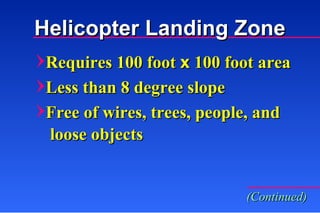
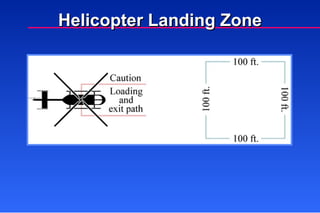
Requires 100 foot  x  100 foot area Less than 8 degree slope Free of wires, trees, people, and loose objects (Continued) Helicopter Landing Zone
Helicopter Landing Zone
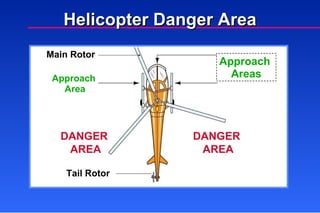
Main Rotor Approach  Area Approach  Areas Tail Rotor Helicopter Danger Area DANGER  AREA DANGER  AREA
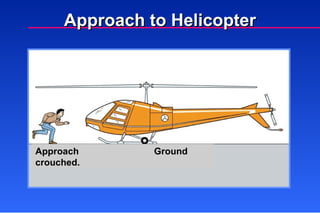
Approach crouched. Ground Approach to Helicopter
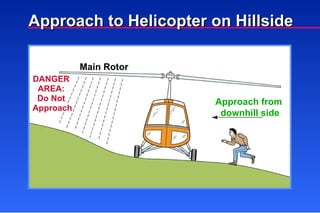
DANGER  AREA:  Do Not  Approach Main Rotor Approach from  downhill side Approach to Helicopter on Hillside
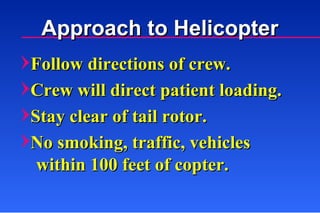
Follow directions of crew. Crew will direct patient loading. Stay clear of tail rotor. No smoking, traffic, vehicles within 100 feet of copter. Approach to Helicopter
1. What are the phases of a call? 2. What is the danger of an escort? 3. How big should an LZ be? 4. Give five examples of patients who could R EVIEW QUESTIONS benefit from aeromedical transportation.

Ambulance Operations

  • 1.
  • 2.
    Equipment carried onambulance and importance of shift checks Basics of most states’ emergency driving laws and regulations Proper emergency vehicle operation Proper transfer of patient to the ED staff Usefulness of aeromedical evacuation where available CORE CONCEPTS Chapter Twenty-Six
  • 3.
    Walk-around Communications Mechanical/fluidsLife-sustaining Safety Other medical Check Equipment Is it there? Does it work? Will it fail? (Continued) Preparation for the Call
  • 4.
    Check Equipment Newbody damage Fluid leaks Tire wear Warning equipment Walk-around (Continued) Preparation for the Call
  • 5.
    Walk-Around Inspection Startthe engine. Turn on the lighting equipment. Walk around the vehicle, looking and listening. What is your equipment telling you?
  • 6.
    Check Equipment DispatchHandheld Medical control Walk-around Communications (Continued) Preparation for the Call
  • 7.
    Check Equipment StartsSteers Stops Stays running Walk-around Communications Mechanical/fluids (Follow Agency Checklist) (Continued) Preparation for the Call
  • 8.
    Mechanical InspectionFollow your agency’s checklist through a careful mechanical inspection. Be as sure as you can about your safety — and the public’s.
  • 9.
    Check Equipment SuctionOxygen/resuscitation (Medication) (Defibrillation) Walk-around Communications Mechanical/fluids Life-sustaining (Continued) Preparation for the Call
  • 10.
    BSI gear BinocularsScene wear Check Equipment Walk-around Communications Mechanical/fluids Life-sustaining Safety (Continued) Preparation for the Call
  • 11.
    Communications Checks Yourradio equipment — and your warning equipment — are vital to your medicine and your safety. They need to work perfectly.
  • 12.
    Check Equipment Carry-inkits Cabinet stock Personal gear Preparation for the Call Walk-around Communications Mechanical/fluids Life-sustaining Safety Other medical (Continued)
  • 13.
    Ensure CleanlinessCarry-in gear Ambulance interior Ambulance exterior Preparation for the Call (Continued) Disease prevention Public perception Personal pride
  • 14.
    Not Good EnoughYour equipment talks about you, all the time. Make sure it refers to you as a professional.
  • 15.
    Check Equipment MedicalNonmedical Personal safety Maps Preparation for the Call (Continued)
  • 16.
    Personnel Available for Response At least one EMT-B in patient compartment (minimum staffing) Two EMT-Bs preferred Preparation for the Call (Continued)
  • 17.
    Vehicle Inspection Preparationfor the Call Engine, belts, hoses, fluids, tires All lights, sirens Communication equipment
  • 18.
    The new EMT-Bmust realize that the most modern, well-equipped ambulance is not worth the room it takes in the garage if it’s not ready to respond. A state of readiness results from a planned preventive maintenance program, periodic servicing of the vehicle, and serious daily shift checks. P RECEPTOR P EARL
  • 19.
    Central access (911) 24-hour availability Trained personnel (emergency (Continued) Dispatch medical dispatchers)
  • 20.
    Information Nature ofcall Name, location, callback number Location of patient Number of patients and severity Special problems Dispatch
  • 21.
    Procedures Wear safetybelts. Notify dispatch. (Continued) En Route to Call
  • 22.
    Driving the AmbulanceEmergency vehicle operations course is recommended. Course is mandated in some areas. (Continued) En Route to Call
  • 23.
    Driving the AmbulanceGood operators: Mentally/physically fit Positive attitude Capable of performing under stress Tolerant of other drivers (Continued) En Route to Call
  • 24.
    Driving the AmbulanceWear safety belts: Driver and passengers Become familiar with vehicle. Be alert to road and weather conditions. (Continued) En Route to Call
  • 25.
    Driving the AmbulanceUse caution when using red lights/siren. Select appropriate route. Maintain safe following distance. Have regard for safety of others. (Continued) En Route to Call
  • 26.
    Driving Hazards Intersectionmost common collision type (72%) Escorts and multiple-vehicle responses. (Motorists don’t expect second emergency vehicle.) (Continued) En Route to Call
  • 27.
    Other Procedures Obtainadditional info from dispatch. Assign personnel specific duties. Assess equipment needs. En Route to Call
  • 28.
    Parking the AmbulancePark uphill from leaking hazards. Park 100 feet from wreckage. Set parking brake. (Continued) Arrival at Scene
  • 29.
    Parking the AmbulanceUse warning lights. Avoid parking where exit will be hampered. (Continued) Arrival at Scene
  • 30.
    Procedures Notify dispatch.Size up the scene: Safety Body substance isolation Number of patients (Continued) Arrival at Scene
  • 31.
    Studies have shownthat red revolving beacons attract intoxicated or tired drivers. Remind new EMT-Bs to consider pulling off the road, turning off headlights, and using just amber rear-sealed beam blinkers that blink in tandem or unison to identify the size of their vehicles. P RECEPTOR P EARL
  • 32.
    Actions Organized Rapid/efficientToward goal of transportation Arrival at Scene
  • 33.
    Procedures Prepare patientfor transport. Complete critical interventions. Check dressings and splints. Secure patient to moving device. Transferring to the Ambulance
  • 34.
    Tell new EMT-Bsthat under NO circumstances should they simply wheel a nonemergency patient into a hospital, place him or her in a bed, and leave! Unless the EMT-B transfers care of the patient directly to a member of the hospital staff, the EMT-B may be open to a charge of abandonment. P RECEPTOR P EARL
  • 35.
    Notify dispatch. Continueongoing assessment. Notify receiving facility. Reassure patient. Complete reports. En Route to Receiving Facility
  • 36.
    Notify dispatch. Usecaution backing into facility. At Receiving Facility
  • 37.
    Verbal and writtenreports Transfer of care to hospital personnel Patient Transfer at Facility
  • 38.
    En Route toStation Notify dispatch. Prepare for next call.
  • 39.
    After the CallRefuel unit. Complete and file reports. Complete cleaning and disinfection. Notify dispatch.
  • 40.
    Using Air MedicalService Medical reasons Operational/rescue reasons Know local protocols.
  • 41.
    Requires 100 foot x 100 foot area Less than 8 degree slope Free of wires, trees, people, and loose objects (Continued) Helicopter Landing Zone
  • 42.
  • 43.
    Main Rotor Approach Area Approach Areas Tail Rotor Helicopter Danger Area DANGER AREA DANGER AREA
  • 44.
    Approach crouched. GroundApproach to Helicopter
  • 45.
    DANGER AREA: Do Not Approach Main Rotor Approach from downhill side Approach to Helicopter on Hillside
  • 46.
    Follow directions ofcrew. Crew will direct patient loading. Stay clear of tail rotor. No smoking, traffic, vehicles within 100 feet of copter. Approach to Helicopter
  • 47.
    1. What arethe phases of a call? 2. What is the danger of an escort? 3. How big should an LZ be? 4. Give five examples of patients who could R EVIEW QUESTIONS benefit from aeromedical transportation.