Documentation
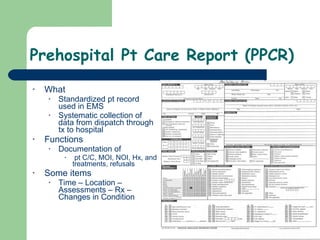
Prehospital Pt Care Report (PPCR) What Standardized pt record used in EMS Systematic collection of data from dispatch through tx to hospital Functions Documentation of pt C/C, MOI, NOI, Hx, and treatments, refusals Some items Time – Location – Assessments – Rx – Changes in Condition
PPCR Functions Medical Record Continuity of Care Medical report of prehospital care Physician review for treatment MOI, NOI, Chronology of S/S, Vitals, etc Educational Demonstrates proper documentation  How to handle unusual situations/events  Administrative  Billing Service Statistics Research Evaluation/CE Continuous QI  Improving different components of EMS through evaluation of call sheets and pt Rx
PPCR Functions Legal Document PROTECTION FROM LAWSUITS  IF YOU DON’T WRITE IT DOWN YOU DIDN’T DO IT!!!!!!!! Generally the writer is the one who goes to court with the PPCR Accurate times Status of pt upon arrival at scene, during tx Emergency treatment provided Changes in condition en route to hospital Any unusual events that occurred during the call
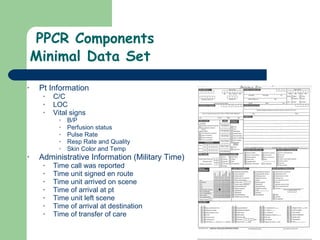
  PPCR Components Minimal Data Set Pt Information C/C LOC Vital signs B/P Perfusion status  Pulse Rate Resp Rate and Quality Skin Color and Temp Administrative Information (Military Time) Time call was reported Time unit signed en route Time unit arrived on scene Time of arrival at pt Time unit left scene Time of arrival at destination Time of transfer of care
PPCR Types/Sections Types Traditional written form  Digital/Computer based Run Data Date – Times – Unit # - Service – Crew Names  Pt Data Name – Address- DOB – Insurance Info – Sex – Age NOI/MOI – Pt Location – Rx given prior to arrival S/S – Rx administered – Baseline Vitals – SAMPLE Hx Changes in condition  -Receiving Facility – Specialty Tx mode Rationale for receiving facility  Check Boxes Be sure to fill in box completely Avoid stray marks
PPCR Narrative Narrative  Describe, don’t conclude Include pertinent negatives Record observations about the scene Avoid radio codes Use standard abbreviations When sensitive information is obtained note the source State reporting requirements Spell correctly  For EVERY assessment record time and findings.
Narrative Methods C.H.A.R.T. C omplaint H istory A ssessment R x-Treatment T ransport S.O.A.P S ubjective What Pt/bystanders says in their “own words” C/C, SAMPLE/OPQRST  O bjective What YOU see/measure in assessment Scene size up, Assessment findings, Vitals,  A ssessment What YOU think is wrong Conclusion/Clinical impression P lan Treatments occurred, treatments planned C.H.E.A.T.E.D. C hief Complaint H istory E xamination A ssessment T reatment E valuation Did treatment help D isposition Final outcome
PPCR Distribution Confidentiality The form and its contents are confidential  Distribution Determined by local and state protocols  Written release not needed… Receiving facility,Transporting agencies  Continuation of care  3 rd  party billing info Continuing education (remove pt ID) Sate law (rape, abuse, GSW) Subpoena  12VAC5-31-950. Disclosure of patient information.
PPCR Falsification Issues Error of omission/commission  Document what did/did not happen What steps if any were done to correct it Falsification Revocation of certification Improper pt care due to incorrect assessment Areas of difficulty Vital Signs Document on the ones there were TAKEN Treatments Do not chart procedures there were not performed
Pt Refusals  COMPETENT  adult pt have the right to refuse care at any time Before you leave the scene you should: Try to persuade pt to go to hospital Ensure pt is able to make informed decision  Inform pt of why he/she should go & what could happen if he/she does not go Consult med control if need be If pt still refuses Document assessment findings Document any Rx Have pt sign refusal  Have a family member, by stander, police sign as witness If pt refuses to sign refusal Have a family member, by stander, police sign as witness
Pt Refusals Complete PPCR  Complete Pt assessment Care EMT-B wished to provide to pt Statement that the EMT-B explained to pt possible consequences of refusal including death Offer alternative methods of obtaining care State willingness to return
Correcting Errors in Documentation  Errors made while writing PPCR Draw single horizontal line through error and initial it Write correct info beside line Do not attempt to obliterate the error Errors discovered after report has been written Draw single horizontal line through error Initial and date it Attach a note with the correct info If info was omitted attach a note with date and EMT’s initials
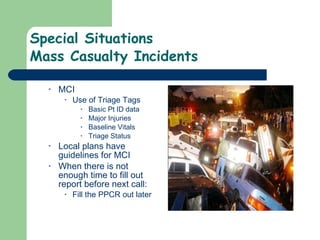
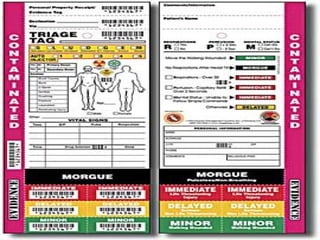
Special Situations Mass Casualty Incidents  MCI Use of Triage Tags Basic Pt ID data Major Injuries Baseline Vitals Triage Status  Local plans have guidelines for MCI  When there is not enough time to fill out report before next call: Fill the PPCR out later
 
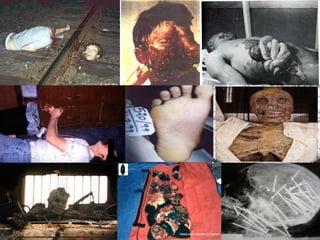
Documentation of Death Documentation of Death Withholding treatment if irreversible brain damage can be proven in pt in cardiac arrest Note ALL factors that denote obvious death including/but not limited to : Decapitation Transection of chest and/or abd Rigor mortis Lividity Decomposition Charring of the body Extensive head trauma Chest injury/trauma indicative of mortal injury Other bodily disfigurement indicative of mortal injury
 
 
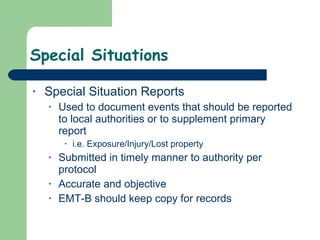
Special Situations Special Situation Reports Used to document events that should be reported to local authorities or to supplement primary report i.e. Exposure/Injury/Lost property  Submitted in timely manner to authority per protocol  Accurate and objective EMT-B should keep copy for records
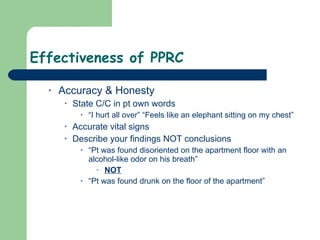
Effectiveness of PPRC  Accuracy & Honesty State C/C in pt own words “I hurt all over” “Feels like an elephant sitting on my chest” Accurate vital signs Describe your findings NOT conclusions  “Pt was found disoriented on the apartment floor with an alcohol-like odor on his breath”  NOT “Pt was found drunk on the floor of the apartment”
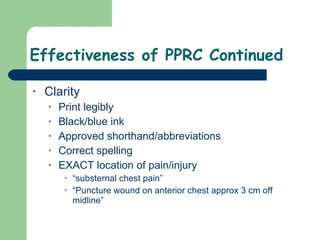
Effectiveness of PPRC Continued Clarity Print legibly Black/blue ink Approved shorthand/abbreviations Correct spelling EXACT location of pain/injury “substernal chest pain” “Puncture wound on anterior chest approx 3 cm off midline”
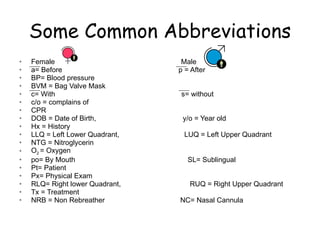
Some Common Abbreviations Female  Male  a= Before  p = After  BP= Blood pressure BVM = Bag Valve Mask c= With  s= without c/o = complains of CPR DOB = Date of Birth,  y/o = Year old  Hx = History LLQ = Left Lower Quadrant,  LUQ = Left Upper Quadrant NTG = Nitroglycerin O 2  = Oxygen  po= By Mouth  SL= Sublingual Pt= Patient Px= Physical Exam RLQ= Right lower Quadrant,  RUQ = Right Upper Quadrant Tx = Treatment NRB = Non Rebreather    NC= Nasal Cannula
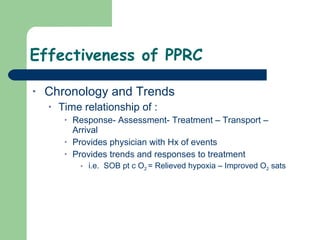
Effectiveness of PPRC Chronology and Trends Time relationship of : Response- Assessment- Treatment – Transport – Arrival Provides physician with Hx of events Provides trends and responses to treatment i.e.  SOB pt c O 2  = Relieved hypoxia – Improved O 2  sats
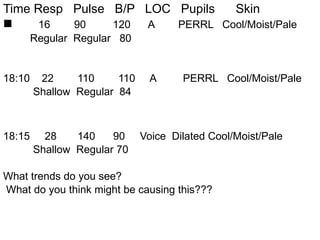
Time Resp  Pulse  B/P  LOC  Pupils  Skin 16  90  120  A  PERRL  Cool/Moist/Pale Regular  Regular  80  18:10  22  110  110  A  PERRL  Cool/Moist/Pale Shallow  Regular  84  18:15  28  140  90  Voice  Dilated Cool/Moist/Pale Shallow  Regular 70 What trends do you see?  What do you think might be causing this???
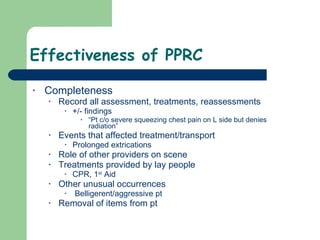
Effectiveness of PPRC Completeness  Record all assessment, treatments, reassessments +/- findings “ Pt c/o severe squeezing chest pain on L side but denies radiation”  Events that affected treatment/transport Prolonged extrications Role of other providers on scene Treatments provided by lay people CPR, 1 st  Aid Other unusual occurrences Belligerent/aggressive pt  Removal of items from pt
One Last Rule… Document… Document… Document…

5)Documentation

  • 1.
  • 2.
    Prehospital Pt CareReport (PPCR) What Standardized pt record used in EMS Systematic collection of data from dispatch through tx to hospital Functions Documentation of pt C/C, MOI, NOI, Hx, and treatments, refusals Some items Time – Location – Assessments – Rx – Changes in Condition
  • 3.
    PPCR Functions MedicalRecord Continuity of Care Medical report of prehospital care Physician review for treatment MOI, NOI, Chronology of S/S, Vitals, etc Educational Demonstrates proper documentation How to handle unusual situations/events Administrative Billing Service Statistics Research Evaluation/CE Continuous QI Improving different components of EMS through evaluation of call sheets and pt Rx
  • 4.
    PPCR Functions LegalDocument PROTECTION FROM LAWSUITS IF YOU DON’T WRITE IT DOWN YOU DIDN’T DO IT!!!!!!!! Generally the writer is the one who goes to court with the PPCR Accurate times Status of pt upon arrival at scene, during tx Emergency treatment provided Changes in condition en route to hospital Any unusual events that occurred during the call
  • 5.
    PPCRComponents Minimal Data Set Pt Information C/C LOC Vital signs B/P Perfusion status Pulse Rate Resp Rate and Quality Skin Color and Temp Administrative Information (Military Time) Time call was reported Time unit signed en route Time unit arrived on scene Time of arrival at pt Time unit left scene Time of arrival at destination Time of transfer of care
  • 6.
    PPCR Types/Sections TypesTraditional written form Digital/Computer based Run Data Date – Times – Unit # - Service – Crew Names Pt Data Name – Address- DOB – Insurance Info – Sex – Age NOI/MOI – Pt Location – Rx given prior to arrival S/S – Rx administered – Baseline Vitals – SAMPLE Hx Changes in condition -Receiving Facility – Specialty Tx mode Rationale for receiving facility Check Boxes Be sure to fill in box completely Avoid stray marks
  • 7.
    PPCR Narrative Narrative Describe, don’t conclude Include pertinent negatives Record observations about the scene Avoid radio codes Use standard abbreviations When sensitive information is obtained note the source State reporting requirements Spell correctly For EVERY assessment record time and findings.
  • 8.
    Narrative Methods C.H.A.R.T.C omplaint H istory A ssessment R x-Treatment T ransport S.O.A.P S ubjective What Pt/bystanders says in their “own words” C/C, SAMPLE/OPQRST O bjective What YOU see/measure in assessment Scene size up, Assessment findings, Vitals, A ssessment What YOU think is wrong Conclusion/Clinical impression P lan Treatments occurred, treatments planned C.H.E.A.T.E.D. C hief Complaint H istory E xamination A ssessment T reatment E valuation Did treatment help D isposition Final outcome
  • 9.
    PPCR Distribution ConfidentialityThe form and its contents are confidential Distribution Determined by local and state protocols Written release not needed… Receiving facility,Transporting agencies Continuation of care 3 rd party billing info Continuing education (remove pt ID) Sate law (rape, abuse, GSW) Subpoena 12VAC5-31-950. Disclosure of patient information.
  • 10.
    PPCR Falsification IssuesError of omission/commission Document what did/did not happen What steps if any were done to correct it Falsification Revocation of certification Improper pt care due to incorrect assessment Areas of difficulty Vital Signs Document on the ones there were TAKEN Treatments Do not chart procedures there were not performed
  • 11.
    Pt Refusals COMPETENT adult pt have the right to refuse care at any time Before you leave the scene you should: Try to persuade pt to go to hospital Ensure pt is able to make informed decision Inform pt of why he/she should go & what could happen if he/she does not go Consult med control if need be If pt still refuses Document assessment findings Document any Rx Have pt sign refusal Have a family member, by stander, police sign as witness If pt refuses to sign refusal Have a family member, by stander, police sign as witness
  • 12.
    Pt Refusals CompletePPCR Complete Pt assessment Care EMT-B wished to provide to pt Statement that the EMT-B explained to pt possible consequences of refusal including death Offer alternative methods of obtaining care State willingness to return
  • 13.
    Correcting Errors inDocumentation Errors made while writing PPCR Draw single horizontal line through error and initial it Write correct info beside line Do not attempt to obliterate the error Errors discovered after report has been written Draw single horizontal line through error Initial and date it Attach a note with the correct info If info was omitted attach a note with date and EMT’s initials
  • 14.
    Special Situations MassCasualty Incidents MCI Use of Triage Tags Basic Pt ID data Major Injuries Baseline Vitals Triage Status Local plans have guidelines for MCI When there is not enough time to fill out report before next call: Fill the PPCR out later
  • 15.
  • 16.
    Documentation of DeathDocumentation of Death Withholding treatment if irreversible brain damage can be proven in pt in cardiac arrest Note ALL factors that denote obvious death including/but not limited to : Decapitation Transection of chest and/or abd Rigor mortis Lividity Decomposition Charring of the body Extensive head trauma Chest injury/trauma indicative of mortal injury Other bodily disfigurement indicative of mortal injury
  • 17.
  • 18.
  • 19.
    Special Situations SpecialSituation Reports Used to document events that should be reported to local authorities or to supplement primary report i.e. Exposure/Injury/Lost property Submitted in timely manner to authority per protocol Accurate and objective EMT-B should keep copy for records
  • 20.
    Effectiveness of PPRC Accuracy & Honesty State C/C in pt own words “I hurt all over” “Feels like an elephant sitting on my chest” Accurate vital signs Describe your findings NOT conclusions “Pt was found disoriented on the apartment floor with an alcohol-like odor on his breath” NOT “Pt was found drunk on the floor of the apartment”
  • 21.
    Effectiveness of PPRCContinued Clarity Print legibly Black/blue ink Approved shorthand/abbreviations Correct spelling EXACT location of pain/injury “substernal chest pain” “Puncture wound on anterior chest approx 3 cm off midline”
  • 22.
    Some Common AbbreviationsFemale Male a= Before p = After BP= Blood pressure BVM = Bag Valve Mask c= With s= without c/o = complains of CPR DOB = Date of Birth, y/o = Year old Hx = History LLQ = Left Lower Quadrant, LUQ = Left Upper Quadrant NTG = Nitroglycerin O 2 = Oxygen po= By Mouth SL= Sublingual Pt= Patient Px= Physical Exam RLQ= Right lower Quadrant, RUQ = Right Upper Quadrant Tx = Treatment NRB = Non Rebreather NC= Nasal Cannula
  • 23.
    Effectiveness of PPRCChronology and Trends Time relationship of : Response- Assessment- Treatment – Transport – Arrival Provides physician with Hx of events Provides trends and responses to treatment i.e. SOB pt c O 2 = Relieved hypoxia – Improved O 2 sats
  • 24.
    Time Resp Pulse B/P LOC Pupils Skin 16 90 120 A PERRL Cool/Moist/Pale Regular Regular 80 18:10 22 110 110 A PERRL Cool/Moist/Pale Shallow Regular 84 18:15 28 140 90 Voice Dilated Cool/Moist/Pale Shallow Regular 70 What trends do you see? What do you think might be causing this???
  • 25.
    Effectiveness of PPRCCompleteness Record all assessment, treatments, reassessments +/- findings “ Pt c/o severe squeezing chest pain on L side but denies radiation” Events that affected treatment/transport Prolonged extrications Role of other providers on scene Treatments provided by lay people CPR, 1 st Aid Other unusual occurrences Belligerent/aggressive pt Removal of items from pt
  • 26.
    One Last Rule…Document… Document… Document…