
“BIOMETRICS”
Introduction
   Biometrics is the science and technology of measuring
    and analyzing biological data.

   It measure and analyze human body characteristics,
    such as DNA, fingerprints, eye retinas and irises, voice
    patterns, facial patterns and hand measurements,
    for authentication purposes.
Biometric devices consist of:
 A reader or scanning device
 Software that converts the scanned
  information into digital form and
  compares match points
 A database that stores the biometric
  data for comparison
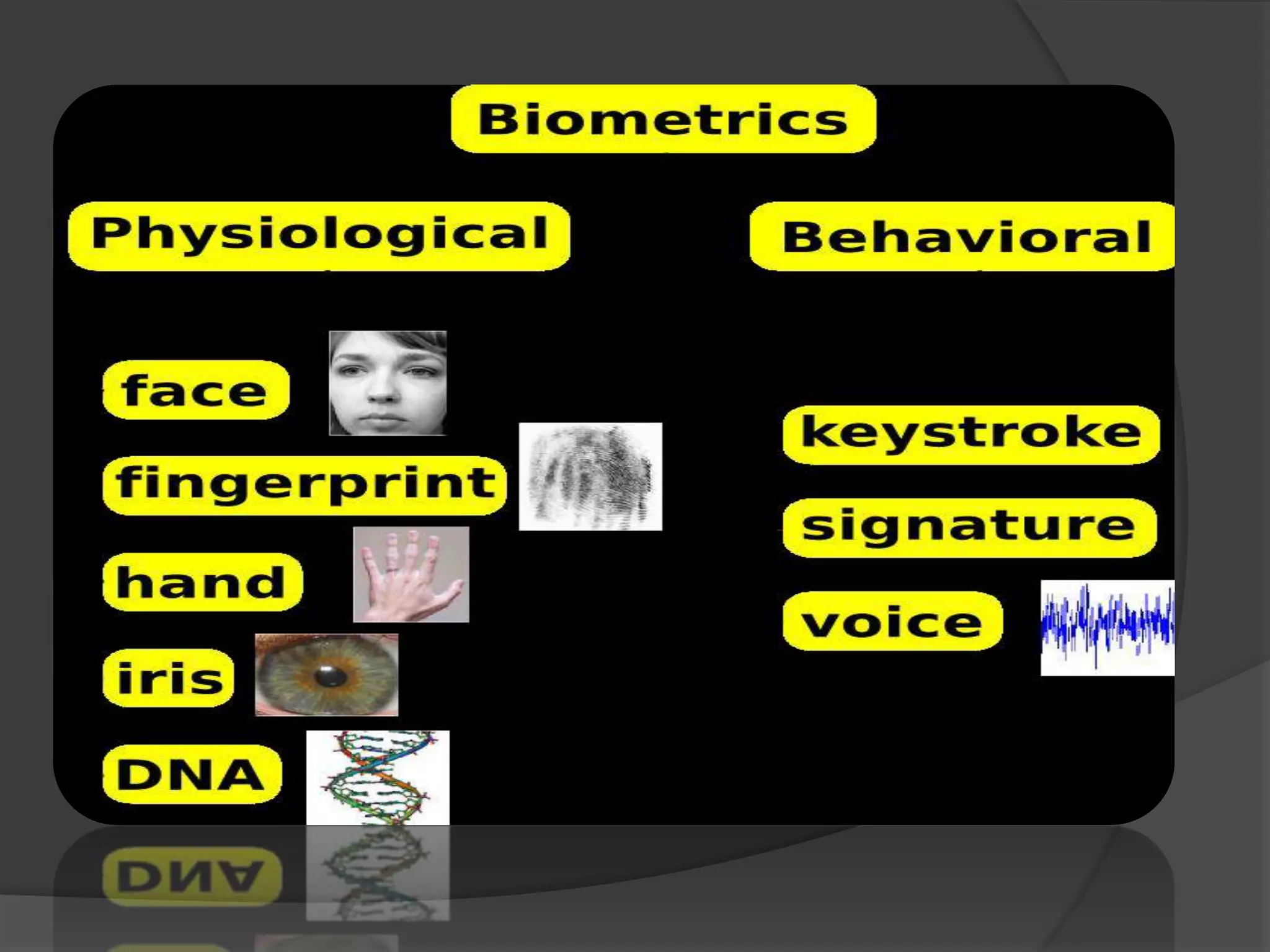
Biometrics can be sorted into
two classes:
 Categories of BIOMETRICS
 Physiological
 Examples- face, fingerprints, hand
  geometry and iris Recognition, DNA.
 Behavioral
 Examples-signature and voice.
Basic characteristics of
BIOMETRIC Technologies:
   Universality: Every person should have the
    characteristic. People who are mute or without
    a fingerprint will need to be accommodated in
    some way.

   Uniqueness: Generally, no two people have
    identical characteristics. However, identical
    twins are hard to distinguish.

   Permanence: The characteristics should not
    vary with time. A person's face, for example,
    may change with age.
   Collectibility: The characteristics must be easily
    collectible and measurable.

   Performance: The method must deliver accurate
    results under varied environmental circumstances.

   Acceptability: The general public must accept the
    sample collection routines. Nonintrusive methods are
    more acceptable.

   Circumvention: The technology should be difficult to
    deceive
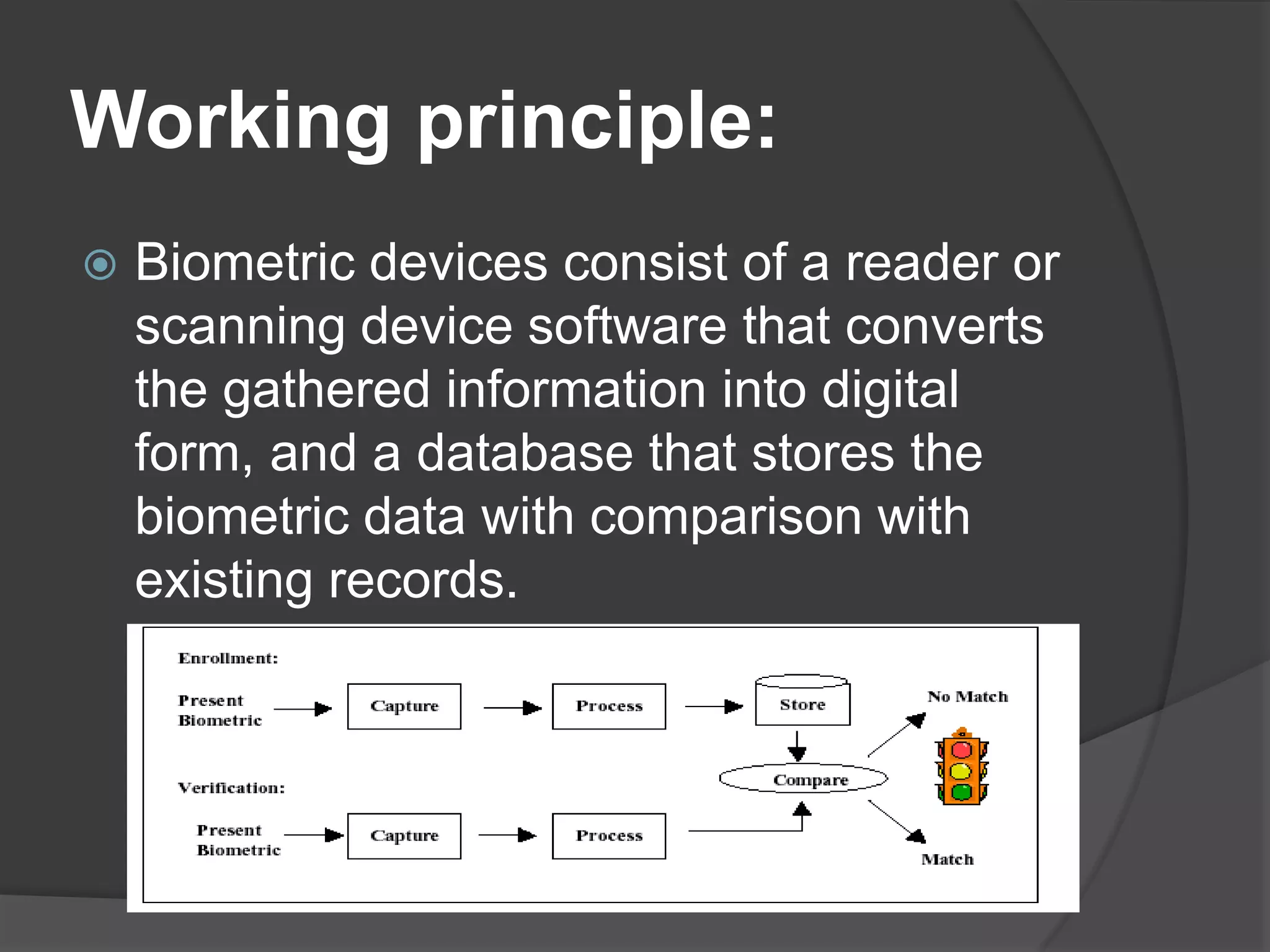
Working principle:
   Biometric devices consist of a reader or
    scanning device software that converts
    the gathered information into digital
    form, and a database that stores the
    biometric data with comparison with
    existing records.
Modes
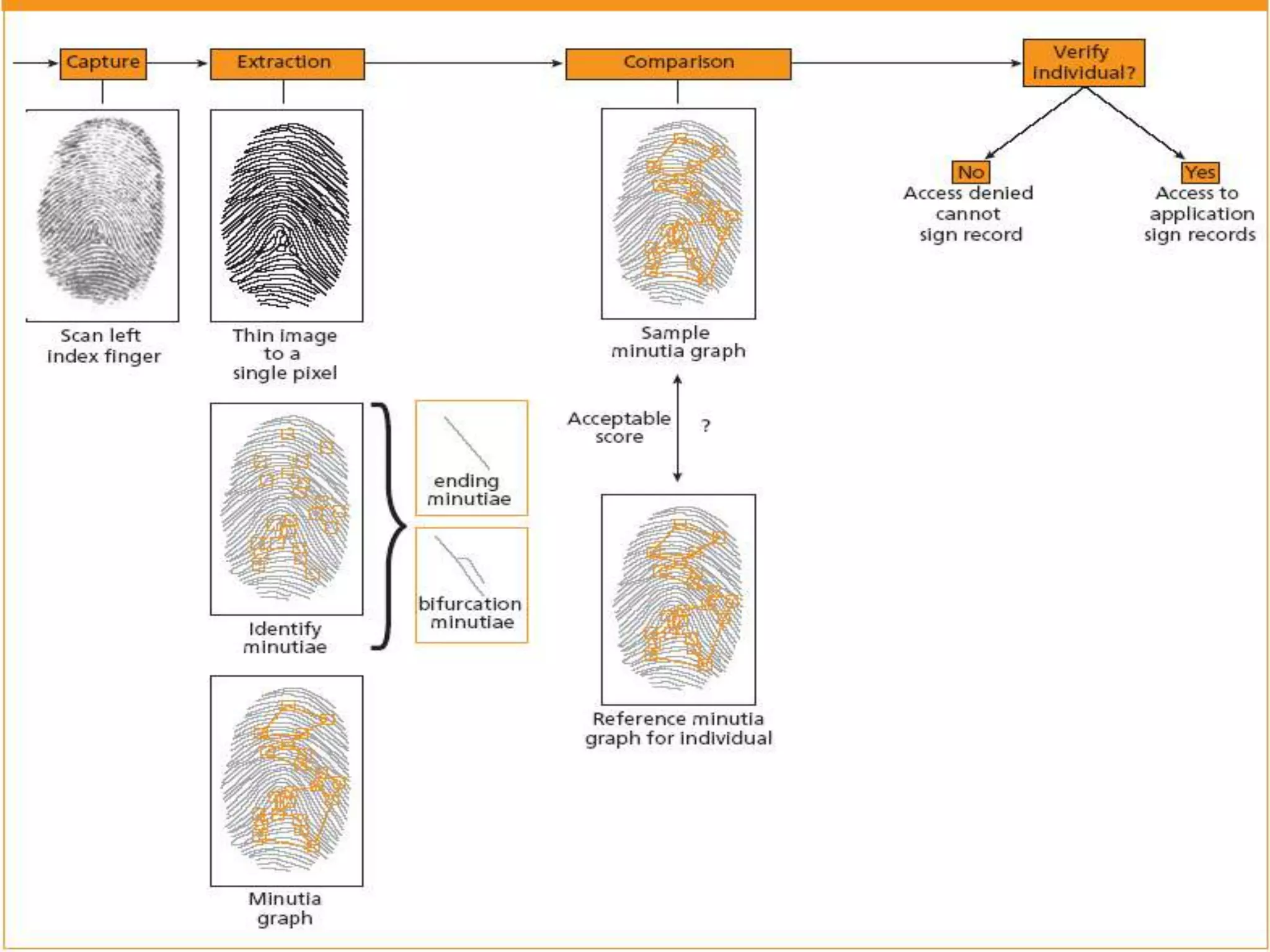
   Enrollment Mode.
   Verification Mode.

   Enrollment Mode:
    A sample of the biometric trait is captured,
    processed by a computer, and stored for later
    comparison.

   Verification Mode:
    In this mode biometric system authenticates a
    person’s claimed identity from their previously
    enrolled pattern.
Biometric Modalities:
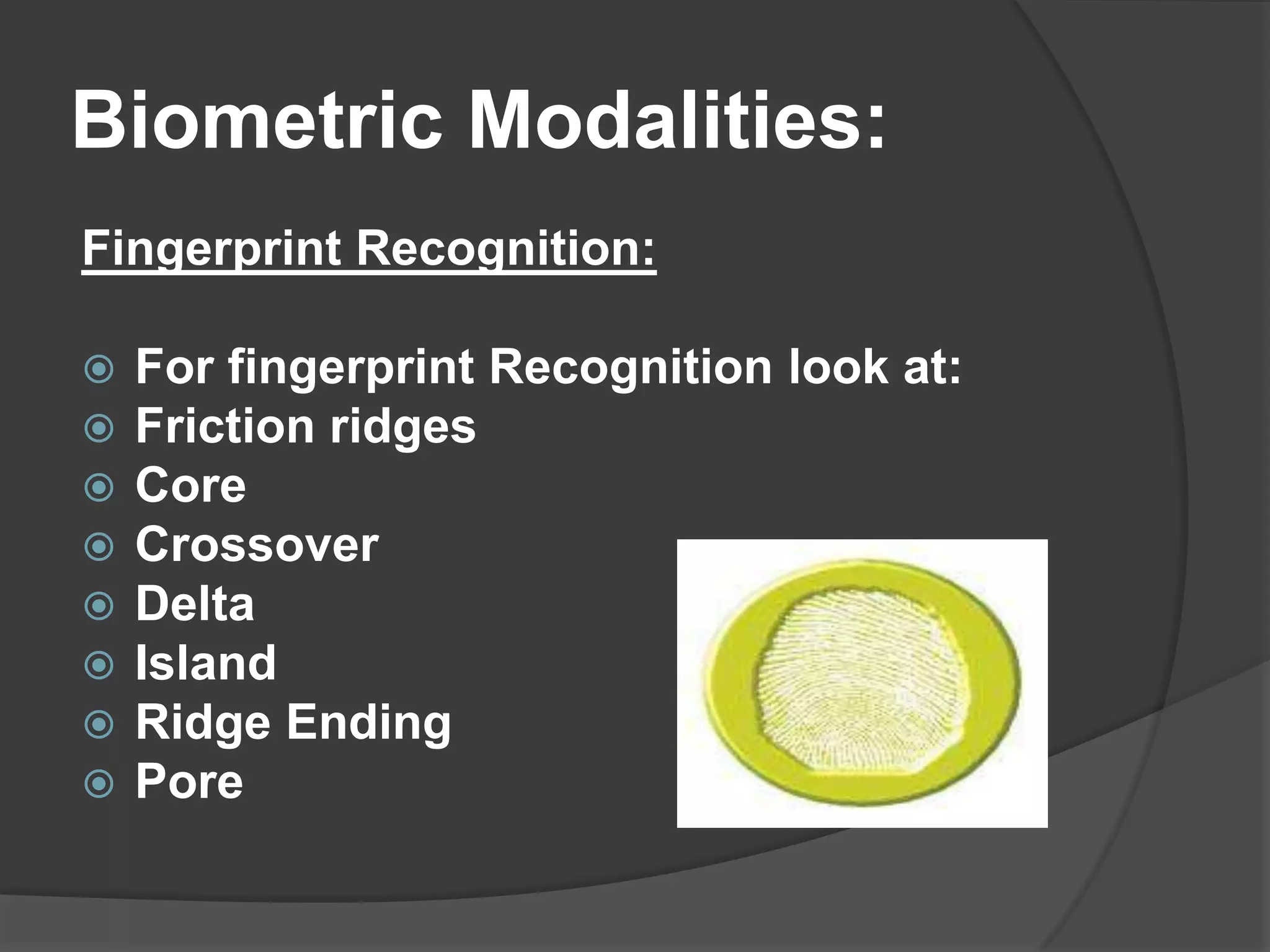
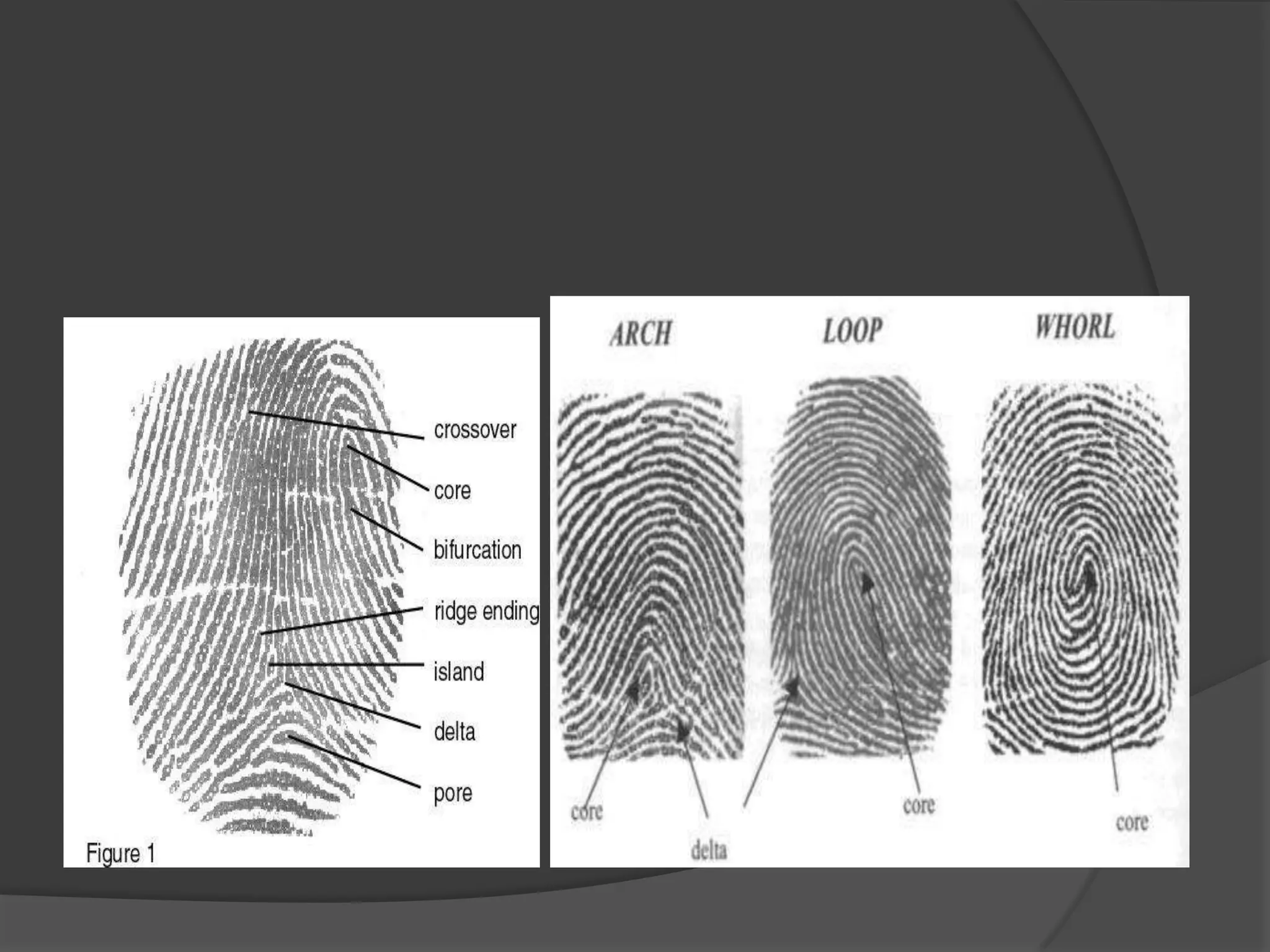
Fingerprint Recognition:

   For fingerprint Recognition look at:
   Friction ridges
   Core
   Crossover
   Delta
   Island
   Ridge Ending
   Pore
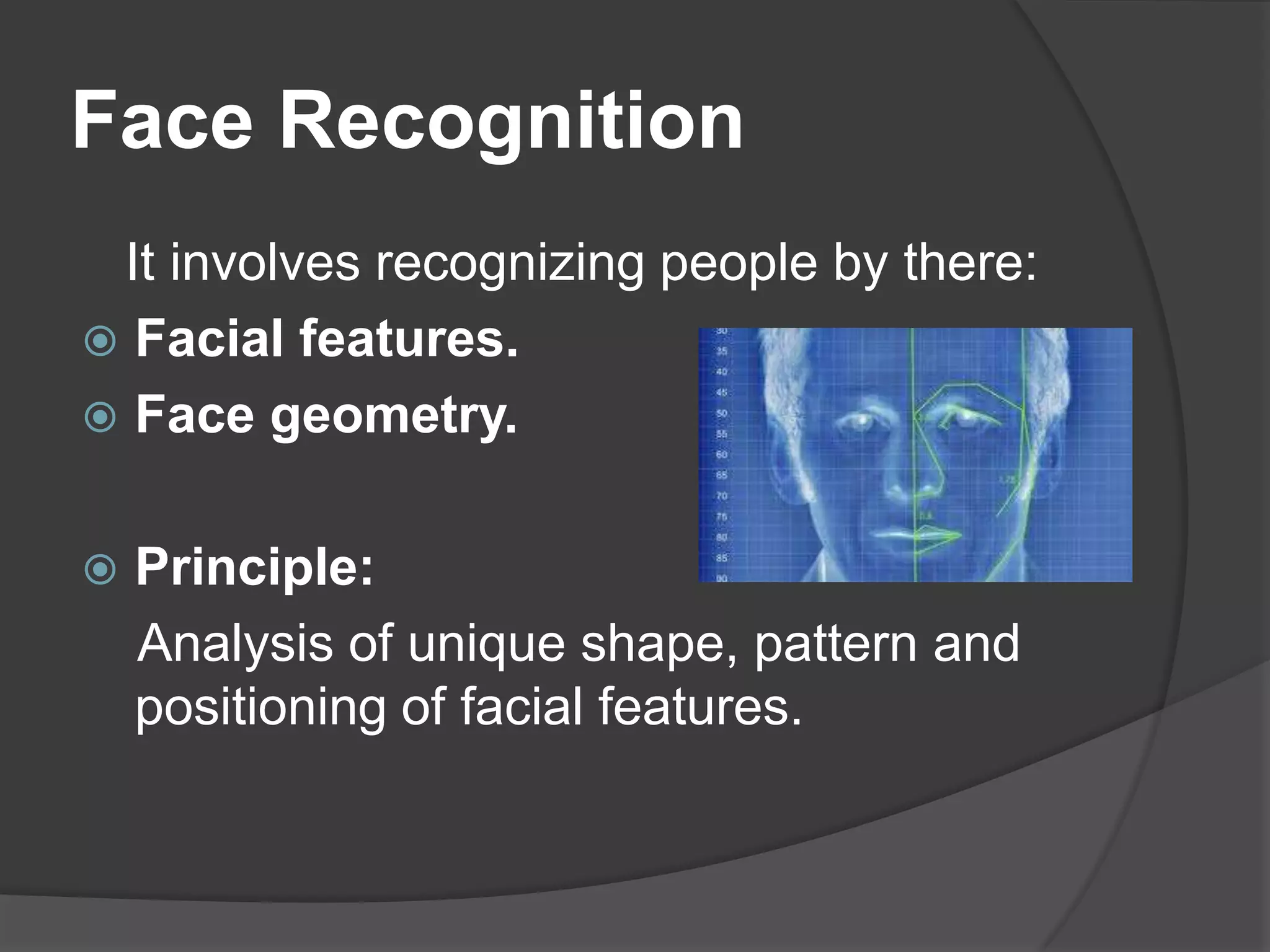
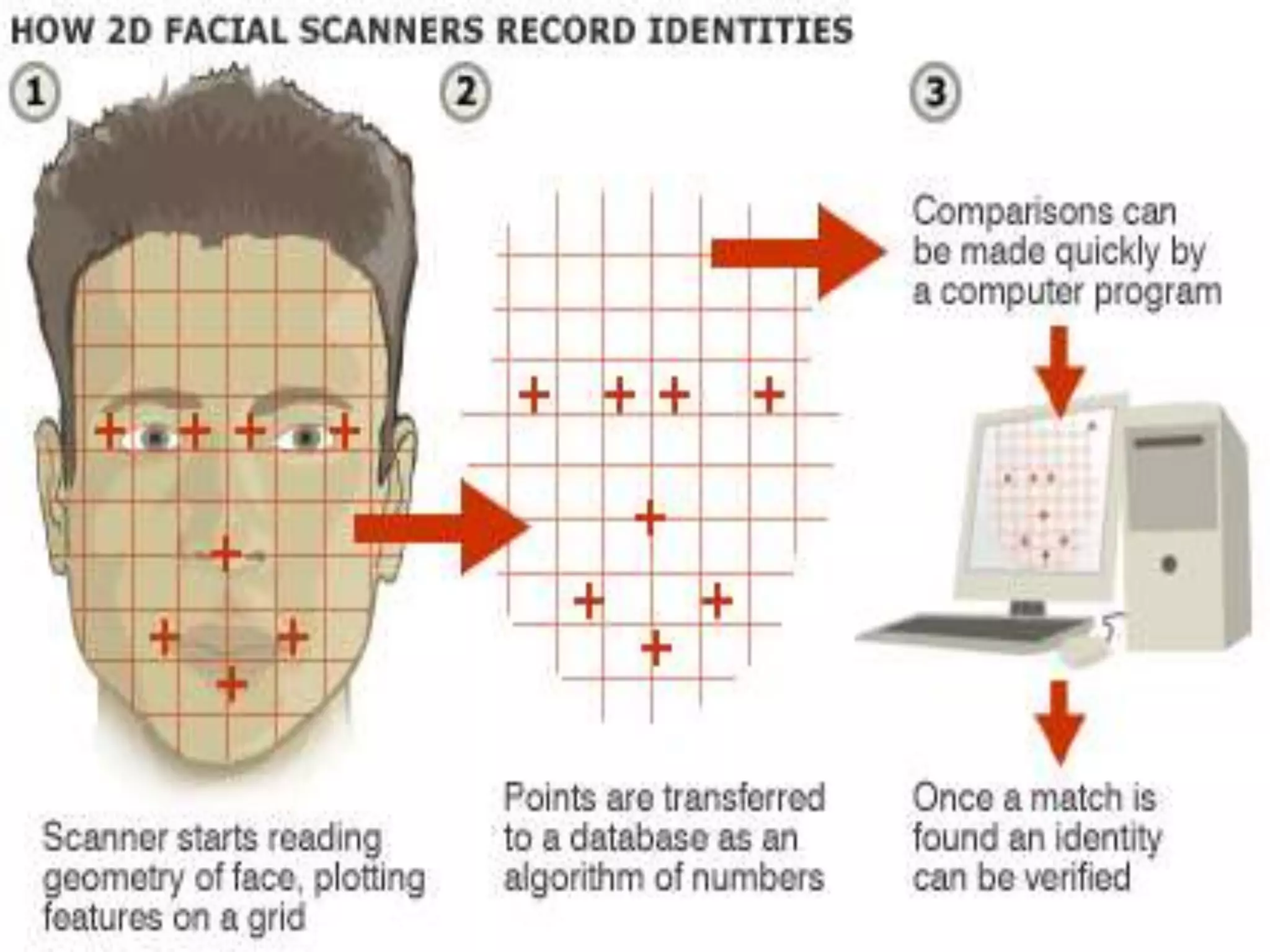
Face Recognition
 It involves recognizing people by there:
 Facial features.
 Face geometry.


   Principle:
    Analysis of unique shape, pattern and
    positioning of facial features.
Voice Recognition:
 Voice recognition is not the same as
  speech recognition, it is speaker
  recognition.
 Considered both physiological and
  behavioral.
 Popular and low-cost, but less accurate
  and sometimes lengthy enrollment.
Styles of spoken input:

 These system have two styles of spoken
  inputs:
 Text Dependent- version inherently
  increases recognition performance, but it
  requires a co-operative user who can
  remember a phrase or sentence.

   Text-independent- version does not even
    need the user to be aware about the
    system, which makes it more convenient
    and secure.
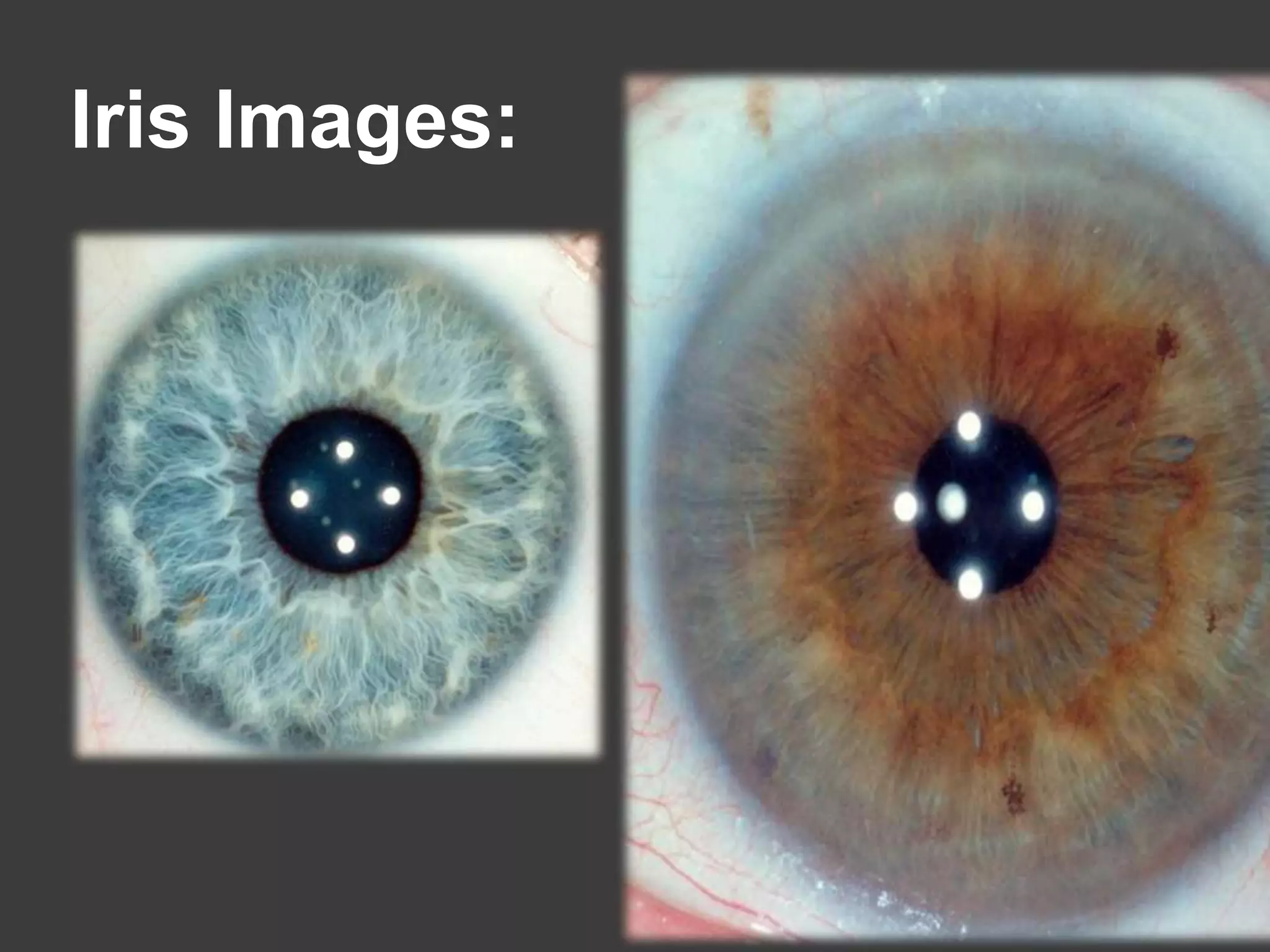
Iris Recognition:
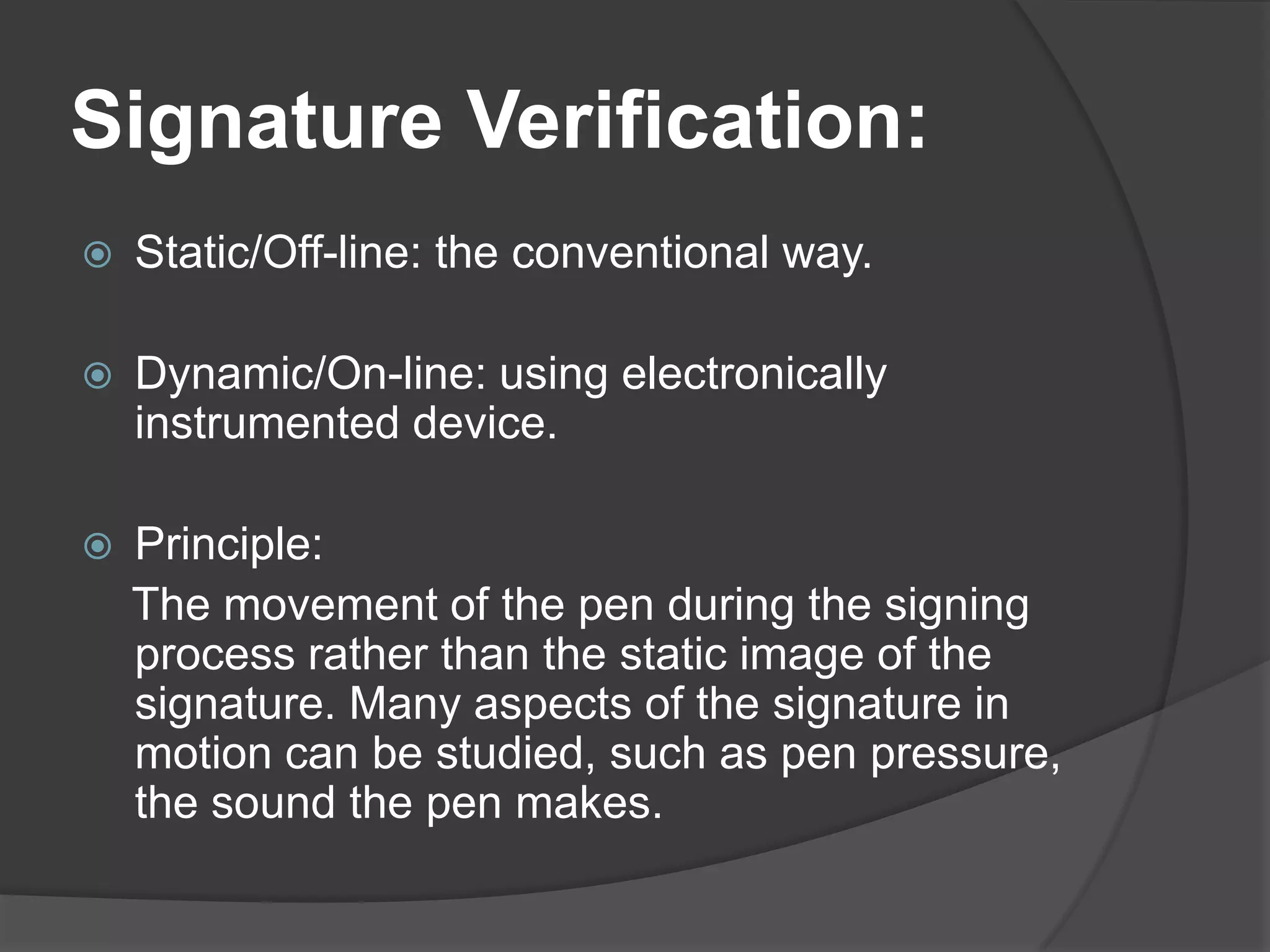
 It is the colored area of the eye that
  surrounds the pupil.
 It is a protected internal organ whose
  random texture is stable throughout life.
 The iris patterns are obtained through a
  video-based image acquisition system .
Iris Images:
Signature Verification:
   Static/Off-line: the conventional way.

   Dynamic/On-line: using electronically
    instrumented device.

   Principle:
    The movement of the pen during the signing
    process rather than the static image of the
    signature. Many aspects of the signature in
    motion can be studied, such as pen pressure,
    the sound the pen makes.
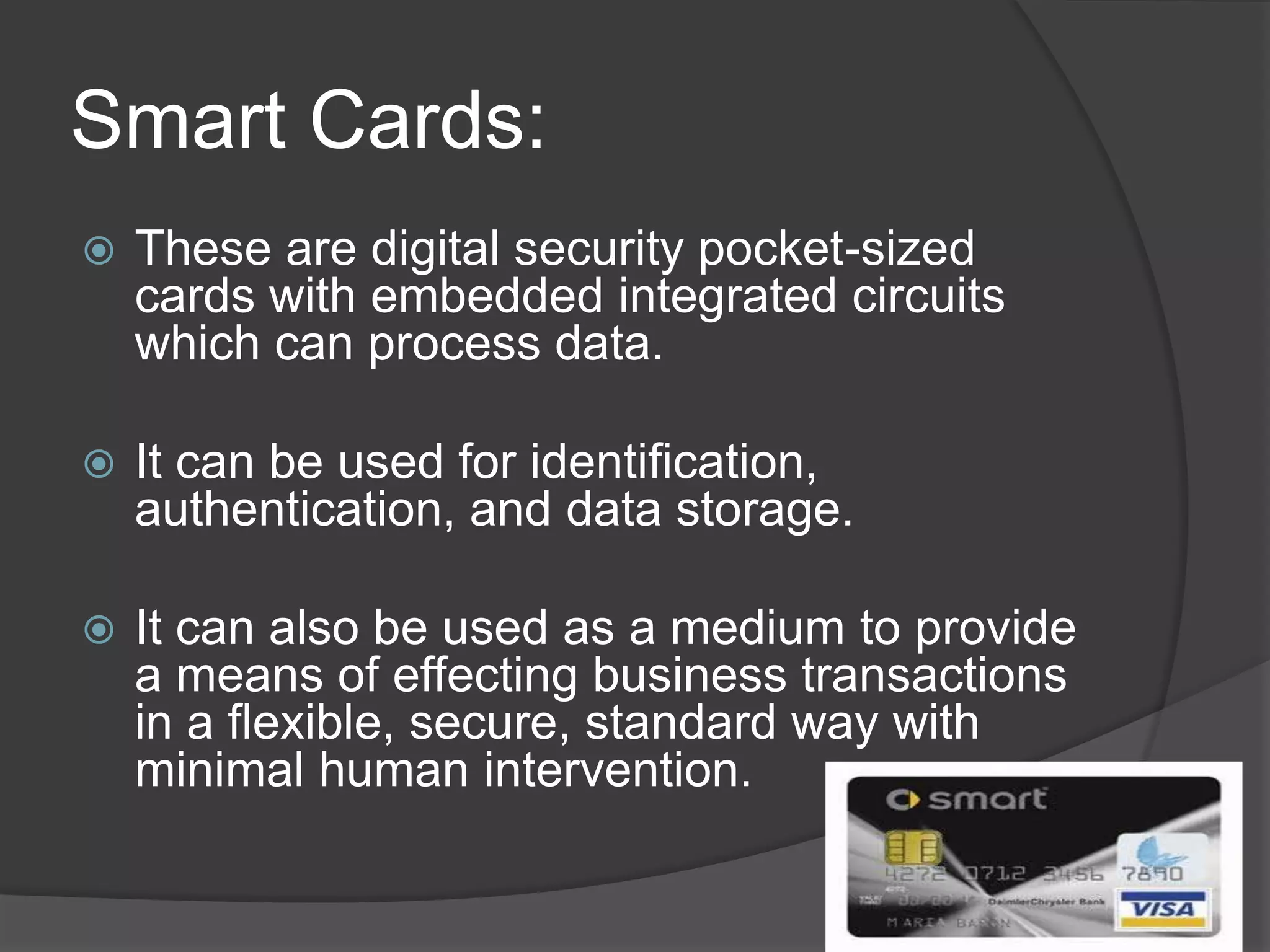
Smart Cards:
   These are digital security pocket-sized
    cards with embedded integrated circuits
    which can process data.

   It can be used for identification,
    authentication, and data storage.

   It can also be used as a medium to provide
    a means of effecting business transactions
    in a flexible, secure, standard way with
    minimal human intervention.
Encryption Systems :
   Transforming information using an
    algorithm to make it unreadable to
    anyone except those possessing special
    knowledge, usually referred to as a key.

   Encryption has long been used by
    militaries and governments to facilitate
    secret communication.
Performance of BIOMETRICS
:
   False accept rate or false match rate (FAR
    or FMR)

   False reject rate or false non-match rate
    (FRR or FNMR)

   Relative operating characteristic (ROC)

   Equal error rate or crossover error rate
    (EER or CER)
Advantages of
Biometrics:
   Biometric identification can provide extremely
    accurate, secured access to information; fingerprints,
    retinal and iris scans produce absolutely unique data
    sets when done properly.

   Current methods like password verification have
    many problems (people write them down, they forget
    them, they make up easy-to-hack passwords) .

   Automated biometric identification can be done very
    rapidly and uniformly, with a minimum of training .

   Your identity can be verified without resort to
    documents that may be stolen, lost or altered.
Disadvantages of
BIOMETRICS:
   The finger print of those people working in Chemical
    industries are often affected. Therefore these companies
    should not use the finger print mode of authentication.

   It is found that with age, the voice of a person differs. Also
    when the person has flu or throat infection the voice
    changes or if there there are too much noise in the
    environment this method maynot authenticate correctly.
    Therefore this method of verification is not workable all
    the time

   For people affected with diabetes, the eyes get affected
    resulting in differences.

   Biometrics is an expensive security solution.
BIOMETRICS SECURITY:
   Security personnel look for biometric
    data that does not change over the
    course of your life; that is, they look for
    physical   characteristics      that  stay
    constant and that are difficult to fake or
    change on purpose
THANK YOU

Biometrics

  • 1.
  • 2.
    Introduction  Biometrics is the science and technology of measuring and analyzing biological data.  It measure and analyze human body characteristics, such as DNA, fingerprints, eye retinas and irises, voice patterns, facial patterns and hand measurements, for authentication purposes.
  • 3.
    Biometric devices consistof:  A reader or scanning device  Software that converts the scanned information into digital form and compares match points  A database that stores the biometric data for comparison
  • 4.
    Biometrics can besorted into two classes:  Categories of BIOMETRICS  Physiological  Examples- face, fingerprints, hand geometry and iris Recognition, DNA.  Behavioral  Examples-signature and voice.
  • 5.
    Basic characteristics of BIOMETRICTechnologies:  Universality: Every person should have the characteristic. People who are mute or without a fingerprint will need to be accommodated in some way.  Uniqueness: Generally, no two people have identical characteristics. However, identical twins are hard to distinguish.  Permanence: The characteristics should not vary with time. A person's face, for example, may change with age.
  • 6.
    Collectibility: The characteristics must be easily collectible and measurable.  Performance: The method must deliver accurate results under varied environmental circumstances.  Acceptability: The general public must accept the sample collection routines. Nonintrusive methods are more acceptable.  Circumvention: The technology should be difficult to deceive
  • 8.
    Working principle:  Biometric devices consist of a reader or scanning device software that converts the gathered information into digital form, and a database that stores the biometric data with comparison with existing records.
  • 9.
    Modes  Enrollment Mode.  Verification Mode.  Enrollment Mode: A sample of the biometric trait is captured, processed by a computer, and stored for later comparison.  Verification Mode: In this mode biometric system authenticates a person’s claimed identity from their previously enrolled pattern.
  • 10.
    Biometric Modalities: Fingerprint Recognition:  For fingerprint Recognition look at:  Friction ridges  Core  Crossover  Delta  Island  Ridge Ending  Pore
  • 13.
    Face Recognition Itinvolves recognizing people by there:  Facial features.  Face geometry.  Principle: Analysis of unique shape, pattern and positioning of facial features.
  • 15.
    Voice Recognition:  Voicerecognition is not the same as speech recognition, it is speaker recognition.  Considered both physiological and behavioral.  Popular and low-cost, but less accurate and sometimes lengthy enrollment.
  • 16.
    Styles of spokeninput: These system have two styles of spoken inputs:  Text Dependent- version inherently increases recognition performance, but it requires a co-operative user who can remember a phrase or sentence.  Text-independent- version does not even need the user to be aware about the system, which makes it more convenient and secure.
  • 17.
    Iris Recognition:  Itis the colored area of the eye that surrounds the pupil.  It is a protected internal organ whose random texture is stable throughout life.  The iris patterns are obtained through a video-based image acquisition system .
  • 18.
  • 19.
    Signature Verification:  Static/Off-line: the conventional way.  Dynamic/On-line: using electronically instrumented device.  Principle: The movement of the pen during the signing process rather than the static image of the signature. Many aspects of the signature in motion can be studied, such as pen pressure, the sound the pen makes.
  • 20.
    Smart Cards:  These are digital security pocket-sized cards with embedded integrated circuits which can process data.  It can be used for identification, authentication, and data storage.  It can also be used as a medium to provide a means of effecting business transactions in a flexible, secure, standard way with minimal human intervention.
  • 21.
    Encryption Systems :  Transforming information using an algorithm to make it unreadable to anyone except those possessing special knowledge, usually referred to as a key.  Encryption has long been used by militaries and governments to facilitate secret communication.
  • 22.
    Performance of BIOMETRICS :  False accept rate or false match rate (FAR or FMR)  False reject rate or false non-match rate (FRR or FNMR)  Relative operating characteristic (ROC)  Equal error rate or crossover error rate (EER or CER)
  • 23.
    Advantages of Biometrics:  Biometric identification can provide extremely accurate, secured access to information; fingerprints, retinal and iris scans produce absolutely unique data sets when done properly.  Current methods like password verification have many problems (people write them down, they forget them, they make up easy-to-hack passwords) .  Automated biometric identification can be done very rapidly and uniformly, with a minimum of training .  Your identity can be verified without resort to documents that may be stolen, lost or altered.
  • 24.
    Disadvantages of BIOMETRICS:  The finger print of those people working in Chemical industries are often affected. Therefore these companies should not use the finger print mode of authentication.  It is found that with age, the voice of a person differs. Also when the person has flu or throat infection the voice changes or if there there are too much noise in the environment this method maynot authenticate correctly. Therefore this method of verification is not workable all the time  For people affected with diabetes, the eyes get affected resulting in differences.  Biometrics is an expensive security solution.
  • 25.
    BIOMETRICS SECURITY:  Security personnel look for biometric data that does not change over the course of your life; that is, they look for physical characteristics that stay constant and that are difficult to fake or change on purpose
  • 26.