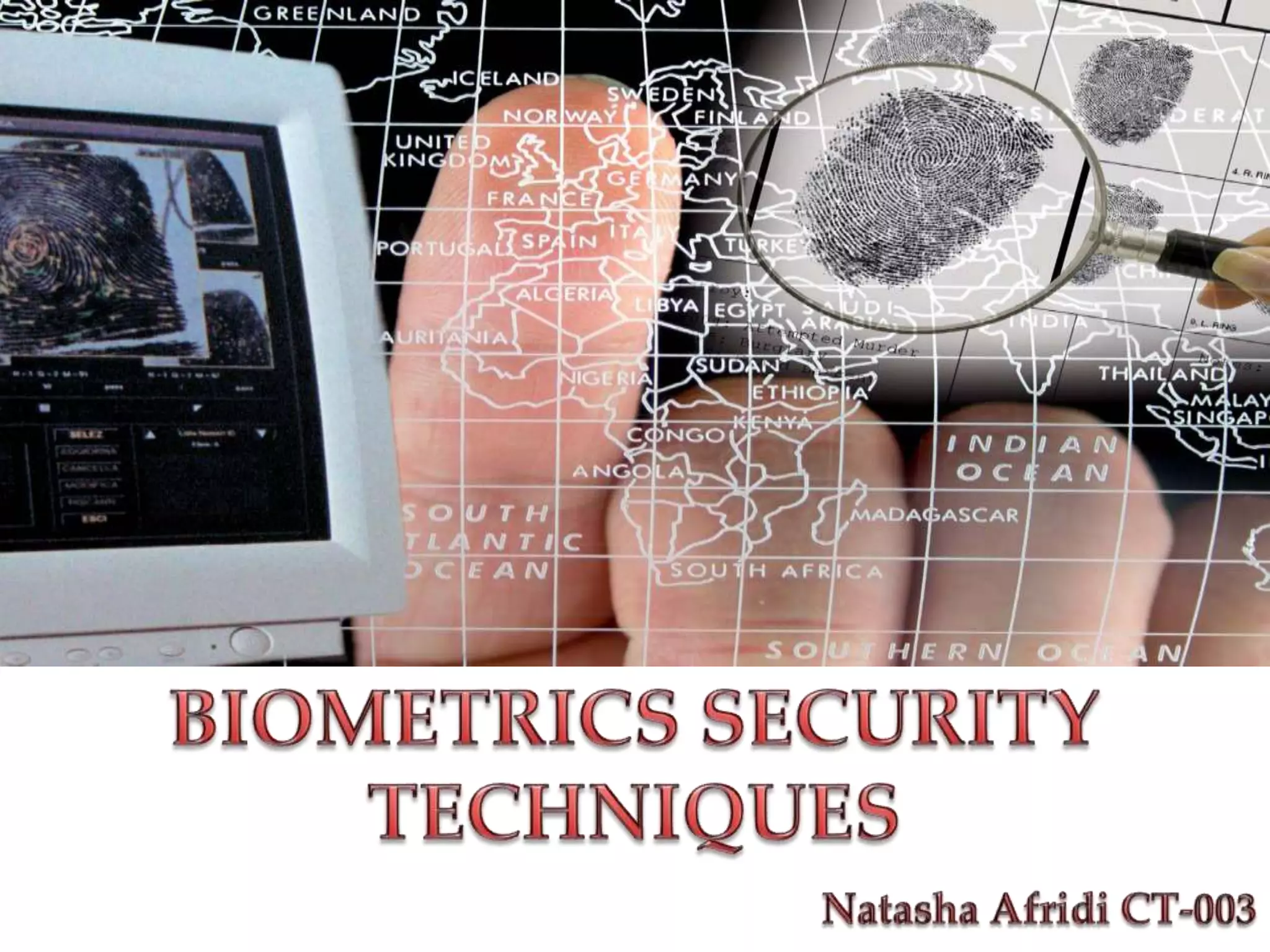
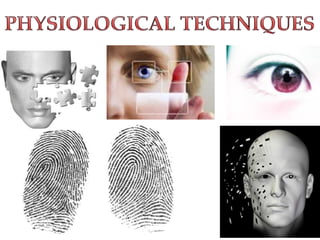
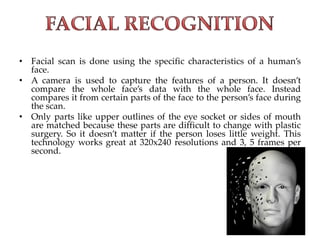
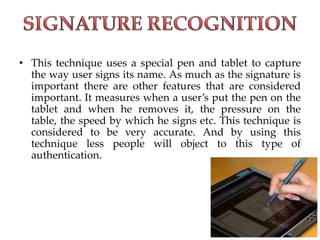
Biometrics uses measurements of physical and behavioral characteristics to authenticate identity. During enrollment, a biometric sample is taken and stored in a database. When authenticating, a new sample is taken and matched against stored data. If the samples match within a set threshold, access is granted. Common biometric traits include fingerprints, iris scans, facial recognition, voice recognition, and hand geometry. While effective, biometrics raise privacy and security concerns if biometric data is stolen or shared without consent. Implementation also faces challenges of user acceptance, high costs, and accuracy limitations. Overall, biometrics can reliably verify identities but organizations must consider implications and mitigate risks to privacy.