Timber Conversion
By Ms. F. Dickenson
What do we know ?
• Trees or wooded land considered as a
source of timber.
• Timber used as a building material;
lumber.
A Log
Type of wood
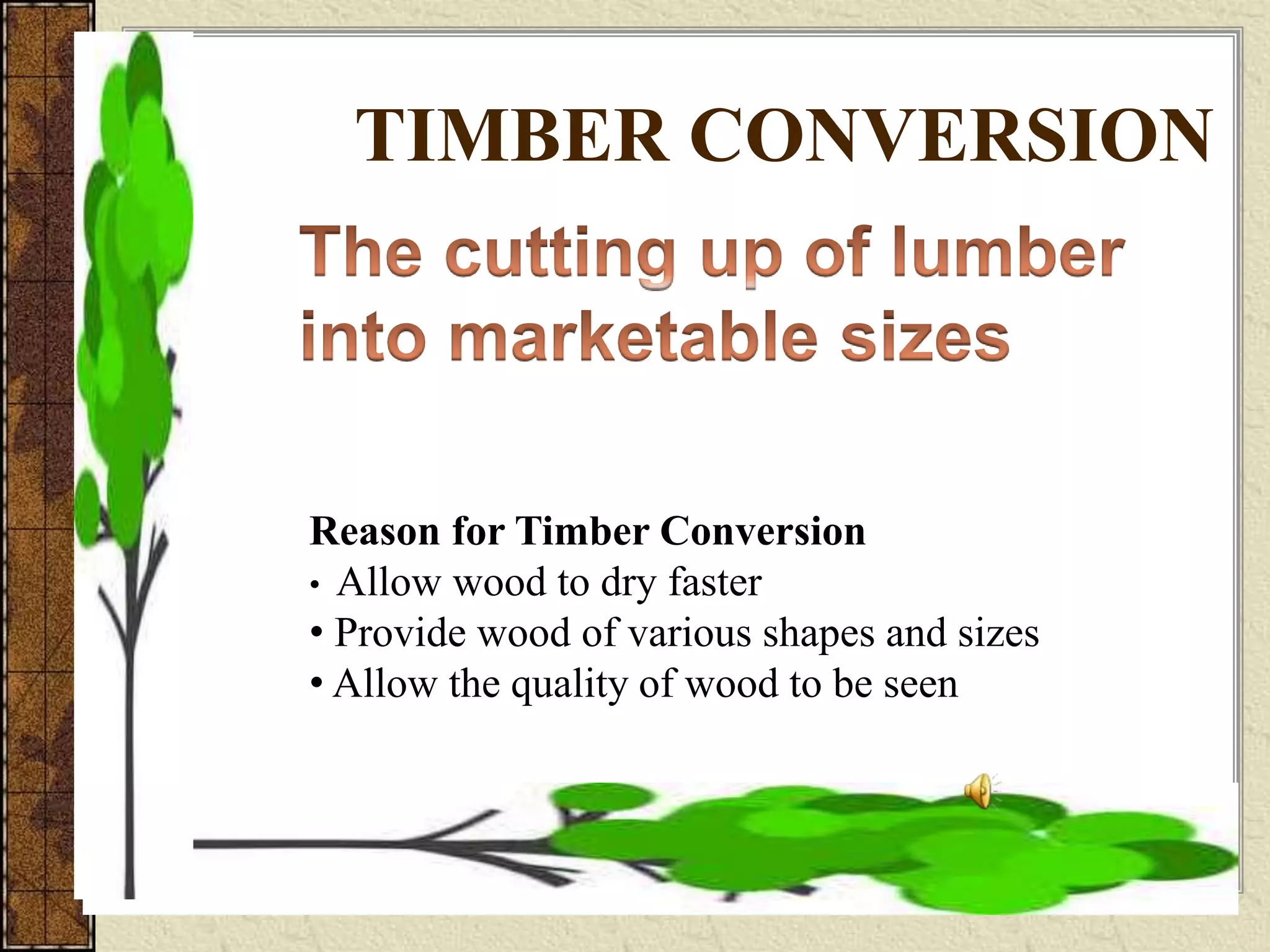
TIMBER CONVERSION
Reason for Timber Conversion
• Allow wood to dry faster
• Provide wood of various shapes and sizes
• Allow the quality of wood to be seen
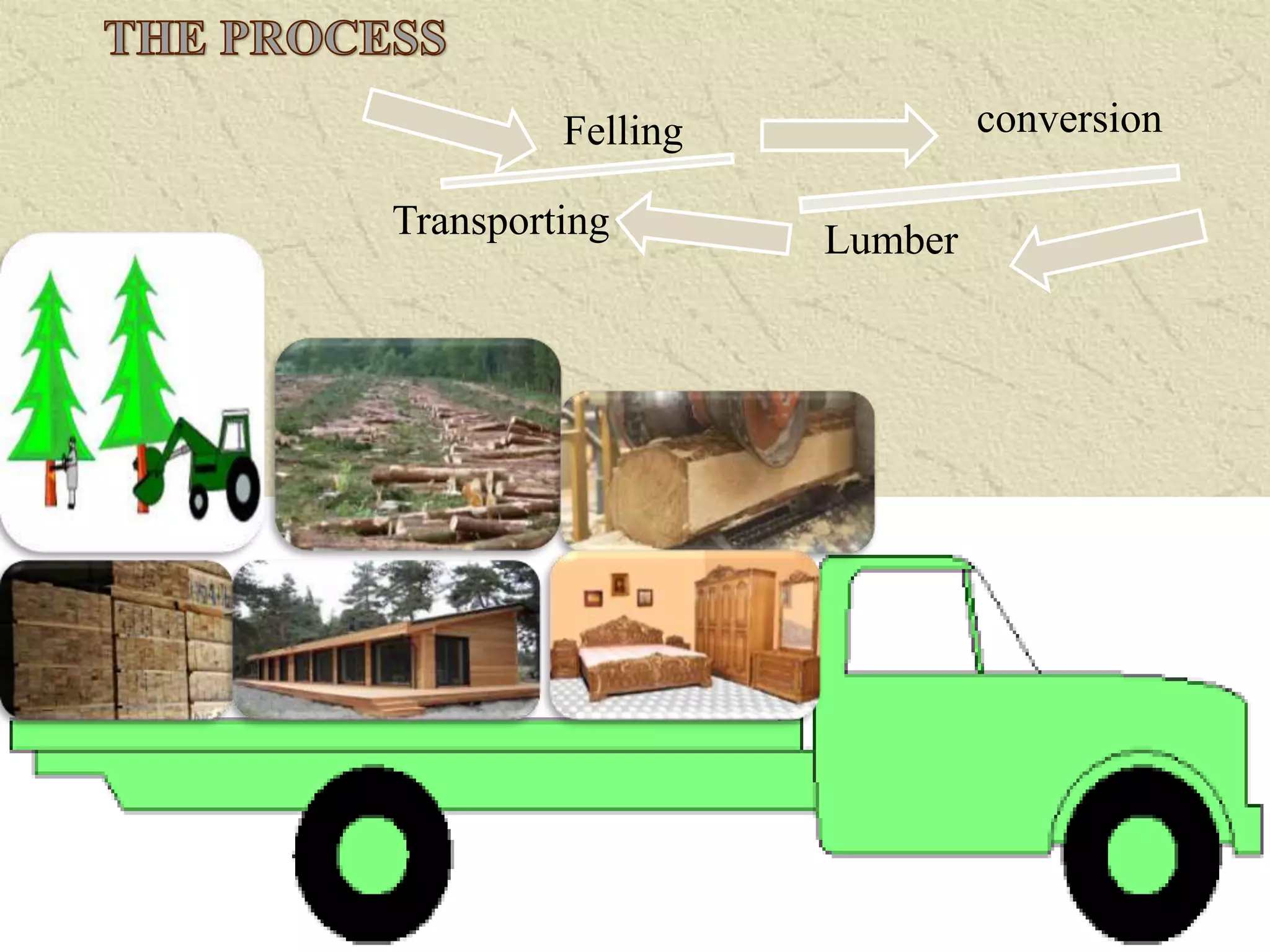
Felling
Transporting
conversion
Lumber
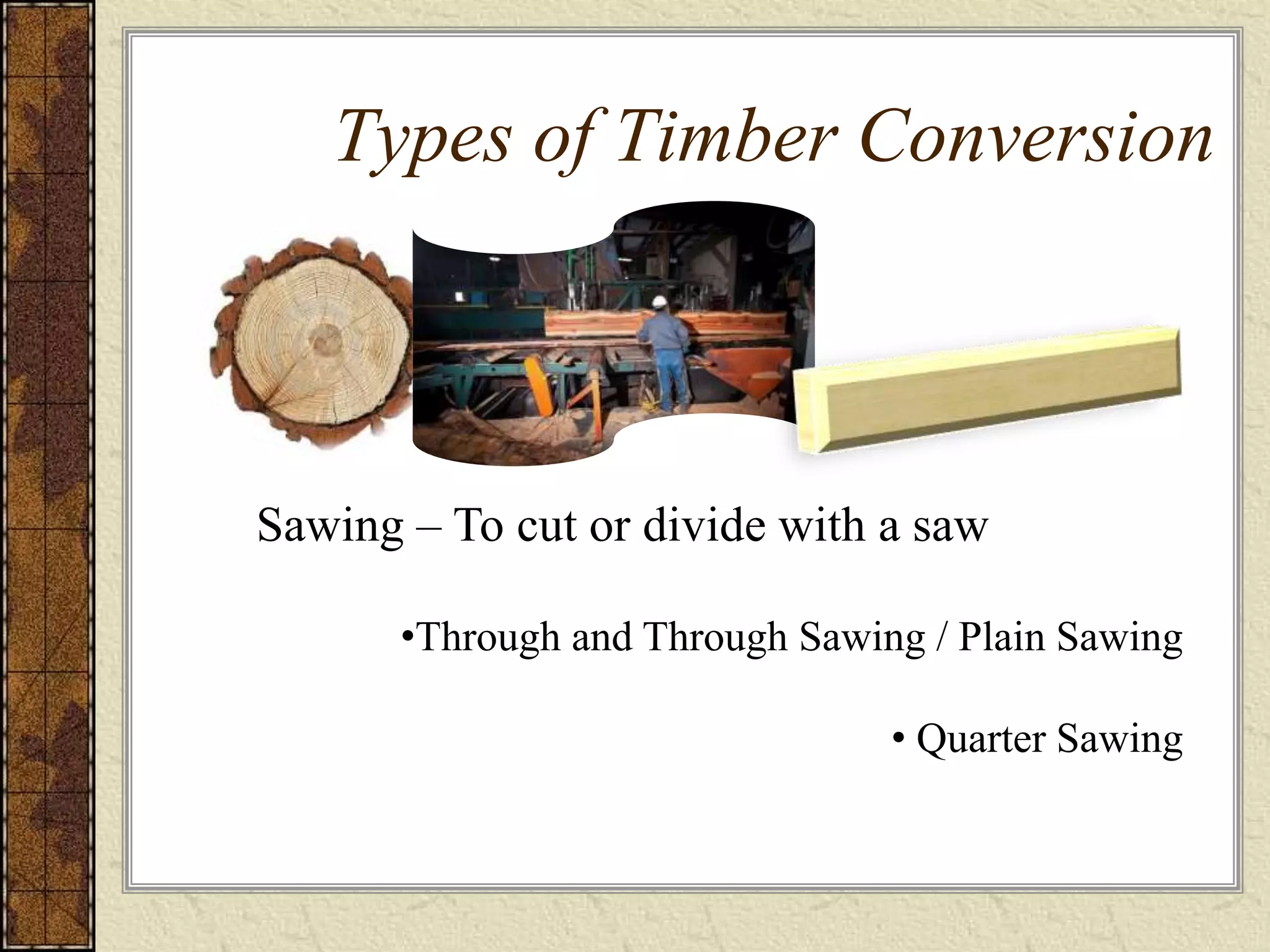
Types of Timber Conversion
•Through and Through Sawing / Plain Sawing
• Quarter Sawing
Sawing – To cut or divide with a saw
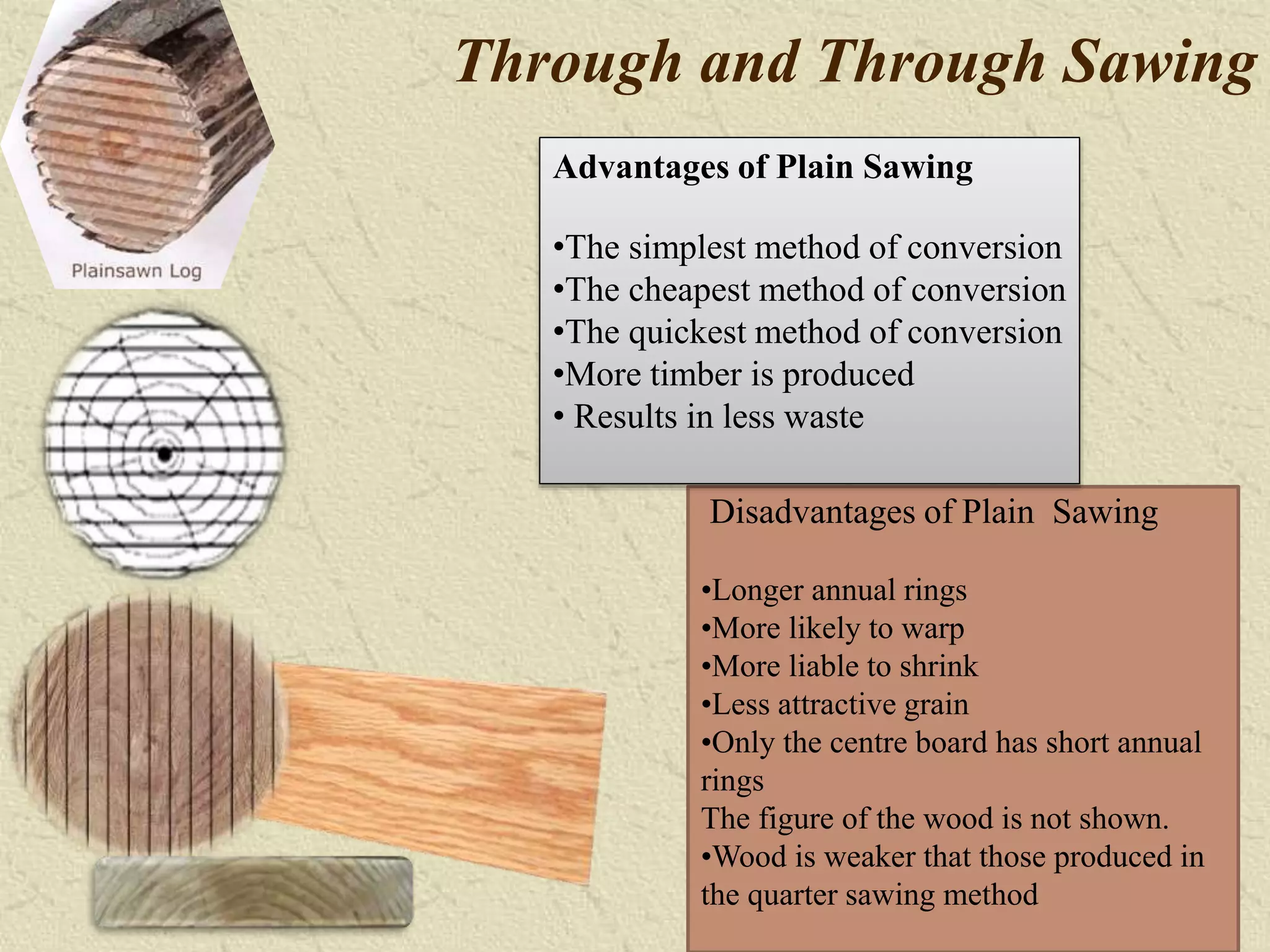
Disadvantages of Plain Sawing
•Longer annual rings
•More likely to warp
•More liable to shrink
•Less attractive grain
•Only the centre board has short annual
rings
The figure of the wood is not shown.
•Wood is weaker that those produced in
the quarter sawing method
Through and Through Sawing
Advantages of Plain Sawing
•The simplest method of conversion
•The cheapest method of conversion
•The quickest method of conversion
•More timber is produced
• Results in less waste
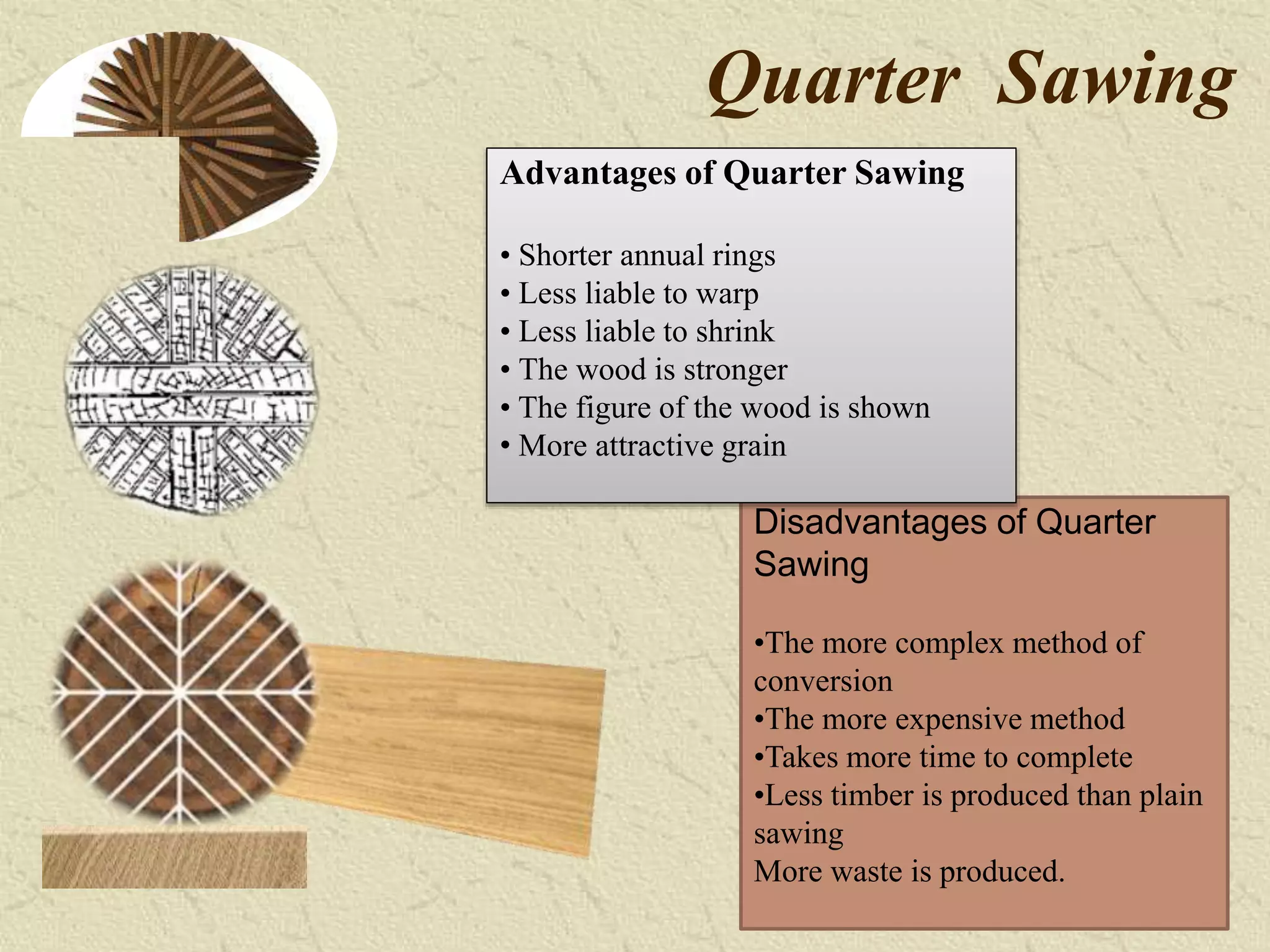
Disadvantages of Quarter
Sawing
•The more complex method of
conversion
•The more expensive method
•Takes more time to complete
•Less timber is produced than plain
sawing
More waste is produced.
Quarter Sawing
Advantages of Quarter Sawing
• Shorter annual rings
• Less liable to warp
• Less liable to shrink
• The wood is stronger
• The figure of the wood is shown
• More attractive grain
Summary
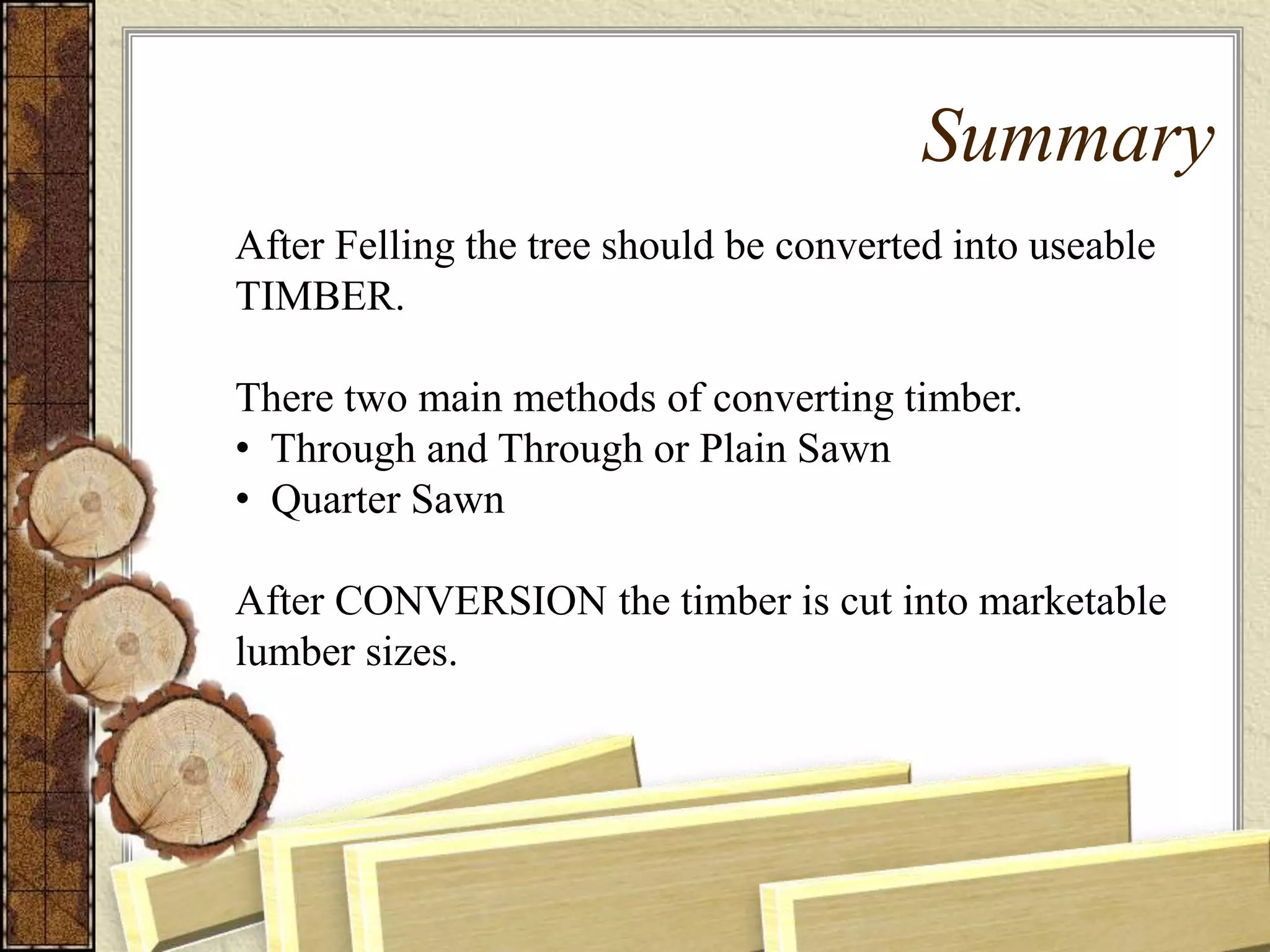
After Felling the tree should be converted into useable
TIMBER.
There two main methods of converting timber.
• Through and Through or Plain Sawn
• Quarter Sawn
After CONVERSION the timber is cut into marketable
lumber sizes.

Timber conversion

  • 1.
  • 2.
    What do weknow ? • Trees or wooded land considered as a source of timber. • Timber used as a building material; lumber. A Log Type of wood
  • 3.
    TIMBER CONVERSION Reason forTimber Conversion • Allow wood to dry faster • Provide wood of various shapes and sizes • Allow the quality of wood to be seen
  • 4.
  • 5.
    Types of TimberConversion •Through and Through Sawing / Plain Sawing • Quarter Sawing Sawing – To cut or divide with a saw
  • 6.
    Disadvantages of PlainSawing •Longer annual rings •More likely to warp •More liable to shrink •Less attractive grain •Only the centre board has short annual rings The figure of the wood is not shown. •Wood is weaker that those produced in the quarter sawing method Through and Through Sawing Advantages of Plain Sawing •The simplest method of conversion •The cheapest method of conversion •The quickest method of conversion •More timber is produced • Results in less waste
  • 7.
    Disadvantages of Quarter Sawing •Themore complex method of conversion •The more expensive method •Takes more time to complete •Less timber is produced than plain sawing More waste is produced. Quarter Sawing Advantages of Quarter Sawing • Shorter annual rings • Less liable to warp • Less liable to shrink • The wood is stronger • The figure of the wood is shown • More attractive grain
  • 9.
    Summary After Felling thetree should be converted into useable TIMBER. There two main methods of converting timber. • Through and Through or Plain Sawn • Quarter Sawn After CONVERSION the timber is cut into marketable lumber sizes.