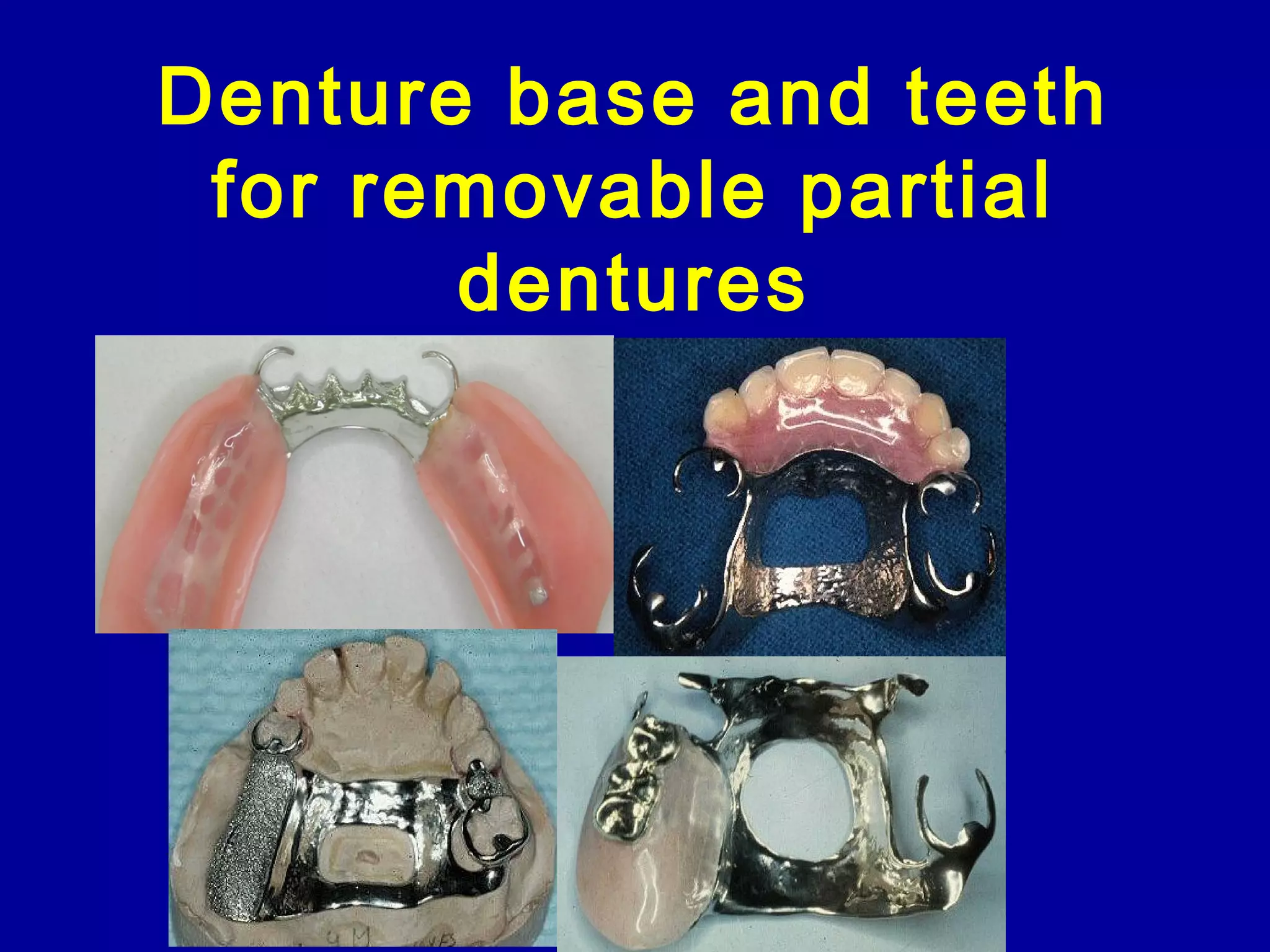
Denture base and teeth
for removable partial
dentures
Learning outcomes
1. Define a denture base.
2. Describe the types of denture
bases and their indications.
3. Compare the advantages and
disadvantages of denture bases.
4. Describe the methods of
attaching teeth to the denture
bases.
Components of a RPD
1. Major connectors
2. Minor connectors
3. Rests
4. Direct retainers
5. Indirect retainers
(CLASS I AND CLASS II ONLY)
6. Denture bases
7. Teeth
 Denture base: the part of a
denture that rests on the
foundation tissues and to which
teeth are attached.
Types of denture base
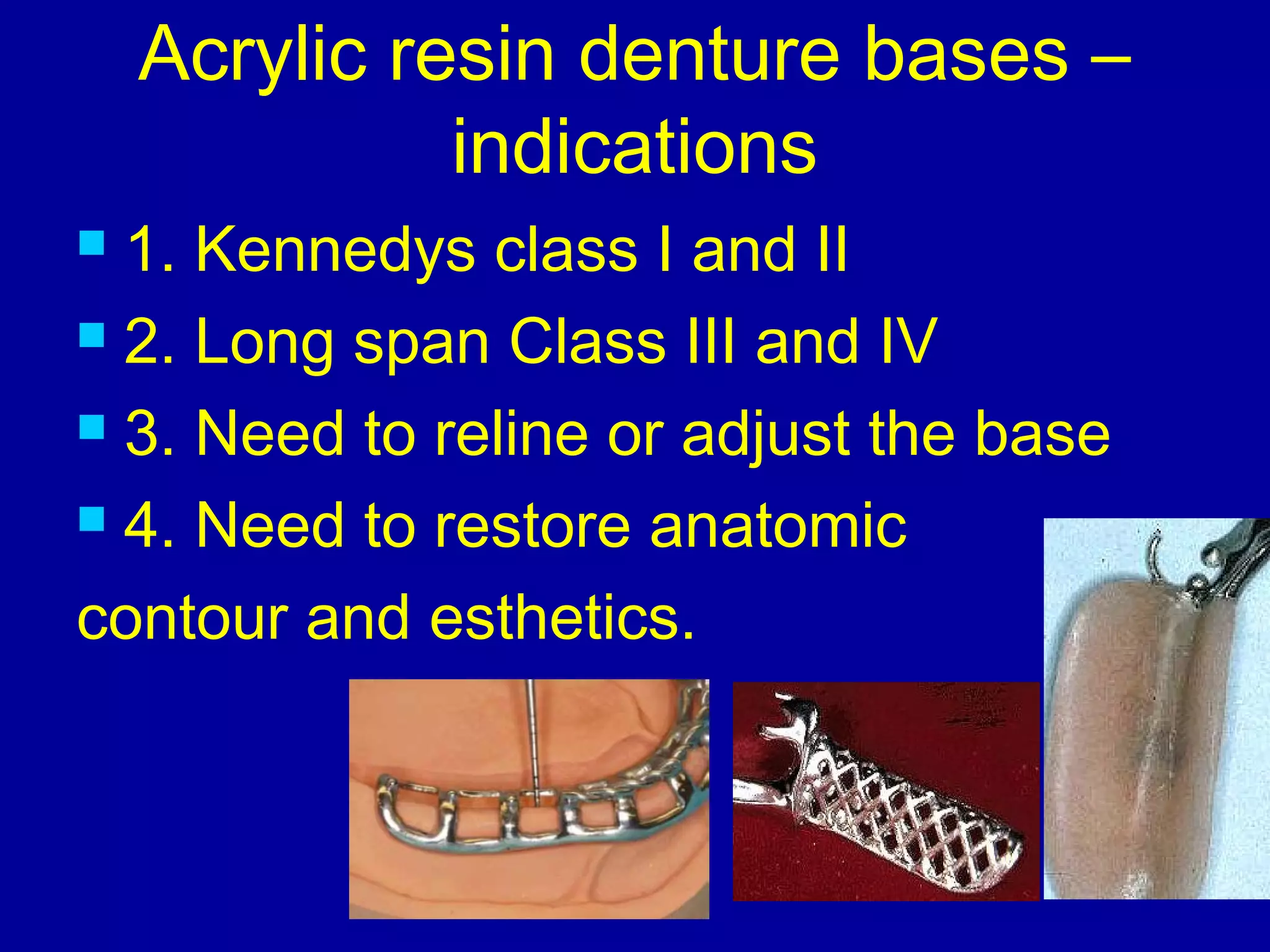
 1. Acrylic resin denture bases
(with metal mesh/lattice work)
 2. Metal denture bases
Acrylic resin denture bases –
indications
 1. Kennedys class I and II
 2. Long span Class III and IV
 3. Need to reline or adjust the base
 4. Need to restore anatomic
contour and esthetics.
Advantages
 Esthetically better than metal
bases
 Easy to repair
Disadvantages
 Dimensional stability- warpage
 Lower strength/wear resistance
than metal
 Porous – hygiene problems
 Low thermal conductivity
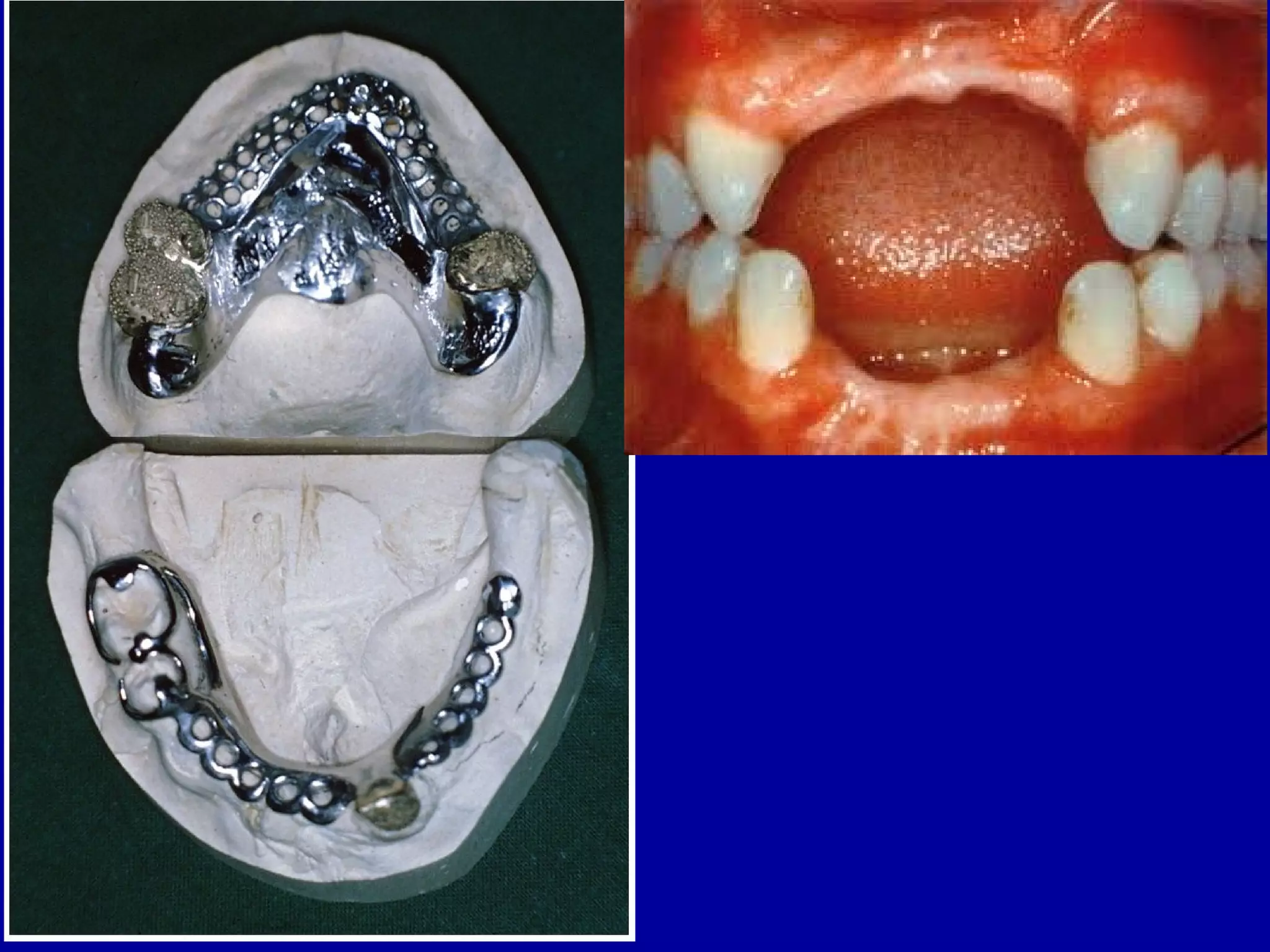
Metal denture bases –
indications
 1. Short span Kennedys class III
 2. Limited vertical height
with less space for resin
 3. Maximum strength
required.
 4. Relining not anticipated.
 5. Where esthetics is not of concern
Advantages
1. Accuracy and Permanence of
Form
Cast metal bases, whether of gold,
chrome, or titanium alloys, not only
may be cast more accurately than
denture resins but also can maintain
their accuracy of form without
changes in the mouth.
2. Comparative Tissue
Response
The cleanliness of the cast metal
base contributes to the health of oral
tissues when compared with an
acrylic resin base.
3. Thermal Conductivity
Freedom of interchange of
temperature between the tissues
covered and the surrounding tissues
contributes much to the patient’s
acceptance of a denture and may
help avoid the feeling of the presence
of a foreign body.
4. Weight and Bulk
Metal alloy may be cast much
thinner than acrylic resin and still
have adequate strength and rigidity.
Disadvantages
 Its principal disadvantages are
that it is difficult to adjust and
reline.
Methods of Attaching Artificial
Teeth
 Artificial teeth may be attached to
denture bases:
- with acrylic resin,
- with cement,
- cast with the framework
 Use of acrylic-resin to attach
artificial teeth to a denture base is
the most common method.
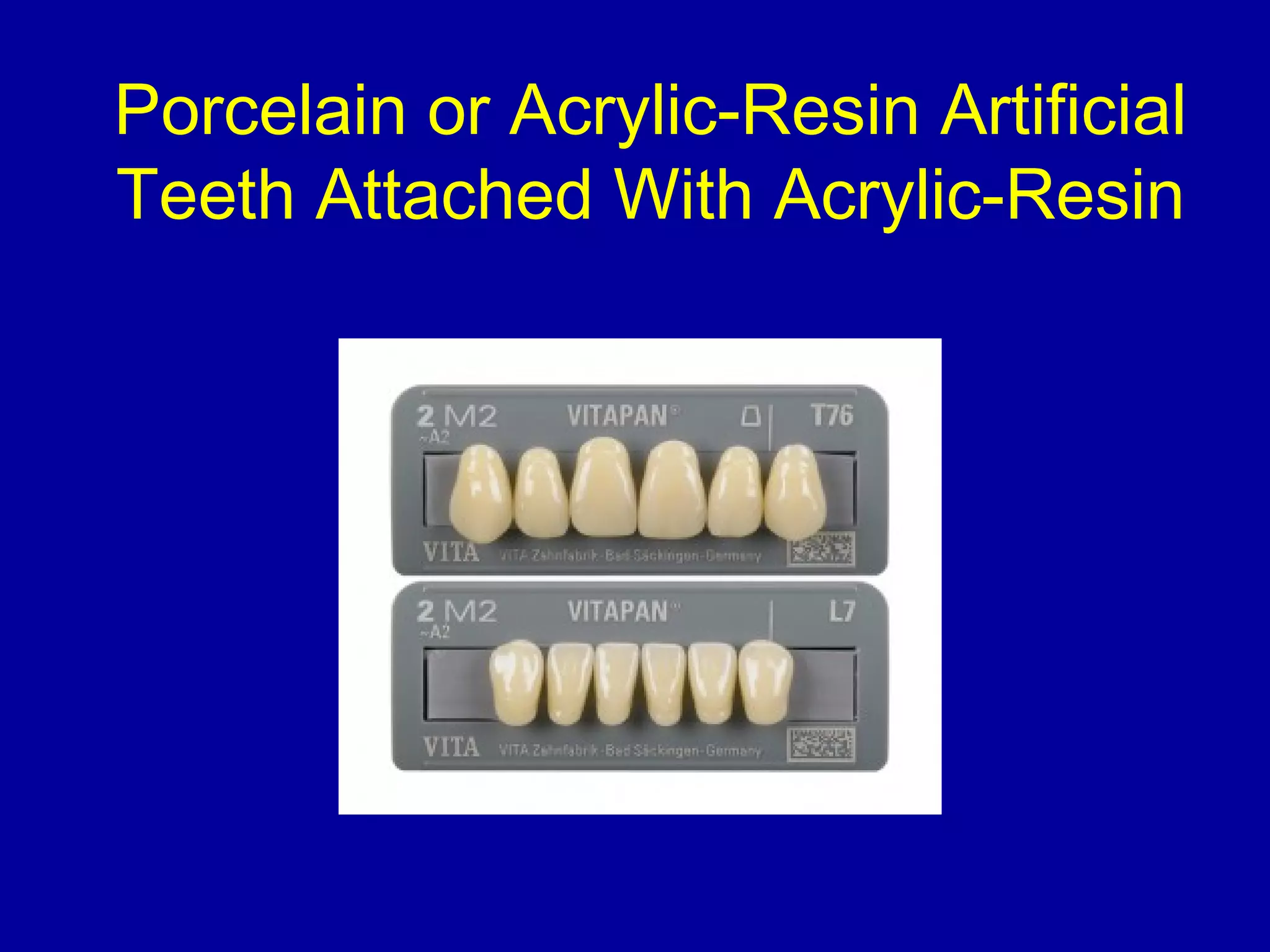
Porcelain or Acrylic-Resin Artificial
Teeth Attached With Acrylic-Resin
 Artificial porcelain teeth are
mechanically retained. The posterior
teeth are retained by acrylic-resin in
their diatoric holes. The anterior
porcelain teeth are retained by acrylic
resin surrounding their lingually placed
retention pins.
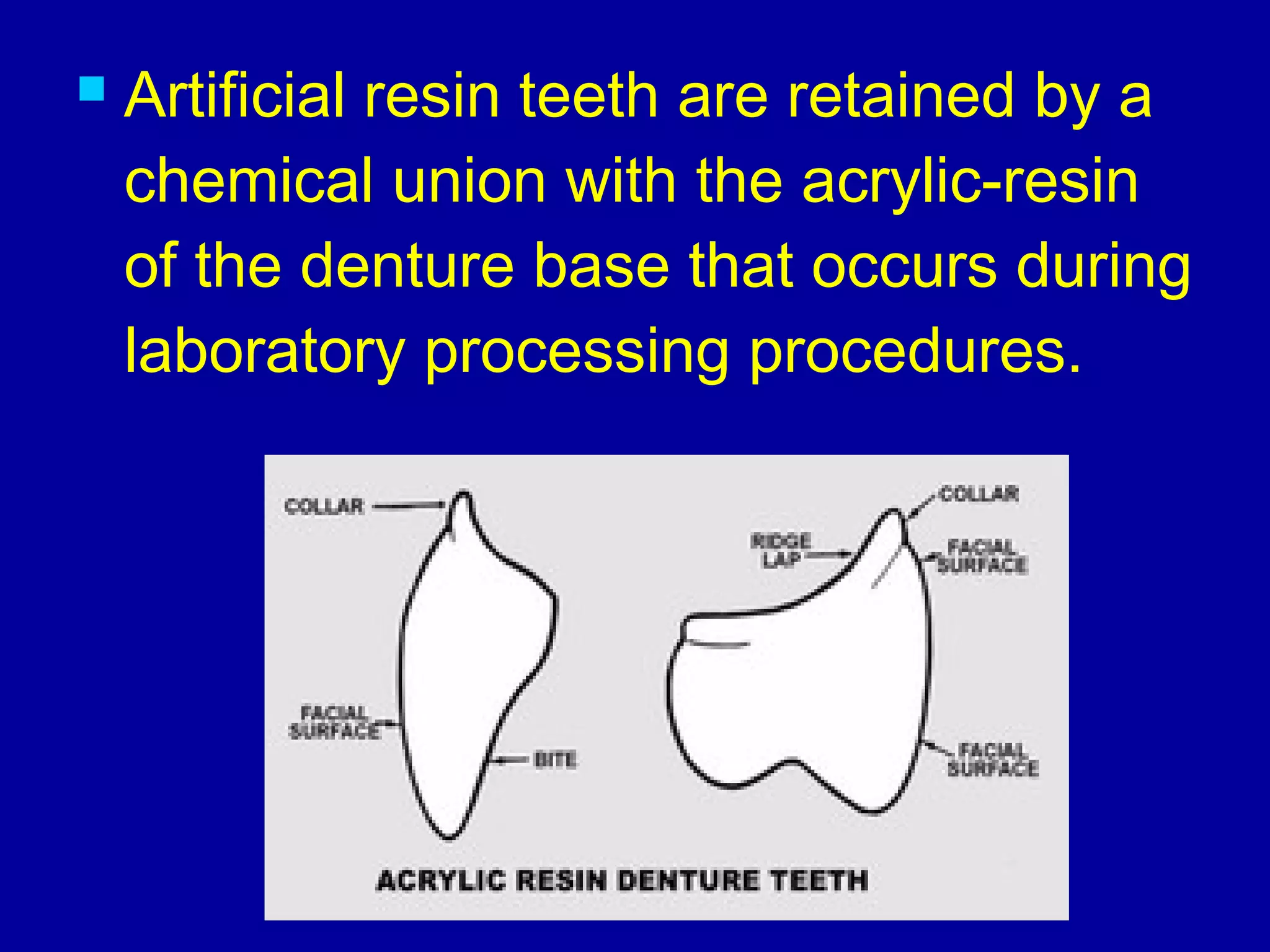
 Artificial resin teeth are retained by a
chemical union with the acrylic-resin
of the denture base that occurs during
laboratory processing procedures.
 Attachment of acrylic-resin to the
metal base may be accomplished
by nailhead retention, retention
loops, or diagonal spurs placed at
random.
Porcelain or Resin Tube Teeth and
Facings Cemented Directly to Metal Bases
Tube Teeth
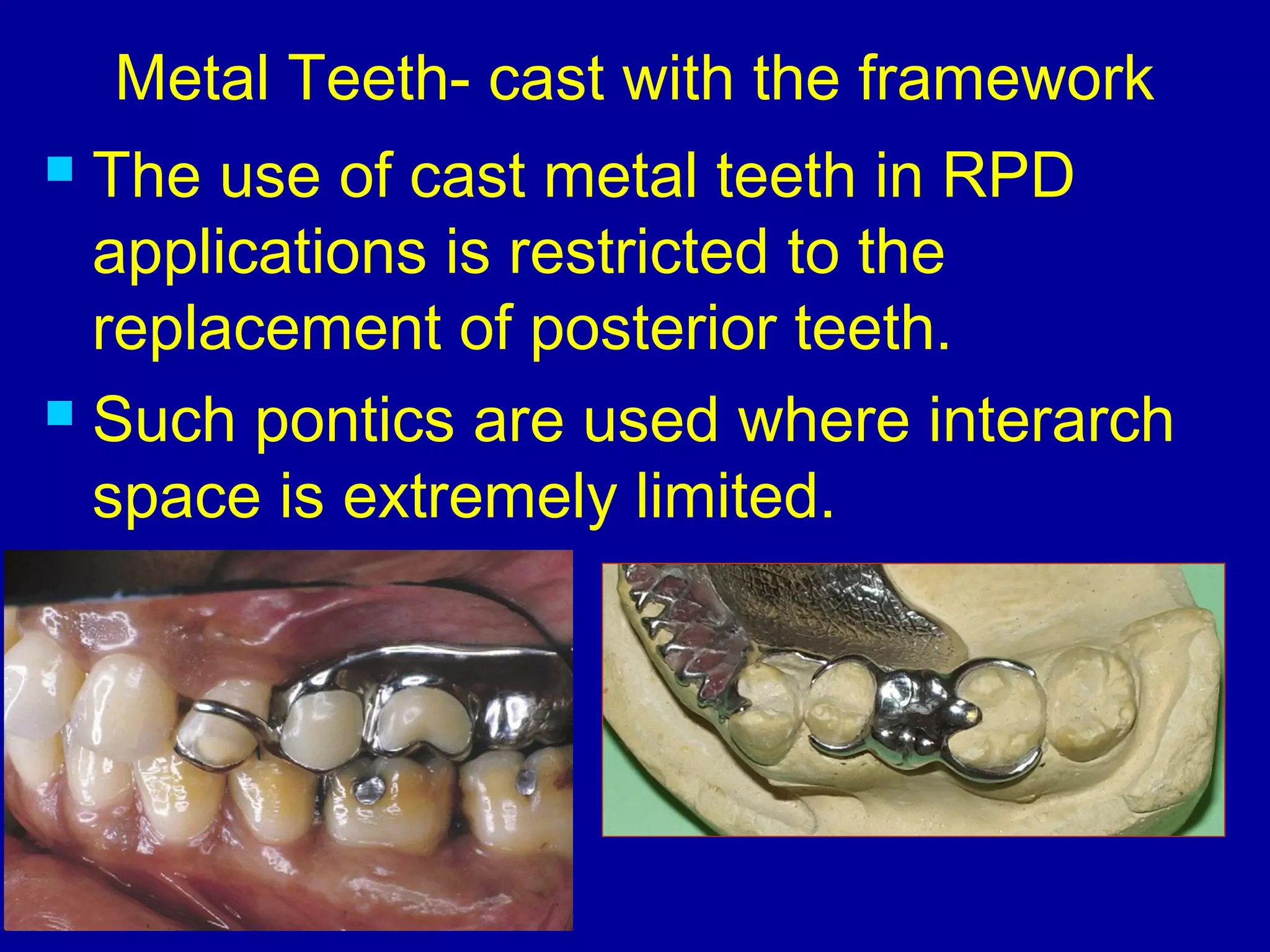
Metal Teeth- cast with the framework
 The use of cast metal teeth in RPD
applications is restricted to the
replacement of posterior teeth.
 Such pontics are used where interarch
space is extremely limited.
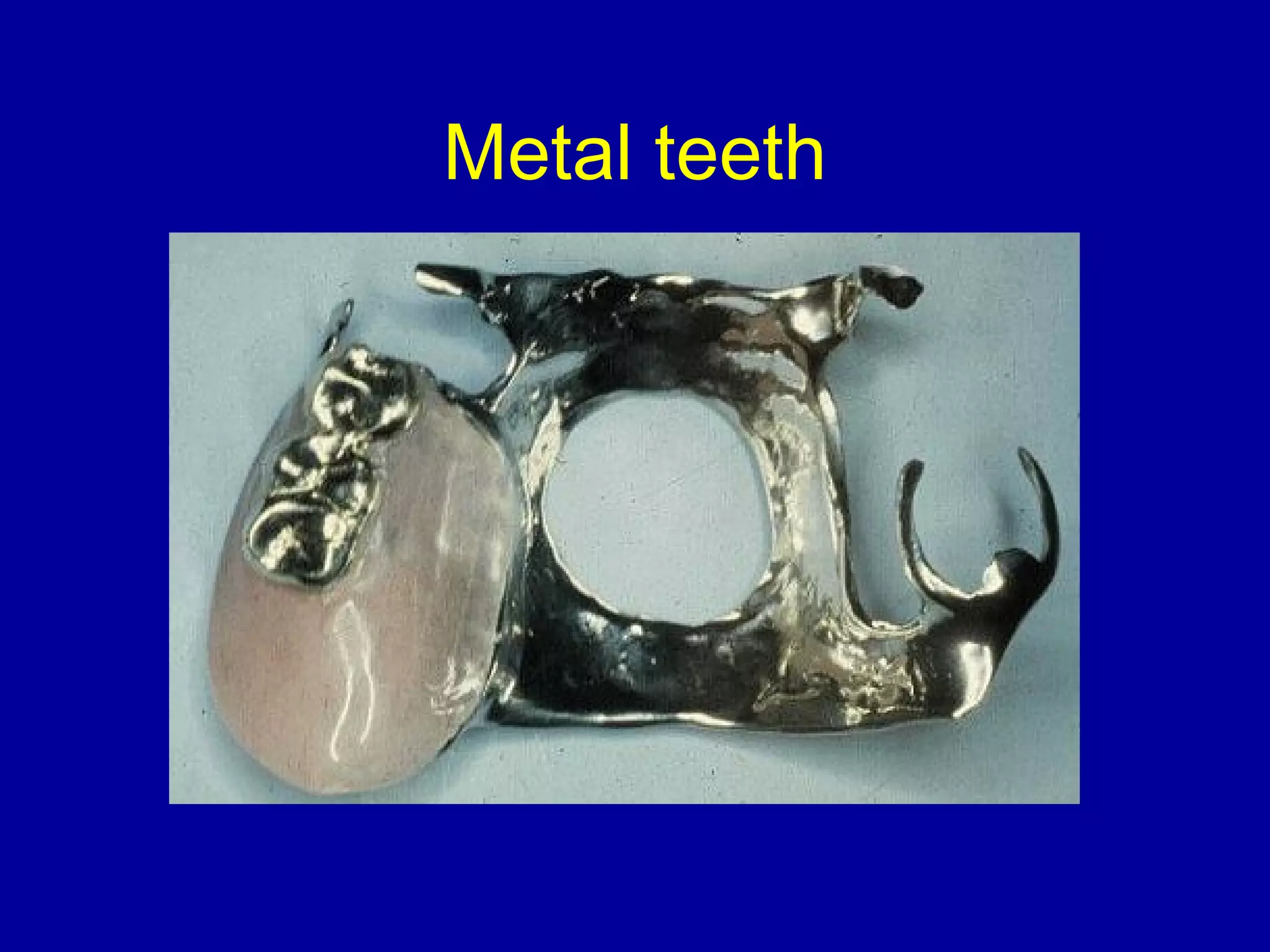
Metal teeth
25. rpd denture bases+teeth

25. rpd denture bases+teeth

  • 2.
    Denture base andteeth for removable partial dentures
  • 3.
    Learning outcomes 1. Definea denture base. 2. Describe the types of denture bases and their indications. 3. Compare the advantages and disadvantages of denture bases. 4. Describe the methods of attaching teeth to the denture bases.
  • 4.
    Components of aRPD 1. Major connectors 2. Minor connectors 3. Rests 4. Direct retainers 5. Indirect retainers (CLASS I AND CLASS II ONLY) 6. Denture bases 7. Teeth
  • 5.
     Denture base:the part of a denture that rests on the foundation tissues and to which teeth are attached.
  • 6.
    Types of denturebase  1. Acrylic resin denture bases (with metal mesh/lattice work)  2. Metal denture bases
  • 7.
    Acrylic resin denturebases – indications  1. Kennedys class I and II  2. Long span Class III and IV  3. Need to reline or adjust the base  4. Need to restore anatomic contour and esthetics.
  • 9.
    Advantages  Esthetically betterthan metal bases  Easy to repair
  • 10.
    Disadvantages  Dimensional stability-warpage  Lower strength/wear resistance than metal  Porous – hygiene problems  Low thermal conductivity
  • 11.
    Metal denture bases– indications  1. Short span Kennedys class III  2. Limited vertical height with less space for resin  3. Maximum strength required.  4. Relining not anticipated.  5. Where esthetics is not of concern
  • 12.
    Advantages 1. Accuracy andPermanence of Form Cast metal bases, whether of gold, chrome, or titanium alloys, not only may be cast more accurately than denture resins but also can maintain their accuracy of form without changes in the mouth.
  • 13.
    2. Comparative Tissue Response Thecleanliness of the cast metal base contributes to the health of oral tissues when compared with an acrylic resin base.
  • 14.
    3. Thermal Conductivity Freedomof interchange of temperature between the tissues covered and the surrounding tissues contributes much to the patient’s acceptance of a denture and may help avoid the feeling of the presence of a foreign body.
  • 15.
    4. Weight andBulk Metal alloy may be cast much thinner than acrylic resin and still have adequate strength and rigidity.
  • 16.
    Disadvantages  Its principaldisadvantages are that it is difficult to adjust and reline.
  • 17.
    Methods of AttachingArtificial Teeth  Artificial teeth may be attached to denture bases: - with acrylic resin, - with cement, - cast with the framework
  • 18.
     Use ofacrylic-resin to attach artificial teeth to a denture base is the most common method.
  • 19.
    Porcelain or Acrylic-ResinArtificial Teeth Attached With Acrylic-Resin
  • 20.
     Artificial porcelainteeth are mechanically retained. The posterior teeth are retained by acrylic-resin in their diatoric holes. The anterior porcelain teeth are retained by acrylic resin surrounding their lingually placed retention pins.
  • 21.
     Artificial resinteeth are retained by a chemical union with the acrylic-resin of the denture base that occurs during laboratory processing procedures.
  • 22.
     Attachment ofacrylic-resin to the metal base may be accomplished by nailhead retention, retention loops, or diagonal spurs placed at random.
  • 23.
    Porcelain or ResinTube Teeth and Facings Cemented Directly to Metal Bases Tube Teeth
  • 24.
    Metal Teeth- castwith the framework  The use of cast metal teeth in RPD applications is restricted to the replacement of posterior teeth.  Such pontics are used where interarch space is extremely limited.
  • 25.