TERMINOLOGY RELATED TO
MAXIILOMANDIBULAR
RELATIONS
Learning Outcomes
1. Memorize and recall the
different terminologies used in
maxillomandibular relations.
2. Explain the types of
maxillomandibular relations.
 Maxillomandibular relationship:
any spatial relationship of the
maxillae to the mandible;
 Maxillomandibular relationship:
any one of the infinite
relationships of the mandible to
the maxillae
 Also called jaw relations
3 types of maxillomandibular
relations
 1. Orientation relation
 2. Vertical relation
 3. Horizontal relation
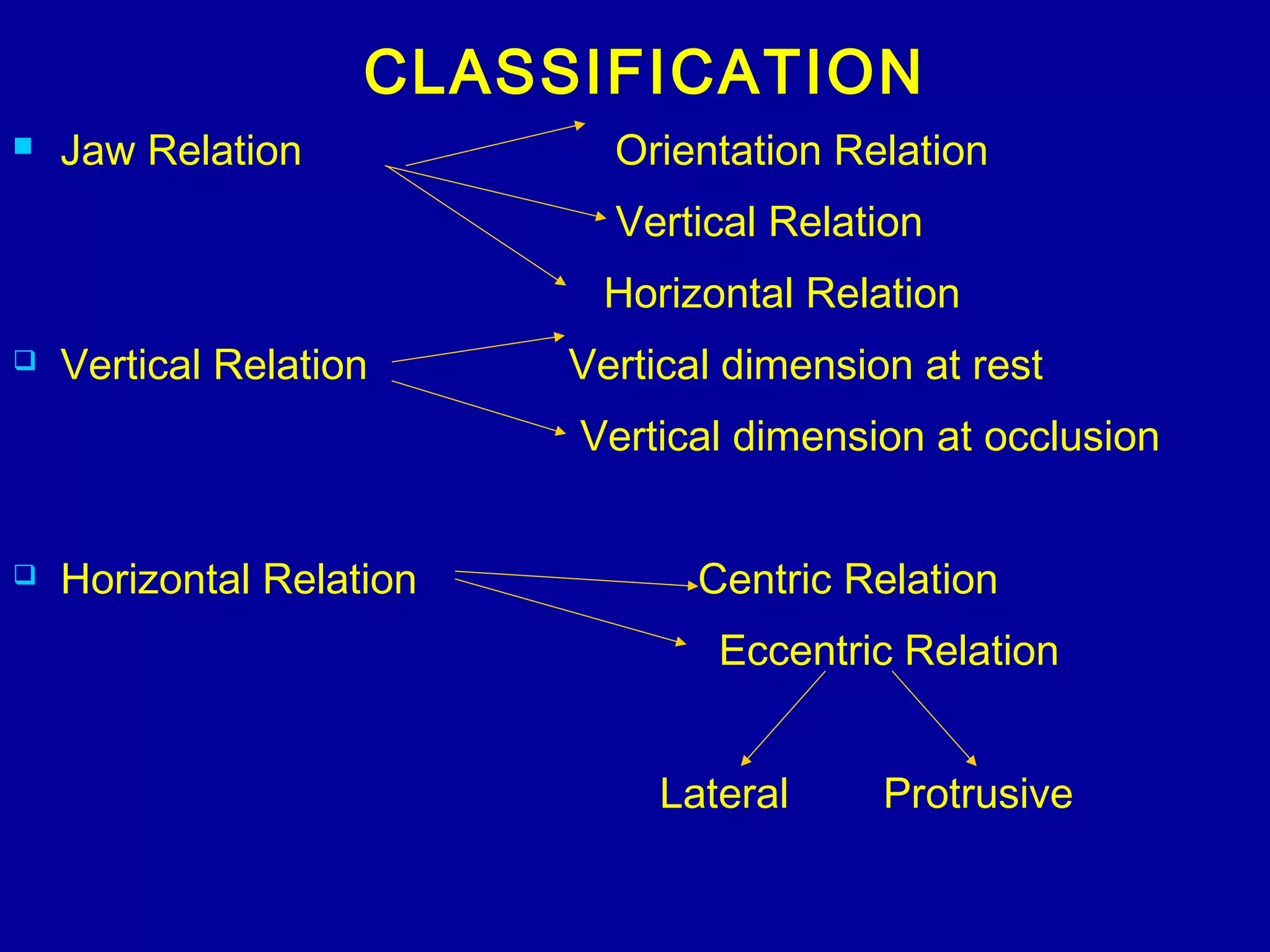
CLASSIFICATION
 Jaw Relation Orientation Relation
Vertical Relation
Horizontal Relation
 Vertical Relation Vertical dimension at rest
Vertical dimension at occlusion
 Horizontal Relation Centric Relation
Eccentric Relation
Lateral Protrusive
ORIENTATION RELATION
Relations of the jaws to
references in the cranium.
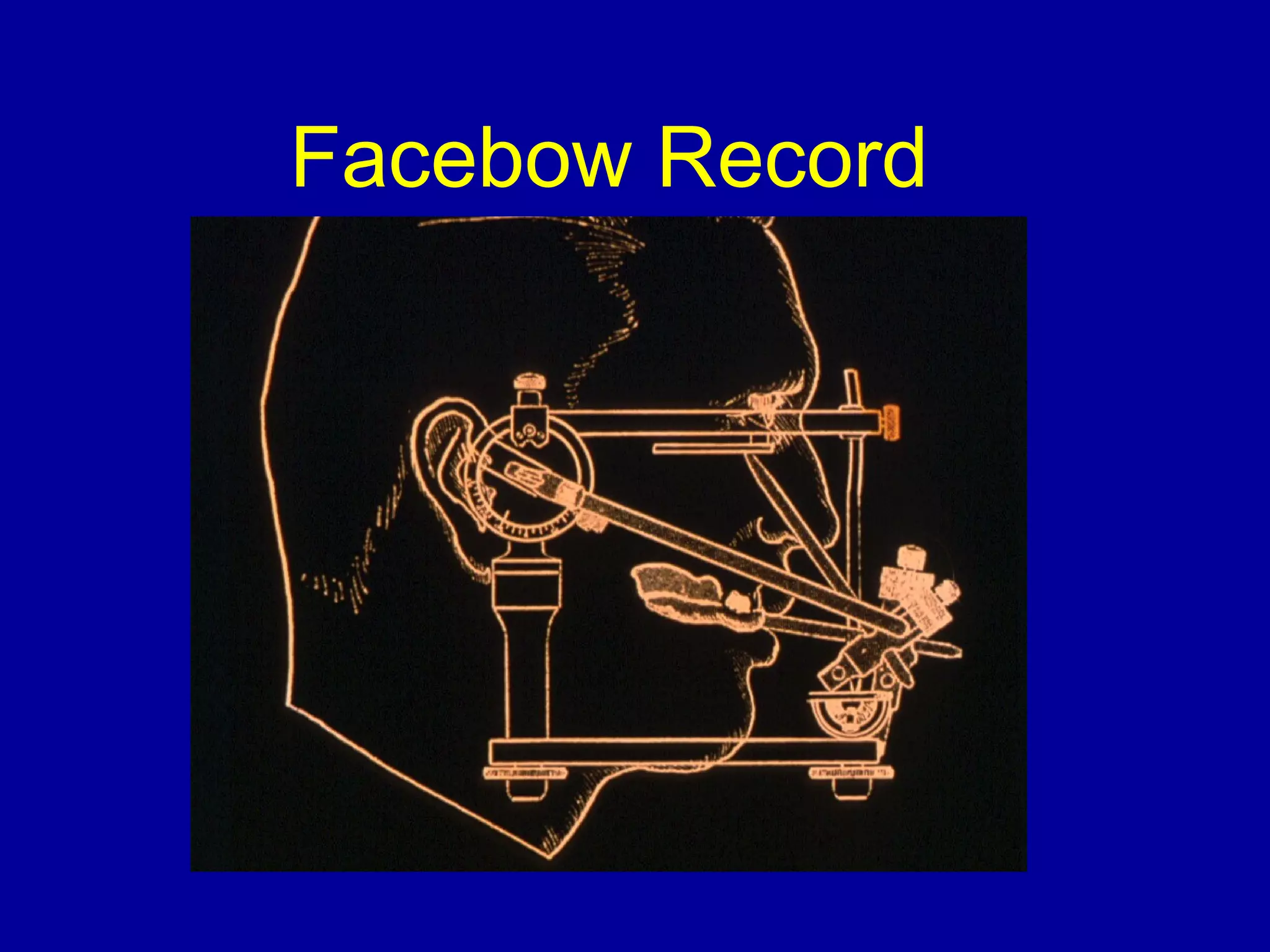
Facebow Record
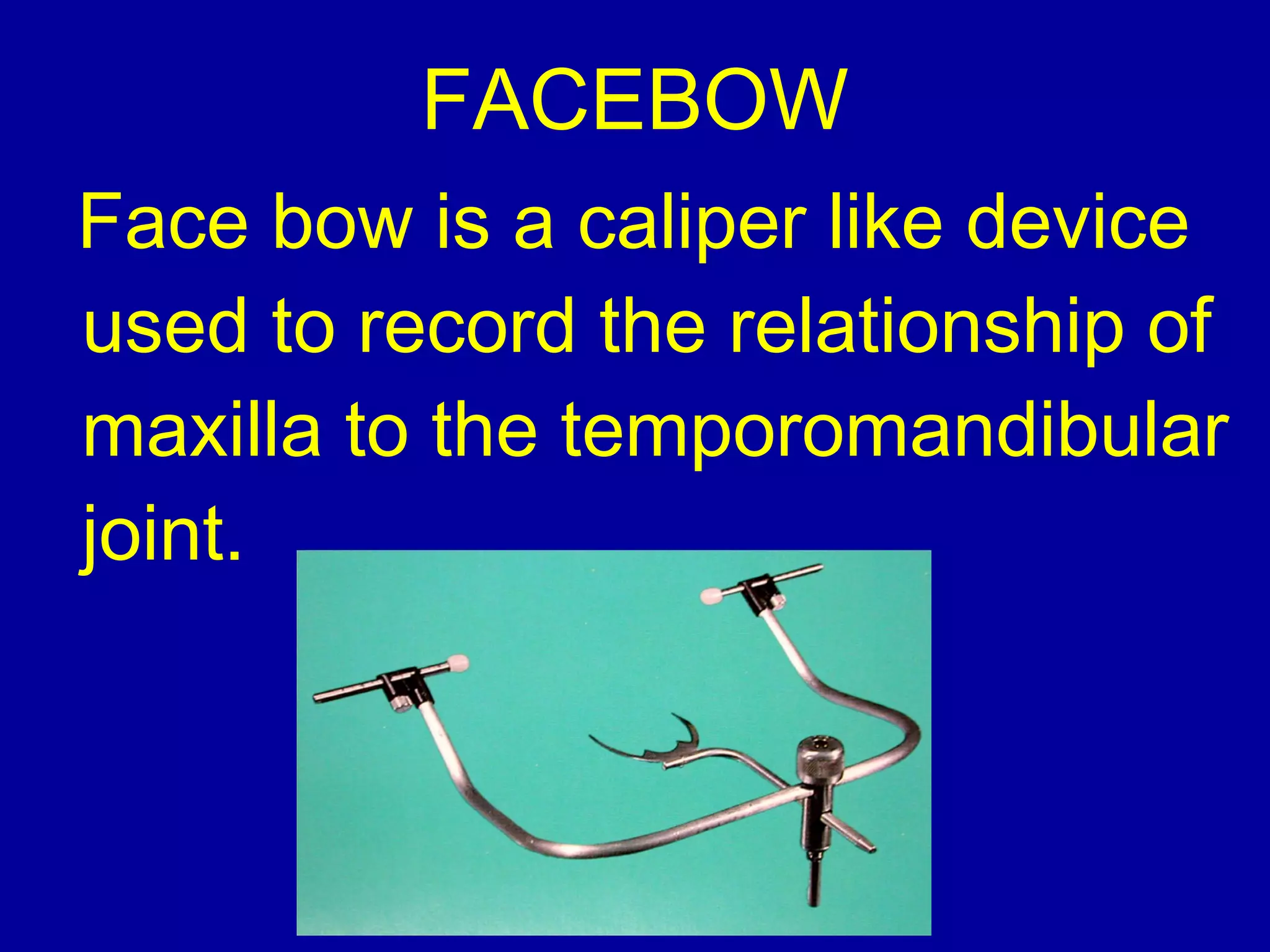
Face bow is a caliper like device
used to record the relationship of
maxilla to the temporomandibular
joint.
FACEBOW
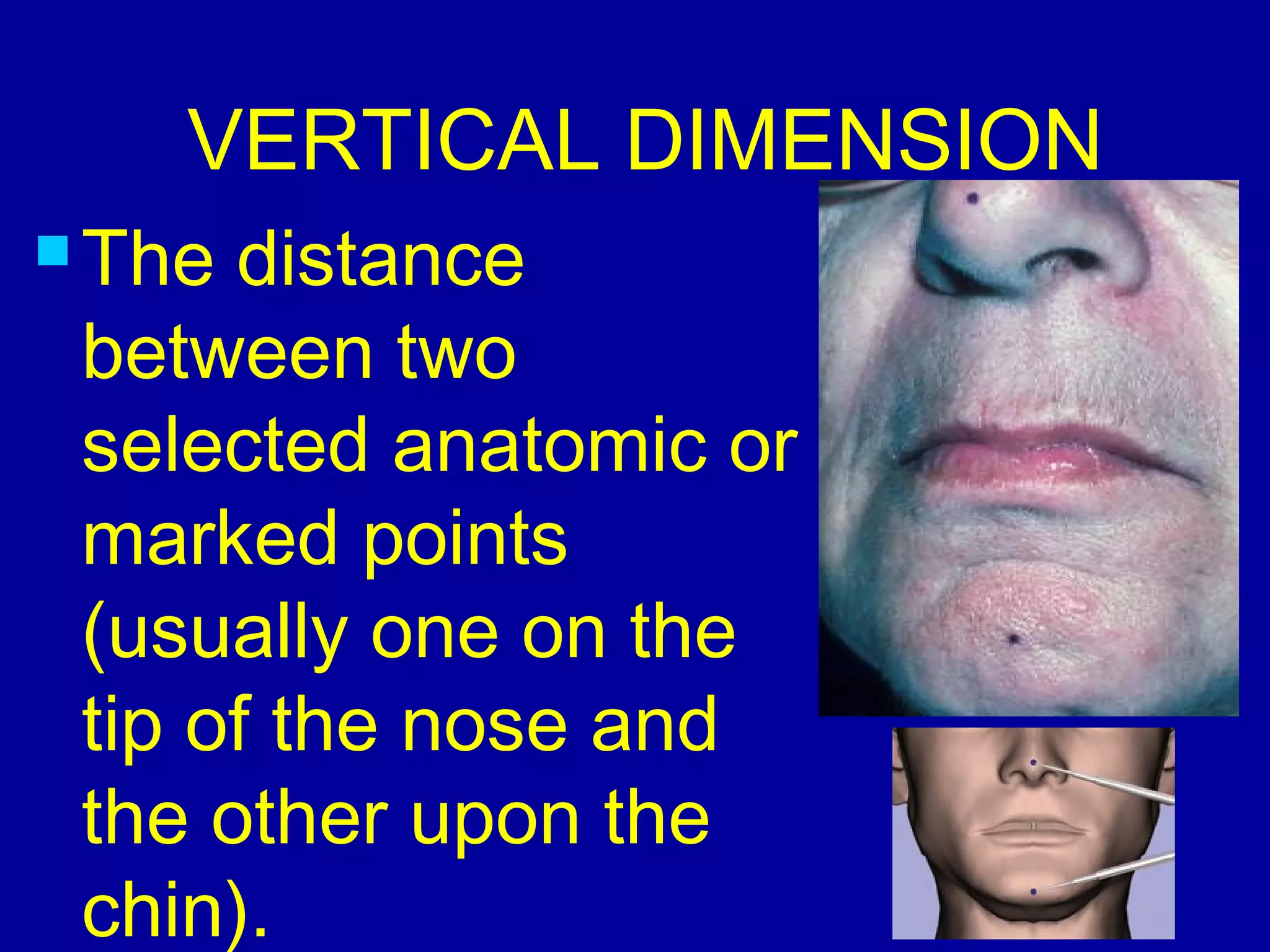
VERTICAL DIMENSION
 The distance
between two
selected anatomic or
marked points
(usually one on the
tip of the nose and
the other upon the
chin).
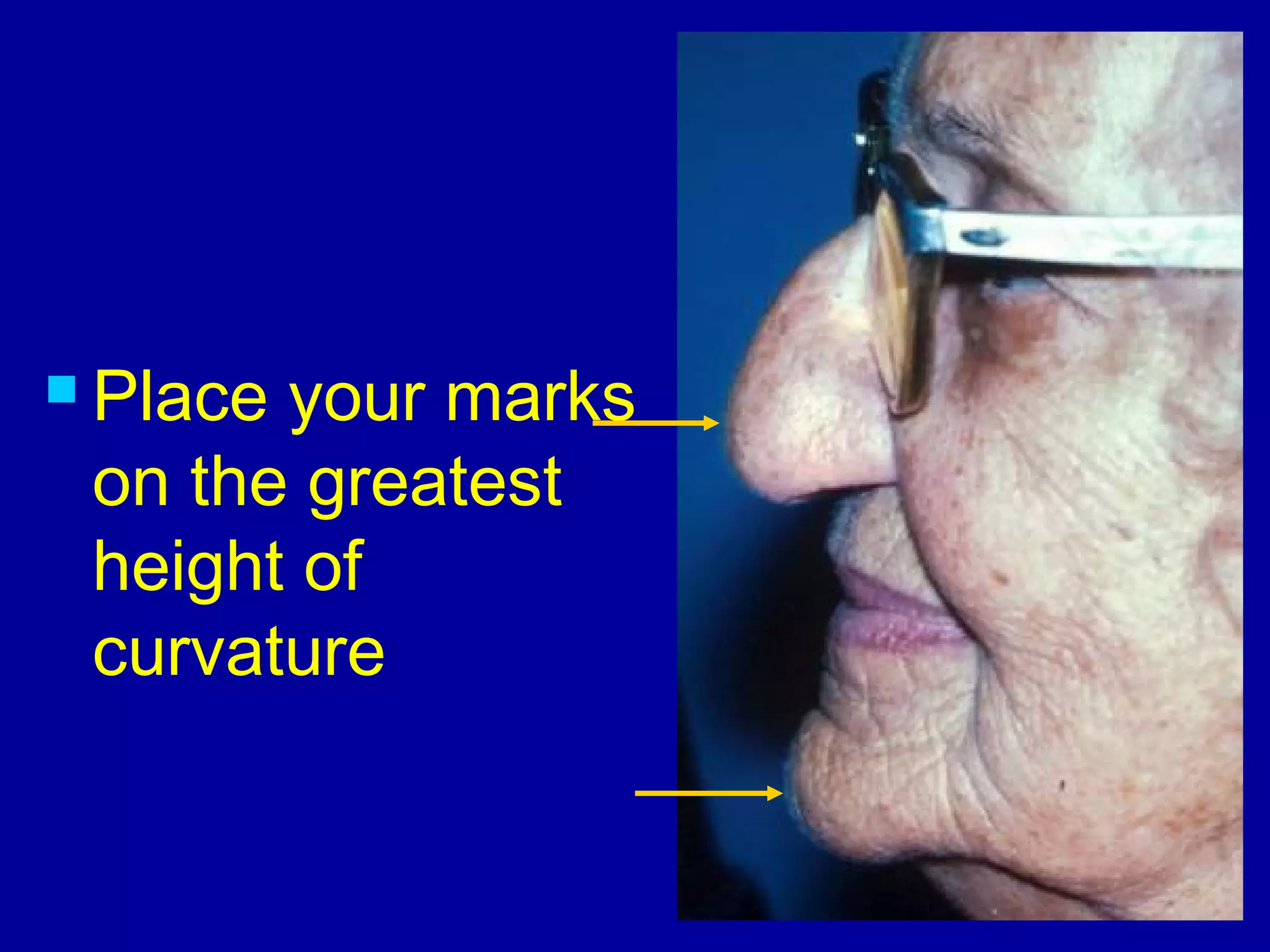
 Place your marks
on the greatest
height of
curvature
 Physiologic rest position:
the postural position of
the mandible when an
individual is resting
comfortably in an upright
position and the
associated muscles are in
a state of minimal
contractual activity.
 Rest vertical dimension:
the distance between two
selected points (one of
which is on the middle of
the face or nose and the
other of which is on the
lower face or chin)
measured when the
mandible is in the
physiologic rest position.
 Occlusal vertical dimension:
the distance measured
between two points when the
occluding members are in
contact.
 Interocclusal rest space: the difference
between the vertical dimension of rest
and the vertical dimension while in
occlusion.
Also called Freeway Space
“VDR”
“VDO”
Freeway space
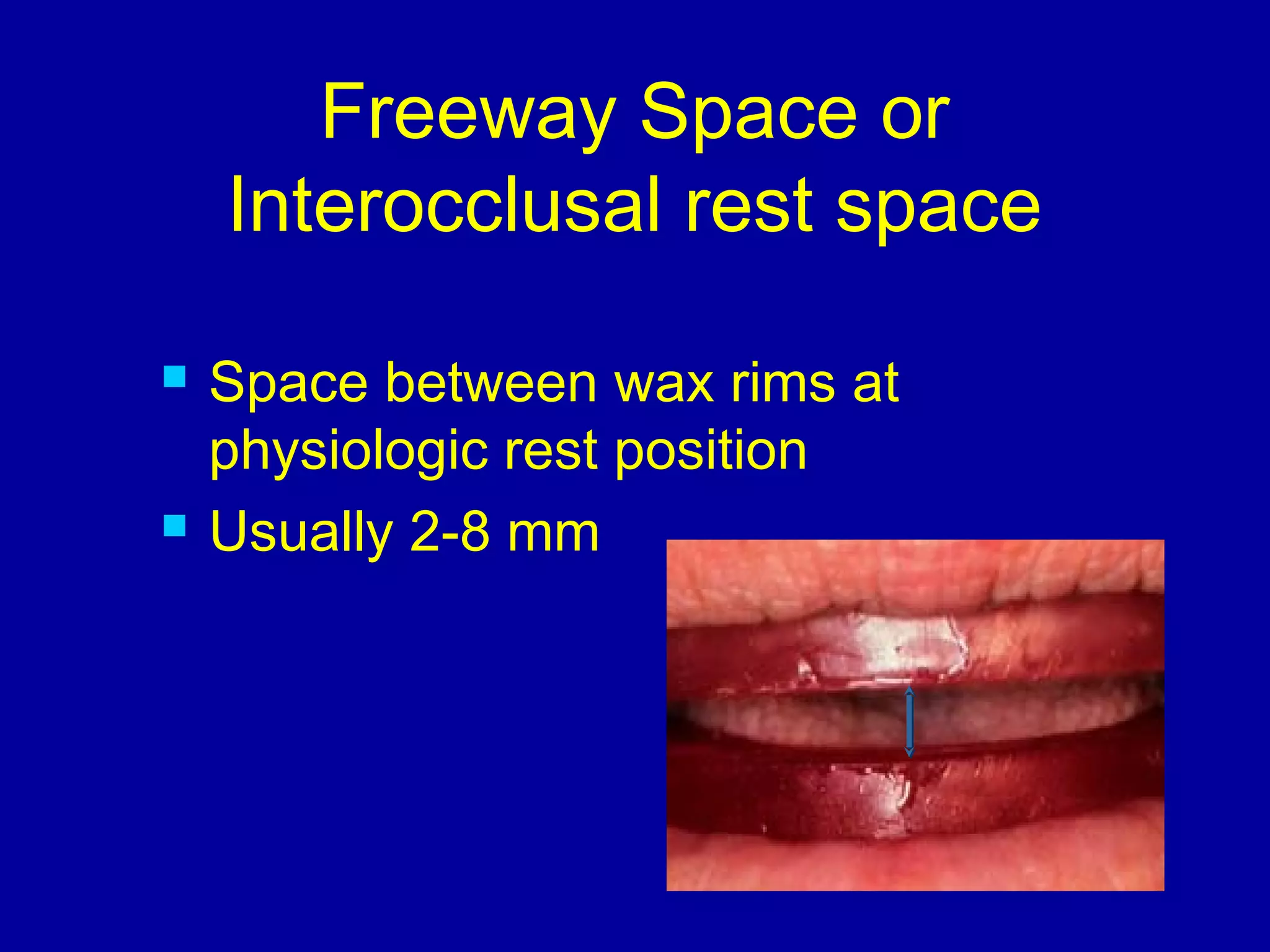
Freeway Space or
Interocclusal rest space
 Space between wax rims at
physiologic rest position
 Usually 2-8 mm
Centric relation
 The most posterior relation of the
lower to the upper jaw from
which lateral movements can be
made at a given vertical
dimension.
Eccentric relation
Any relationship of the mandible
to the maxilla other than centric
relation.
Protrusive relation
 The relation of the mandible to
the maxillae when the
mandible is thrust forward.
Lateral relation
 The relation of the mandible to the
maxillae when the lower jaw is in a
position to either side of centric
relation.
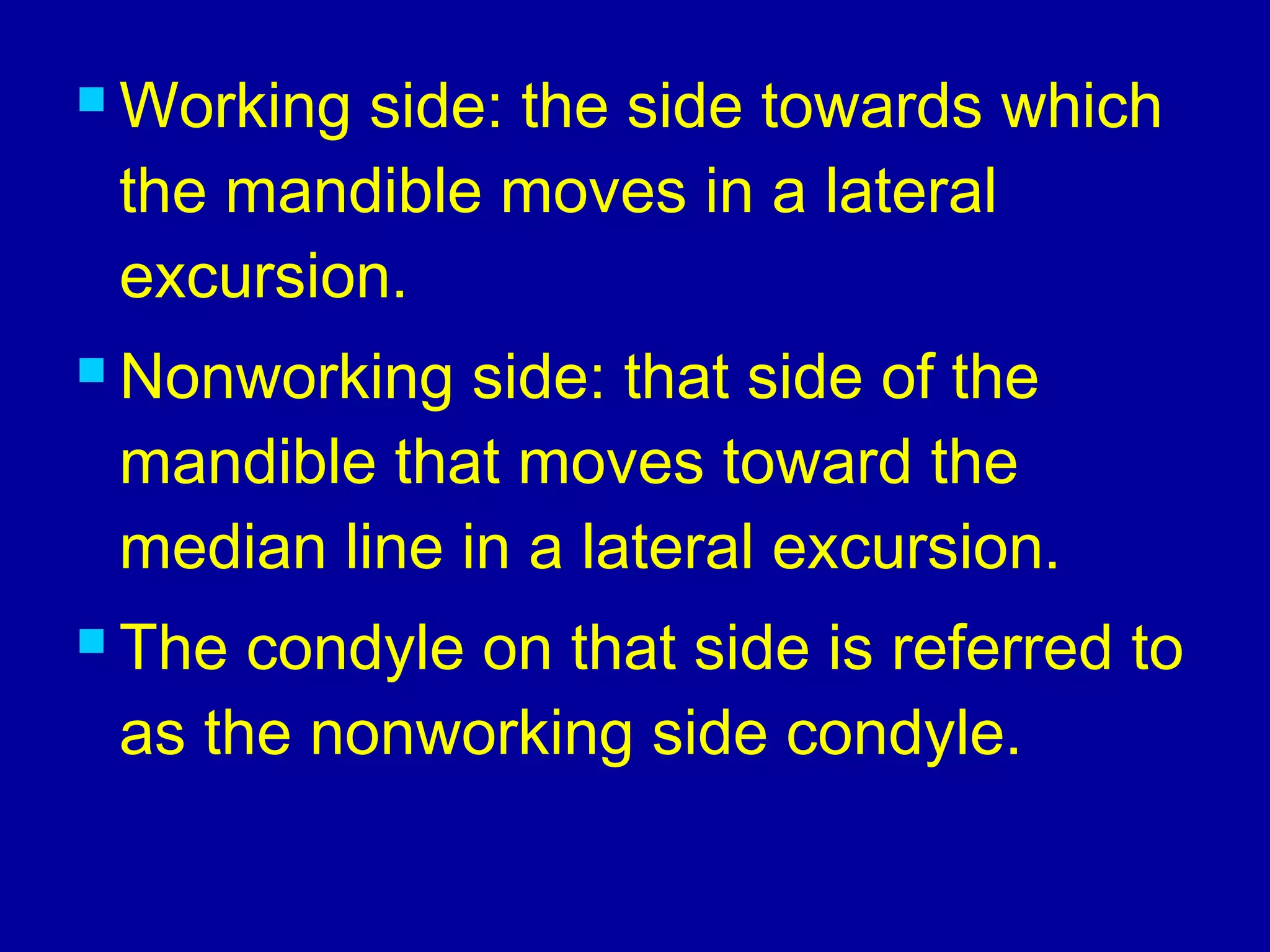
 Working side: the side towards which
the mandible moves in a lateral
excursion.
 Nonworking side: that side of the
mandible that moves toward the
median line in a lateral excursion.
 The condyle on that side is referred to
as the nonworking side condyle.
Centric occlusion
 The occlusion of opposing
teeth when the mandible is in
centric relation.
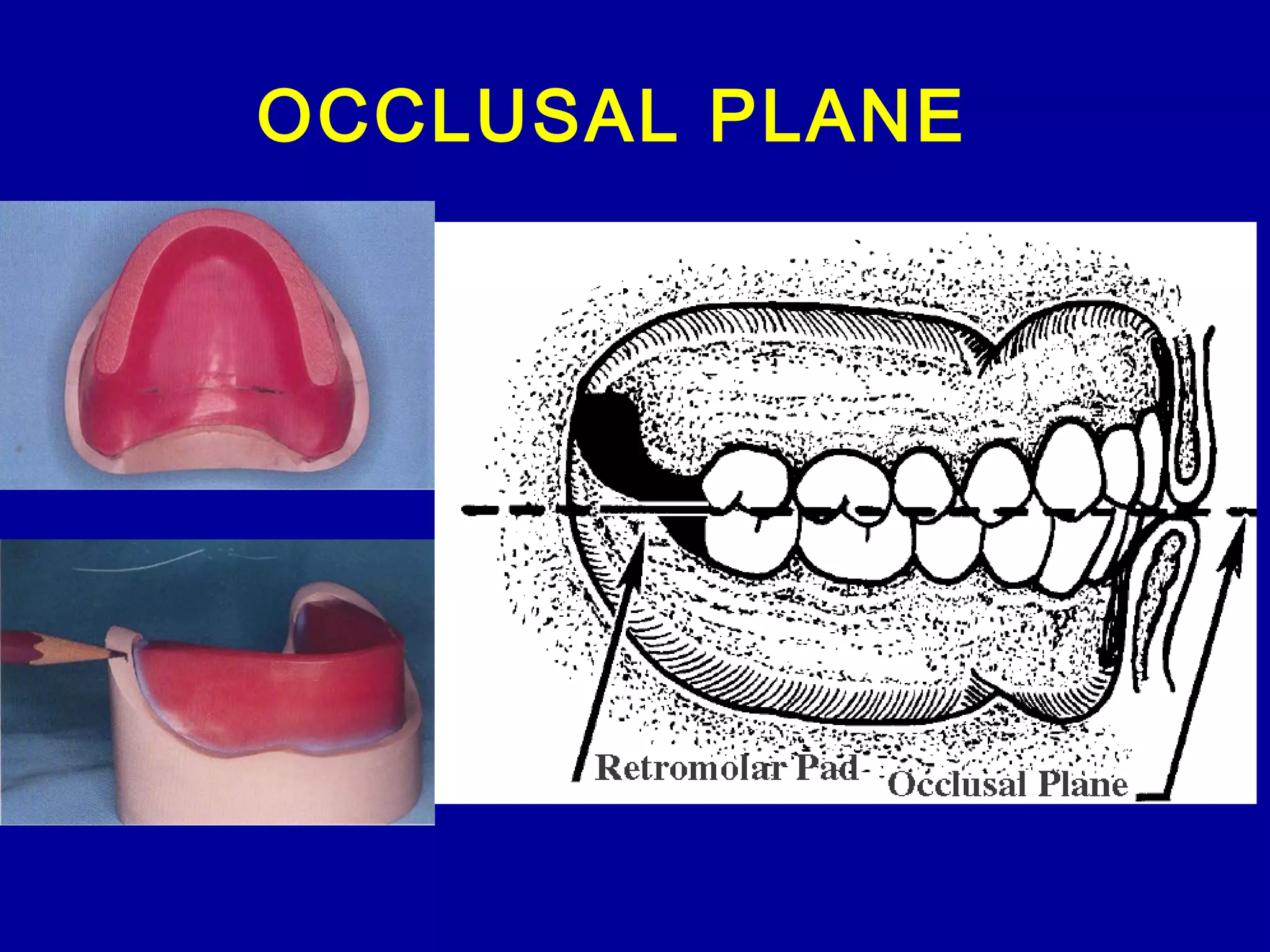
Occlusal plane
1: the average plane
established by the incisal and
occlusal surfaces of the teeth.
2: the surface of wax occlusion
rims contoured to guide in the
arrangement of denture teeth.
OCCLUSAL PLANE
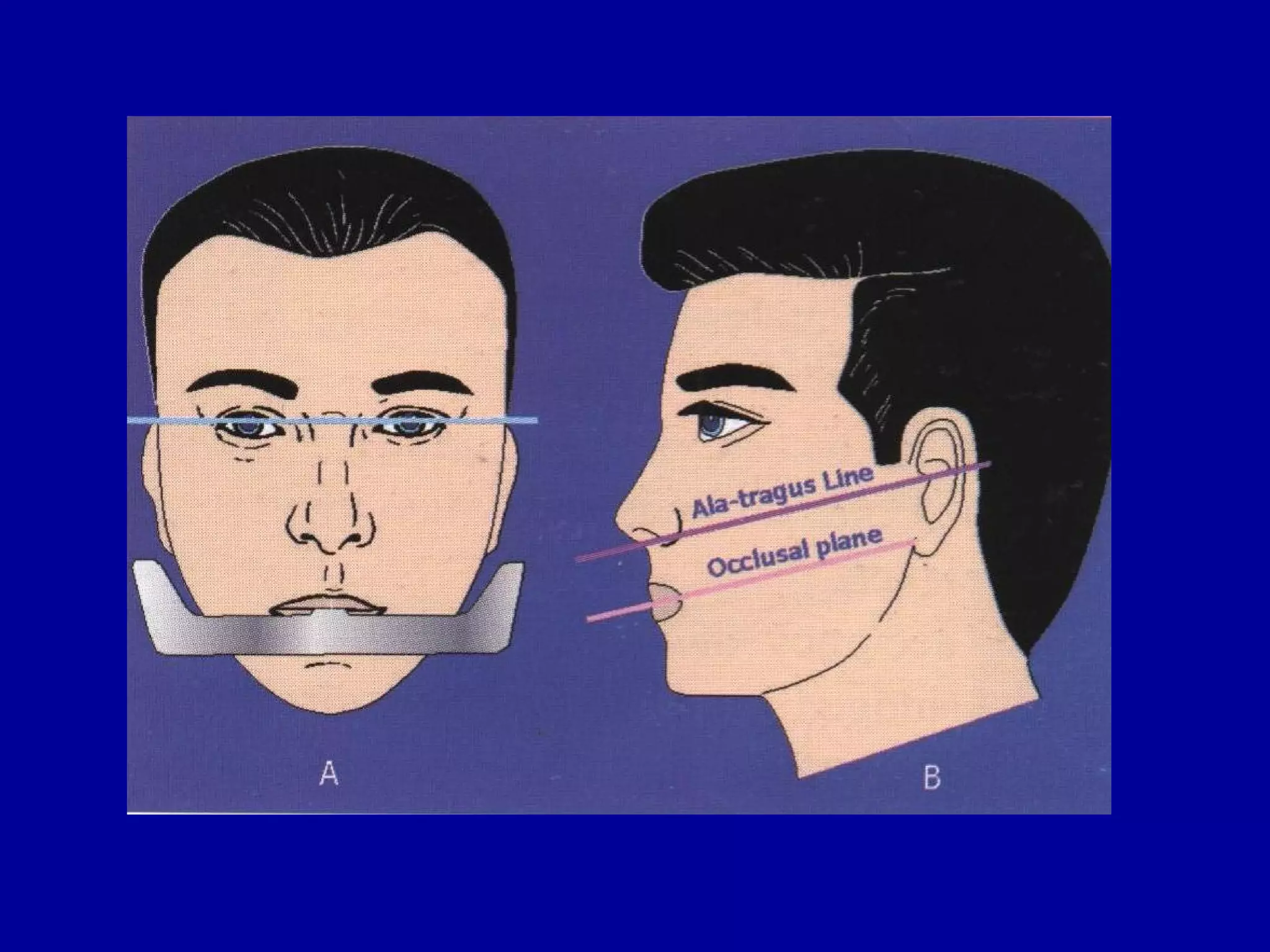
Camper’s plane
 A plane established by the inferior
border of the ala of the nose and
the superior border of the tragus of
each ear.
 Also called ala-tragus plane.
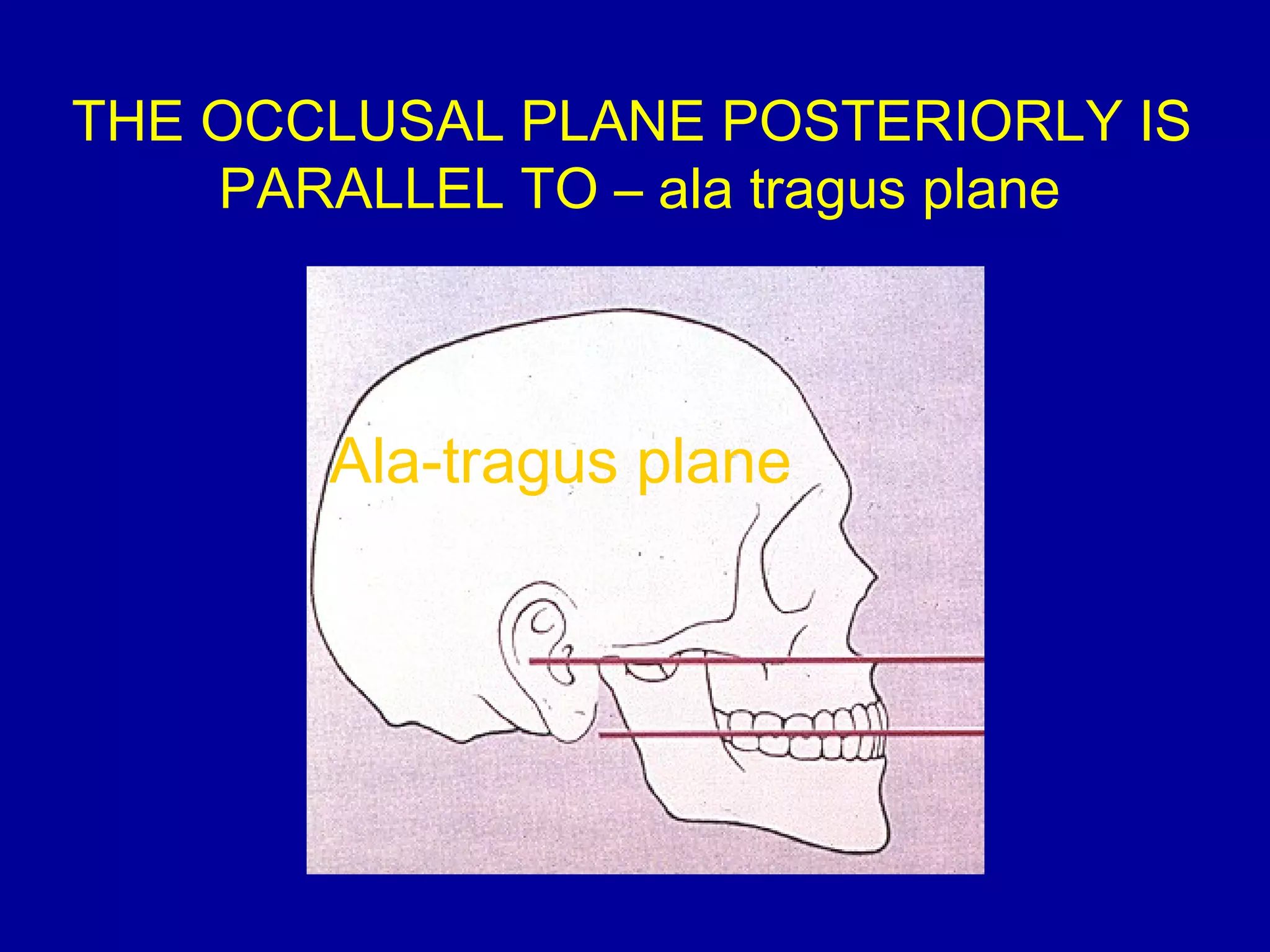
 The ala-tragus plane is considered
to be parallel to the occlusal plane.
THE OCCLUSAL PLANE POSTERIORLY IS
PARALLEL TO – ala tragus plane
Ala-tragus plane
THE OCCLUSAL PLANE ANTERIORLY IS
PARALLEL TO -Interpupillary line
Interpupillary line
Christensen’s phenomenon
 The space that occurs between
opposing occlusal surfaces during
mandibular protrusion.
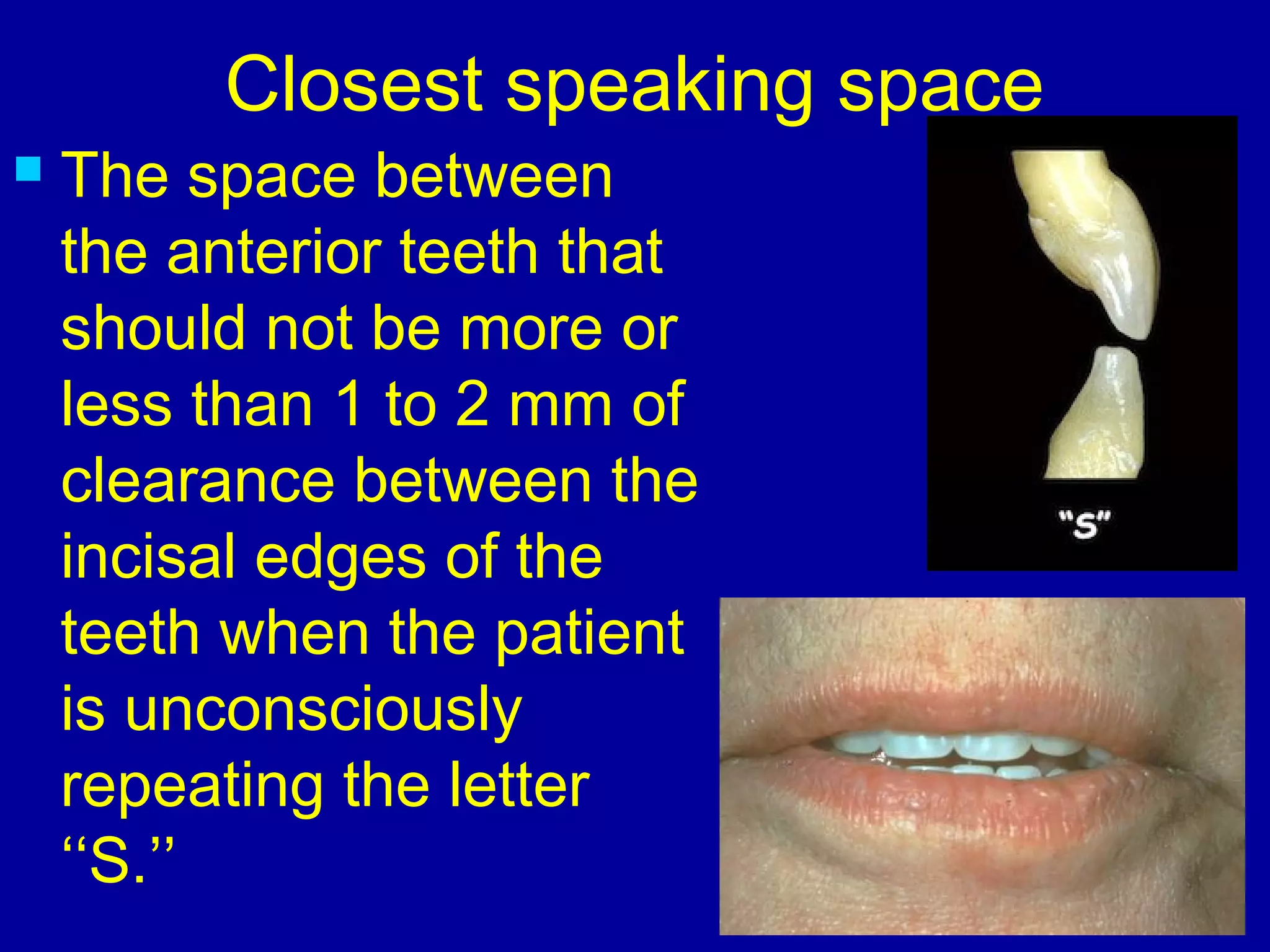
Closest speaking space
 The space between
the anterior teeth that
should not be more or
less than 1 to 2 mm of
clearance between the
incisal edges of the
teeth when the patient
is unconsciously
repeating the letter
‘‘S.’’
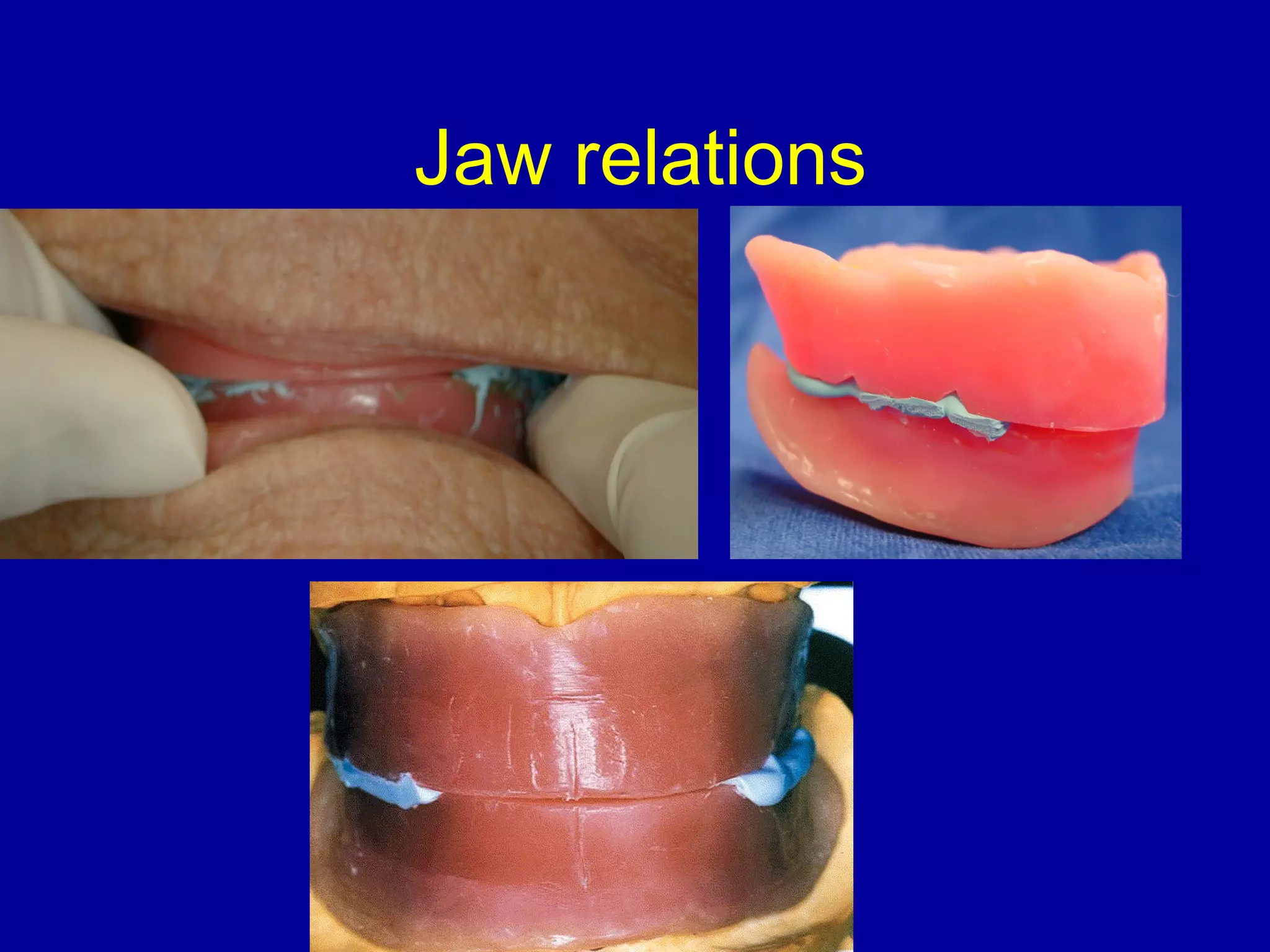
Jaw relations
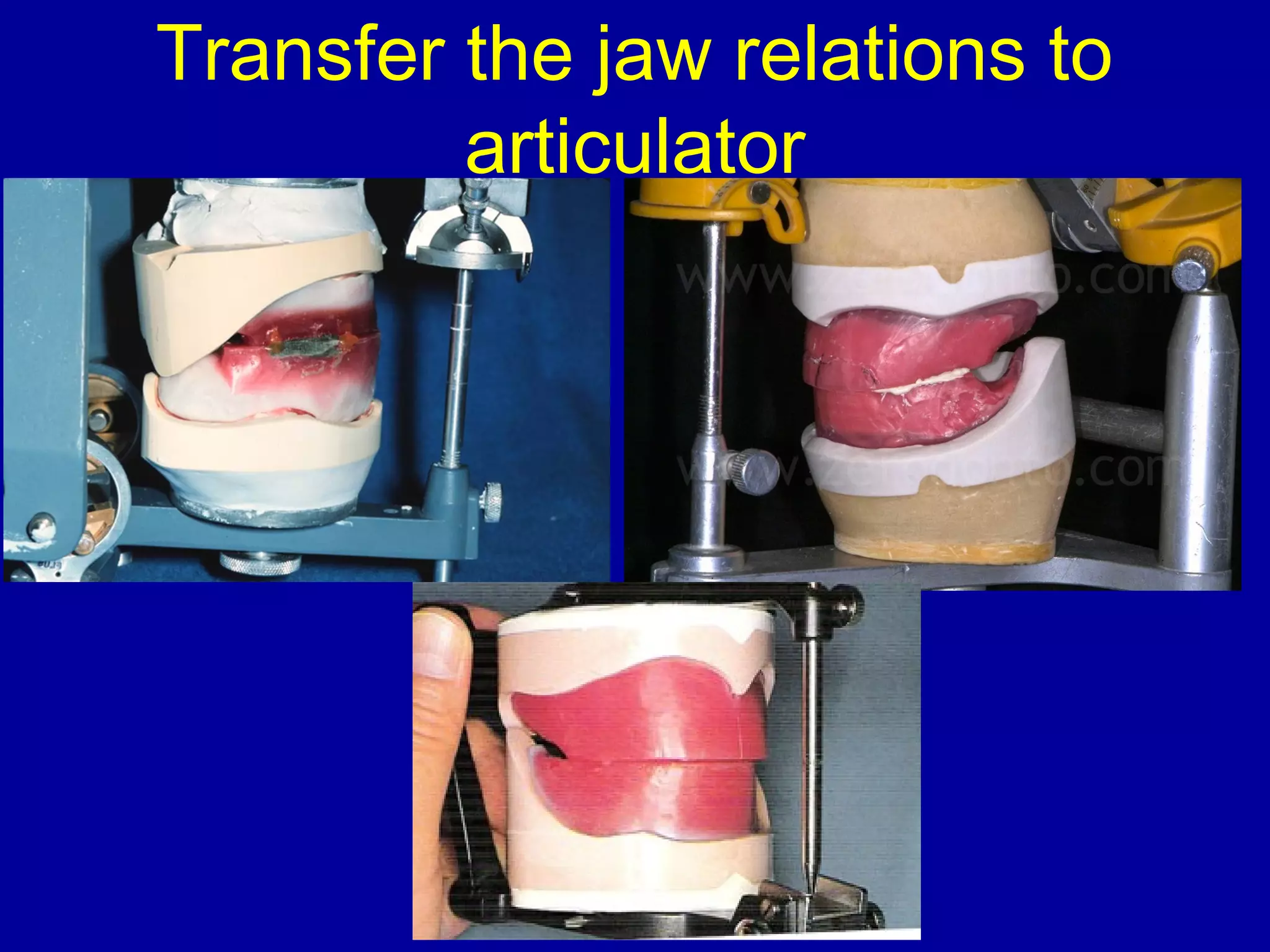
Transfer the jaw relations to
articulator
‫أسئلة‬ ‫أي‬

maxillomandibular relations - terminology

  • 2.
  • 3.
    Learning Outcomes 1. Memorizeand recall the different terminologies used in maxillomandibular relations. 2. Explain the types of maxillomandibular relations.
  • 5.
     Maxillomandibular relationship: anyspatial relationship of the maxillae to the mandible;
  • 6.
     Maxillomandibular relationship: anyone of the infinite relationships of the mandible to the maxillae  Also called jaw relations
  • 7.
    3 types ofmaxillomandibular relations  1. Orientation relation  2. Vertical relation  3. Horizontal relation
  • 8.
    CLASSIFICATION  Jaw RelationOrientation Relation Vertical Relation Horizontal Relation  Vertical Relation Vertical dimension at rest Vertical dimension at occlusion  Horizontal Relation Centric Relation Eccentric Relation Lateral Protrusive
  • 10.
    ORIENTATION RELATION Relations ofthe jaws to references in the cranium.
  • 11.
  • 12.
    Face bow isa caliper like device used to record the relationship of maxilla to the temporomandibular joint. FACEBOW
  • 16.
    VERTICAL DIMENSION  Thedistance between two selected anatomic or marked points (usually one on the tip of the nose and the other upon the chin).
  • 17.
     Place yourmarks on the greatest height of curvature
  • 18.
     Physiologic restposition: the postural position of the mandible when an individual is resting comfortably in an upright position and the associated muscles are in a state of minimal contractual activity.
  • 19.
     Rest verticaldimension: the distance between two selected points (one of which is on the middle of the face or nose and the other of which is on the lower face or chin) measured when the mandible is in the physiologic rest position.
  • 20.
     Occlusal verticaldimension: the distance measured between two points when the occluding members are in contact.
  • 22.
     Interocclusal restspace: the difference between the vertical dimension of rest and the vertical dimension while in occlusion.
  • 23.
    Also called FreewaySpace “VDR” “VDO” Freeway space
  • 24.
    Freeway Space or Interocclusalrest space  Space between wax rims at physiologic rest position  Usually 2-8 mm
  • 26.
    Centric relation  Themost posterior relation of the lower to the upper jaw from which lateral movements can be made at a given vertical dimension.
  • 27.
    Eccentric relation Any relationshipof the mandible to the maxilla other than centric relation.
  • 28.
    Protrusive relation  Therelation of the mandible to the maxillae when the mandible is thrust forward.
  • 29.
    Lateral relation  Therelation of the mandible to the maxillae when the lower jaw is in a position to either side of centric relation.
  • 30.
     Working side:the side towards which the mandible moves in a lateral excursion.  Nonworking side: that side of the mandible that moves toward the median line in a lateral excursion.  The condyle on that side is referred to as the nonworking side condyle.
  • 31.
    Centric occlusion  Theocclusion of opposing teeth when the mandible is in centric relation.
  • 32.
    Occlusal plane 1: theaverage plane established by the incisal and occlusal surfaces of the teeth. 2: the surface of wax occlusion rims contoured to guide in the arrangement of denture teeth.
  • 33.
  • 35.
    Camper’s plane  Aplane established by the inferior border of the ala of the nose and the superior border of the tragus of each ear.  Also called ala-tragus plane.  The ala-tragus plane is considered to be parallel to the occlusal plane.
  • 37.
    THE OCCLUSAL PLANEPOSTERIORLY IS PARALLEL TO – ala tragus plane Ala-tragus plane
  • 38.
    THE OCCLUSAL PLANEANTERIORLY IS PARALLEL TO -Interpupillary line Interpupillary line
  • 39.
    Christensen’s phenomenon  Thespace that occurs between opposing occlusal surfaces during mandibular protrusion.
  • 40.
    Closest speaking space The space between the anterior teeth that should not be more or less than 1 to 2 mm of clearance between the incisal edges of the teeth when the patient is unconsciously repeating the letter ‘‘S.’’
  • 41.
  • 42.
    Transfer the jawrelations to articulator
  • 44.