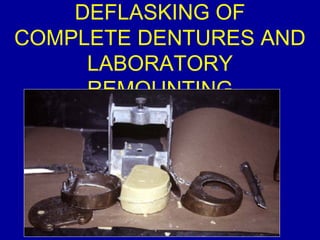
DEFLASKING OF
COMPLETE DENTURES AND
LABORATORY
REMOUNTING
Learning outcomes
1. Describe deflasking procedure.
2. Explain lab remounting procedure.
3. List the purpose of doing lab
remounting.
DEFLASKING
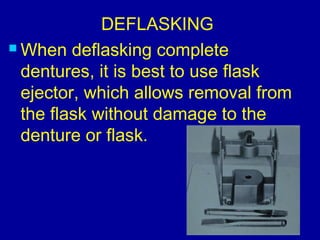
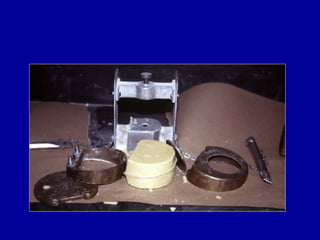
 When deflasking complete
dentures, it is best to use flask
ejector, which allows removal from
the flask without damage to the
denture or flask.
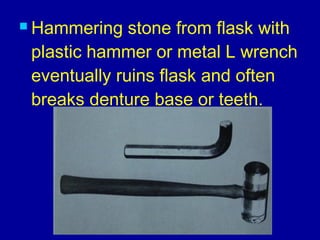
 Hammering stone from flask with
plastic hammer or metal L wrench
eventually ruins flask and often
breaks denture base or teeth.
PROCEDURE
 Remove the lid from the flask
containing the denture.
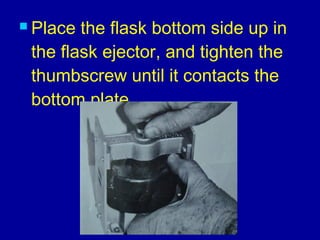
 Place the flask bottom side up in
the flask ejector, and tighten the
thumbscrew until it contacts the
bottom plate.
 Place the pry bars through the
slots in the side of the flask
ejector, and engage the slots in
the flask between both halves of
the flask.
 With pry bars engaged, pry down
on them to separate bottom half
of flask.
 And then pry up. These
movements readily separates the
flask from the stone enclosed
denture.
 Tap back of knife blade with plastic mallet
to separate stone cap.
 Separating medium properly applied
facilitates separation of stone cap,
exposing cusp tips of denture teeth.
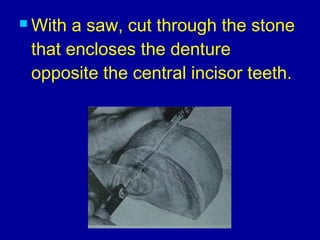
 With a saw, cut through the stone
that encloses the denture
opposite the central incisor teeth.
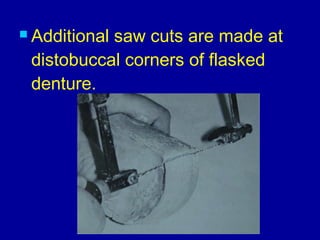
 Additional saw cuts are made at
distobuccal corners of flasked
denture.
 So that the stone enclosing the
denture has three cuts.
 Place a knife in the anterior saw
cut, and pry gently to separate
the stone from the buccal and
anterior flanges of the denture.
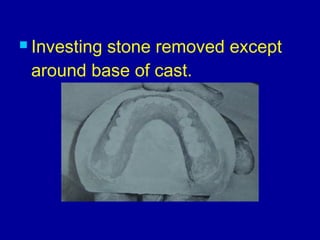
 Investing stone removed except
around base of cast.
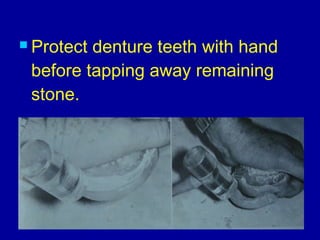
 Protect denture teeth with hand
before tapping away remaining
stone.
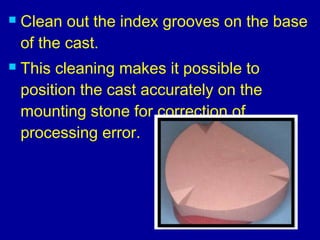
 Clean out the index grooves on the base
of the cast.
 This cleaning makes it possible to
position the cast accurately on the
mounting stone for correction of
processing error.
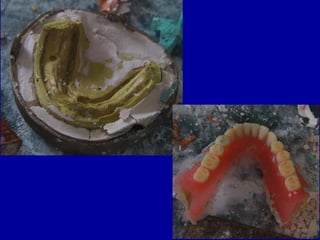
 After recovery from the stone, the
dentures are ready for
remounting on the articulator.
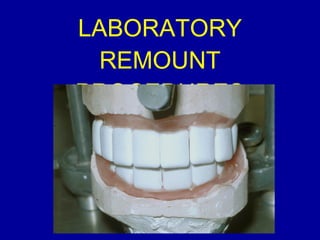
LABORATORY
REMOUNT
PROCEDURES
 Remount Procedure: any method
used to relate restorations to an
articulator for analysis and/or to
assist in development of a plan
for occlusal reshaping.
 Acrylic resins shrink when they
change from a moldable to a solid
form. They have a high coefficient of
thermal expansion, and in cooling
after polymerization they shrink
causing dimensional changes.
 These faults can be corrected by
careful selective grinding
procedures.
 Laboratory remounting the
dentures on the articulator and
selective grinding procedures
should be carried out before
polishing the dentures.
Ignoring this important step will
lead to:
1.trauma to the underlying soft
tissues,
2.discomfort, and
3.destruction of the supporting
bone.
Laboratory Remount
Purpose:
1. To correct errors in occlusion
that have occurred during
processing.
2. To return dentures to the correct
vertical dimension of occlusion.
3. To restore centric and bilateral
balanced occlusion.
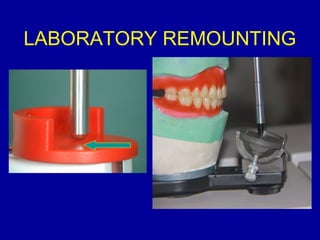
LABORATORY REMOUNTING
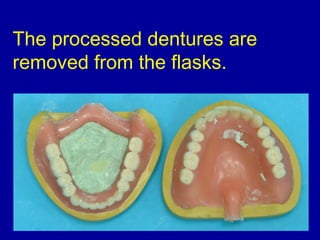
The processed dentures are
removed from the flasks.
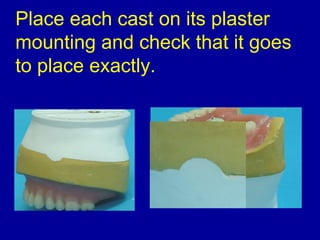
Place each cast on its plaster
mounting and check that it goes
to place exactly.
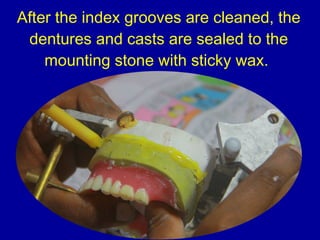
After the index grooves are cleaned, the
dentures and casts are sealed to the
mounting stone with sticky wax.
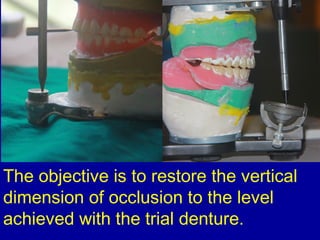
The objective is to restore the vertical
dimension of occlusion to the level
achieved with the trial denture.
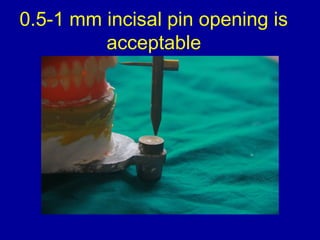
0.5-1 mm incisal pin opening is
acceptable
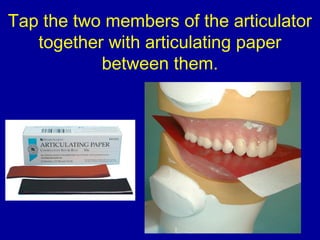
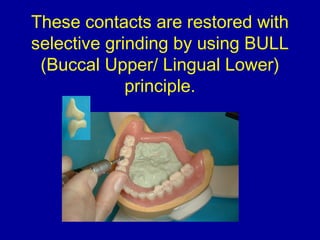
Tap the two members of the articulator
together with articulating paper
between them.
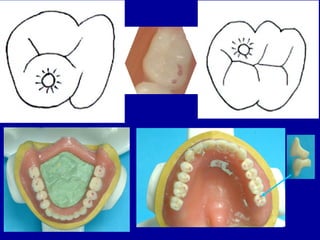
These contacts are restored with
selective grinding by using BULL
(Buccal Upper/ Lingual Lower)
principle.
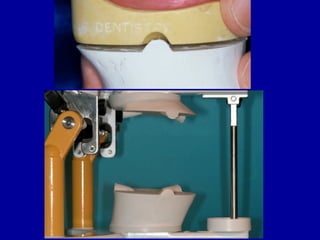
Do selective grinding till the
incisal pin touches the incisal
table.
Lab Remount
Upon completion, the articulator should slide
easily from working to balancing to protrusive
and back.
BalancingProtrusive Working
Questions

12.deflasking & lab remount

  • 2.
    DEFLASKING OF COMPLETE DENTURESAND LABORATORY REMOUNTING
  • 3.
    Learning outcomes 1. Describedeflasking procedure. 2. Explain lab remounting procedure. 3. List the purpose of doing lab remounting.
  • 4.
    DEFLASKING  When deflaskingcomplete dentures, it is best to use flask ejector, which allows removal from the flask without damage to the denture or flask.
  • 5.
     Hammering stonefrom flask with plastic hammer or metal L wrench eventually ruins flask and often breaks denture base or teeth.
  • 6.
    PROCEDURE  Remove thelid from the flask containing the denture.
  • 7.
     Place theflask bottom side up in the flask ejector, and tighten the thumbscrew until it contacts the bottom plate.
  • 8.
     Place thepry bars through the slots in the side of the flask ejector, and engage the slots in the flask between both halves of the flask.
  • 9.
     With prybars engaged, pry down on them to separate bottom half of flask.
  • 10.
     And thenpry up. These movements readily separates the flask from the stone enclosed denture.
  • 12.
     Tap backof knife blade with plastic mallet to separate stone cap.  Separating medium properly applied facilitates separation of stone cap, exposing cusp tips of denture teeth.
  • 13.
     With asaw, cut through the stone that encloses the denture opposite the central incisor teeth.
  • 14.
     Additional sawcuts are made at distobuccal corners of flasked denture.
  • 15.
     So thatthe stone enclosing the denture has three cuts.
  • 16.
     Place aknife in the anterior saw cut, and pry gently to separate the stone from the buccal and anterior flanges of the denture.
  • 17.
     Investing stoneremoved except around base of cast.
  • 18.
     Protect dentureteeth with hand before tapping away remaining stone.
  • 19.
     Clean outthe index grooves on the base of the cast.  This cleaning makes it possible to position the cast accurately on the mounting stone for correction of processing error.
  • 20.
     After recoveryfrom the stone, the dentures are ready for remounting on the articulator.
  • 21.
  • 22.
     Remount Procedure:any method used to relate restorations to an articulator for analysis and/or to assist in development of a plan for occlusal reshaping.
  • 23.
     Acrylic resinsshrink when they change from a moldable to a solid form. They have a high coefficient of thermal expansion, and in cooling after polymerization they shrink causing dimensional changes.
  • 24.
     These faultscan be corrected by careful selective grinding procedures.  Laboratory remounting the dentures on the articulator and selective grinding procedures should be carried out before polishing the dentures.
  • 25.
    Ignoring this importantstep will lead to: 1.trauma to the underlying soft tissues, 2.discomfort, and 3.destruction of the supporting bone.
  • 26.
    Laboratory Remount Purpose: 1. Tocorrect errors in occlusion that have occurred during processing. 2. To return dentures to the correct vertical dimension of occlusion. 3. To restore centric and bilateral balanced occlusion.
  • 27.
  • 30.
    The processed denturesare removed from the flasks.
  • 32.
    Place each caston its plaster mounting and check that it goes to place exactly.
  • 33.
    After the indexgrooves are cleaned, the dentures and casts are sealed to the mounting stone with sticky wax.
  • 34.
    The objective isto restore the vertical dimension of occlusion to the level achieved with the trial denture.
  • 35.
    0.5-1 mm incisalpin opening is acceptable
  • 36.
    Tap the twomembers of the articulator together with articulating paper between them.
  • 38.
    These contacts arerestored with selective grinding by using BULL (Buccal Upper/ Lingual Lower) principle.
  • 40.
    Do selective grindingtill the incisal pin touches the incisal table.
  • 41.
    Lab Remount Upon completion,the articulator should slide easily from working to balancing to protrusive and back. BalancingProtrusive Working
  • 42.