FINISHING AND POLISHING
OF DENTURES
Learning outcomes
1. Describe the clinical remount index
procedure.
2. Explain finishing and polishing of
dentures.
3. Describe clinical remounting
procedure.
Patient Visit #4
Visit 4
Clinical
procedure
Lab.
procedure
Try-in
Appointment
Flasking Deflasking
Laboratory
Remount
Finishing and
polishing the
denture
Preparing Dentures for Insertion
 Fabrication of face bow remount jig
 Removing processed dentures from
master casts
 Finishing and polishing the dentures
 Fabrication of clinical remount casts
 Mount the maxillary remount cast on
the articulator preserving the
facebow transfer record
CLINICAL REMOUNT
 Laboratory remounting, will not
eliminate errors produced by the
impressions or jaw relation
records, nor will it eliminate
errors that develop when the
dentures are removed from the
casts or are polished.
MAKING A FACEBOW
REMOUNT JIG
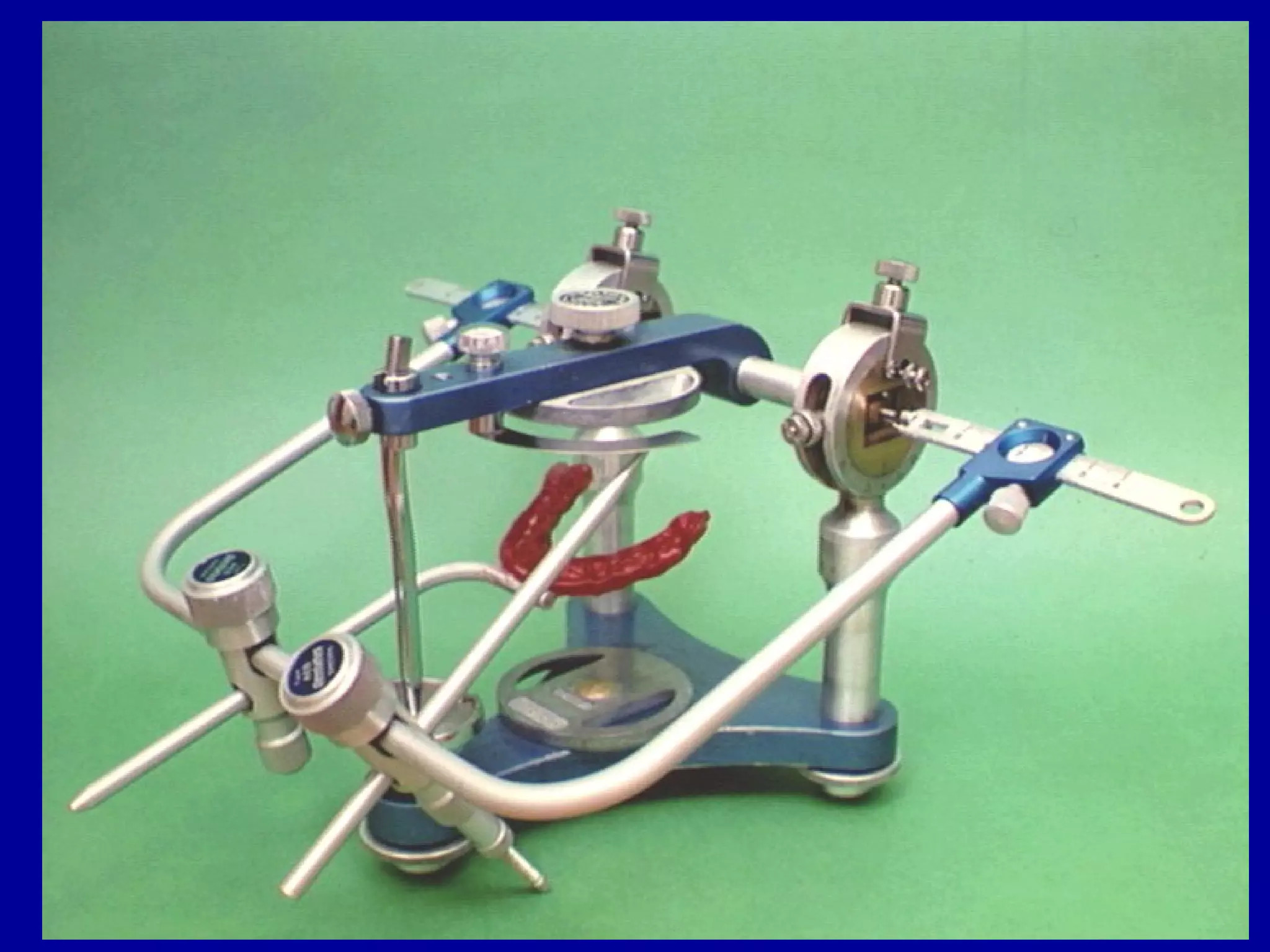
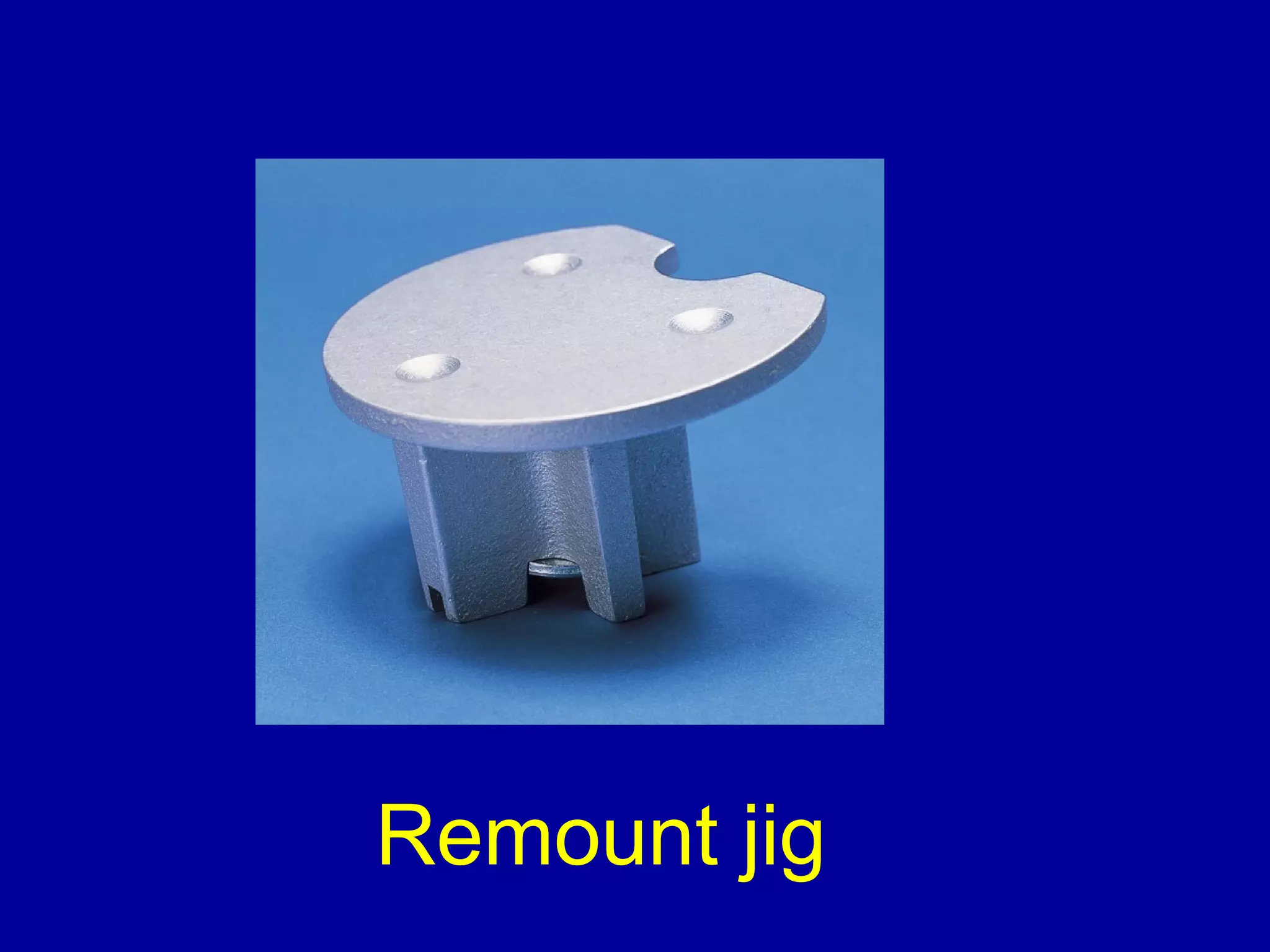
 After the lab remounting is done,
making a facebow remount jig
preserves the face-bow mounting of
the maxillary denture.
Remount jig
 The upper cast is attached to the
upper mounting, and a record of
its relationship to the articulator is
made in plaster on the lower
mounting ring.
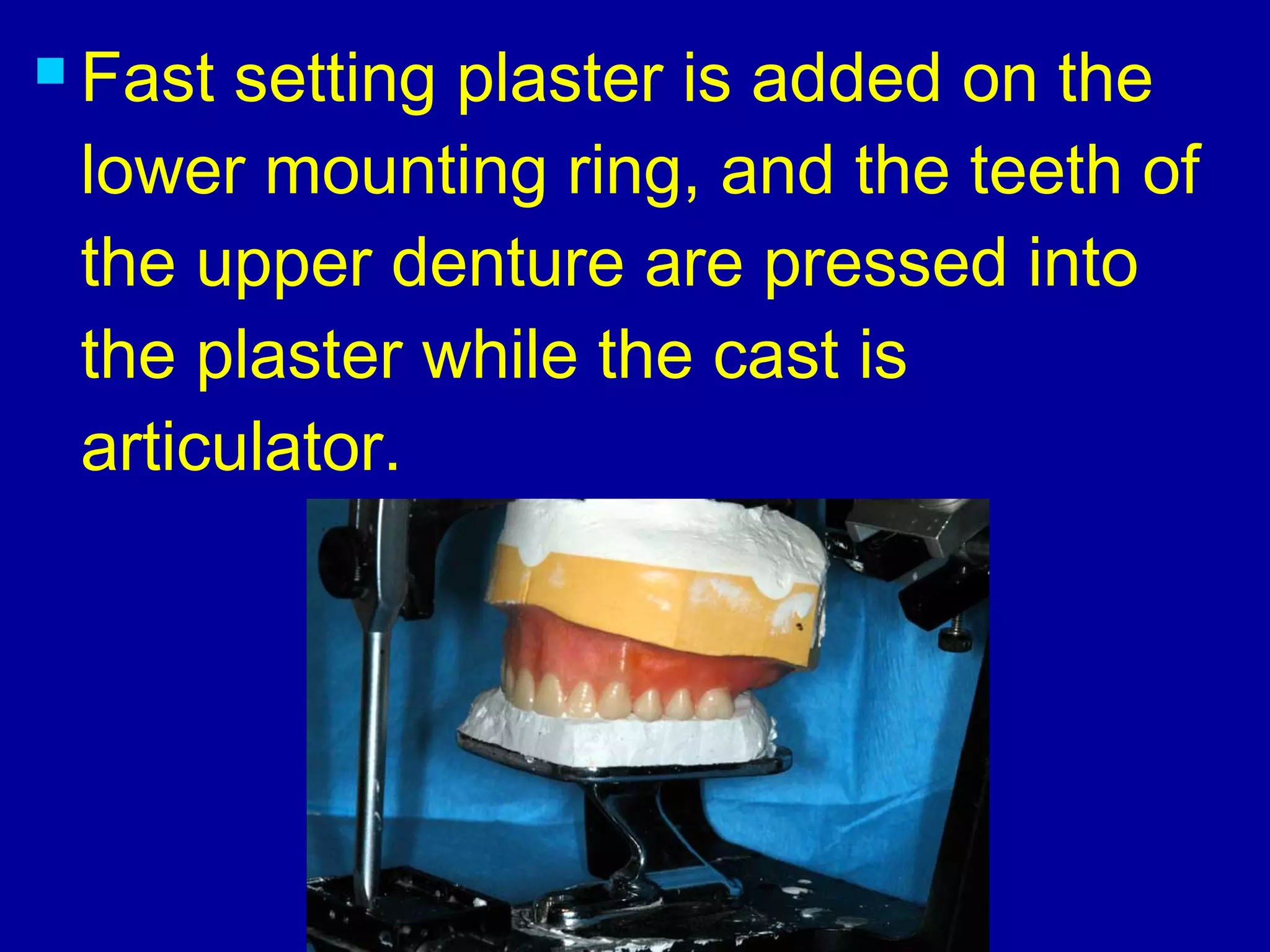
 Fast setting plaster is added on the
lower mounting ring, and the teeth of
the upper denture are pressed into
the plaster while the cast is
articulator.
Only the occlusal and the incisal
surfaces of the denture teeth
engage the plaster.
Removing Dentures from Casts
and Polishing
 Plaster knife
 Acrylic Burs
 Pumice
 Rag polishing wheels
 Felt cones
 Brush wheels
Instruments and Materials
Removing Dentures from the Master
Casts
 Make cuts into the base of each cast
almost to the resin.
 Insert the plaster knife into the cuts and
carefully separate the sections of stone.
Finishing and Polishing
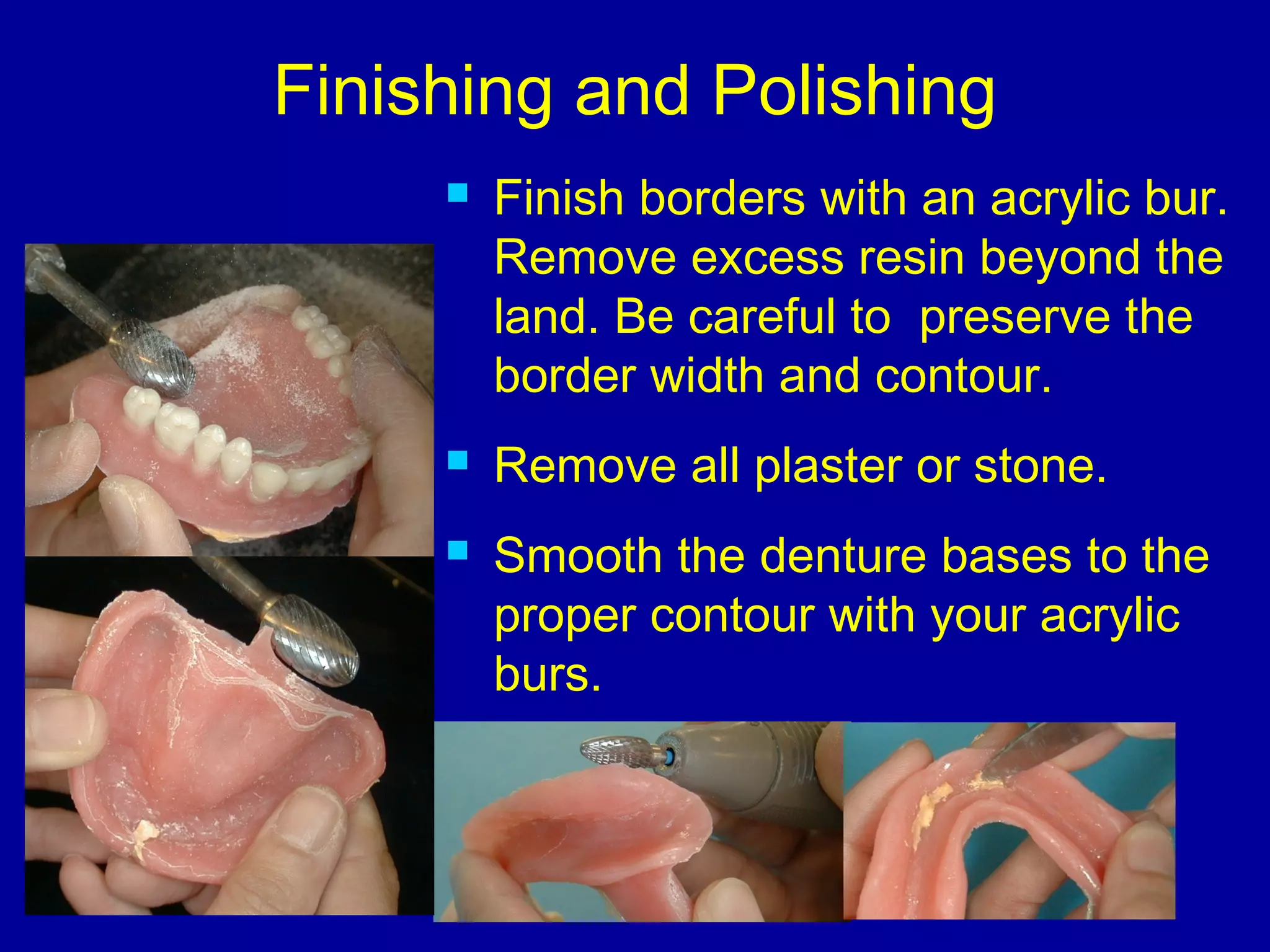
 Finish borders with an acrylic bur.
Remove excess resin beyond the
land. Be careful to preserve the
border width and contour.
 Remove all plaster or stone.
 Smooth the denture bases to the
proper contour with your acrylic
burs.
Remove small particles of stone
from the proximal areas with a
brush wheel.
The palatal portion should be 2
mm thick.
Pumice
 Use a wet rag wheel with lots of wet pumice to polish
the palatal, lingual, labial and buccal areas.
 The periphery of the denture must also be carefully
polished. Do not overpolish and thereby loose the
contours that were developed during festooning.
 Check the bearing
surfaces of the dentures
for bubbles and sharp
projections. Remove
such projections with an
acrylic bur.
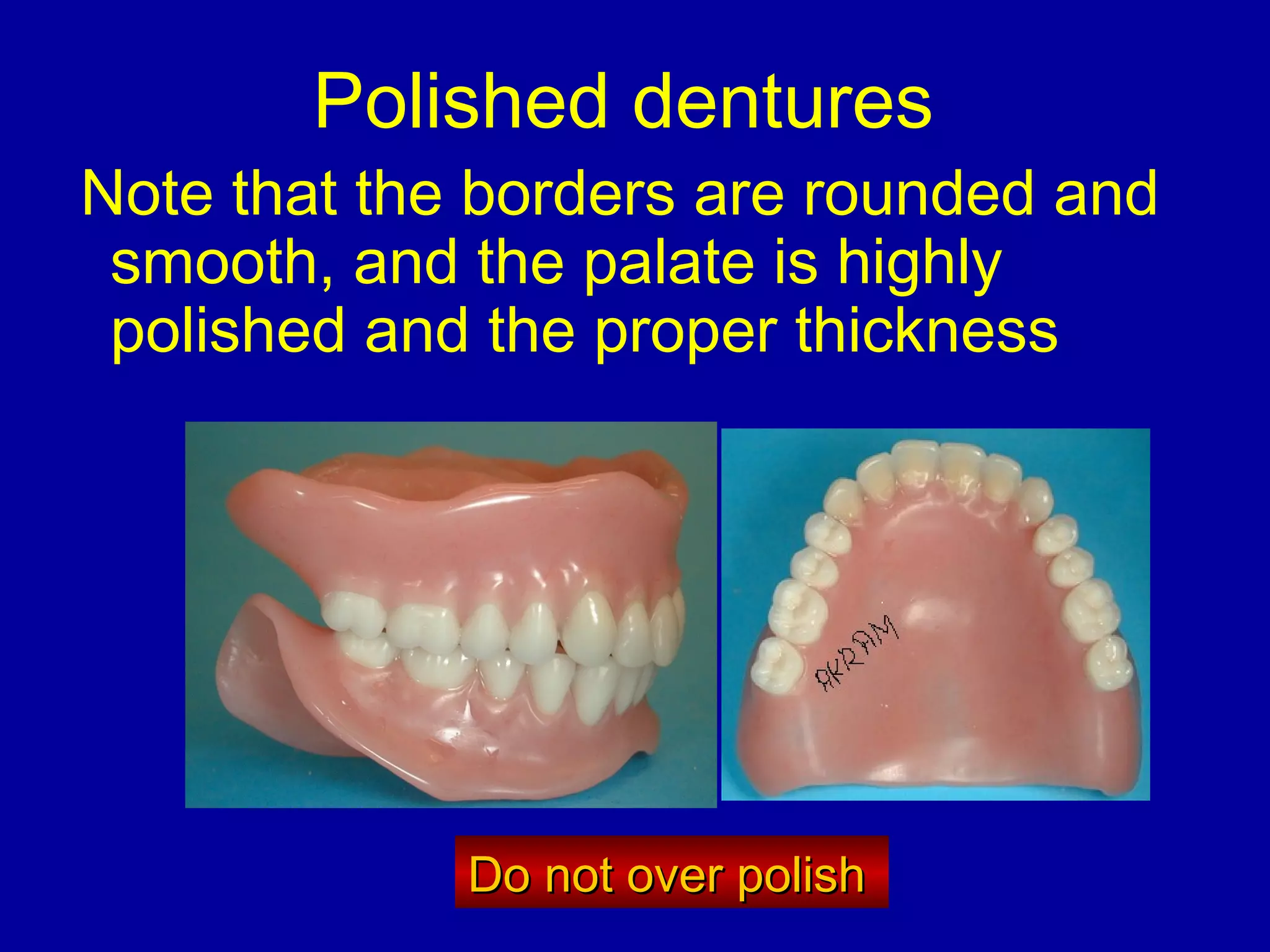
Polished dentures
Note that the borders are rounded and
smooth, and the palate is highly
polished and the proper thickness
Do not over polishDo not over polish
 After finishing of the dentures, the
prostheses should be maintained in
water till it is inserted in the mouth.
Patient Visit # 5
Visit 5
Clinical
procedure
Lab.
procedure
Denture
insertion
Clinical
Remount
procedure
Lab procedure
for
Clinical Remount
Remount Cast: a cast formed
of a prosthesis for the
purpose of mounting the
prosthesis on an articulator.
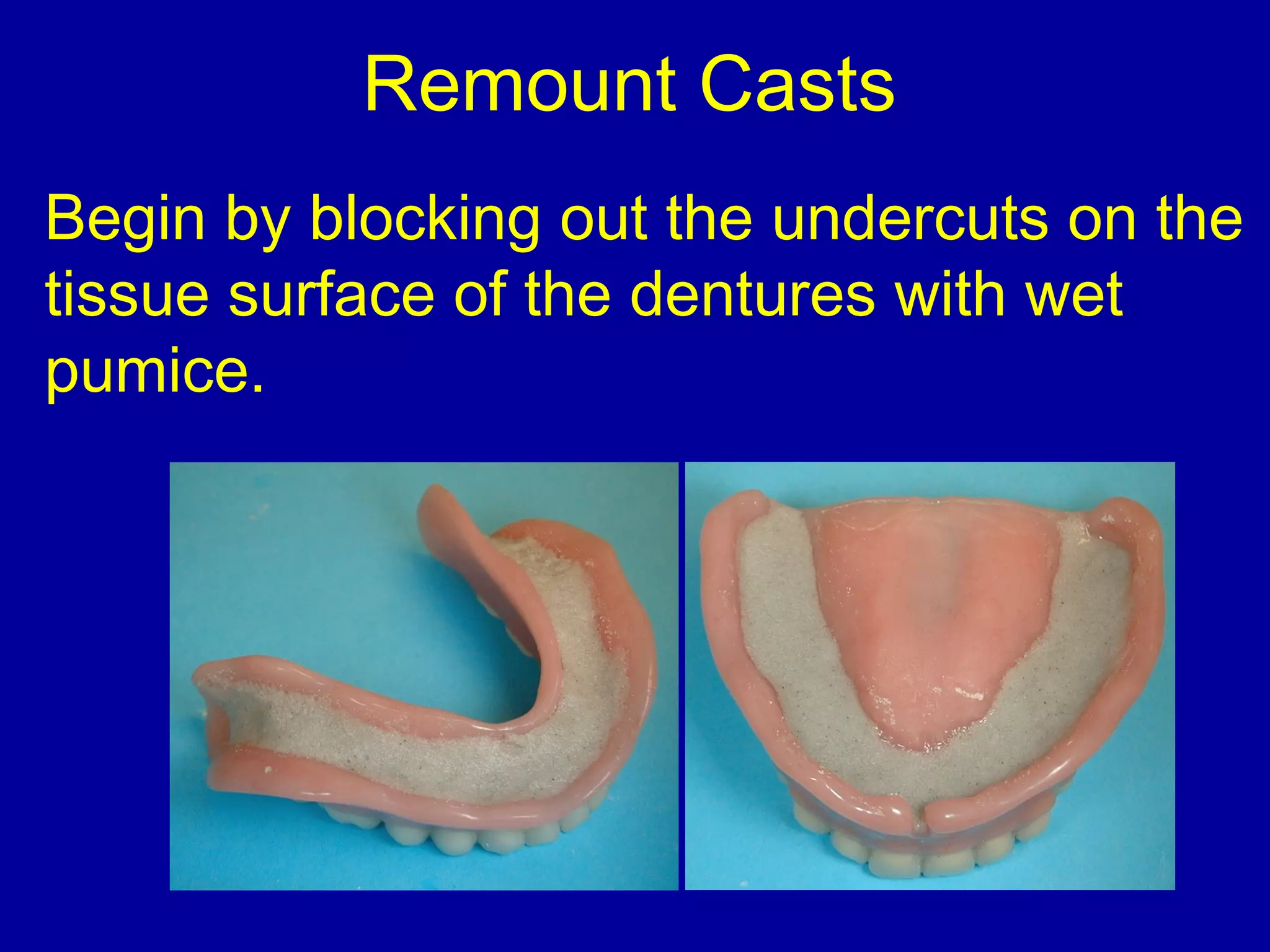
Remount Casts
Begin by blocking out the undercuts on the
tissue surface of the dentures with wet
pumice.
Remount Casts
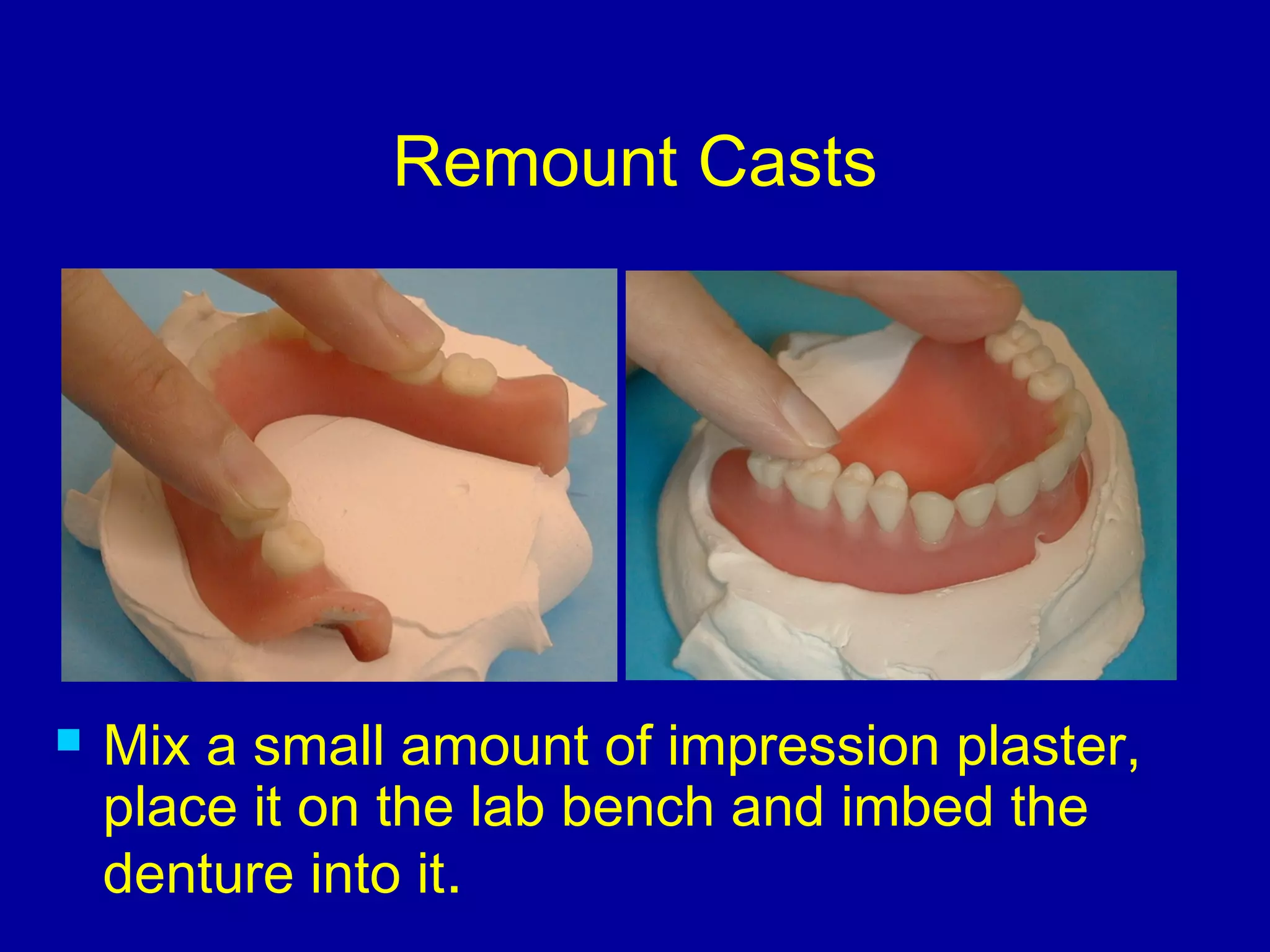
 Mix a small amount of impression plaster,
place it on the lab bench and imbed the
denture into it.
Remount Casts
After the
plaster has
set, remove
the
dentures
from the
cast, and
trim them.
The remount
casts will be
used to mount
the clinical
remount
records on the
articulator.
You are now ready to perform the
clinical remount procedure
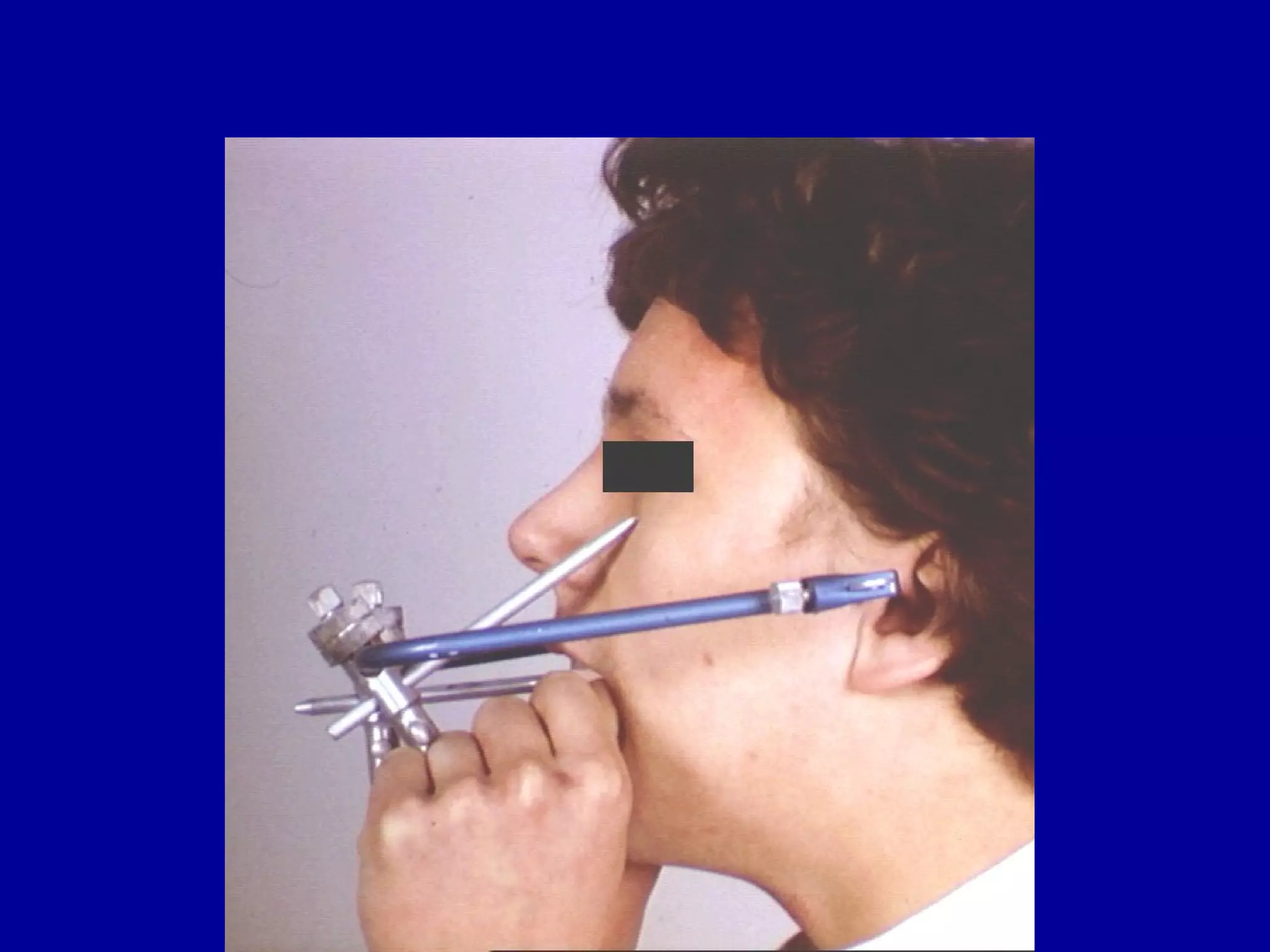
The maxillary remount
cast has been connected
to the upper member of
the articulator by means
of the facebow remount
jig.
With the lower remount
cast you are now ready to
perform the clinical
remount procedure.
Attach the maxillary cast with
dentures to the articulator with new
remount casts.
Denture insertion
13. finishing & polishing

13. finishing & polishing

  • 2.
  • 3.
    Learning outcomes 1. Describethe clinical remount index procedure. 2. Explain finishing and polishing of dentures. 3. Describe clinical remounting procedure.
  • 4.
    Patient Visit #4 Visit4 Clinical procedure Lab. procedure Try-in Appointment Flasking Deflasking Laboratory Remount Finishing and polishing the denture
  • 5.
    Preparing Dentures forInsertion  Fabrication of face bow remount jig  Removing processed dentures from master casts  Finishing and polishing the dentures  Fabrication of clinical remount casts  Mount the maxillary remount cast on the articulator preserving the facebow transfer record
  • 6.
    CLINICAL REMOUNT  Laboratoryremounting, will not eliminate errors produced by the impressions or jaw relation records, nor will it eliminate errors that develop when the dentures are removed from the casts or are polished.
  • 7.
    MAKING A FACEBOW REMOUNTJIG  After the lab remounting is done, making a facebow remount jig preserves the face-bow mounting of the maxillary denture.
  • 11.
  • 12.
     The uppercast is attached to the upper mounting, and a record of its relationship to the articulator is made in plaster on the lower mounting ring.
  • 13.
     Fast settingplaster is added on the lower mounting ring, and the teeth of the upper denture are pressed into the plaster while the cast is articulator.
  • 14.
    Only the occlusaland the incisal surfaces of the denture teeth engage the plaster.
  • 15.
    Removing Dentures fromCasts and Polishing  Plaster knife  Acrylic Burs  Pumice  Rag polishing wheels  Felt cones  Brush wheels Instruments and Materials
  • 16.
    Removing Dentures fromthe Master Casts  Make cuts into the base of each cast almost to the resin.  Insert the plaster knife into the cuts and carefully separate the sections of stone.
  • 17.
    Finishing and Polishing Finish borders with an acrylic bur. Remove excess resin beyond the land. Be careful to preserve the border width and contour.  Remove all plaster or stone.  Smooth the denture bases to the proper contour with your acrylic burs.
  • 18.
    Remove small particlesof stone from the proximal areas with a brush wheel. The palatal portion should be 2 mm thick.
  • 19.
  • 20.
     Use awet rag wheel with lots of wet pumice to polish the palatal, lingual, labial and buccal areas.  The periphery of the denture must also be carefully polished. Do not overpolish and thereby loose the contours that were developed during festooning.
  • 21.
     Check thebearing surfaces of the dentures for bubbles and sharp projections. Remove such projections with an acrylic bur.
  • 22.
    Polished dentures Note thatthe borders are rounded and smooth, and the palate is highly polished and the proper thickness Do not over polishDo not over polish
  • 23.
     After finishingof the dentures, the prostheses should be maintained in water till it is inserted in the mouth.
  • 24.
    Patient Visit #5 Visit 5 Clinical procedure Lab. procedure Denture insertion Clinical Remount procedure Lab procedure for Clinical Remount
  • 25.
    Remount Cast: acast formed of a prosthesis for the purpose of mounting the prosthesis on an articulator.
  • 26.
    Remount Casts Begin byblocking out the undercuts on the tissue surface of the dentures with wet pumice.
  • 27.
    Remount Casts  Mixa small amount of impression plaster, place it on the lab bench and imbed the denture into it.
  • 28.
    Remount Casts After the plasterhas set, remove the dentures from the cast, and trim them. The remount casts will be used to mount the clinical remount records on the articulator.
  • 29.
    You are nowready to perform the clinical remount procedure The maxillary remount cast has been connected to the upper member of the articulator by means of the facebow remount jig. With the lower remount cast you are now ready to perform the clinical remount procedure.
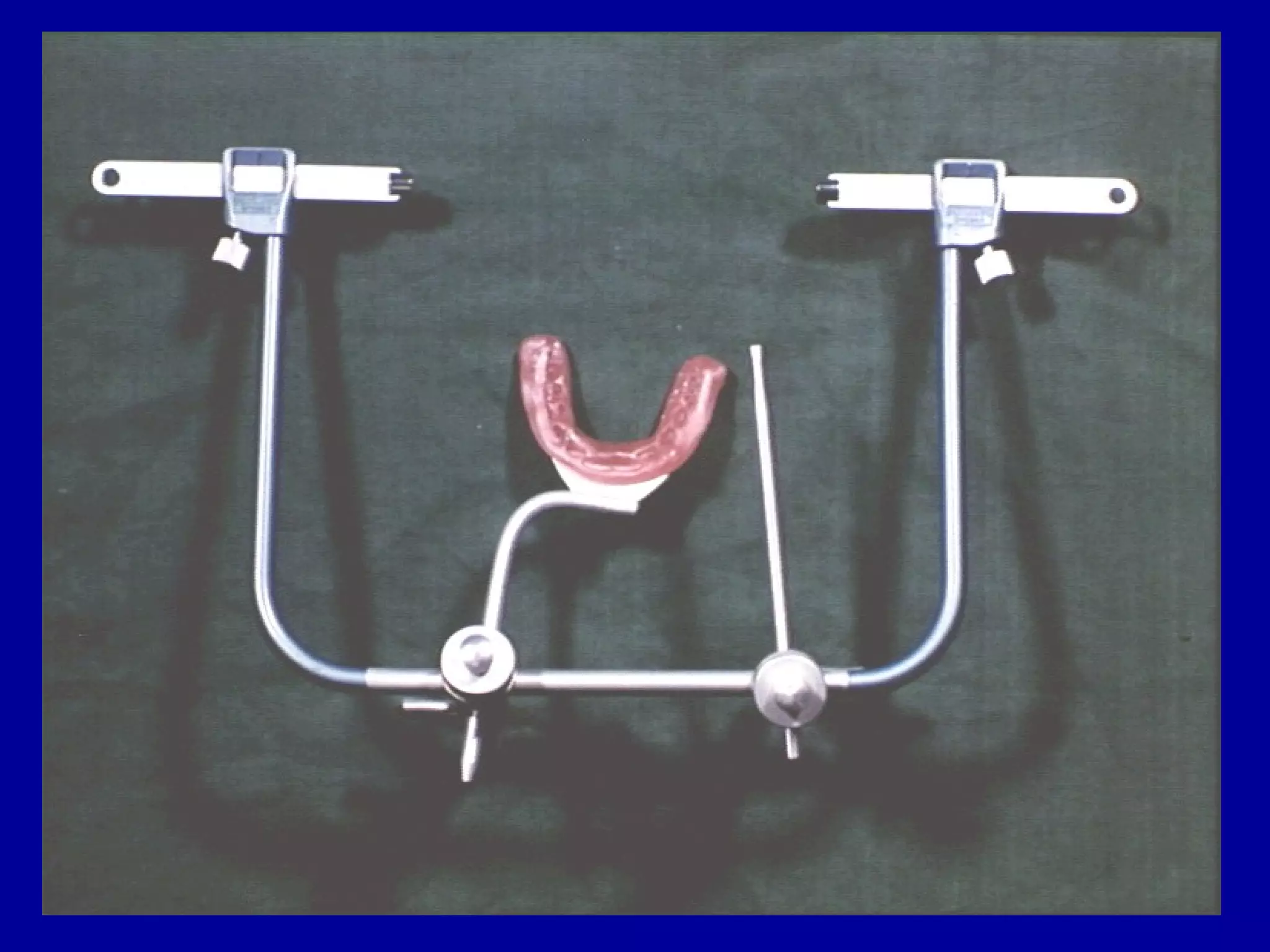
  • 30.
    Attach the maxillarycast with dentures to the articulator with new remount casts.
  • 31.