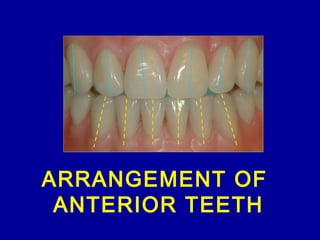
ARRANGEMENT OF
ANTERIOR TEETH
Learning outcomes
1. Explain individual anterior tooth
arrangement.
2. Compare horizontal and vertical
overlap.
3. Define what is incisal guidance.
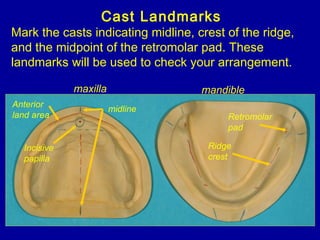
Cast Landmarks
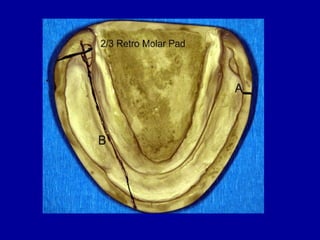
Mark the casts indicating midline, crest of the ridge,
and the midpoint of the retromolar pad. These
landmarks will be used to check your arrangement.
maxilla mandible
Incisive
papilla
midline
Anterior
land area
Ridge
crest
Retromolar
pad
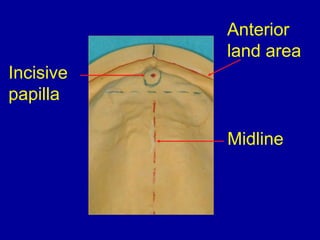
Anterior
land area
Midline
Incisive
papilla
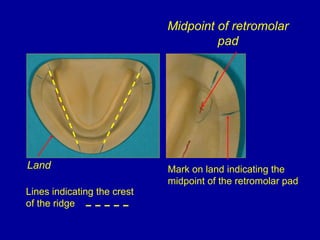
Lines indicating the crest
of the ridge
Midpoint of retromolar
pad
Mark on land indicating the
midpoint of the retromolar pad
Land
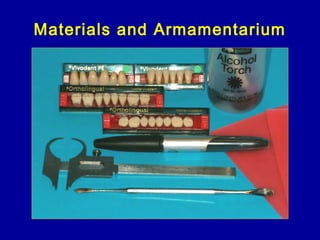
Materials and Armamentarium
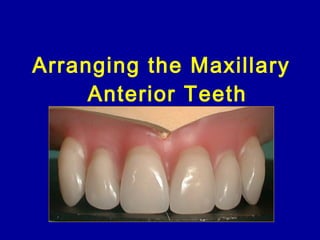
Arranging the Maxillary
Anterior Teeth
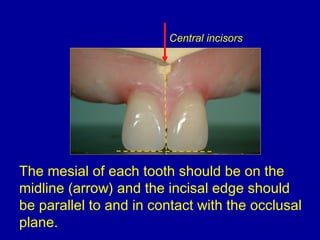
The mesial of each tooth should be on the
midline (arrow) and the incisal edge should
be parallel to and in contact with the occlusal
plane.
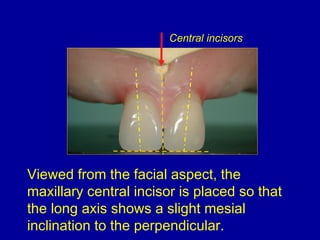
Central incisors
Viewed from the facial aspect, the
maxillary central incisor is placed so that
the long axis shows a slight mesial
inclination to the perpendicular.
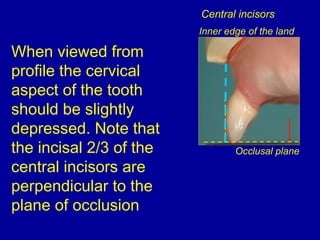
Central incisors
When viewed from
profile the cervical
aspect of the tooth
should be slightly
depressed. Note that
the incisal 2/3 of the
central incisors are
perpendicular to the
plane of occlusion
Inner edge of the land
Occlusal plane
Central incisors
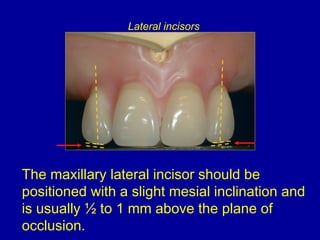
The maxillary lateral incisor should be
positioned with a slight mesial inclination and
is usually ½ to 1 mm above the plane of
occlusion.
Lateral incisors
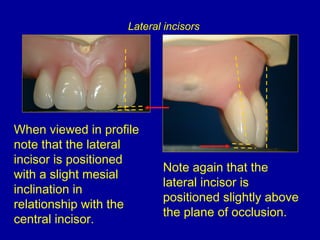
When viewed in profile
note that the lateral
incisor is positioned
with a slight mesial
inclination in
relationship with the
central incisor.
Note again that the
lateral incisor is
positioned slightly above
the plane of occlusion.
Lateral incisors
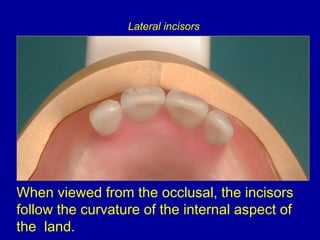
When viewed from the occlusal, the incisors
follow the curvature of the internal aspect of
the land.
Lateral incisors
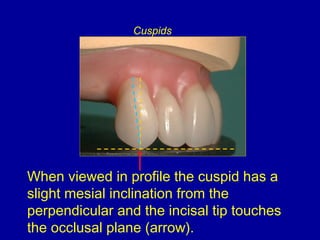
When viewed in profile the cuspid has a
slight mesial inclination from the
perpendicular and the incisal tip touches
the occlusal plane (arrow).
Cuspids
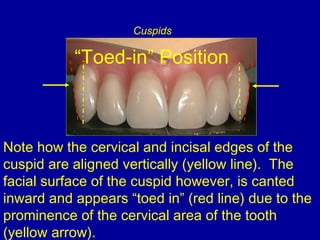
“Toed-in” Position
Note how the cervical and incisal edges of the
cuspid are aligned vertically (yellow line). The
facial surface of the cuspid however, is canted
inward and appears “toed in” (red line) due to the
prominence of the cervical area of the tooth
(yellow arrow).
Cuspids
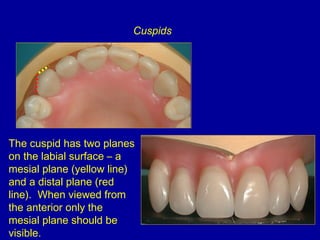
The cuspid has two planes
on the labial surface – a
mesial plane (yellow line)
and a distal plane (red
line). When viewed from
the anterior only the
mesial plane should be
visible.
Cuspids
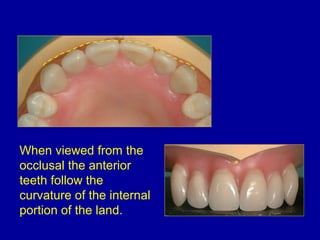
When viewed from the
occlusal the anterior
teeth follow the
curvature of the internal
portion of the land.
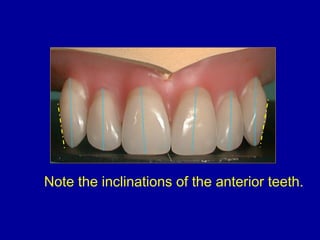
Note the inclinations of the anterior teeth.
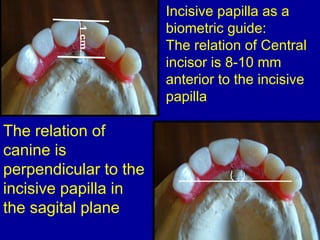
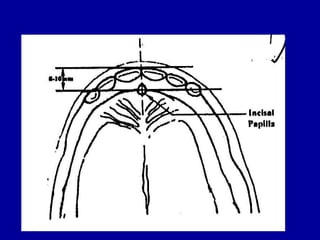
Incisive papilla as a
biometric guide:
The relation of Central
incisor is 8-10 mm
anterior to the incisive
papilla
The relation of
canine is
perpendicular to the
incisive papilla in
the sagital plane
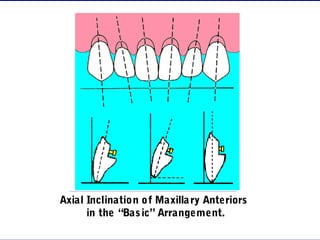
Axial Inclination of Maxillary Anteriors
in the “Basic” Arrangement.
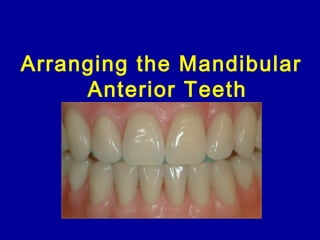
Arranging the Mandibular
Anterior Teeth
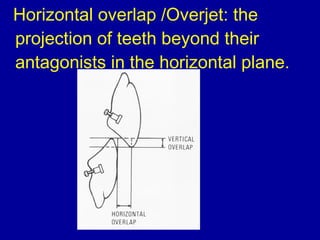
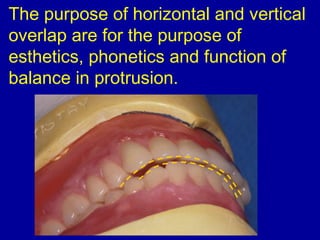
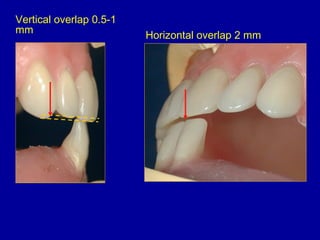
Horizontal overlap /Overjet: the
projection of teeth beyond their
antagonists in the horizontal plane.
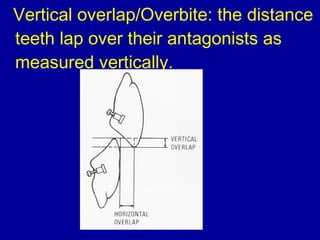
Vertical overlap/Overbite: the distance
teeth lap over their antagonists as
measured vertically.
The purpose of horizontal and vertical
overlap are for the purpose of
esthetics, phonetics and function of
balance in protrusion.
Vertical overlap 0.5-1
mm
Horizontal overlap 2 mm
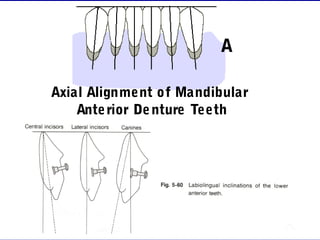
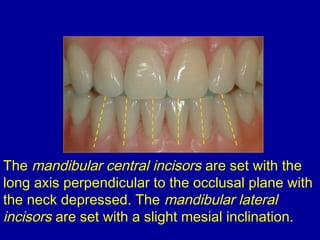
The mandibular central incisors are set with the
long axis perpendicular to the occlusal plane with
the neck depressed. The mandibular lateral
incisors are set with a slight mesial inclination.
Axial Alignment of MandibularAxial Alignment of Mandibular
Anterior Denture TeethAnterior Denture Teeth
A. Facial View.A. Facial View.
B. Proximal View.B. Proximal View.
B
A
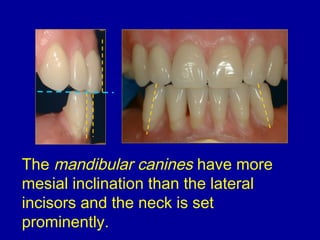
The mandibular canines have more
mesial inclination than the lateral
incisors and the neck is set
prominently.
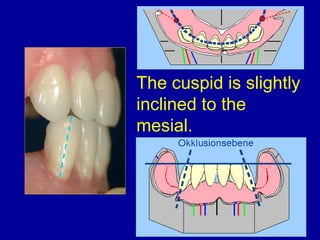
The cuspid is slightly
inclined to the
mesial.
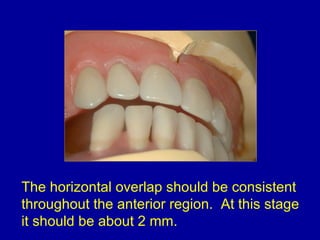
The horizontal overlap should be consistent
throughout the anterior region. At this stage
it should be about 2 mm.
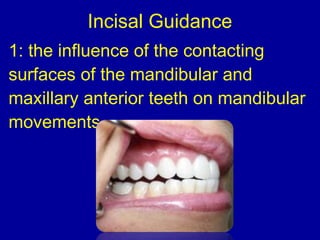
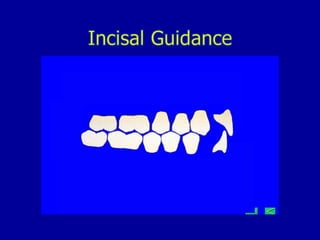
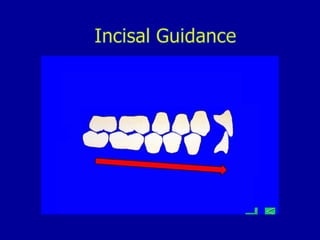
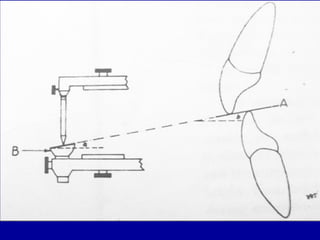
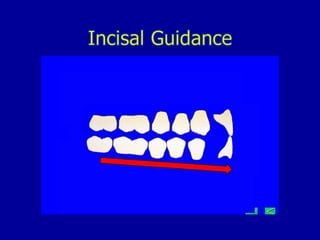
Incisal Guidance
1: the influence of the contacting
surfaces of the mandibular and
maxillary anterior teeth on mandibular
movements.
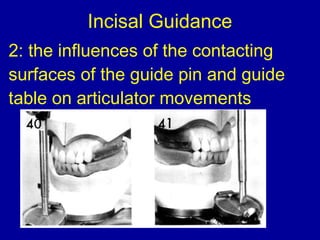
Incisal Guidance
2: the influences of the contacting
surfaces of the guide pin and guide
table on articulator movements
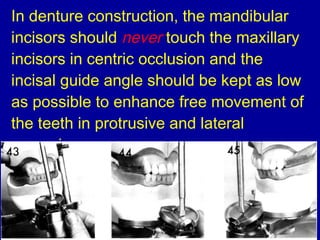
In denture construction, the mandibular
incisors should never touch the maxillary
incisors in centric occlusion and the
incisal guide angle should be kept as low
as possible to enhance free movement of
the teeth in protrusive and lateral
excursions.
Questions

9. anterior teeth arrangement

  • 2.
  • 3.
    Learning outcomes 1. Explainindividual anterior tooth arrangement. 2. Compare horizontal and vertical overlap. 3. Define what is incisal guidance.
  • 4.
    Cast Landmarks Mark thecasts indicating midline, crest of the ridge, and the midpoint of the retromolar pad. These landmarks will be used to check your arrangement. maxilla mandible Incisive papilla midline Anterior land area Ridge crest Retromolar pad
  • 5.
  • 6.
    Lines indicating thecrest of the ridge Midpoint of retromolar pad Mark on land indicating the midpoint of the retromolar pad Land
  • 8.
  • 9.
  • 10.
    The mesial ofeach tooth should be on the midline (arrow) and the incisal edge should be parallel to and in contact with the occlusal plane. Central incisors
  • 11.
    Viewed from thefacial aspect, the maxillary central incisor is placed so that the long axis shows a slight mesial inclination to the perpendicular. Central incisors
  • 12.
    When viewed from profilethe cervical aspect of the tooth should be slightly depressed. Note that the incisal 2/3 of the central incisors are perpendicular to the plane of occlusion Inner edge of the land Occlusal plane Central incisors
  • 13.
    The maxillary lateralincisor should be positioned with a slight mesial inclination and is usually ½ to 1 mm above the plane of occlusion. Lateral incisors
  • 14.
    When viewed inprofile note that the lateral incisor is positioned with a slight mesial inclination in relationship with the central incisor. Note again that the lateral incisor is positioned slightly above the plane of occlusion. Lateral incisors
  • 15.
    When viewed fromthe occlusal, the incisors follow the curvature of the internal aspect of the land. Lateral incisors
  • 16.
    When viewed inprofile the cuspid has a slight mesial inclination from the perpendicular and the incisal tip touches the occlusal plane (arrow). Cuspids
  • 17.
    “Toed-in” Position Note howthe cervical and incisal edges of the cuspid are aligned vertically (yellow line). The facial surface of the cuspid however, is canted inward and appears “toed in” (red line) due to the prominence of the cervical area of the tooth (yellow arrow). Cuspids
  • 18.
    The cuspid hastwo planes on the labial surface – a mesial plane (yellow line) and a distal plane (red line). When viewed from the anterior only the mesial plane should be visible. Cuspids
  • 19.
    When viewed fromthe occlusal the anterior teeth follow the curvature of the internal portion of the land.
  • 20.
    Note the inclinationsof the anterior teeth.
  • 21.
    Incisive papilla asa biometric guide: The relation of Central incisor is 8-10 mm anterior to the incisive papilla The relation of canine is perpendicular to the incisive papilla in the sagital plane
  • 23.
    Axial Inclination ofMaxillary Anteriors in the “Basic” Arrangement.
  • 24.
  • 25.
    Horizontal overlap /Overjet:the projection of teeth beyond their antagonists in the horizontal plane.
  • 26.
    Vertical overlap/Overbite: thedistance teeth lap over their antagonists as measured vertically.
  • 27.
    The purpose ofhorizontal and vertical overlap are for the purpose of esthetics, phonetics and function of balance in protrusion.
  • 28.
  • 29.
    The mandibular central incisors areset with the long axis perpendicular to the occlusal plane with the neck depressed. The mandibular lateral incisors are set with a slight mesial inclination.
  • 30.
    Axial Alignment ofMandibularAxial Alignment of Mandibular Anterior Denture TeethAnterior Denture Teeth A. Facial View.A. Facial View. B. Proximal View.B. Proximal View. B A
  • 31.
    The mandibular canines have more mesialinclination than the lateral incisors and the neck is set prominently.
  • 32.
    The cuspid isslightly inclined to the mesial.
  • 33.
    The horizontal overlapshould be consistent throughout the anterior region. At this stage it should be about 2 mm.
  • 34.
    Incisal Guidance 1: theinfluence of the contacting surfaces of the mandibular and maxillary anterior teeth on mandibular movements.
  • 38.
    Incisal Guidance 2: theinfluences of the contacting surfaces of the guide pin and guide table on articulator movements
  • 40.
    In denture construction,the mandibular incisors should never touch the maxillary incisors in centric occlusion and the incisal guide angle should be kept as low as possible to enhance free movement of the teeth in protrusive and lateral excursions.
  • 41.
Editor's Notes

  • #5 Mark middle of retromolar pad Central grooves .. Lower teeth on the line
  • #6 Incisive papilla..
  • #11 Square tapered teeth are his favorite. They have long contact point… best to not show too much gingiva.. Looks more real. Some ovoid molds… only have a small low contact … will end up with large papilla that doesn’t look nice.. So he uses square tapering teeth almost exclusively.
  • #14 Laterals slightly above the plane of occlusion, can depress the necks a little bit to get diff light reflection. And inclined slightly distally.
  • #16 If you have trimmed cast correctly, teeth will follow outline of the land.
  • #17 Move necks of cuspids out, rotate distally.
  • #18 Only see one half of the cuspid. Will not see distal lobe ..
  • #19 Cuspid has two incisal edges. Mesial incisal edge should follow the other anterior teeth. The distal edge will follow central fossa of posterior teeth. Looks more realistic. Don’t want big bold flat cuspids. Will look awful .
  • #20 Silver dollar look  lab techs would take silver dollar and set teeth along it.. And it would fit perfectly Can use plastic ruler On top of it there is a circle – if you place inside the arch – set along it --- will follow it exactly [silver dollar set up] Also tapered edge on one end – generally taper of anterior teeth Mm rule lines at 18 and 22 to measure length of wax rims On flat smaller end  letters – mark rims at cuspids  take ruler and measure btw cuspids, gives you letter for anterior tooth selection [x, e etc]
  • #34 Check for this space when setting lower anteriors must be consistent. Look from underneath… [he skipped through most slides]