MELTING AND BOILING
MELTING
 When ice is heated, it melts.
 Ice melts at 0oC.
 The heat applied is used to break the forces of
attraction between molecules.
 As the ice melts, temperature remains constant.
 The heat applied to melt a substance is called Latent
Heat.
 Latent heat means ‘hidden’ heat.
 Since there is no change in temperature, the heat
applied is hidden.
 Melting - change from solid to liquid
 Melting point - SPECIFIC temperature when
melting occurs.
 Each pure substance has a SPECIFIC melting
point.
 Examples:
 M.P. of Water = 0°C
 M.P. of Nitrogen = -209.9 °C
 M.P. of Silver = 961.93 °C
 M.P. of Carbon = 3500.0 °C
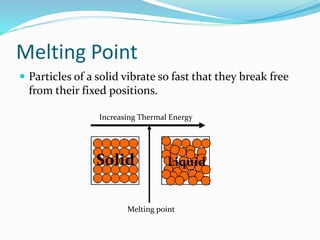
Melting Point
 Particles of a solid vibrate so fast that they break free
from their fixed positions.
Solid Liquid
Increasing Thermal Energy
Melting point
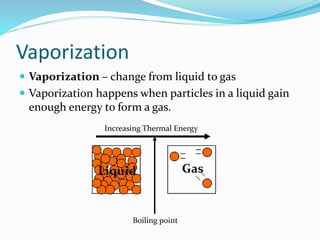
Vaporization
 Vaporization – change from liquid to gas
 Vaporization happens when particles in a liquid gain
enough energy to form a gas.
GasLiquid
Increasing Thermal Energy
Boiling point
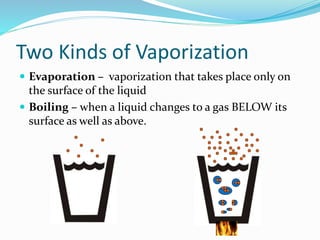
Two Kinds of Vaporization
 Evaporation – vaporization that takes place only on
the surface of the liquid
 Boiling – when a liquid changes to a gas BELOW its
surface as well as above.
Boiling Point
 Boiling Point – temperature at which a liquid boils
 Each pure substance has a SPECIFIC boiling point.
 Examples:
 B.P. of Water = 100°C
 B.P. of Nitrogen = -195.79 °C
 B.P. of Silver = 2162 °C
 B.P. of Carbon = 4027 °C
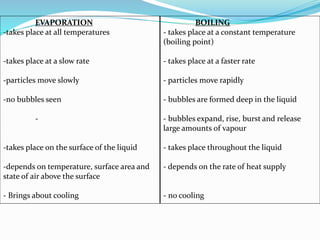
EVAPORATION BOILING
-takes place at all temperatures - takes place at a constant temperature
(boiling point)
-takes place at a slow rate - takes place at a faster rate
-particles move slowly - particles move rapidly
-no bubbles seen - bubbles are formed deep in the liquid
- - bubbles expand, rise, burst and release
large amounts of vapour
-takes place on the surface of the liquid - takes place throughout the liquid
-depends on temperature, surface area and - depends on the rate of heat supply
state of air above the surface
- Brings about cooling - no cooling
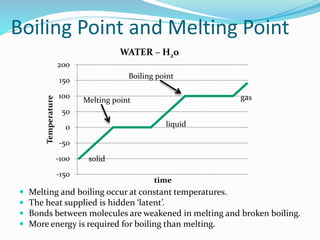
Boiling Point and Melting Point
-150
-100
-50
0
50
100
150
200
Temperature
time
WATER – H20
Melting point
Boiling point
solid
liquid
gas
 Melting and boiling occur at constant temperatures.
 The heat supplied is hidden ‘latent’.
 Bonds between molecules are weakened in melting and broken boiling.
 More energy is required for boiling than melting.

2.4 form 3 melting and boiling

  • 1.
  • 2.
    MELTING  When iceis heated, it melts.  Ice melts at 0oC.  The heat applied is used to break the forces of attraction between molecules.  As the ice melts, temperature remains constant.  The heat applied to melt a substance is called Latent Heat.  Latent heat means ‘hidden’ heat.  Since there is no change in temperature, the heat applied is hidden.
  • 3.
     Melting -change from solid to liquid  Melting point - SPECIFIC temperature when melting occurs.  Each pure substance has a SPECIFIC melting point.  Examples:  M.P. of Water = 0°C  M.P. of Nitrogen = -209.9 °C  M.P. of Silver = 961.93 °C  M.P. of Carbon = 3500.0 °C
  • 4.
    Melting Point  Particlesof a solid vibrate so fast that they break free from their fixed positions. Solid Liquid Increasing Thermal Energy Melting point
  • 5.
    Vaporization  Vaporization –change from liquid to gas  Vaporization happens when particles in a liquid gain enough energy to form a gas. GasLiquid Increasing Thermal Energy Boiling point
  • 6.
    Two Kinds ofVaporization  Evaporation – vaporization that takes place only on the surface of the liquid  Boiling – when a liquid changes to a gas BELOW its surface as well as above.
  • 7.
    Boiling Point  BoilingPoint – temperature at which a liquid boils  Each pure substance has a SPECIFIC boiling point.  Examples:  B.P. of Water = 100°C  B.P. of Nitrogen = -195.79 °C  B.P. of Silver = 2162 °C  B.P. of Carbon = 4027 °C
  • 8.
    EVAPORATION BOILING -takes placeat all temperatures - takes place at a constant temperature (boiling point) -takes place at a slow rate - takes place at a faster rate -particles move slowly - particles move rapidly -no bubbles seen - bubbles are formed deep in the liquid - - bubbles expand, rise, burst and release large amounts of vapour -takes place on the surface of the liquid - takes place throughout the liquid -depends on temperature, surface area and - depends on the rate of heat supply state of air above the surface - Brings about cooling - no cooling
  • 9.
    Boiling Point andMelting Point -150 -100 -50 0 50 100 150 200 Temperature time WATER – H20 Melting point Boiling point solid liquid gas  Melting and boiling occur at constant temperatures.  The heat supplied is hidden ‘latent’.  Bonds between molecules are weakened in melting and broken boiling.  More energy is required for boiling than melting.