WIRELESS COMMUNICATION
SERIES
Propagation Mechanisms
&
Propagation Models
Lecture Videos are available for this slides
at
www.youtube.com/gurukula
Support by Subscribing to my
Channel
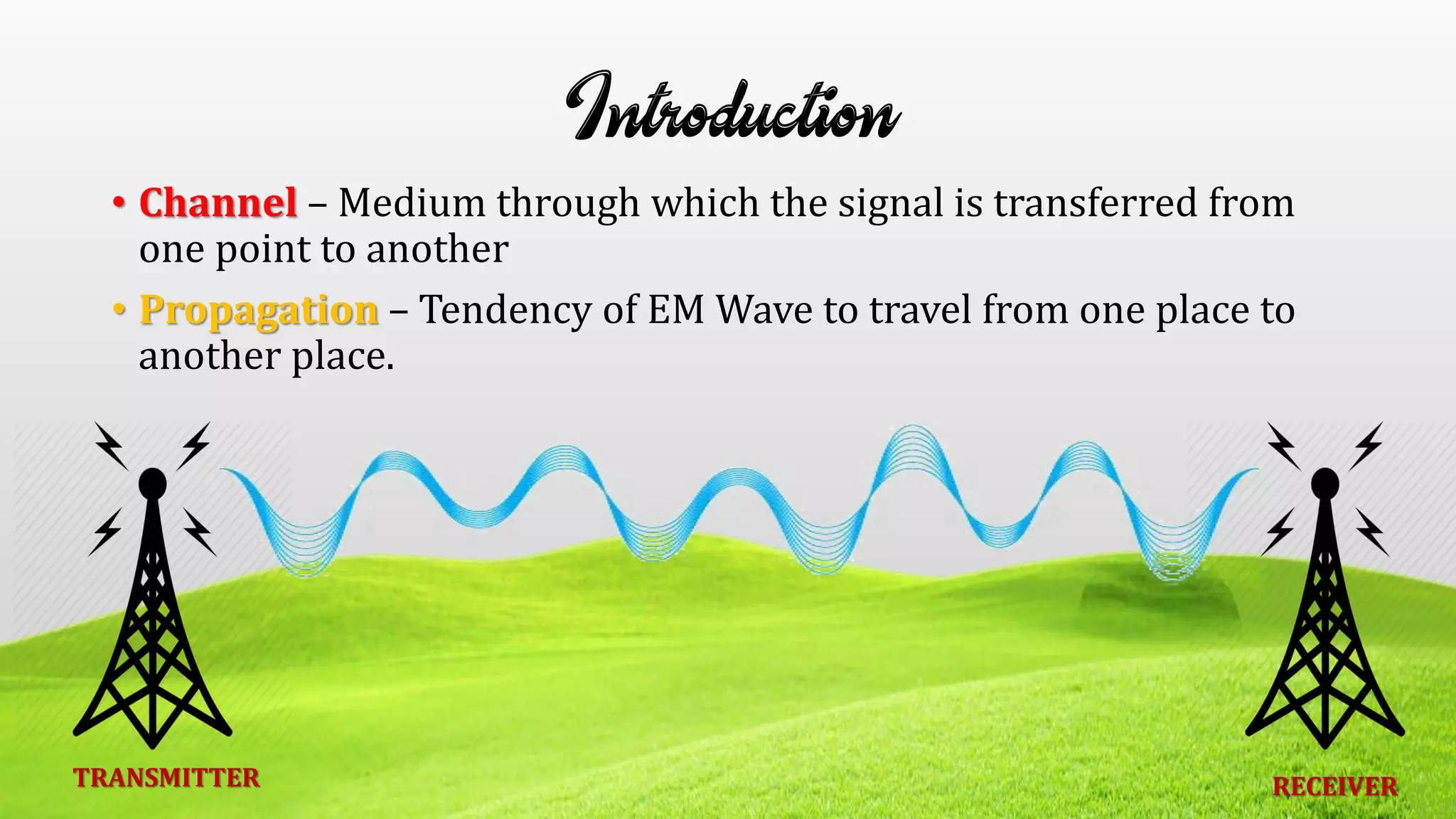
• Channel – Medium through which the signal is transferred from
one point to another
• Propagation – Tendency of EM Wave to travel from one place to
another place.
TRANSMITTER RECEIVER
-
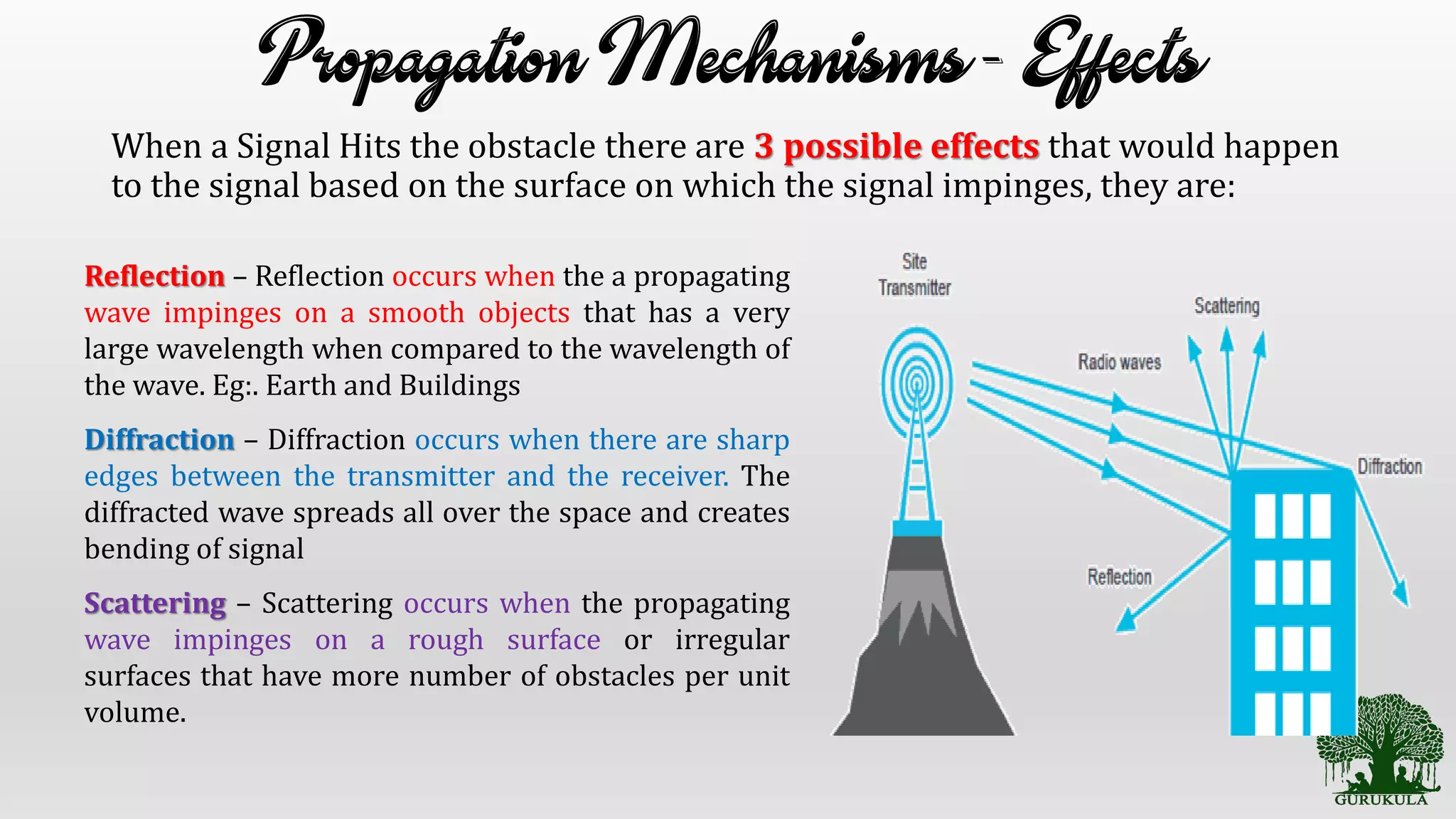
When a Signal Hits the obstacle there are 3 possible effects that would happen
to the signal based on the surface on which the signal impinges, they are:
Reflection – Reflection occurs when the a propagating
wave impinges on a smooth objects that has a very
large wavelength when compared to the wavelength of
the wave. Eg:. Earth and Buildings
Diffraction – Diffraction occurs when there are sharp
edges between the transmitter and the receiver. The
diffracted wave spreads all over the space and creates
bending of signal
Scattering – Scattering occurs when the propagating
wave impinges on a rough surface or irregular
surfaces that have more number of obstacles per unit
volume.
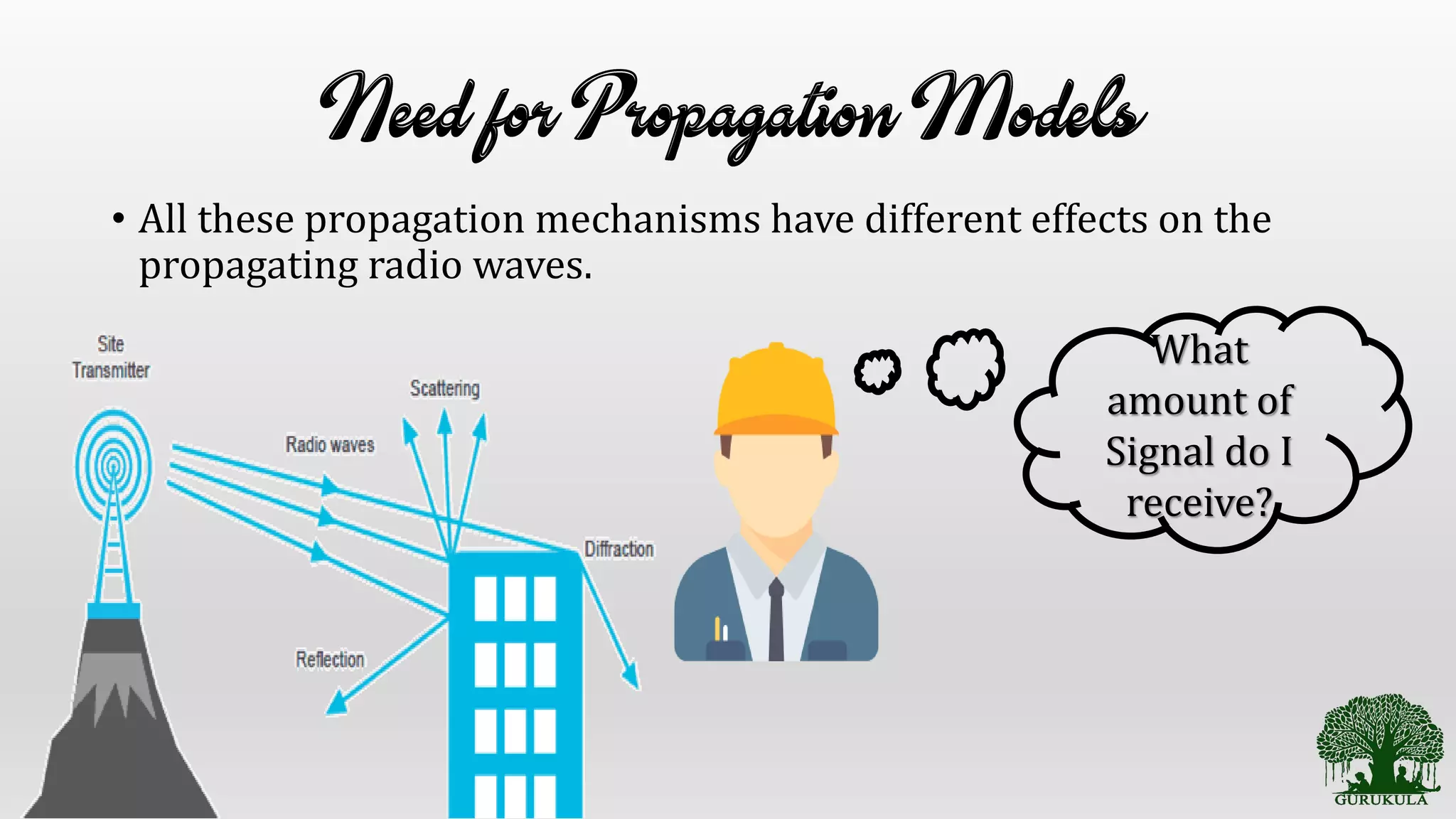
• All these propagation mechanisms have different effects on the
propagating radio waves.
What
amount of
Signal do I
receive?
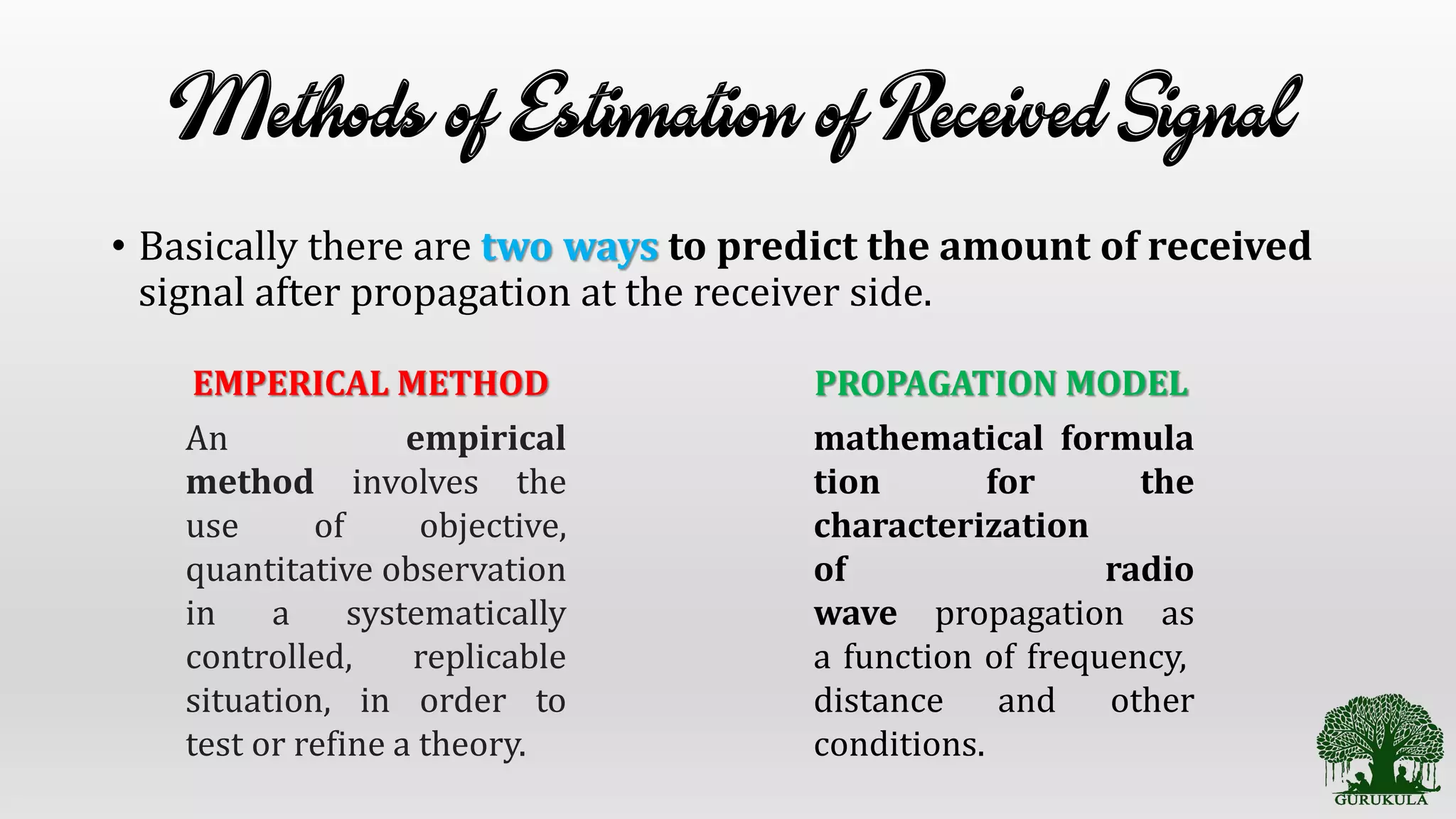
• Basically there are two ways to predict the amount of received
signal after propagation at the receiver side.
An empirical
method involves the
use of objective,
quantitative observation
in a systematically
controlled, replicable
situation, in order to
test or refine a theory.
EMPERICAL METHOD PROPAGATION MODEL
mathematical formula
tion for the
characterization
of radio
wave propagation as
a function of frequency,
distance and other
conditions.
-
• With Propagation models it is easy to design, simulate and Plan
the wireless systems.
• Propagation models reflect the properties of the propagation
channel
• Since the wireless channel characteristics are dynamic in nature
one single model cannot be defined for estimating the wireless
systems.
• Modelling a radio channel decides the coverage area,
modulation schemes to be used to optimize communication
parameters
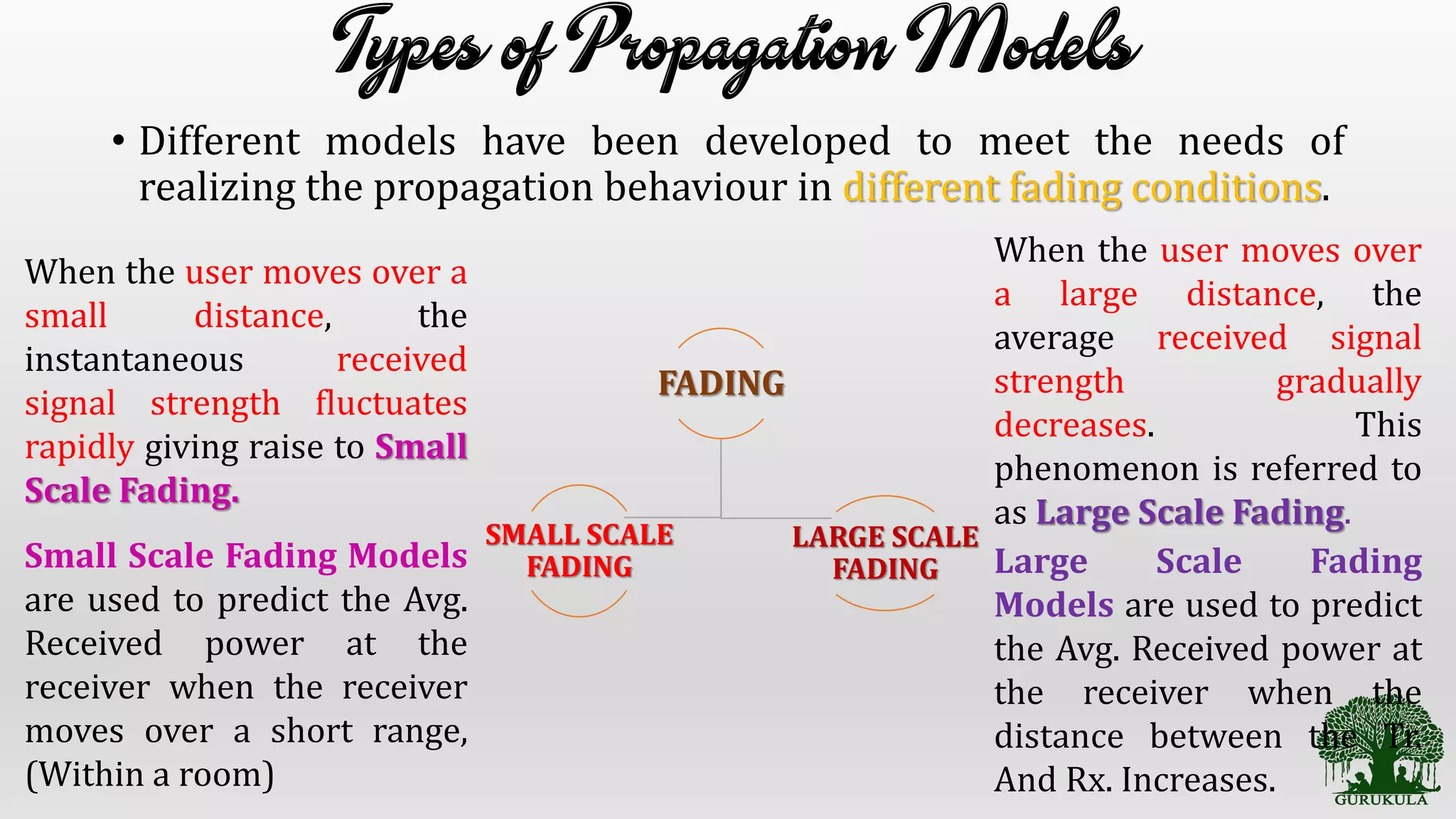
• Different models have been developed to meet the needs of
realizing the propagation behaviour in different fading conditions.
FADING
SMALL SCALE
FADING
LARGE SCALE
FADING
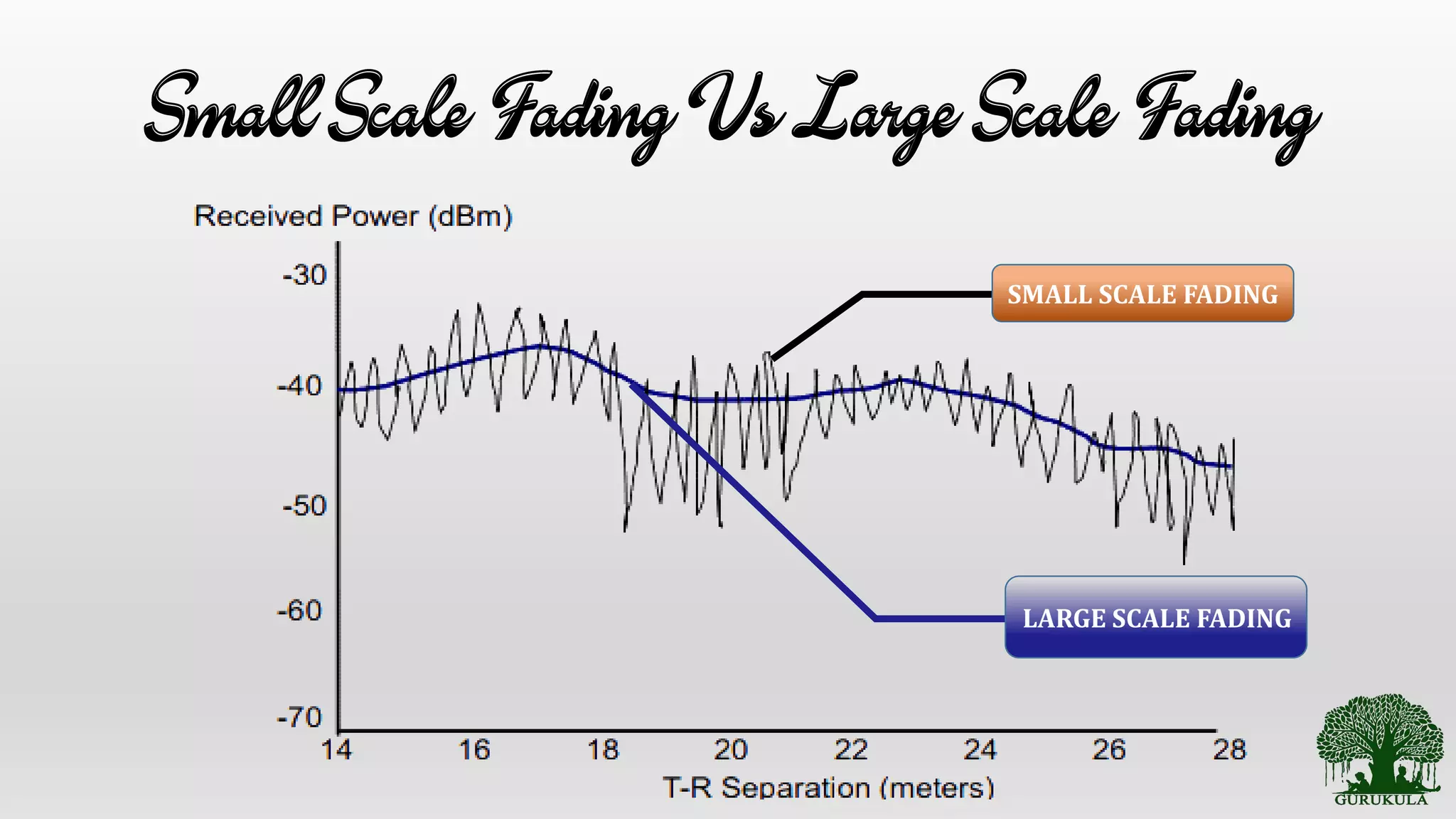
When the user moves over a
small distance, the
instantaneous received
signal strength fluctuates
rapidly giving raise to Small
Scale Fading.
Small Scale Fading Models
are used to predict the Avg.
Received power at the
receiver when the receiver
moves over a short range,
(Within a room)
When the user moves over
a large distance, the
average received signal
strength gradually
decreases. This
phenomenon is referred to
as Large Scale Fading.
Large Scale Fading
Models are used to predict
the Avg. Received power at
the receiver when the
distance between the Tr.
And Rx. Increases.
SMALL SCALE FADING
LARGE SCALE FADING
Introduction
Propagation Mechanisms
Propagation Models
Uses of Prop. Models
Small & Large Scale Fading
S U B S C R I B E

2. wireless propagation models free space propagation

  • 1.
  • 2.
    Lecture Videos areavailable for this slides at www.youtube.com/gurukula Support by Subscribing to my Channel
  • 3.
    • Channel –Medium through which the signal is transferred from one point to another • Propagation – Tendency of EM Wave to travel from one place to another place. TRANSMITTER RECEIVER
  • 4.
    - When a SignalHits the obstacle there are 3 possible effects that would happen to the signal based on the surface on which the signal impinges, they are: Reflection – Reflection occurs when the a propagating wave impinges on a smooth objects that has a very large wavelength when compared to the wavelength of the wave. Eg:. Earth and Buildings Diffraction – Diffraction occurs when there are sharp edges between the transmitter and the receiver. The diffracted wave spreads all over the space and creates bending of signal Scattering – Scattering occurs when the propagating wave impinges on a rough surface or irregular surfaces that have more number of obstacles per unit volume.
  • 5.
    • All thesepropagation mechanisms have different effects on the propagating radio waves. What amount of Signal do I receive?
  • 6.
    • Basically thereare two ways to predict the amount of received signal after propagation at the receiver side. An empirical method involves the use of objective, quantitative observation in a systematically controlled, replicable situation, in order to test or refine a theory. EMPERICAL METHOD PROPAGATION MODEL mathematical formula tion for the characterization of radio wave propagation as a function of frequency, distance and other conditions.
  • 7.
    - • With Propagationmodels it is easy to design, simulate and Plan the wireless systems. • Propagation models reflect the properties of the propagation channel • Since the wireless channel characteristics are dynamic in nature one single model cannot be defined for estimating the wireless systems. • Modelling a radio channel decides the coverage area, modulation schemes to be used to optimize communication parameters
  • 8.
    • Different modelshave been developed to meet the needs of realizing the propagation behaviour in different fading conditions. FADING SMALL SCALE FADING LARGE SCALE FADING When the user moves over a small distance, the instantaneous received signal strength fluctuates rapidly giving raise to Small Scale Fading. Small Scale Fading Models are used to predict the Avg. Received power at the receiver when the receiver moves over a short range, (Within a room) When the user moves over a large distance, the average received signal strength gradually decreases. This phenomenon is referred to as Large Scale Fading. Large Scale Fading Models are used to predict the Avg. Received power at the receiver when the distance between the Tr. And Rx. Increases.
  • 9.
  • 10.
    Introduction Propagation Mechanisms Propagation Models Usesof Prop. Models Small & Large Scale Fading S U B S C R I B E